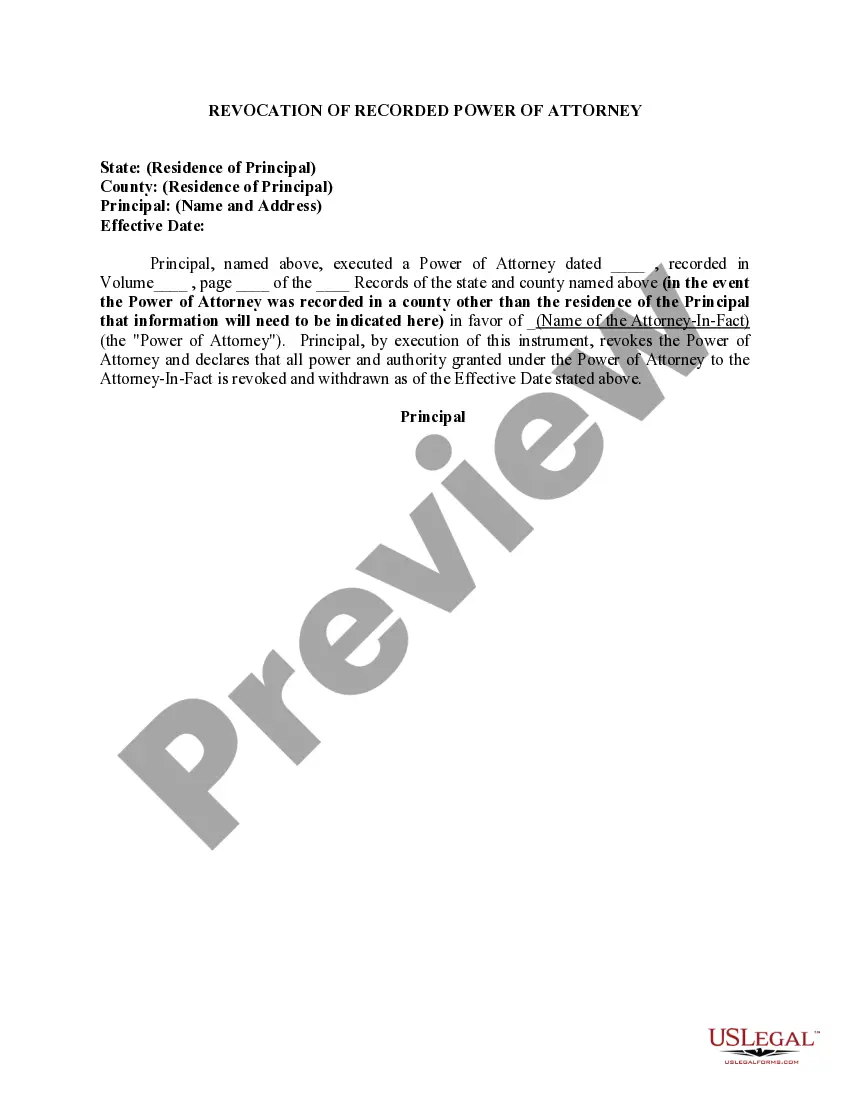
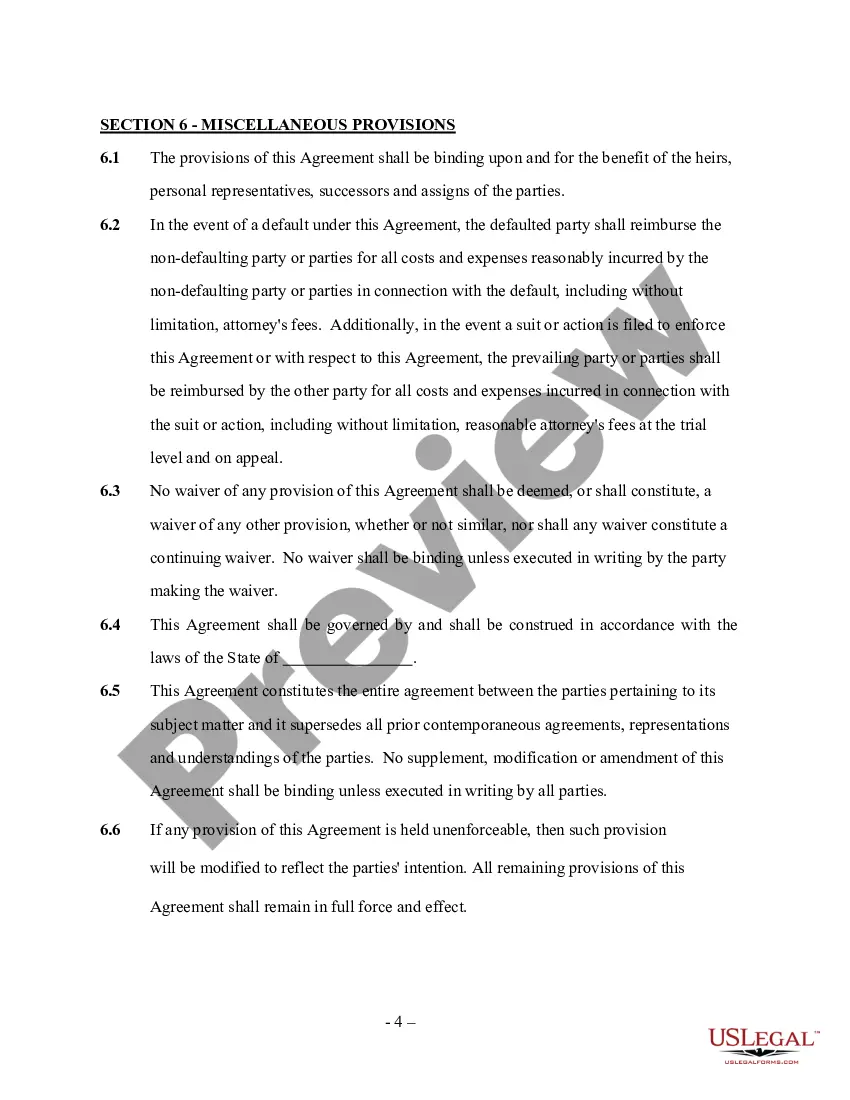
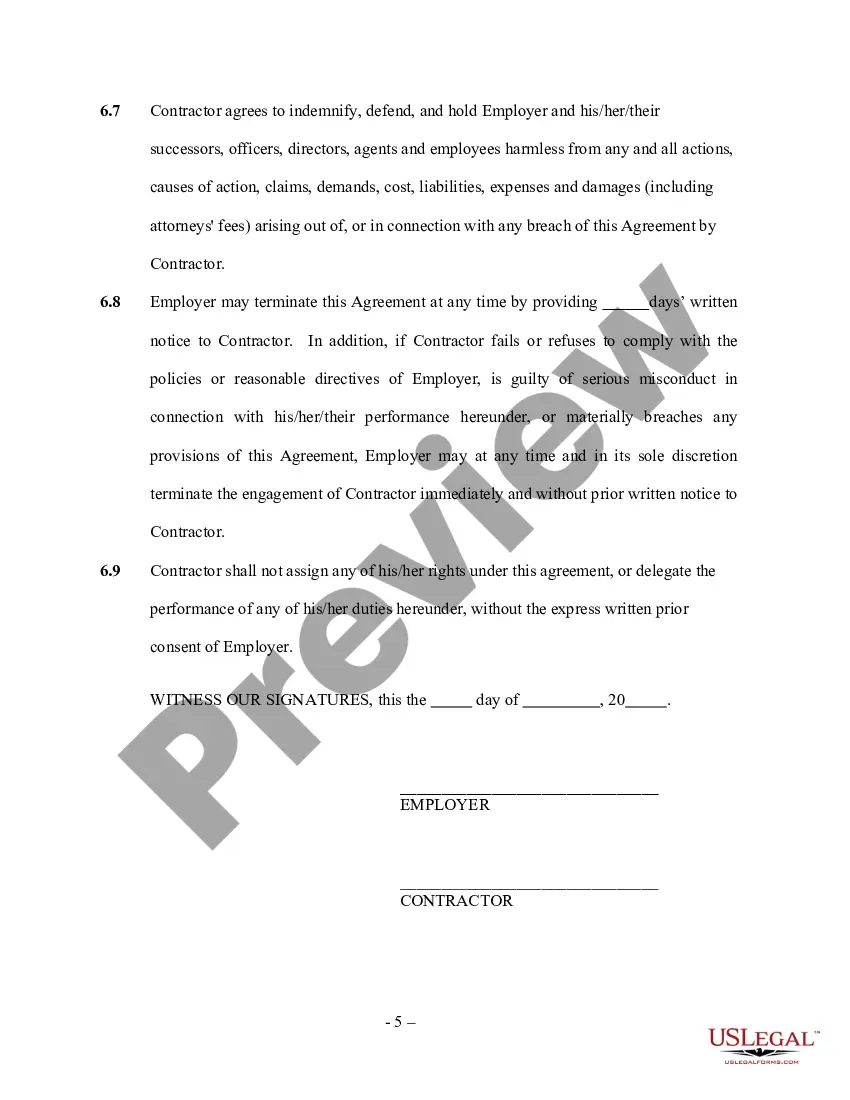
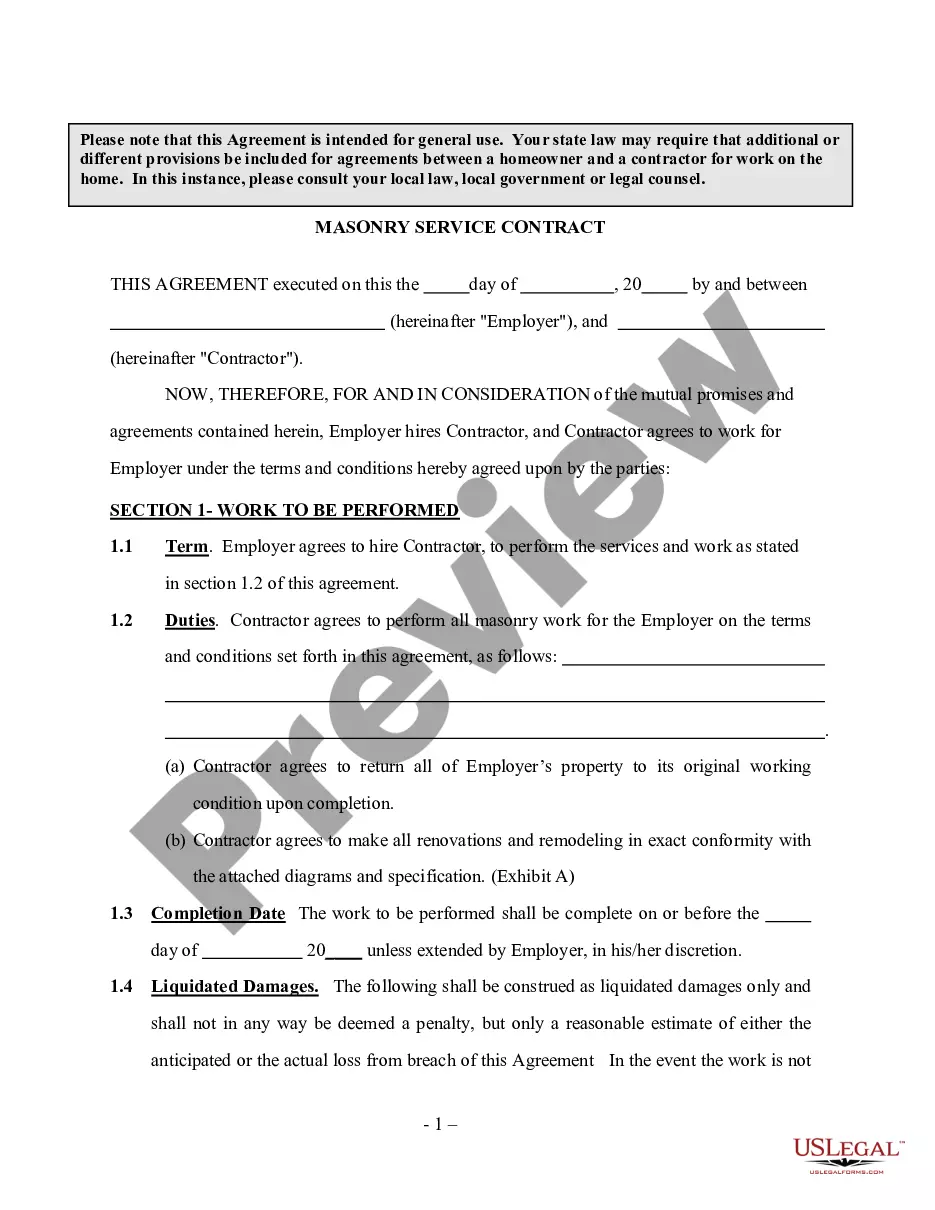
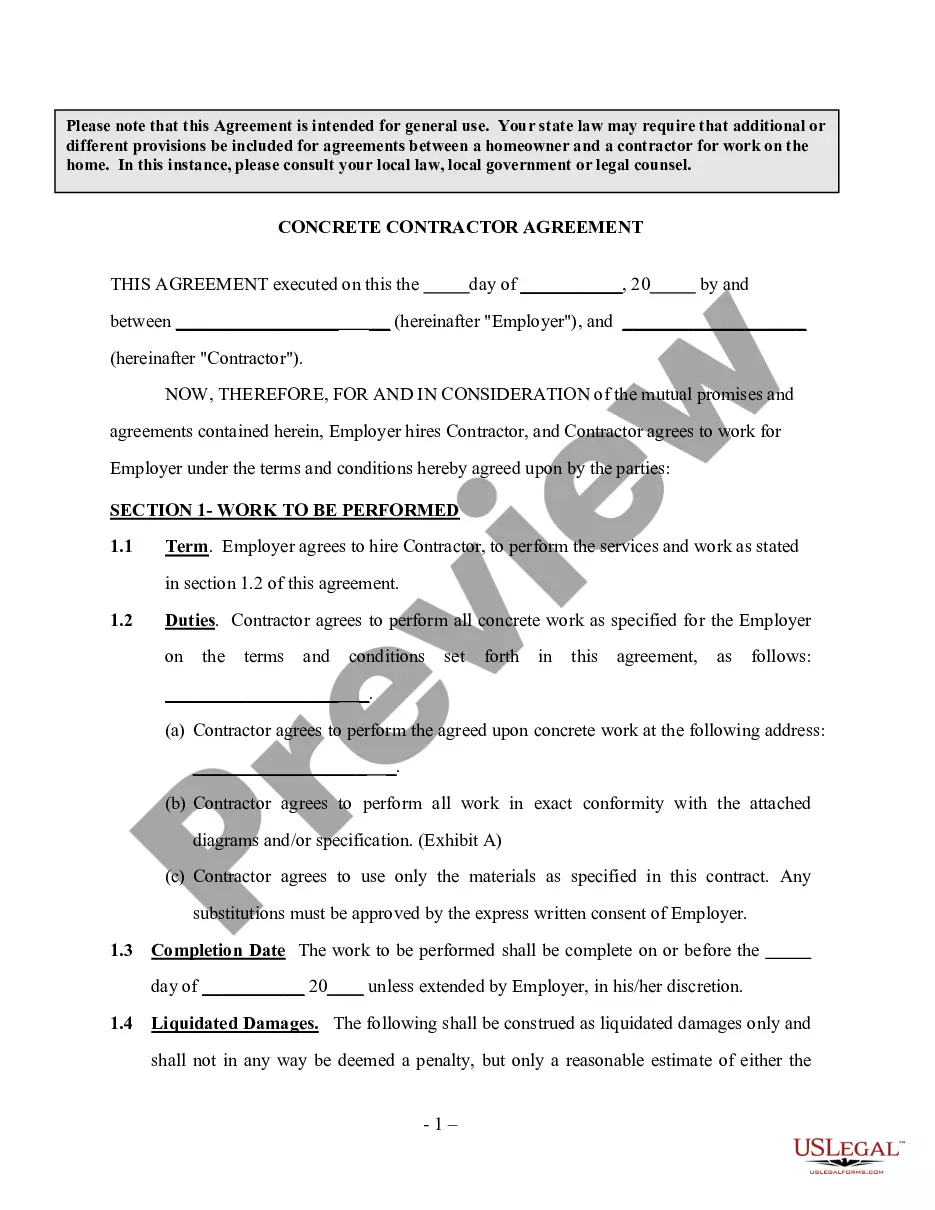
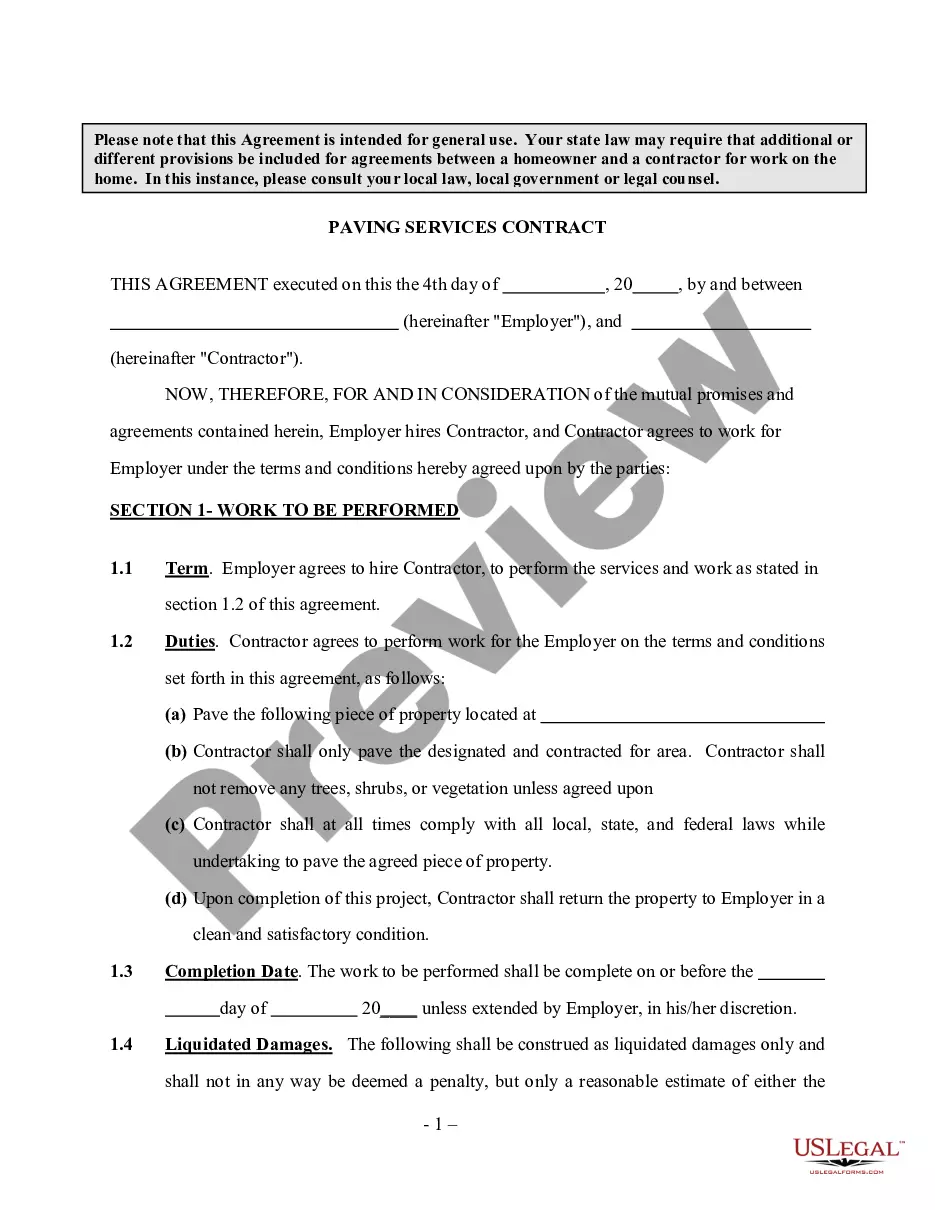
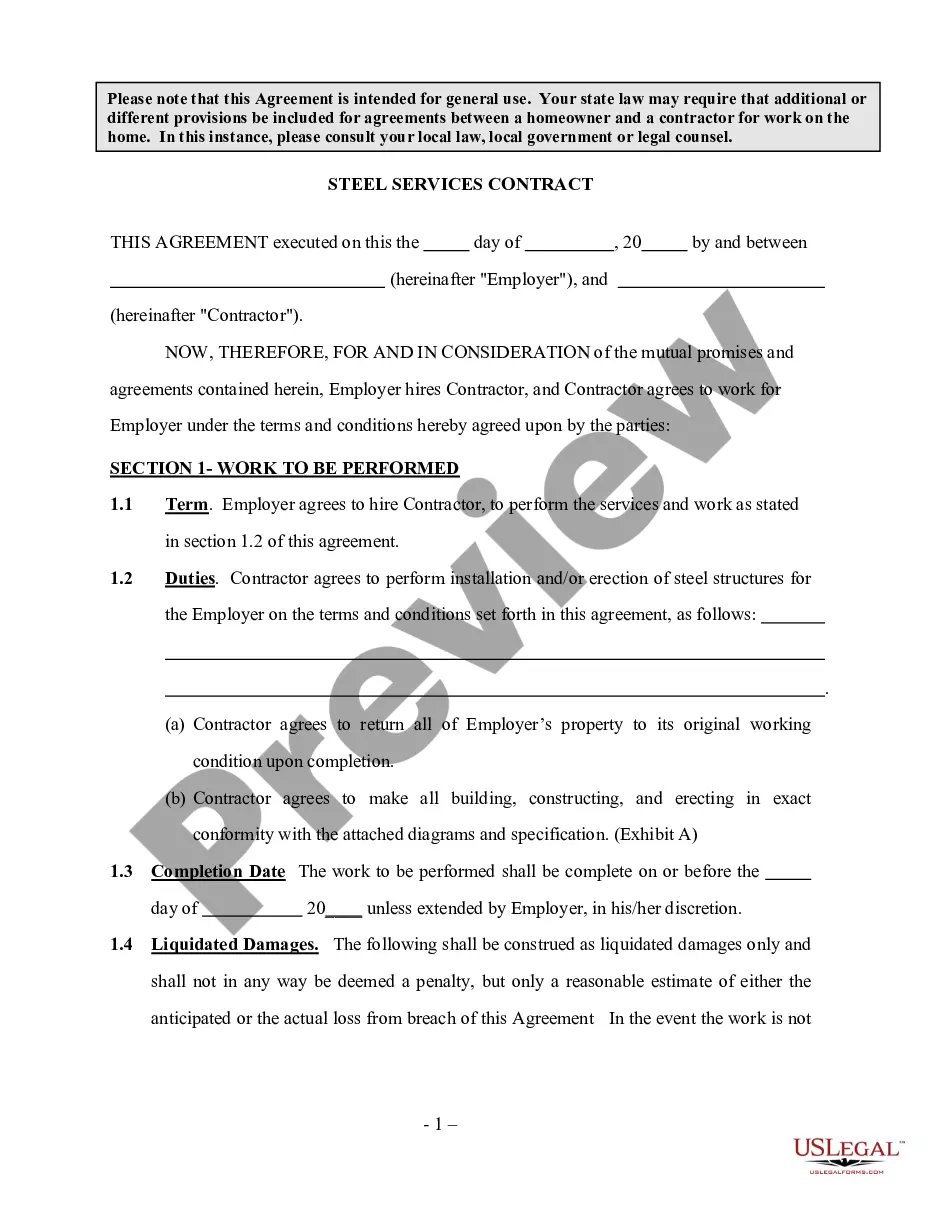
Employer contracts with an independent contractor to install or pre-cast foundation as specified and agreed upon in the contract. Please note that this Agreement is intended for general use. Your state law may require that additional or different provisions be included for agreements between a homeowner and a contractor for work on the home. In this instance, please consult your local law, local government or legal counsel.
Kansas Self-Employed Precast Concrete Contract
State:
Multi-State
Control #:
US-INDC-91
Format:
Word;
Rich Text
Instant download
Description
Free preview
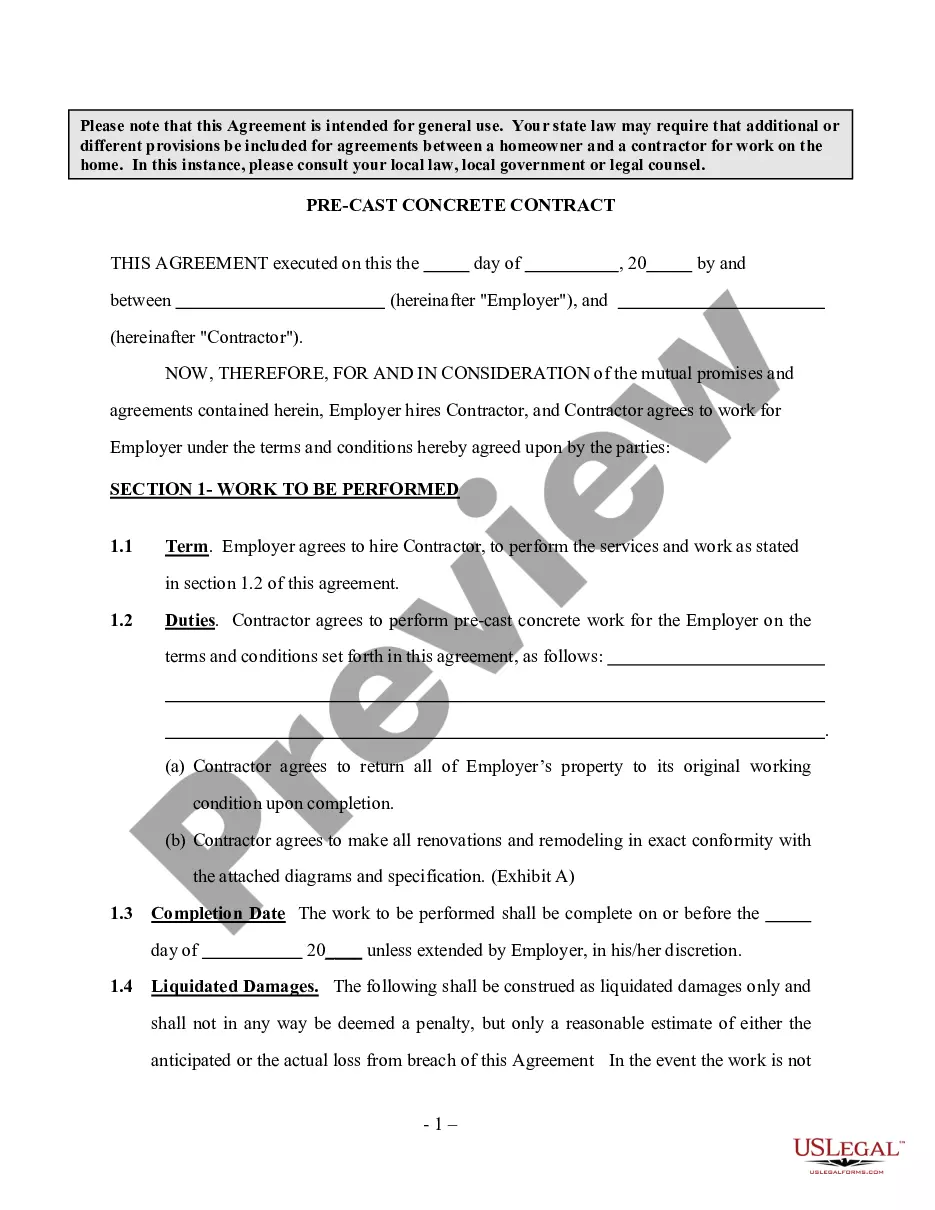
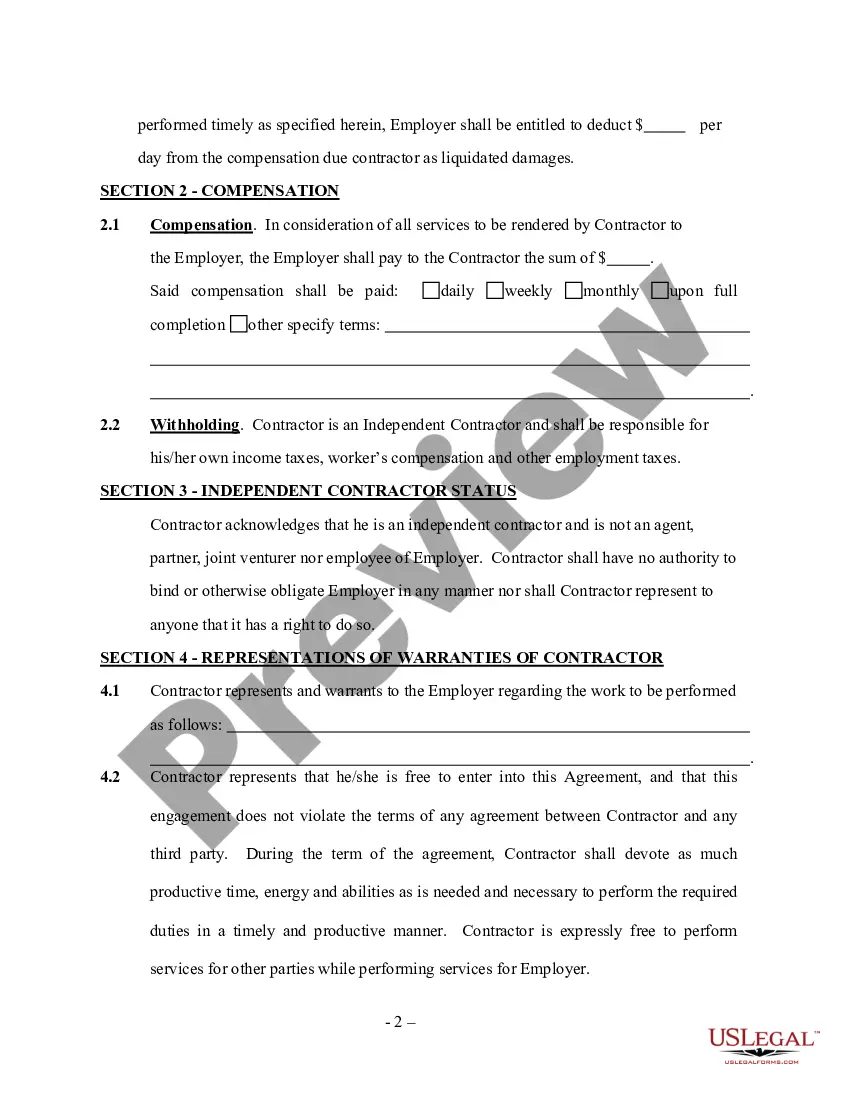
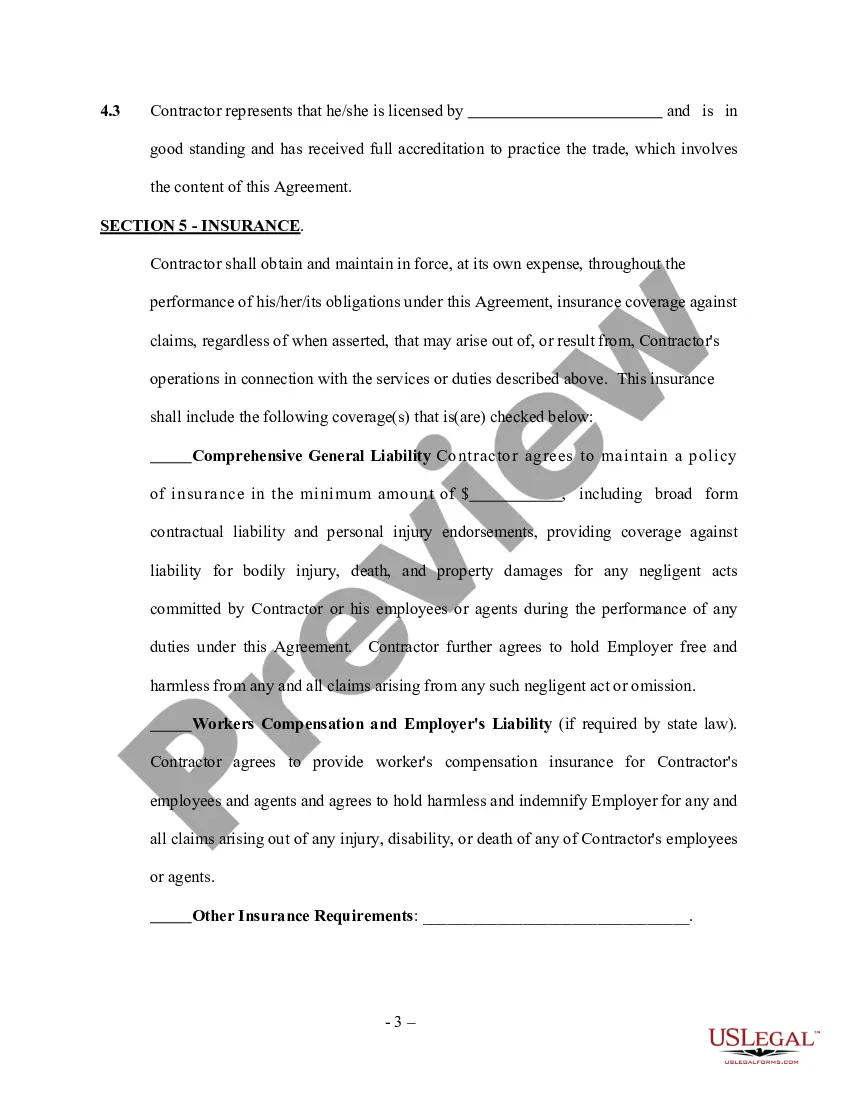
How to fill out Self-Employed Precast Concrete Contract?
Are you presently in the situation where you require documentation for both business or specific tasks almost every time.
There are numerous legal document templates accessible online, but finding ones you can trust isn’t easy.
US Legal Forms offers a vast array of form templates, including the Kansas Self-Employed Precast Concrete Contract, which are designed to comply with federal and state regulations.
Once you find the suitable form, simply click Buy now.
Select the pricing plan you want, fill in the required information to create your account, and complete the purchase using your PayPal or credit card.
- If you are already familiar with the US Legal Forms website and have an account, simply Log In.
- After that, you can download the Kansas Self-Employed Precast Concrete Contract template.
- If you do not have an account and wish to start using US Legal Forms, follow these steps.
- Find the form you need and ensure it is for the correct city/region.
- Utilize the Review option to examine the form.
- Check the details to confirm that you have selected the correct form.
- If the form isn’t what you are looking for, use the Look for field to find the form that meets your needs and criteria.
Form popularity
FAQ
The time it takes to obtain a general contractor (GC) license in Kansas can vary, but it typically ranges from a few weeks to several months. This time frame includes the application process, any required exams, and background checks. If you are aiming for the Kansas Self-Employed Precast Concrete Contract, starting the licensing process early will help ensure you can begin your projects on time. Check with your local licensing authority for specific timelines.
Some states, such as Montana and Wyoming, do not require a general contractor's license for most types of work. However, even in these states, specific projects may still require permits or adherence to local codes. If you are considering the Kansas Self-Employed Precast Concrete Contract, it's essential to remember that Kansas does have licensing requirements. Always check local laws to avoid any issues.
For concrete work in Kansas, including precast concrete projects, you typically need a general contractor's license. This licensing ensures that you meet safety standards and comply with local building codes. If you are pursuing a Kansas Self-Employed Precast Concrete Contract, having the right license is vital for your credibility and success. Consult local regulations to determine the exact requirements.
Whether you need a contractor's license in Kansas depends on the type of work you plan to do. For most construction jobs, including those related to precast concrete, a license is necessary. Engaging in work under the Kansas Self-Employed Precast Concrete Contract without the proper licensing can lead to fines or legal issues. It's best to check with local authorities for detailed licensing requirements.
Yes, Kansas does require contractors to be licensed for many types of work. This includes general contracting, electrical, plumbing, and HVAC work, among others. If you are considering the Kansas Self-Employed Precast Concrete Contract, obtaining the correct license is essential to operate legally. Always verify the specific requirements in your area.
In Kansas, you can perform certain tasks without a contractor's license, such as minor repairs or maintenance work on your own property. However, when it comes to larger projects like precast concrete installations, having the appropriate licensing is crucial. The Kansas Self-Employed Precast Concrete Contract may require you to adhere to specific regulations. Always check local laws to ensure compliance.
Kansas does not have a state-wide requirement for a general contractor license. However, as mentioned, local municipalities may impose their own regulations. If you are involved in a Kansas Self-Employed Precast Concrete Contract, it is essential to research your local government's requirements to avoid potential legal issues.
Several states do not require a general contractor's license, including Kansas. This means you can manage your construction projects without a formal license, which can be advantageous for those pursuing a Kansas Self-Employed Precast Concrete Contract. However, keep in mind that local regulations may still apply, so always verify your local laws.
Yes, construction labor is generally taxable in Kansas. This means that when you engage in projects under a Kansas Self-Employed Precast Concrete Contract, you need to consider sales tax on certain labor and materials. It's important to consult with a tax professional or the Kansas Department of Revenue to understand your obligations.
In Kansas, you can call yourself a general contractor without a license, but it comes with risks. Operating without proper licensing may affect your ability to secure contracts and liability coverage. If you are entering into agreements like a Kansas Self-Employed Precast Concrete Contract, it’s beneficial to maintain transparency about your qualifications.