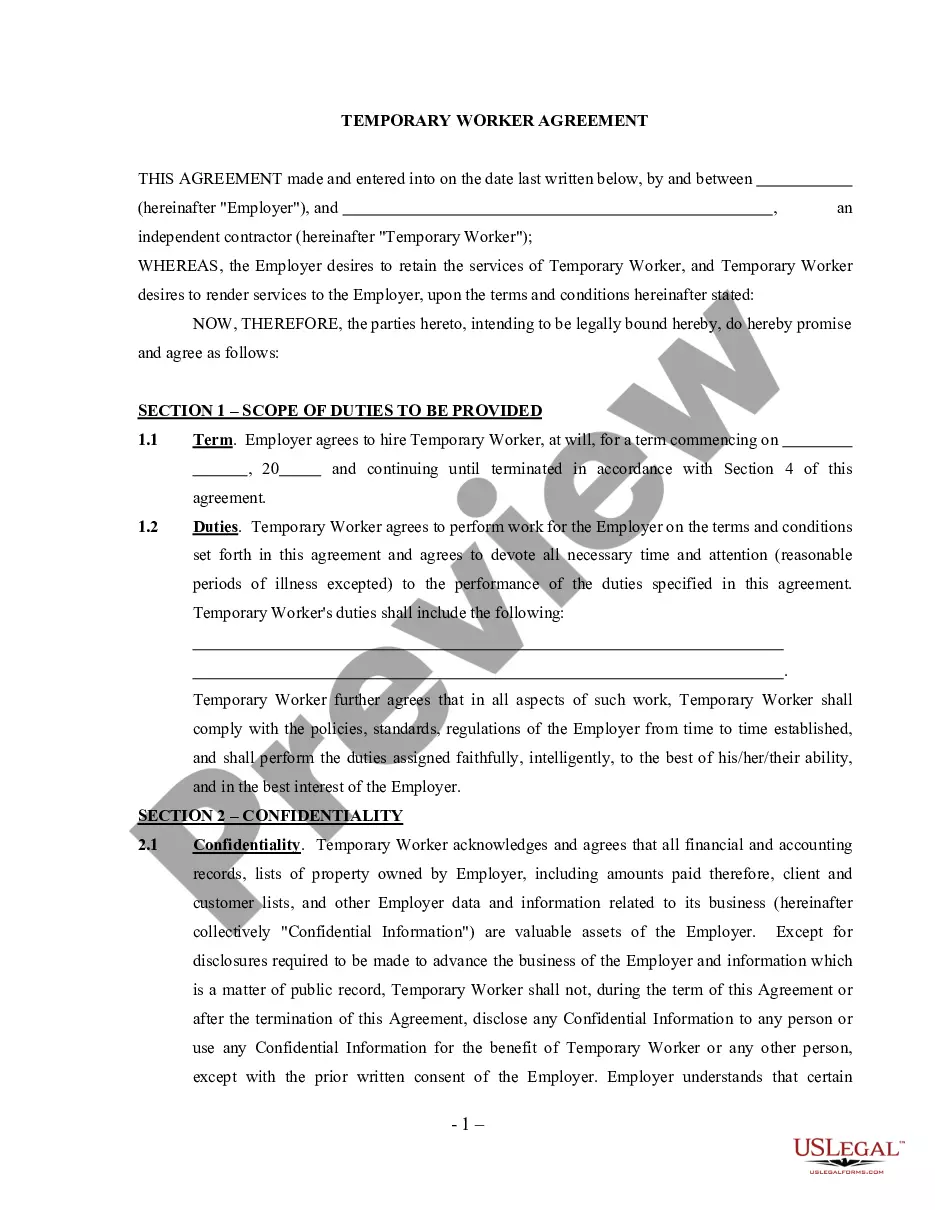
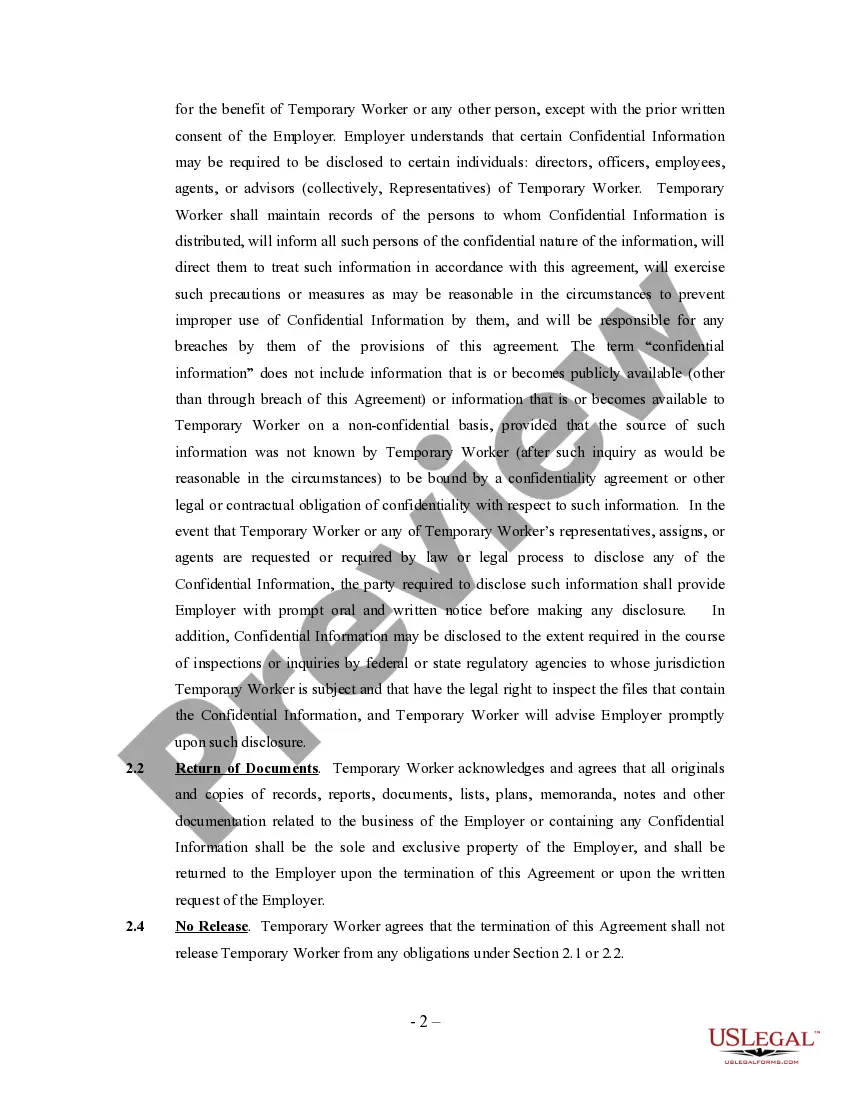
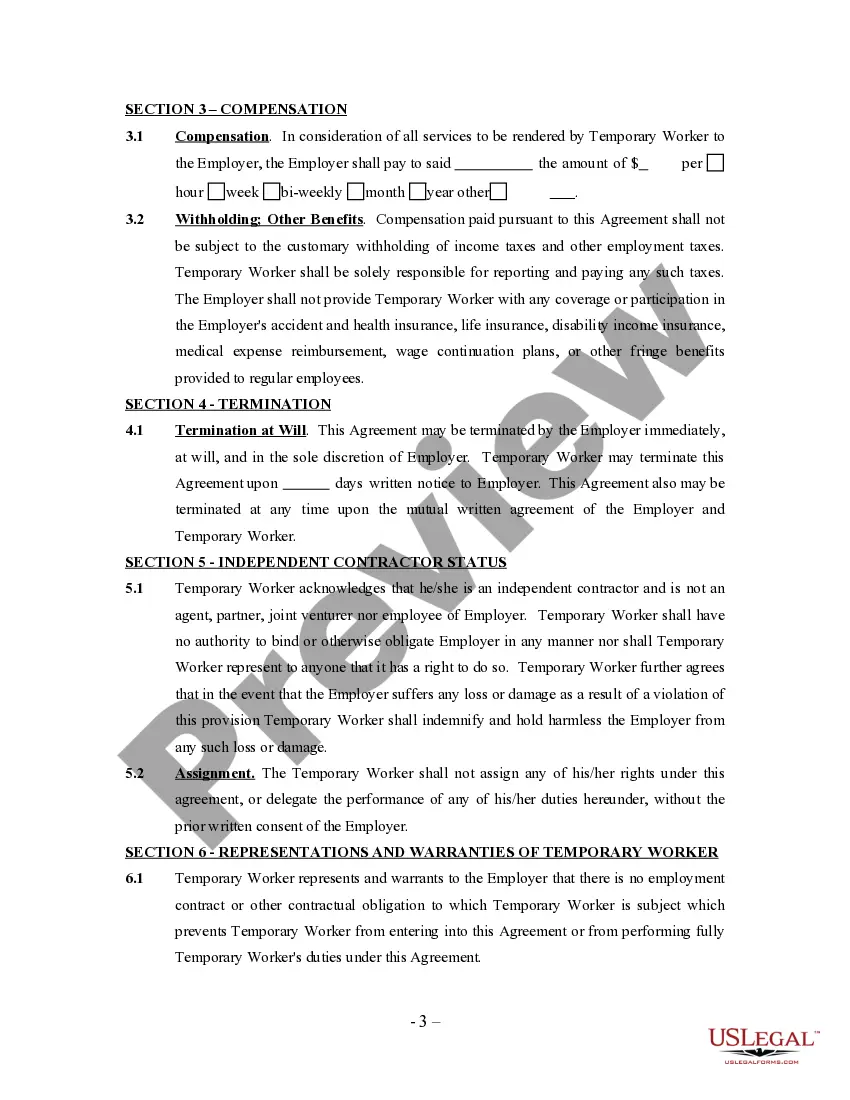
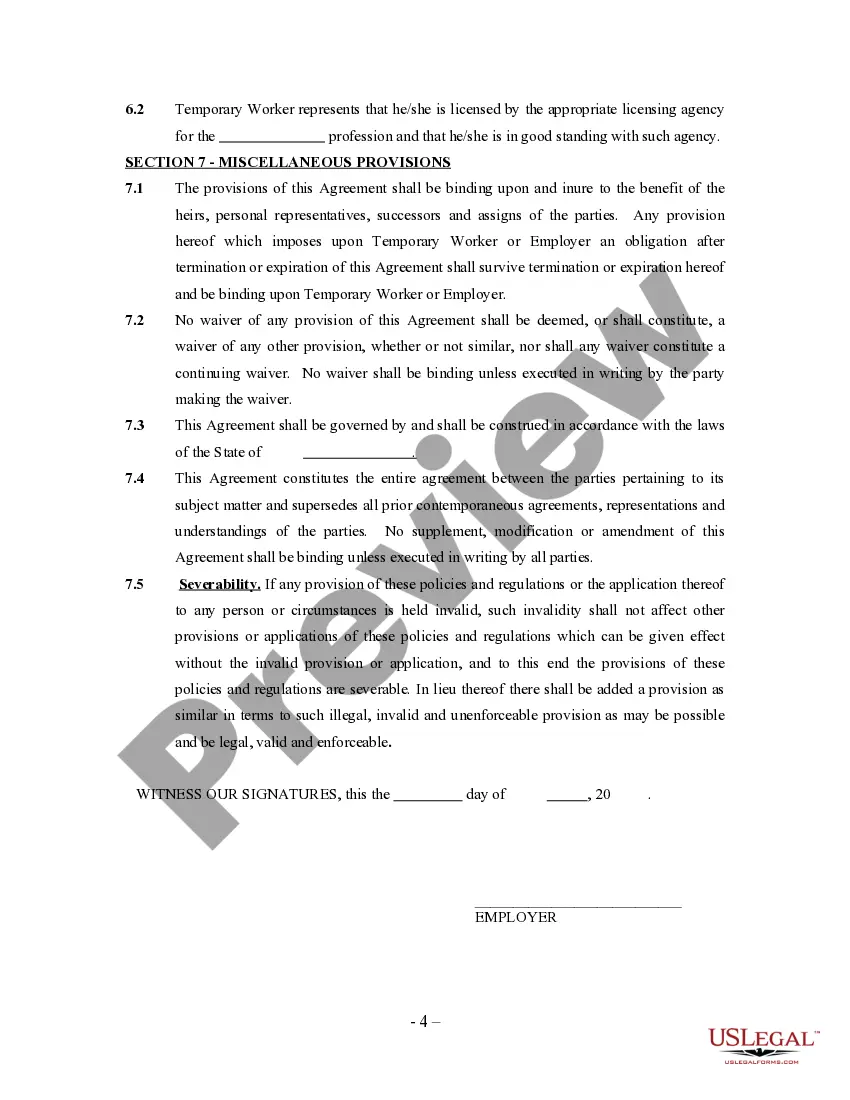
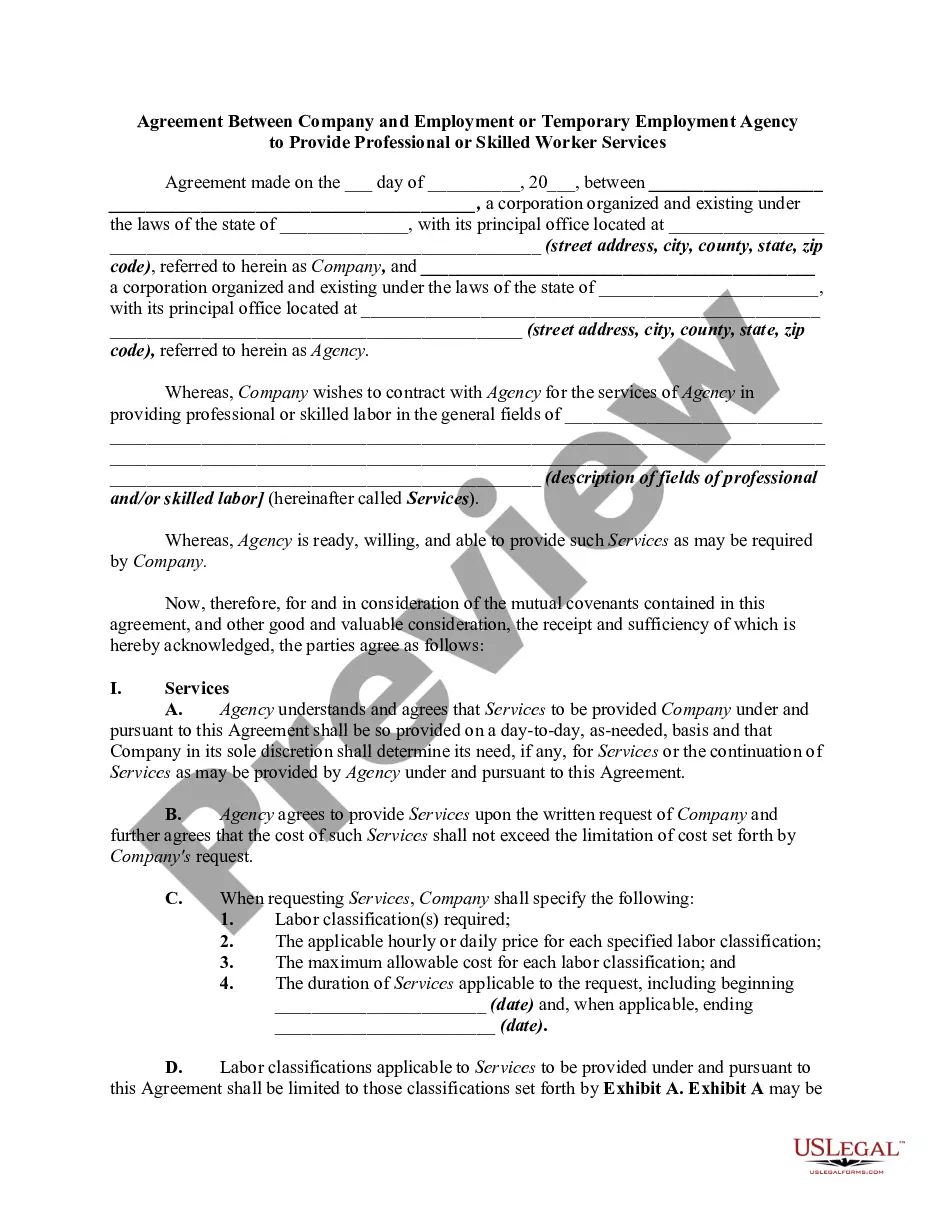
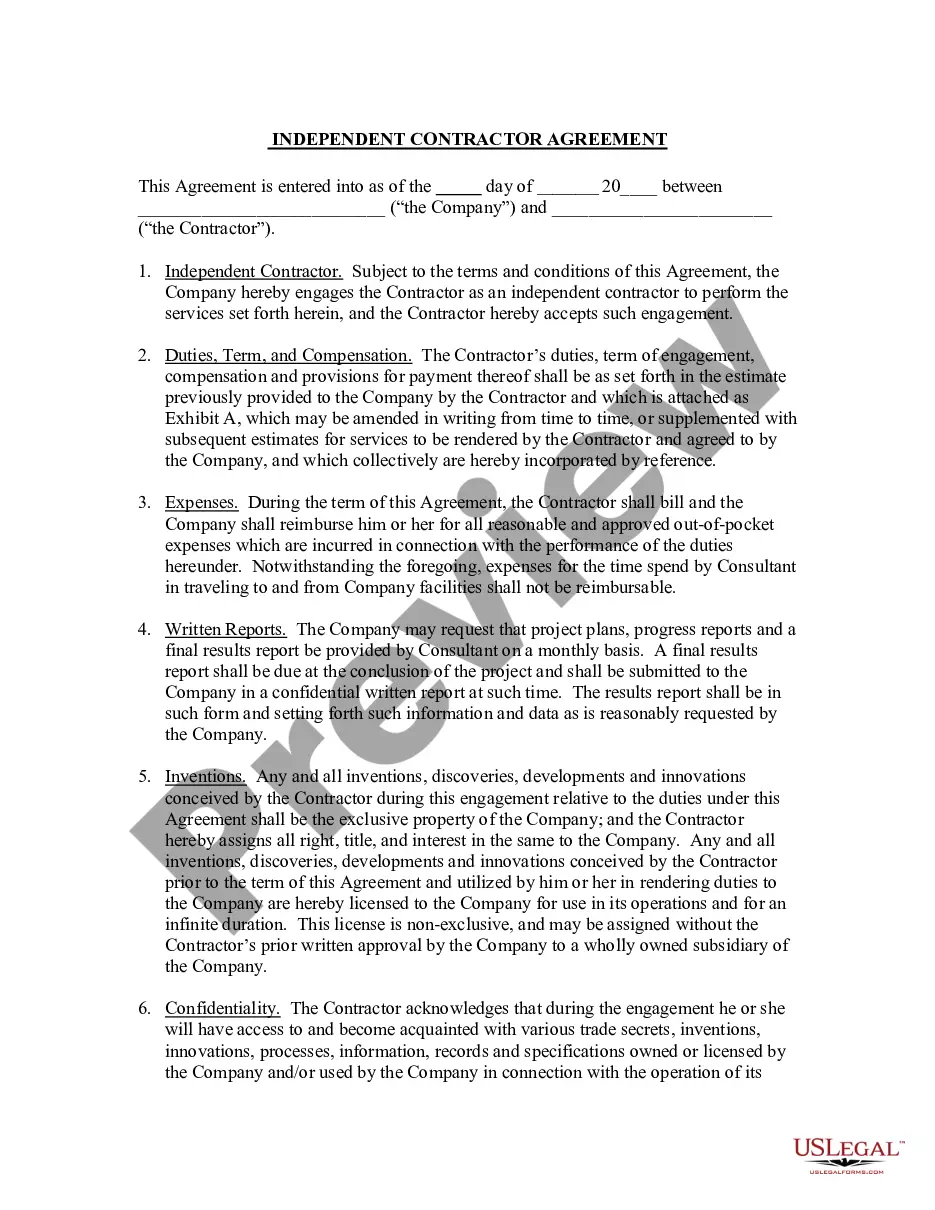
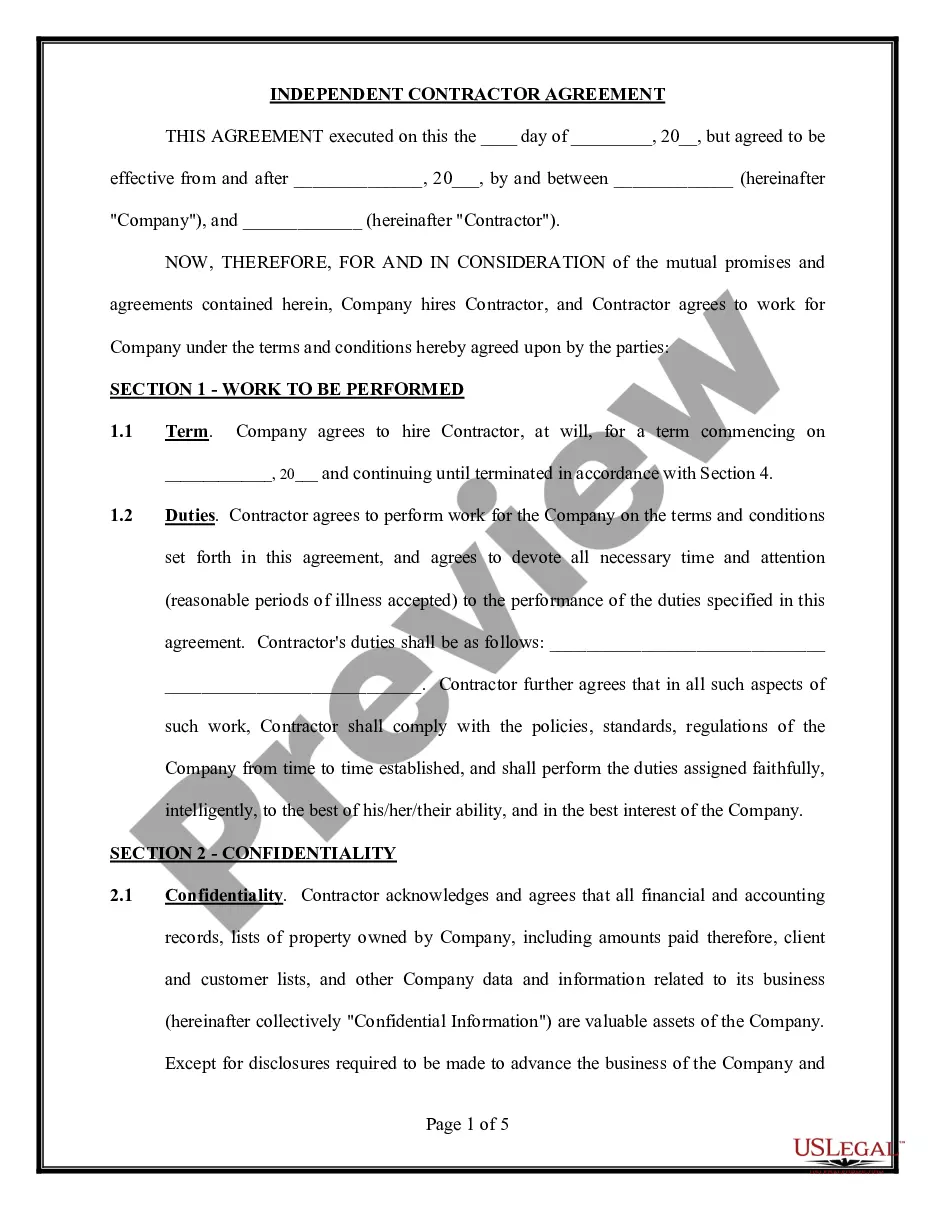
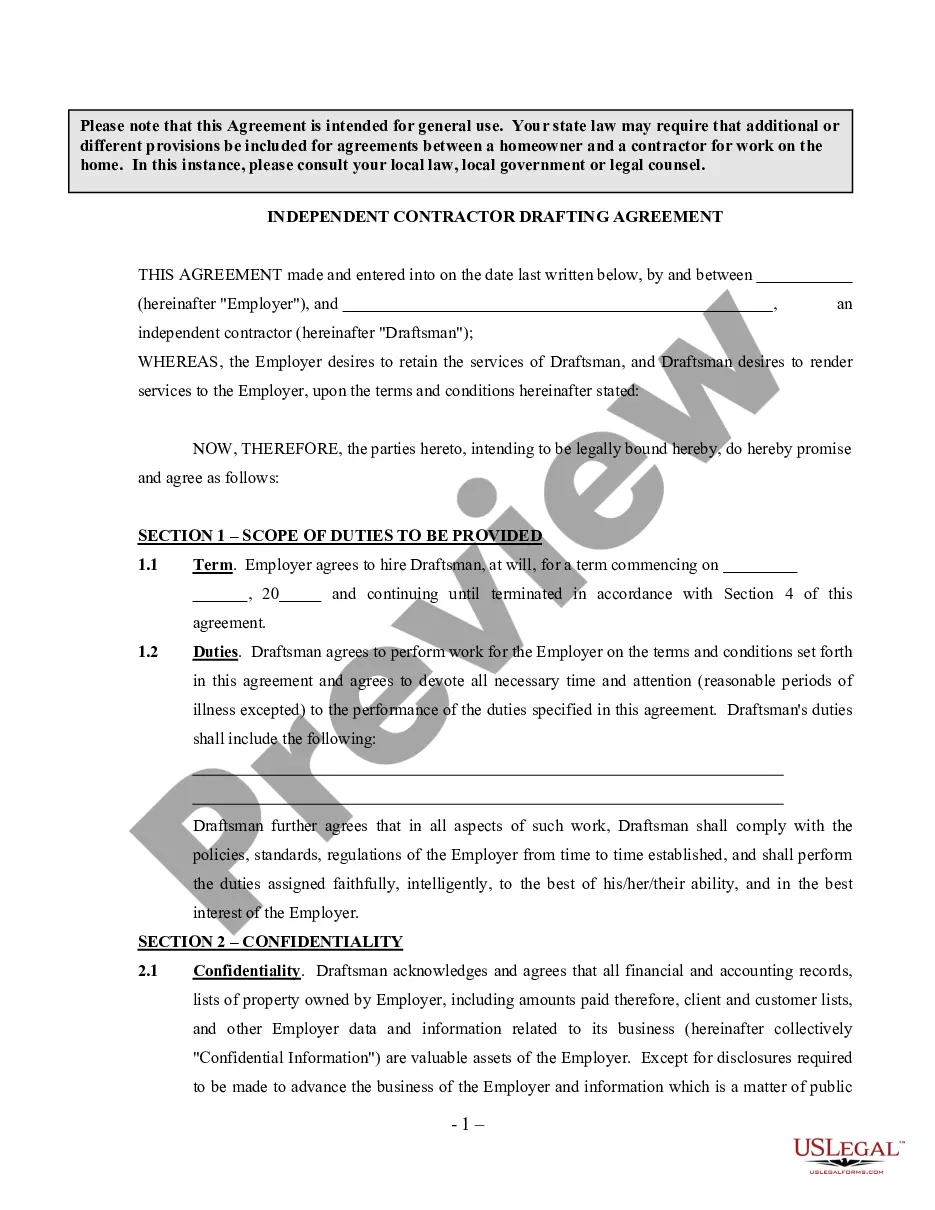
Employer hires a temporary worker or temporary staff as an independent contractor to provide services for Employer as specified in the Agreement. Confidentiality clause included.
Kansas Temporary Worker Agreement - Self-Employed Independent Contractor
State:
Multi-State
Control #:
US-INDC-187
Format:
Word;
Rich Text
Instant download
Description
Free preview

Get your form ready online
Our built-in tools help you complete, sign, share, and store your documents in one place.
Built-in online Word editor
Make edits, fill in missing information, and update formatting in US Legal Forms—just like you would in MS Word.
Export easily
Download a copy, print it, send it by email, or mail it via USPS—whatever works best for your next step.
E-sign your document
Sign and collect signatures with our SignNow integration. Send to multiple recipients, set reminders, and more. Go Premium to unlock E-Sign.
Notarize online 24/7
If this form requires notarization, complete it online through a secure video call—no need to meet a notary in person or wait for an appointment.
Store your document securely
We protect your documents and personal data by following strict security and privacy standards.

Make edits, fill in missing information, and update formatting in US Legal Forms—just like you would in MS Word.

Download a copy, print it, send it by email, or mail it via USPS—whatever works best for your next step.

Sign and collect signatures with our SignNow integration. Send to multiple recipients, set reminders, and more. Go Premium to unlock E-Sign.

If this form requires notarization, complete it online through a secure video call—no need to meet a notary in person or wait for an appointment.

We protect your documents and personal data by following strict security and privacy standards.
Looking for another form?

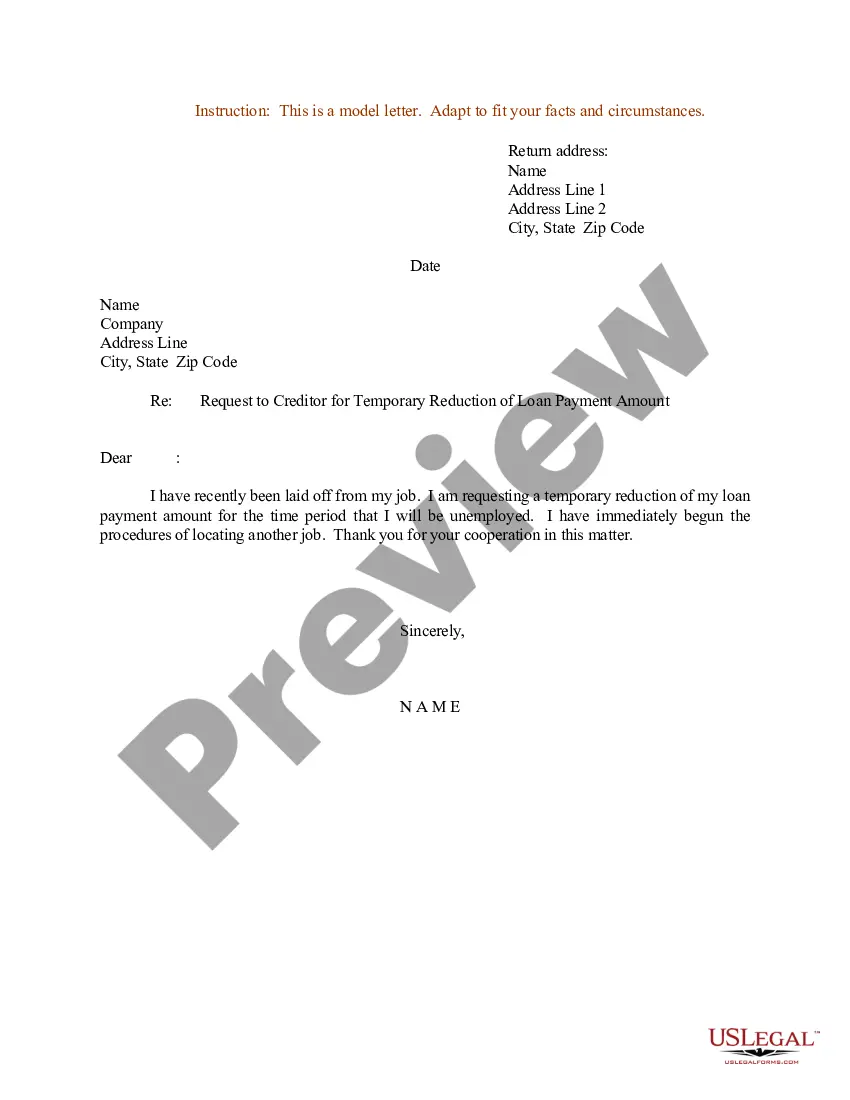
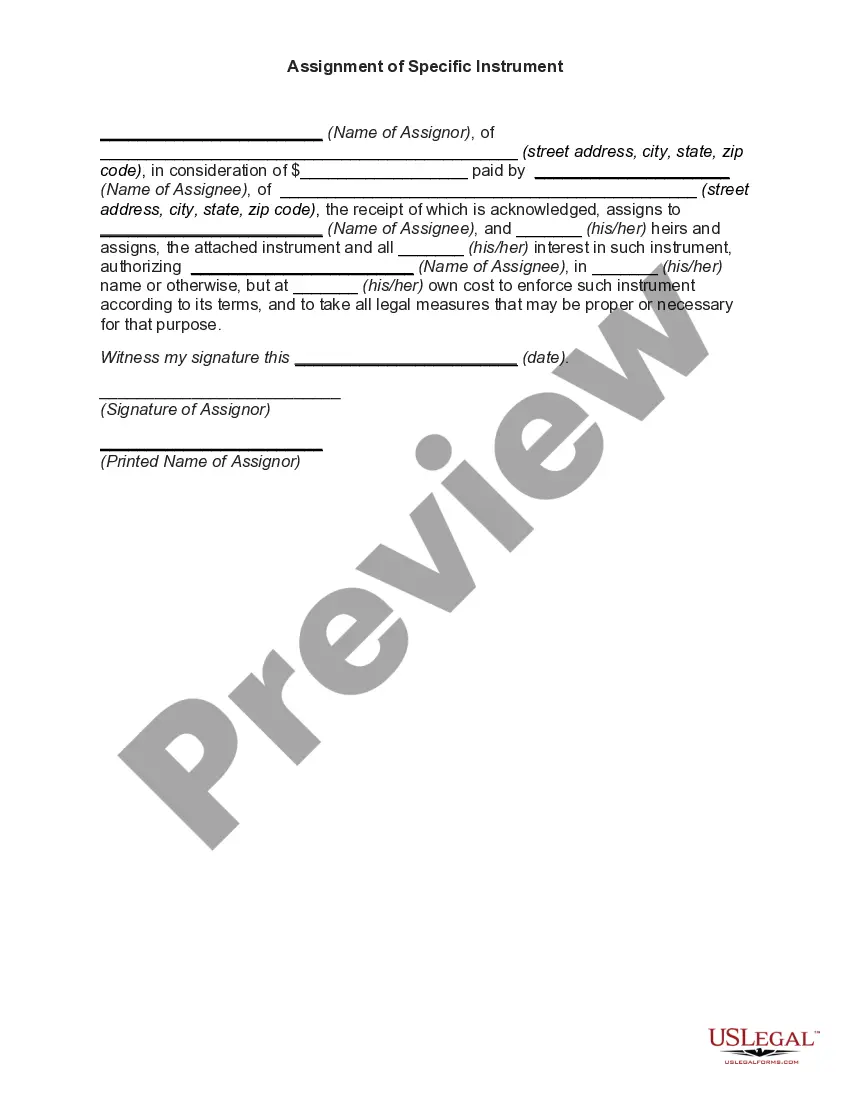
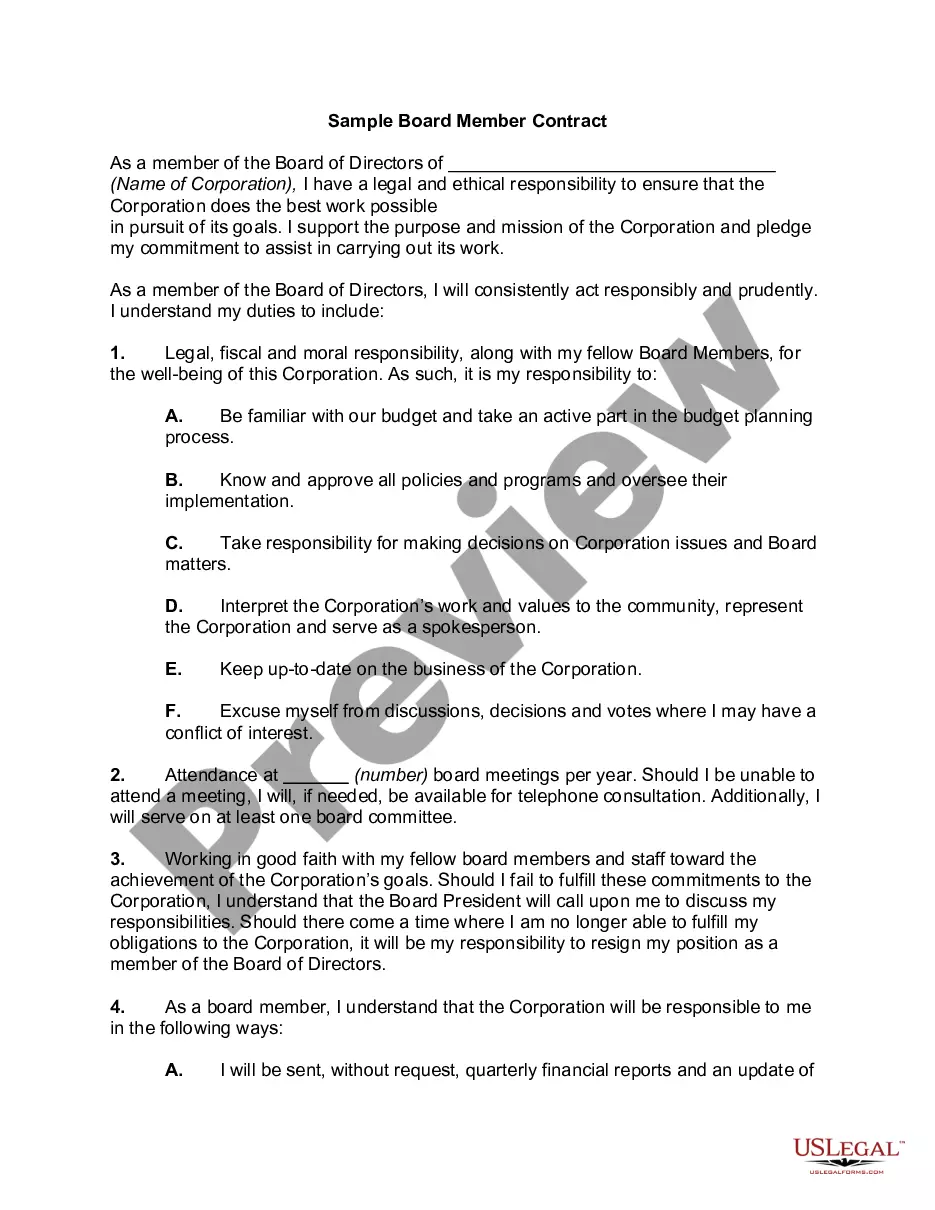
How to fill out Temporary Worker Agreement - Self-Employed Independent Contractor?
Are you currently in a situation where you need documents for either professional or personal reasons almost every day.
There are numerous legitimate document templates available online, but locating trustworthy ones can be challenging.
US Legal Forms offers a wide array of form templates, such as the Kansas Temporary Worker Agreement - Self-Employed Independent Contractor, designed to comply with federal and state regulations.
When you acquire the appropriate form, click Get now.
Choose the pricing plan you prefer, complete the necessary information to create your account, and pay for your order using your PayPal or credit card.
- If you are already acquainted with the US Legal Forms website and possess an account, simply Log In.
- Once logged in, you can download the Kansas Temporary Worker Agreement - Self-Employed Independent Contractor template.
- If you do not have an account and wish to start using US Legal Forms, follow these steps.
- Obtain the form you need and ensure it corresponds to the correct city/state.
- Utilize the Preview button to review the form.
- Examine the details to confirm you have selected the right document.
- If the form is not what you require, use the Search field to find the document that suits your needs.
Form popularity
FAQ
Creating a Kansas Temporary Worker Agreement - Self-Employed Independent Contractor involves several key steps. First, define the scope of work clearly, specifying the duties and responsibilities of the contractor. Next, outline the payment terms, including the rate and schedule for payments. Finally, use a trusted platform like uslegalforms to generate a customized document that meets legal standards and protects both parties’ rights.
Yes, an independent contractor is indeed considered self-employed. They operate their business independently, rather than working as an employee for a company. When utilizing a Kansas Temporary Worker Agreement - Self-Employed Independent Contractor, you can clearly outline the relationship between the contractor and the client. This agreement helps in defining responsibilities, payment terms, and project expectations, ensuring a smooth and professional interaction.
To fill out an independent contractor form, start by providing your personal information and the details of the work you will perform. Refer to the Kansas Temporary Worker Agreement - Self-Employed Independent Contractor for an example of required fields. Include payment methods, service descriptions, and deadlines. After completion, double-check for accuracy and ensure both parties sign the form to validate the agreement.
Filling out an independent contractor agreement involves entering essential information like the contractor's name, address, and the specific scope of work. Be sure to reference the Kansas Temporary Worker Agreement - Self-Employed Independent Contractor for comprehensive guidance. Detail the payment arrangement, timeline, and roles and responsibilities of both parties. Once completed, review the document together before signing to ensure mutual understanding.
A temporary employee and an independent contractor differ in their work relationship and legal classification. Temporary employees work under the direction of a company, while independent contractors, as outlined in the Kansas Temporary Worker Agreement - Self-Employed Independent Contractor, operate their own businesses. Understanding this distinction helps in proper classification for tax and legal purposes. Always consult appropriate resources to confirm the right classification.
To write an independent contractor agreement, start by clearly defining the work involved, including specific tasks and expected outcomes. Use the Kansas Temporary Worker Agreement - Self-Employed Independent Contractor as a guide for structure and content. Include details like payment terms, deadlines, and any necessary confidentiality clauses. Finally, ensure both parties review and sign the document to solidify the agreement.
The main pieces of employment legislation, chief among which are the Labour Relations Act 66 of 1995 (LRA) the Basic Conditions of Employment Act 75 of 1997 (BCEA) and the Employment Equity Act 55 of 1998 (EEA), apply to employees and not independent contractors.
Simply put, being an independent contractor is one way to be self-employed. Being self-employed means that you earn money but don't work as an employee for someone else.
The other contract (Independent contractor) is a Contract for Service, and is usually a contract where the contractor undertakes to perform a specific service or task, and upon completion of the agreed service or task, or upon production of the result agreed upon, the contractor will be paid.
Employees in South Africa are entitled to certain minimum employment benefits, while independent contractors are not. Subject to some exclusions, all employees are entitled to a number of statutory minimum entitlements and basic conditions of employment.