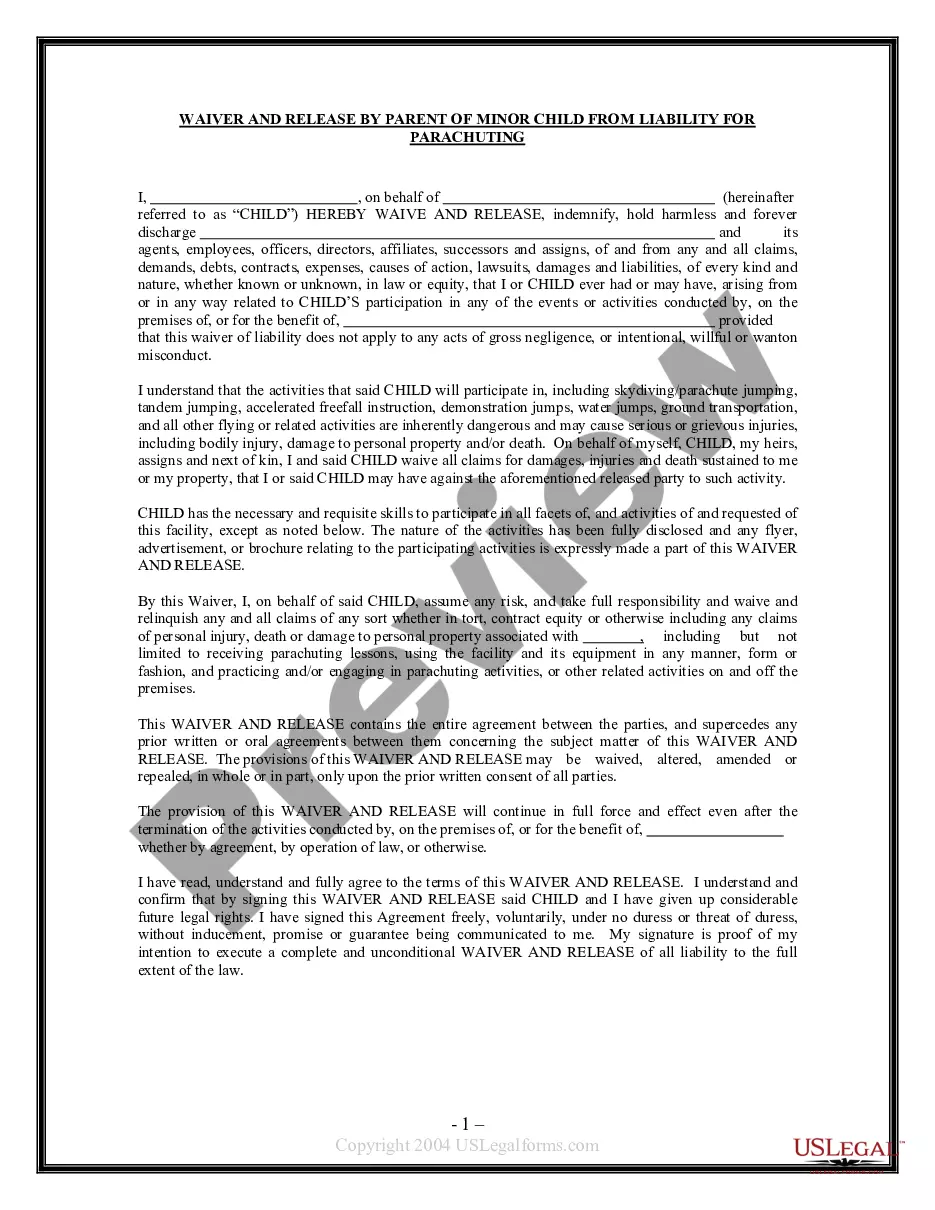
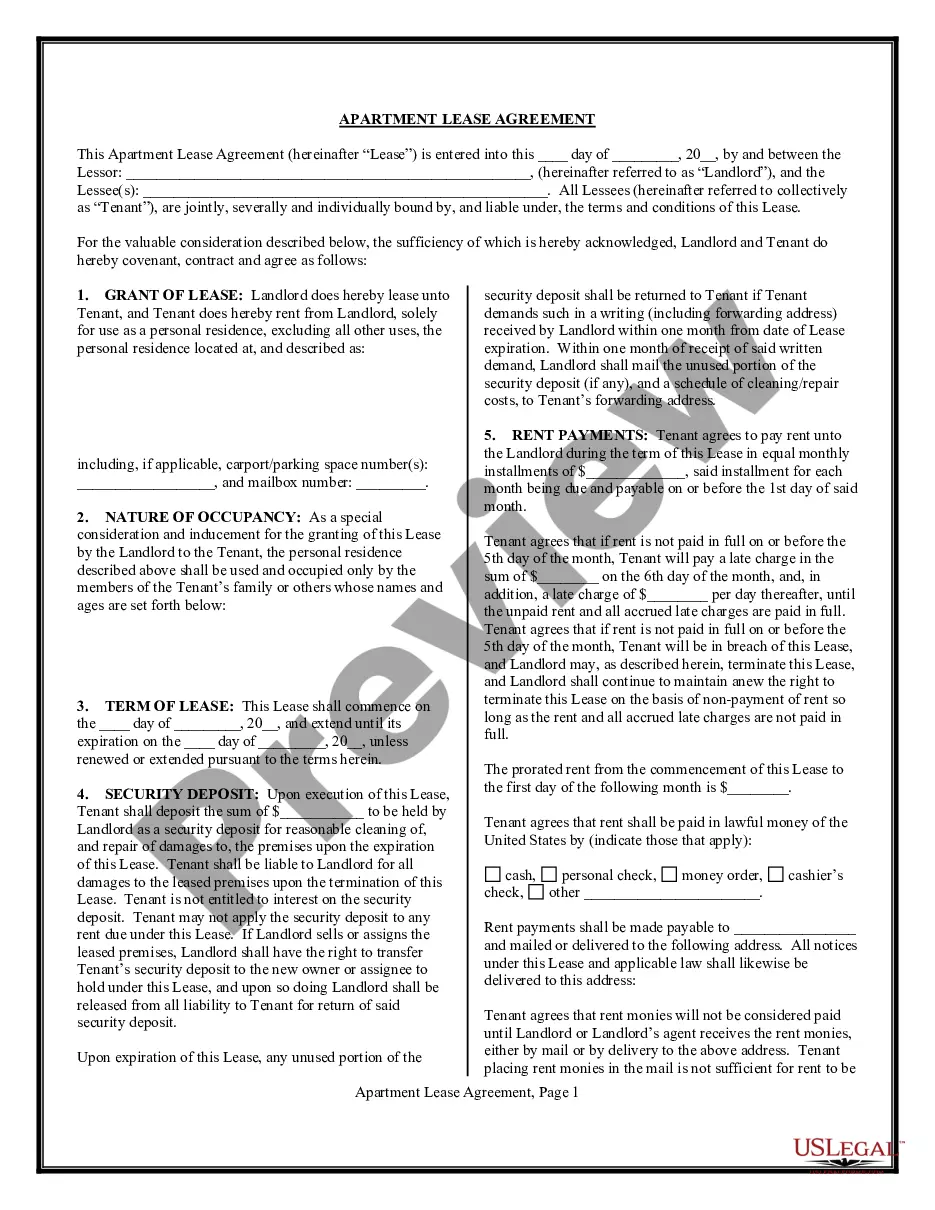
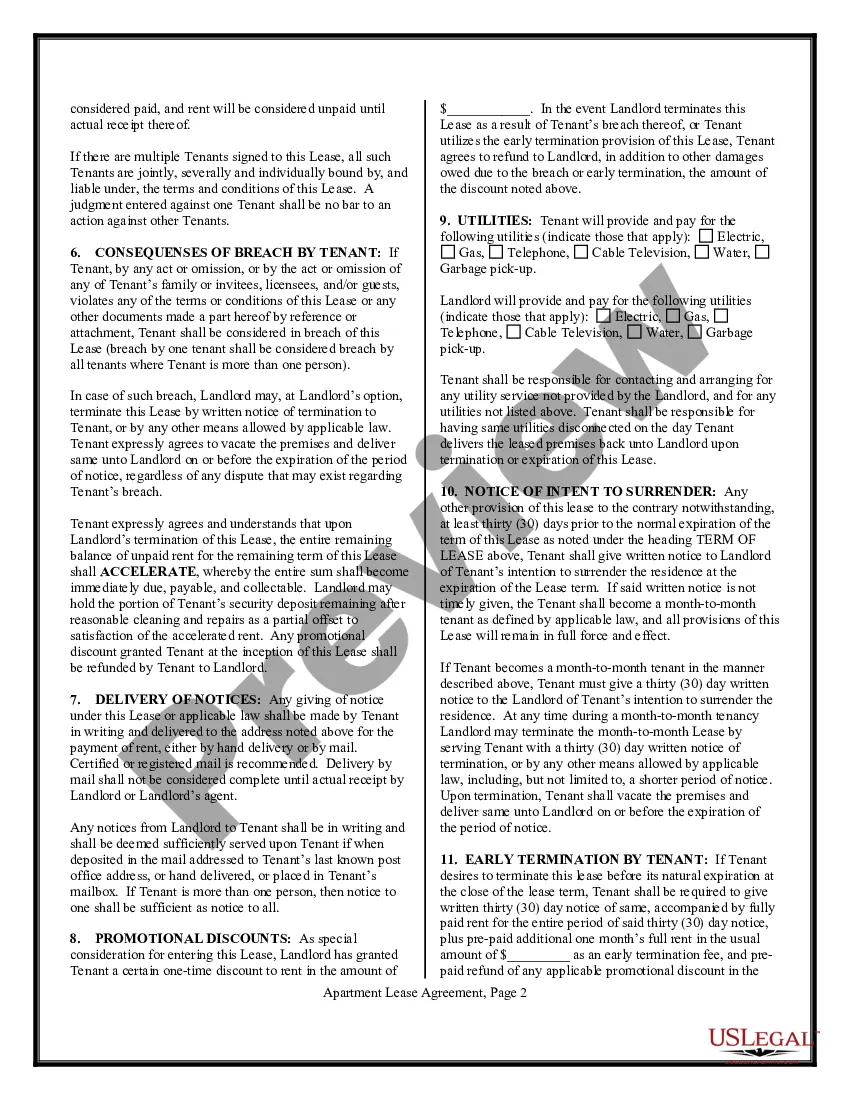
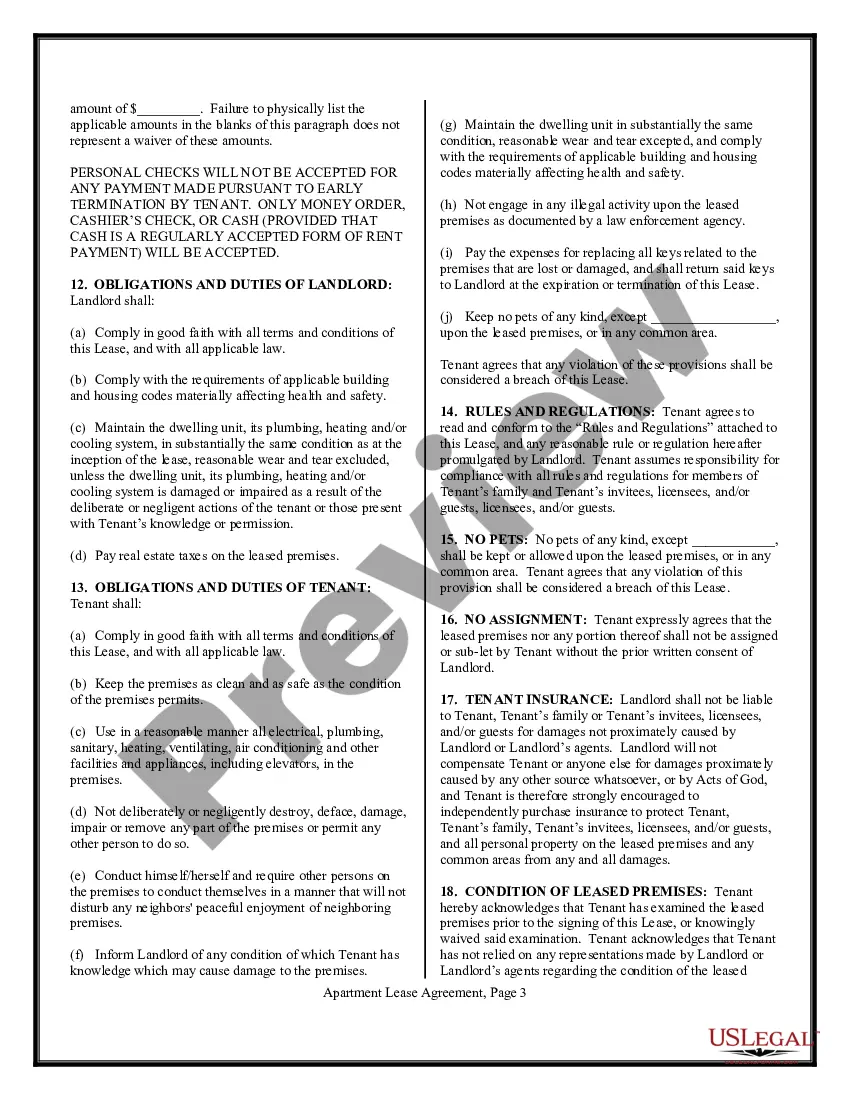
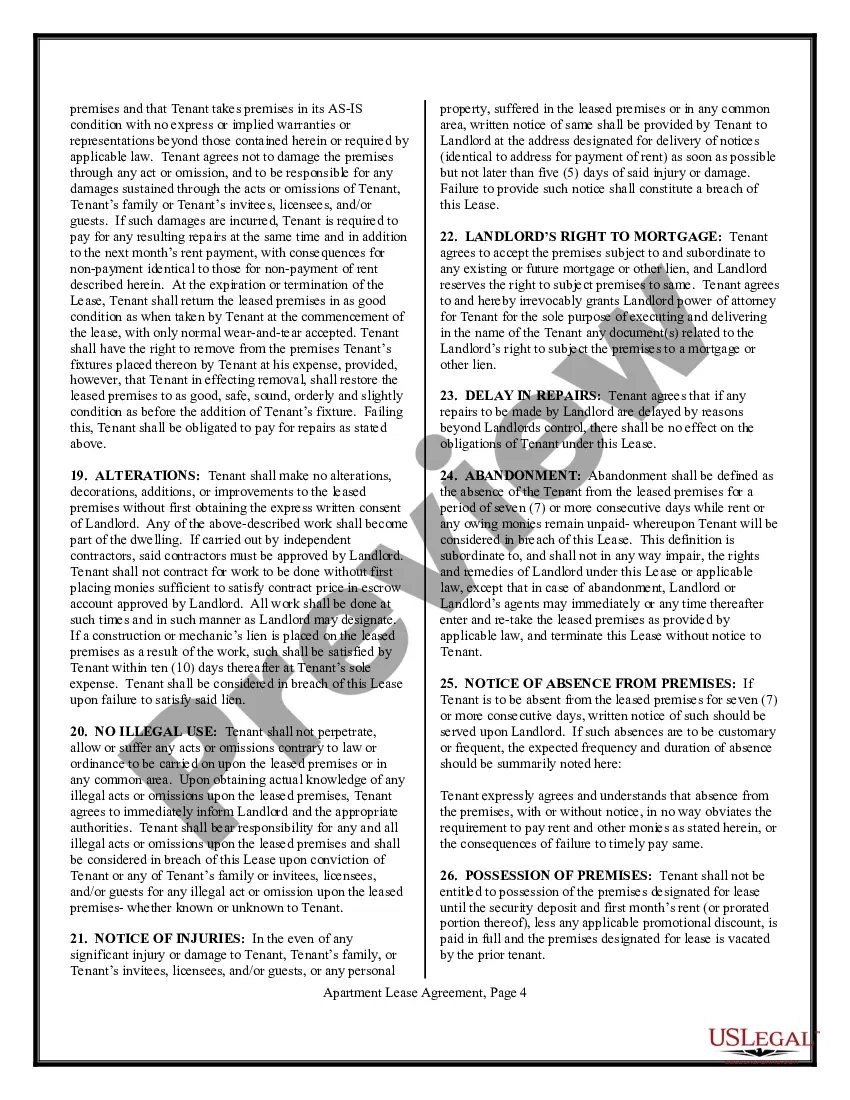
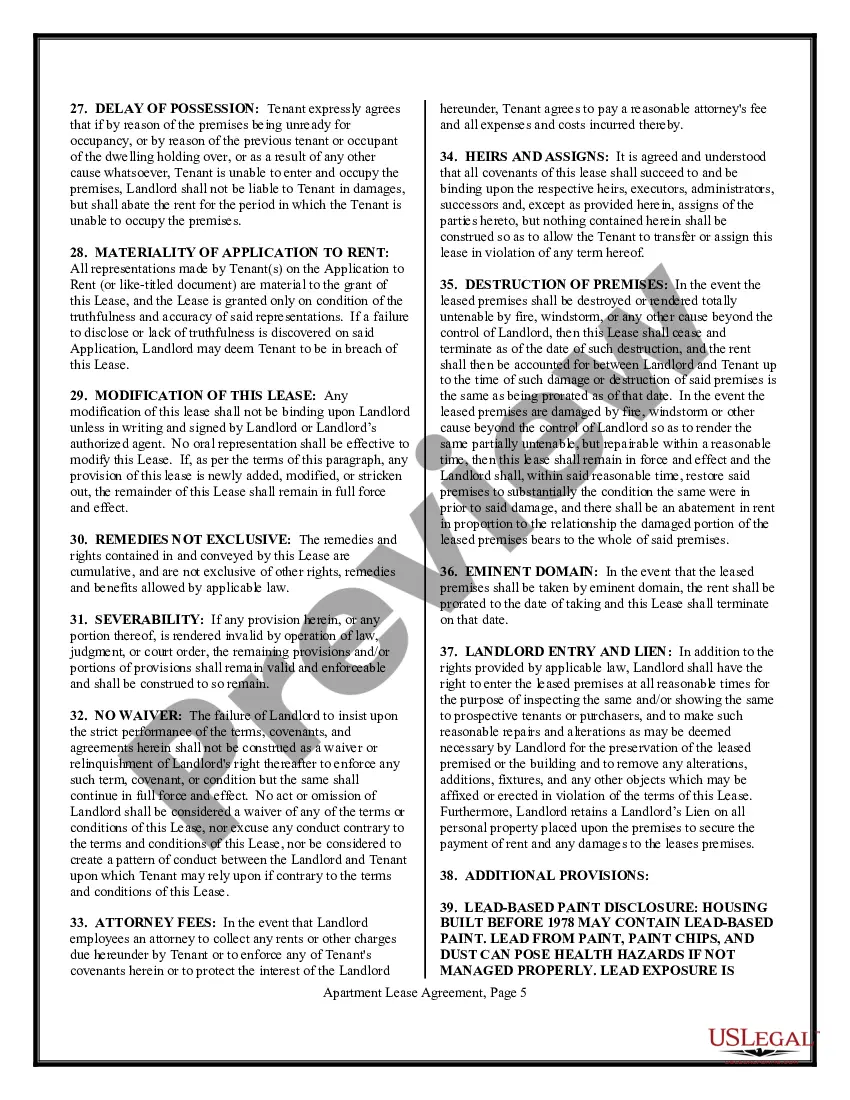
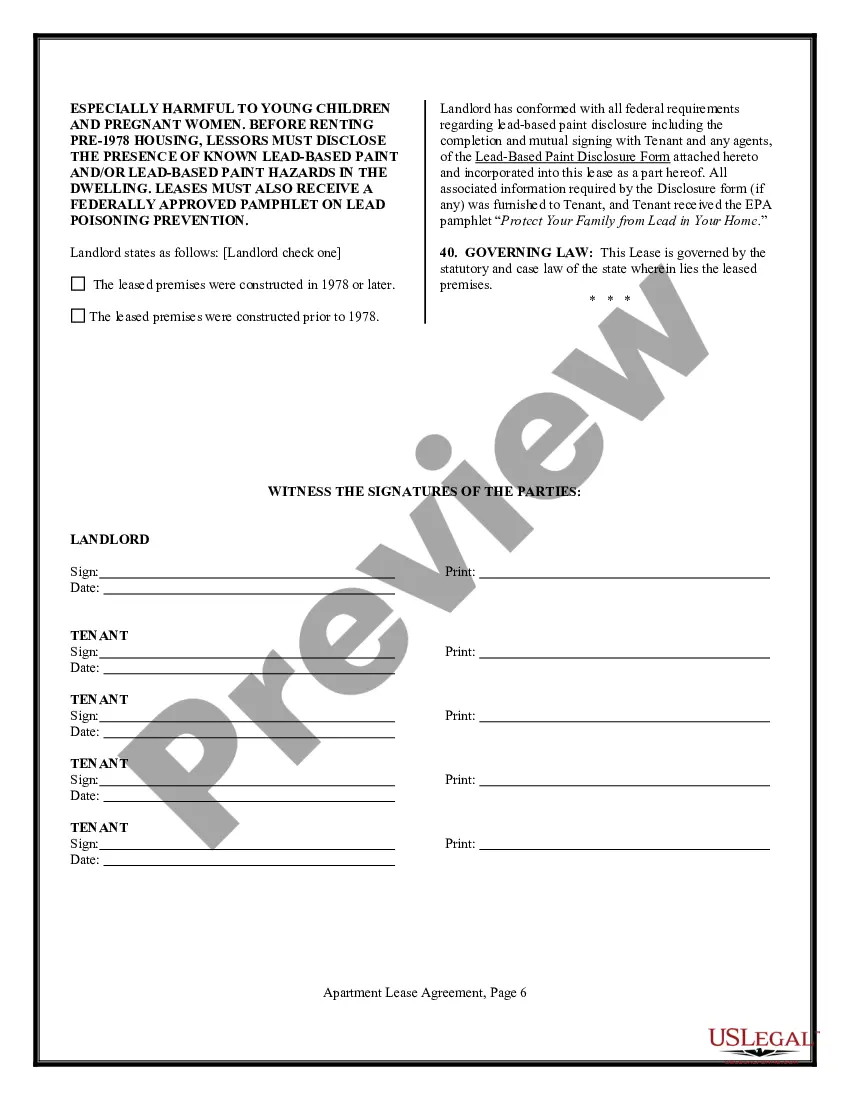
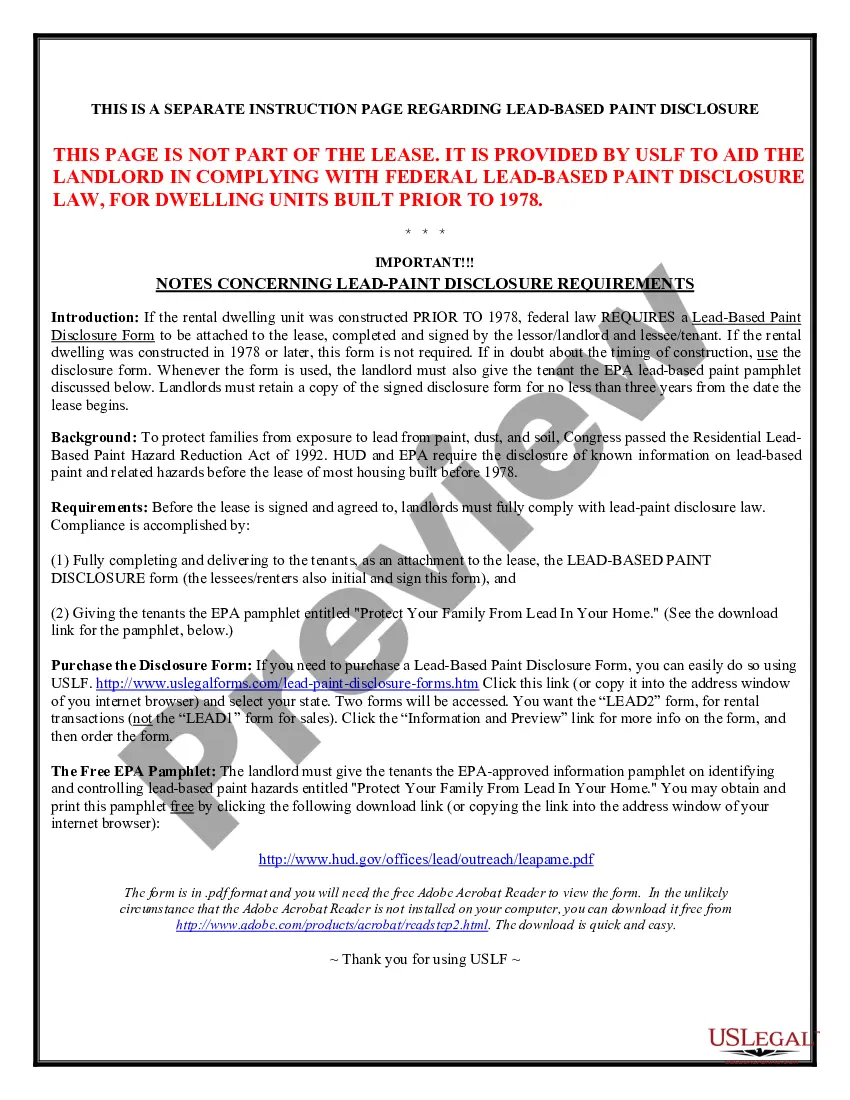
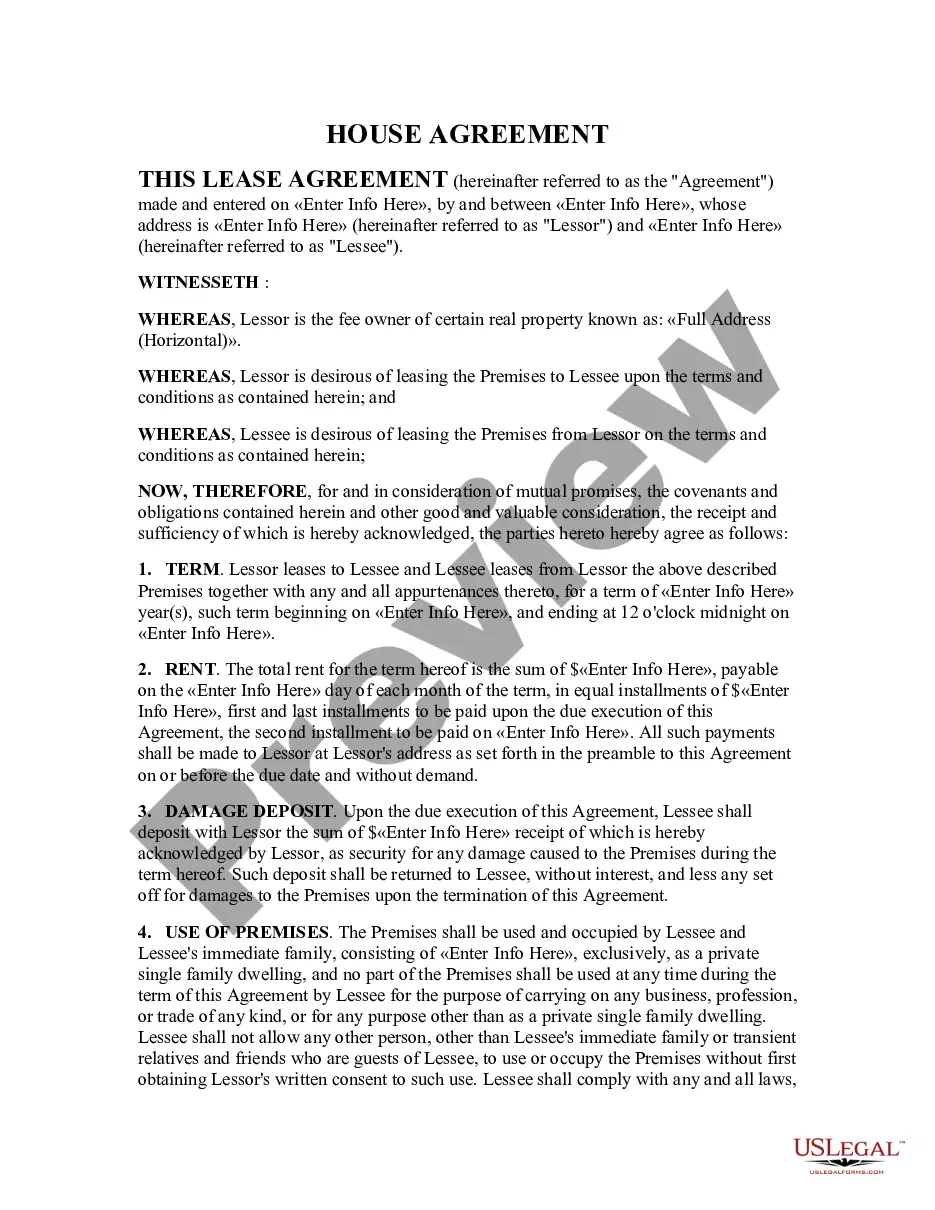
This is a sample apartment lease form. You may use it as a guide for creating an appartment lease form for your state. You must ensure that you comply with all applicable laws in your state.
Kansas Apartment Lease Agreement
State:
Multi-State
Control #:
US-846LT
Format:
Word;
Rich Text
Instant download
Description
Free preview
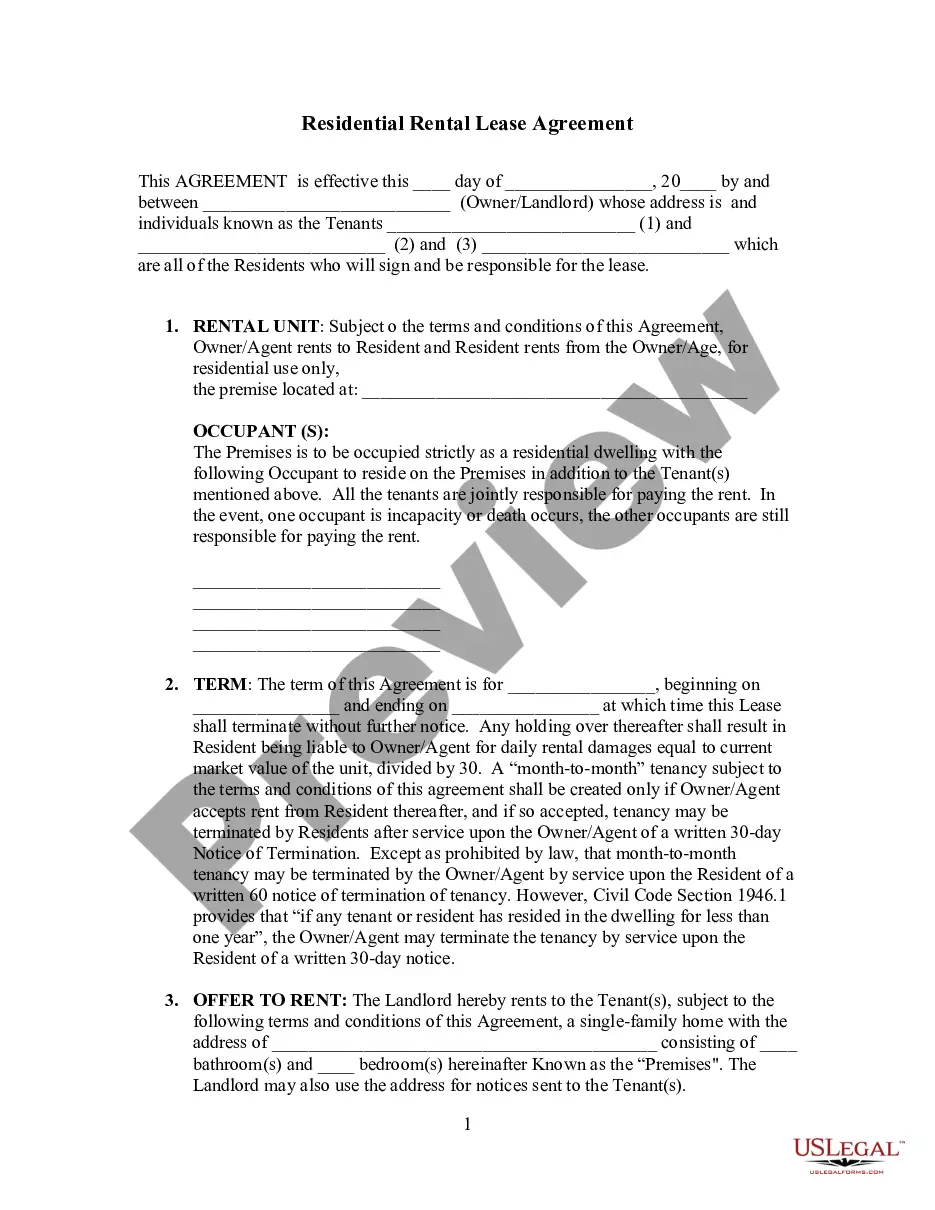
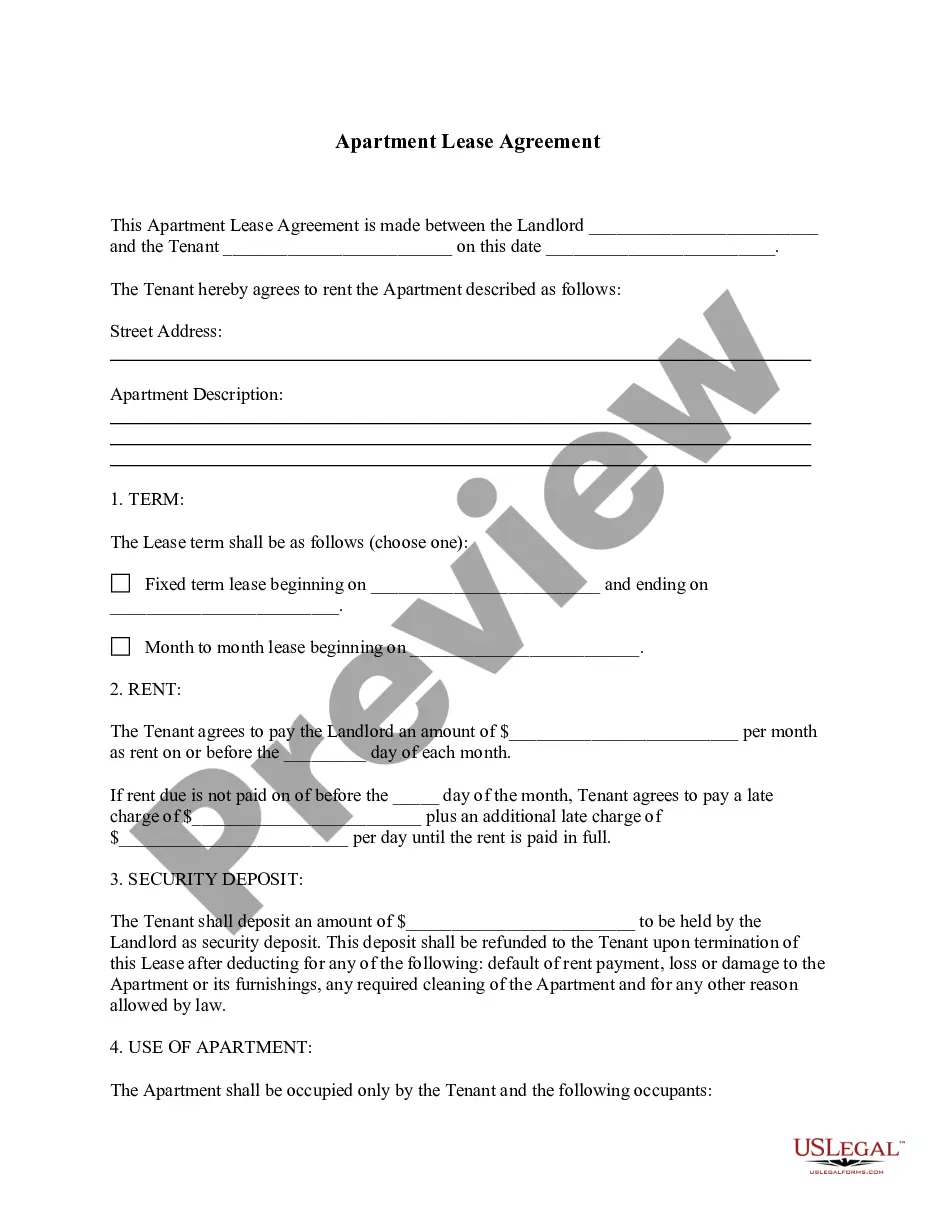
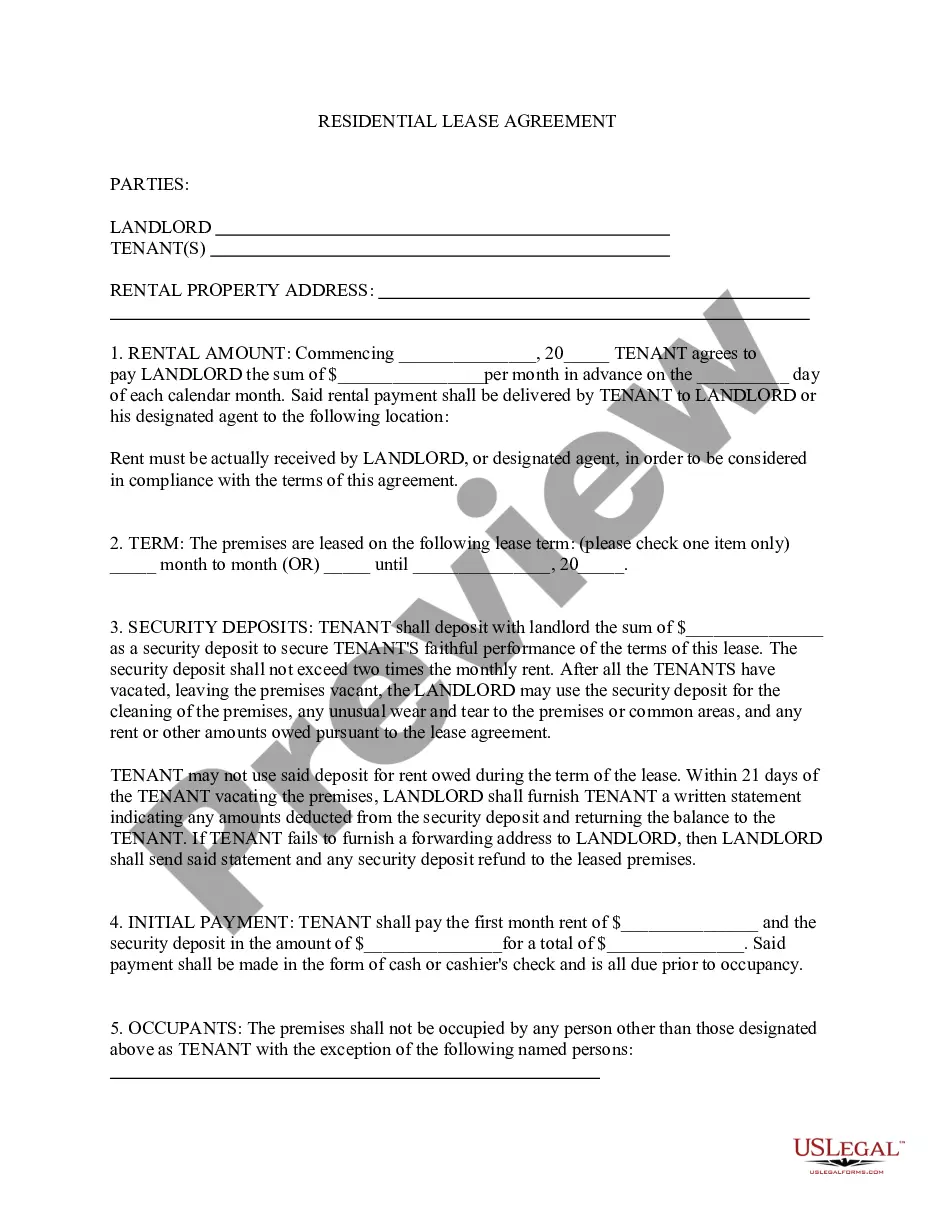
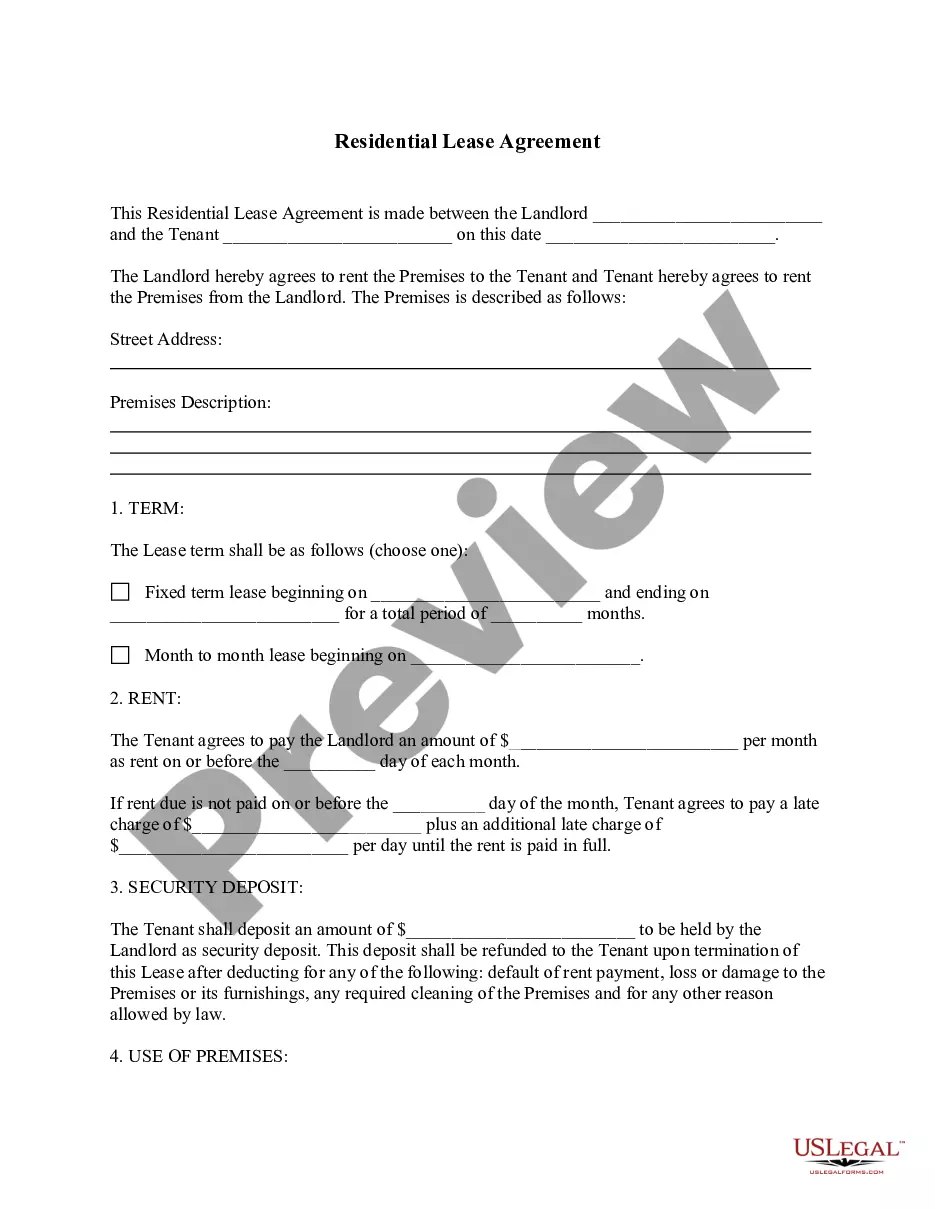
Get your form ready online
Our built-in tools help you complete, sign, share, and store your documents in one place.
Built-in online Word editor
Make edits, fill in missing information, and update formatting in US Legal Forms—just like you would in MS Word.
Export easily
Download a copy, print it, send it by email, or mail it via USPS—whatever works best for your next step.
E-sign your document
Sign and collect signatures with our SignNow integration. Send to multiple recipients, set reminders, and more. Go Premium to unlock E-Sign.
Notarize online 24/7
If this form requires notarization, complete it online through a secure video call—no need to meet a notary in person or wait for an appointment.
Store your document securely
We protect your documents and personal data by following strict security and privacy standards.

Make edits, fill in missing information, and update formatting in US Legal Forms—just like you would in MS Word.

Download a copy, print it, send it by email, or mail it via USPS—whatever works best for your next step.

Sign and collect signatures with our SignNow integration. Send to multiple recipients, set reminders, and more. Go Premium to unlock E-Sign.

If this form requires notarization, complete it online through a secure video call—no need to meet a notary in person or wait for an appointment.

We protect your documents and personal data by following strict security and privacy standards.
Looking for another form?




How to fill out Apartment Lease Agreement?
US Legal Forms - among the largest collections of legal documents in the USA - offers a vast selection of legal form templates that you can download or print.
By using the website, you can access numerous forms for business and personal use, organized by categories, states, or keywords. You can find the latest forms such as the Kansas Apartment Lease Agreement in minutes.
If you already have a subscription, Log In to obtain the Kansas Apartment Lease Agreement from your US Legal Forms collection. The Download feature will appear on every form you view. You can access all previously downloaded forms in the My documents section of your account.
Process the transaction. Use your credit card or PayPal account to complete the transaction.
Select the format and download the form to your device. Edit. Fill out, modify, print, and sign the downloaded Kansas Apartment Lease Agreement. Each template you save to your account has no expiration date and is yours indefinitely. So, if you need to download or print another copy, just navigate to the My documents section and click on the form you need. Access the Kansas Apartment Lease Agreement with US Legal Forms, the most extensive collection of legal document templates. Utilize thousands of professional and state-specific templates that meet your business or personal requirements.
- To start using US Legal Forms for the first time, follow these simple steps.
- Ensure you have selected the correct form for your city/state.
- Click the Review option to check the form’s details.
- Consult the form description to confirm that you have chosen the right type.
- If the form does not meet your needs, use the Search field at the top of the screen to find one that does.
- If you are satisfied with the form, confirm your selection by clicking the Acquire now button.
- Then, choose your preferred payment plan and provide your details to create an account.
Form popularity
FAQ
Kansas law does not limit how much your rent can be raised or how often. Because a rent raise is similar to an eviction, there is one rule. If you have a month-to-month lease, your landlord must inform you, IN WRIT- ING, of a rent raise at least 30 days before the rent date when it is supposed to go into effect.
So you may not have to pay much, if any additional rent, if you break your lease. You need pay only the amount of rent the landlord loses because you moved out early. This is because Kansas requires landlords to take reasonable steps to keep their losses to a minimumor to "mitigate damages" in legal terms.
If you have a lease agreement normally you cannot terminate your tenancy unless your landlord is in breach of his/her obligations, there is a break clause in your lease or both you and your landlord agree at the time to end the tenancy.
Kansas state law limits how much a landlord can charge for a security deposit (one month's rent if the residence is unfurnished and one and one-half months if it's furnished; additional deposit can be added for pets), when it must be returned (within 30 days after a tenant moves), and sets other restrictions on
Kansas law does not allow for rent control at either a state or local level. As such, Kansas landlords can charge as much as they want for rent. Rental increases. Landlords must provide at least 30 days' written notice before raising rent, though they are not limited in how much they can raise.
If you are already on a month-to-month tenancy, you must give at least 30 days' notice that you plan to terminate the tenancy. In addition, the date of termination must be a normal rent-paying date if you pay rent on the first, your termination date should also be on the first (and also at least 30 days out).
Terminating tenancy And in most cases, your landlord will have to provide you at least 30 days' notice that they plan to not renew your lease.
The landlord must give the tenant a Kansas eviction notice called a 30-Day Notice to Comply, which provides the tenant with 14 days to fix the issue.
Your options for getting out of a leaseterminate the lease under a break clause;negotiate termination with the landlord;assign the lease - ie sell it to a new tenant;sublet the premises, or part of the premises.
The Landlord can increase the rent every twelve months. The increase is to be calculated according to the Retail Price Index, being a minimum of 3% and a maximum of 8%. The Landlord must serve written notice at least two months' prior to the rent increase date.