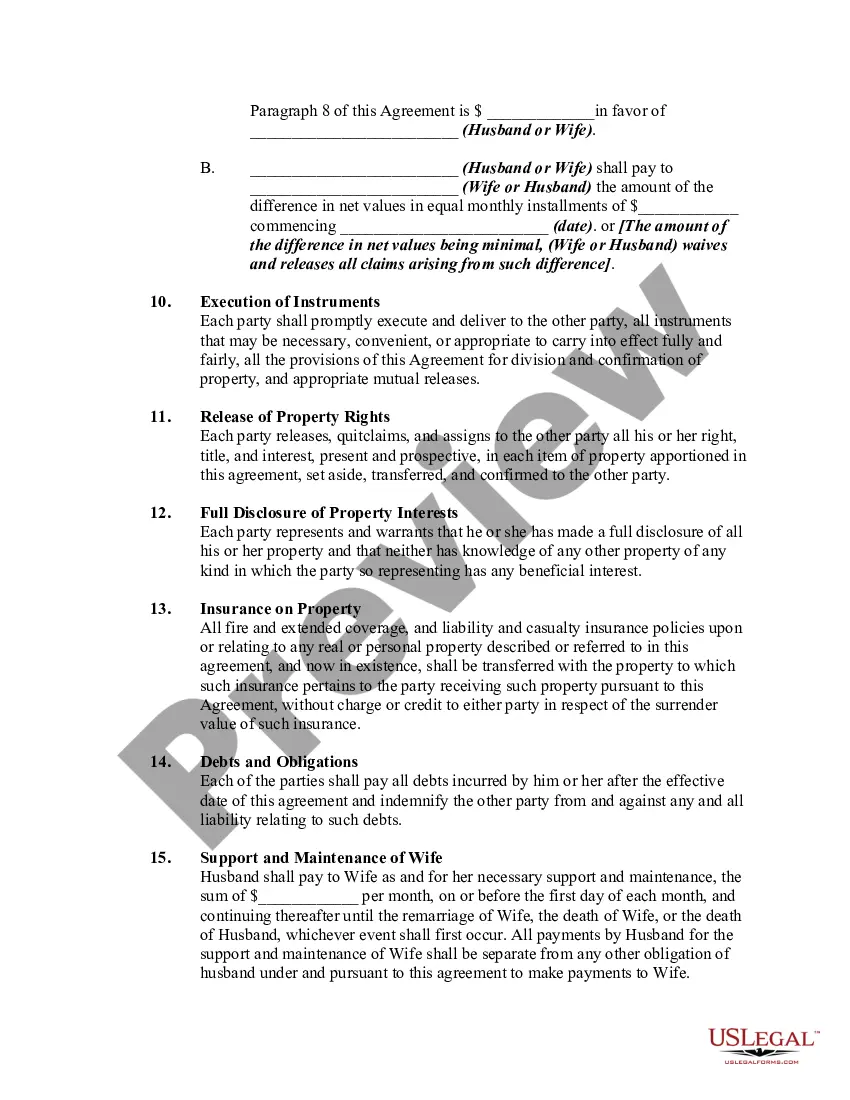
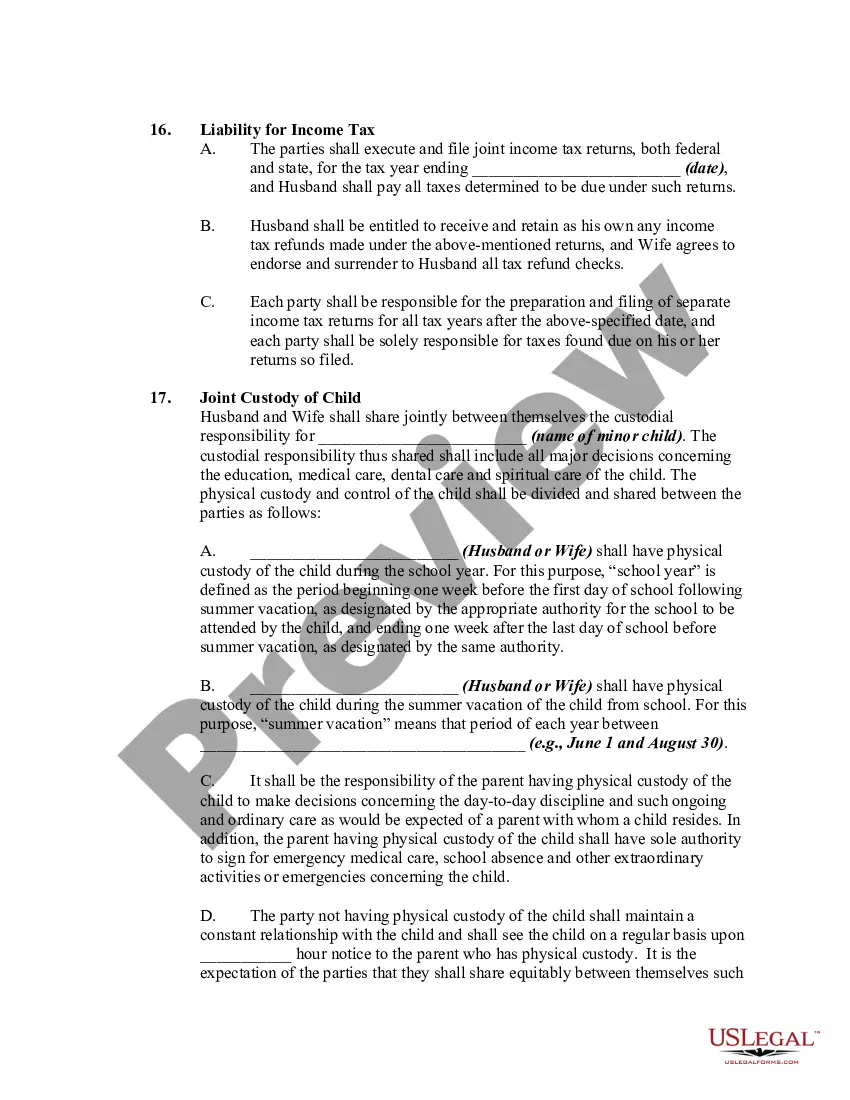
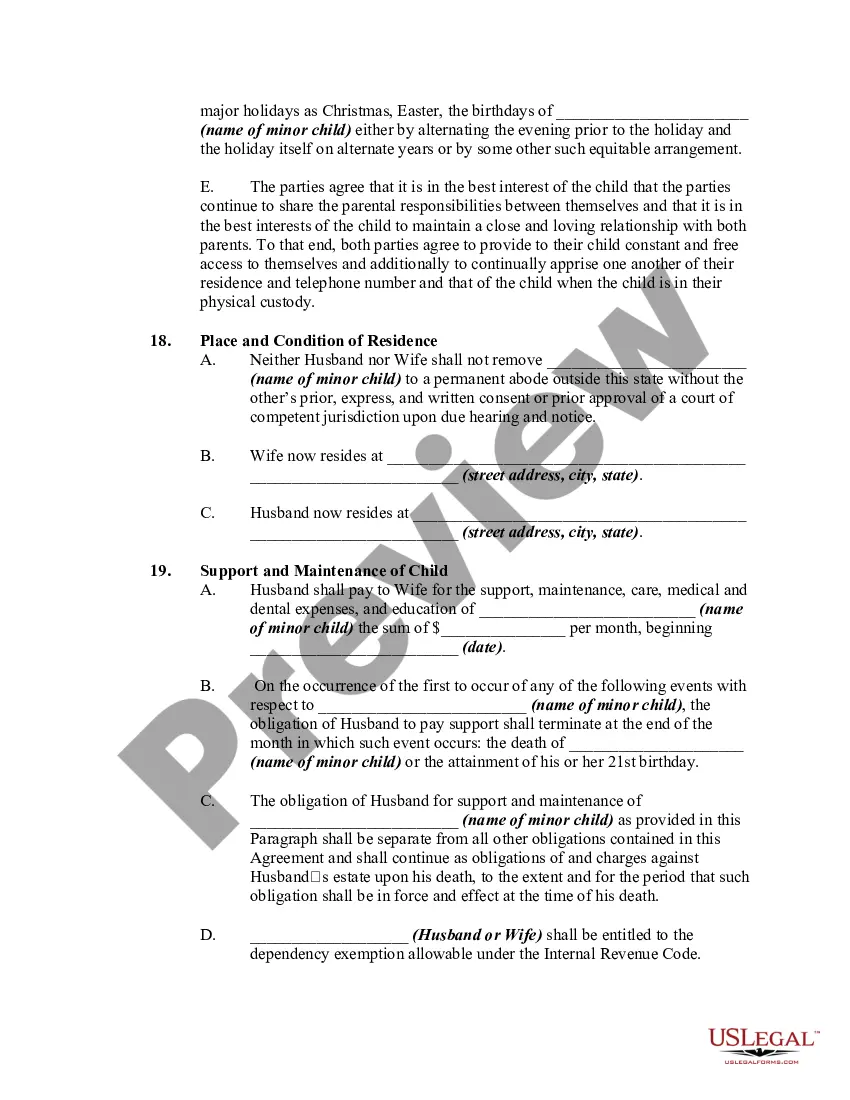
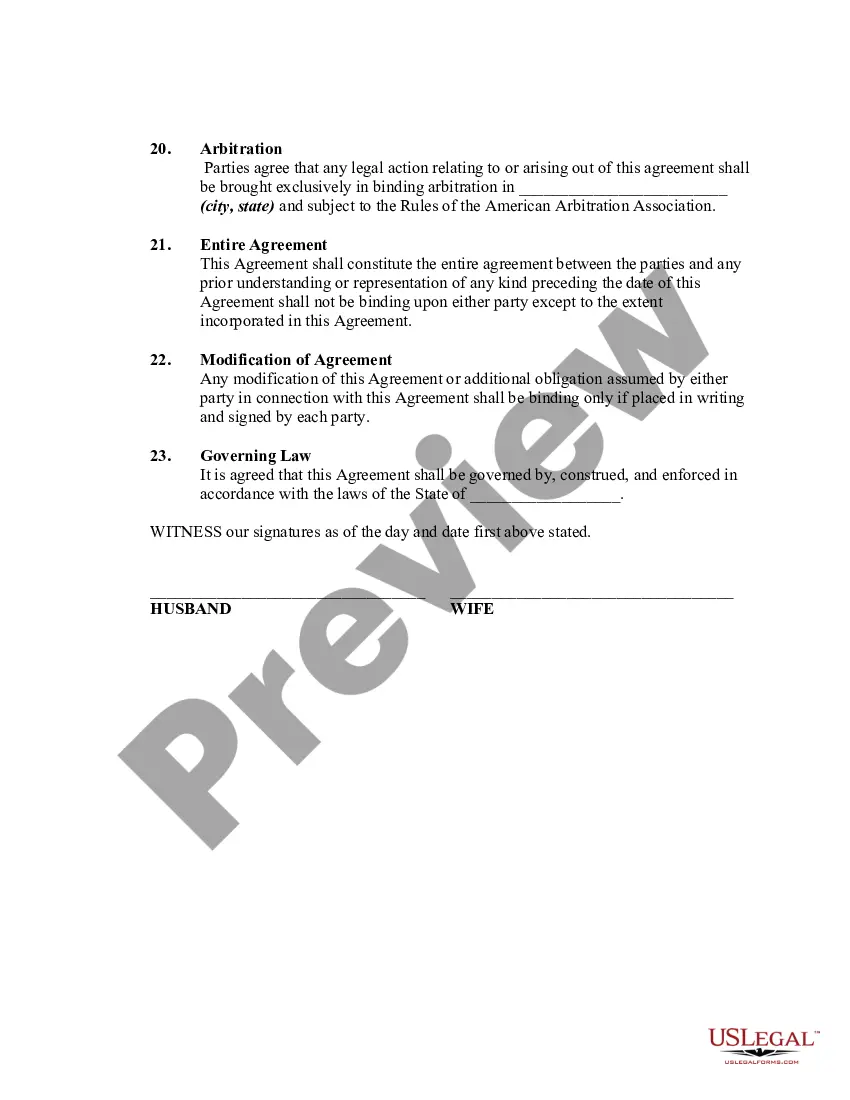
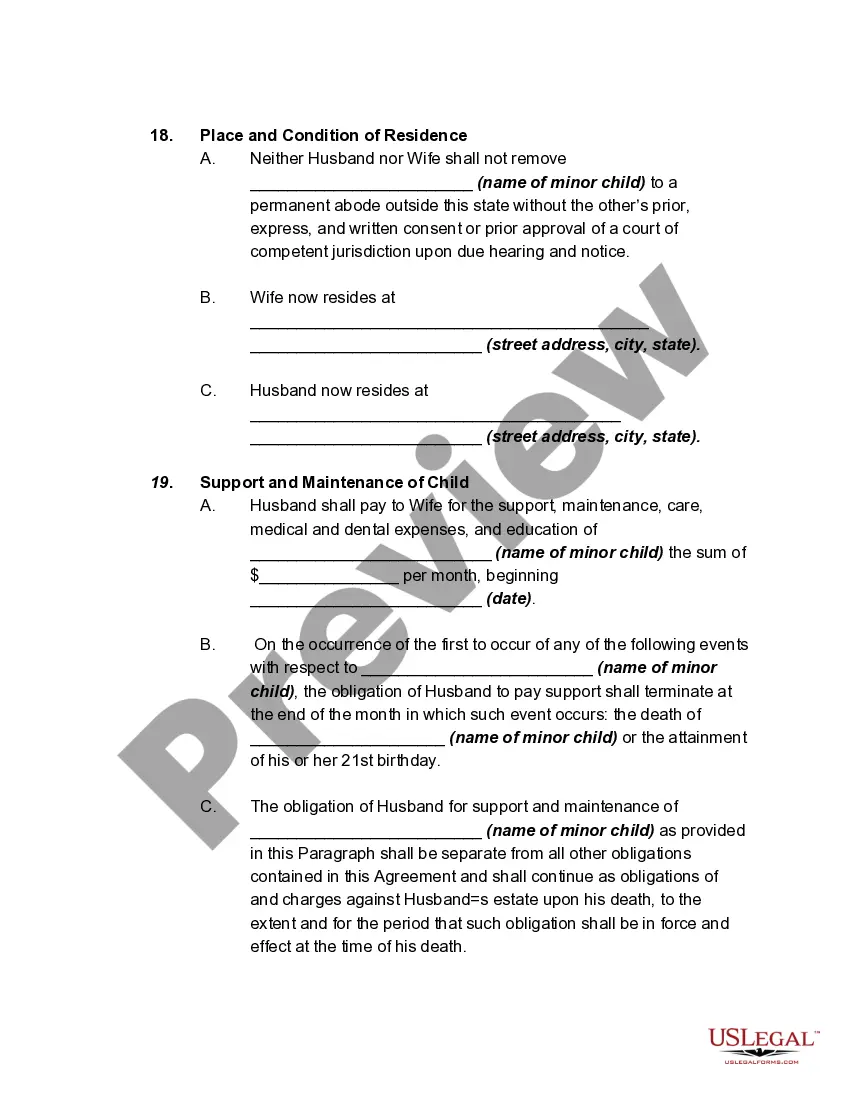
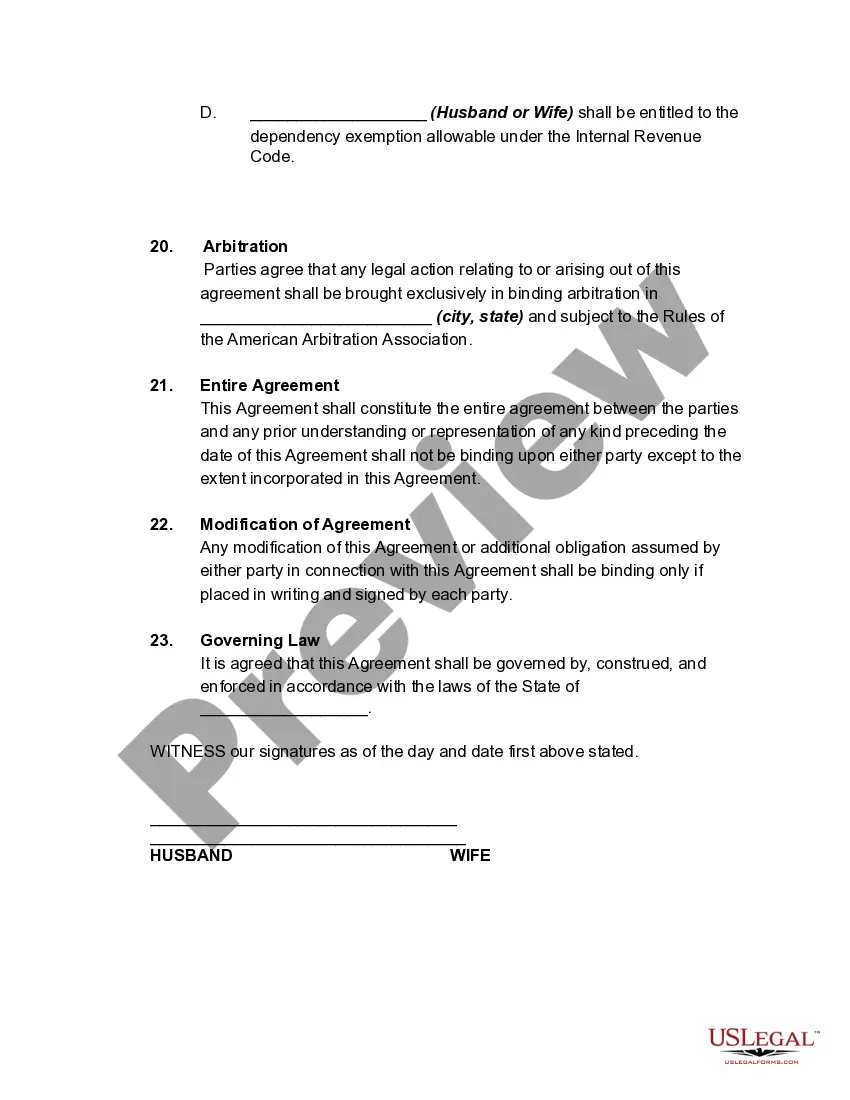
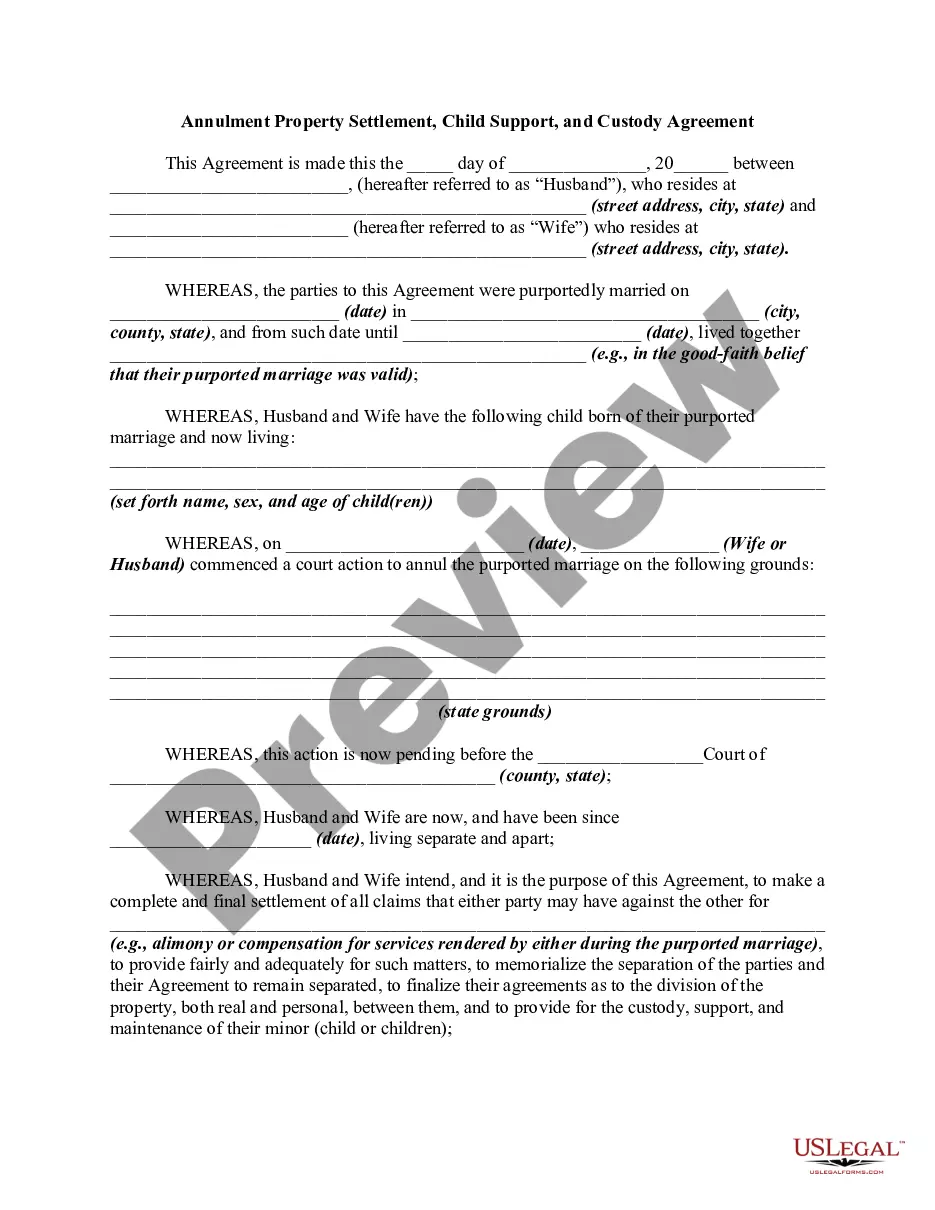
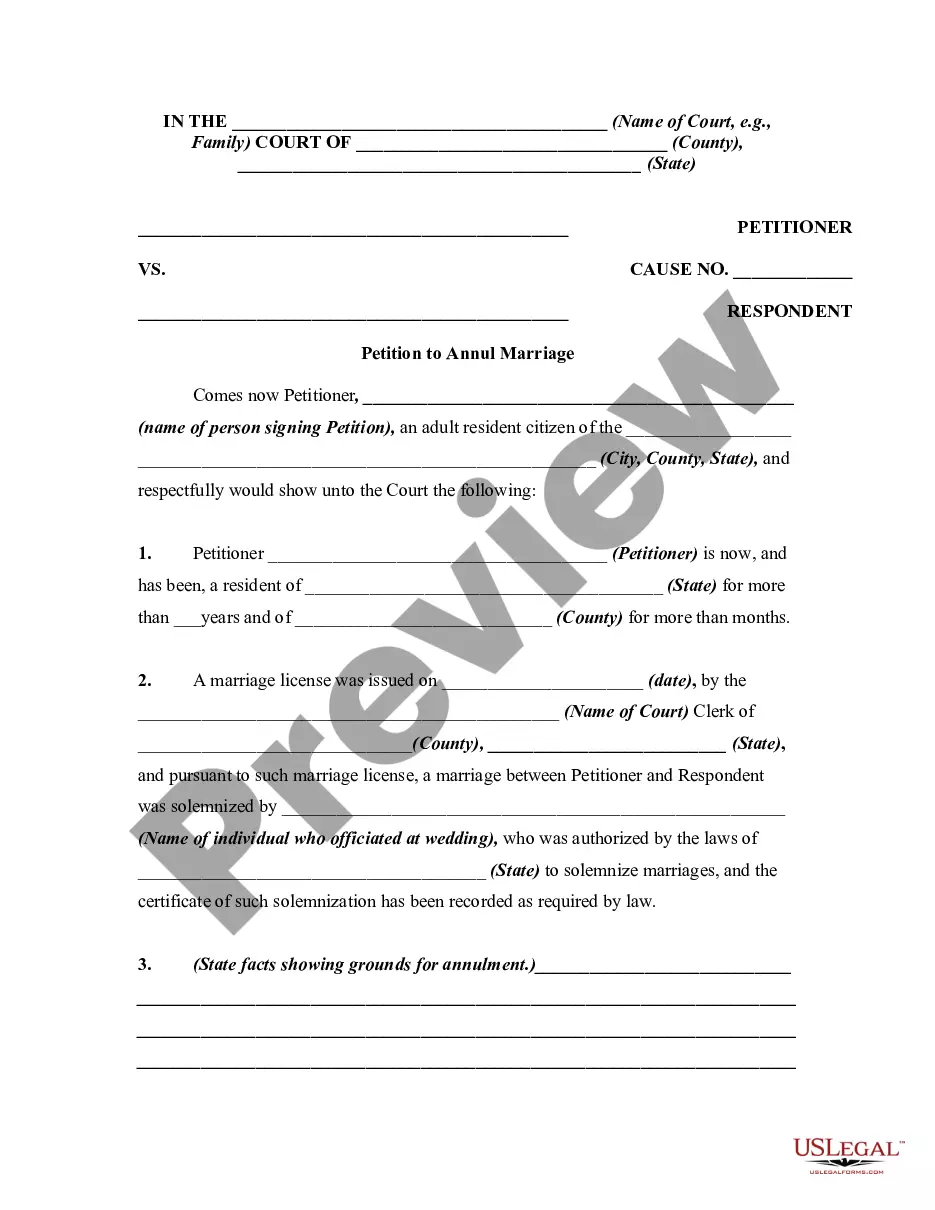
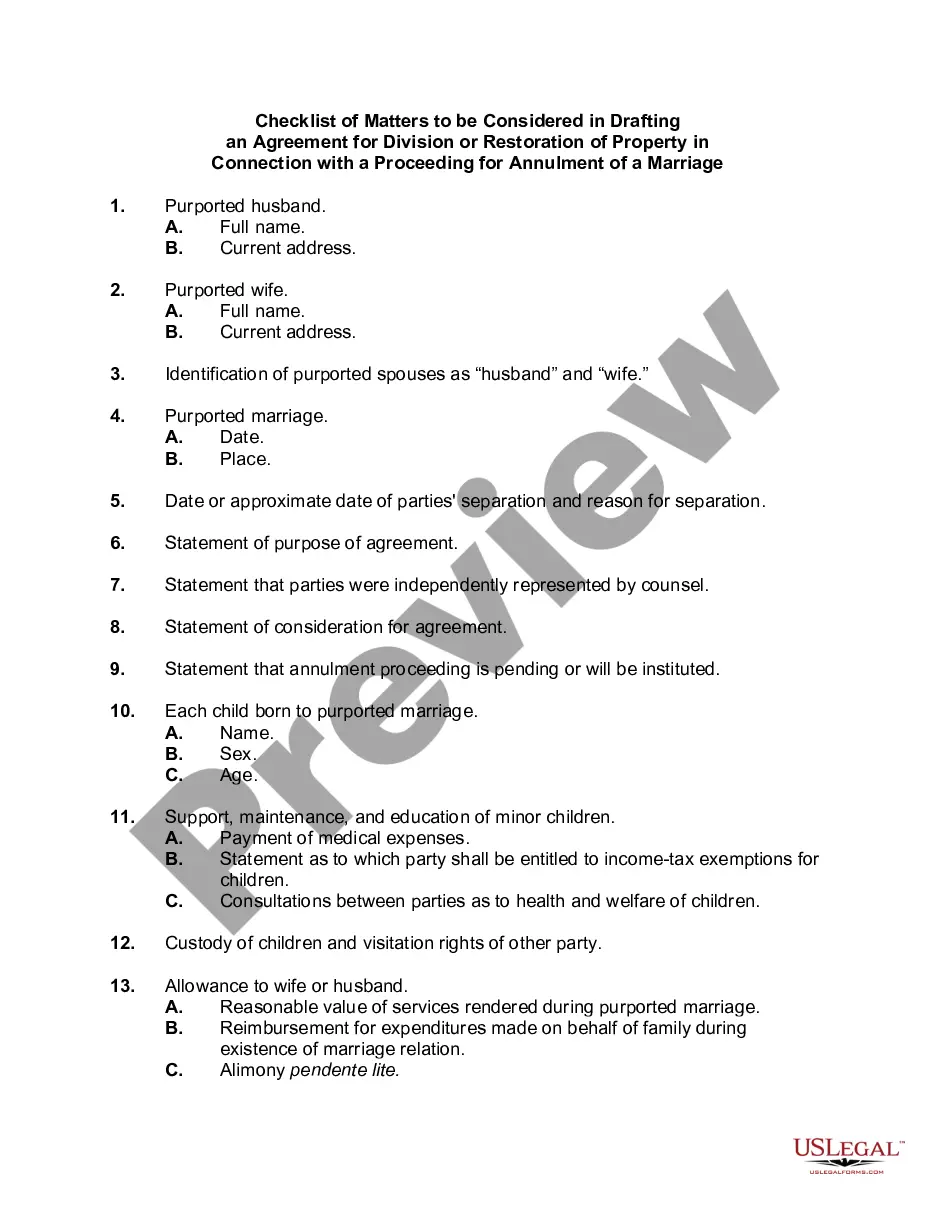
The following form is a Property Settlement and Joint Custody Agreement.
Kansas Annulment Property Settlement and Joint Custody Agreement
140 downloads
Description
Free preview
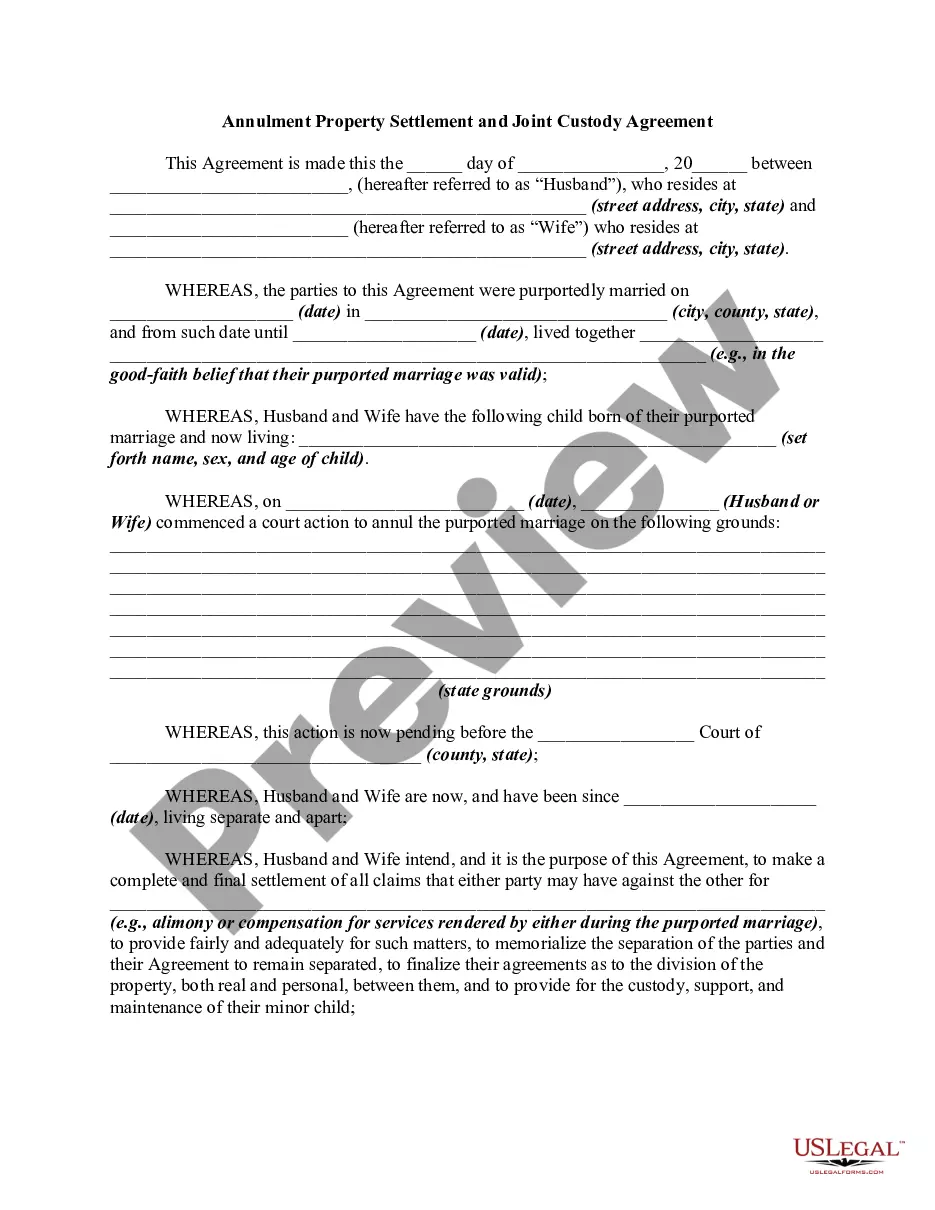
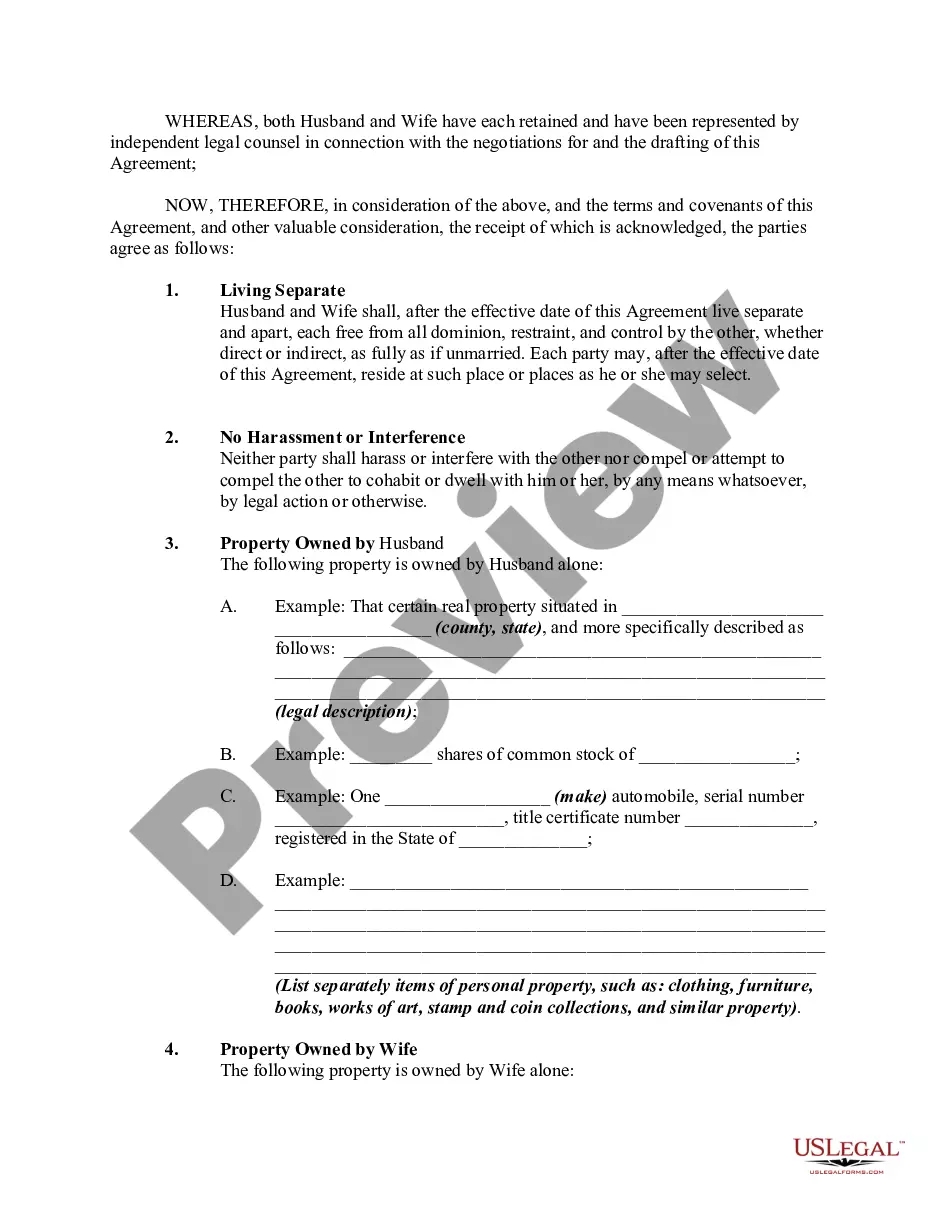
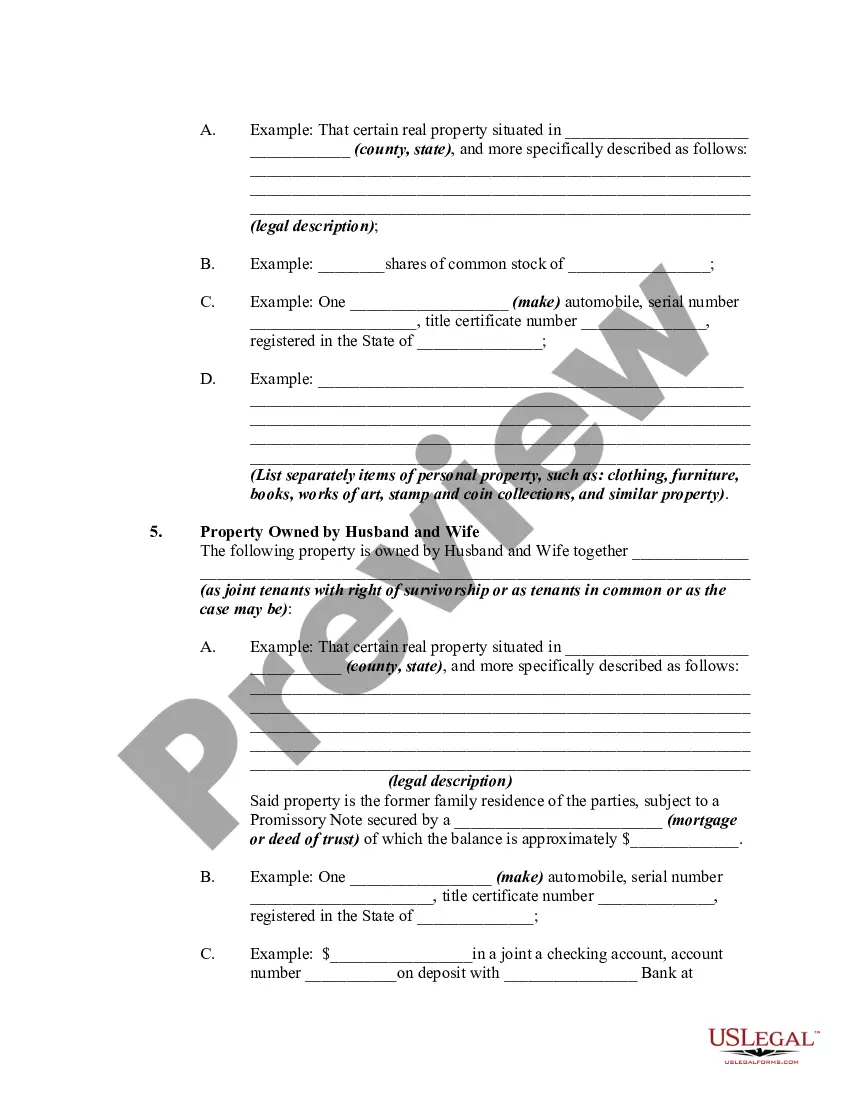
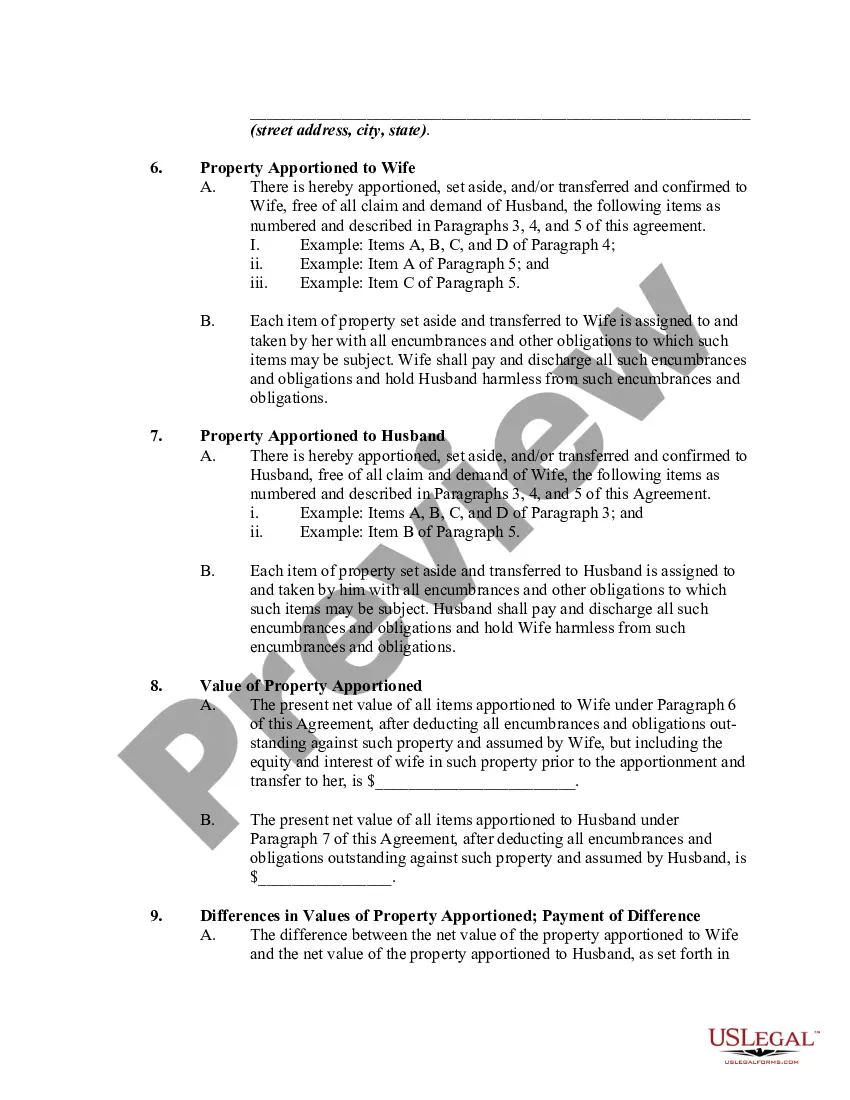
Get your form ready online
Our built-in tools help you complete, sign, share, and store your documents in one place.
Built-in online Word editor
Make edits, fill in missing information, and update formatting in US Legal Forms—just like you would in MS Word.
Export easily
Download a copy, print it, send it by email, or mail it via USPS—whatever works best for your next step.
E-sign your document
Sign and collect signatures with our SignNow integration. Send to multiple recipients, set reminders, and more. Go Premium to unlock E-Sign.
Notarize online 24/7
If this form requires notarization, complete it online through a secure video call—no need to meet a notary in person or wait for an appointment.
Store your document securely
We protect your documents and personal data by following strict security and privacy standards.

Make edits, fill in missing information, and update formatting in US Legal Forms—just like you would in MS Word.

Download a copy, print it, send it by email, or mail it via USPS—whatever works best for your next step.

Sign and collect signatures with our SignNow integration. Send to multiple recipients, set reminders, and more. Go Premium to unlock E-Sign.

If this form requires notarization, complete it online through a secure video call—no need to meet a notary in person or wait for an appointment.

We protect your documents and personal data by following strict security and privacy standards.
Looking for another form?
How to fill out Annulment Property Settlement And Joint Custody Agreement?
If you need to compile, obtain, or print legal document templates, utilize US Legal Forms, the largest collection of legal forms available online.
Take advantage of the site's straightforward and user-friendly search to locate the documents you require.
A range of templates for business and personal purposes are organized by categories and states, or keywords and phrases. Use US Legal Forms to locate the Kansas Annulment Property Settlement and Joint Custody Agreement in just a few clicks.
Every legal document template you purchase is yours indefinitely. You will have access to every form you saved in your account. Go to the My documents section and choose a form to print or download again.
Be proactive and obtain, and print the Kansas Annulment Property Settlement and Joint Custody Agreement with US Legal Forms. There are millions of professional and state-specific forms you can utilize for your business or personal needs.
- If you are already a US Legal Forms customer, Log In to your account and click the Acquire button to obtain the Kansas Annulment Property Settlement and Joint Custody Agreement.
- You can also access forms you previously saved in the My documents tab of your account.
- If you are using US Legal Forms for the first time, follow the steps below.
- Step 1. Ensure you have selected the form for the correct state/country.
- Step 2. Use the Review option to examine the form’s content. Don’t forget to check the overview.
- Step 3. If you are not satisfied with the form, use the Search box at the top of the screen to find other versions of the legal form template.
- Step 4. Once you have found the form you require, click on the Buy now button. Choose the pricing plan you prefer and enter your details to create an account.
- Step 5. Proceed with the transaction. You can use your credit card or PayPal account to complete the transaction.
- Step 6. Select the format of your legal form and download it to your device.
- Step 7. Complete, modify and print or sign the Kansas Annulment Property Settlement and Joint Custody Agreement.
Form popularity
FAQ
In Kansas, a judge, not a jury, decides how to divide legal custody and residency of the child based on what is in the best interests of the child. The best interest standard also guides the judge's decisions about visitation.
In Kansas, courts will order custody based on the best interests of the child with joint custody being the preferred arrangement. Joint custody in Kansas often entails parents sharing the responsibilities of legal custody, meaning that they are jointly responsible for making major decisions about their child's life.
Joint Legal Custody Both parents have equal access to medical and school records. Joint Legal Custody is the preferred method of custody in Kansas. It has nothing to do with who the children live with or the amount of time each party spends with the children.
In Kansas, both parents have a duty to support their children. Although a court could order one or both parents to make payments, typically the parent without primary residential custody?meaning, the parent who spends less time with the child(ren)?actually pays support.
The court may order child support and education expenses to be paid by either or both parents for any child under the age of 18, regardless of the type of custodial arrangement that is ordered.
Grounds For an Annulment in Kansas Generally, your marriage may be annulled based on any of the following grounds: incest- spouses are first cousins or closer in relation. bigamy - one spouse has a previous spouse they never divorced. Insanity - one spouse was incapable of understanding they were getting married.
Parents pay a proportional share of the obligation based on their child support income. If one parent earns 60% of the parents' combined gross income and the other parent earns 40%, then their child support obligation will be shared 60-40. Income earned by a new spouse or other relationship is not considered income.
It's a common misconception that older children can refuse visitation with a non-custodial parent. On the contrary, until the child turns 18, the custodial parent must follow the visitation order and send the child for visitation. The only exception is if the parent believes the child is in immediate danger.