Kansas Marital Legal Separation and Property Settlement Agreement Minor Children no Joint Property or Debts where Divorce Action Filed
What this document covers
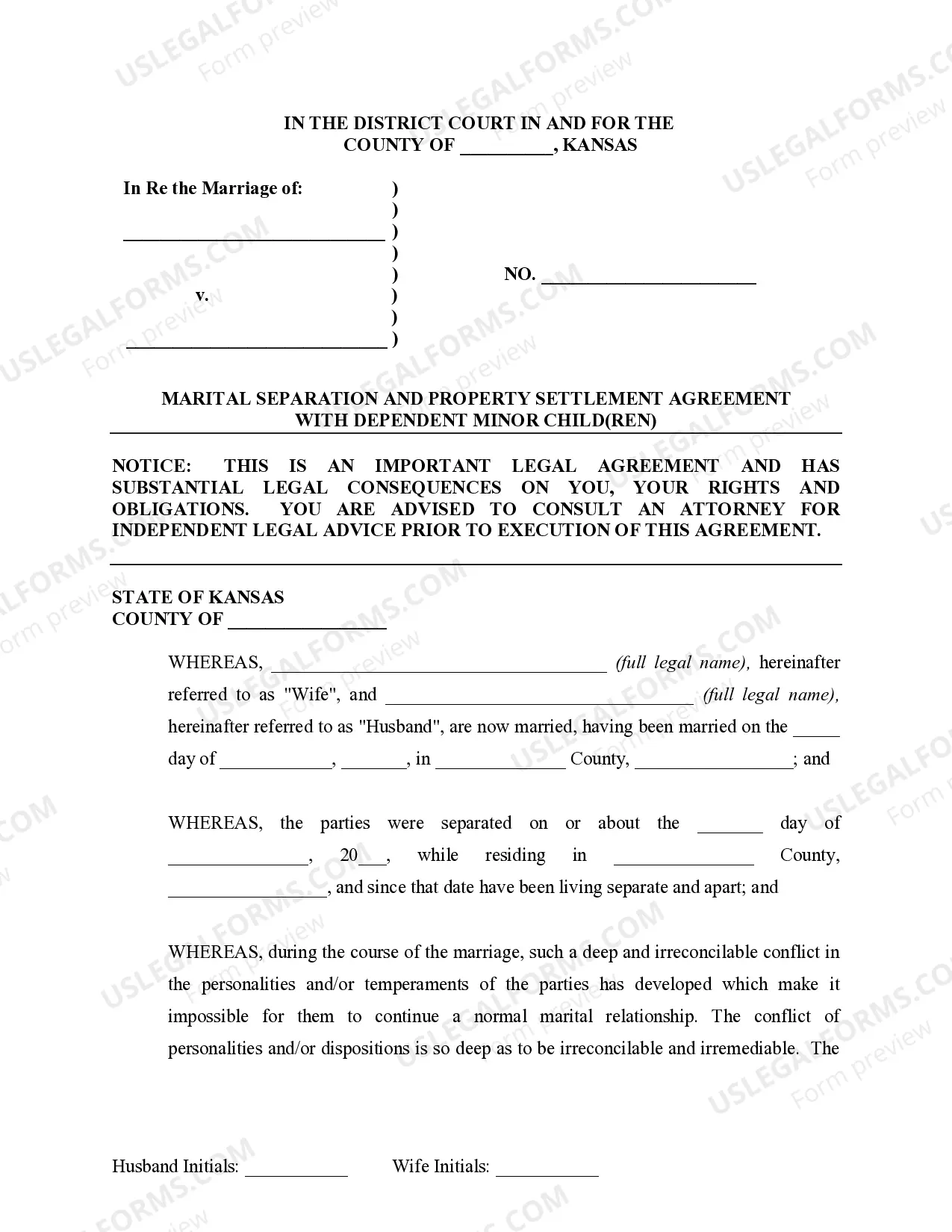
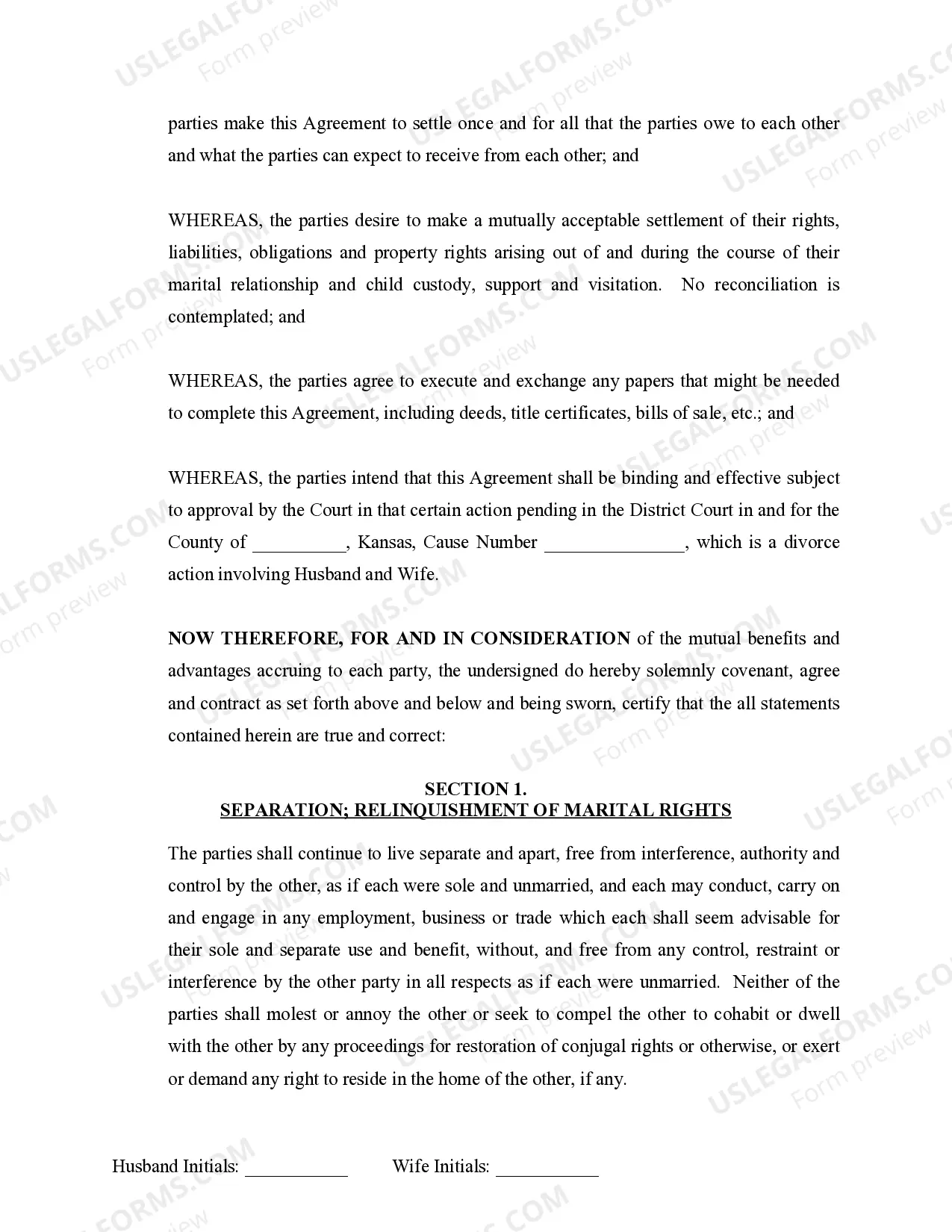
This Marital Legal Separation and Property Settlement Agreement is designed for married couples in Kansas with minor children, who do not share joint property or debts. It provides a clear separation agreement that outlines custody, visitation, child support, and alimony arrangements, specifically in cases where a divorce action has been filed or is imminent. This form differs from other separation agreements by focusing on simplifying proceedings where minimal joint assets or liabilities exist.
What’s included in this form
- Details regarding the legal separation and relinquishment of marital rights.
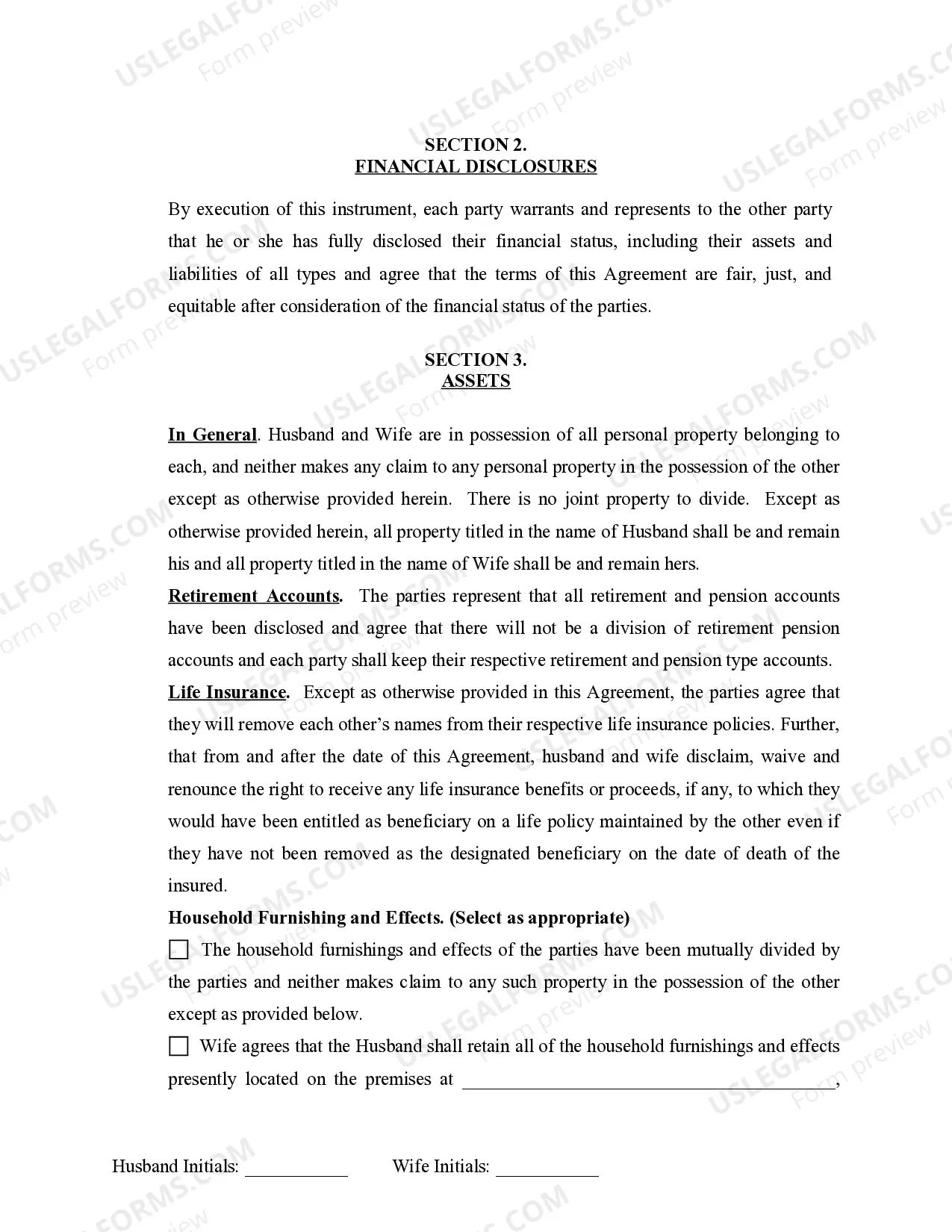
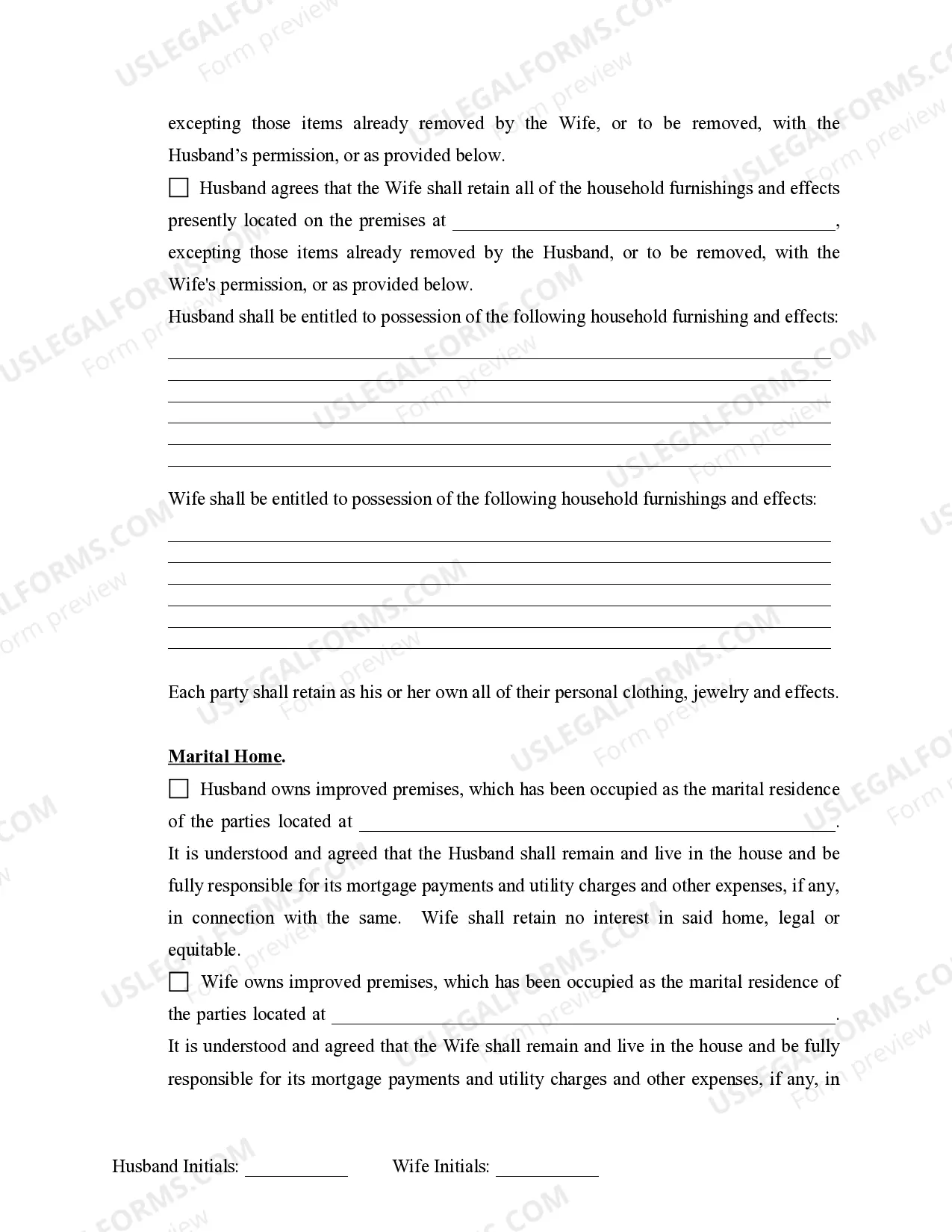
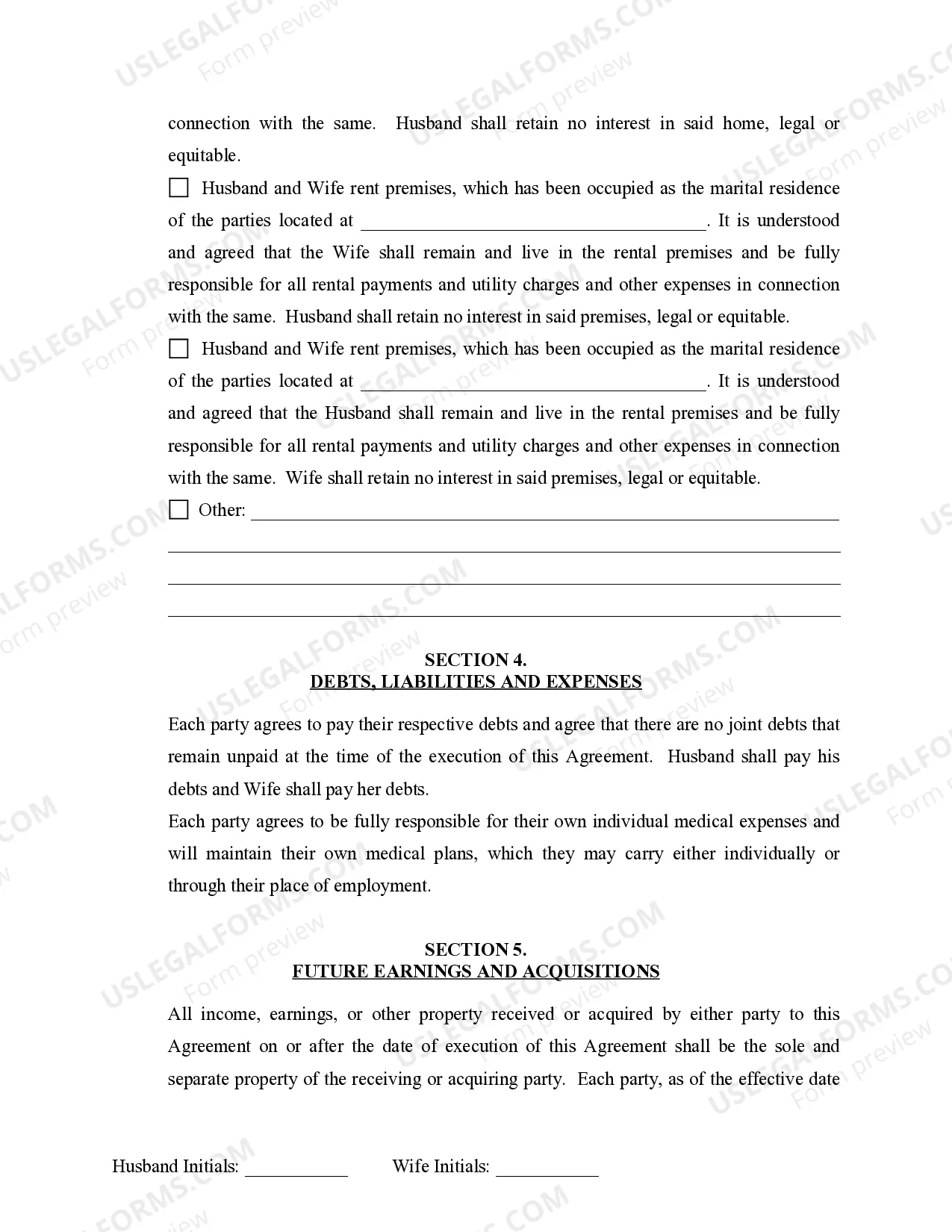
- Financial disclosures of each party's assets and debts.
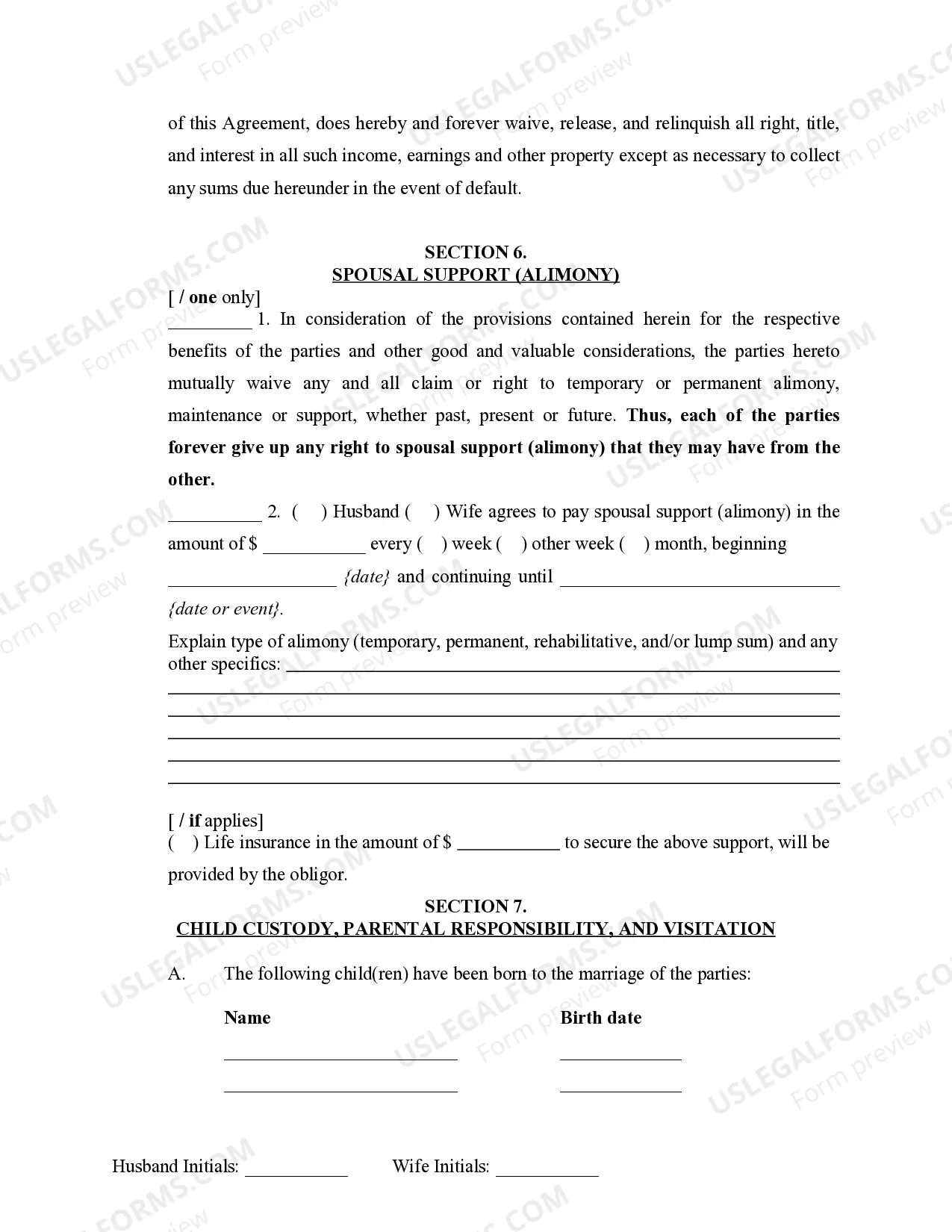
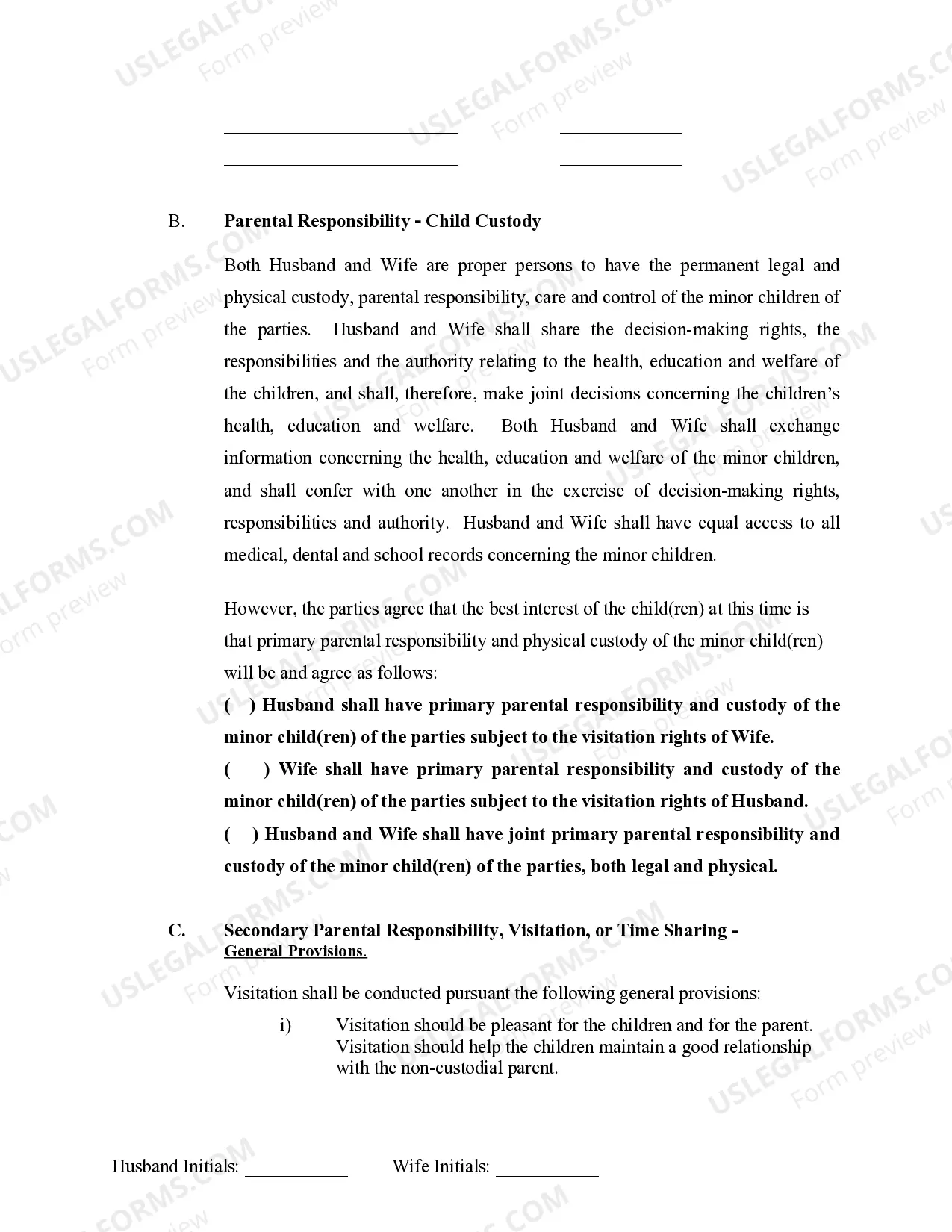
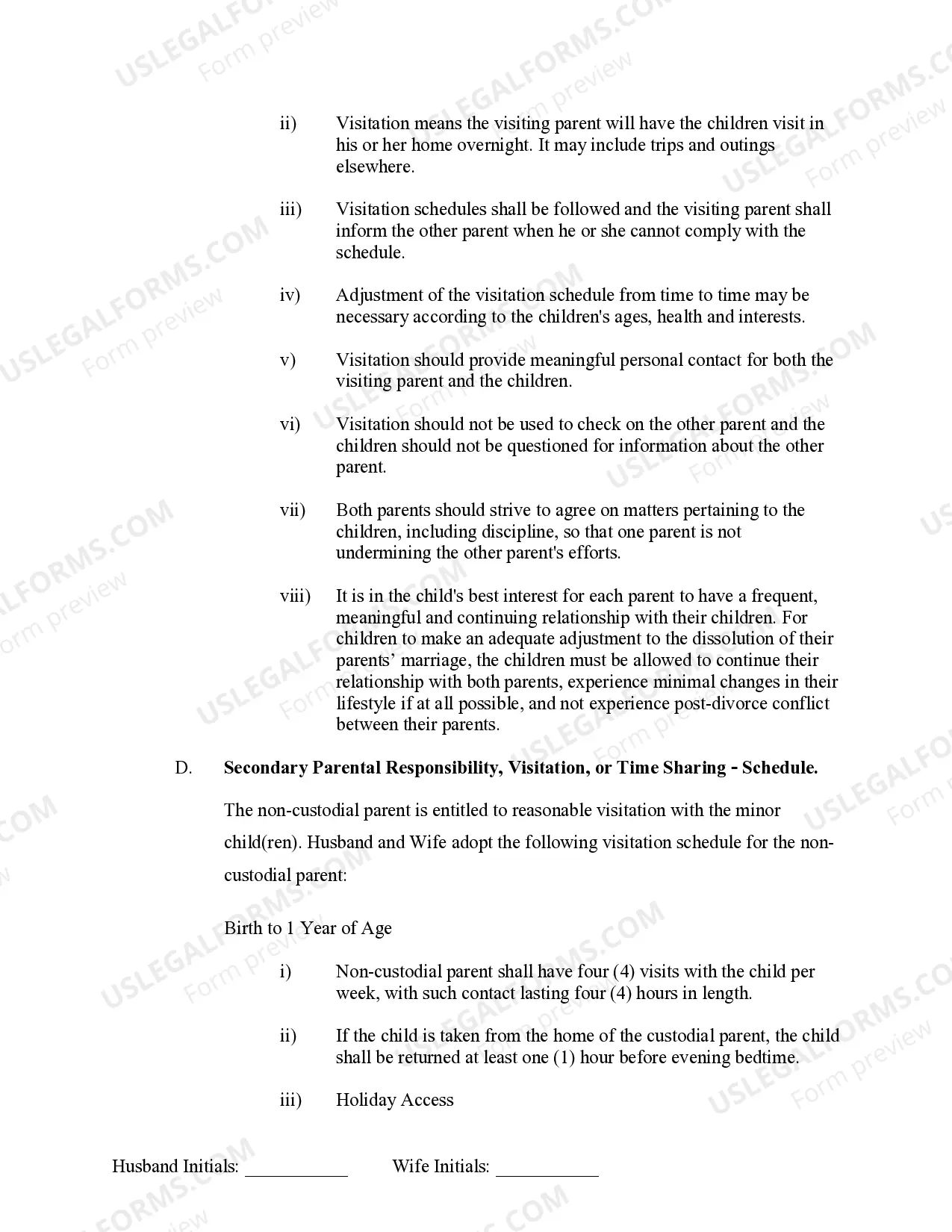
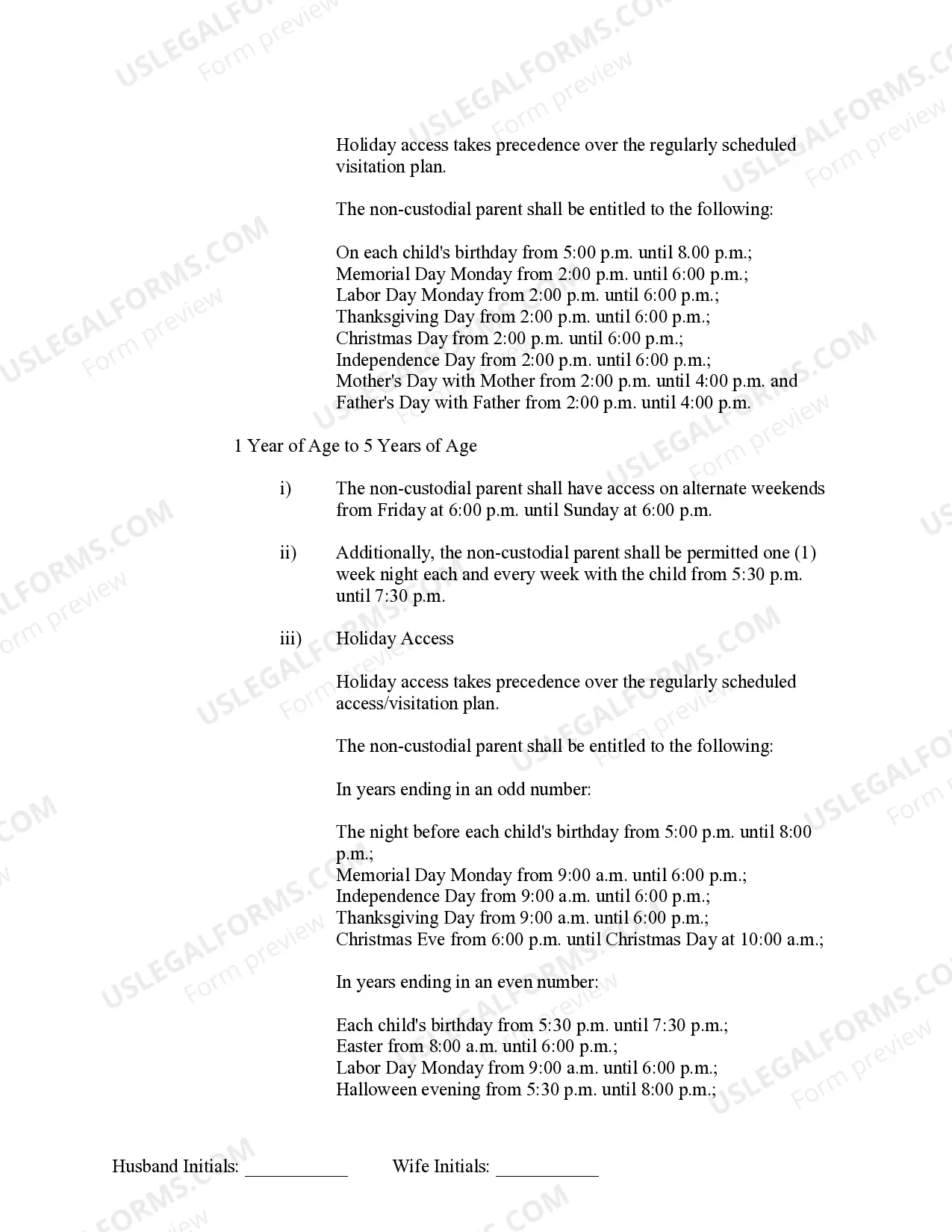
- Child custody and visitation arrangements for minor children.
- Calculations for child support and health insurance obligations.
- Terms relating to alimony and financial support if applicable.
- Provisions for the mutual indemnification of debts incurred by either party.

When this form is needed
This form should be utilized when spouses with minor children wish to formalize their separation without sharing joint property or debts. It is specifically for situations where a divorce action has already been initiated or will be initiated shortly. This can include circumstances where the parties prefer to settle custody, support, and other legal matters amicably before the finalization of their divorce.
Who should use this form
- Married individuals in Kansas who are considering a divorce
- Parents with minor children seeking a separation agreement
- Couples with no joint property or debts
- Parties who have filed for divorce or plan to do so before this Agreement's effective date
Instructions for completing this form
- Identify the parties involved by entering their full legal names and contact details.
- Outline the details of the separation, including the date of separation and acknowledgment of no joint property or debts.
- Specify custody arrangements and visitation rights for the minor children.
- Detail the financial agreements regarding child support, health insurance, and any spousal support terms.
- Have both parties sign the Agreement in the presence of a notary to ensure legal validity.
Is notarization required?
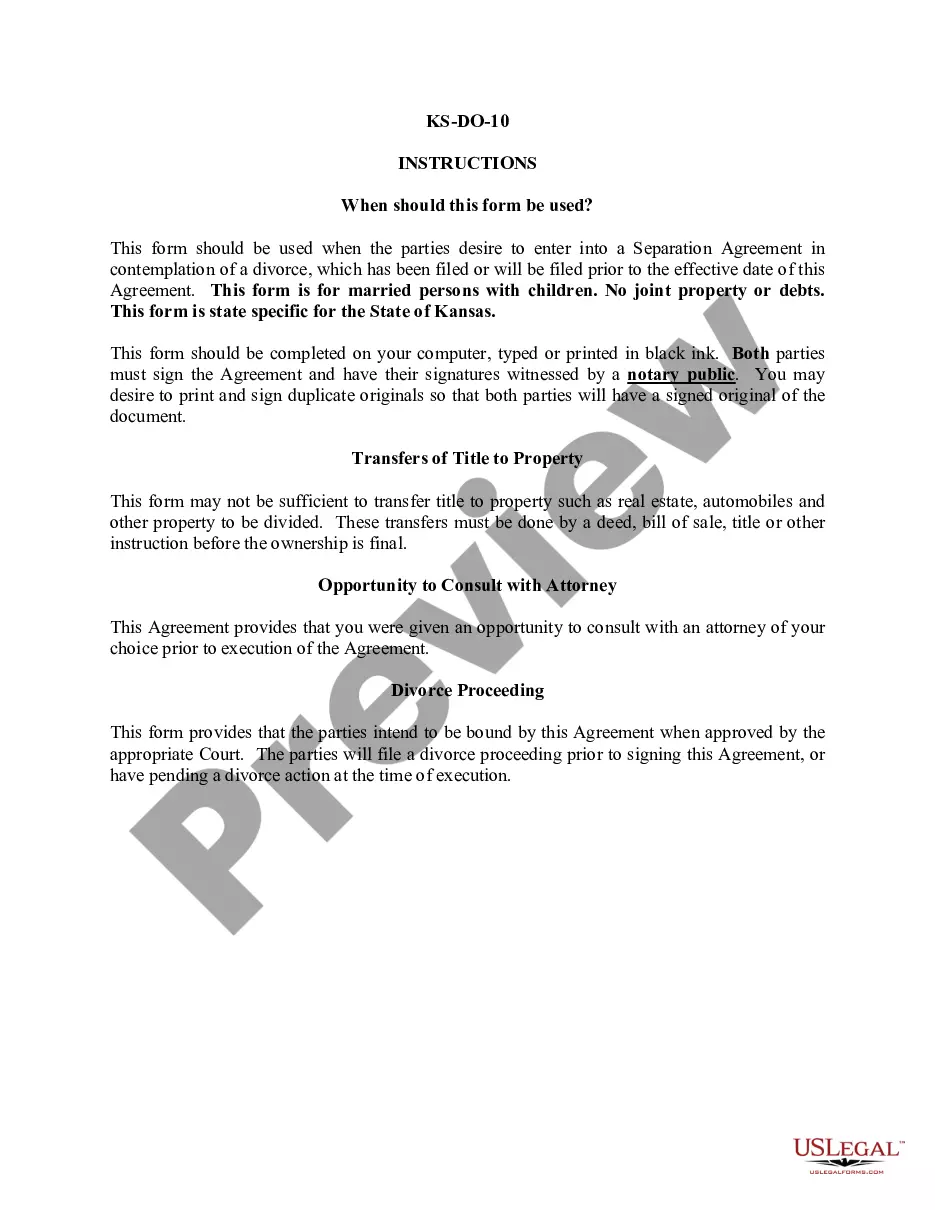
Yes, this form must be notarized to be legally valid. All parties are required to sign the Agreement in the presence of a notary public. US Legal Forms offers integrated online notarization, available 24/7 through secure video call, ensuring ease of access and compliance with legal standards.
Get your form ready online
Our built-in tools help you complete, sign, share, and store your documents in one place.
Make edits, fill in missing information, and update formatting in US Legal Forms—just like you would in MS Word.
Download a copy, print it, send it by email, or mail it via USPS—whatever works best for your next step.
Sign and collect signatures with our SignNow integration. Send to multiple recipients, set reminders, and more. Go Premium to unlock E-Sign.
If this form requires notarization, complete it online through a secure video call—no need to meet a notary in person or wait for an appointment.
We protect your documents and personal data by following strict security and privacy standards.

Make edits, fill in missing information, and update formatting in US Legal Forms—just like you would in MS Word.

Download a copy, print it, send it by email, or mail it via USPS—whatever works best for your next step.

Sign and collect signatures with our SignNow integration. Send to multiple recipients, set reminders, and more. Go Premium to unlock E-Sign.

If this form requires notarization, complete it online through a secure video call—no need to meet a notary in person or wait for an appointment.

We protect your documents and personal data by following strict security and privacy standards.
Avoid these common issues
- Failing to properly fill out all required fields, which can lead to legal issues later.
- Not having the Agreement signed and notarized, resulting in unenforceability.
- Overlooking the necessity to update custody and support terms if circumstances change.
Benefits of completing this form online
- Convenient access to legal documents without the need for in-person appointments.
- Ability to edit the document for specific needs before finalizing.
- Immediate download upon completion for quick filing.
Legal use & context
- This Agreement legally binds both parties to the terms outlined, pending court approval.
- If any disputes arise, the Agreement serves as a critical document in family court proceedings.
- Parties will be required to adhere to the agreements regarding custody and support to avoid legal penalties.
Main things to remember
- This form is essential for separating married couples with minor children in Kansas who do not share property or debts.
- Notarization is mandatory for the Agreement to be enforceable.
- Understanding the specific child custody and financial responsibilities outlined in the form is critical for compliance.
Looking for another form?
Form popularity
FAQ
A filing fee of $55.50 is required to file any post-decree motion. Other court costs may include service fees, deposition expenses, and other similar expenses. At the time a petition is filed, the person filing the petition can request that various orders be issued by the court.
Equitable division: Kansas law provides that property in a divorce proceeding is distributed by the rule of 'equitable division.Kansas courts try to make any division of assets and debts fair and appropriate for everyone both the husband and the wife.
Kansas is an equitable distribution state, and assets acquired both during and prior to the marriage can be subject to division following divorce.
In Kansas, a legal separation is an alternative to divorce. The spouses are still married but allowed to live apart under a court decree of separate maintenance. In a separation, the court demands an equitable division of assets and debt. Whether it's established by the couple or by the judge.
Marital Property Law While a few states have enacted laws that consider all marital property as "community property," which is equally owned by both parties and must be equally divided after a divorce. Kansas, however, has no community property law.
Equitable distribution is a method of dividing property at the time of divorce. All states except for Arizona, California, Idaho, Louisiana, Nevada, New Mexico, Texas, Washington and Wisconsin follow the principles of equitable distribution.
Enforcing an MSA must be done by filing a formal request or motion (legal paperwork) with the court. You will need to show the court how your ex-spouse failed to follow the terms of the agreement. There are many reasons you may need to ask the court to assist you with enforcing your agreement.
Kansas is a hybrid state that recognizes both fault-based and no-fault grounds (legal justifications) for divorce.Kansas allows divorce when parties are incompatible. This is a no-fault ground that means a married couple simply can't get along anymore.
Marital Settlement Agreements, reached between the parties in writing and signed by the parties, become legally binding when approved by the court at the time of the final court hearing.Once approved by the court, such post judgment stipulations do become legally binding and enforceable between the parties.