Kansas Mutual Wills containing Last Will and Testaments for Man and Woman living together not Married with No Children
About this form
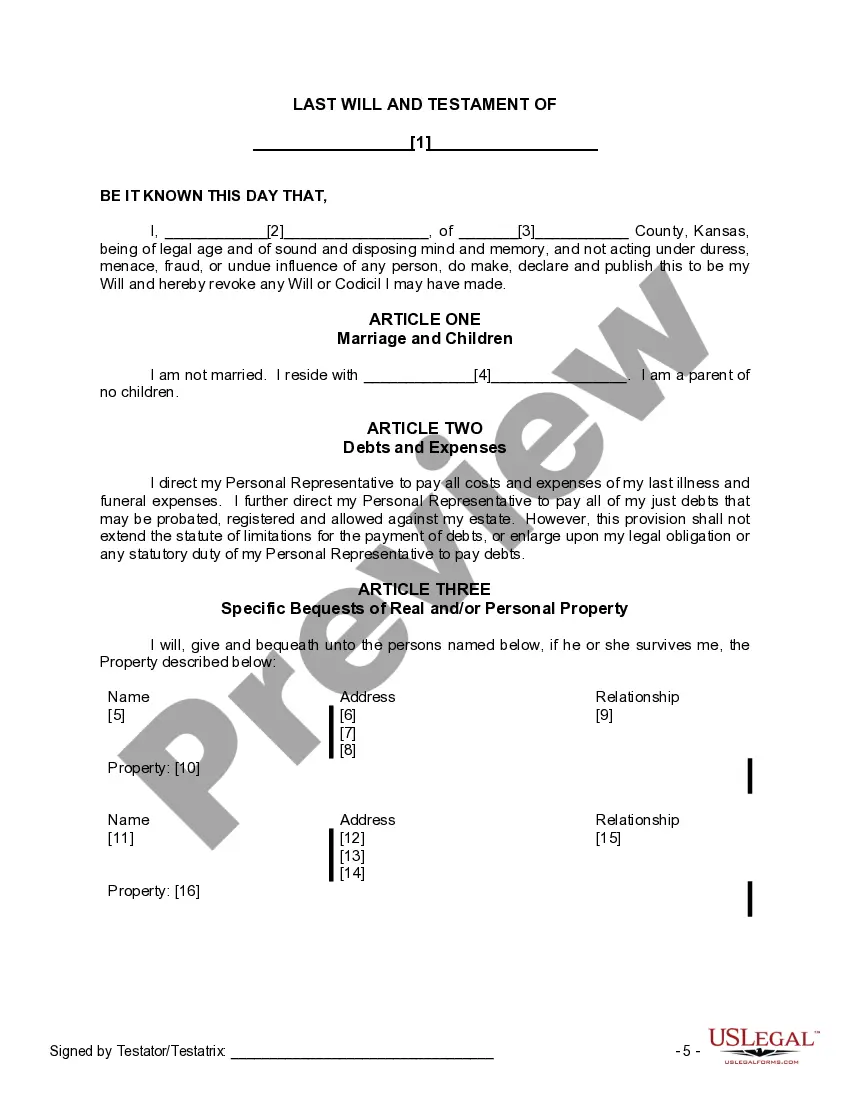
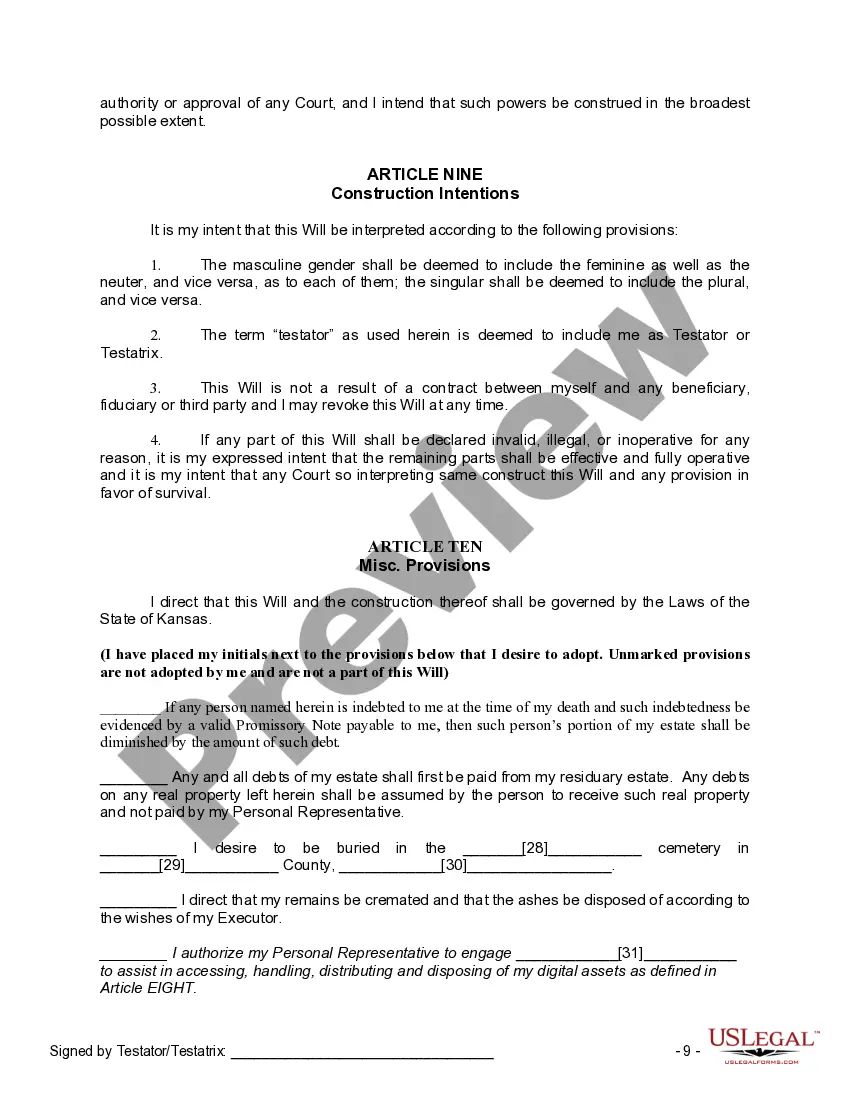
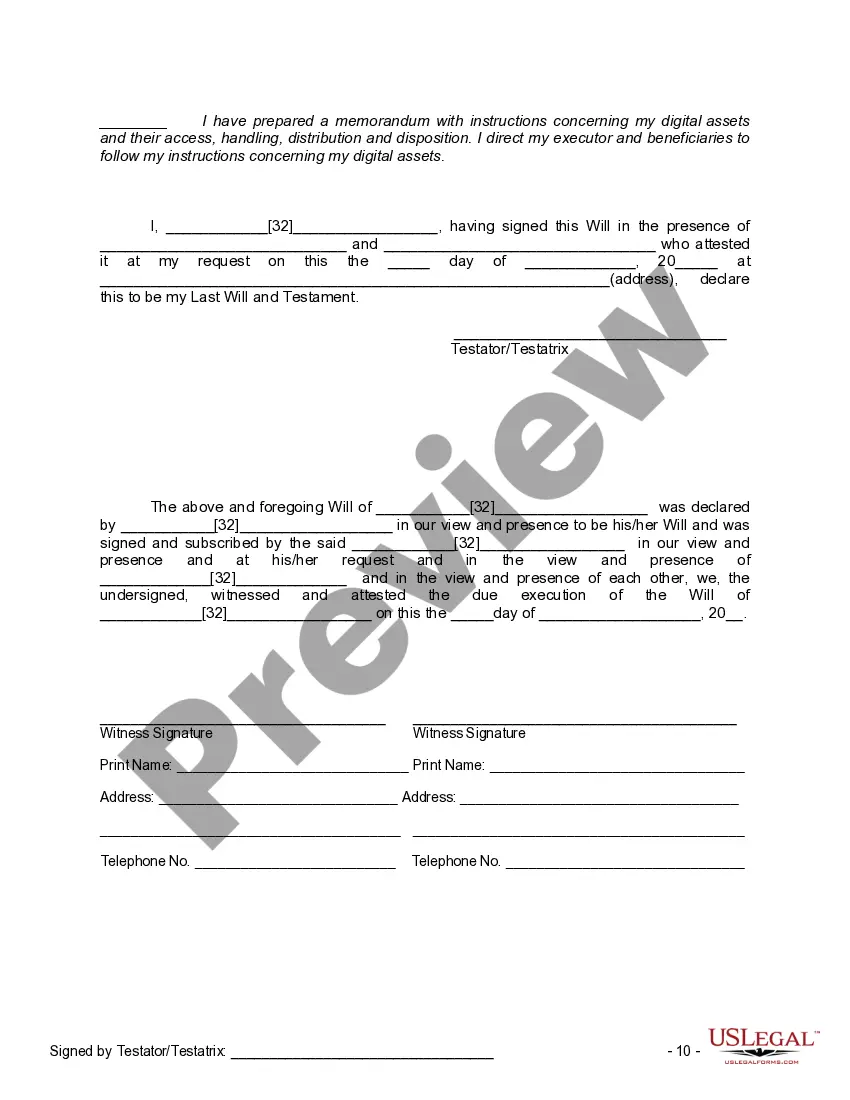
This form package includes mutual wills containing Last Will and Testaments designed specifically for a man and woman living together but not married and without children. It allows individuals to ensure that their property will be passed on to each other after their death, providing a legal framework for those wishing to establish mutual intentions regarding their estate. This form differs from standard wills by emphasizing the mutual relationship and intentions of unmarried partners.
Form components explained
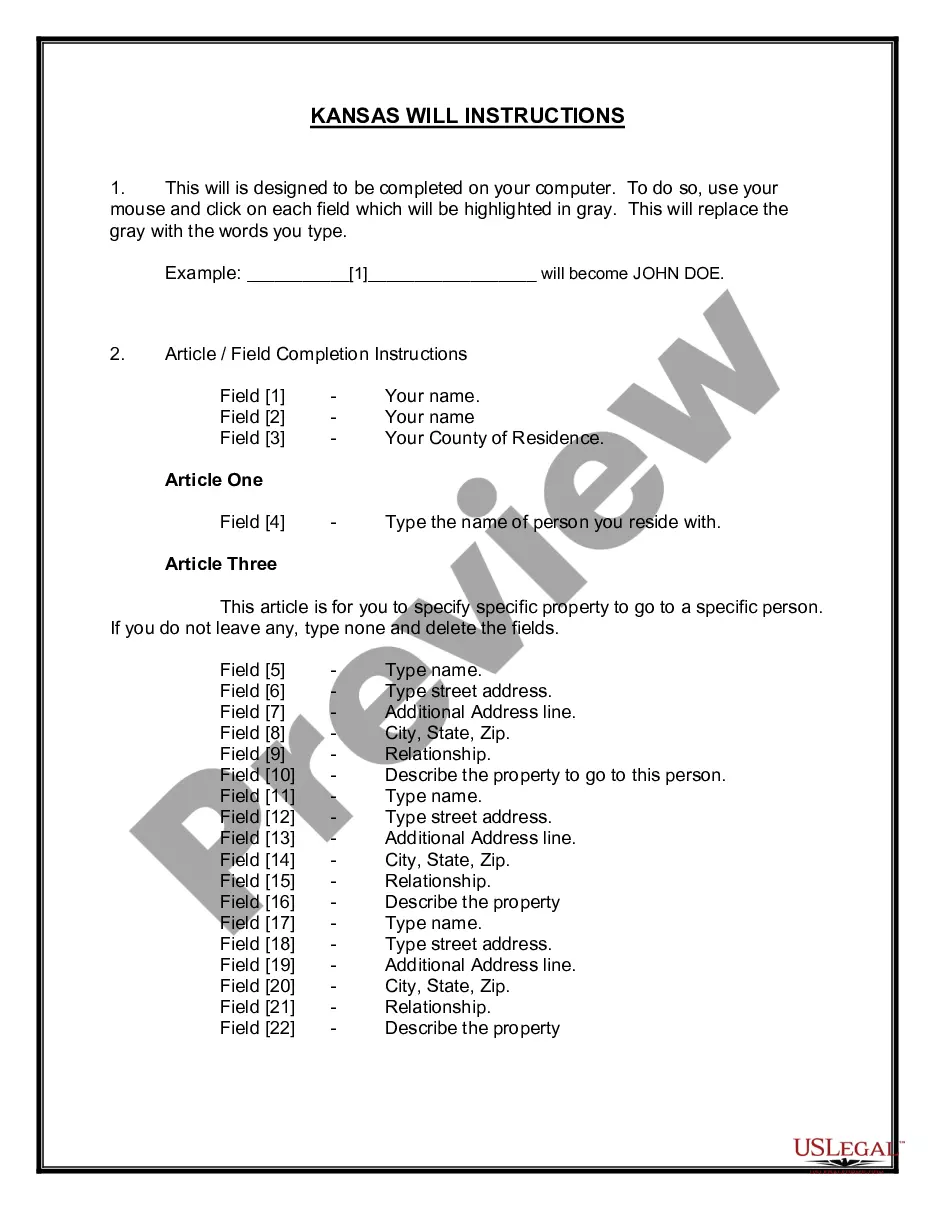
- Personal information, including names and county of residence.
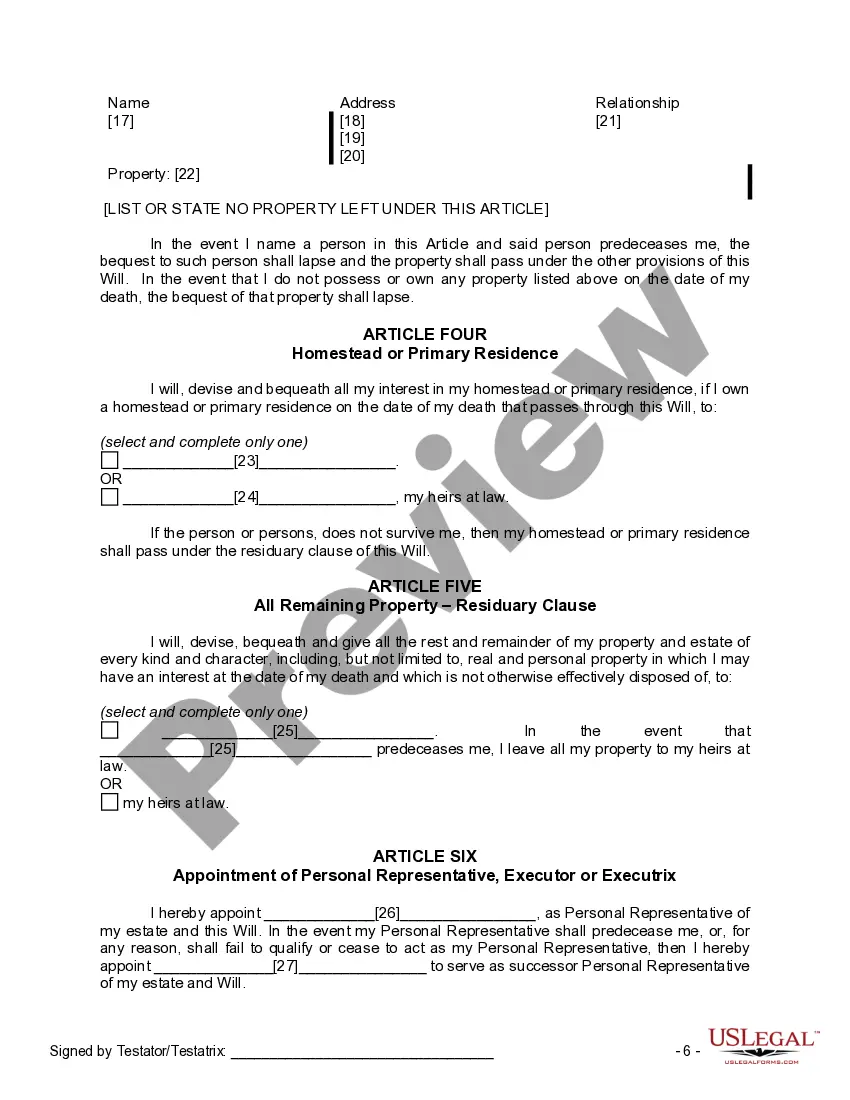
- Article dedicated to specific property bequests to named individuals.
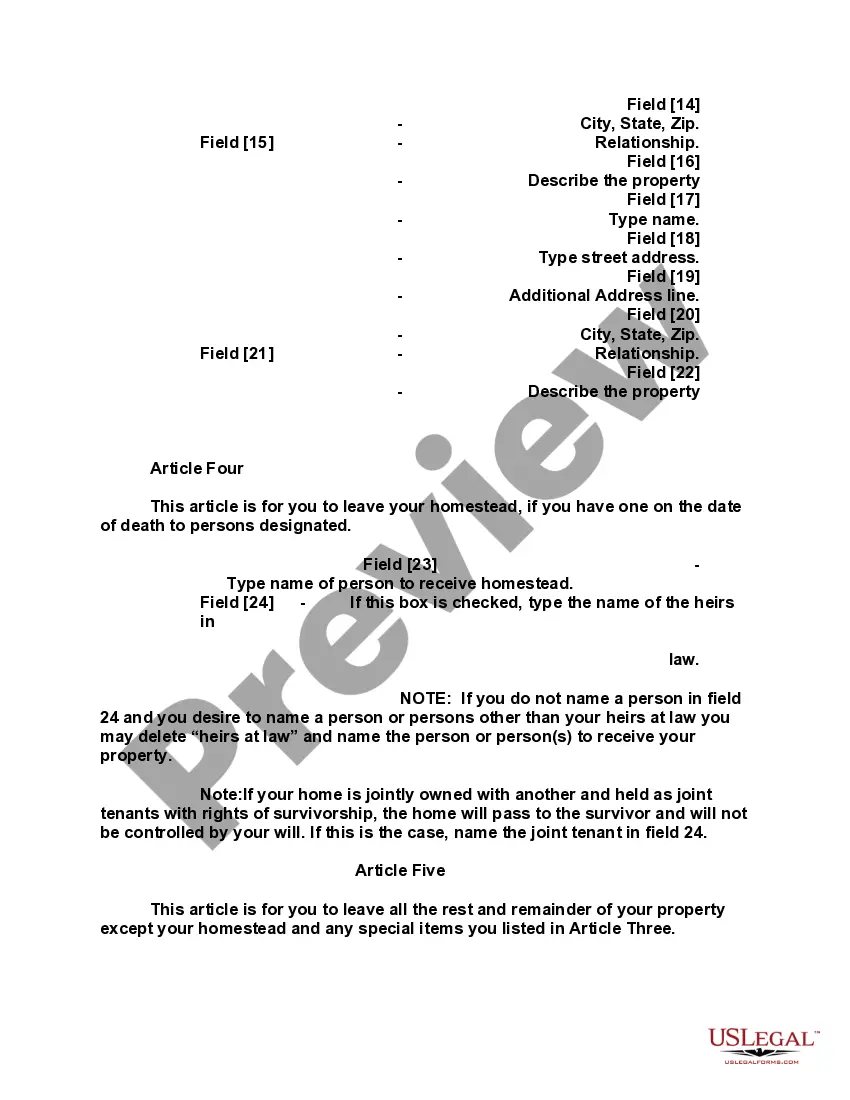
- Clauses for homestead or primary residence allocation.
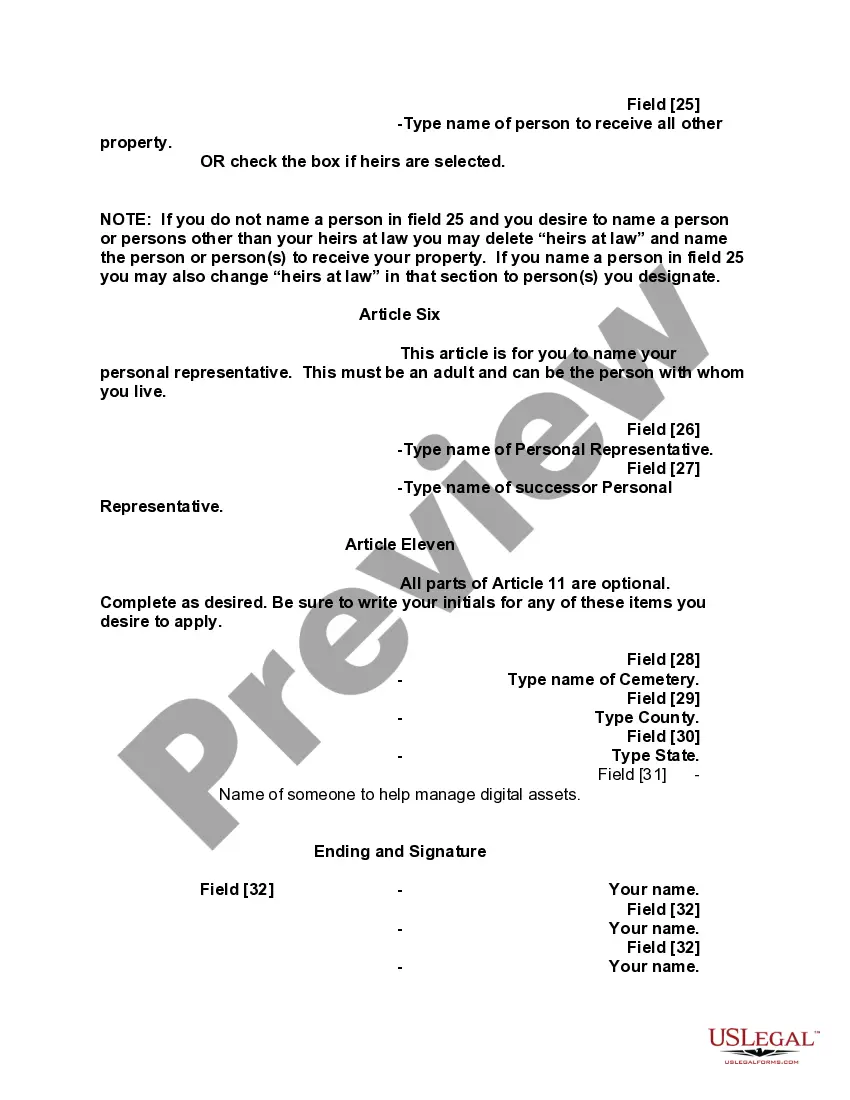
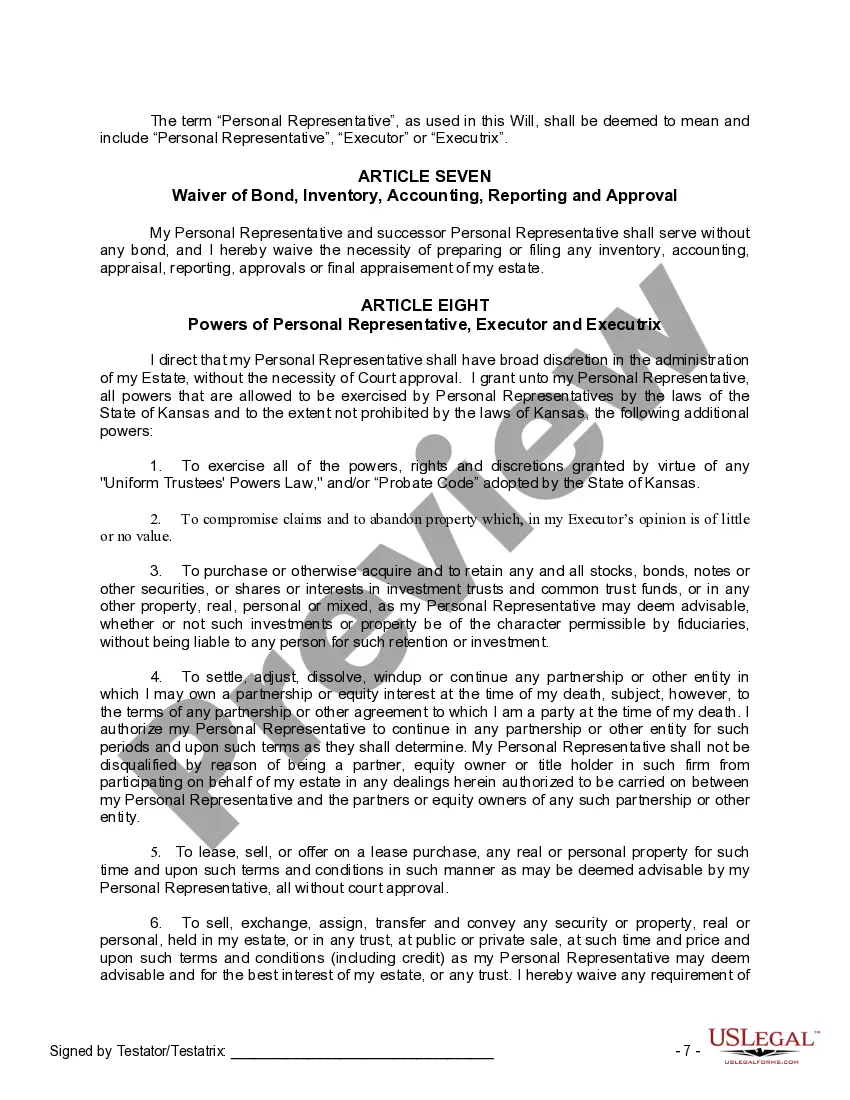
- Direction on the appointment of a personal representative to manage the estate.
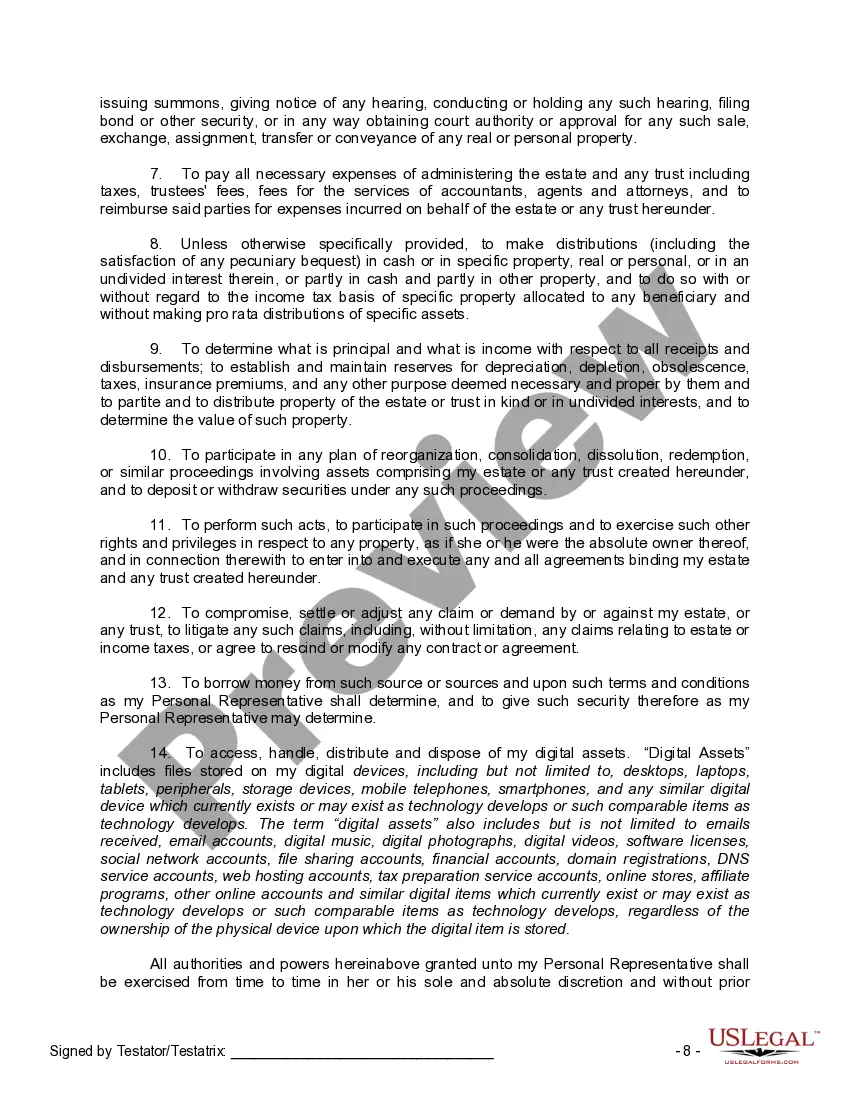
- Waiver of bond for the personal representative.
- Optional provisions for digital assets management.



When to use this document
Use this form when you and your partner wish to formalize your wishes regarding the distribution of assets upon death, especially when there are no children involved. This scenario often applies to committed partners who want to ensure that their wishes are legally recognized and to avoid potential disputes between family members.
Who should use this form
This form is suitable for:
- Unmarried couples living together who have no children.
- Individuals who want to protect their partner's interests in their estate.
- People who wish to create legally binding mutual wills without extensive legal assistance.
Instructions for completing this form
- Identify the parties: Enter your name and the name of your partner in the appropriate fields.
- Specify the property: Detail any specific items or assets you wish to pass to your partner.
- Designate your personal representative: Name an individual who will manage your estate upon death.
- Include homestead information: Specify who will inherit your primary residence, if applicable.
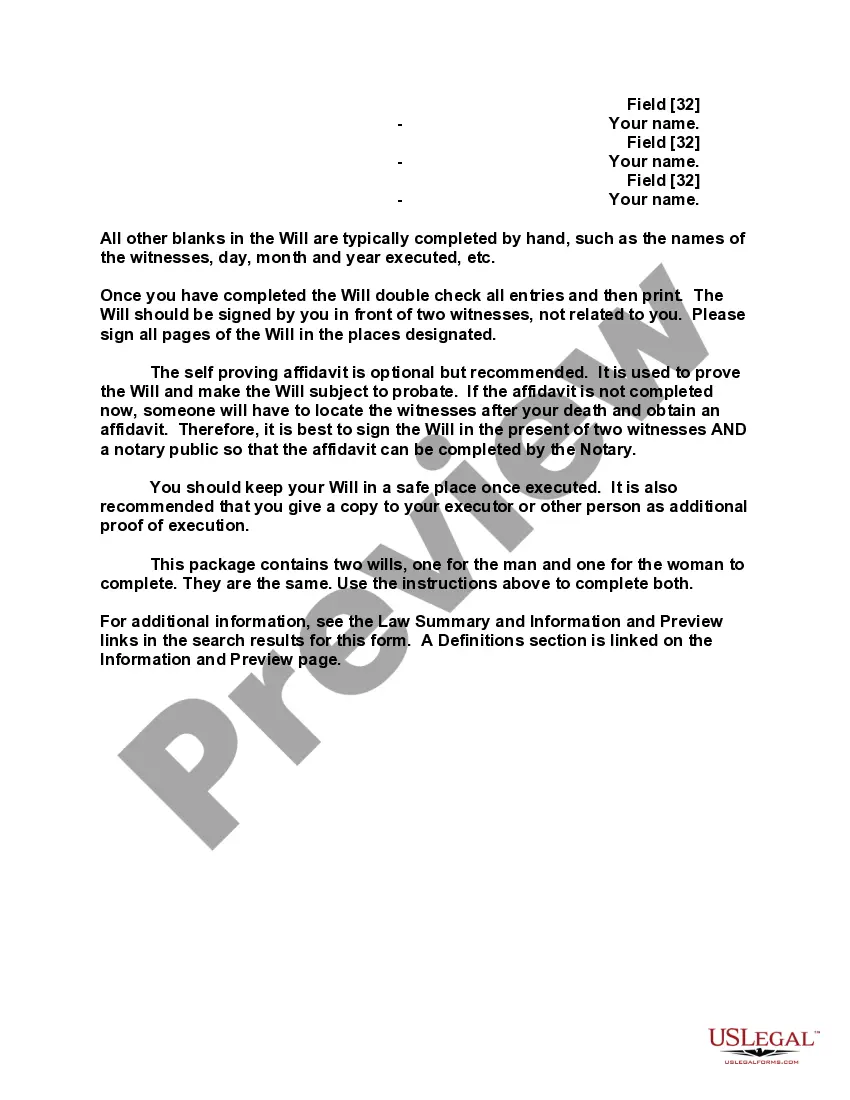
- Sign in the presence of witnesses: Ensure the will is signed by you and two witnesses to make it valid.
Does this document require notarization?
Yes, this form must be notarized to be legally valid. It is recommended to sign the will in the presence of a notary public to facilitate the completion of the self-proving affidavit, making the will easier to prove during probate.
Get your form ready online
Our built-in tools help you complete, sign, share, and store your documents in one place.
Make edits, fill in missing information, and update formatting in US Legal Forms—just like you would in MS Word.
Download a copy, print it, send it by email, or mail it via USPS—whatever works best for your next step.
Sign and collect signatures with our SignNow integration. Send to multiple recipients, set reminders, and more. Go Premium to unlock E-Sign.
If this form requires notarization, complete it online through a secure video call—no need to meet a notary in person or wait for an appointment.
We protect your documents and personal data by following strict security and privacy standards.

Make edits, fill in missing information, and update formatting in US Legal Forms—just like you would in MS Word.

Download a copy, print it, send it by email, or mail it via USPS—whatever works best for your next step.

Sign and collect signatures with our SignNow integration. Send to multiple recipients, set reminders, and more. Go Premium to unlock E-Sign.

If this form requires notarization, complete it online through a secure video call—no need to meet a notary in person or wait for an appointment.

We protect your documents and personal data by following strict security and privacy standards.
Mistakes to watch out for
- Failing to have the will signed by two witnesses, as required by law.
- Not designating clear beneficiaries for specific bequests.
- Overlooking the need to update the will after significant life changes.
Benefits of using this form online
- Convenience of downloading the form immediately after purchase.
- Editability allows you to customize according to your specific needs.
- Access to state-specific legal guidance tailored to Kansas.
What to keep in mind
- This Mutual Will form is ideal for couples living together who wish to secure each other's rights to their estates.
- It includes essential articles for debt management, property bequests, and appointment of a personal representative.
- Proper execution, including witness signatures and notarization, is crucial for enforcing the will.
Looking for another form?
Form popularity
FAQ
As long as it was properly signed and witnessed by two adult independent witnesses who are present at the time you sign your will, it should be legally binding.Using the wrong wording could mean that your instructions aren't followed, or even that your will isn't valid.
As the name indicates, reciprocal wills between spouses are essentially two separate wills that are mirror images of one another.After specific transfers to beneficiaries, the surviving spouse will then receive the entirety of whatever is left of the decedent's (spouse who passed away) estate.
A joint will is a legal document executed by two (or more) people, which merges their individual wills into a single, combined last will and testament. Like most wills, a joint will lets the will-makers name who will get their property and assets after they die. Joint wills are usually created by married couples.
Mutual Wills are Wills drawn up by at least two people and are signed following an agreement between the individuals which it is intended should bind the survivor of them. Each individual agrees with the other not to alter their Will after the other dies.
Include personal identifying information. Include a statement about your age and mental status. Designate an executor. Decide who will take care of your children. Choose your beneficiaries. List your funeral details. Sign and date your Last Will and Testament.
Choose an online legal services provider or locate a will template. Carefully consider your distribution wishes. Identify a personal representative/executor. Understand the requirements to make your will legal. Make sure someone else knows about your will. Consult a lawyer if you have a more complicated estate.
The four main types of wills are simple, testamentary trust, joint, and living.
Choose an online legal services provider or locate a will template. Carefully consider your distribution wishes. Identify a personal representative/executor. Understand the requirements to make your will legal. Make sure someone else knows about your will. Consult a lawyer if you have a more complicated estate.
Yes! Your Free Will Kit will be delivered to you at no-cost, no purchase necessary.