Indiana Right of Way Agreement
Description
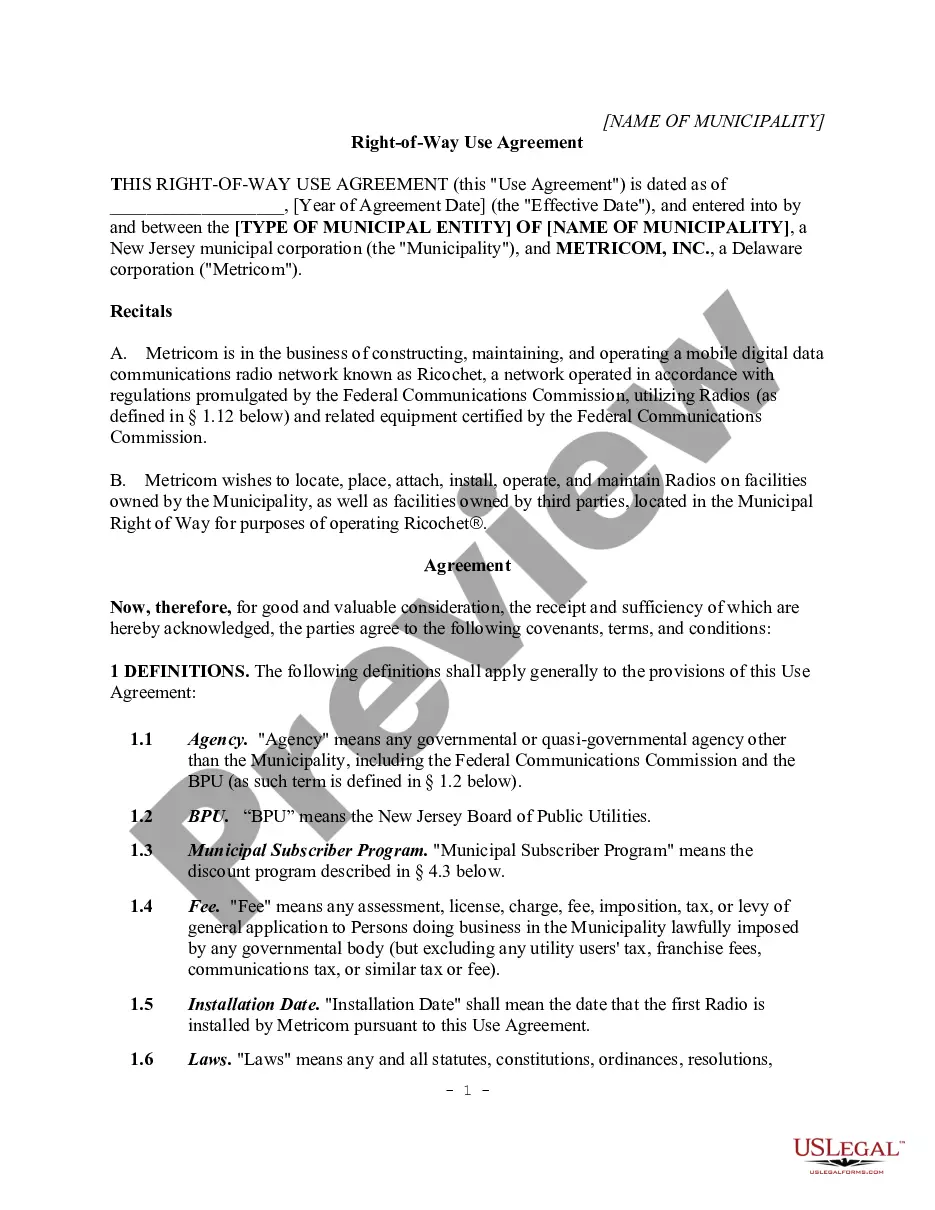
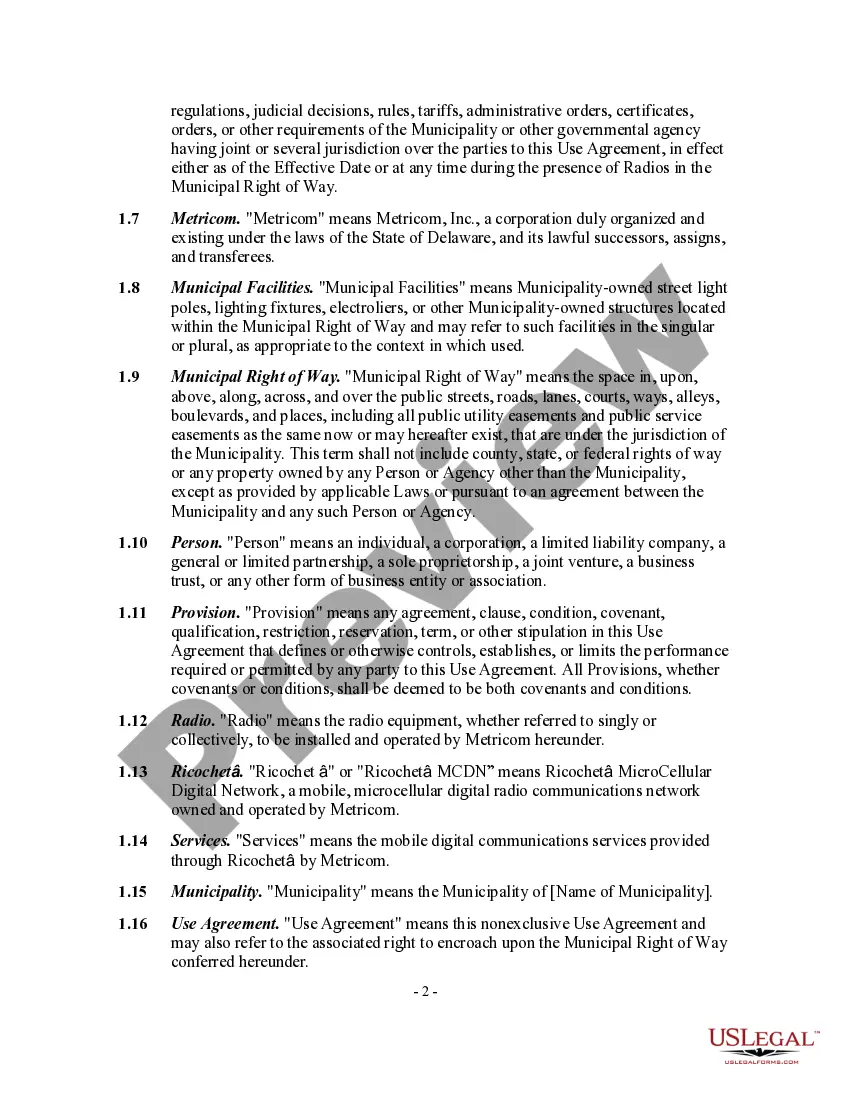
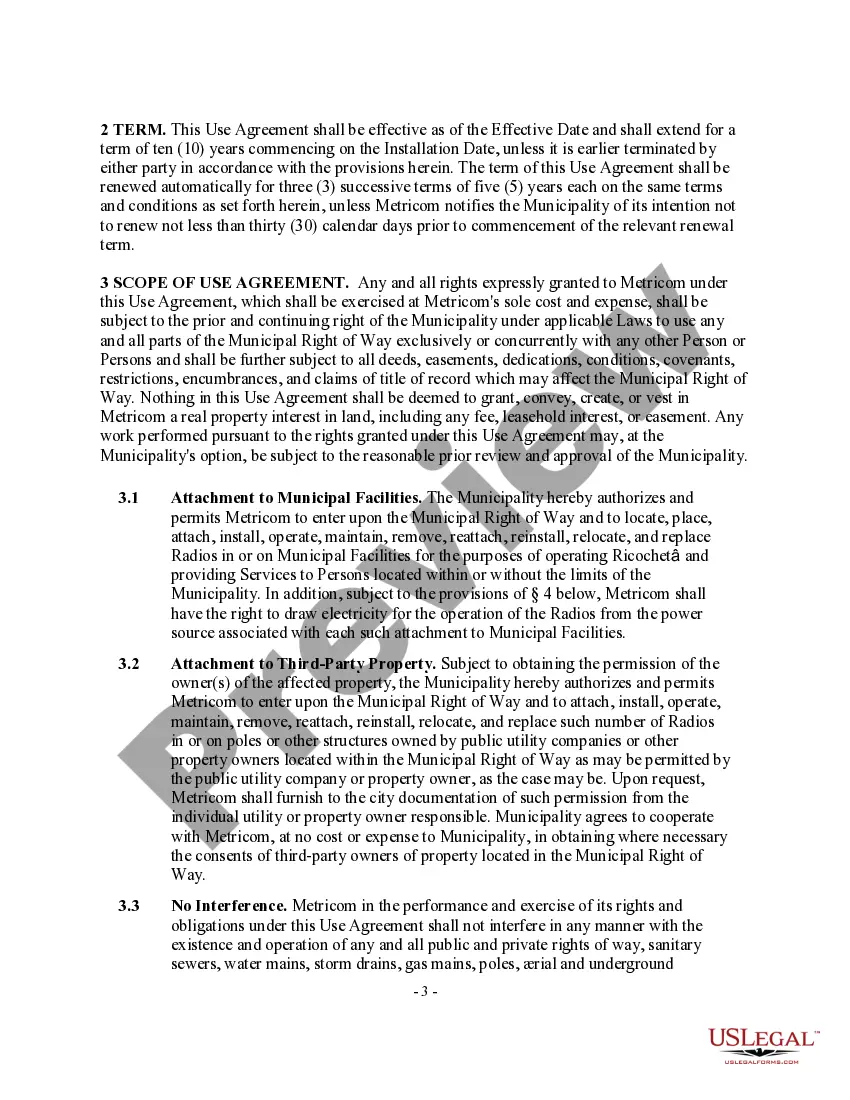
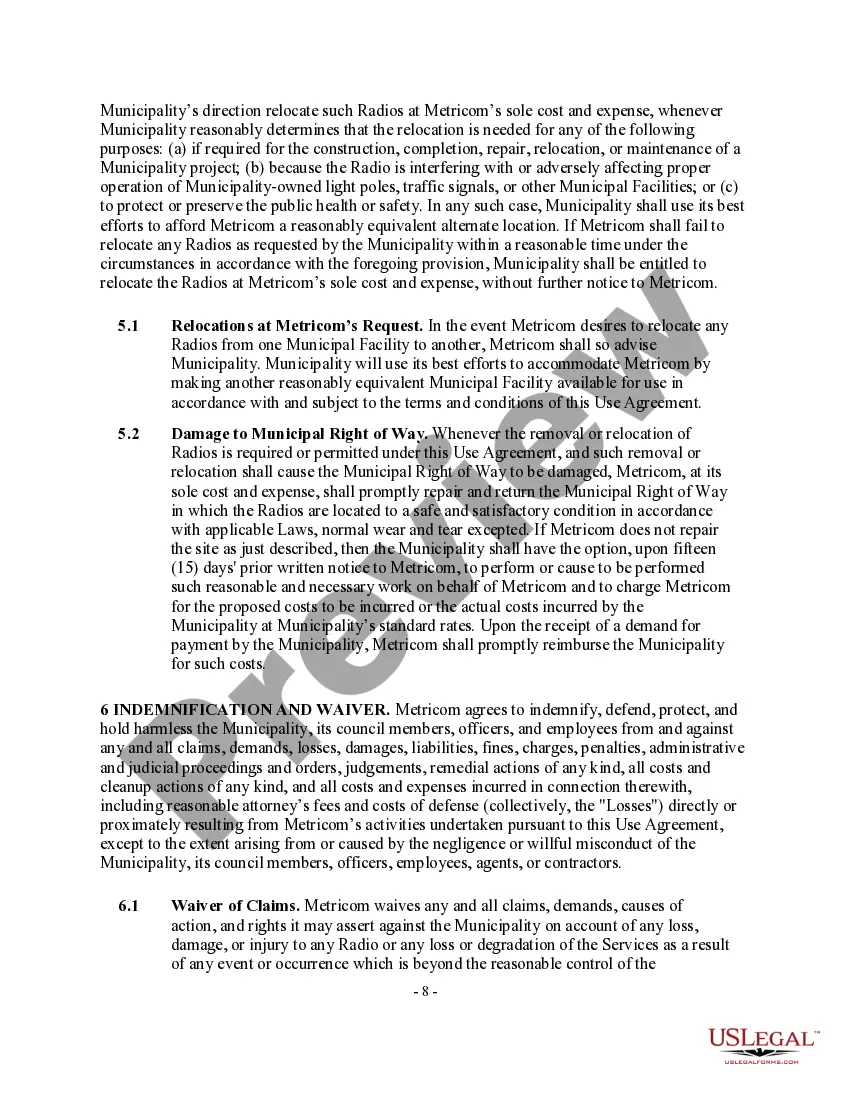
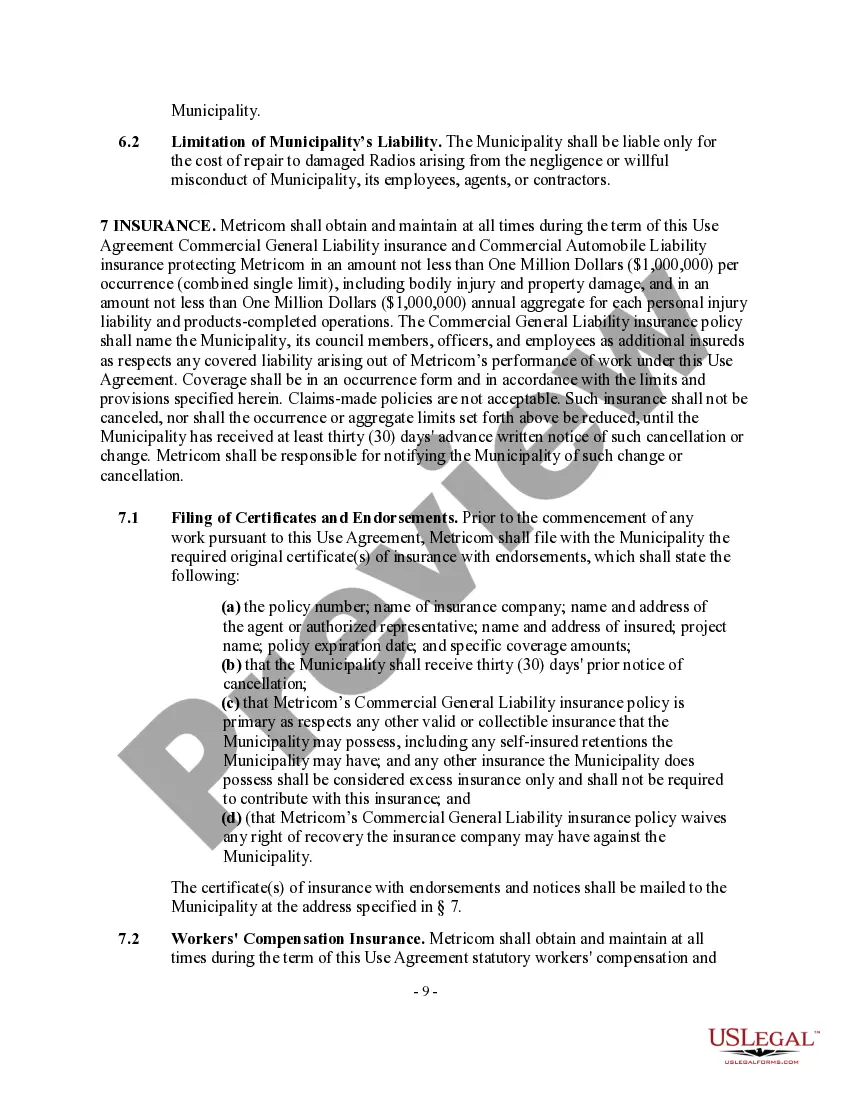
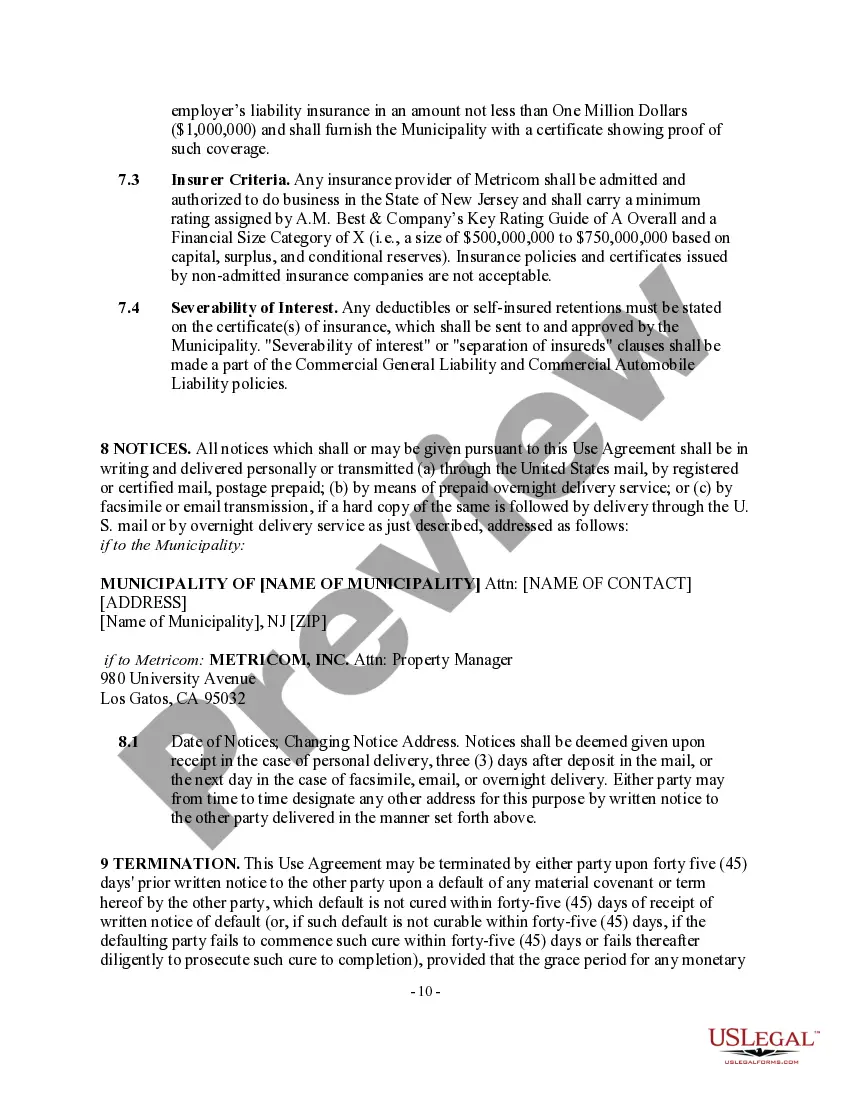

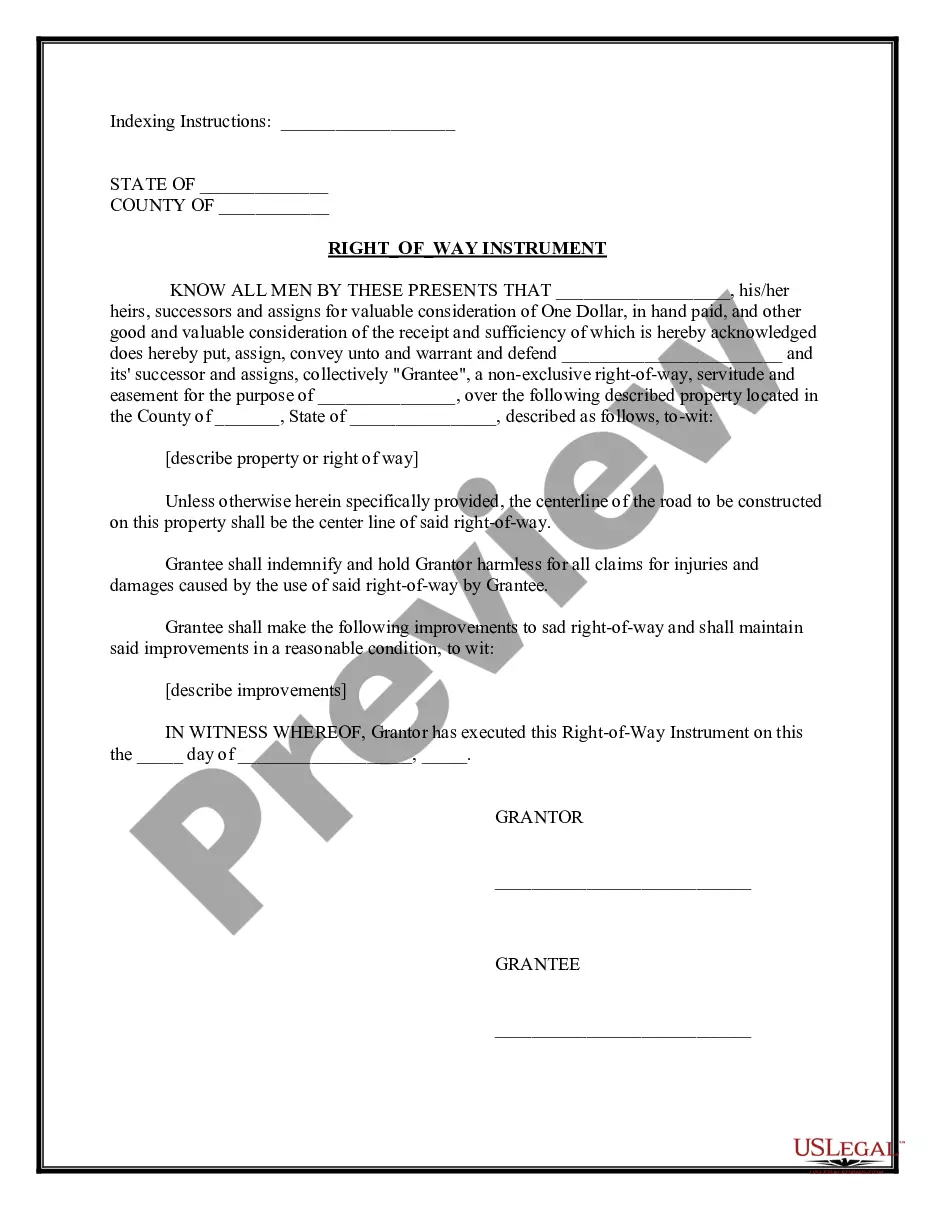
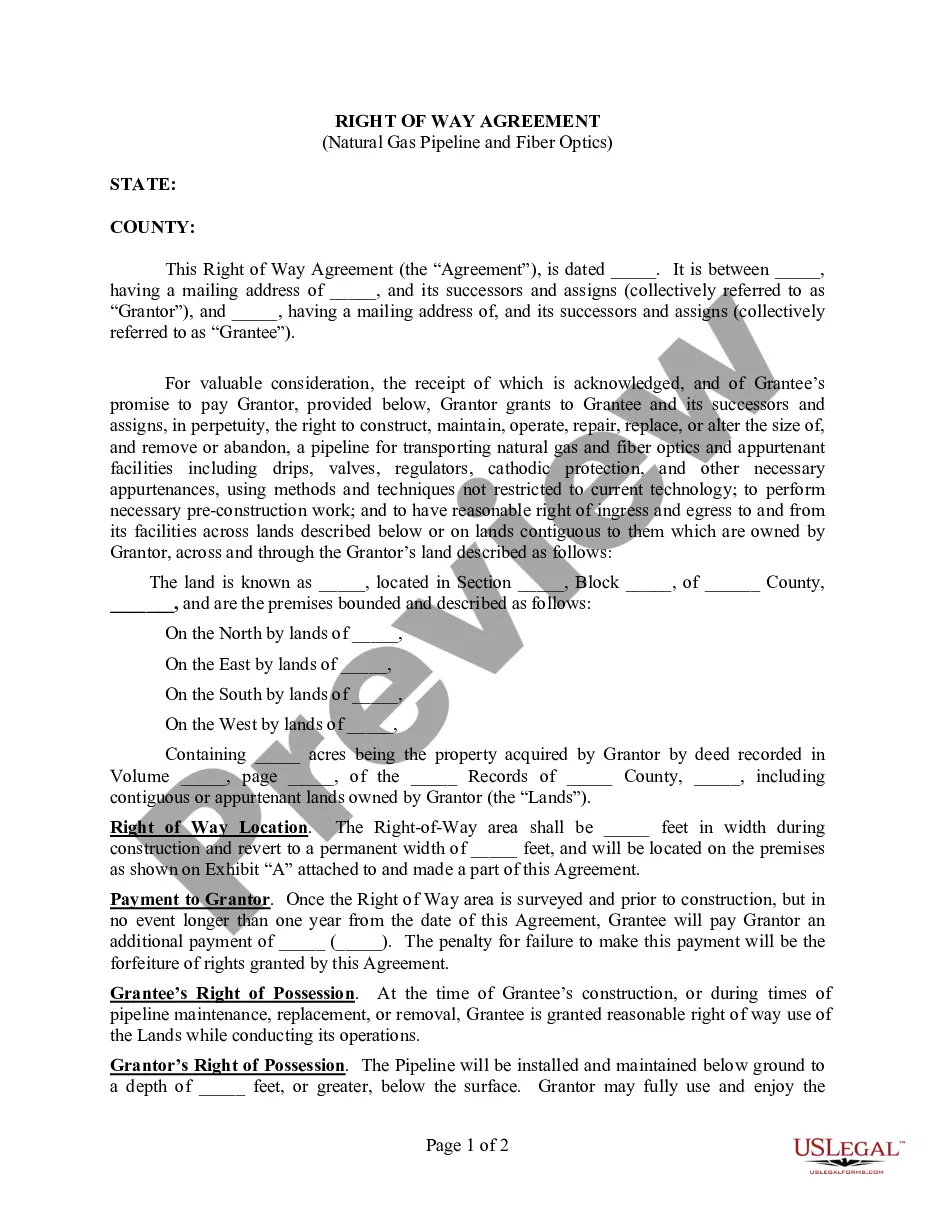
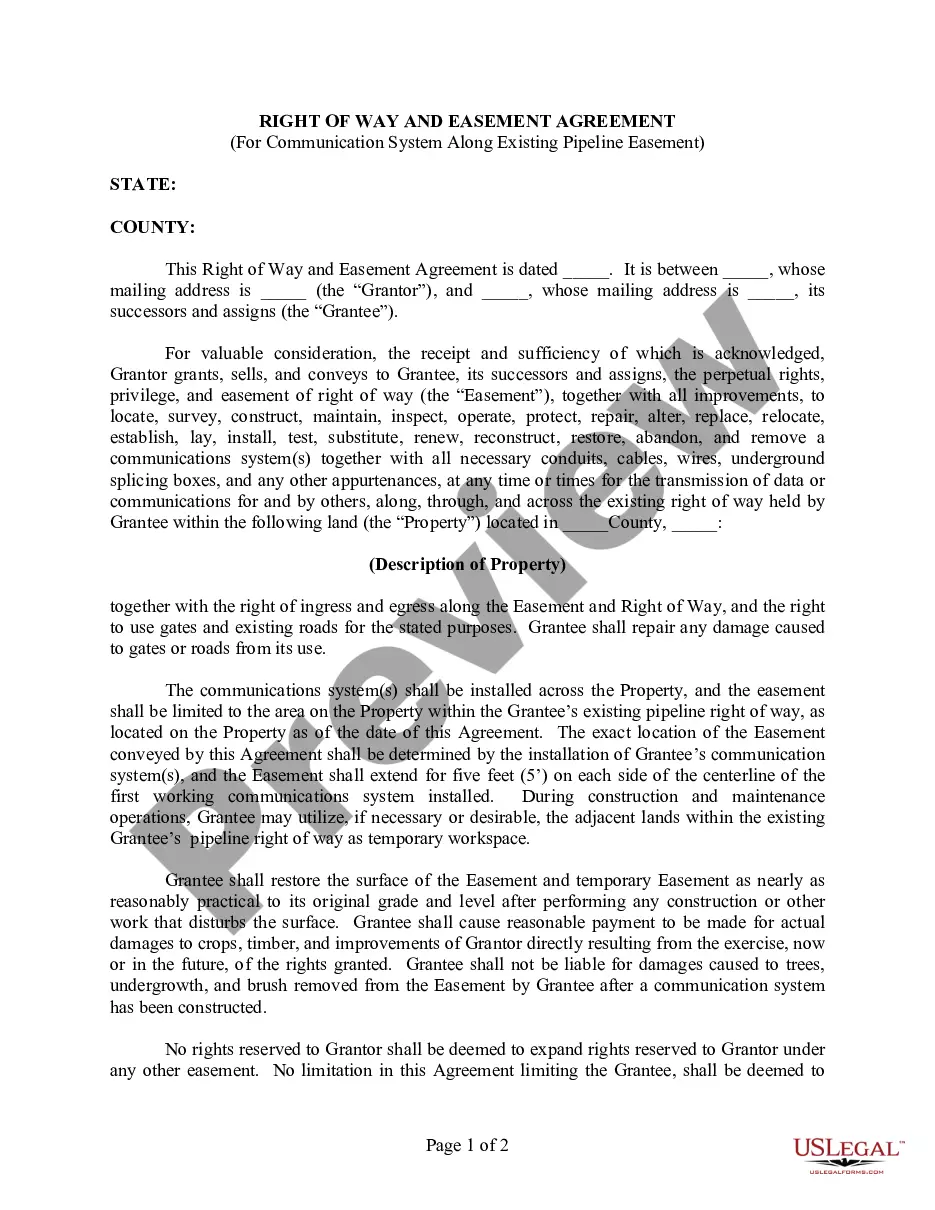
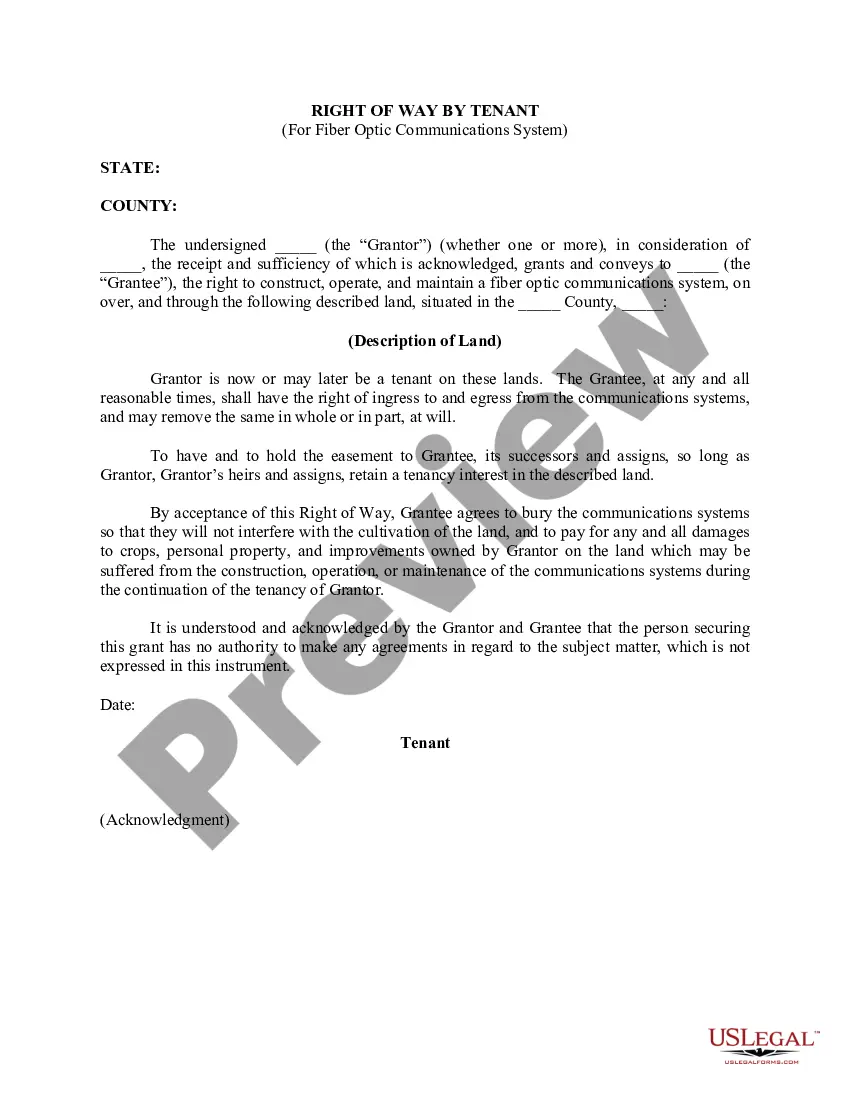
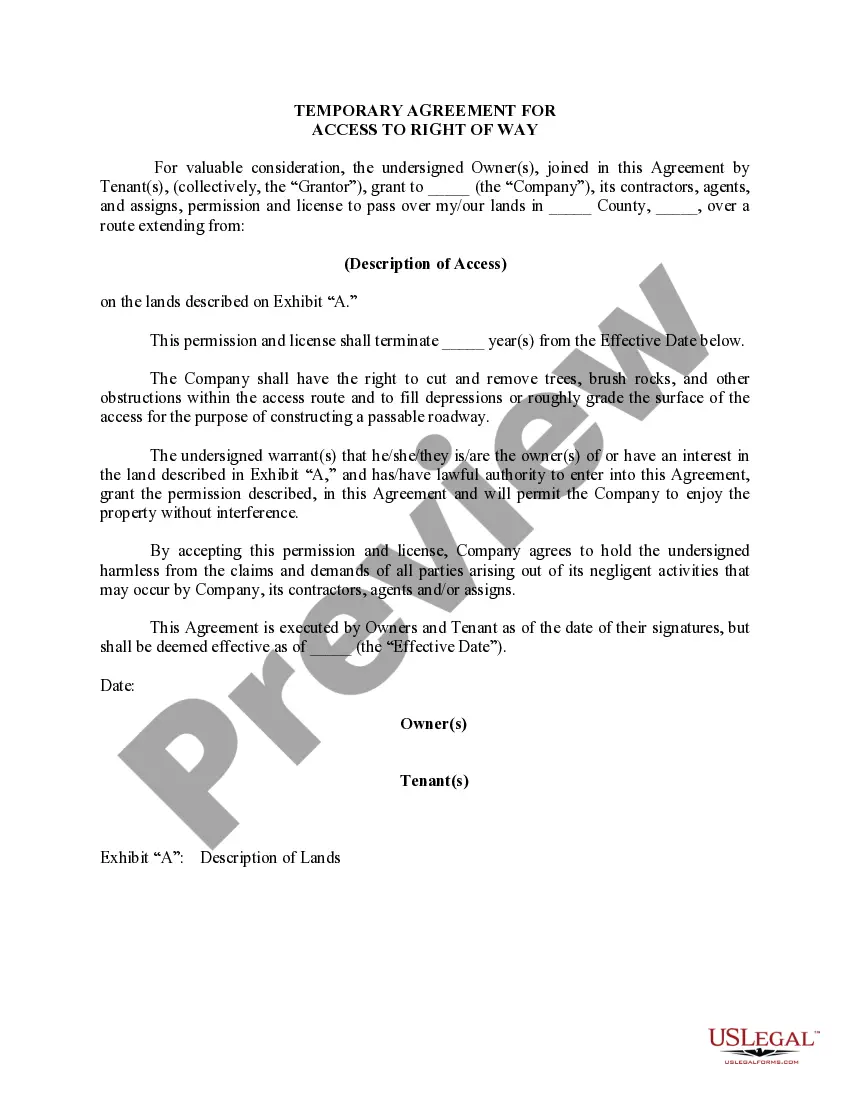



How to fill out Right Of Way Agreement?
Selecting the optimal valid document format can be a challenge. Clearly, there are numerous templates accessible online, but how can you find the appropriate document you need? Utilize the US Legal Forms website. The service offers thousands of templates, such as the Indiana Right of Way Agreement, that can be utilized for business and personal purposes. All forms are reviewed by experts and comply with federal and state regulations.
If you are already registered, Log In to your account and click the Download button to access the Indiana Right of Way Agreement. Use your account to browse through the legal forms you have previously purchased. Go to the My documents tab of your account and retrieve another copy of the document you need.
If you are a new user of US Legal Forms, here are some simple instructions for you to follow: First, ensure you have selected the correct document for your locality. You can preview the form using the Preview button and read the form description to confirm this is the right one for you. If the form does not fulfill your requirements, utilize the Search box to find the correct document. Once you are confident that the form is suitable, click the Purchase now button to obtain the form. Choose the pricing plan you want and enter the necessary information. Create your account and pay for your order using your PayPal account or credit card. Select the document format and download the legal document format to your device. Complete, edit, print, and sign the received Indiana Right of Way Agreement.
- US Legal Forms is the largest collection of legal forms where you can find a variety of document templates.
- Utilize the service to obtain professionally-crafted paperwork that complies with state requirements.
Form popularity
FAQ
Maintenance responsibilities for an easement in Indiana are typically outlined in the easement agreement itself. Generally, the party benefiting from the easement is responsible for its upkeep, ensuring that the right of way remains accessible and functional. It is crucial to clearly define these responsibilities in your Indiana Right of Way Agreement to avoid disputes in the future. For assistance in drafting these agreements, US Legal Forms provides valuable templates.
The Indiana right-of-way bond is a financial guarantee required by local governments when individuals or companies seek to use public land for development or construction projects. This bond ensures that the project will be completed without causing damage to the right of way. Understanding the requirements for this bond is crucial when entering into an Indiana Right of Way Agreement. For detailed guidance, US Legal Forms offers resources to help you navigate these legal requirements.
Yes, you can add an easement to your property, but it requires careful consideration and proper documentation. An easement allows another party to use a portion of your property for specific activities, such as access or utilities. To establish an easement properly, an Indiana Right of Way Agreement must be created and recorded. Utilizing resources like US Legal Forms can help simplify this process with easy-to-use templates.
Ownership of a right of way can vary based on the specific agreements in place. Typically, a right of way allows one party to use another's land for a specific purpose, while the landowner maintains ownership. In the context of an Indiana Right of Way Agreement, it is essential to clarify the terms to ensure all parties understand their rights and responsibilities. If you need help navigating these agreements, consider using US Legal Forms for reliable templates.
The right of way law in Indiana encompasses statutes and regulations that govern the use of land for passage and access. These laws aim to balance public needs with private property rights. By entering into an Indiana Right of Way Agreement, you can ensure compliance with these laws while protecting your interests. For comprehensive guidance, consider using platforms like US Legal Forms to access resources and templates tailored to your needs.
When you hold a right of way, you have the legal authority to access the specified pathway or area, as outlined in your agreement. However, your rights may come with conditions, such as limits on the type of activities allowed. An Indiana Right of Way Agreement clarifies these rights and can help protect you from unauthorized use by others. It is essential to review this document to fully understand your entitlements and responsibilities.
A right of way allows someone to pass through another person's property, while an easement grants specific rights to use the land for a particular purpose, such as installing utilities. Both terms are often used interchangeably, but they serve different legal functions in property law. Understanding the distinctions is crucial when drafting an Indiana Right of Way Agreement, as it ensures that all parties know their rights and limitations.
In Indiana, the rules for right of way dictate how property owners and the public can use land for travel or access. These rules ensure that landowners maintain their property rights while allowing for necessary access. When you enter an Indiana Right of Way Agreement, you establish clear guidelines for usage, helping to prevent disputes in the future. It's important to consult legal resources to understand your specific obligations and rights.
The simplest method to create an easement is to have a mutual agreement documented in writing. This agreement should specify the rights granted and any limitations on use. Leveraging the Indiana Right of Way Agreement can help make this process clear and legally binding.
The most straightforward way to create an easement is through a written agreement between the property owner and the party seeking the easement. This document should clearly define the terms of use and any restrictions. Utilizing the Indiana Right of Way Agreement can simplify this process and ensure all legal requirements are met.