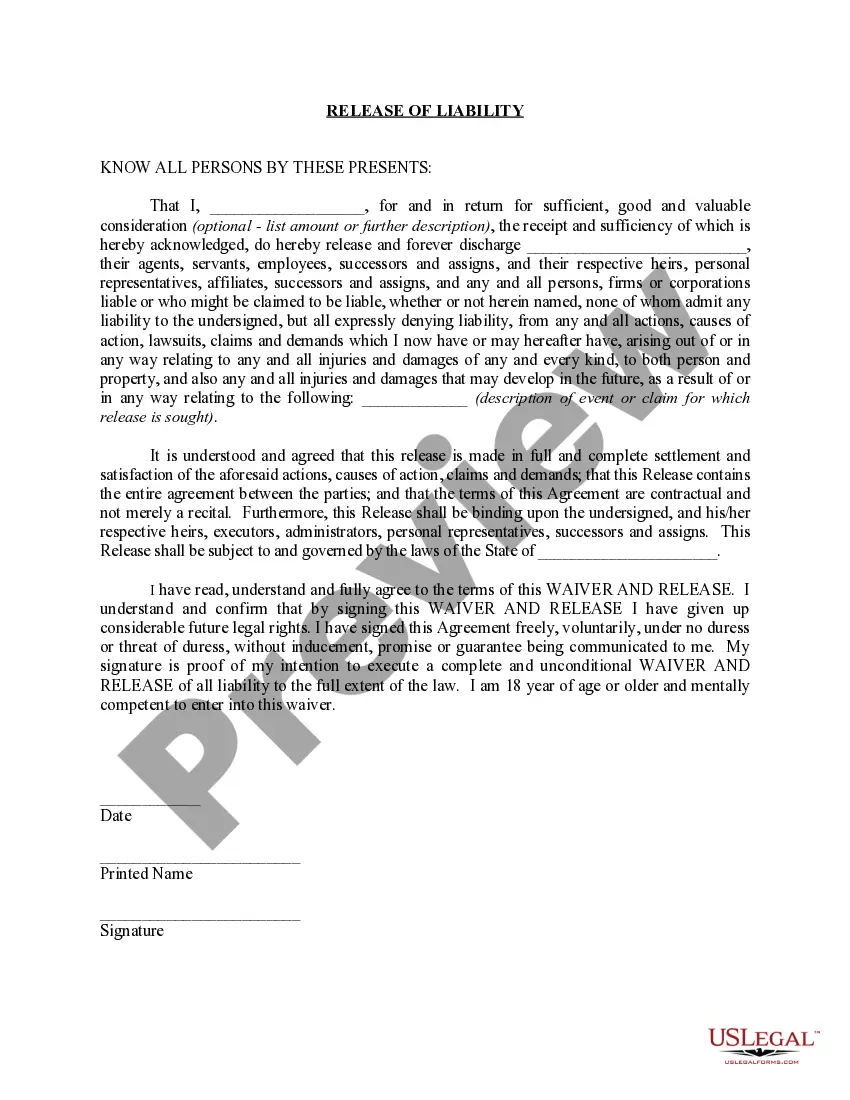
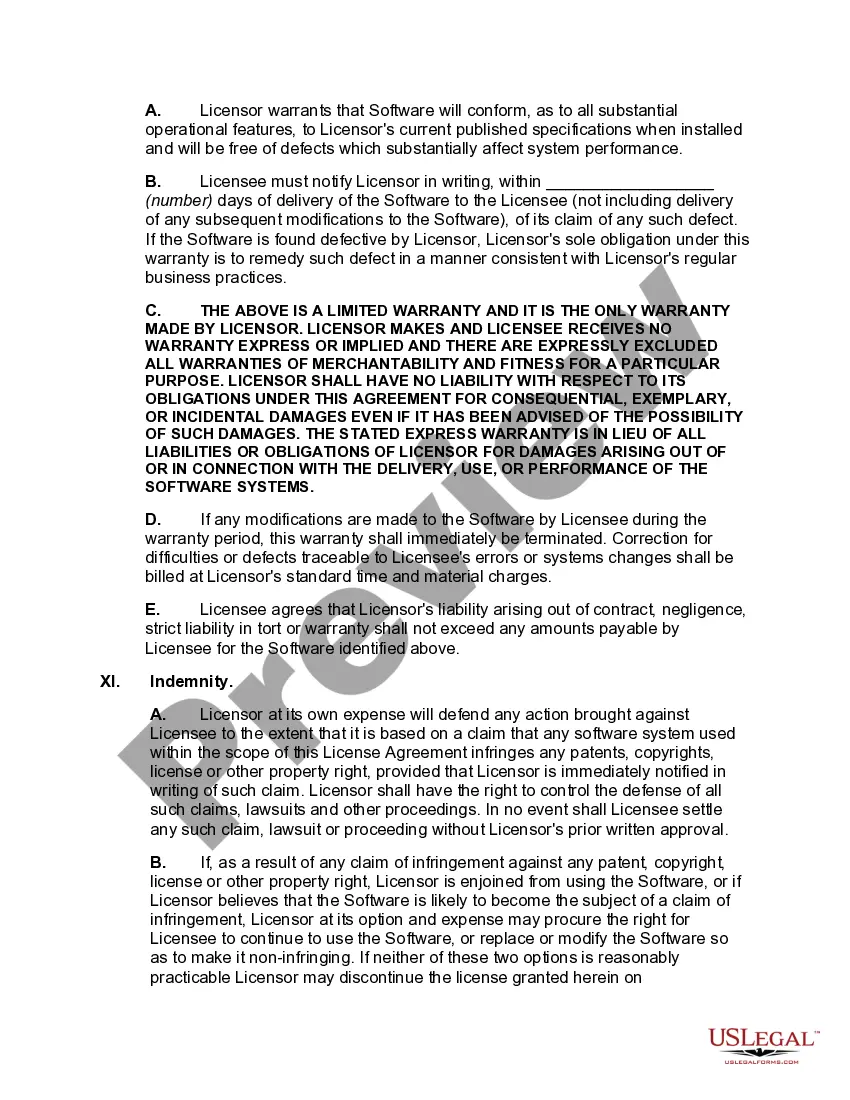
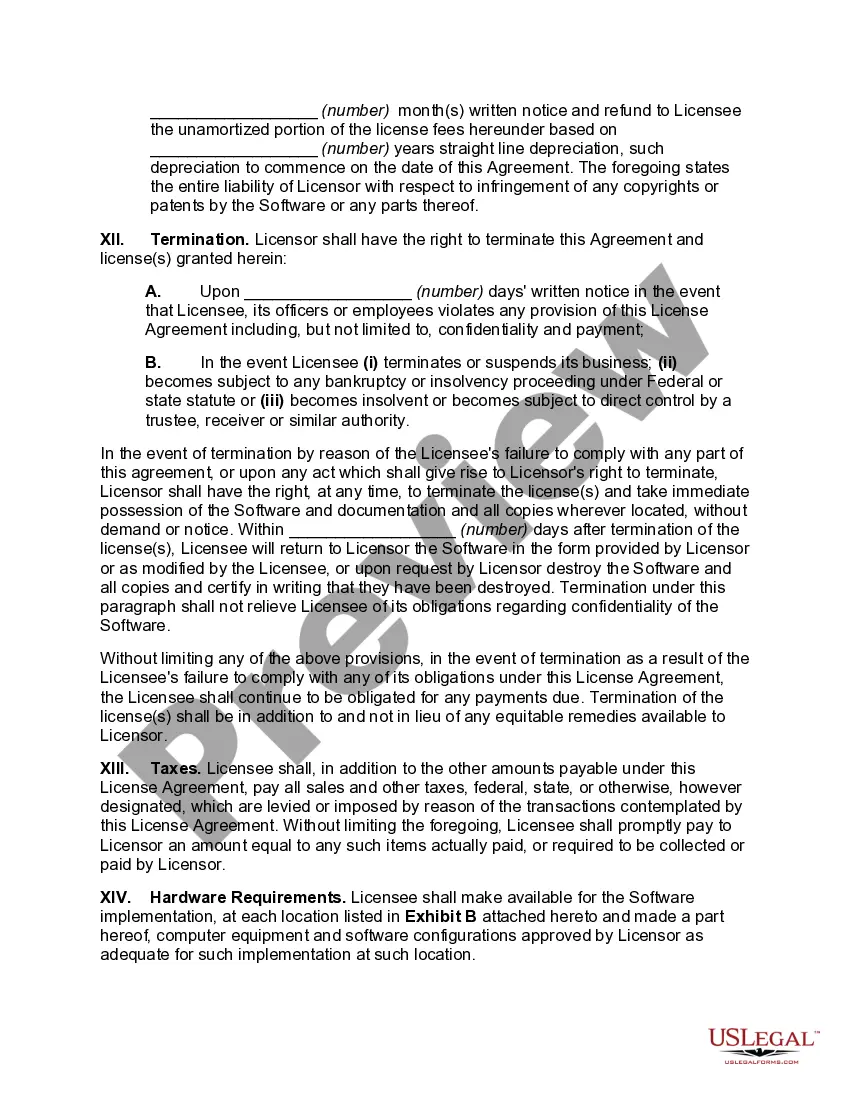
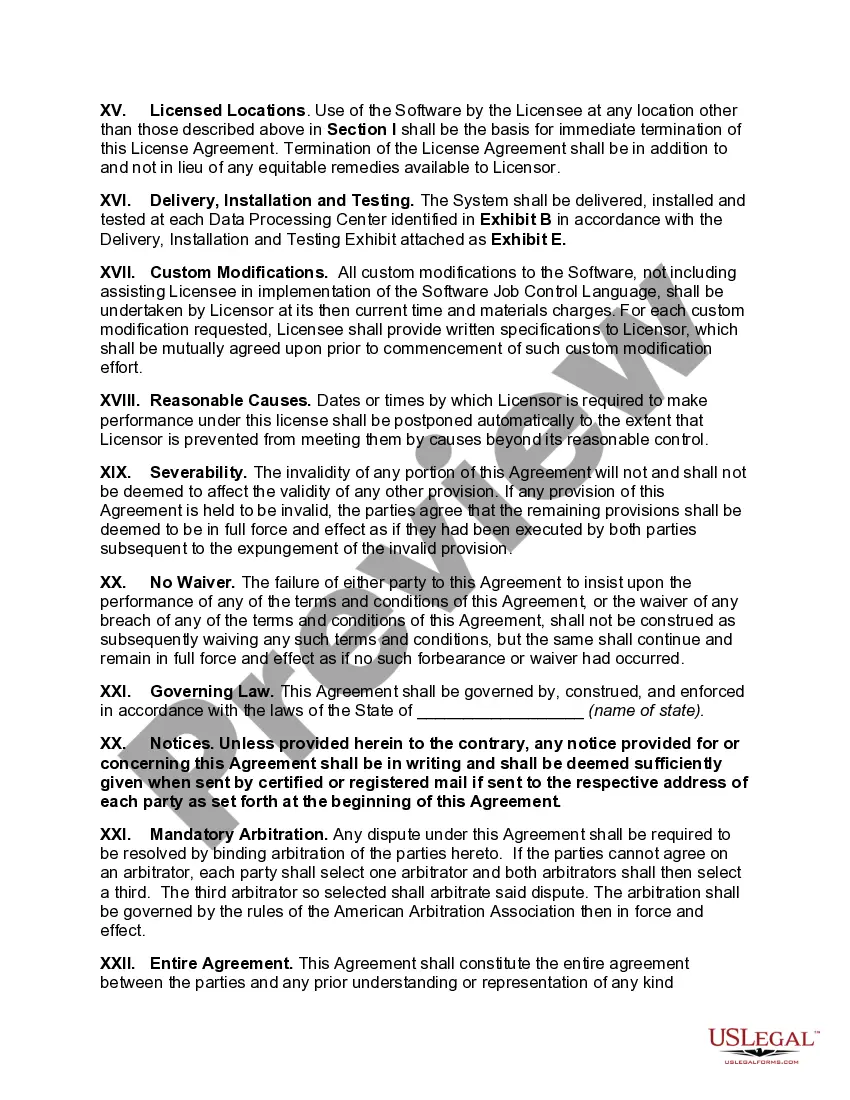
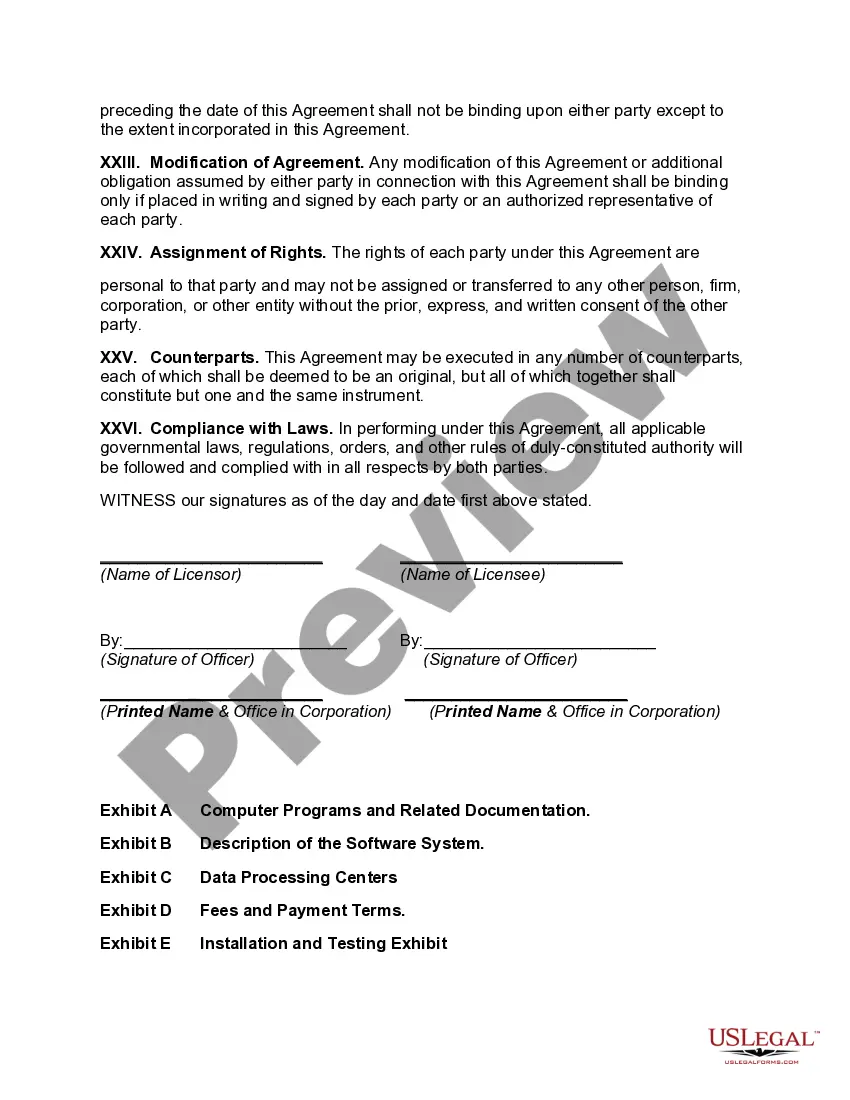
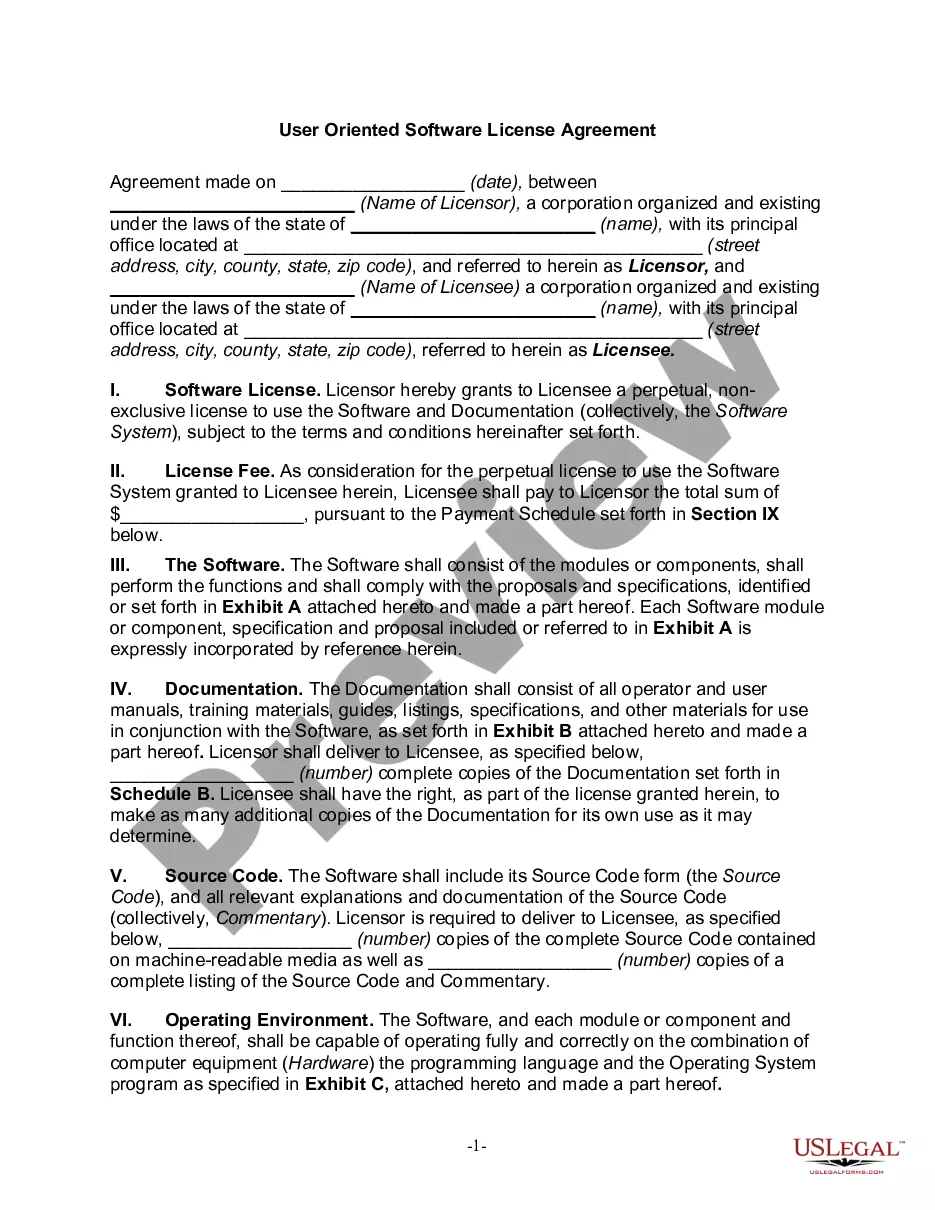
Indiana Vendor Oriented Software License Agreement
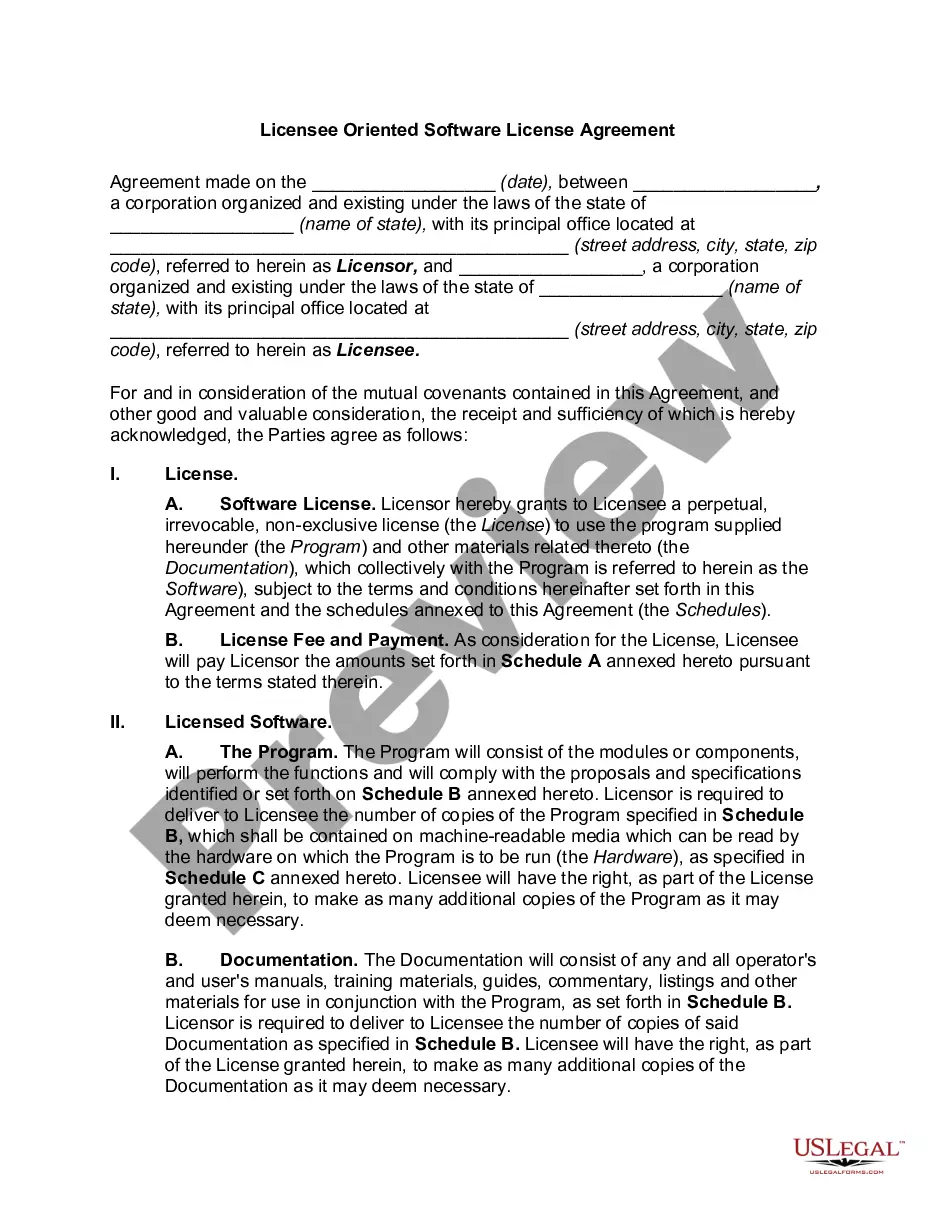
Description
Get your form ready online
Our built-in tools help you complete, sign, share, and store your documents in one place.
Make edits, fill in missing information, and update formatting in US Legal Forms—just like you would in MS Word.
Download a copy, print it, send it by email, or mail it via USPS—whatever works best for your next step.
Sign and collect signatures with our SignNow integration. Send to multiple recipients, set reminders, and more. Go Premium to unlock E-Sign.
If this form requires notarization, complete it online through a secure video call—no need to meet a notary in person or wait for an appointment.
We protect your documents and personal data by following strict security and privacy standards.

Make edits, fill in missing information, and update formatting in US Legal Forms—just like you would in MS Word.

Download a copy, print it, send it by email, or mail it via USPS—whatever works best for your next step.

Sign and collect signatures with our SignNow integration. Send to multiple recipients, set reminders, and more. Go Premium to unlock E-Sign.

If this form requires notarization, complete it online through a secure video call—no need to meet a notary in person or wait for an appointment.

We protect your documents and personal data by following strict security and privacy standards.
Looking for another form?





How to fill out Vendor Oriented Software License Agreement?
Have you ever been in a situation where you require documents for both business or personal reasons practically all the time.
There are numerous legal document templates available online, but finding ones you can rely on is challenging.
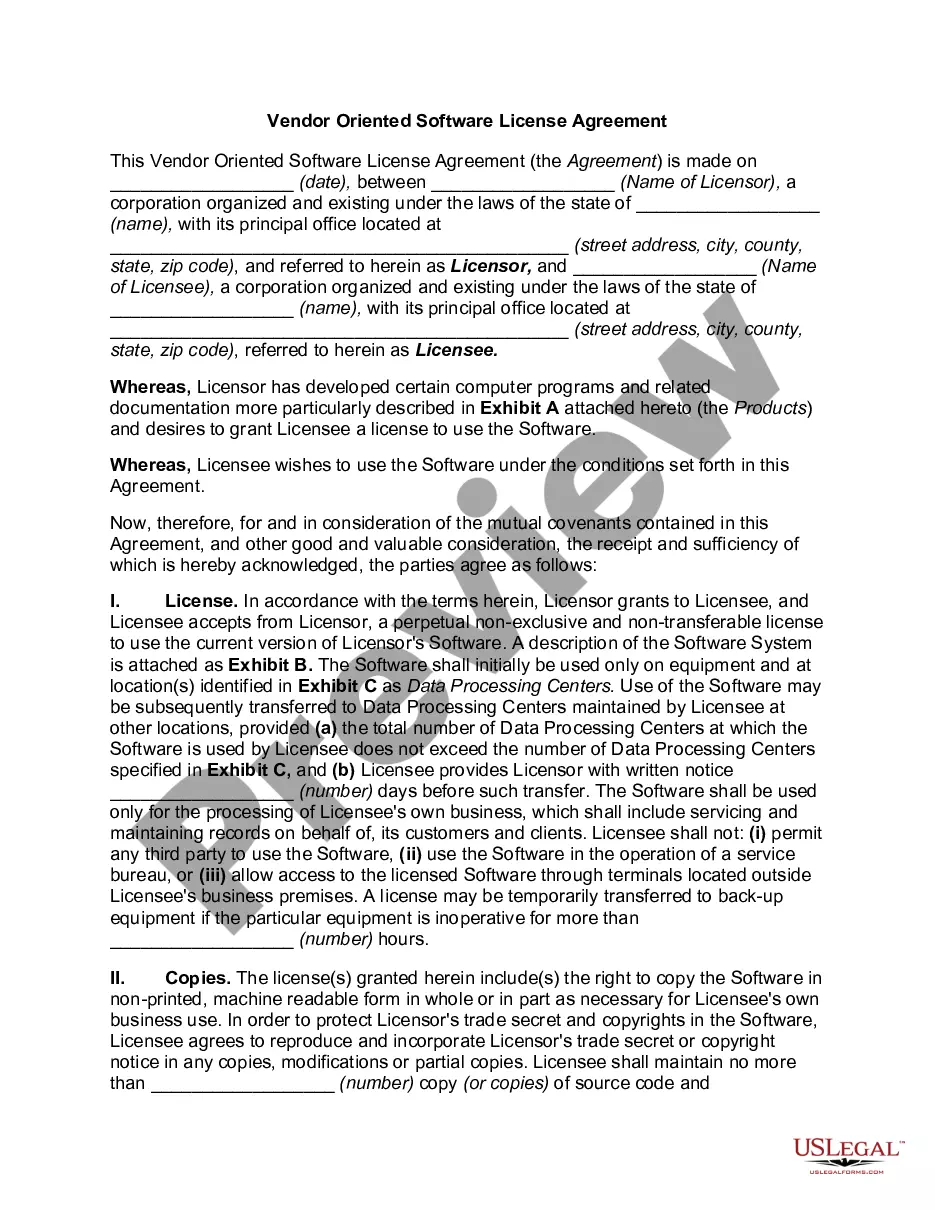
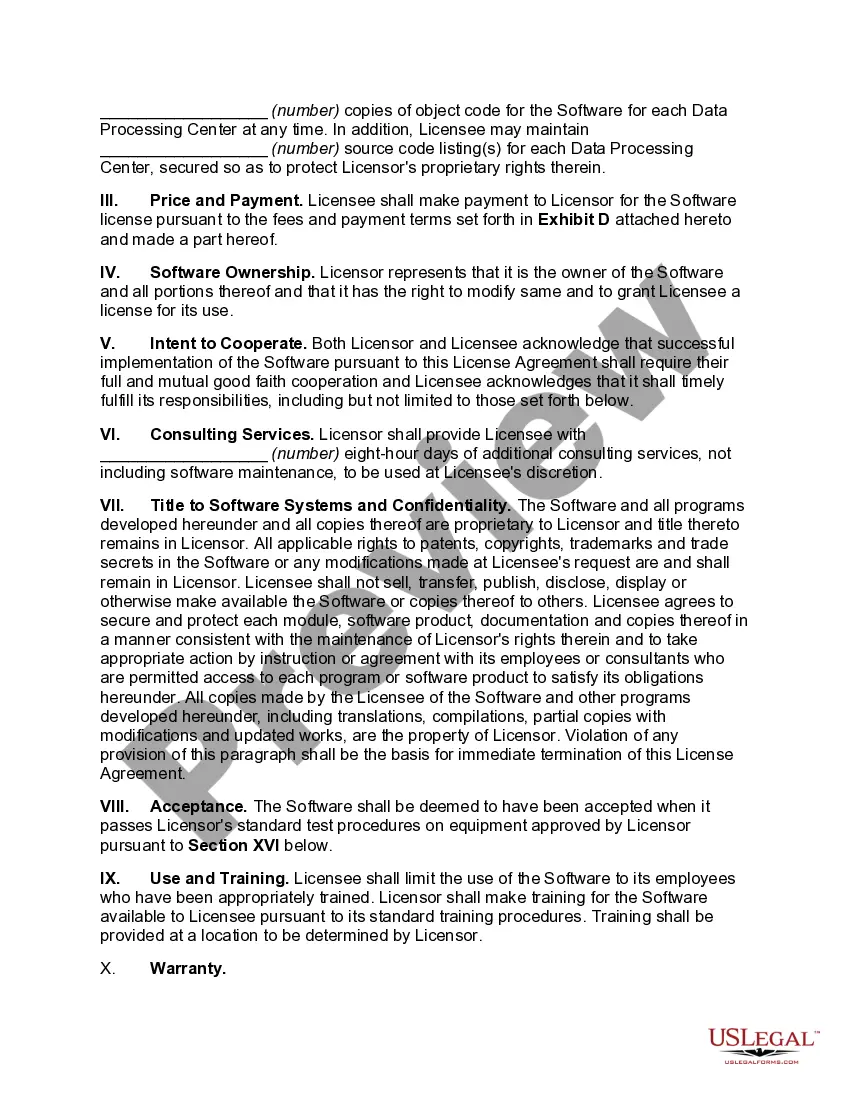
US Legal Forms offers a vast array of form templates, such as the Indiana Vendor Oriented Software License Agreement, designed to meet state and federal regulations.
If you find the right form, simply click Acquire now.
Choose the pricing plan you desire, fill out the necessary information to create your account, and make a purchase using your PayPal or credit card.
- If you are already familiar with the US Legal Forms website and possess an account, simply Log In.
- After that, you can download the Indiana Vendor Oriented Software License Agreement template.
- If you do not have an account and wish to start using US Legal Forms, follow these instructions.
- Select the form you need and ensure it corresponds to the correct city/state.
- Use the Review button to examine the form.
- Check the details to confirm that you have selected the correct form.
- If the form is not what you are looking for, utilize the Search field to find the form that suits your needs.
Form popularity
FAQ
What is the purpose of an End User License Agreement (EULA)? Acting as a contract between the software developer or publisher and the end-user, an end user license agreement grants the user a license to use the app and covers a series of important clauses that limit your own obligations as the vendor.
A software license agreement details how and when the software can be used, and provides any restrictions that are imposed on the software. A software license agreement also defines and protects the rights of the parties involved in a clear and concise manner.
Generally speaking, an EULA is a legally binding agreement between the owner of a product (often software) and the end-user more specifically a contract between the licensor of a product and the licensee.
An EULA is the agreement between someone who downloads software (the licensor, or end user) and the developer. A Terms and Conditions agreement is between the service provider and the end user. Although they have many similar clauses, you'll note that the EULA only covers terms relating to the software or app download.
Generally speaking, an EULA is a legally binding agreement between the owner of a product (often software) and the end-user more specifically a contract between the licensor of a product and the licensee.
A software license is a legally binding agreement made between the owner or developer of a software program and the user, outlining how they can use and distribute the product.
The important difference is the fact that a software license provides a product that is tangible, whereas a SaaS agreement is based on a service. For those who draft software contracts, confusing SaaS agreements and software licenses are a common occurrence.
A software license agreement should include the licensor's reservation of all its rights not specifically granted to the licensee and the licensee's acknowledgment of the licensor's ownership of the licensed software. Payment terms.
An EULA sets out what end users can and can't do with your software. A Terms and Conditions agreement set out what services you agree to offer the end user and how you expect them to behave in return.
A EULA, which may also be referred to as software license, is written to enforce specific use limitations, such as only installing the software on one computer. Some EULAs limit the user's right to copy software, including copying the software for backup purposes.