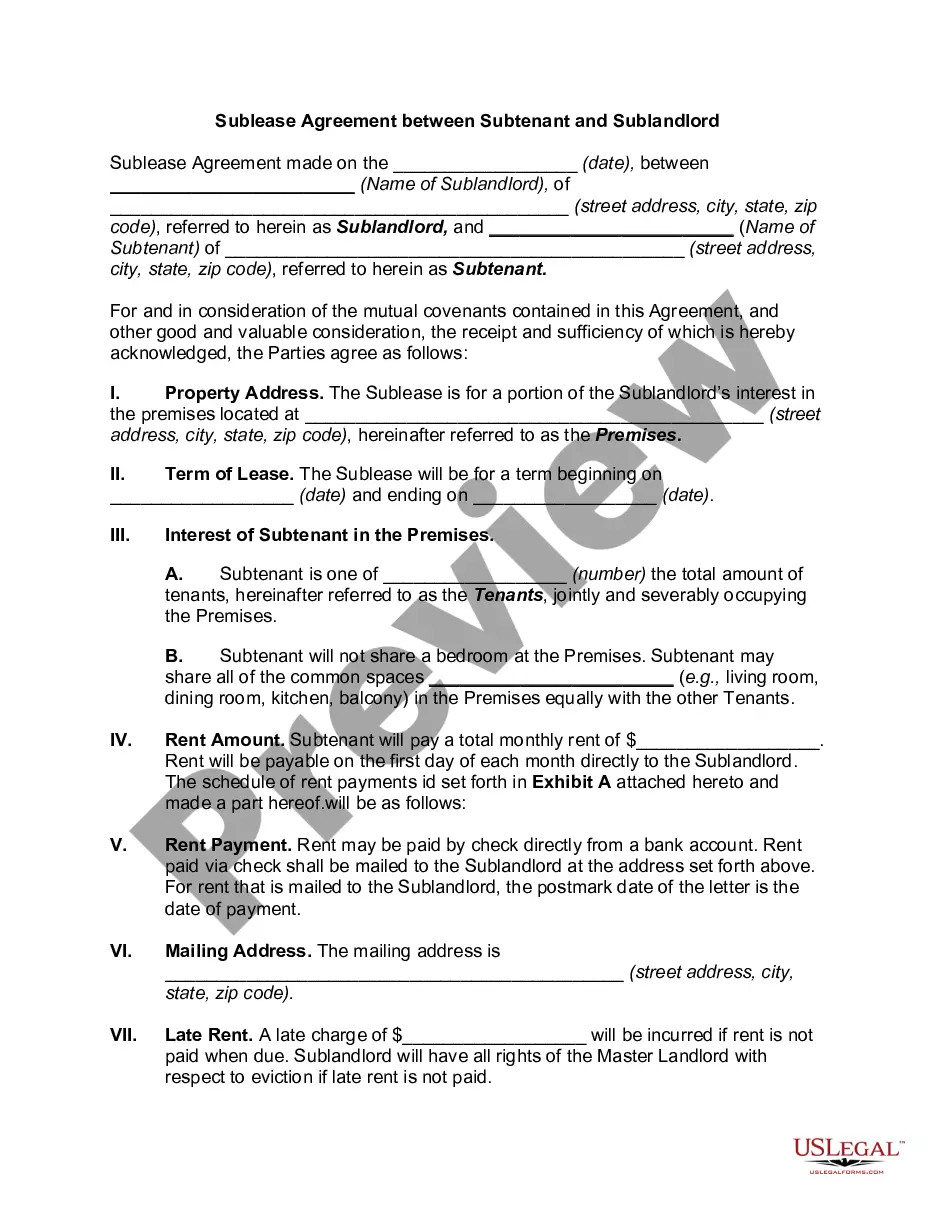
Indiana Sublease Agreement for Commercial Property
Description

Get your form ready online
Our built-in tools help you complete, sign, share, and store your documents in one place.
Make edits, fill in missing information, and update formatting in US Legal Forms—just like you would in MS Word.
Download a copy, print it, send it by email, or mail it via USPS—whatever works best for your next step.
Sign and collect signatures with our SignNow integration. Send to multiple recipients, set reminders, and more. Go Premium to unlock E-Sign.
If this form requires notarization, complete it online through a secure video call—no need to meet a notary in person or wait for an appointment.
We protect your documents and personal data by following strict security and privacy standards.

Make edits, fill in missing information, and update formatting in US Legal Forms—just like you would in MS Word.

Download a copy, print it, send it by email, or mail it via USPS—whatever works best for your next step.

Sign and collect signatures with our SignNow integration. Send to multiple recipients, set reminders, and more. Go Premium to unlock E-Sign.

If this form requires notarization, complete it online through a secure video call—no need to meet a notary in person or wait for an appointment.

We protect your documents and personal data by following strict security and privacy standards.
Looking for another form?

How to fill out Sublease Agreement For Commercial Property?
US Legal Forms - one of the largest repositories of legal documents in the United States - offers a range of legal document templates that you can download or print.
By using the website, you can access thousands of forms for business and personal use, categorized by type, state, or keywords. You can find the latest editions of forms such as the Indiana Sublease Agreement for Commercial Property within moments.
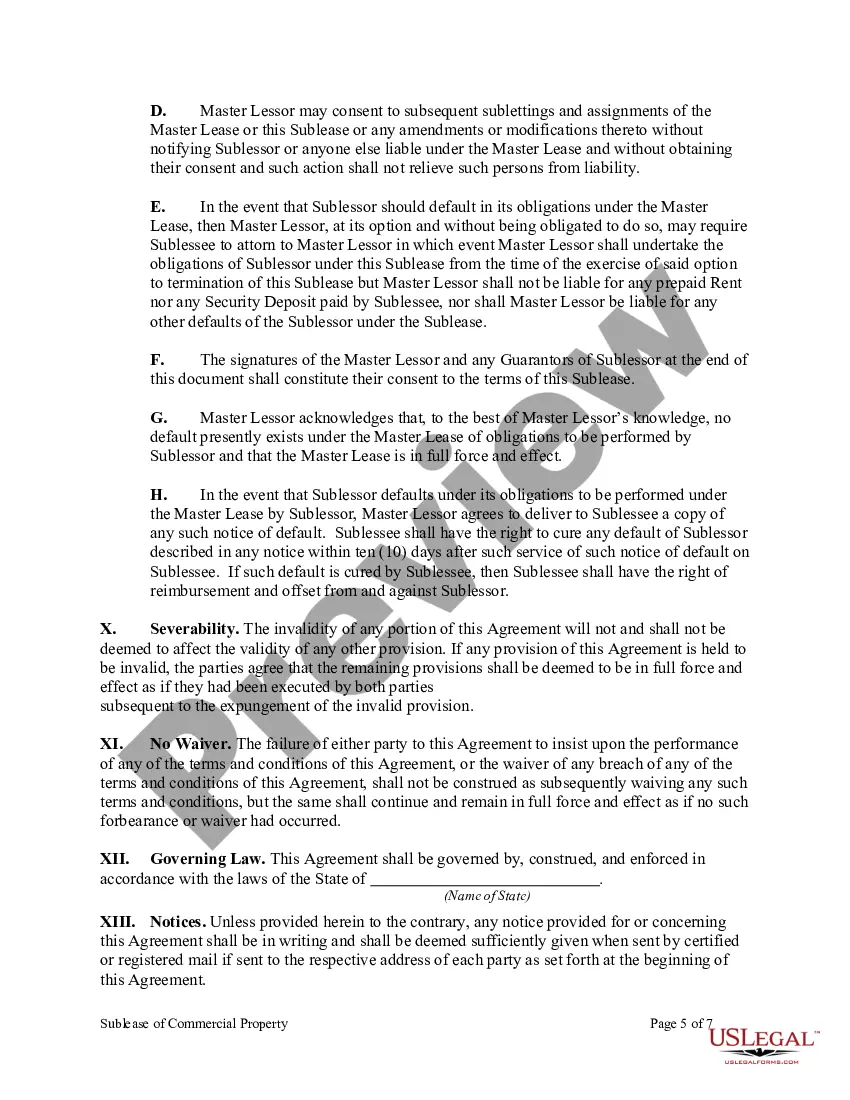
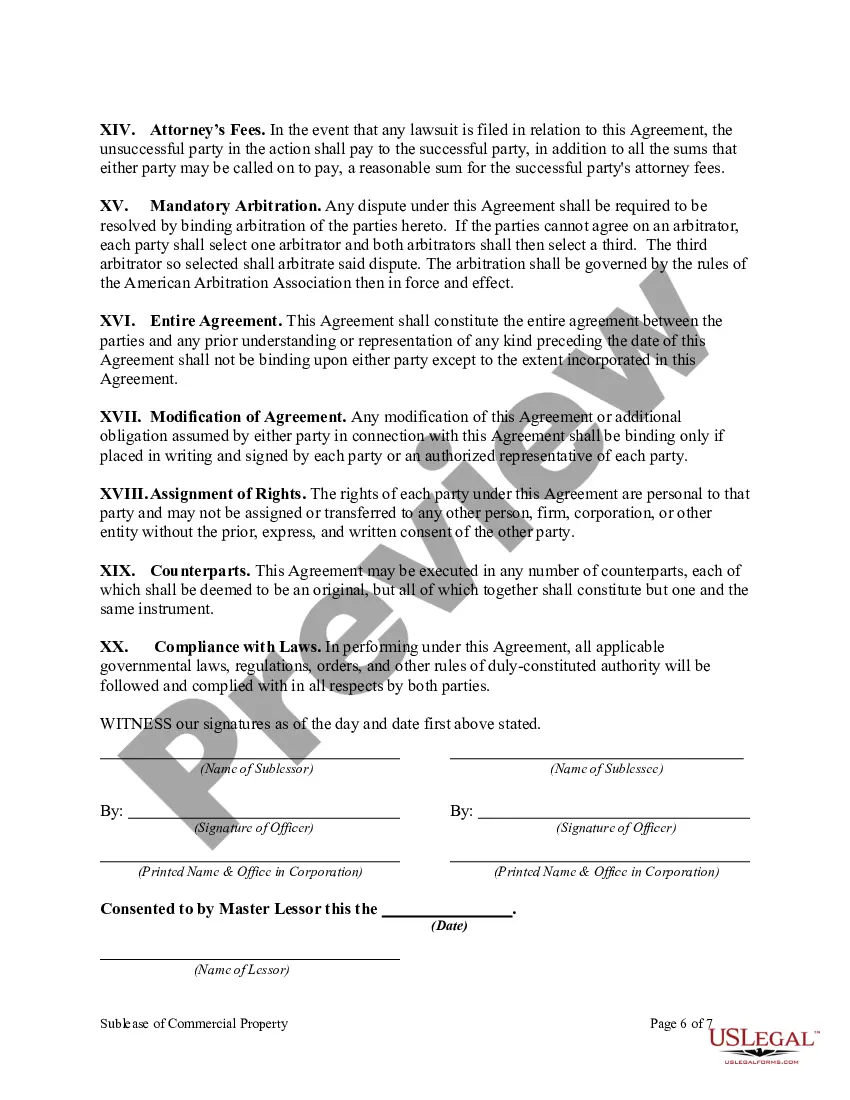
If you already have a monthly subscription, Log In and download the Indiana Sublease Agreement for Commercial Property from the US Legal Forms library. The Download button will appear on each form you view. You can access all previously downloaded forms in the My documents section of your account.
Choose the format and download the form to your device.
Make edits. Fill out, modify, print, and sign the downloaded Indiana Sublease Agreement for Commercial Property. Each format you added to your account has no expiration date and is yours for an indefinite period. So, if you wish to download or print another copy, simply go to the My documents section and click on the form you desire.
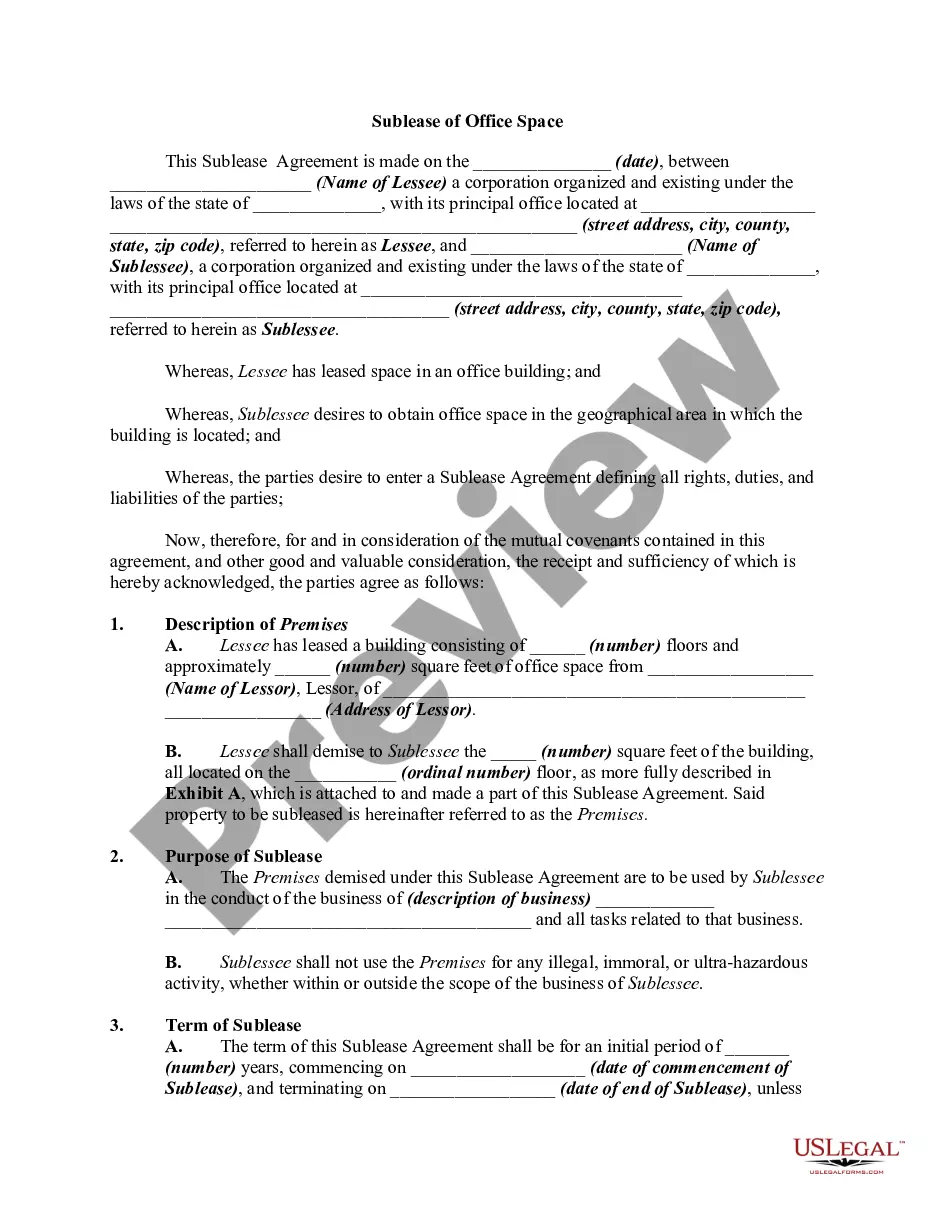
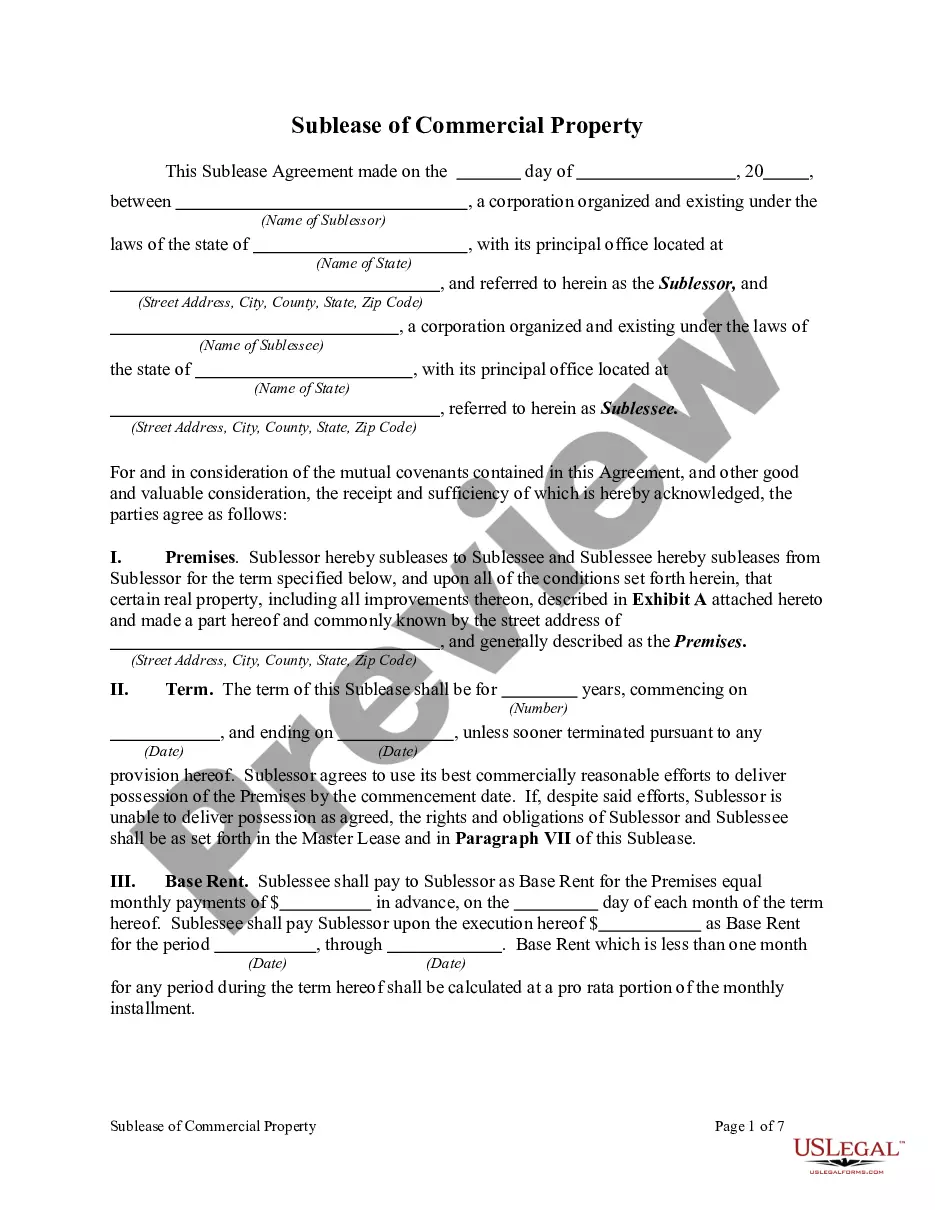
- Ensure you have selected the correct form for your city/region. Click the Preview button to review the form's content.
- Examine the form description to confirm that you have selected the right form.
- If the form does not meet your needs, use the Search field at the top of the screen to find one that does.
- When you are satisfied with the form, confirm your choice by clicking the Download now button.
- Then, select the payment plan you prefer and provide your details to register for the account.
- Complete the purchase. Use your credit card or PayPal account to finalize the transaction.
Form popularity
FAQ
In most cases, you will require the landlord's permission to sublet all or part of your business space to another party. There are obvious benefits to subletting, if you are allowed.
No, lease agreements do not need to be notarized in Indiana. Either party can request that the lease be notarized, or they can agree that the lease should be notified. However, it is not required by Indiana state law.
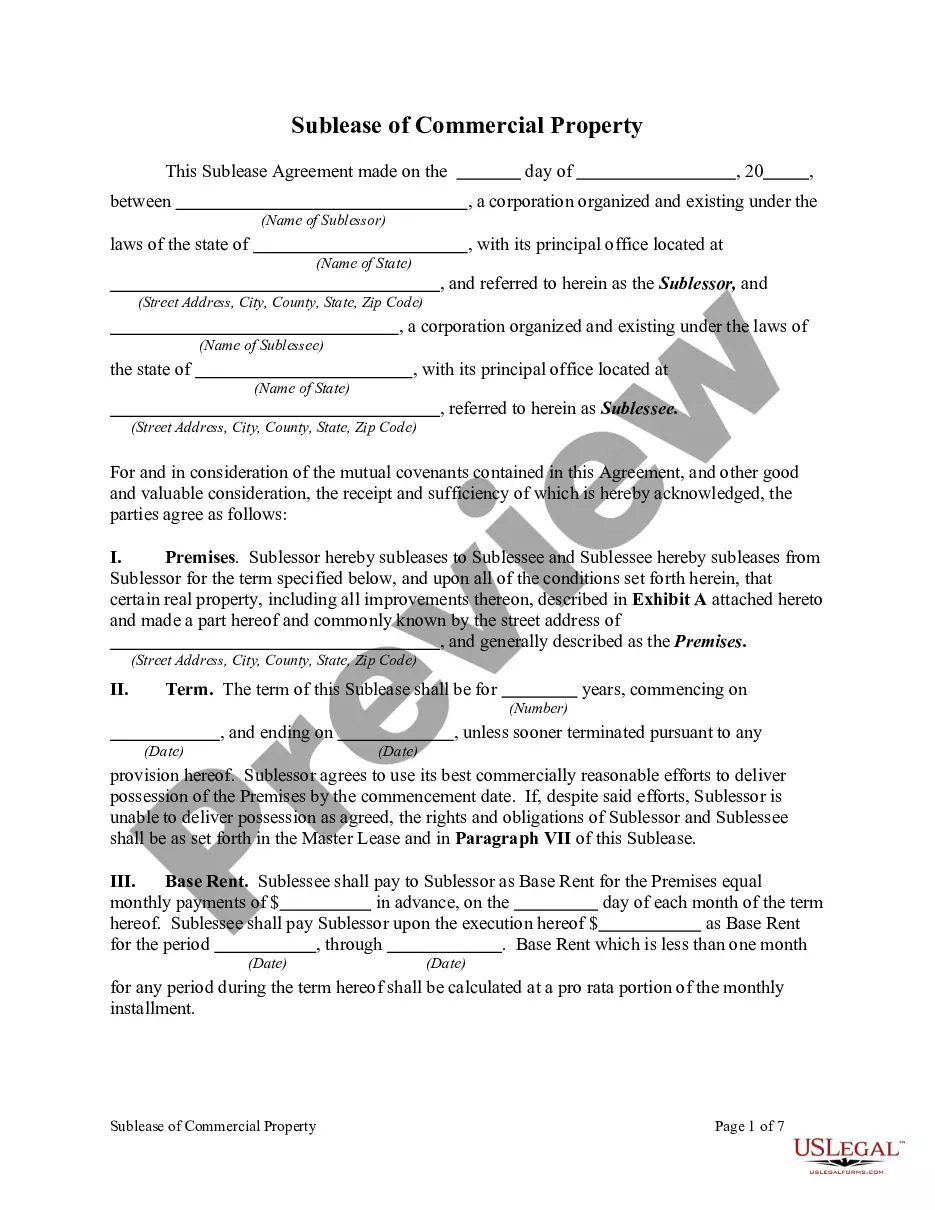
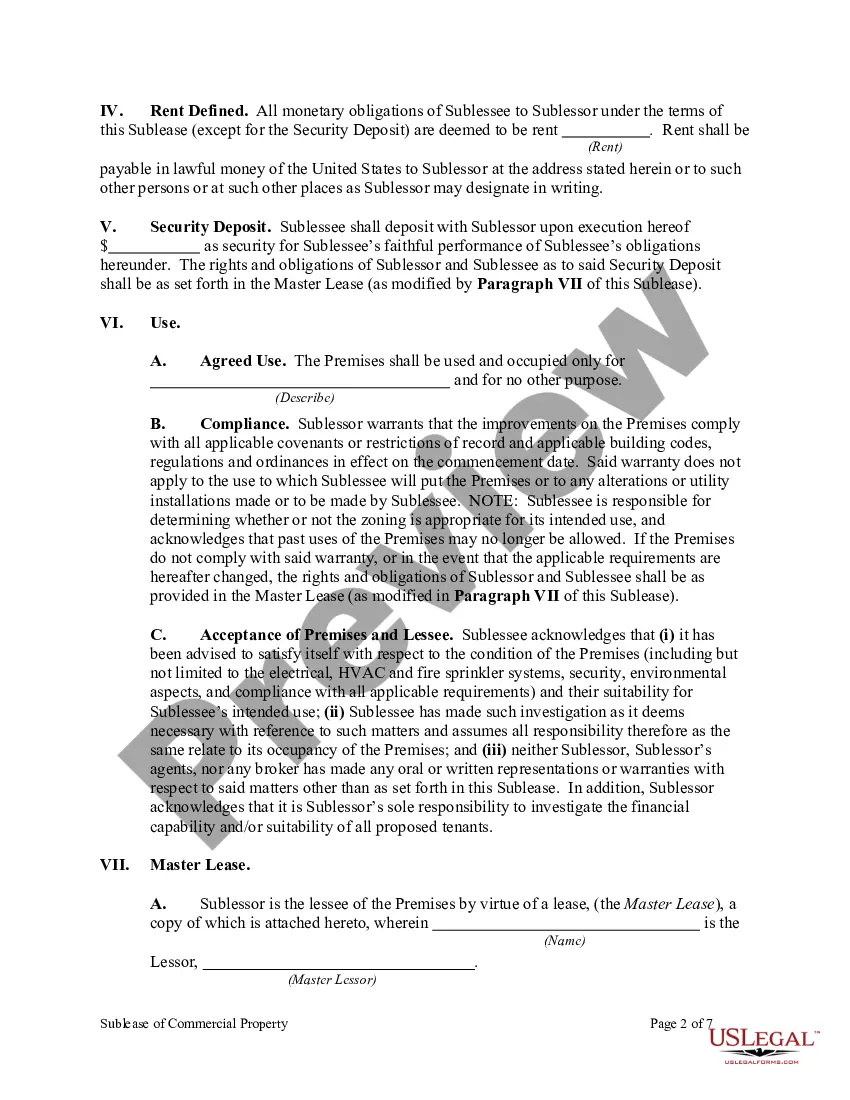
A sublease is the re-renting of property by an existing tenant to a new third party for a portion of the tenant's existing lease contract. The sublease agreement may also be called a sublet.
No, a commercial lease agreement does not need to be notarized in Indiana in order for it to be a legally valid document; however, either party to the lease may choose to have the document notarized.
Sublet Cons for LandlordsInconsistent screening procedures. If you don't require that all subtenants must be screened by the landlord, you'll have no idea about the caliber of tenant subleasing your property.Subtenant may not be reliable.Property damage.Lease violations or eviction.
The short answer is No a witness does not need to sign But, there are some exceptions and things to consider. Most agreements do not need witnesses to sign them. Most agreements do not even need to be signed by the parties entering into the agreement. Most agreements do not even need to be in writing.
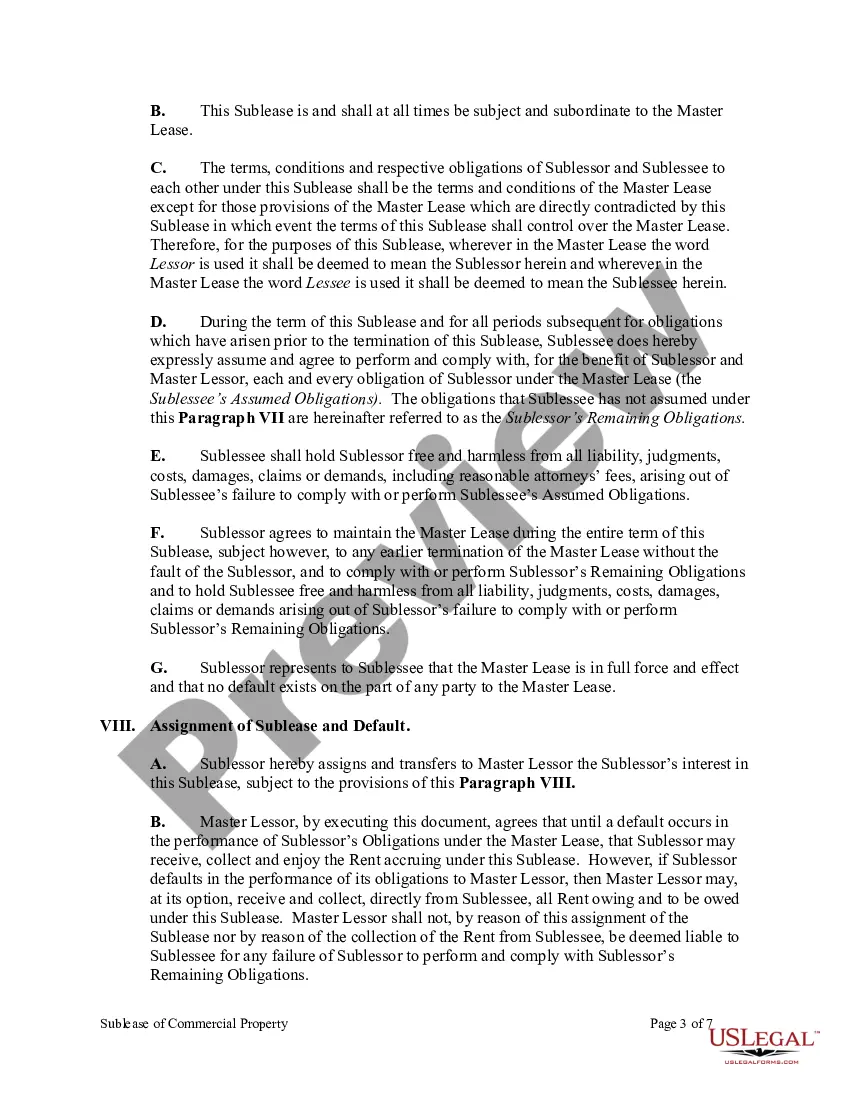
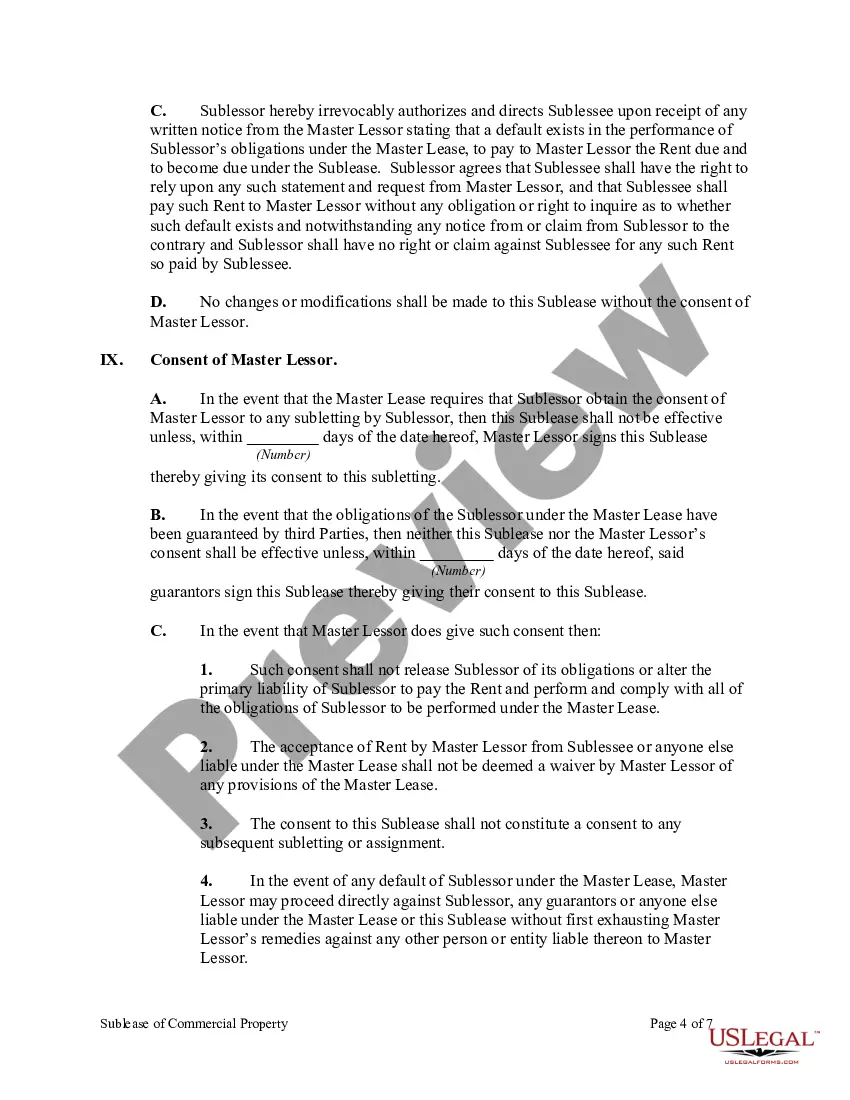
Typically, you must obtain written consent from your landlord before you can sublet a property. In most cases, a landlord will state in the master lease that subletting is either not permitted or is allowed with consent of the landlord.
A lease is automatically void when it is against the law, such as a lease for an illegal purpose. In other circumstances, like fraud or duress, a lease can be declared void at the request of one party but not the other.
The Bottom Line: Indiana law does not specifically prohibit or permit sublets, so what your lease reads matters. If your lease says no sublets, then that means no sublets and always obtain written approval from your landlord prior to subletting.
A sublease occurs when the original owner does not lease the premises to you, but there is another person or entity in between you and the landlord. That is, the property owner rents to someone else, and then that person rents to you. Subleases are common in both commercial and residential properties.