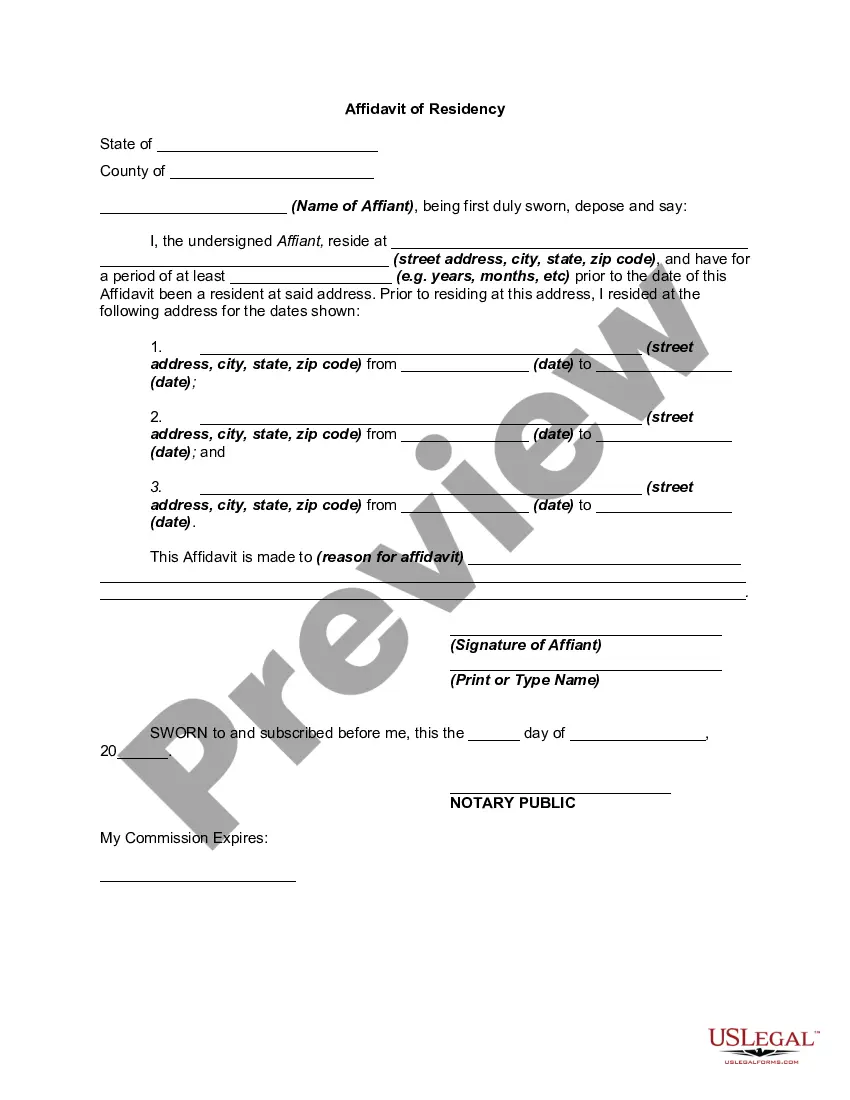
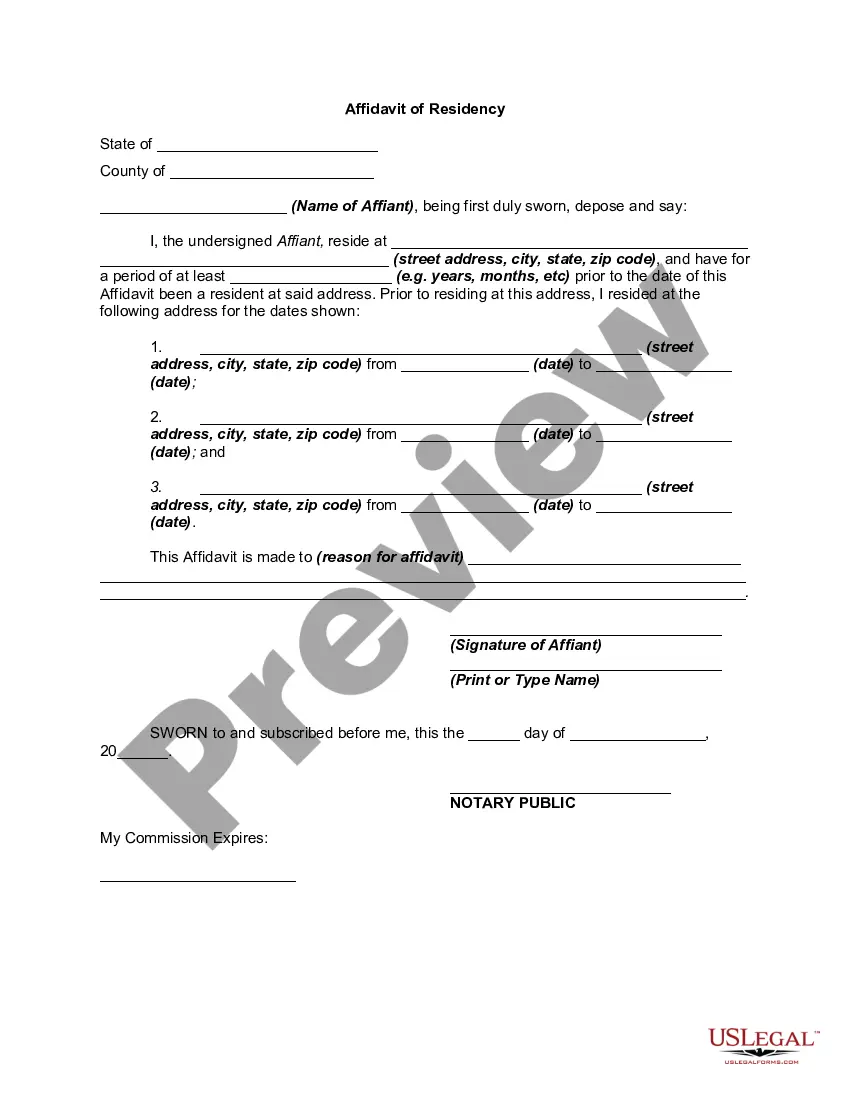
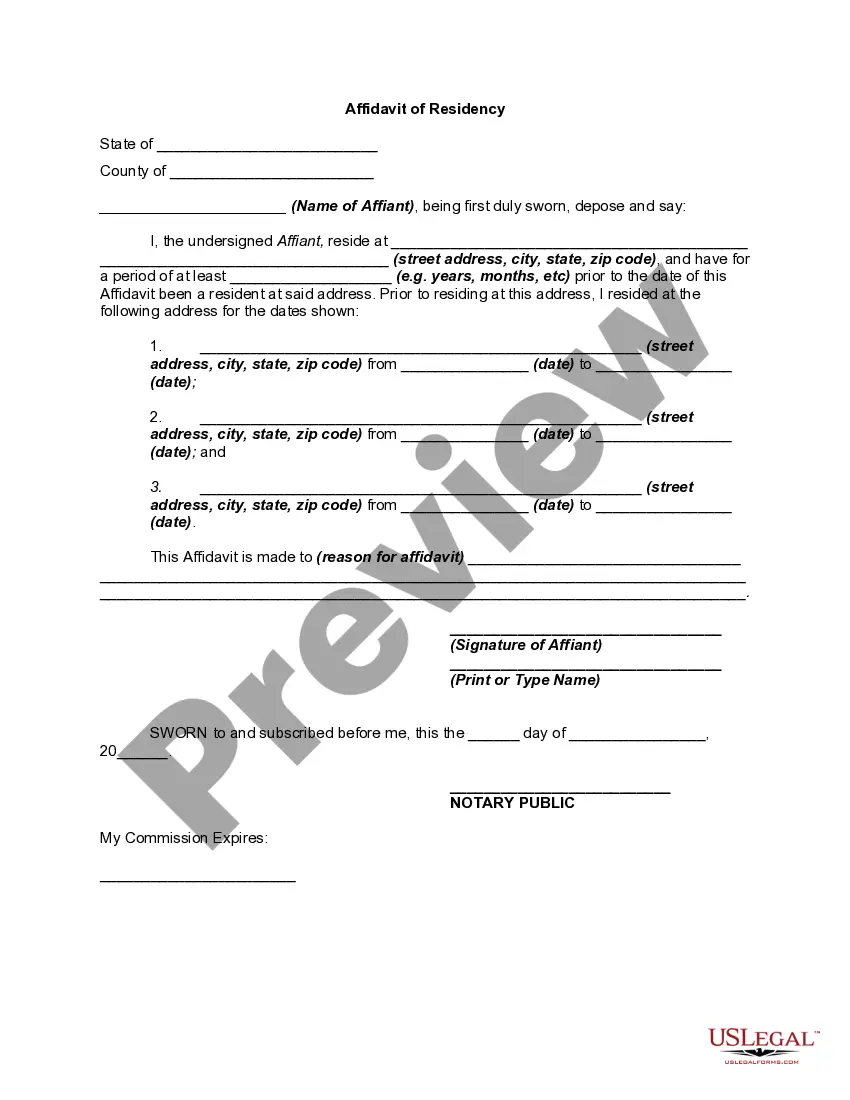
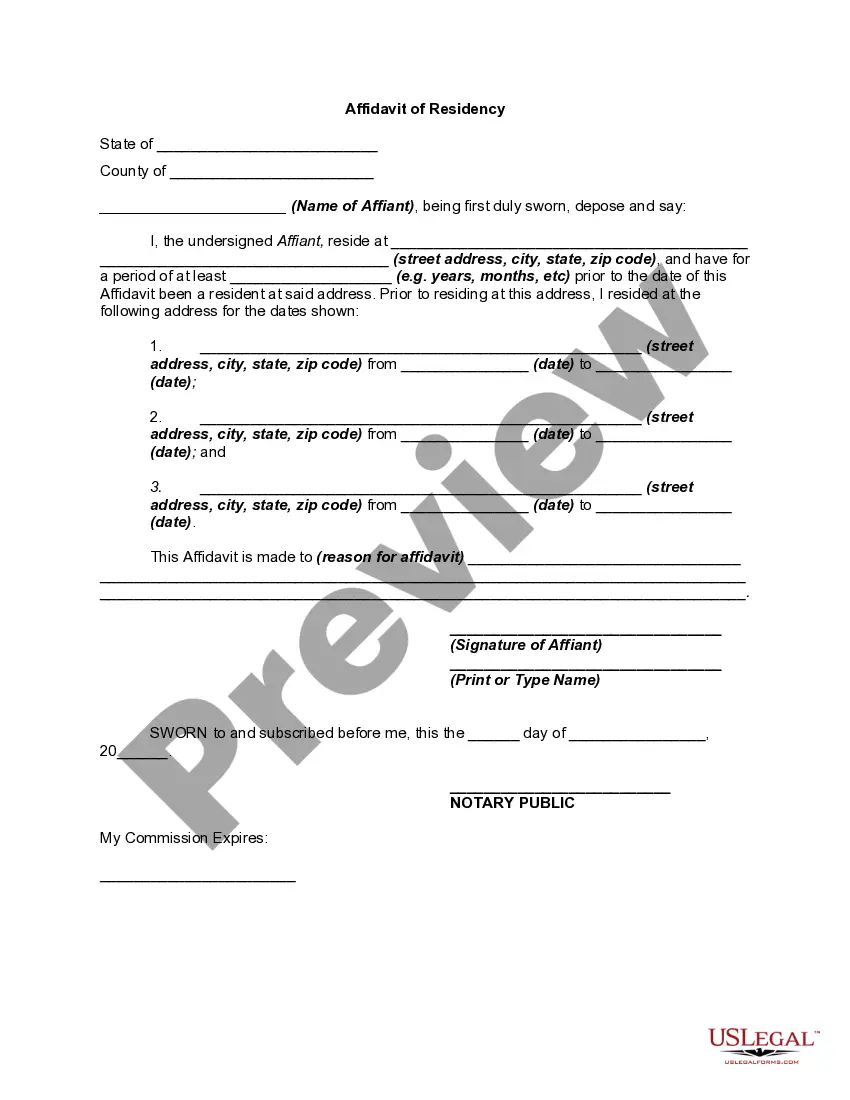
Indiana Affidavit of Residency
Description
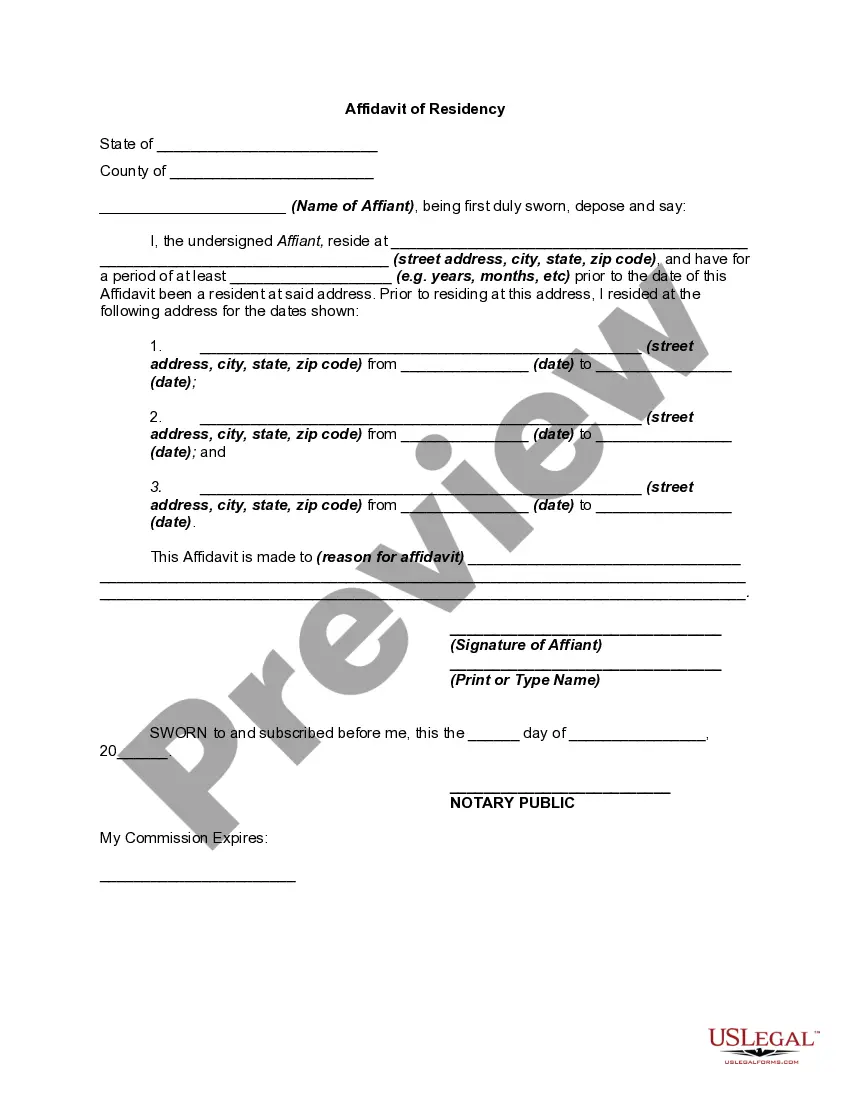
Get your form ready online
Our built-in tools help you complete, sign, share, and store your documents in one place.
Make edits, fill in missing information, and update formatting in US Legal Forms—just like you would in MS Word.
Download a copy, print it, send it by email, or mail it via USPS—whatever works best for your next step.
Sign and collect signatures with our SignNow integration. Send to multiple recipients, set reminders, and more. Go Premium to unlock E-Sign.
If this form requires notarization, complete it online through a secure video call—no need to meet a notary in person or wait for an appointment.
We protect your documents and personal data by following strict security and privacy standards.

Make edits, fill in missing information, and update formatting in US Legal Forms—just like you would in MS Word.

Download a copy, print it, send it by email, or mail it via USPS—whatever works best for your next step.

Sign and collect signatures with our SignNow integration. Send to multiple recipients, set reminders, and more. Go Premium to unlock E-Sign.

If this form requires notarization, complete it online through a secure video call—no need to meet a notary in person or wait for an appointment.

We protect your documents and personal data by following strict security and privacy standards.
Looking for another form?
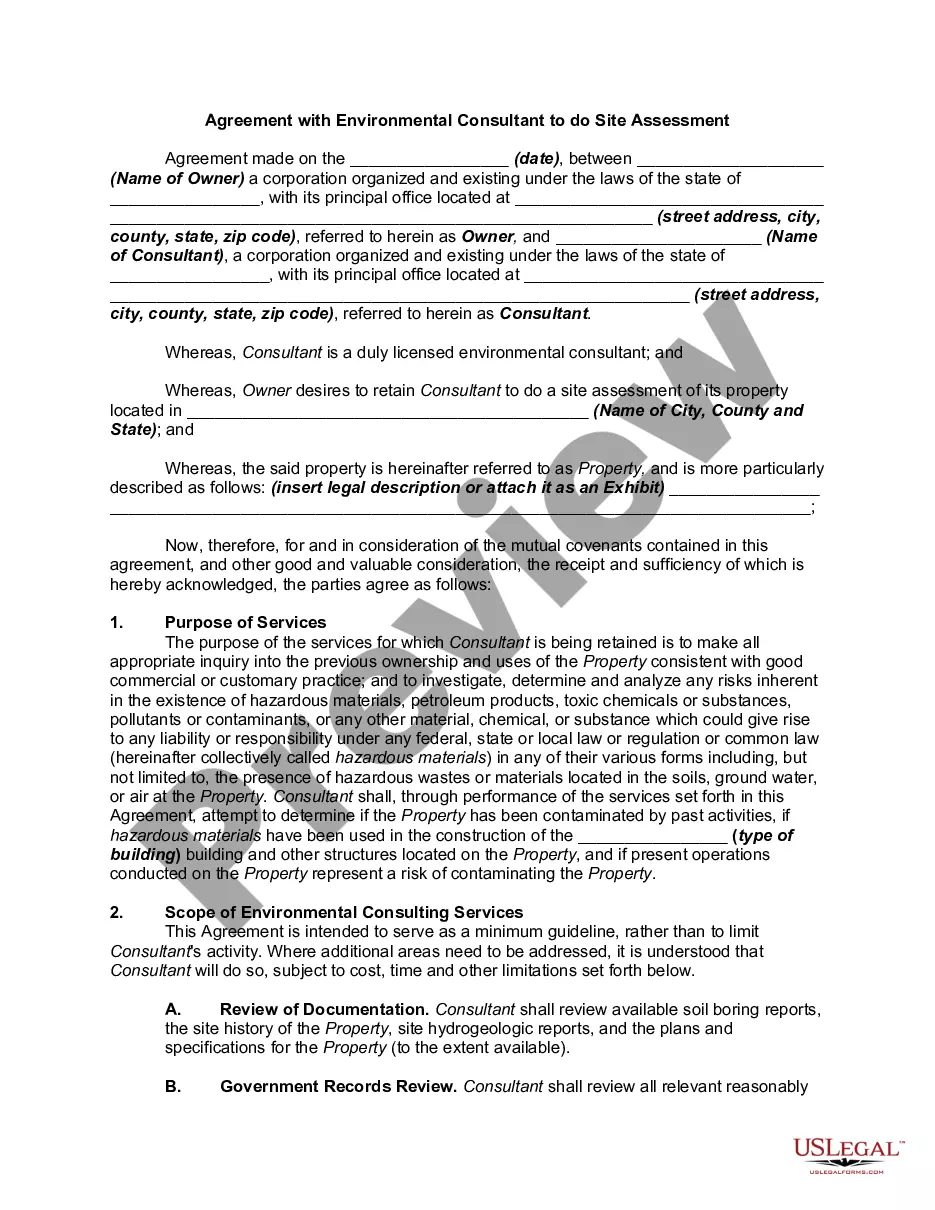

How to fill out Affidavit Of Residency?
You can invest time online looking for the valid document template that meets the state and federal criteria you require. US Legal Forms provides a vast array of valid forms that are vetted by experts.
You can effortlessly obtain or create the Indiana Affidavit of Residency through my service. If you possess a US Legal Forms account, you can sign in and click the Obtain button. Then, you can fill out, alter, create, or sign the Indiana Affidavit of Residency. Every valid document template you acquire is your property indefinitely.
To obtain an additional copy of the purchased form, navigate to the My documents section and click the corresponding button. If you're using the US Legal Forms website for the first time, follow the simple instructions below: First, ensure you have selected the correct document template for the region/city of your choice. Review the form description to confirm you have chosen the accurate form. If available, use the Preview button to examine the document template as well.
Avoid altering or removing any HTML tags. Only synonymize plain text outside of the HTML tags.
- If you wish to find another version of the form, use the Search area to locate the template that satisfies your needs and requirements.
- Once you have found the template you require, click Purchase now to proceed.
- Select the pricing plan you desire, enter your details, and register for an account on US Legal Forms.
- Complete the transaction. You can use your credit card or PayPal account to pay for the valid form.
- Choose the format of the document and download it to your device.
- Make edits to your document if possible. You can fill out, modify, and sign and print the Indiana Affidavit of Residency.
- Access and print a vast array of document layouts using the US Legal Forms website, which offers the largest selection of valid forms. Utilize professional and state-specific templates to address your business or personal needs.
Form popularity
FAQ
1. General purposes: Residency is established by registering to vote, enrolling a child in school, paying taxes, or living in the state for 183 days without a residence in another state.
To be considered a resident of Indiana, you must be domiciled in the state on or before December 31st of the year preceding application for an award and be continuously domiciled in the state thereafter.
You can get an affidavit in Indiana in many ways. The most common way is to go to a local court and collect the form. But if your affidavit will be submitted to a government entity, you can visit their offices and ask for the form.
The most common documents (must be printed) proving your Indiana residency include: Computer-generated bill from a utility company, credit card company, doctor, or hospital, issued within 60 days of the date you visit a BMV branch, and containing your name and address of residence. Bank statement. Pre-printed pay stub.
An Indiana Residency Affidavit for you must be signed at a license branch by another Indiana resident who attests that you may use his or her address of residence for record purposes. The person signing the affidavit must submit two documents proving their Indiana residency.
The most common documents (must be printed) proving your Indiana residency include: Computer-generated bill from a utility company, credit card company, doctor, or hospital, issued within 60 days of the date you visit a BMV branch, and containing your name and address of residence.
You can be a resident of two states at the same time, usually by maintaining a domicile in one state and spending 183 days or more in another. It is not advisable, as you will be liable to file income taxes in both states, rather than in only one.
State Laws: When a Guest Legally Becomes a Tenant StateRules on Guests Becoming TenantsIllinoisGuests are tenants if establish residency without landlord permissionIndianaGuests become tenants after 14 days in 6 monthsIowaNo official cutoff. Landlord must specify in lease guests vs. tenants47 more rows ?