Indiana Warranty Deed - Six Individuals to Four Individuals
Understanding this form
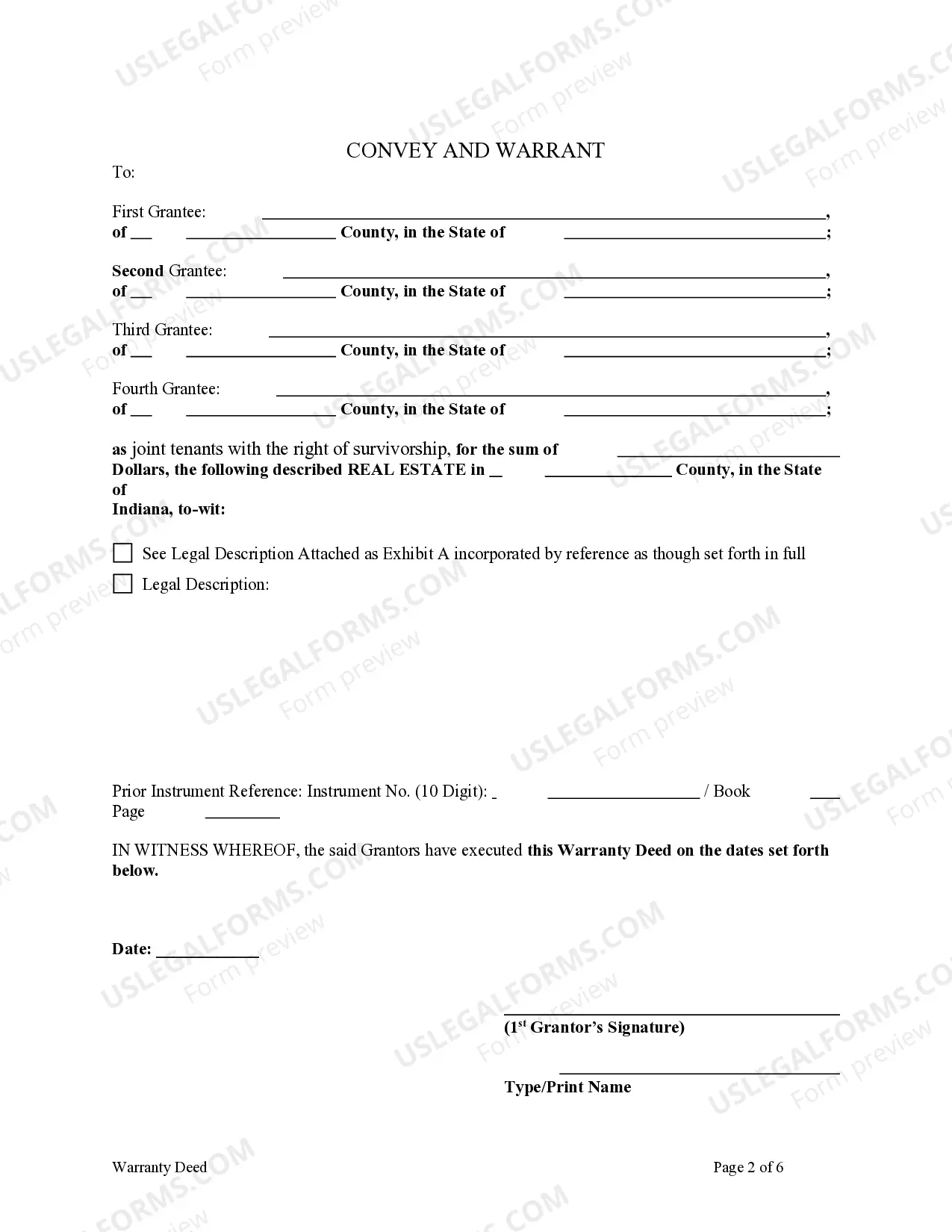
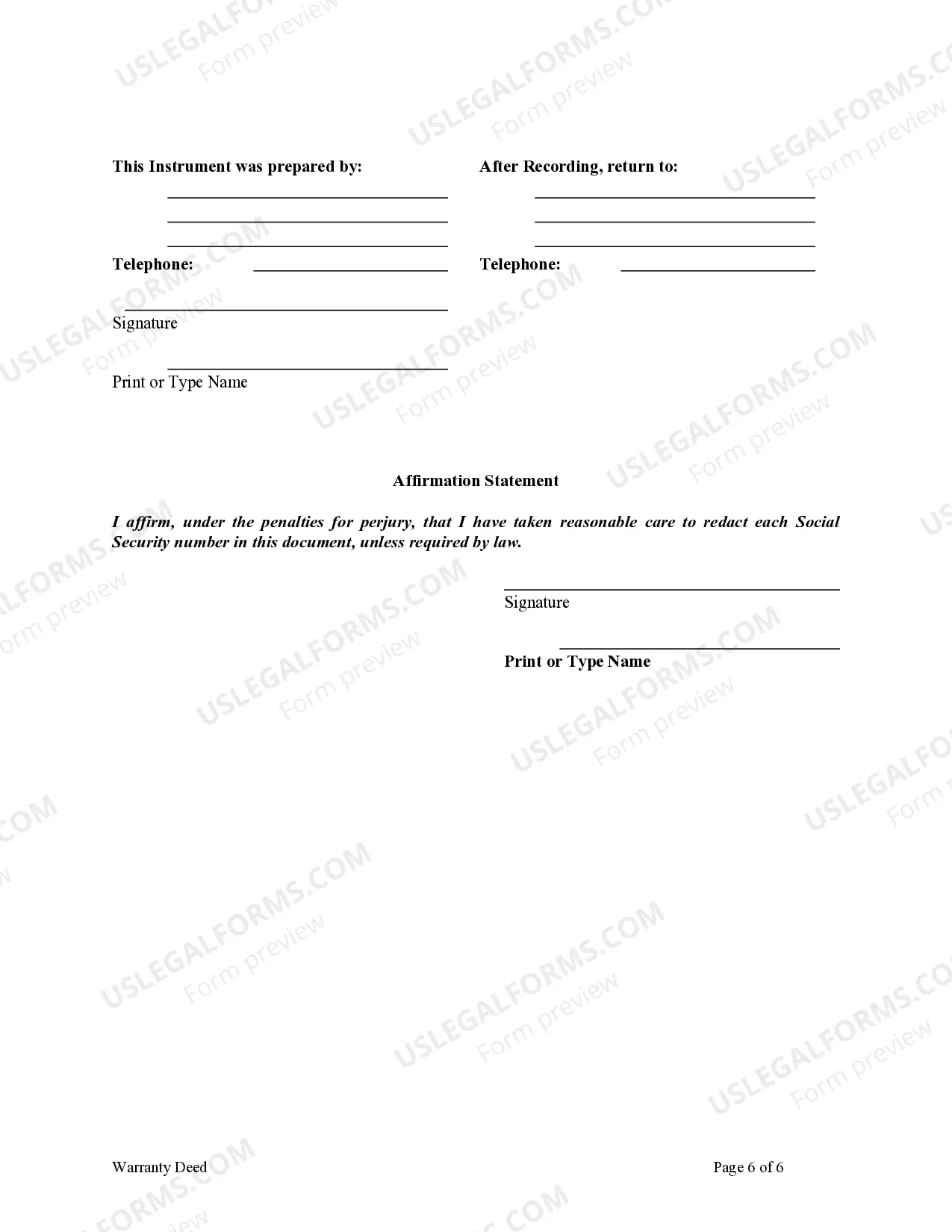
This Warranty Deed is a legal document where six individuals, known as the Grantors, convey property to four individuals, the Grantees. This form allows the Grantees to hold the property as joint tenants with rights of survivorship or as tenants in common. It is designed to ensure compliance with state statutory laws, making it a reliable choice for property transfers involving multiple parties.
Form components explained
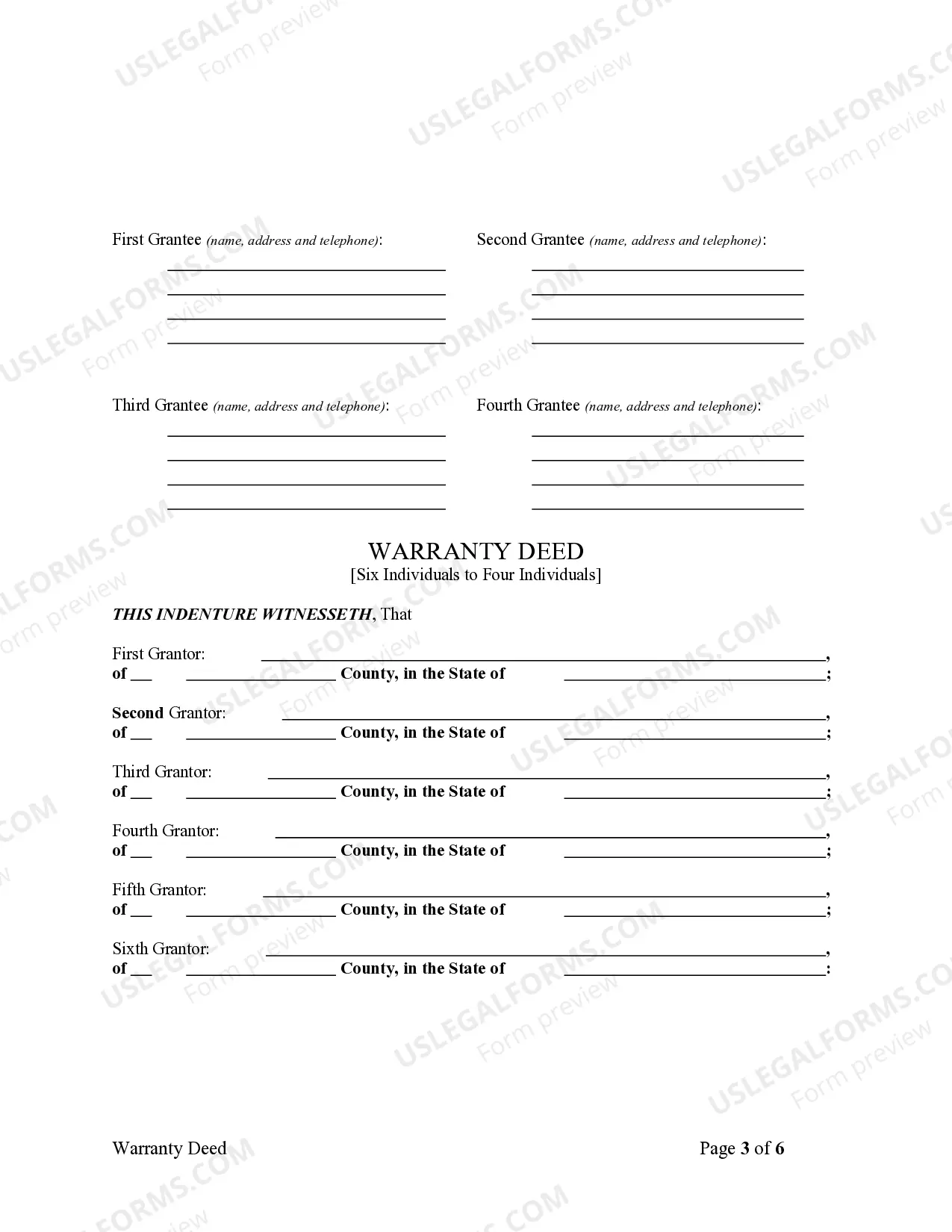
- Identification of the Grantors and Grantees
- Description of the Property being transferred
- Defined interest type: joint tenants or tenants in common
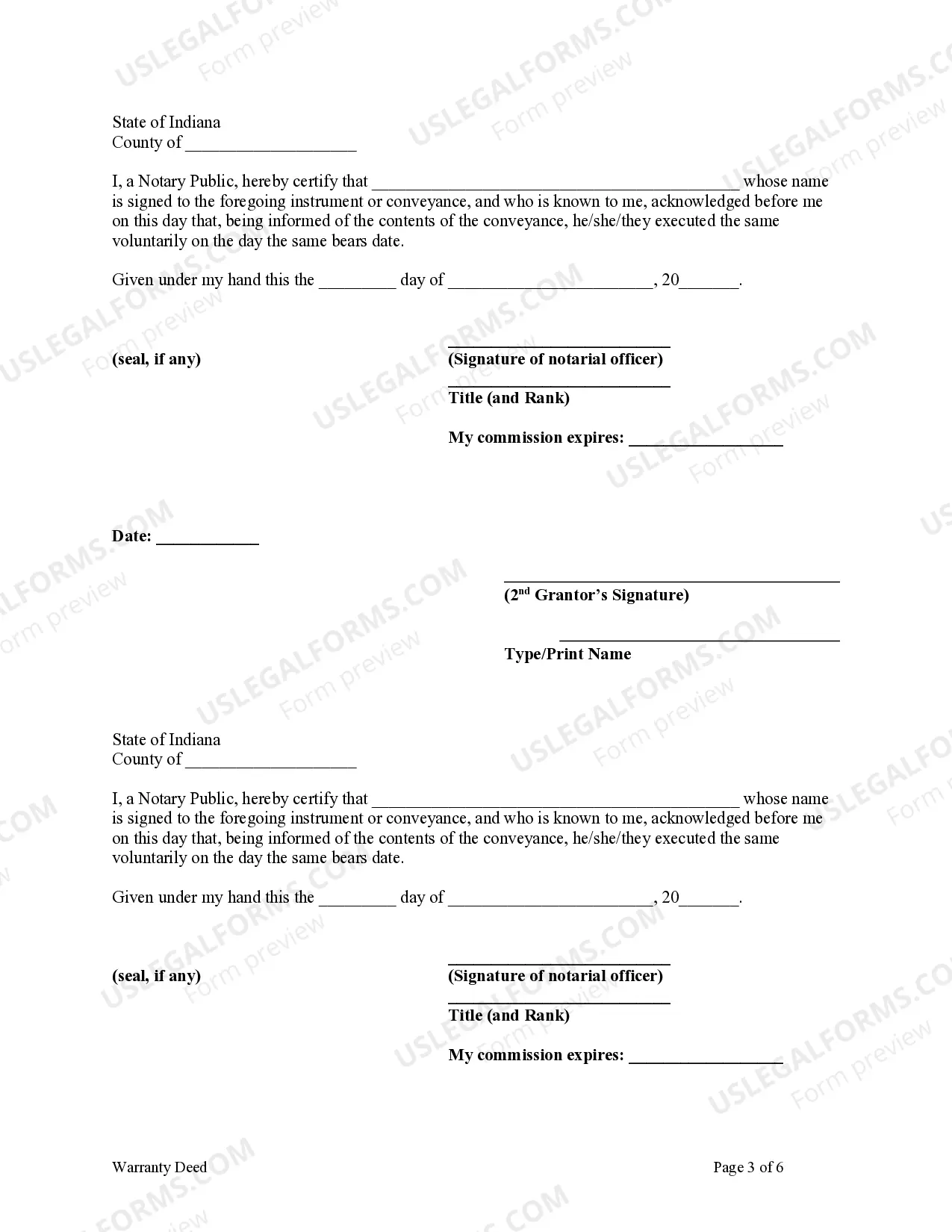
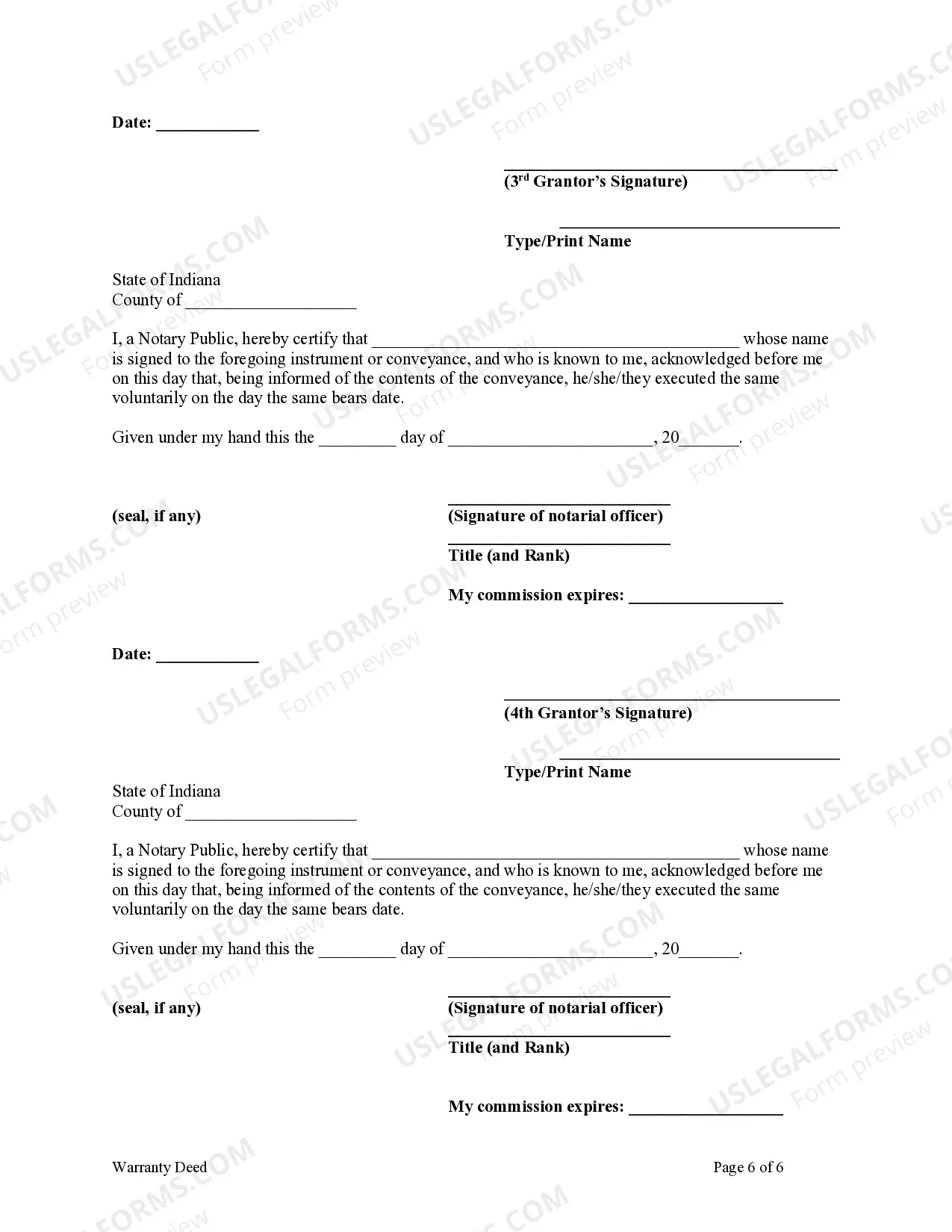
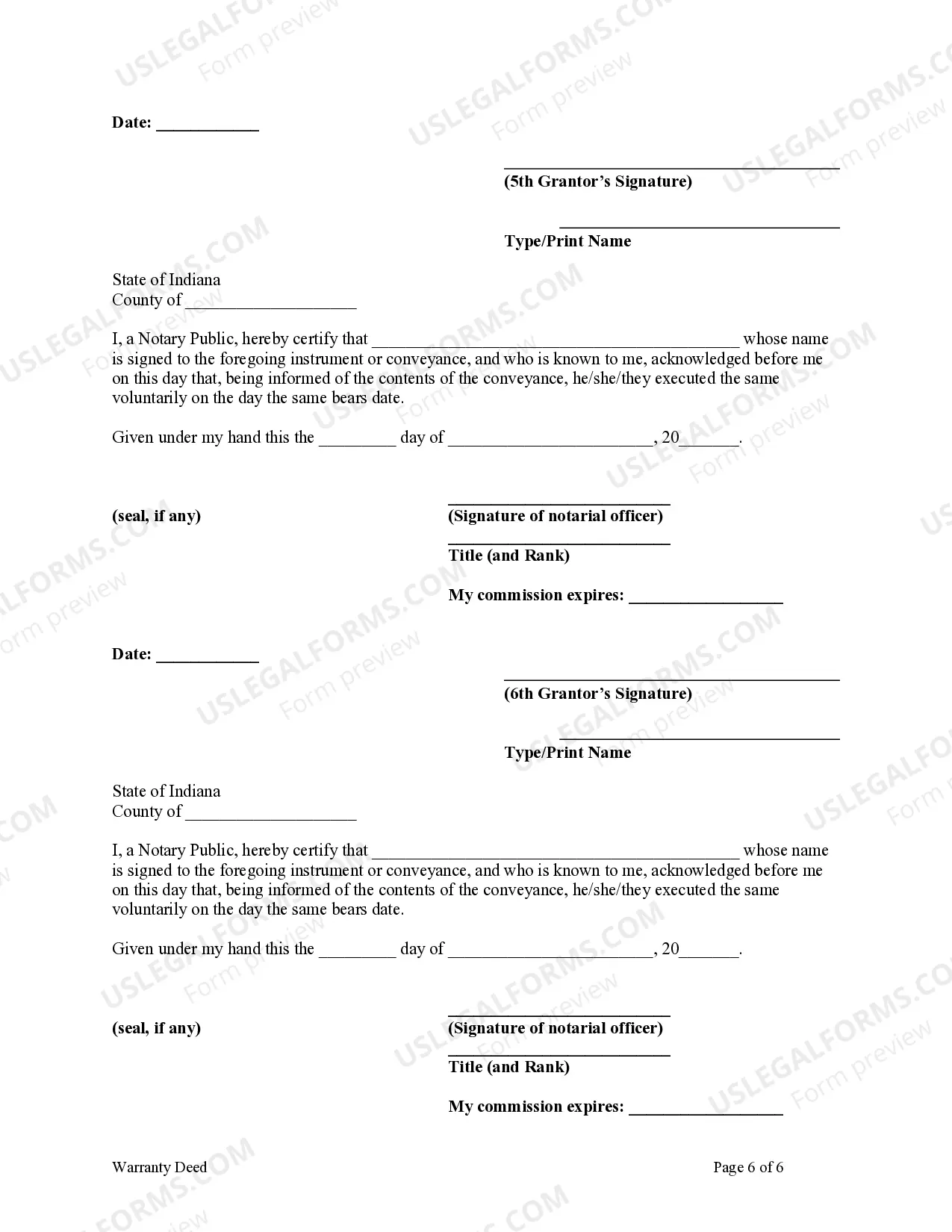
- Signatures of all parties involved
- Notary acknowledgment (if required by state law)







Common use cases
This form should be used when six individuals wish to transfer real property to four individuals. This situation might arise in family estate planning, joint purchases, or when friends decide to co-own a property. Using a Warranty Deed ensures that the transfer is legally binding and provides necessary warranties of title.
Who should use this form
- Individuals involved in a property transfer as Grantors or Grantees
- Real estate agents facilitating the transaction
- Estate planners managing property distribution among multiple beneficiaries
- Anyone seeking to clarify ownership of shared property
Steps to complete this form
- Identify and list all Grantors and Grantees in the appropriate fields.
- Describe the property in detail, including its address and legal description.
- Specify the type of ownership as either joint tenants or tenants in common.
- Sign the document in the presence of a notary if required.
- Ensure all signatures are dated before submitting the deed for recording.
Does this form need to be notarized?
This form needs to be notarized to ensure legal validity. US Legal Forms provides secure online notarization powered by Notarize, allowing you to complete the process through a verified video call, available anytime.
Get your form ready online
Our built-in tools help you complete, sign, share, and store your documents in one place.
Make edits, fill in missing information, and update formatting in US Legal Forms—just like you would in MS Word.
Download a copy, print it, send it by email, or mail it via USPS—whatever works best for your next step.
Sign and collect signatures with our SignNow integration. Send to multiple recipients, set reminders, and more. Go Premium to unlock E-Sign.
If this form requires notarization, complete it online through a secure video call—no need to meet a notary in person or wait for an appointment.
We protect your documents and personal data by following strict security and privacy standards.

Make edits, fill in missing information, and update formatting in US Legal Forms—just like you would in MS Word.

Download a copy, print it, send it by email, or mail it via USPS—whatever works best for your next step.

Sign and collect signatures with our SignNow integration. Send to multiple recipients, set reminders, and more. Go Premium to unlock E-Sign.

If this form requires notarization, complete it online through a secure video call—no need to meet a notary in person or wait for an appointment.

We protect your documents and personal data by following strict security and privacy standards.
Mistakes to watch out for
- Failing to properly identify all parties involved.
- Not including a complete legal description of the property.
- Leaving signatures or dates blank.
- Not having the deed notarized when required by state law.
Why complete this form online
- Immediate access to a professionally drafted document.
- Ability to complete the form digitally, saving time and reducing errors.
- Easy downloading and printing options for filing with local authorities.
- Guidance provided to help users through the filling process.
Legal use & context
- This Warranty Deed provides a guarantee from the Grantors regarding the title of the property.
- It is enforceable in court, provided it is executed correctly and filed according to local laws.
- Failure to comply with statutory requirements may invalidate the deed.
Main things to remember
- A Warranty Deed transfers property from six individuals to four individuals.
- Grantees may choose how they want to hold title: as joint tenants or tenants in common.
- Ensure that all required signatures and notarization are completed for the deed to be valid.
Looking for another form?


Form popularity
FAQ
Yes you can. This is called a transfer of equity but you will need the permission of your lender. If you are not married or in a civil partnership you may wish to consider creating a deed of trust and a living together agreement which we can explain to you.
Before adding your spouse to the deed, speak with your attorney. The easiest way to grant your spouse title to your home is via a quitclaim deed (Californians generally use an interspousal grant deed). With a quitclaim deed, you can name your spouse as the property's joint owner.
The name and address of the seller (called the grantor) The name and address of the buyer (called the grantee) A legal description of the property (found on the previous deed) A statement that the grantor is transferring the property to the grantee.
The basic requirements of a valid deed are (1) written instrument, (2) competent grantor, (3) identity of the grantee, (4) words of conveyance, (5) adequate description of the land, (6) consideration, (7) signature of grantor, (8) witnesses, and (9) delivery of the completed deed to the grantee.
The easiest way to grant your spouse title to your home is via a quitclaim deed (Californians generally use an interspousal grant deed). With a quitclaim deed, you can name your spouse as the property's joint owner. The quitclaim deed must include the property's description, including its boundary lines.
Definition: A deed is a formal and dignified instrument. In general, it refers to any document by which two or more parties agree to put into force any right or liability. For instance: Gift Deed, Partnership Deed, Trust Deed, Deed of Family Settlement, Mortgage Deed, Lease Deed, Sale Deed, etc.
Consideration (valuable or good) Execution (signed by a competent grantor and two witnesses) Description of property. Delivery and acceptance (voluntary) Interest or estate being conveyed (habendum clause) Names of a grantee and grantor. Granting and other appropriate clauses.
If you live in a common-law state, you can keep your spouse's name off the title the document that says who owns the property.You can put your spouse on the title without putting them on the mortgage; this would mean that they share ownership of the home but aren't legally responsible for making mortgage payments.
If you've recently married and already own a home or other real estate, you may want to add your new spouse to the deed for your property so the two of you own it jointly. To add a spouse to a deed, all you have to do is literally fill out, sign and record a new deed in your county recorder's office.