Indiana Order on Fee Waiver
About this form
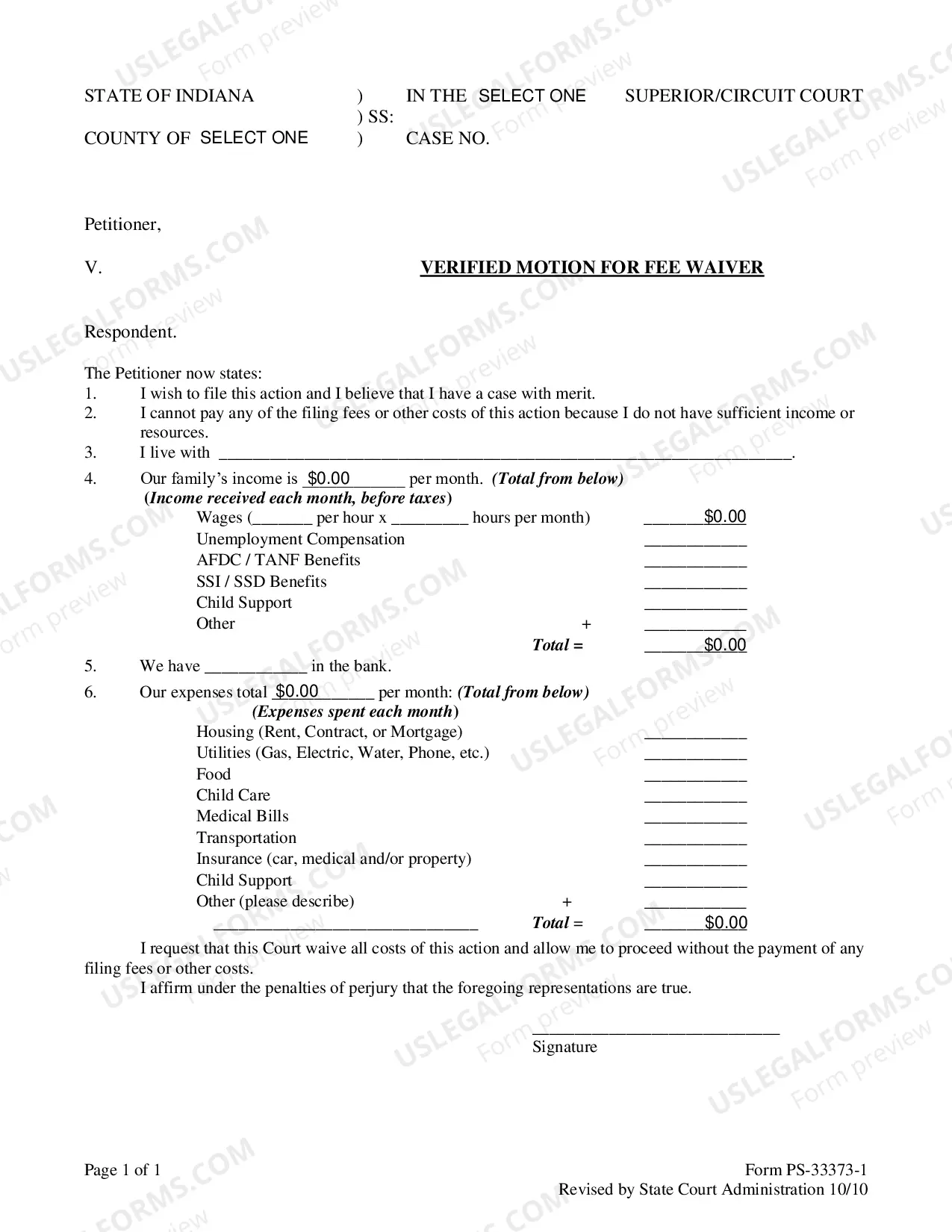
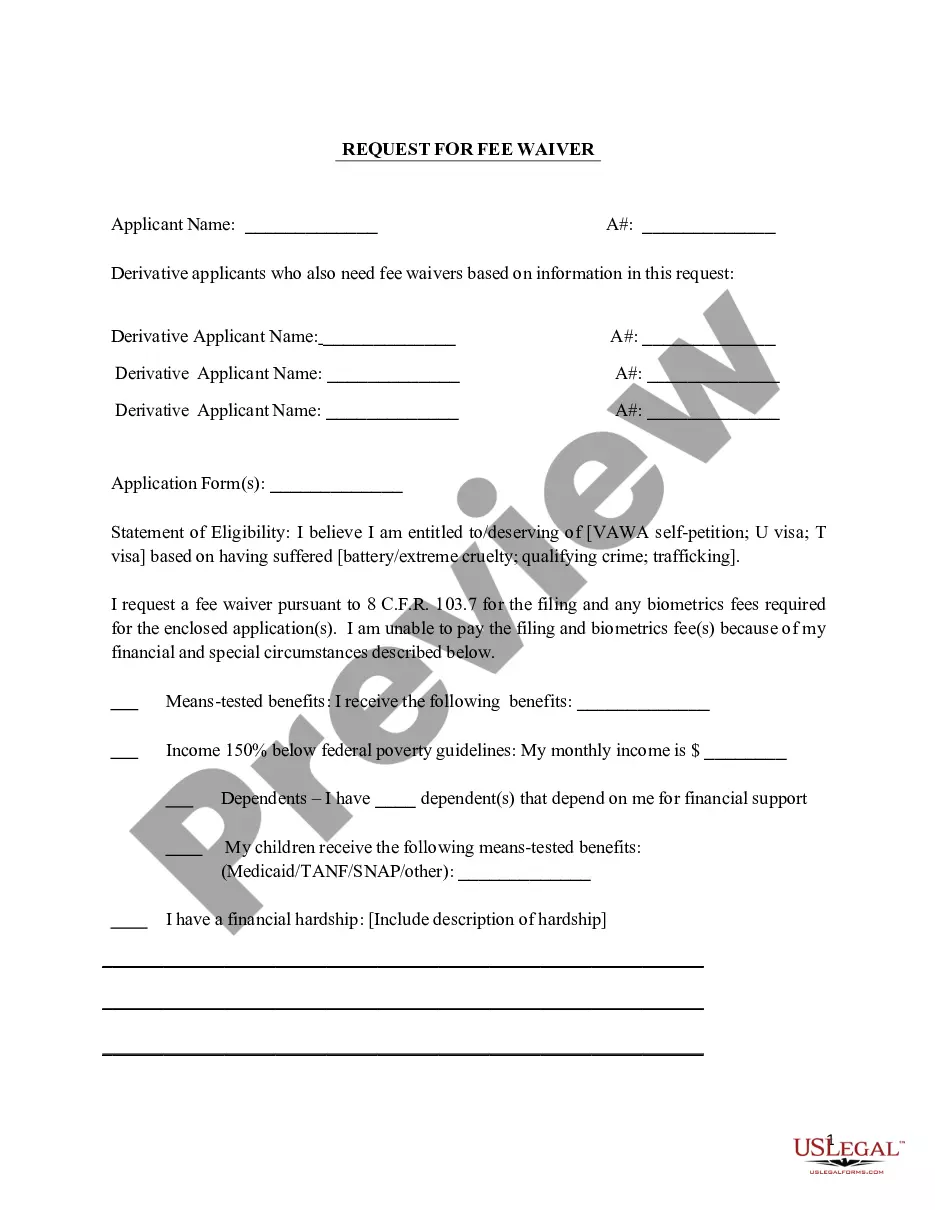
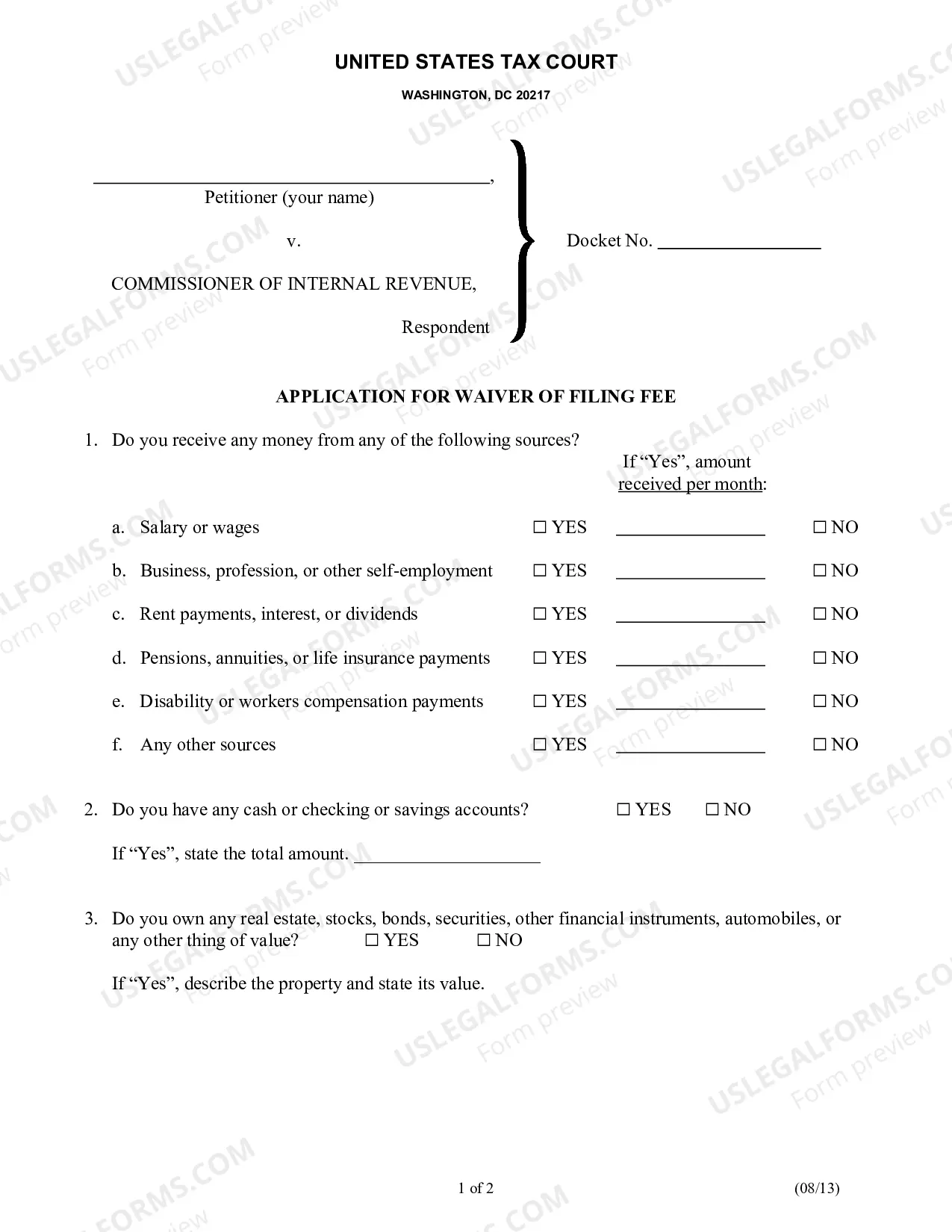
The Order on Fee Waiver is a legal document that allows individuals to request a waiver of court fees when they are unable to pay due to financial hardship. This document must be filed alongside a Verified Motion for Fee Waiver, which demonstrates the petitionerâs financial situation. It is an essential tool for those seeking to initiate legal proceedings without the burden of upfront costs, particularly in divorce cases.
What’s included in this form
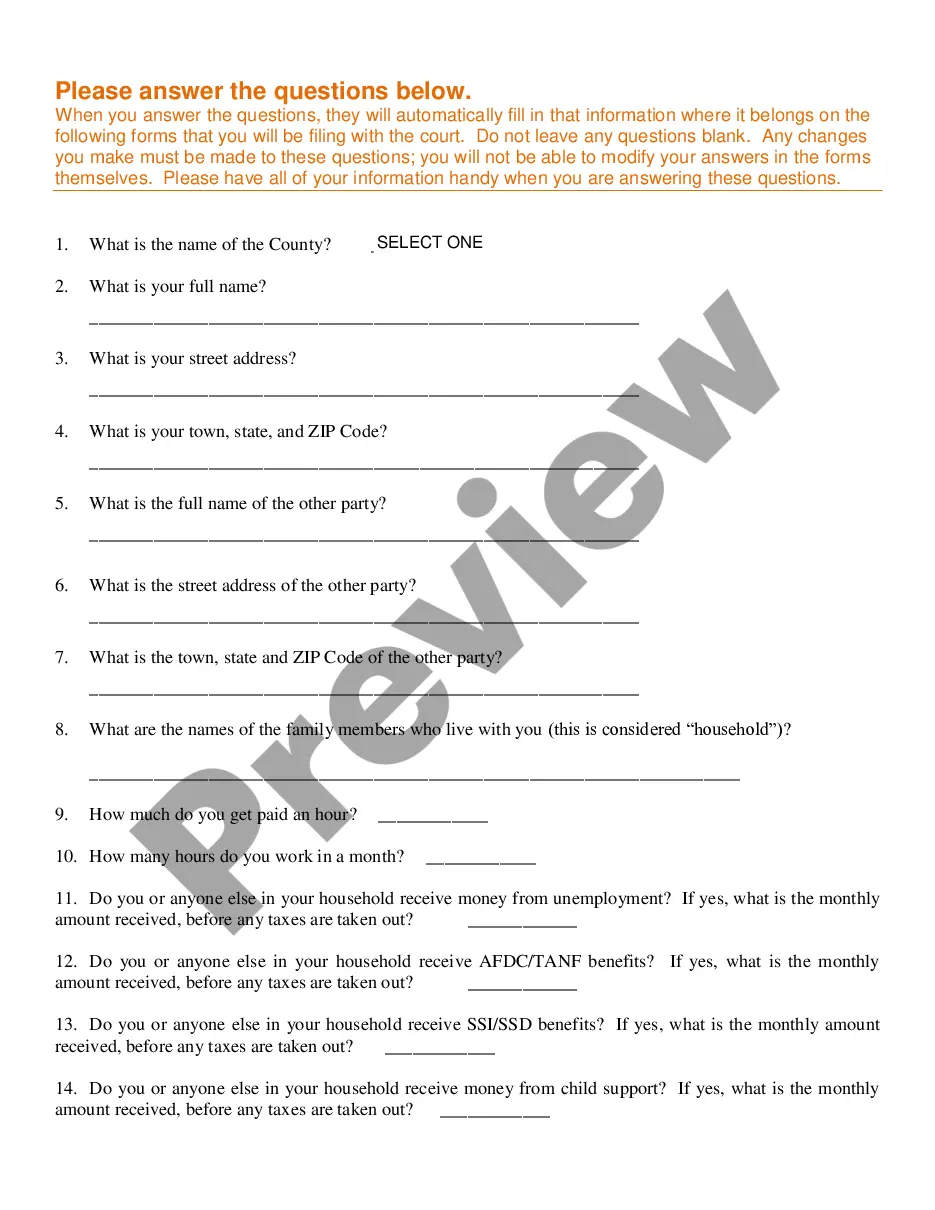
- Identification of the petitioner and respondent, including their addresses.
- Detailed financial information required to assess eligibility for the fee waiver.
- Declaration of income and monthly expenses to justify the request.
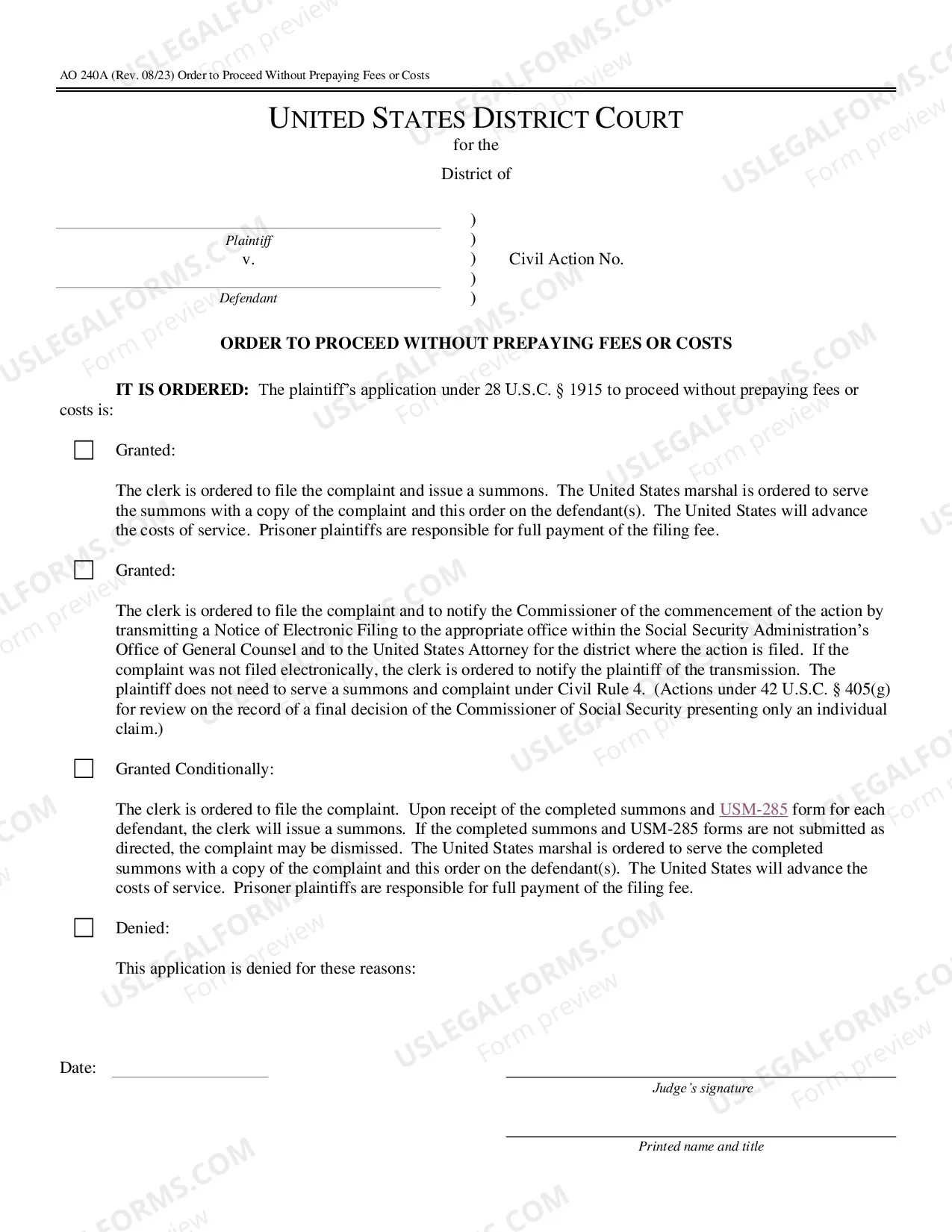
- Judge's order indicating whether the fee waiver is granted or if partial payment is required.


When to use this document
You should use the Order on Fee Waiver when filing a Verified Motion for Fee Waiver in court, especially if you are initiating a divorce proceeding and cannot afford the required filing fees. This form is appropriate when you can demonstrate financial incapacity and need to proceed without incurring costs that you cannot manage.
Intended users of this form
- Individuals filing for divorce or legal separation who lack the financial means to pay required court fees.
- Petitioners who are receiving government benefits or have low income.
- Persons who need the courtâs assistance to waive fees due to significant financial hardship.
Instructions for completing this form
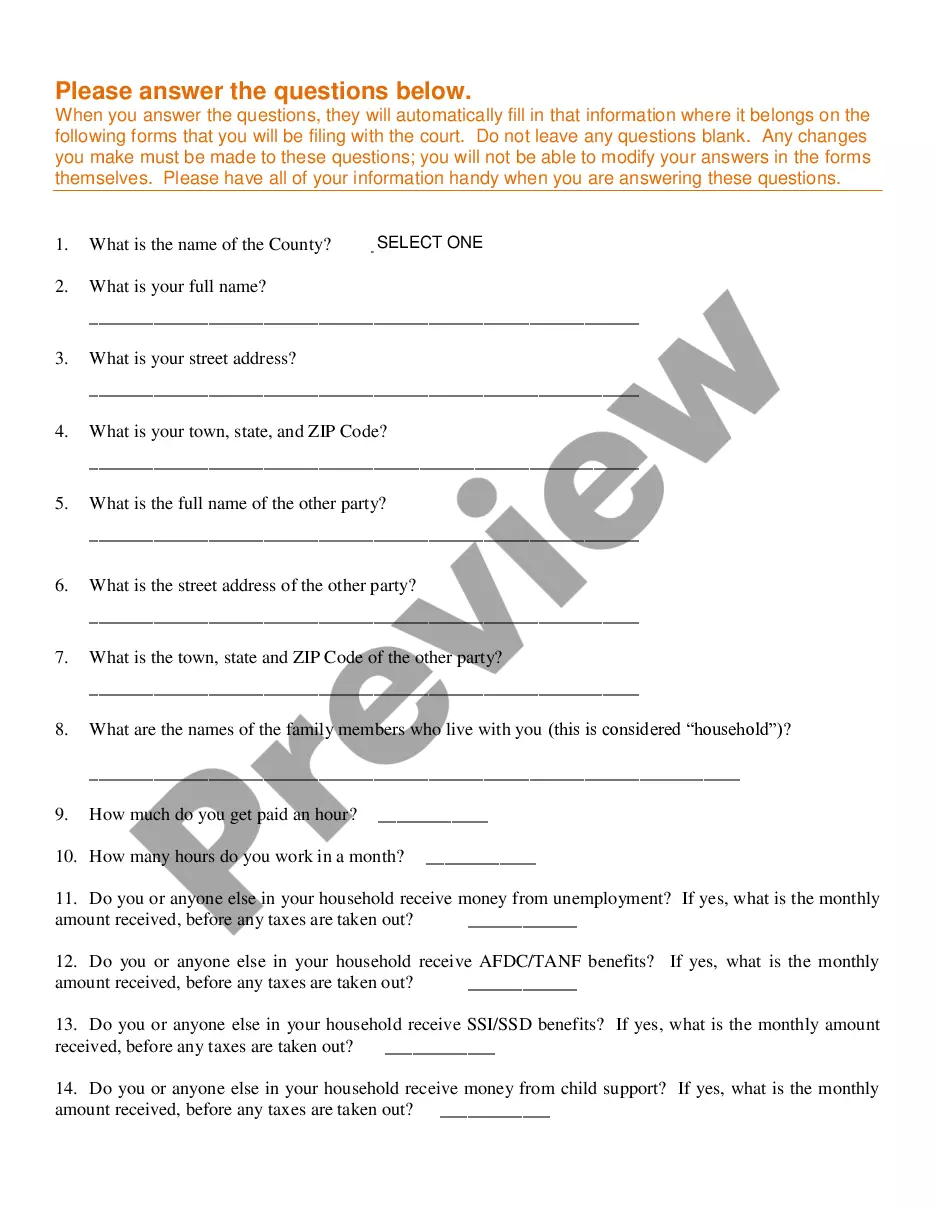
- Gather your financial information, including income, expenses, and bank account details.
- Complete the sections requesting your personal information and that of the other party.
- Accurately input your monthly income and expenses as prompted in the form.
- Review all entries to ensure accuracy, as errors can delay the process.
- Sign the forms where indicated before filing with the court.
Notarization guidance
This form does not typically require notarization unless specified by local law. However, it is important to check with your local court for any specific requirements related to notarization.
Get your form ready online
Our built-in tools help you complete, sign, share, and store your documents in one place.
Make edits, fill in missing information, and update formatting in US Legal Forms—just like you would in MS Word.
Download a copy, print it, send it by email, or mail it via USPS—whatever works best for your next step.
Sign and collect signatures with our SignNow integration. Send to multiple recipients, set reminders, and more. Go Premium to unlock E-Sign.
If this form requires notarization, complete it online through a secure video call—no need to meet a notary in person or wait for an appointment.
We protect your documents and personal data by following strict security and privacy standards.

Make edits, fill in missing information, and update formatting in US Legal Forms—just like you would in MS Word.

Download a copy, print it, send it by email, or mail it via USPS—whatever works best for your next step.

Sign and collect signatures with our SignNow integration. Send to multiple recipients, set reminders, and more. Go Premium to unlock E-Sign.

If this form requires notarization, complete it online through a secure video call—no need to meet a notary in person or wait for an appointment.

We protect your documents and personal data by following strict security and privacy standards.
Avoid these common issues
- Leaving questions blank, especially those related to financial information.
- Providing inaccurate income figures that do not reflect your actual financial situation.
- Failing to sign the form, which can lead to rejection by the court.
Why complete this form online
- Convenience of completing the form from home at your own pace.
- Editability allows you to easily correct any mistakes before final submission.
- Access to professionally drafted templates ensures compliance with legal standards.
Looking for another form?




Form popularity
FAQ
Fee waivers are generally given to students who demonstrate financial need. However, some schools will allow any student to avoid paying the application fee if they meet certain requirements, such as making an official on-campus visit.For example, some schools have their own fee waiver application process.
Sign in at collegeboard.org/mysat. Click the link Get your college application fee waivers View fee-waiver options. Clicking the link takes students to a page where they can: Print their college application fee waivers. Send fee waiver.
If you feel that your financial circumstances might qualify you for an application fee waiver, you can request a fee waiver in the Common App fee waiver section in the profile section. Your counselor will be asked to complete a fee waiver form to affirm your request for a fee waiver.
Your counselor will be asked to complete a fee waiver form to affirm your request for a fee waiver. International applicants may be eligible for the Common App fee waiver. If you meet at least one of the indicators of economic need outlined in the Common App fee waiver question, please indicate so on your application.
To be considered for the application fee waiver, you must be: An undergraduate student (you cannot be in an extension program) A California resident for more than one year. A U.S. citizen or someone without lawful immigration status who qualifies for an AB540 non-resident tuition exception.
Use polite and formal language. Be concise and precise. Do the research on the school. Tell a little bit about yourselfwhy you want to attend that university and what your goals for the future are.
You can get ACT and SAT fee waivers to take up to two of each test for free. To get either, talk to your high school college or guidance counselor. Each test company allocates only a certain number of waivers to each high school, and it's up to the school's counselors to distribute them based on need.
Call the admissions office of the college or university you plan on applying to and ask what their fee waiver policy is. Many schools have very simple processes in place for fee waivers, and might just request you send in a letter from your guidance counselor or mentor that explains your financial situation.
Common reasons why we deny fee waiver requests You did not provide evidence that: You are currently receiving a means-tested benefit; Your household income is at or below 150 percent of the Federal Poverty Guidelines; or. You are currently experiencing a financial hardship.