Indiana Office Policy for Sellers - Disclosure Regarding Real Estate Agency Relationships
Understanding this form
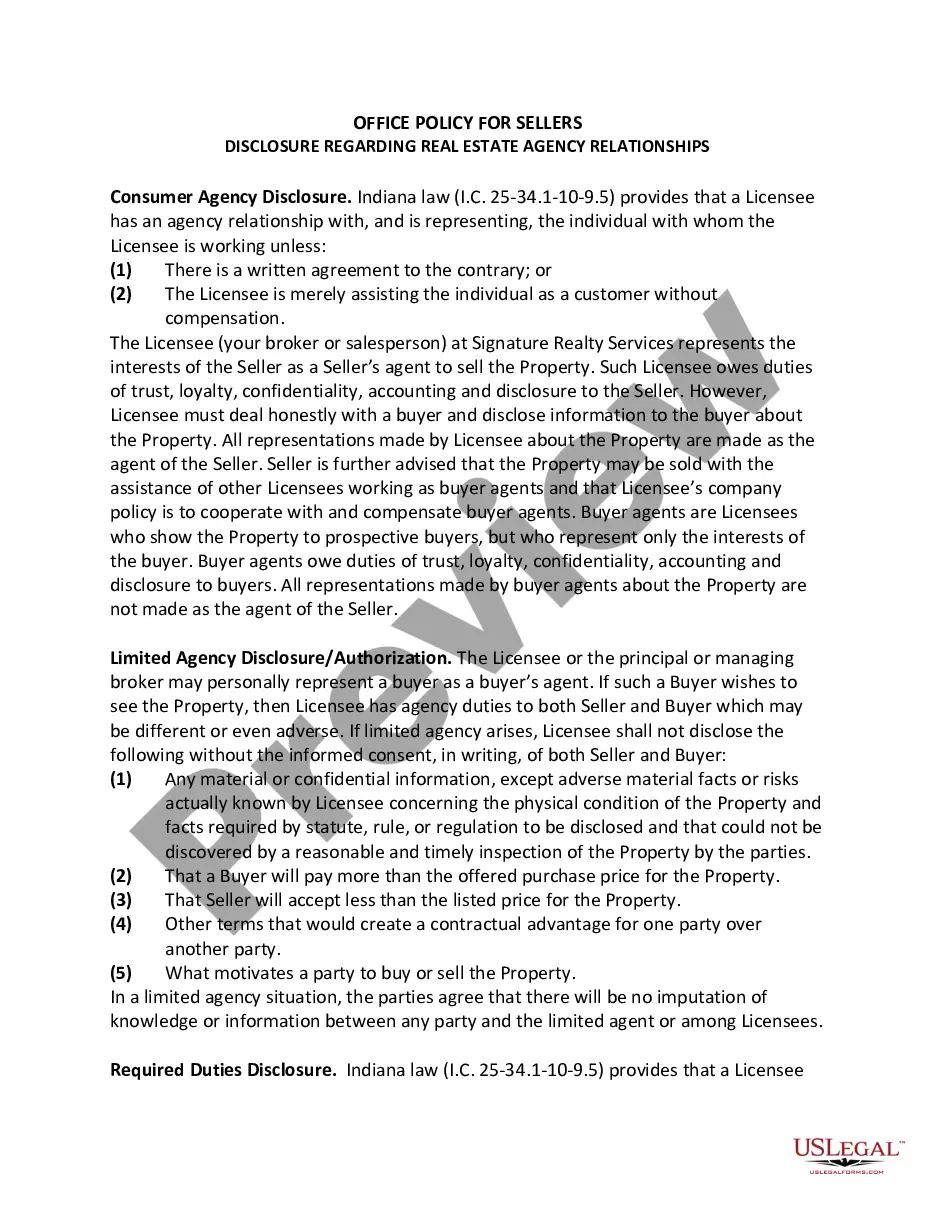
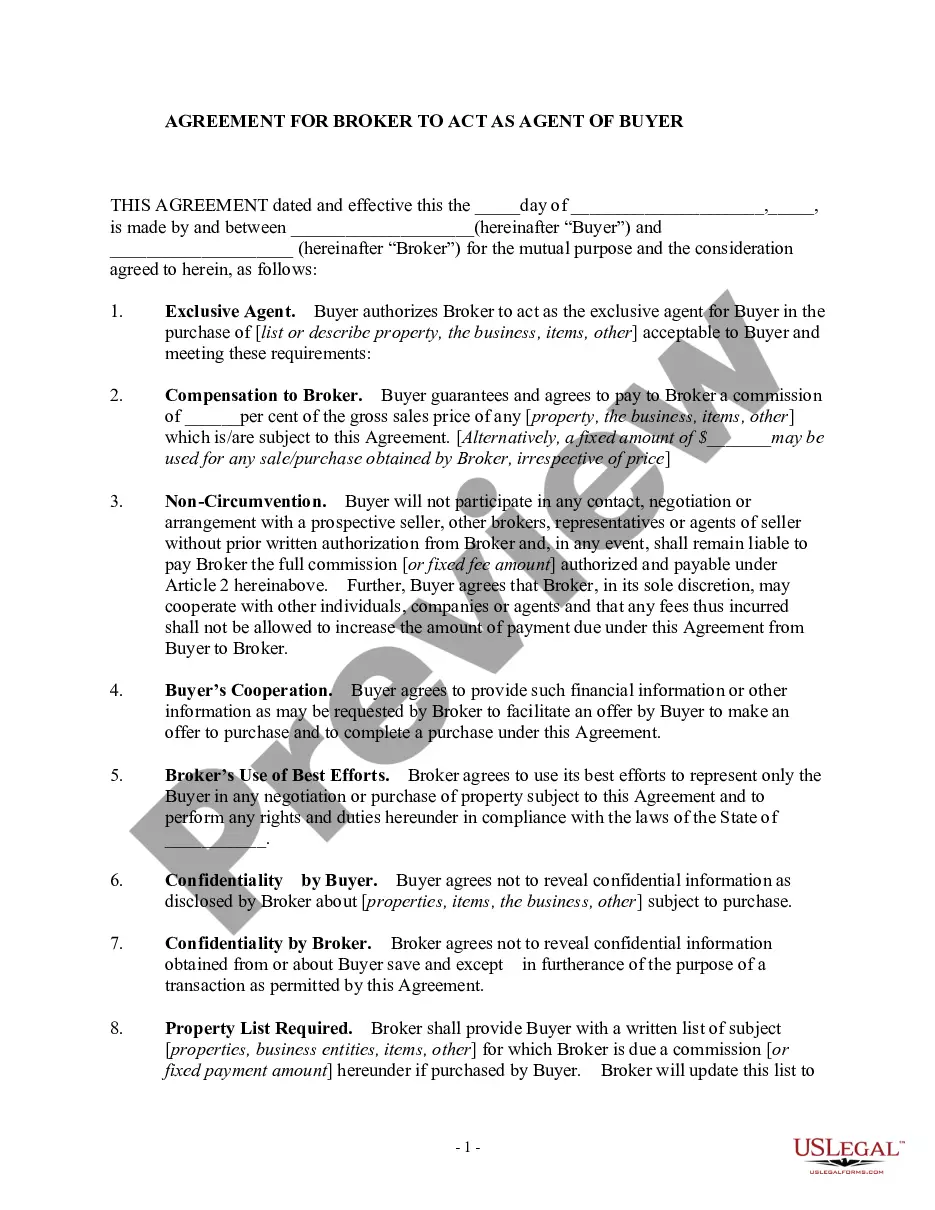
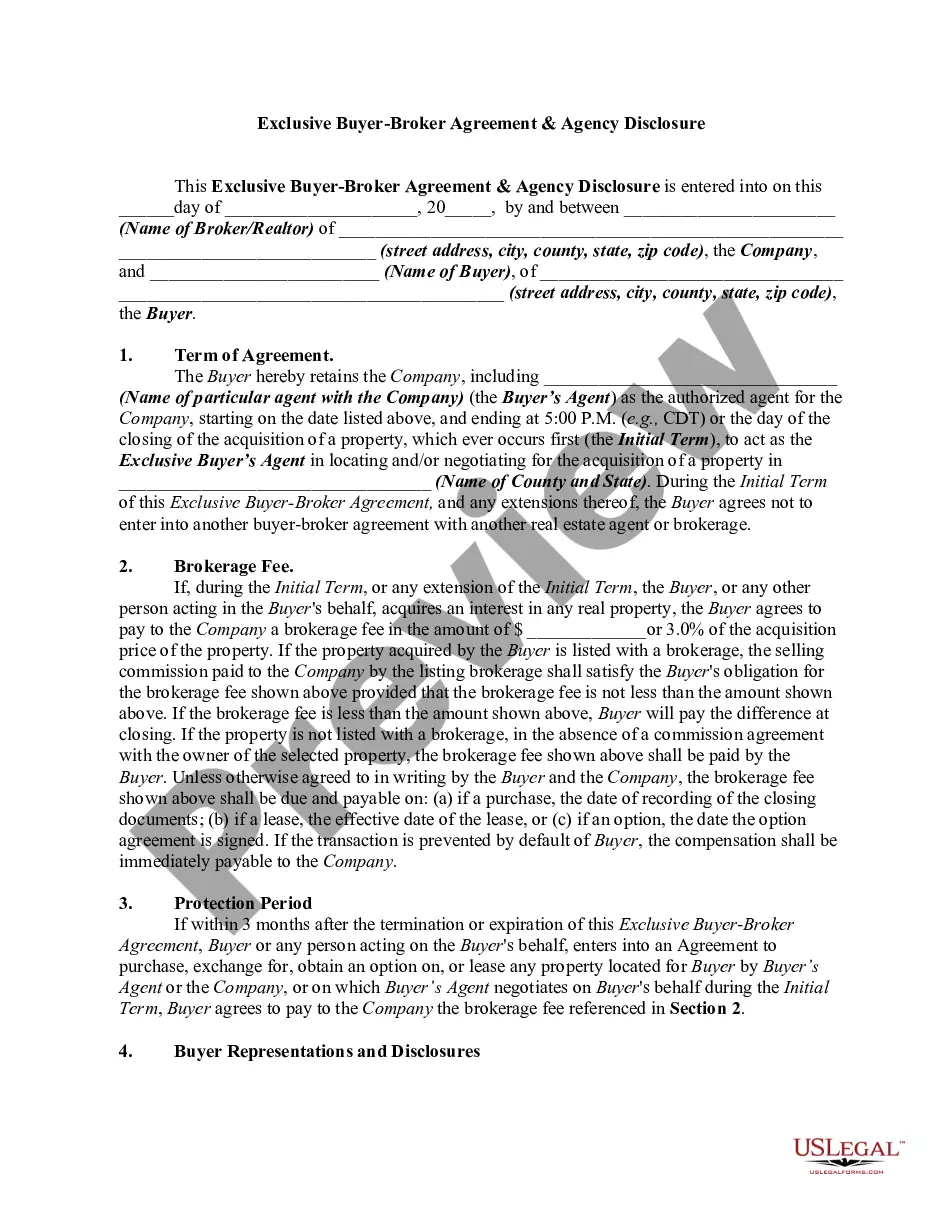
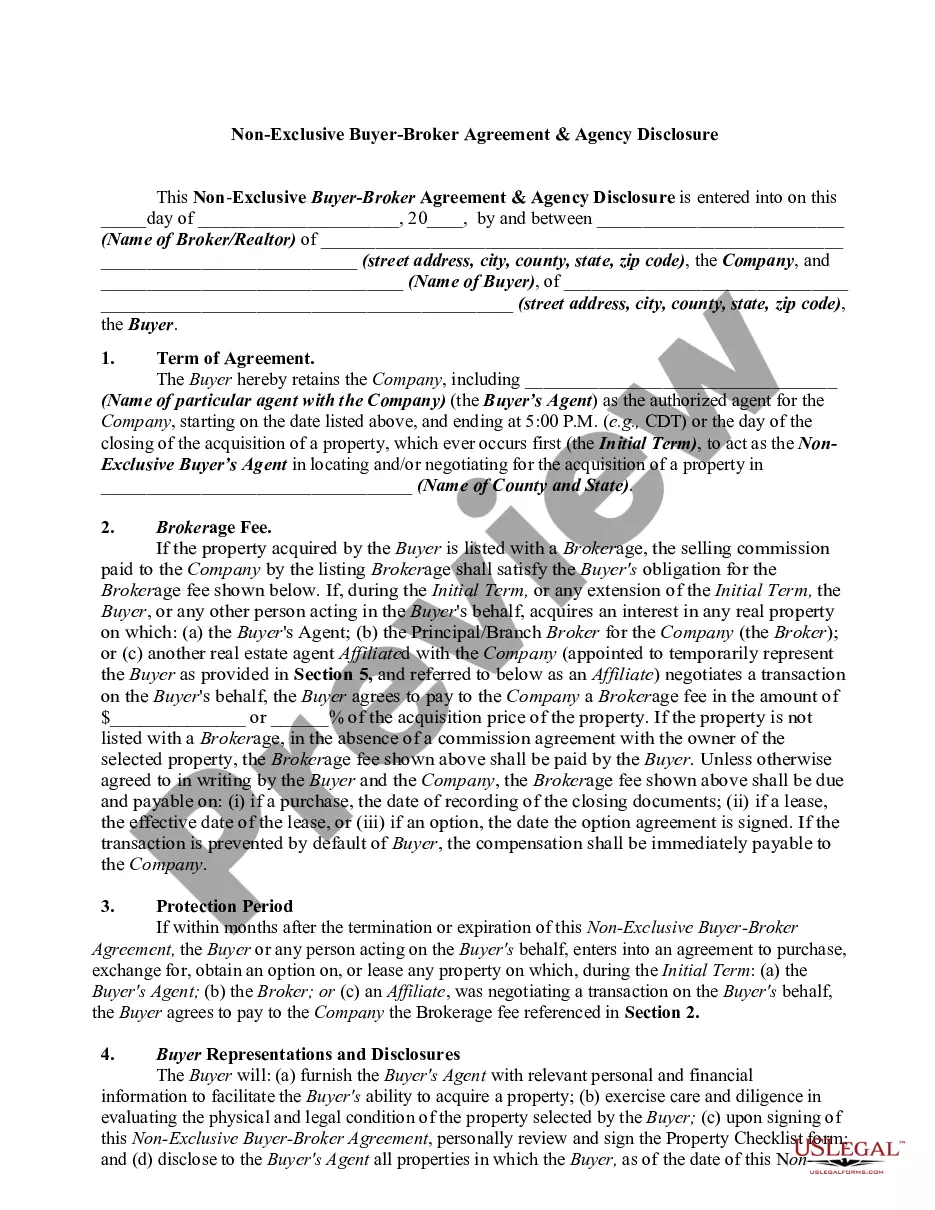
The Office Policy for Sellers - Disclosure Regarding Real Estate Agency Relationships is a crucial legal document for real estate transactions in Indiana. This form outlines the agency relationships between real estate licensees and sellers, ensuring compliance with Indiana law. It provides clarity on the functions and responsibilities of agents, including duties to clients and the limitations of those duties. By using this form, sellers can understand their rights and the obligations of their agents, which differs from other real estate documents that may not specifically address agency relationships.
Form components explained
- Consumer Agency Disclosure: Clarifies the agency relationship between the licensee and the seller.
- Limited Agency Disclosure/Authorization: Details conditions under which an agent can represent both a buyer and a seller.
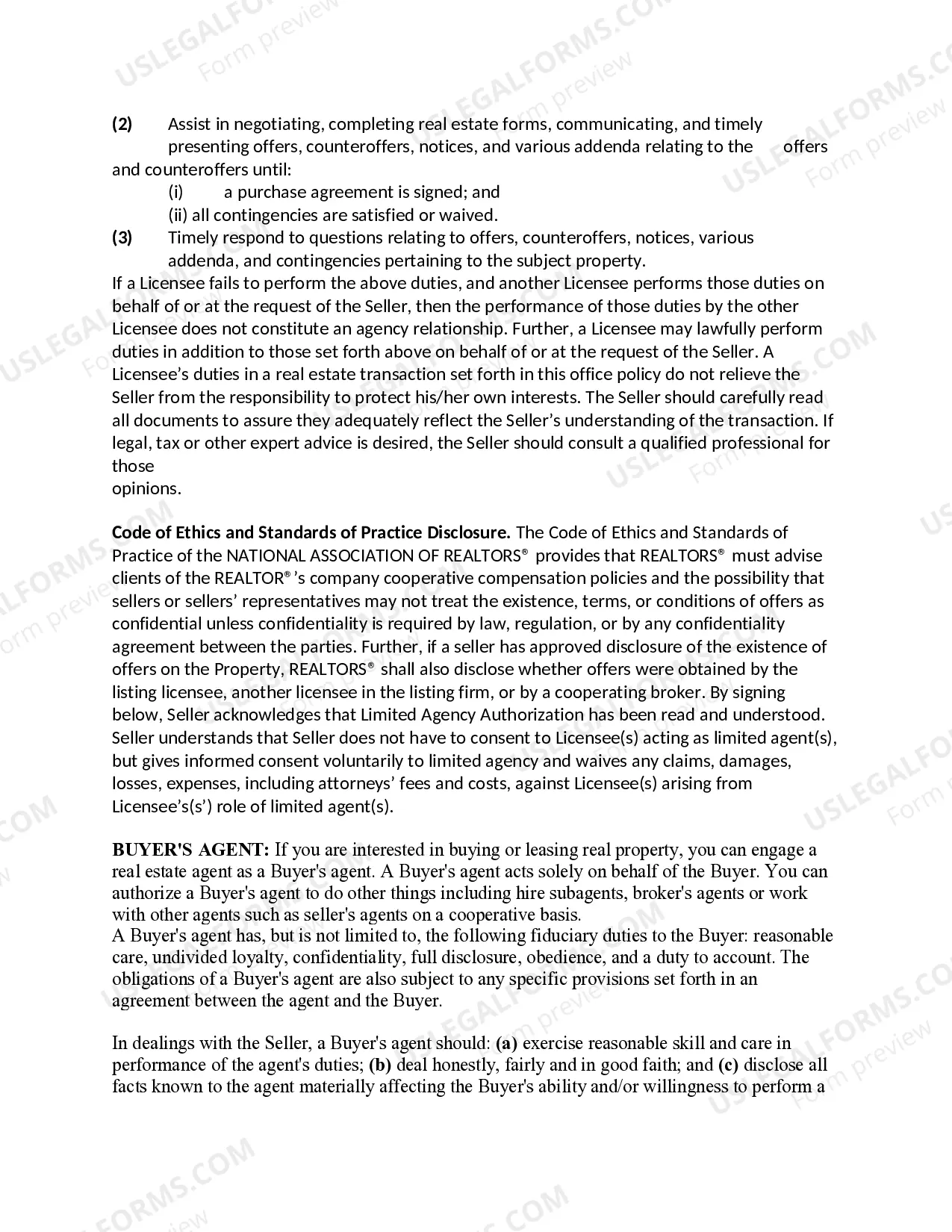
- Required Duties Disclosure: Outlines the specific duties a licensee must perform for the seller.
- Code of Ethics and Standards of Practice Disclosure: Explains the ethical obligations of the REALTOR.
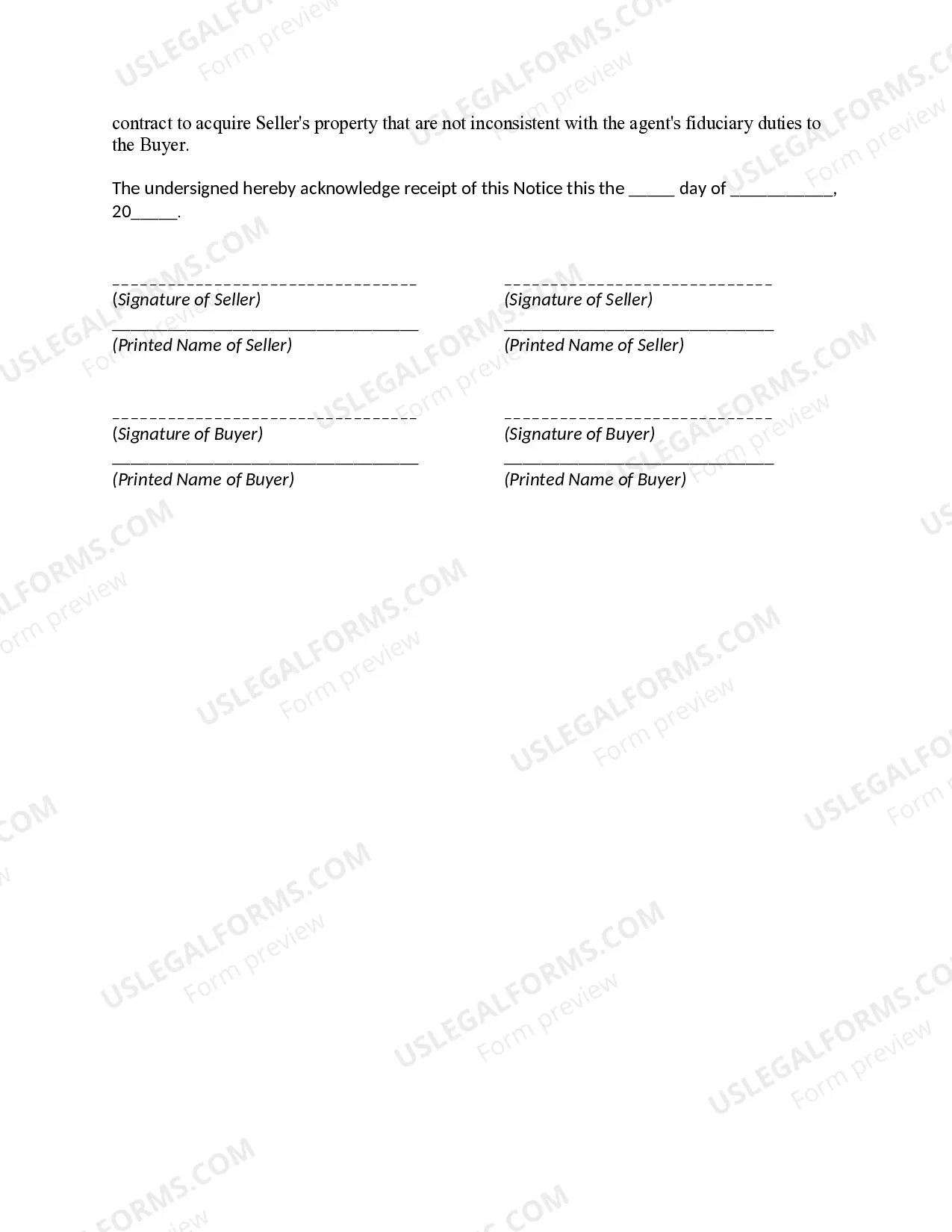
- Section for signatures: Allows for acknowledgment of understanding by the seller and potential buyer.
When this form is needed
This form should be used at the start of any real estate transaction in Indiana where an agency relationship is established. It is particularly important when a seller is engaging with a licensee for representation in selling their property. Utilizing this form helps ensure that the seller is fully informed about the agency relationship and any limitations regarding confidentiality and compensation. This document should be completed before any confidential information about the property is shared.
Who needs this form
- Sellers who are entering into a real estate transaction in Indiana.
- Real estate brokers and agents who require a written office policy for their agency relationships.
- Landlords and property managers involved in leasing agreements.
Instructions for completing this form
- Identify the parties involved: Specify the seller and the real estate agent or broker.
- Review the agency disclosures: Ensure all relationships and duties are clearly outlined.
- Sign the form: Both the seller and agent must sign to acknowledge understanding and agreement.
- Keep a copy: Ensure all parties retain a signed copy for their records.
Notarization requirements for this form
This form does not typically require notarization unless specified by local law.
Get your form ready online
Our built-in tools help you complete, sign, share, and store your documents in one place.
Make edits, fill in missing information, and update formatting in US Legal Forms—just like you would in MS Word.
Download a copy, print it, send it by email, or mail it via USPS—whatever works best for your next step.
Sign and collect signatures with our SignNow integration. Send to multiple recipients, set reminders, and more. Go Premium to unlock E-Sign.
If this form requires notarization, complete it online through a secure video call—no need to meet a notary in person or wait for an appointment.
We protect your documents and personal data by following strict security and privacy standards.

Make edits, fill in missing information, and update formatting in US Legal Forms—just like you would in MS Word.

Download a copy, print it, send it by email, or mail it via USPS—whatever works best for your next step.

Sign and collect signatures with our SignNow integration. Send to multiple recipients, set reminders, and more. Go Premium to unlock E-Sign.

If this form requires notarization, complete it online through a secure video call—no need to meet a notary in person or wait for an appointment.

We protect your documents and personal data by following strict security and privacy standards.
Avoid these common issues
- Failing to provide the form before disclosing confidential information.
- Not fully understanding the implications of limited agency.
- Neglecting to obtain signatures from all involved parties.
Benefits of using this form online
- Convenience of accessing and completing the form from home at any time.
- Editability allows users to customize details specific to their transaction.
- Reliability, as the forms are drafted by licensed attorneys to ensure legal compliance.
Legal use & context
- This form is legally binding once signed by the involved parties.
- It helps provide clarity on agency relationships, reducing misunderstandings in real estate transactions.
- Failure to use a form can lead to legal disputes regarding agency obligations and responsibilities.
Main things to remember
- The form is essential for outlining the real estate agency relationship in Indiana.
- It aids in ensuring transparency between the agent and the seller.
- Completing the form accurately helps avoid common legal pitfalls in real estate transactions.
Looking for another form?
Form popularity
FAQ
In California, certain types of agency relationships, like dual agency without proper declaration, are not permitted and thus should not be included in the disclosures. It is crucial to recognize the difference, as failing to disclose accurately can lead to legal complications. The Indiana Office Policy for Sellers - Disclosure Regarding Real Estate Agency Relationships helps clarify acceptable agency relationships specific to Indiana, so you can comply with local regulations.
For these reasons, the best way to go about canceling a contract with a Realtor is to simply call the broker and explain your desire to end the contract with their agent. Many reputable brokers who wish to stay in your good graces (and with the community's) will let you out of the contract.
Some states do not disclose the actual value of property sales to the public. Non-disclosure states include: Idaho, Indiana, Kansas, Mississippi, Missouri, Montana, New Mexico, North Dakota, South Dakota, Texas, Utah, and Wyoming.
Case Law Update Since the mid-1990's, the State of Indiana has required sellers of single-family residential real estate to complete and deliver to buyers a disclosure form entitled Seller's Residential Real Estate Sales Disclosure, pursuant to the requirements of Indiana Code § 32-21-5.
To recap, the agency disclosure process has three parts: disclose, elect, and confirm. And always remember that only the employing broker can be a Listing Agent or Selling Agent.
In a real estate transaction, brokers and agents are key parties that help carry out the sale.Full disclosure provides the parties to a transaction all the details needed to evaluate the property, to make the decision to move forward or reject a sale, and for successful negotiations.
Indiana Courts generally apply the rule of caveat emptor, or buyer beware, in connection with sales of residential real estate.Notably, there is no exception for the sale of a residential property by a seller that never lived in the home being sold.
You have to bring evidence that the seller knew or should have known about the issues, and they purposely covered it up. For example, if it was obvious that the seller tried to hide mold by painting over it, photos of that would work as evidence.
As a local homeowner myself, I recommend that you get familiar with this form, and remember it is not a contract, just simply a disclosure.
By ratification. in writing. by estoppel.