Indiana Siding Contract for Contractor
About this form
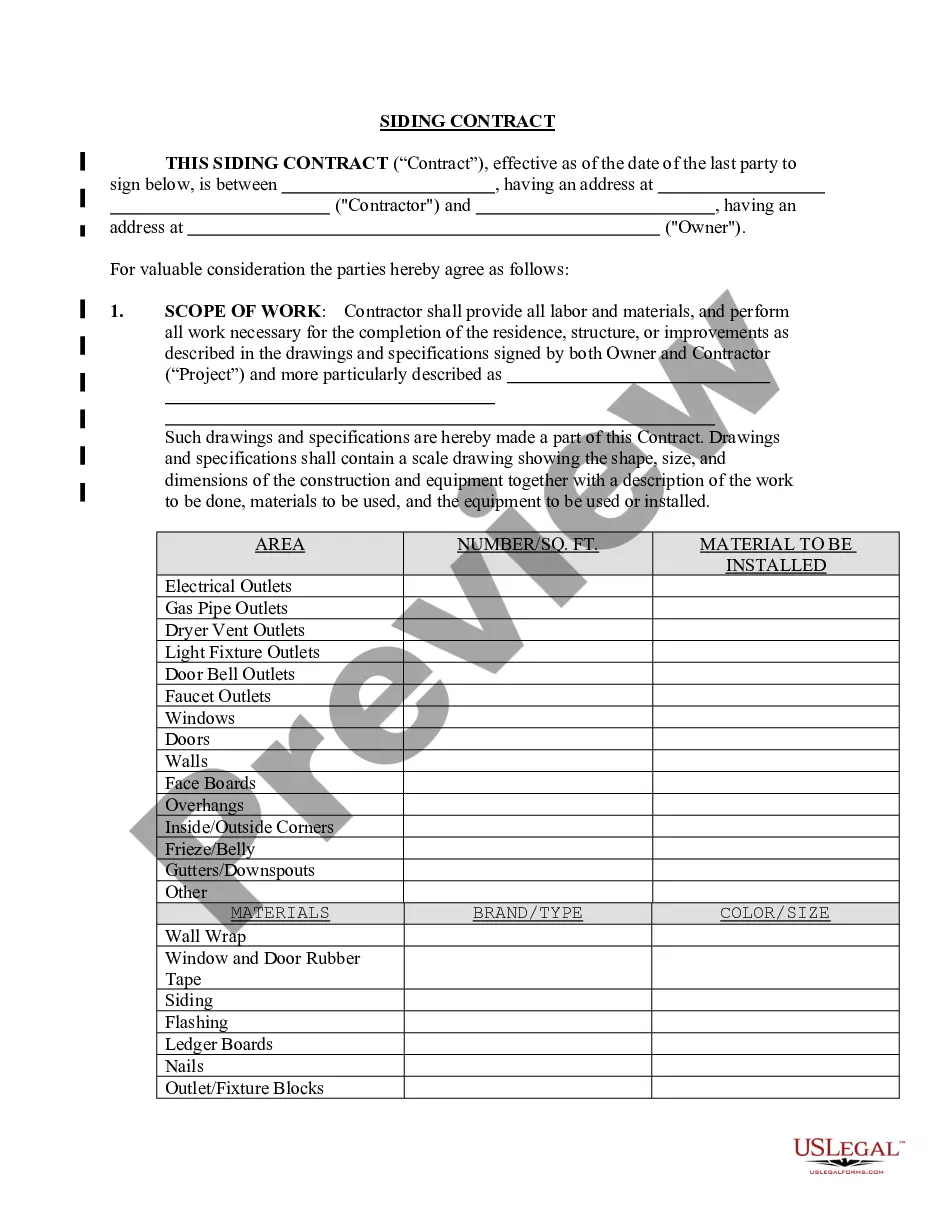
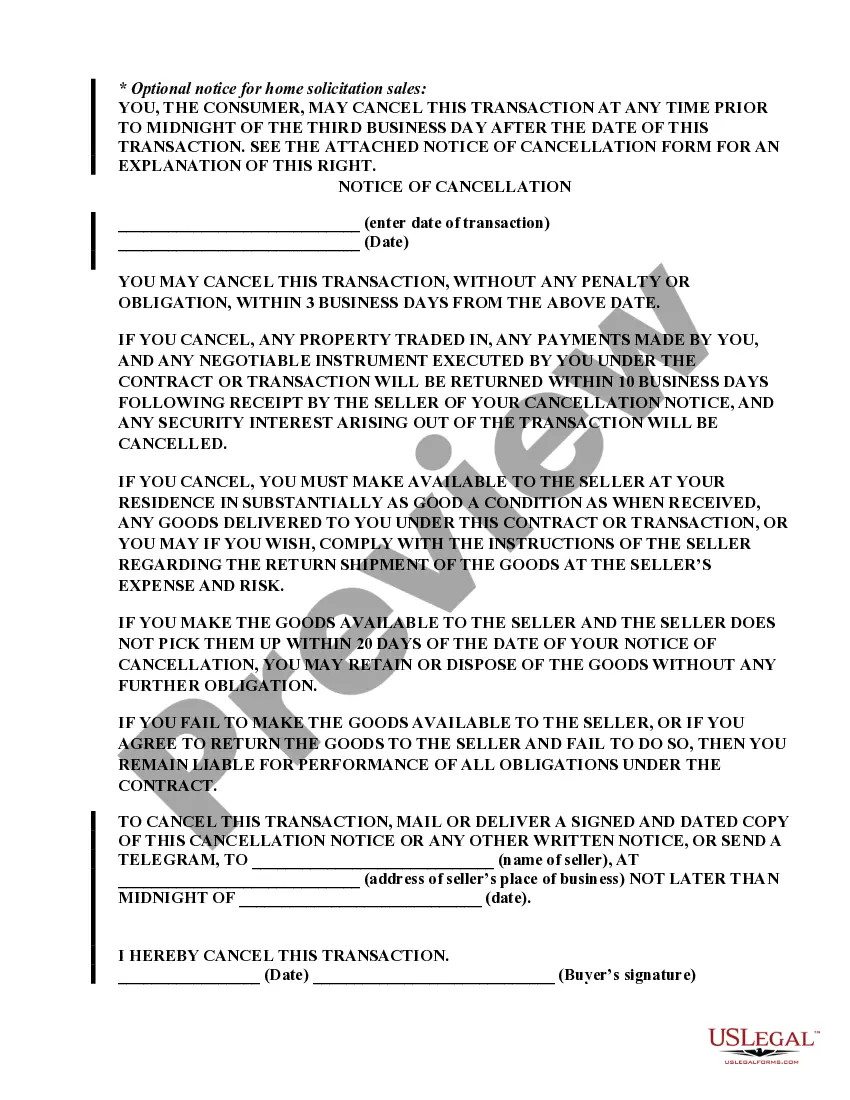
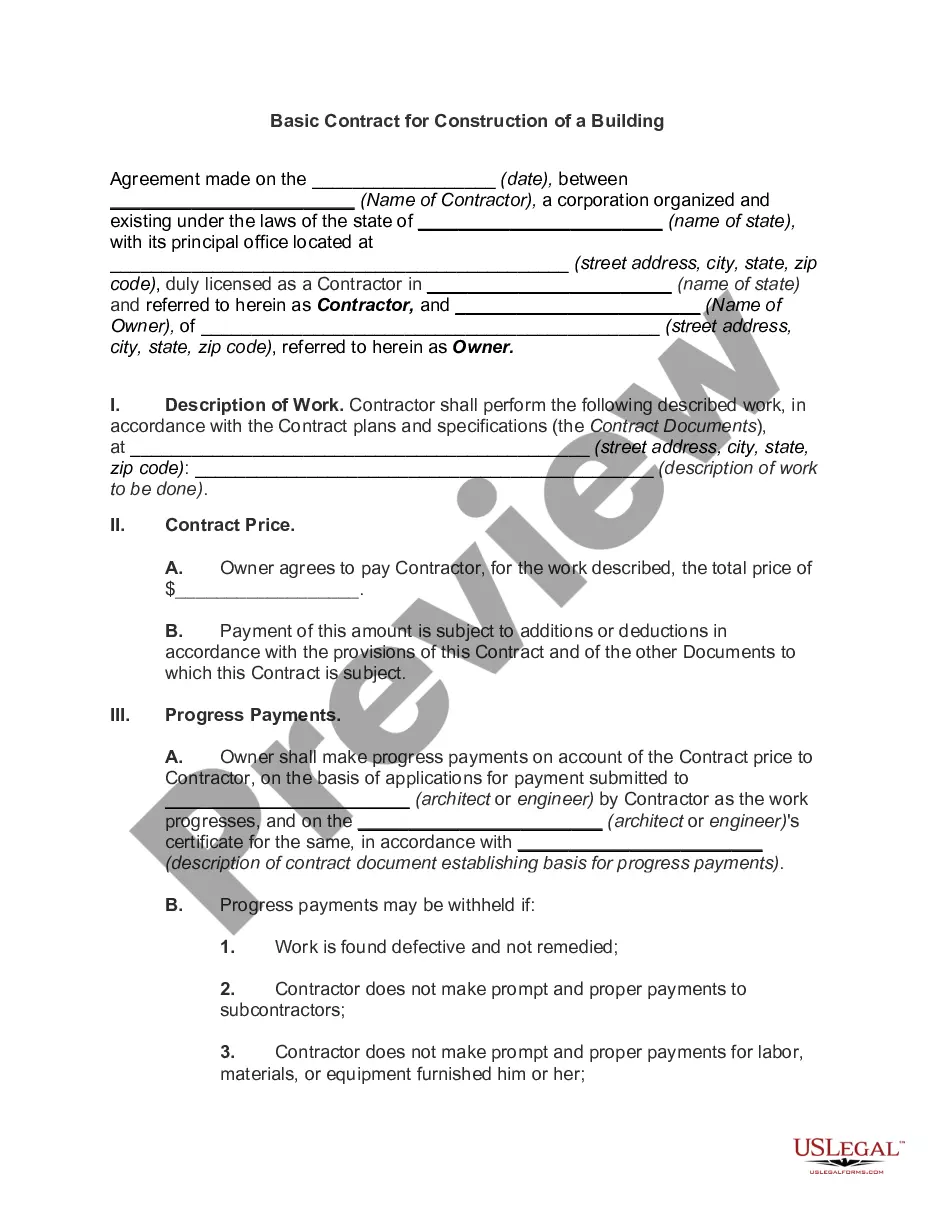
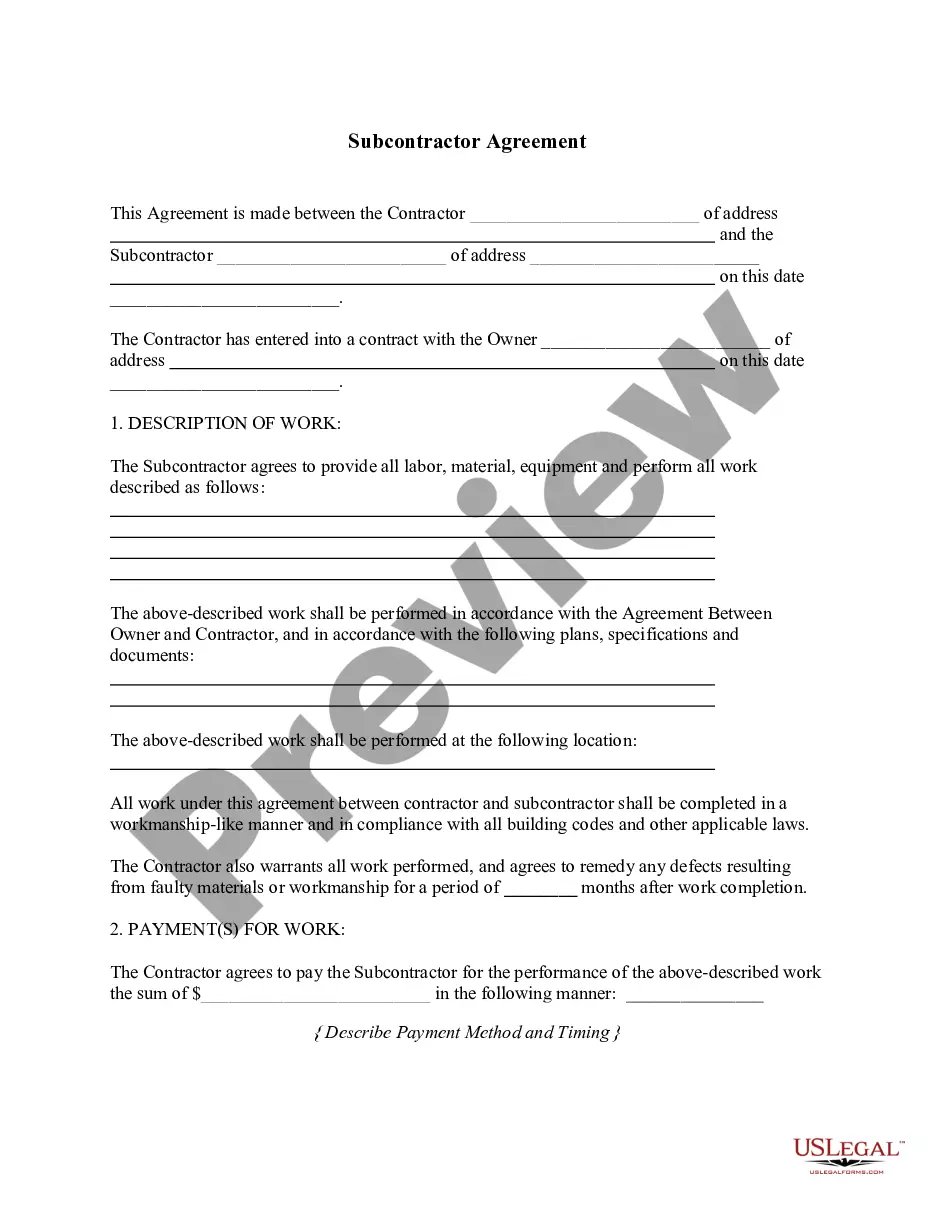
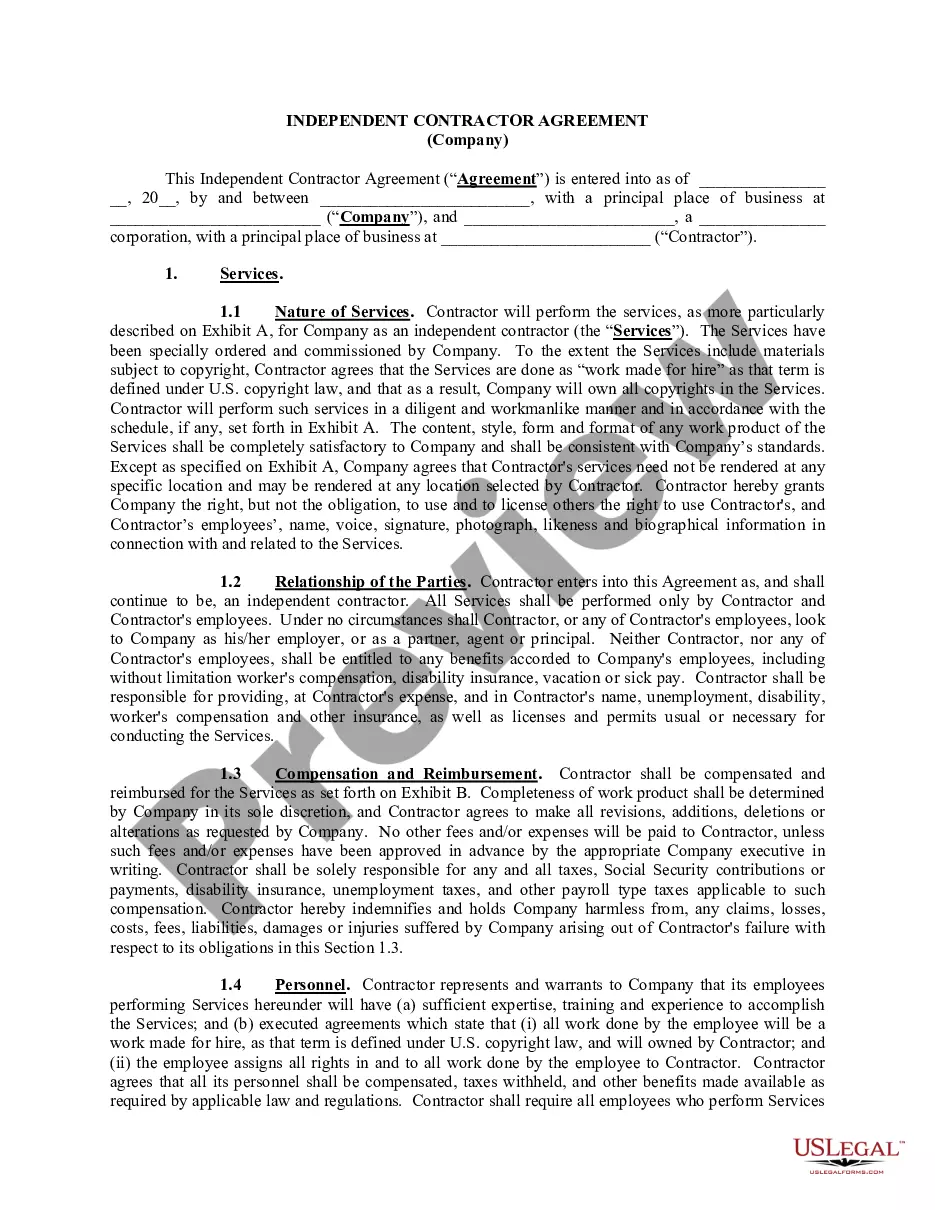
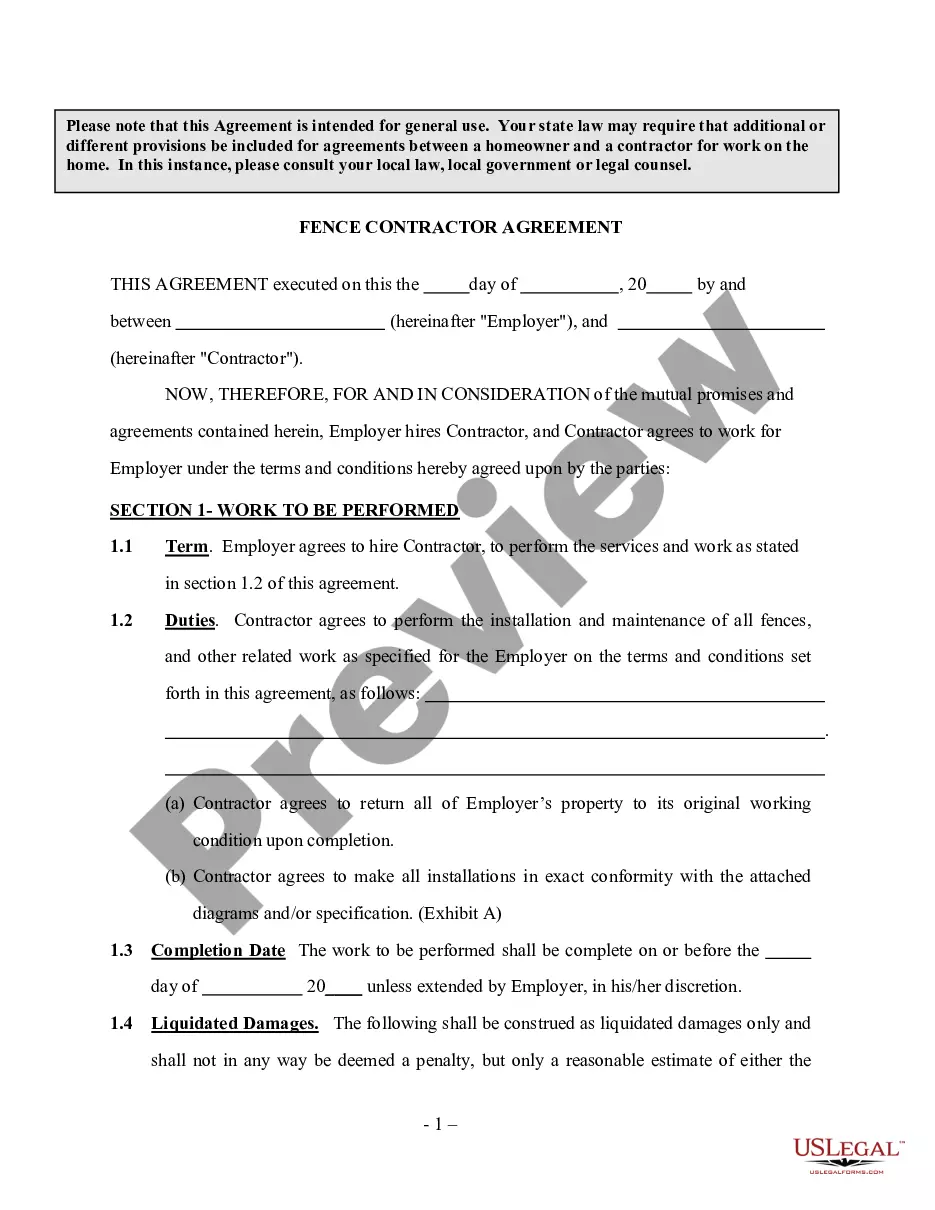
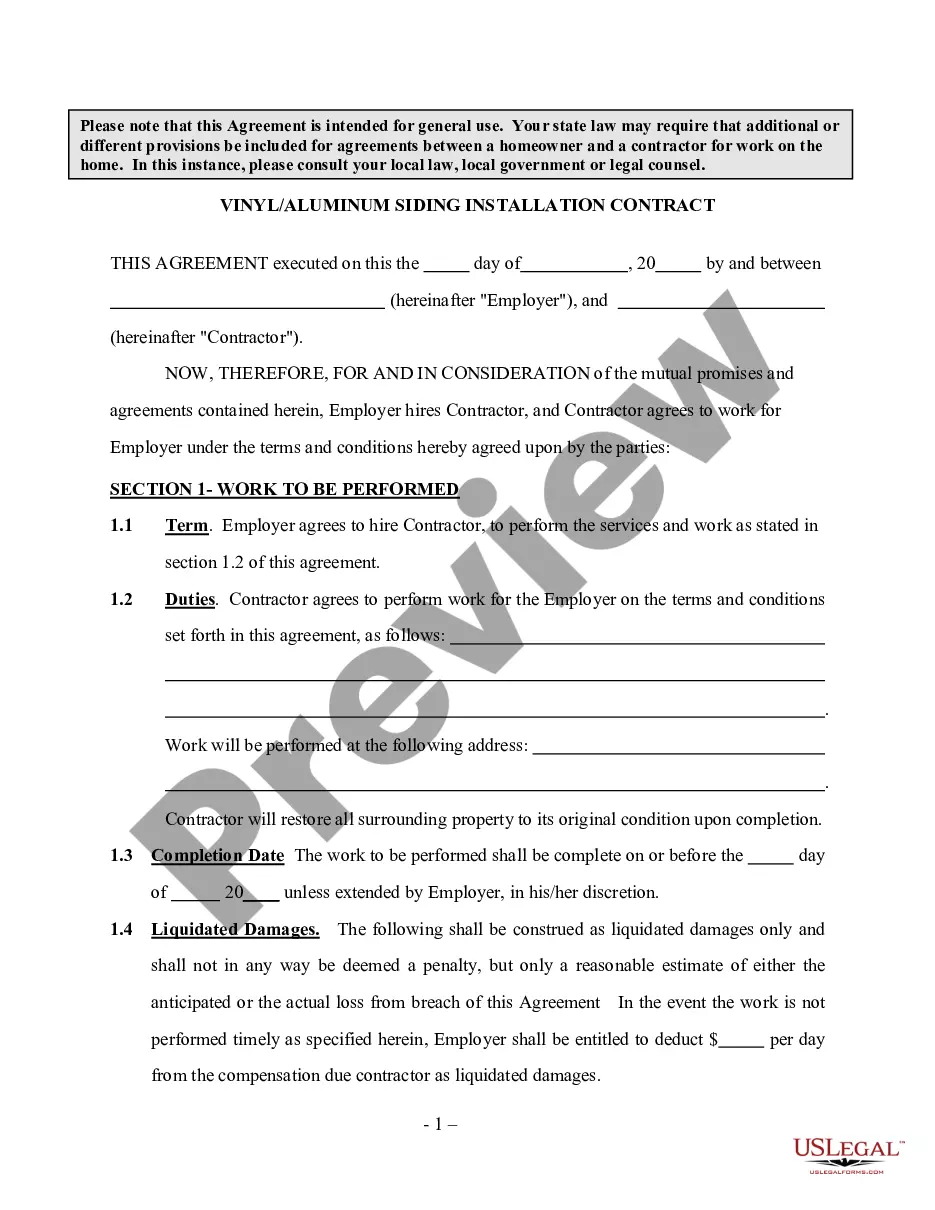
The Siding Contract for Contractor is a legal agreement specifically created for use between siding contractors and property owners. It establishes the terms of the work, payment arrangements, and the rights and responsibilities of each party. Unlike general construction agreements, this contract focuses on the particulars of siding installations and complies with Indiana state laws. This ensures all parties are protected and clearly understand their commitments regarding the project.
Key components of this form
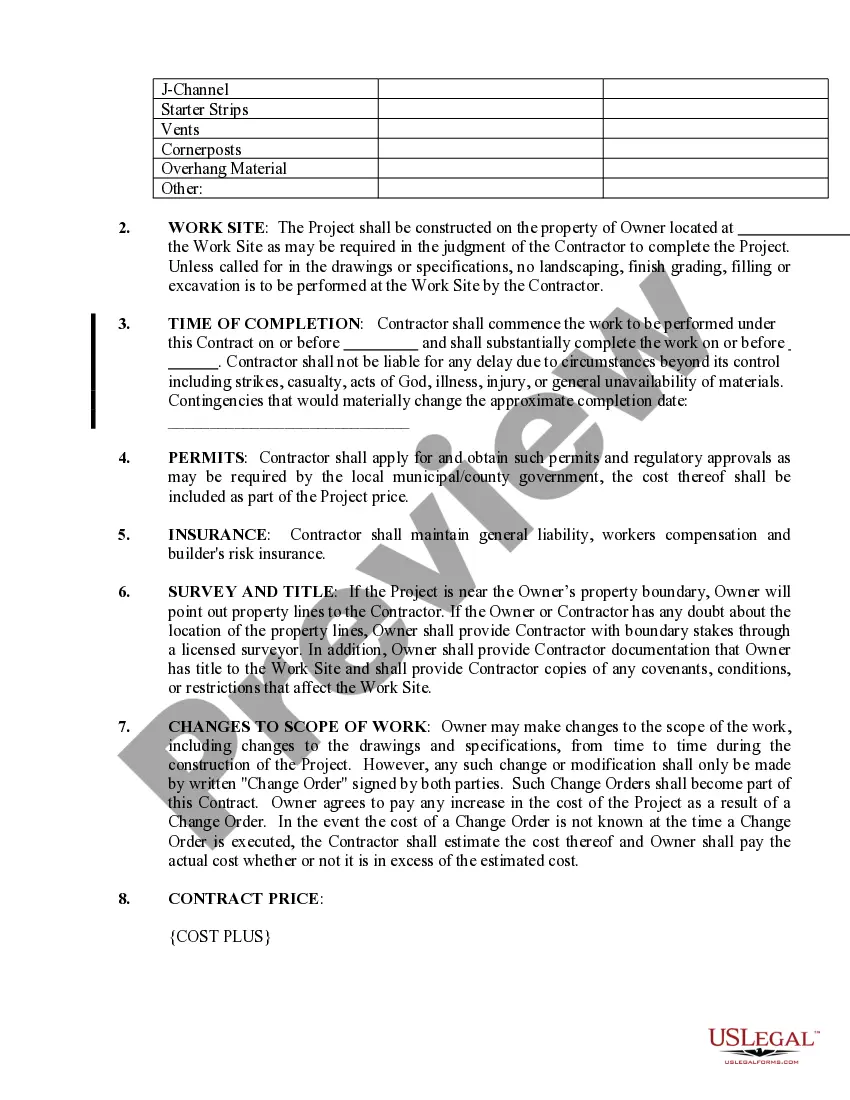
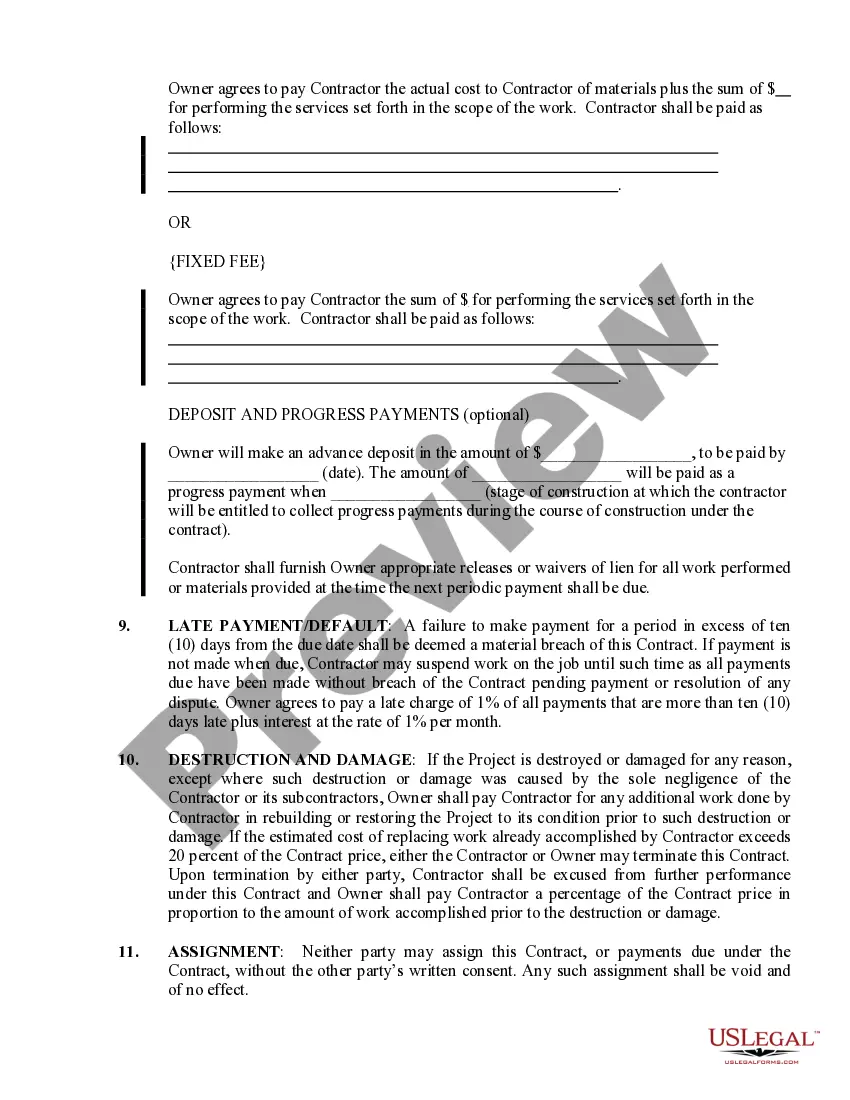
- Permits: The contractor is responsible for obtaining necessary permits, which are included in the project price.
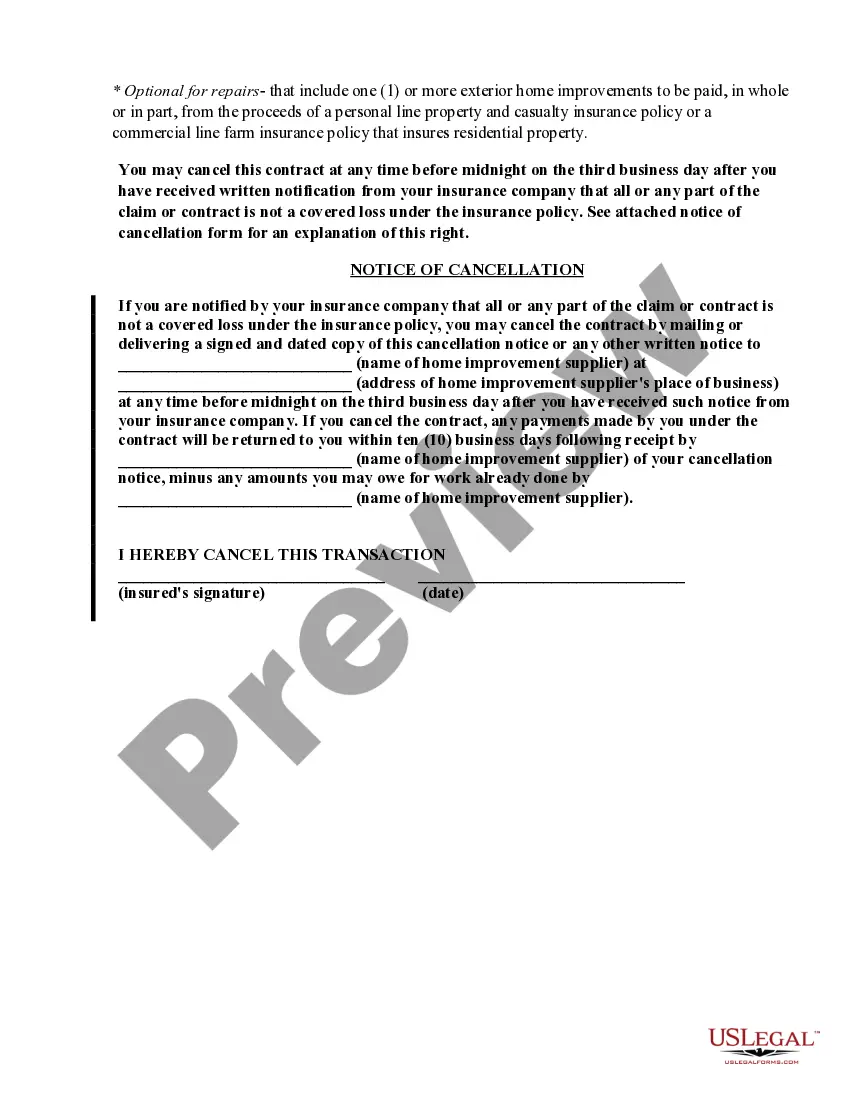
- Insurance: The contractor must maintain general liability, workers compensation, and builders risk insurance.
- Survey and Title: The owner must confirm property boundaries and provide necessary documentation regarding property title.
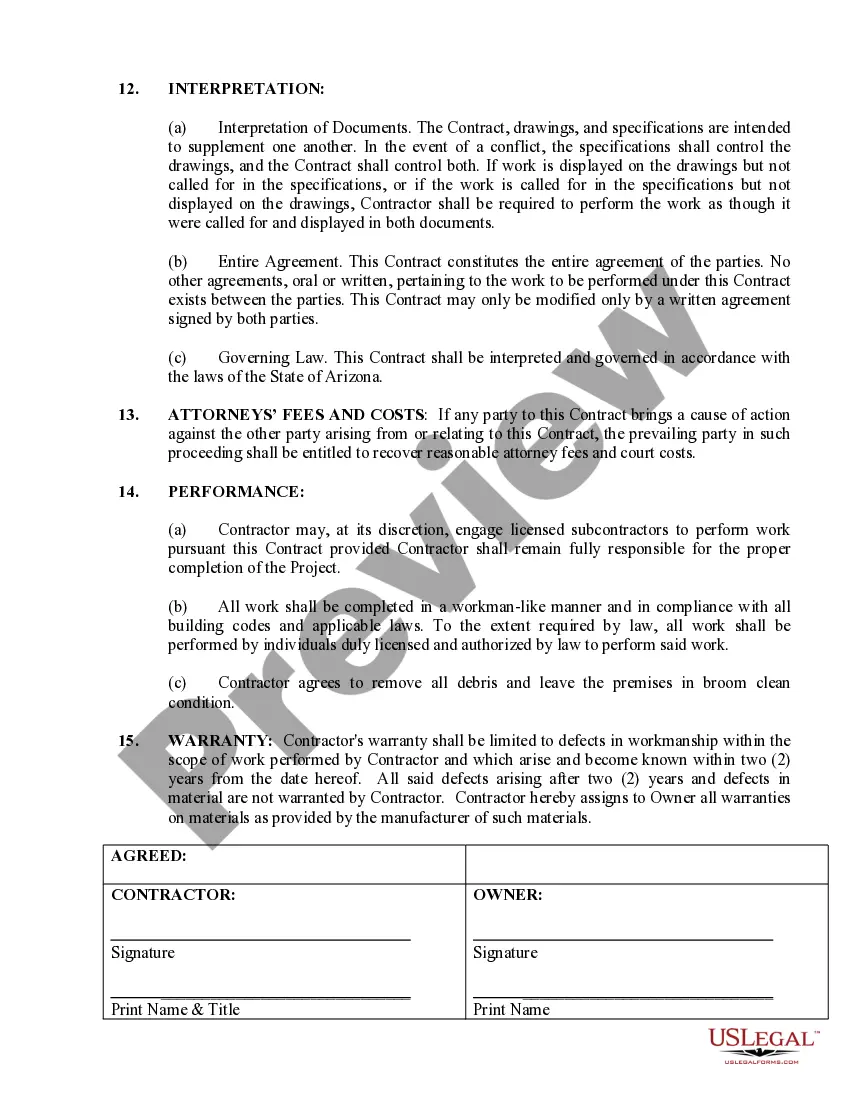
- Late Payment/Default: Specifies conditions for late payment and consequences, including potential work suspension.
- Destruction and Damage: Outlines responsibilities for repairs in case of project damage not caused by the contractor's negligence.
- Performance: Details on the quality of work expected and the contractor's obligation to remove debris.
When this form is needed
This form is essential when a property owner hires a siding contractor for a project involving the installation, repair, or replacement of siding. It should be utilized in scenarios where clear terms regarding project scope, payment structure, and responsibilities are necessary to avoid misunderstandings. It is particularly useful when the job requires permits and compliance with local building regulations.
Who this form is for
- Property owners planning to install or replace siding on their home.
- Siding contractors who wish to formalize their agreement with clients.
- Both parties looking for legal protection and clarity regarding project expectations and obligations.
How to prepare this document
- Identify the parties involved by clearly naming the contractor and property owner with their contact details.
- Specify the scope of work, including detailed descriptions of the siding project and any relevant specifications.
- Include the agreed-upon payment terms, whether cost-plus or fixed fee, along with any deadlines for payments.
- Provide necessary documentation regarding property boundaries and titles as required.
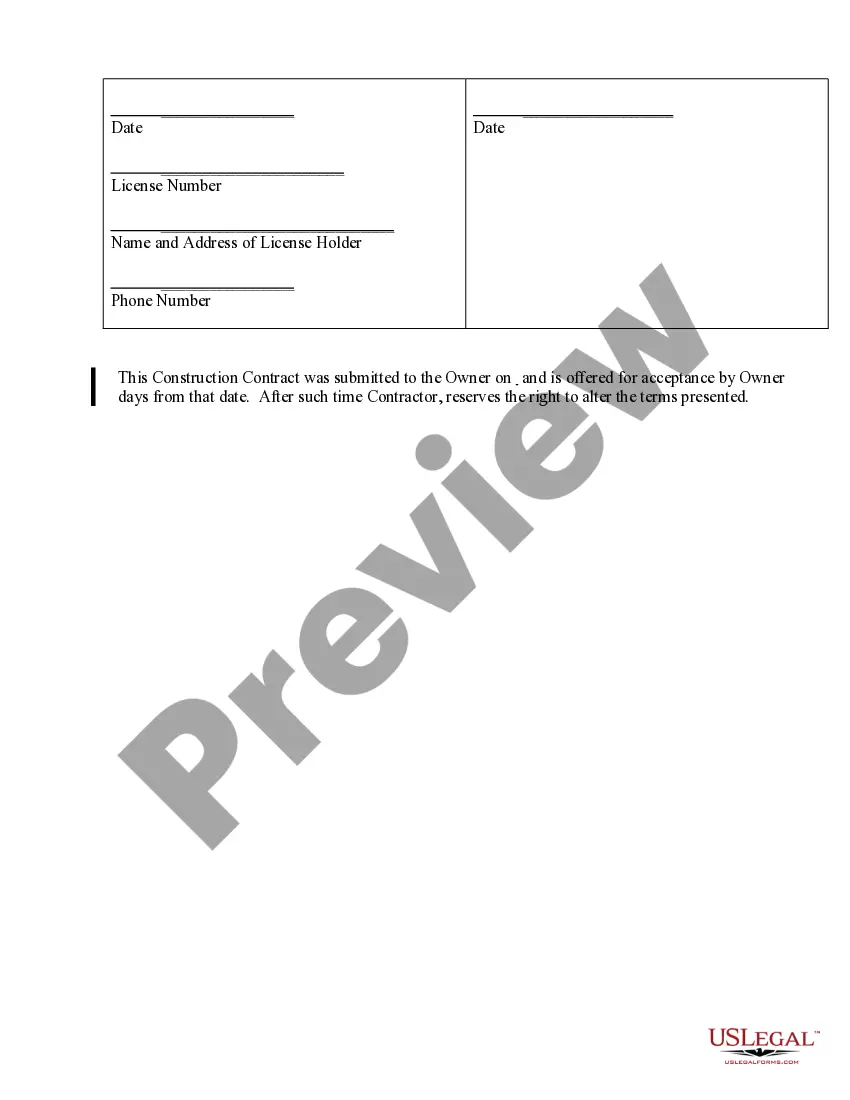
- Have both parties sign and date the contract to formalize the agreement.
Is notarization required?
This form does not typically require notarization unless specified by local law. However, it is recommended to check local regulations to ensure compliance.
Get your form ready online
Our built-in tools help you complete, sign, share, and store your documents in one place.
Make edits, fill in missing information, and update formatting in US Legal Forms—just like you would in MS Word.
Download a copy, print it, send it by email, or mail it via USPS—whatever works best for your next step.
Sign and collect signatures with our SignNow integration. Send to multiple recipients, set reminders, and more. Go Premium to unlock E-Sign.
If this form requires notarization, complete it online through a secure video call—no need to meet a notary in person or wait for an appointment.
We protect your documents and personal data by following strict security and privacy standards.

Make edits, fill in missing information, and update formatting in US Legal Forms—just like you would in MS Word.

Download a copy, print it, send it by email, or mail it via USPS—whatever works best for your next step.

Sign and collect signatures with our SignNow integration. Send to multiple recipients, set reminders, and more. Go Premium to unlock E-Sign.

If this form requires notarization, complete it online through a secure video call—no need to meet a notary in person or wait for an appointment.

We protect your documents and personal data by following strict security and privacy standards.
Avoid these common issues
- Not specifying the full scope of work, leading to misunderstandings about the project.
- Failing to include details about payment schedules, which may result in late payments.
- Neglecting to verify and document property boundaries, potentially causing disputes.
- Omitting necessary insurance requirements, exposing both parties to liability issues.
Benefits of using this form online
- Immediate access to a legally vetted template that saves time and effort in drafting.
- Edit and customize the form easily to fit specific project needs and specifications.
- Downloadable format allows for easy storage and printing when needed.
- Legal compliance ensured with state-specific language tailored to Indiana regulations.
Legal use & context
- This contract serves as important legal documentation between the contractor and property owner.
- It is enforceable in Indiana, protecting both parties' interests.
- Understanding each component ensures that agreements are clear and binding.
Looking for another form?
Form popularity
FAQ
Name of contractor and contact information. Name of homeowner and contact information. Describe property in legal terms. List attachments to the contract. The cost. Failure of homeowner to obtain financing. Description of the work and the completion date. Right to stop the project.
Get it in writing. Keep it simple. Deal with the right person. Identify each party correctly. Spell out all of the details. Specify payment obligations. Agree on circumstances that terminate the contract. Agree on a way to resolve disputes.
Indiana law requires home improvement contracts exceeding $150 to be in writing. Before signing the contract, make certain it includes: The price of the job. Payment schedule.
Name of the employer and the employee. Important details bout both employer and employee. Length of contract. If the contract is on a fixed term, the end date of the contract. The job description or job title of the employee. Start of employment date.
Identifying/Contact Information. Title and Description of the Project. Projected Timeline and Completion Date. Cost Estimate and Payment Schedule. Stop Work Clause and Stop Payment Clause. Act of God Clause. Change Order Agreement. Warranty.
What is a labour only contract? Under a labour only contract, the worker supplies labour only and does not supply materials for the job. Furthermore the worker does not provide equipment other than the small tools of the trade.
Noun. 1. labor contract - contract between labor and management governing wages and benefits and working conditions. collective agreement, labor agreement. contract - a binding agreement between two or more persons that is enforceable by law.
Labour Contract. A labour contract is one which involves only the labour that is required for construction.You will be involved in every step of the construction process and can decide on the cost and quality of the materials used.
Get it in writing. Keep it simple. Deal with the right person. Identify each party correctly. Spell out all of the details. Specify payment obligations. Agree on circumstances that terminate the contract. Agree on a way to resolve disputes.