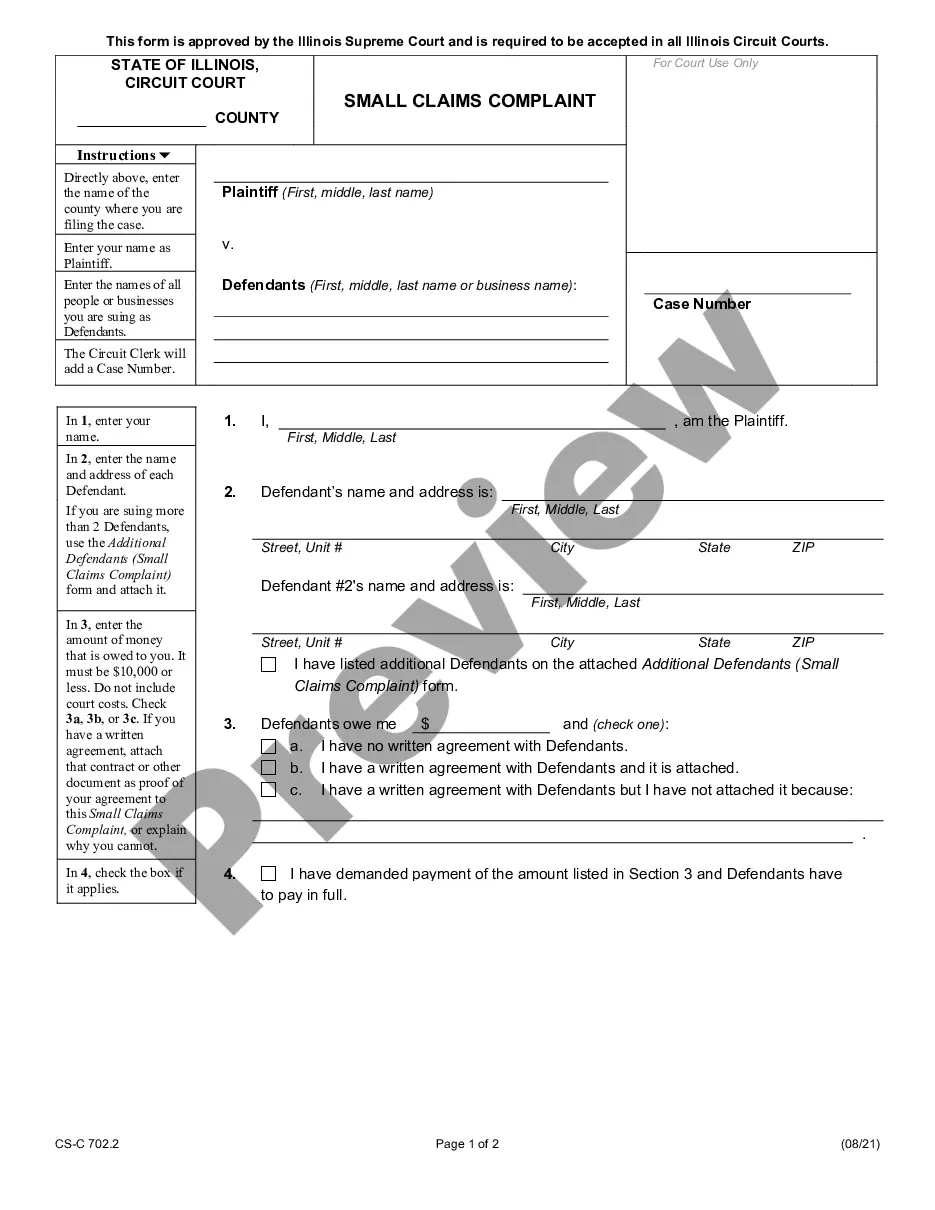
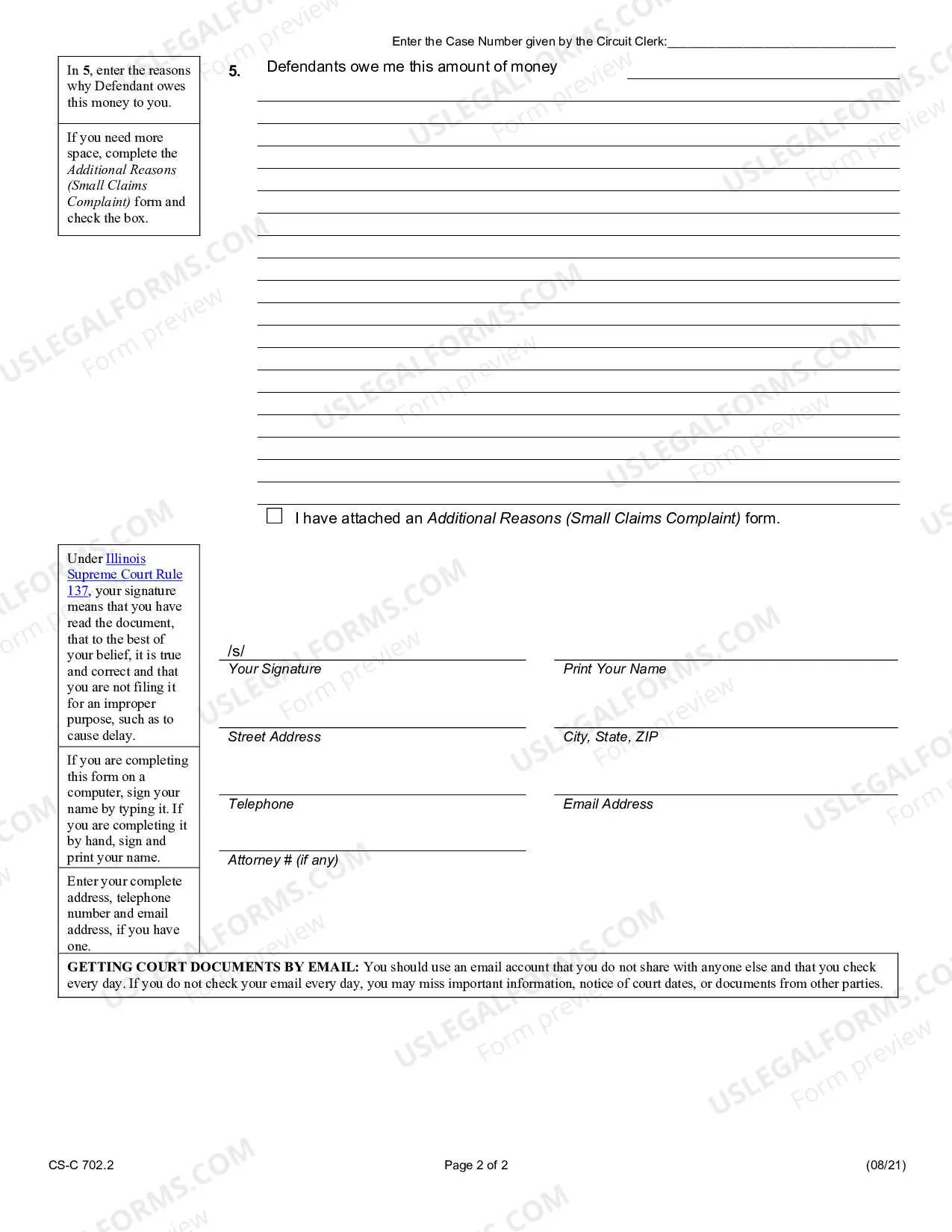
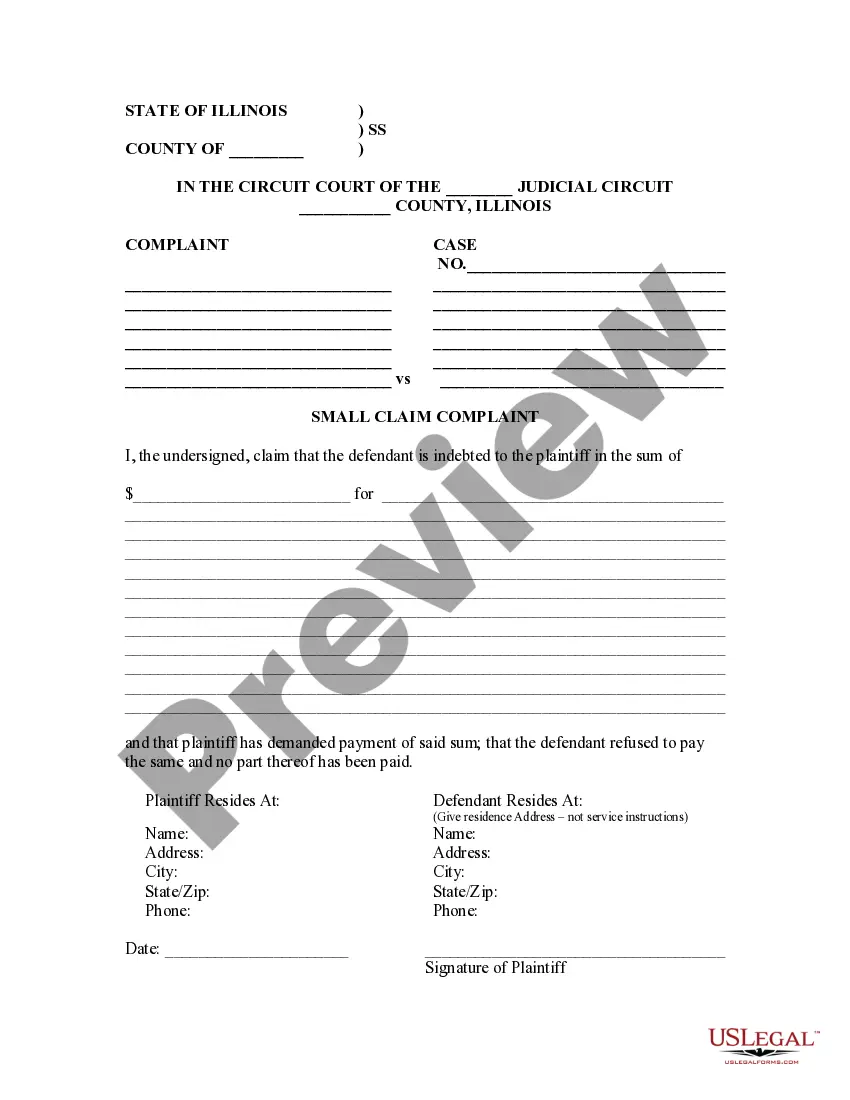
Illinois Small Claims Complaint

Notarization requirements for this form
In most cases, this form does not require notarization. However, some jurisdictions or signing circumstances might. US Legal Forms offers online notarization powered by Notarize, accessible 24/7 for a quick, remote process.
Get your form ready online
Our built-in tools help you complete, sign, share, and store your documents in one place.
Make edits, fill in missing information, and update formatting in US Legal Forms—just like you would in MS Word.
Download a copy, print it, send it by email, or mail it via USPS—whatever works best for your next step.
Sign and collect signatures with our SignNow integration. Send to multiple recipients, set reminders, and more. Go Premium to unlock E-Sign.
If this form requires notarization, complete it online through a secure video call—no need to meet a notary in person or wait for an appointment.
We protect your documents and personal data by following strict security and privacy standards.

Make edits, fill in missing information, and update formatting in US Legal Forms—just like you would in MS Word.

Download a copy, print it, send it by email, or mail it via USPS—whatever works best for your next step.

Sign and collect signatures with our SignNow integration. Send to multiple recipients, set reminders, and more. Go Premium to unlock E-Sign.

If this form requires notarization, complete it online through a secure video call—no need to meet a notary in person or wait for an appointment.

We protect your documents and personal data by following strict security and privacy standards.
Looking for another form?
Form popularity
FAQ
To file a small claims complaint, the plaintiff must pay a filing fee depending on the amount and type of suit to be filed. If the amount of money you are asking for is $2,500.00 or less, the filing fee is $89.00. If the amount of money exceeds $2,500.00 but not more than $10,000.00 the filing fee is $225.00.
To recover a security deposit. To recover unpaid rent after a tenant vacates a property. To recover for medical bills after an injury accident. To recover money spent to repair or replace damaged or destroyed personal property. To recover a relatively small, unpaid debt.
If your dispute is for slightly more than the limit, it may still be worth it to file a small claims suit.You won't be able to sue for the full amount, but you'll avoid the expense of a regular lawsuit. The small claims filing fee varies from state to state.
Your filing fees in a small claims case depend on the amount you are suing for. Filing fees generally are not more than $250. You may also need to pay a small fee for serving the defendant . If you win your case, you can usually have the defendants pay for your court costs .
Filing Deadline in Illinois's Small Claims Courts The statute of limitations for Illinois cases is ten years for written contract cases and five years for oral contracts. You must bring personal injury cases within two years, and property damage matters within five years.
Small claims courts have an upper limit on the amount of money that a party can claim. You can sue for up to $10,000, if you are an individual or a sole proprietor. Corporations and other entities are limited to $5,000.
Small claims court is a civil court where you can sue someone for $10,000 or less. It has simplified rules and can go much faster than other types of cases. The person bringing the claim is the plaintiff. The person being sued is the defendant.
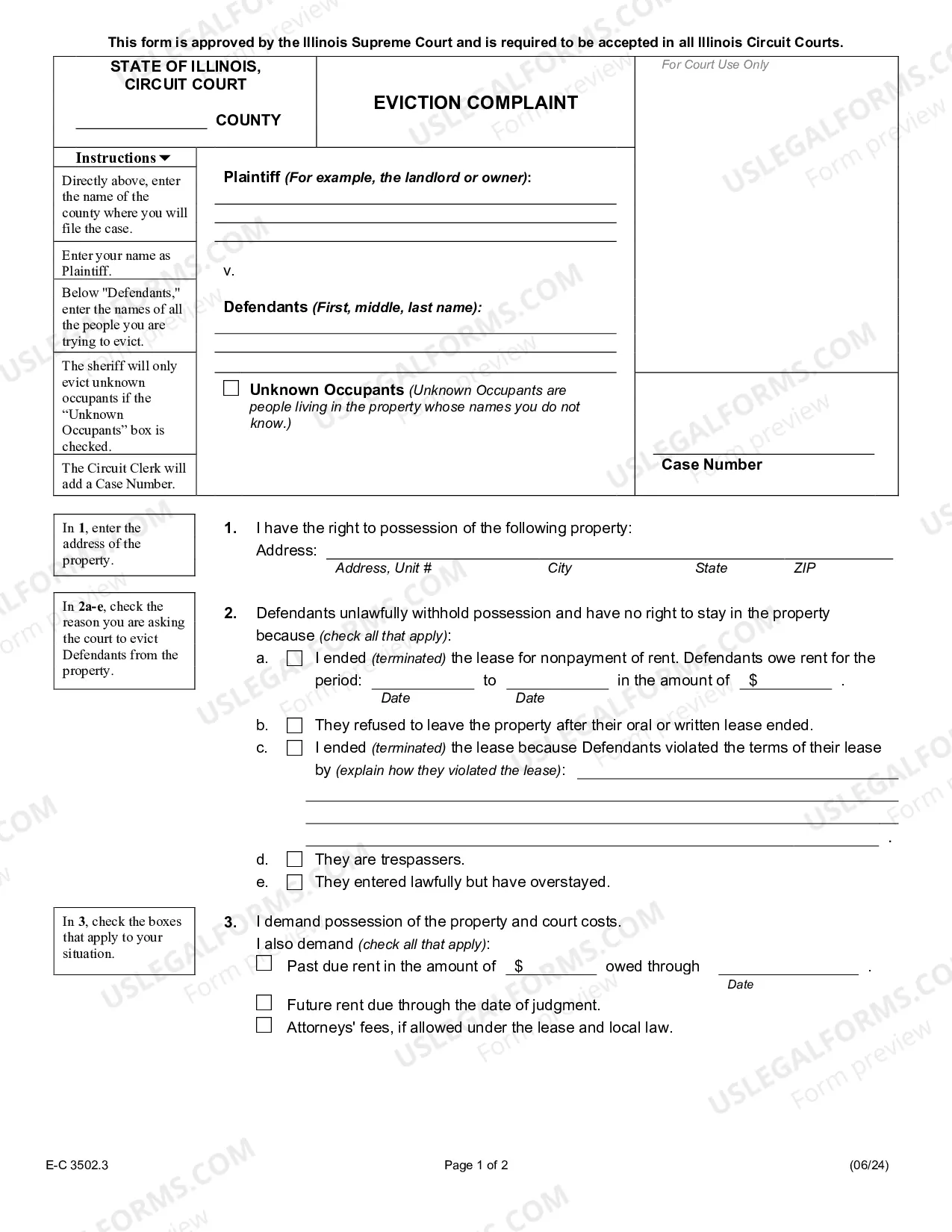
Go to the courthouse. List your name as the plaintiff. The party you are suing is called the defendant. List the amount of money you request as damages. Include a brief explanation about why you are suing the defendant. The clerk will assign a number to each small claim case.