Illinois Last Will and Testament for a Widow or Widower with Adult Children
What is this form?
The Last Will and Testament for a Widow or Widower with Adult Children is a legal document that outlines how a deceased person's estate will be distributed. Specifically designed for widows and widowers with adult children, this form allows you to appoint an executor, designate beneficiaries, and detail any specific bequests. Unlike other wills, this version considers the unique situation of a surviving spouse with adult offspring, ensuring their interests are well-addressed.
Form components explained
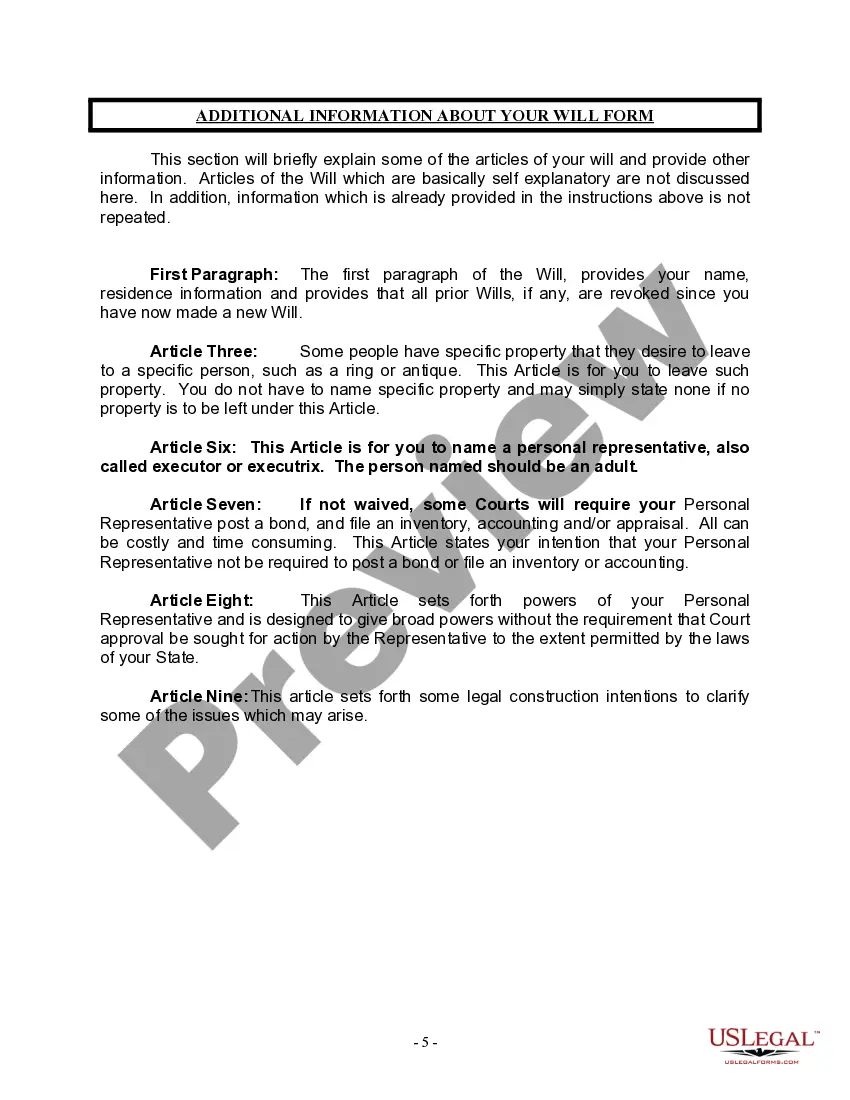
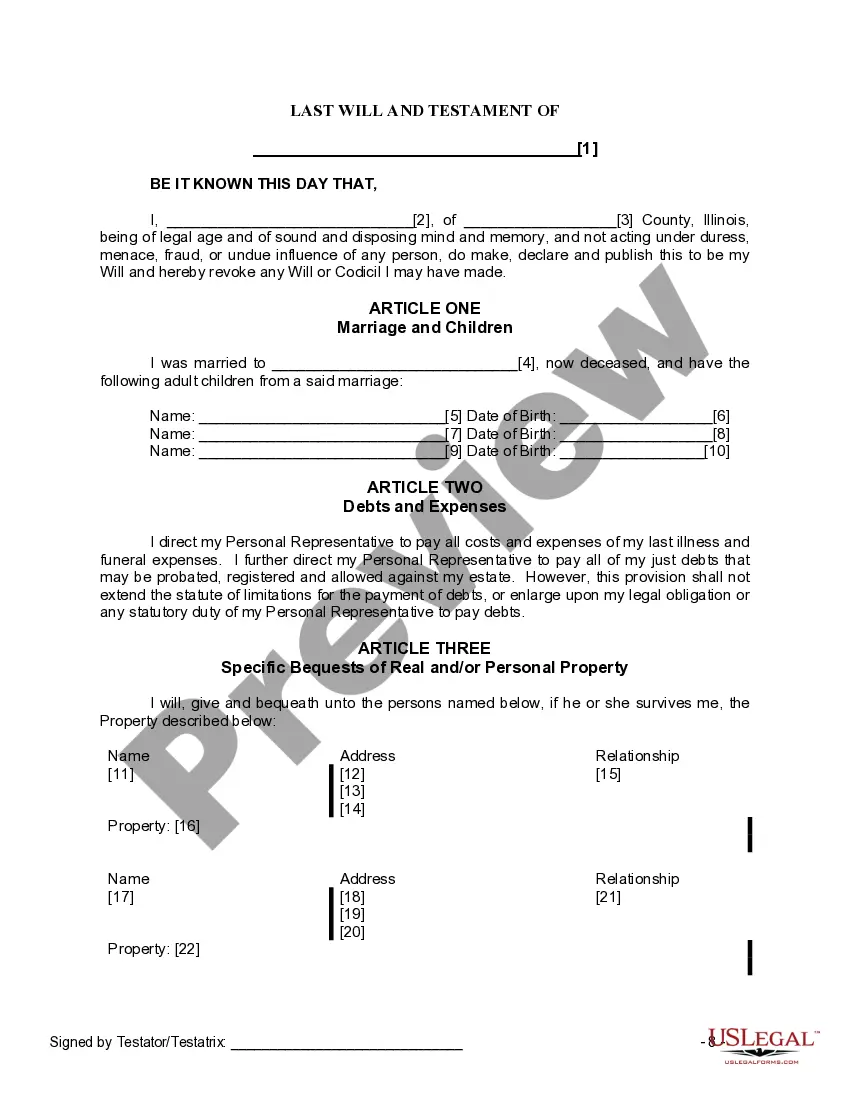
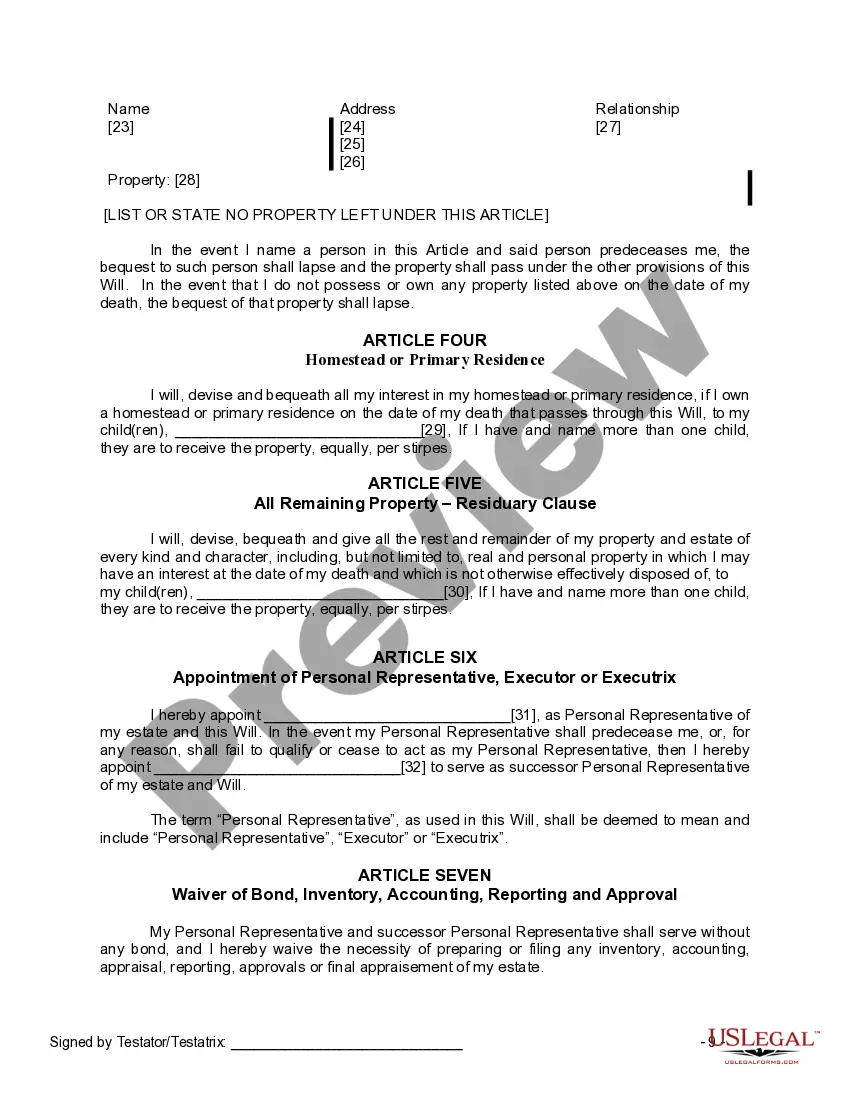
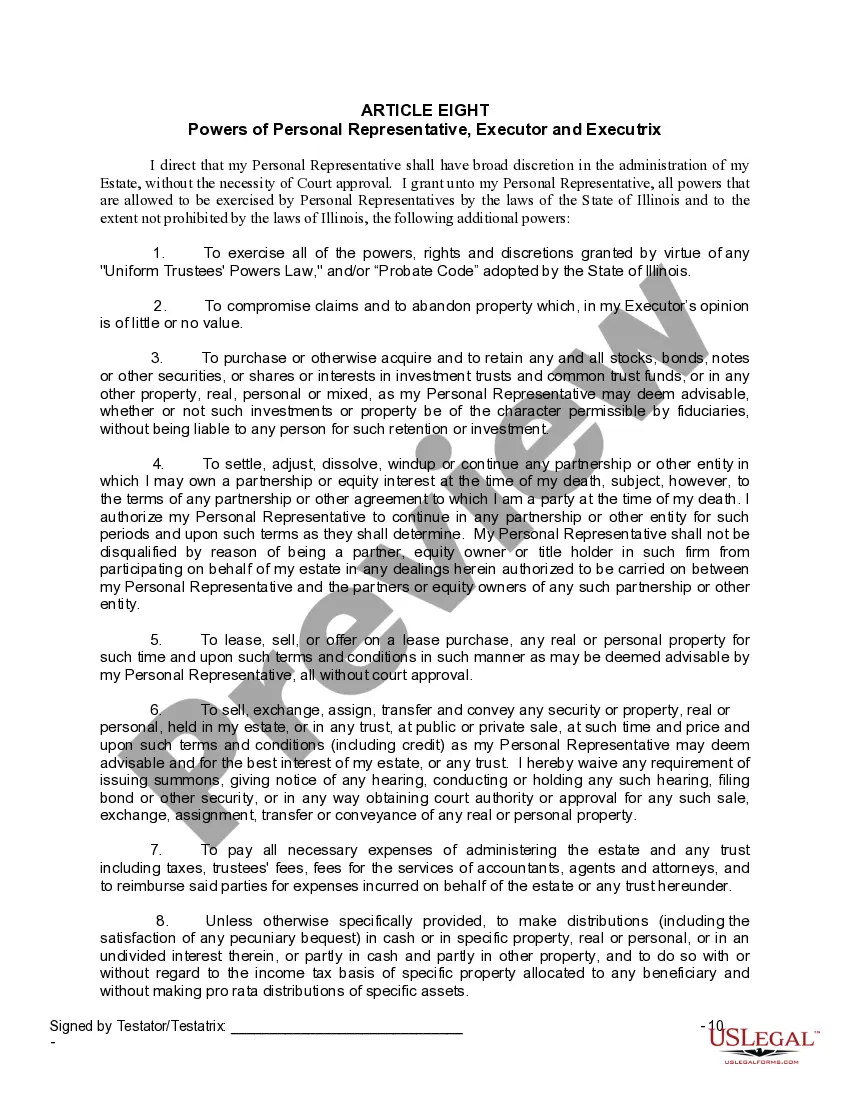
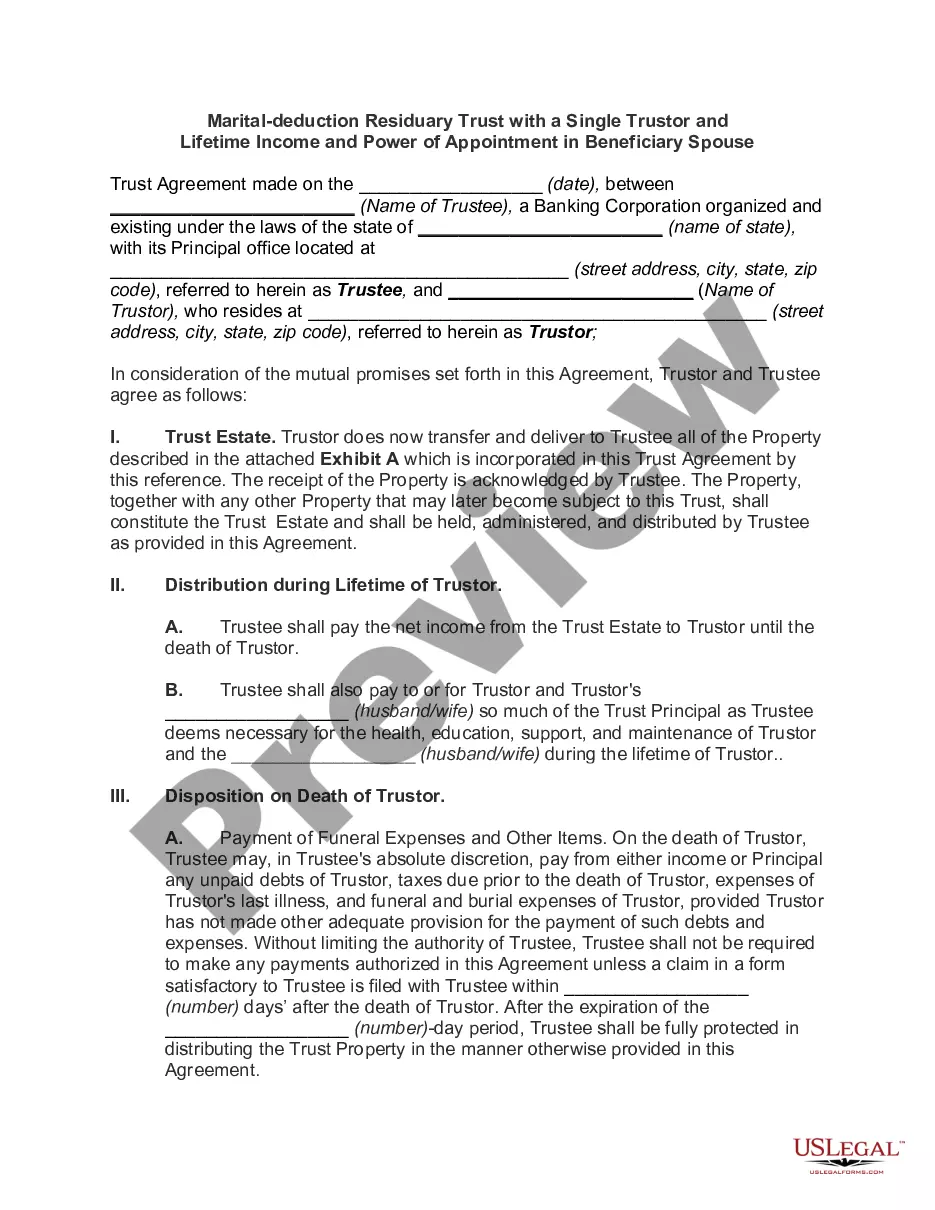
- Appointment of a personal representative or executor.
- Designation of beneficiaries, including adult children.
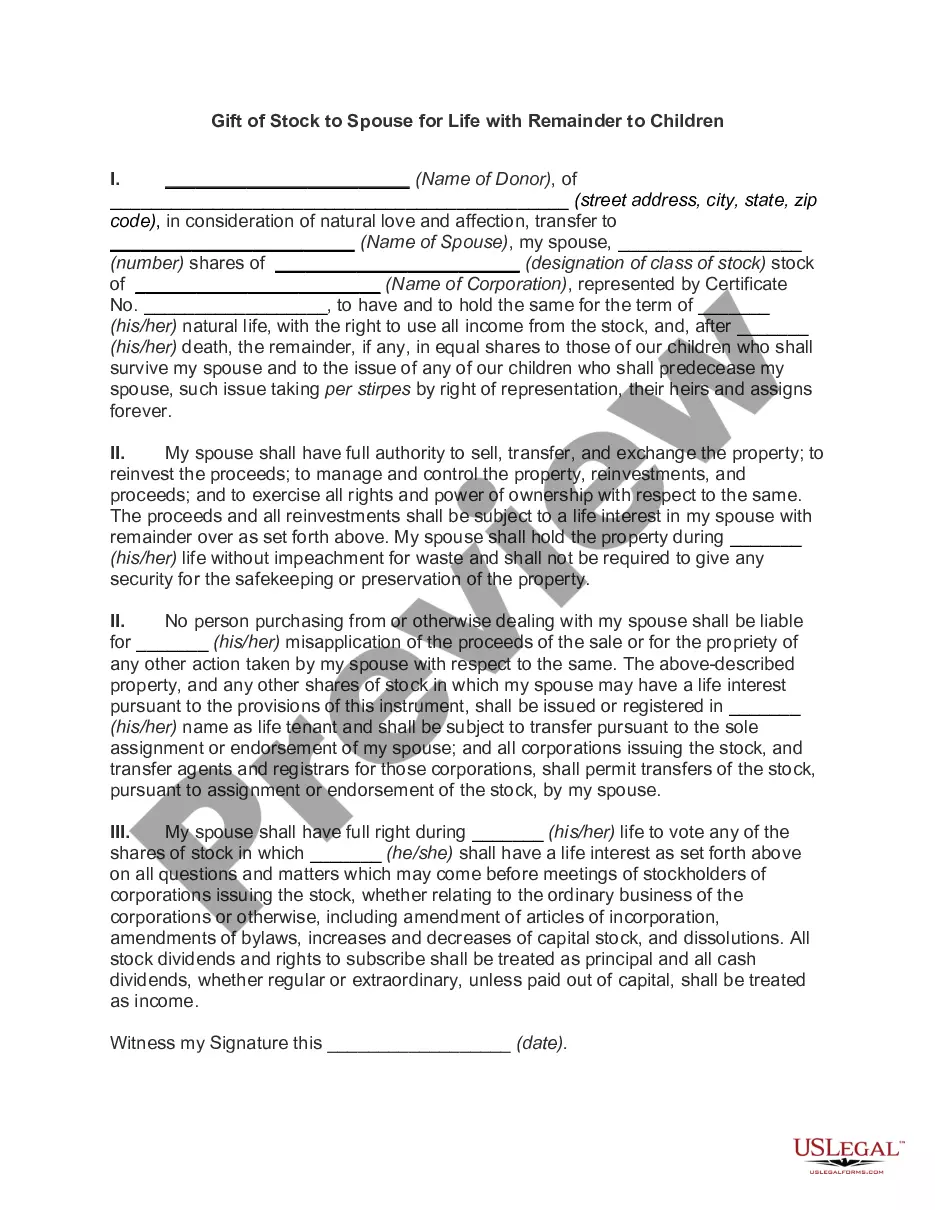
- Specific bequests for tangible property, if desired.
- Instructions regarding the payment of debts and expenses.
- Provisions for the disposal of your homestead or primary residence.
- Optional articles for additional preferences or personal wishes.






When this form is needed
This form is needed when you wish to create a legally binding document to outline your wishes regarding the distribution of your estate after your death. It is particularly relevant if you are a widow or widower with adult children and want to ensure that your assets are managed and distributed according to your specific desires, minimizing potential disputes among heirs.
Who needs this form
This Last Will and Testament is suitable for:
- Widows and widowers looking to establish their final wishes regarding property distribution.
- Individuals with adult children who want to specify how their assets should be handled.
- Persons wanting to appoint a trusted individual as their executor or personal representative.
How to prepare this document
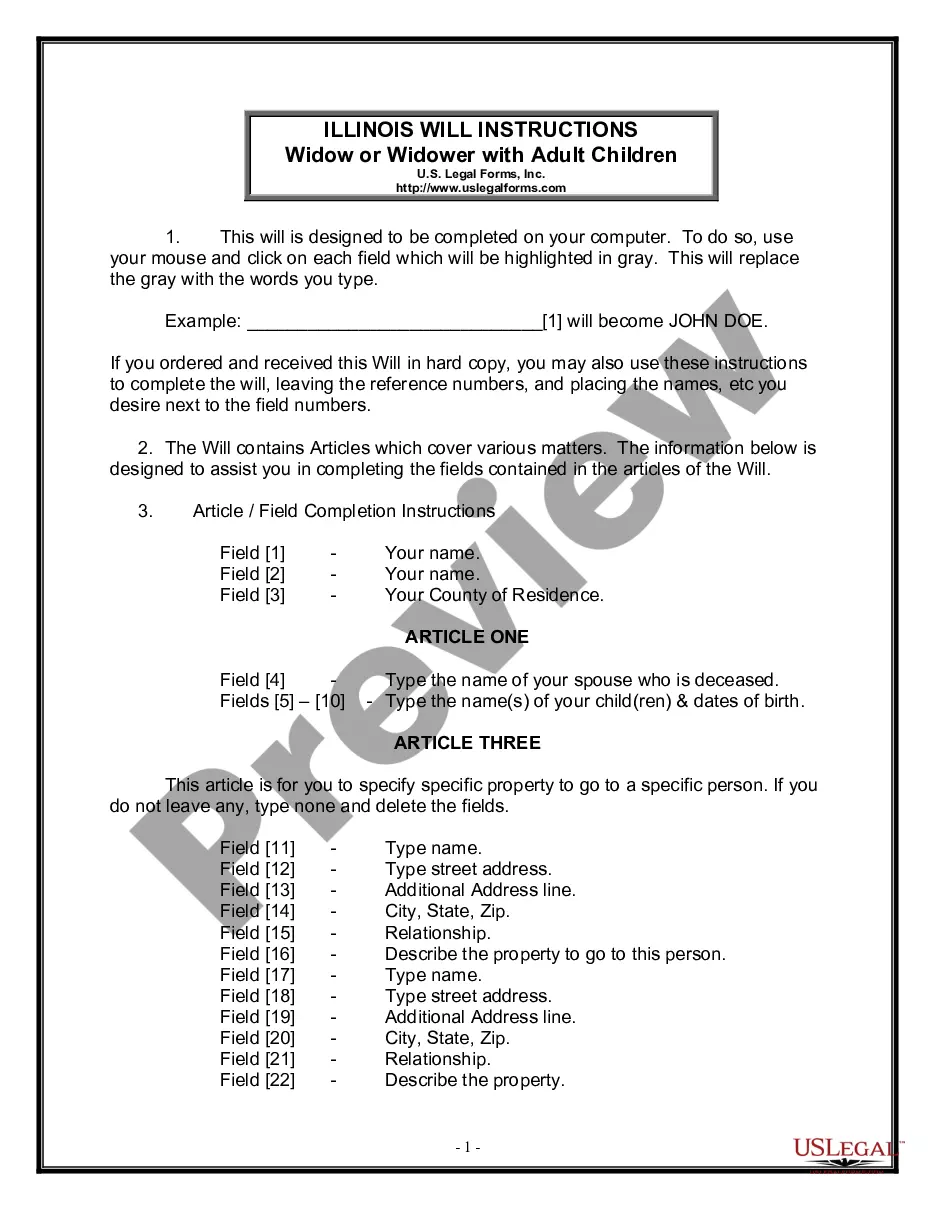
- Enter your name and county of residence in the designated fields.
- Specify the name of your deceased spouse and your adult children, including their birth dates.
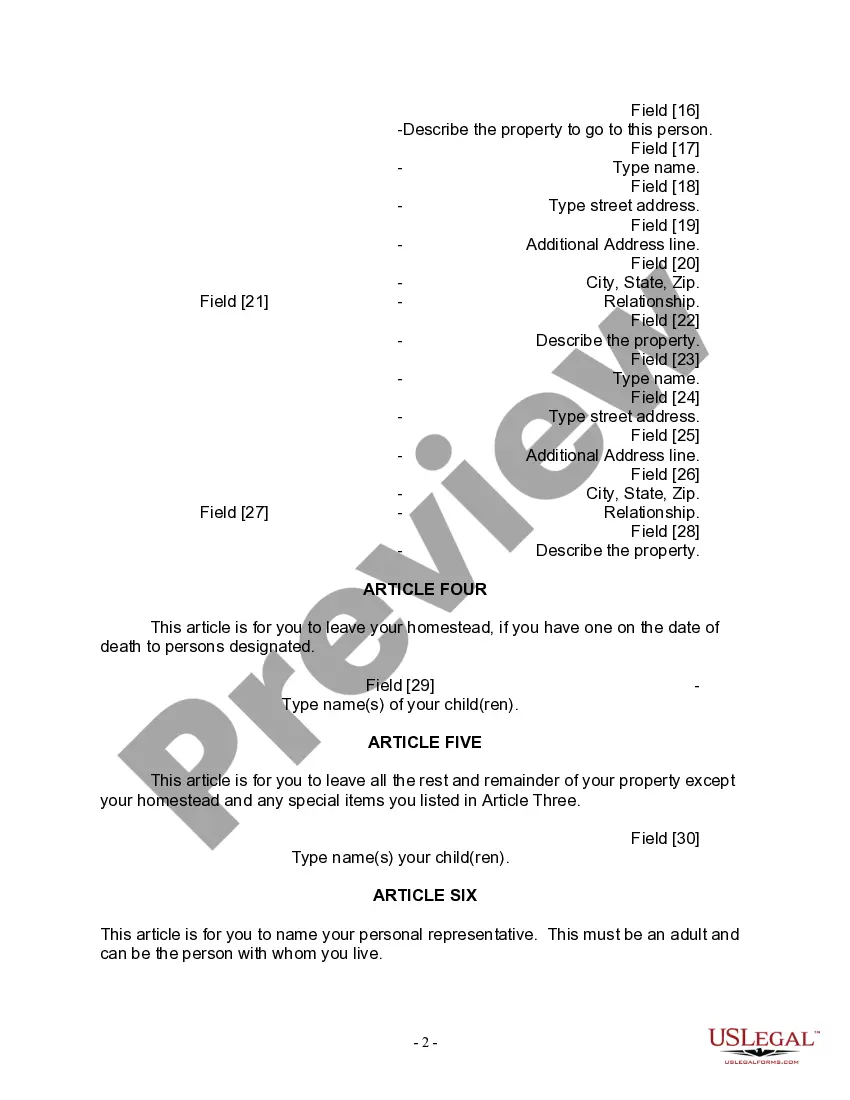
- Detail any specific items you wish to bequeath to certain individuals and their relationship to you.
- Choose a personal representative to administer your estate, along with a successor if necessary.
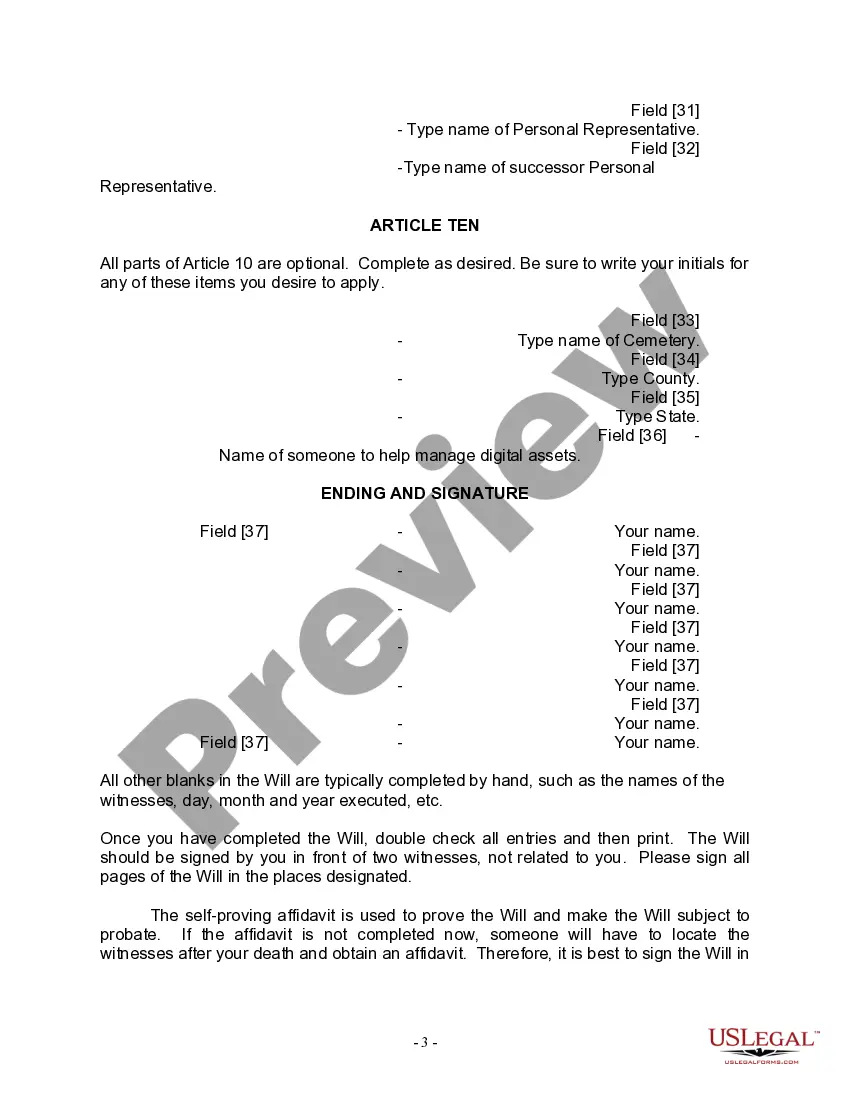
- Sign the will in the presence of two witnesses and have the document notarized if required by state law.
Does this document require notarization?
This form needs to be notarized to ensure legal validity. US Legal Forms provides secure online notarization powered by Notarize, allowing you to complete the process through a verified video call, available anytime.
Get your form ready online
Our built-in tools help you complete, sign, share, and store your documents in one place.
Make edits, fill in missing information, and update formatting in US Legal Forms—just like you would in MS Word.
Download a copy, print it, send it by email, or mail it via USPS—whatever works best for your next step.
Sign and collect signatures with our SignNow integration. Send to multiple recipients, set reminders, and more. Go Premium to unlock E-Sign.
If this form requires notarization, complete it online through a secure video call—no need to meet a notary in person or wait for an appointment.
We protect your documents and personal data by following strict security and privacy standards.

Make edits, fill in missing information, and update formatting in US Legal Forms—just like you would in MS Word.

Download a copy, print it, send it by email, or mail it via USPS—whatever works best for your next step.

Sign and collect signatures with our SignNow integration. Send to multiple recipients, set reminders, and more. Go Premium to unlock E-Sign.

If this form requires notarization, complete it online through a secure video call—no need to meet a notary in person or wait for an appointment.

We protect your documents and personal data by following strict security and privacy standards.
Mistakes to watch out for
- Failing to have the will signed by two disinterested witnesses.
- Not updating the will after major life events such as divorce or the death of a beneficiary.
- Overlooking the notarization requirement for a self-proving affidavit.
Benefits of completing this form online
- Convenience of filling out the form from home at your own pace.
- Easy accessibility for future modifications as your situation changes.
- Reliable templates drafted by licensed attorneys, ensuring legal validity.
Legal use & context
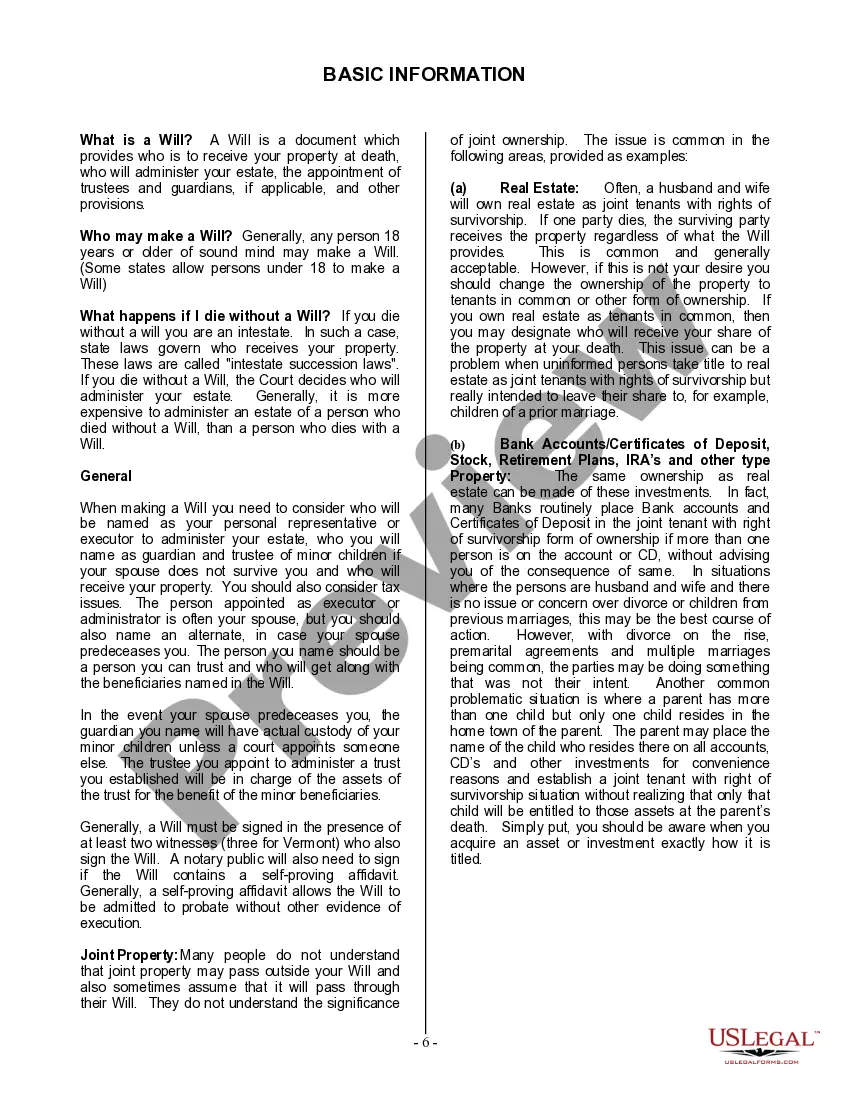
- A Last Will and Testament legally outlines the distribution of your assets upon death.
- This form provides clear directives to avoid disputes among heirs.
- It is enforceable in probate court if properly executed according to state laws.
- Failure to create a will can lead to intestate succession, where state laws dictate asset distribution.
What to keep in mind
- This form is specifically for widows and widowers with adult children.
- Proper execution and notarization of the will are crucial for its validity.
- It allows individuals to customize their estate plan and ensure their wishes are carried out.
- Failing to complete this form correctly may lead to potential disputes or complications during probate.
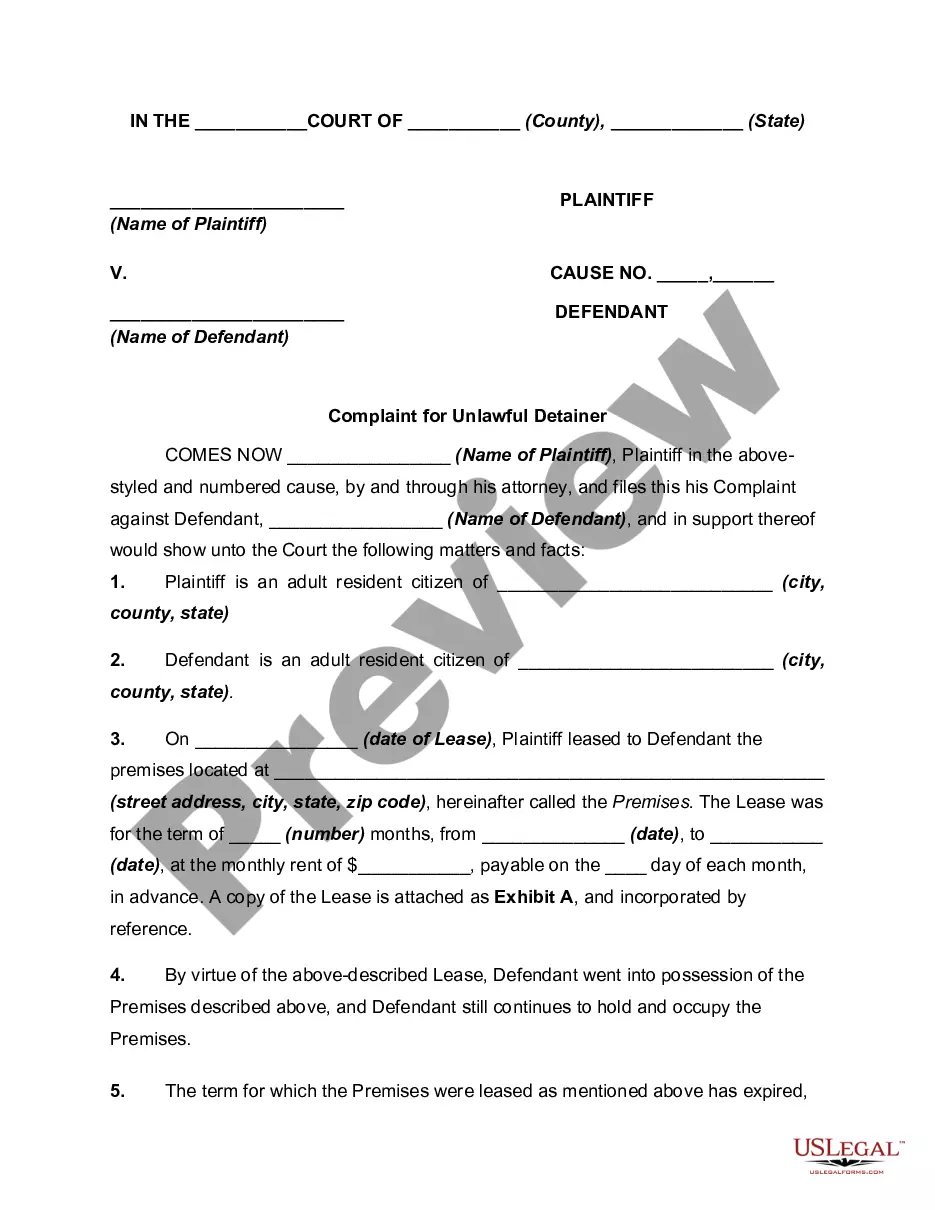
Looking for another form?

Form popularity
FAQ
Handwritten Wills in Illinois In the state of Illinois, holographic wills are not considered to be valid. Illinois does recognize, however, handwritten wills that are signed by two witnesses and satisfy all other requirements for wills as stated in the law.
A widow's will must meet her state's standards in order to be considered legally valid. Typically, this means the will must be in writing and signed. States generally require the signatures of two neutral witnesses who watch the widow sign the document, and a notary may also be required.
Do I Need to Have My Will Notarized? No, in Illinois, you do not need to notarize your will to make it legal.However, Illinois allows your will to be self-proved without a self-proving affidavit, as long as you sign and witness it correctly.
Write an Introduction. Select an Executor. Identify Your Heirs and Beneficiaries. Nominate a Guardian for Your Minor or Dependent Children. Assess and Divide Your Property. State Your Funeral Wishes (If You Have Any) Sign and Notarize the Document.
Do I Need to Have My Will Notarized? No, in Illinois, you do not need to notarize your will to make it legal.However, Illinois allows your will to be self-proved without a self-proving affidavit, as long as you sign and witness it correctly.
To be legally binding, a will must meet three requirements, all intended to protect against fraud or forgery. The will must be: in writing. signed and dated by the person who made it, and. signed by witnesses.
In Illinois, to have a valid will it is required that two or more credible witnesses validate or attest the will. This means each witness must watch the testator (person making his or her will) sign or acknowledge the will, determine the testator is of sound mind, and sign the will in front of the testator.
It must be in writing. Generally, of course, wills are composed on a computer and printed out. The person who made it must have signed and dated it. A will must be signed and dated by the person who made it. Two adult witnesses must have signed it. Witnesses are crucial.
A will can also be declared invalid if someone proves in court that it was procured by undue influence. This usually involves some evil-doer who occupies a position of trust -- for example, a caregiver or adult child -- manipulating a vulnerable person to leave all, or most, of his property to the manipulator instead