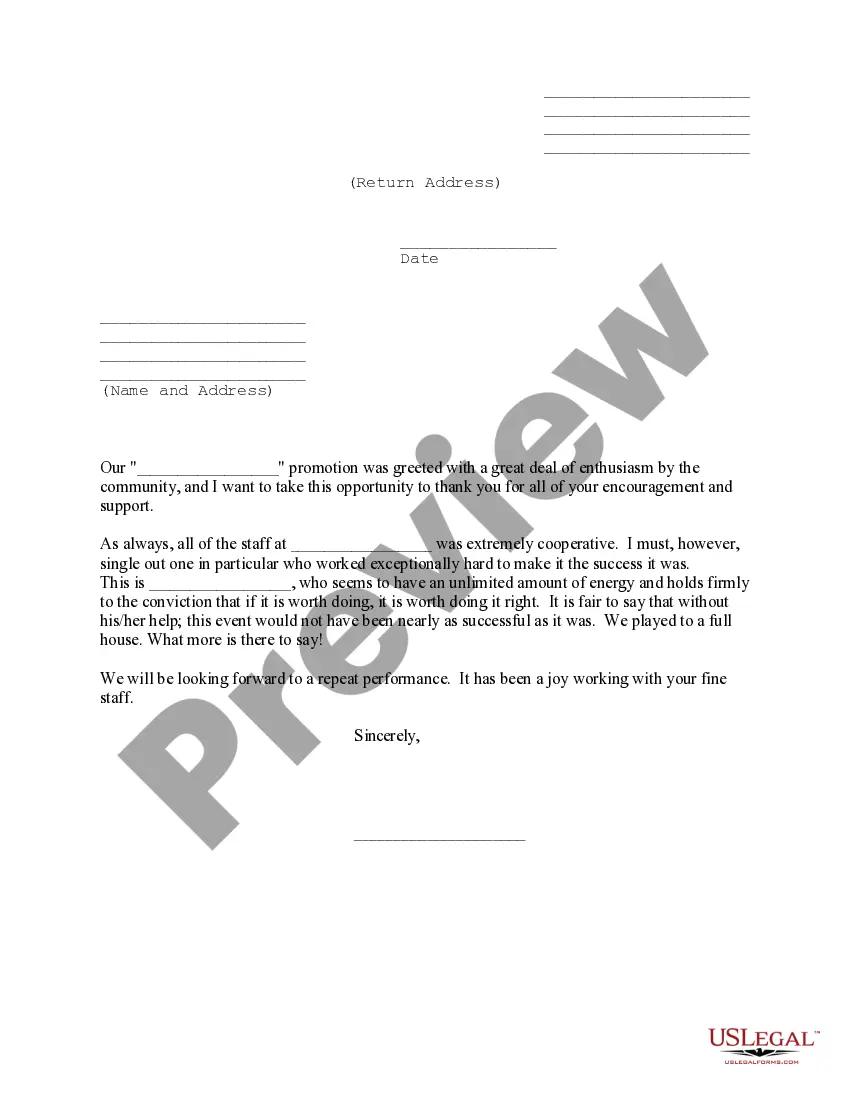
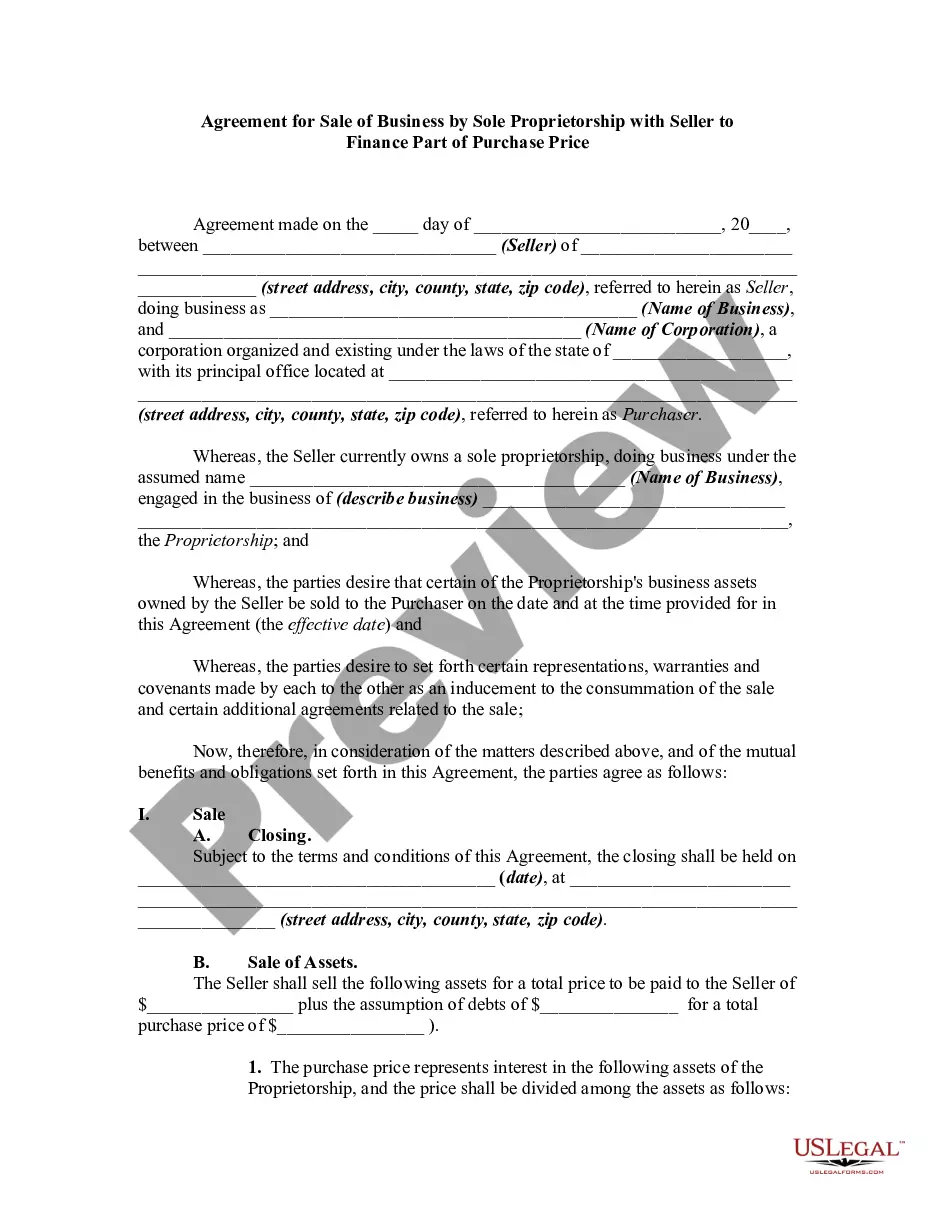
This is a multi-state form covering the subject matter of the title.
Illinois Subordination and Attornment Agreement - Landlord - Tenant - Lender
Category:
State:
Multi-State
Control #:
US-XS-0014
Format:
Word;
Rich Text
Instant download
Description
Free preview
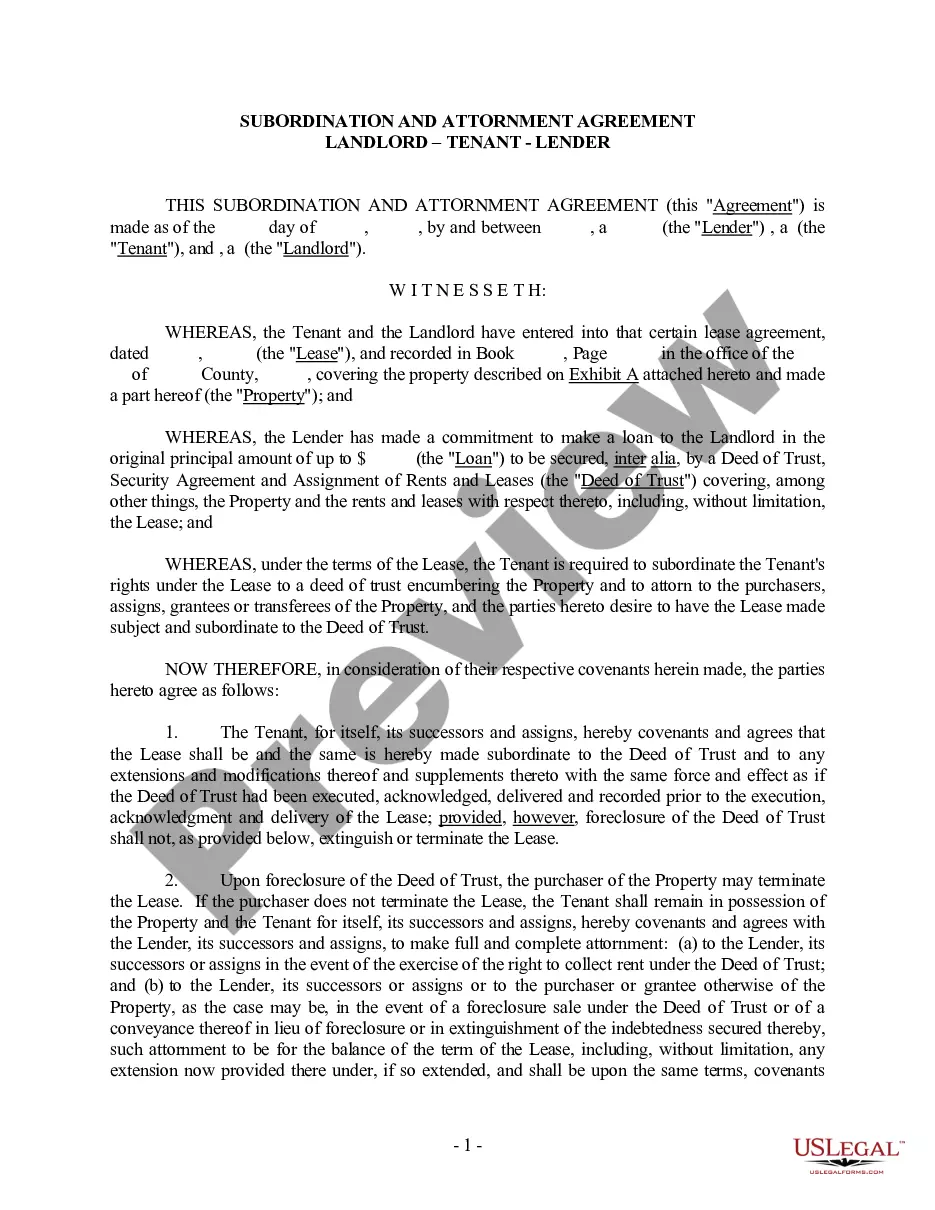
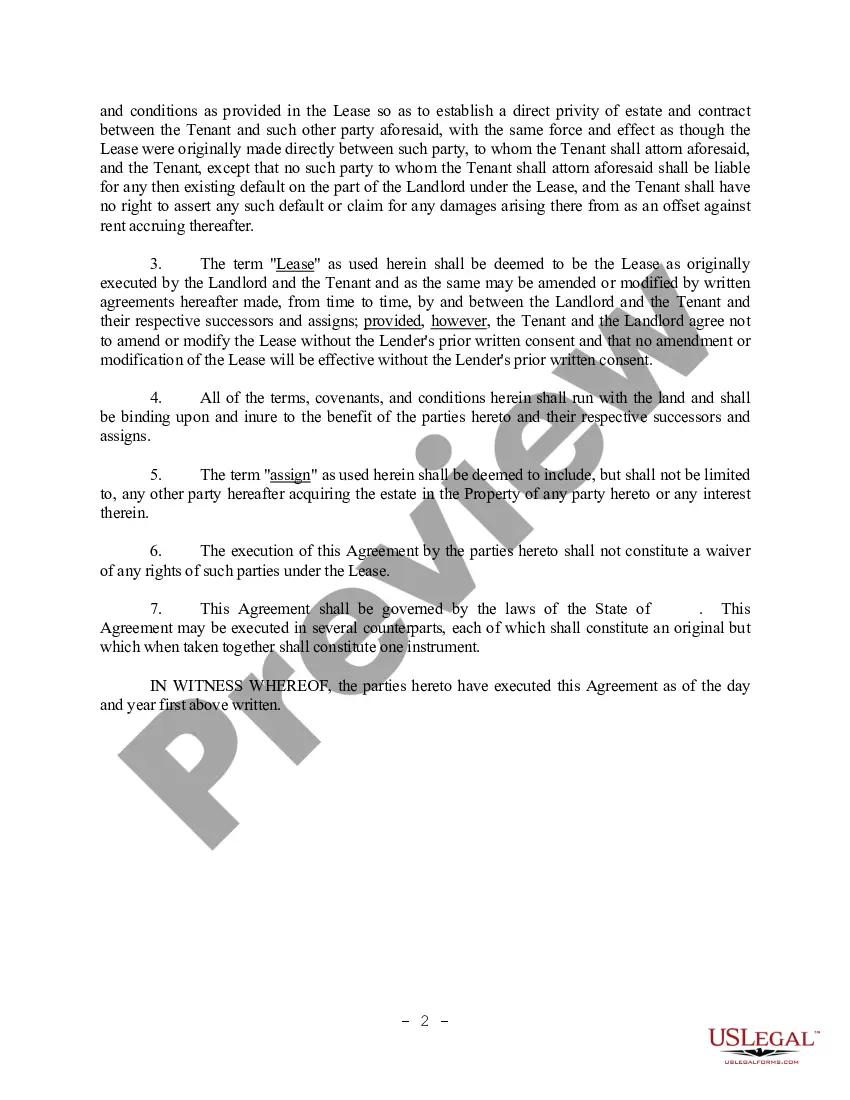
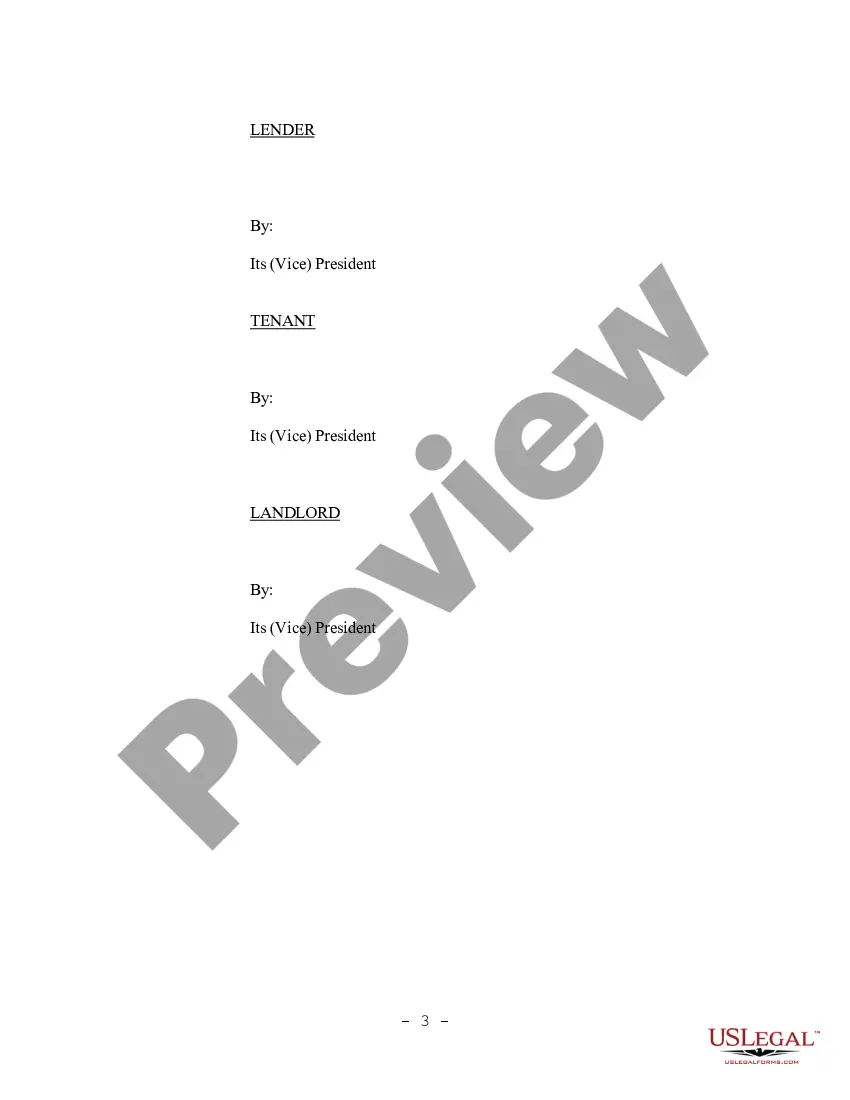
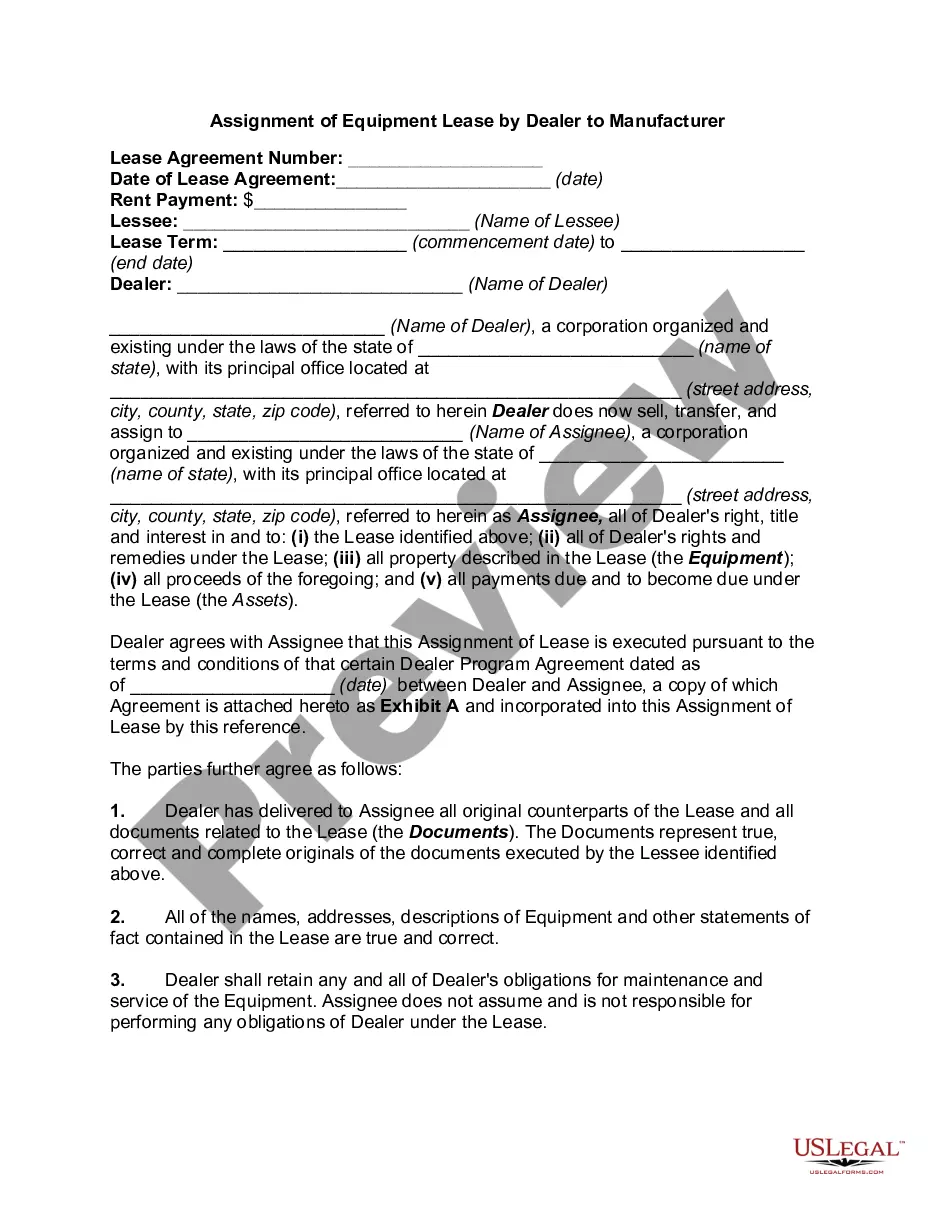
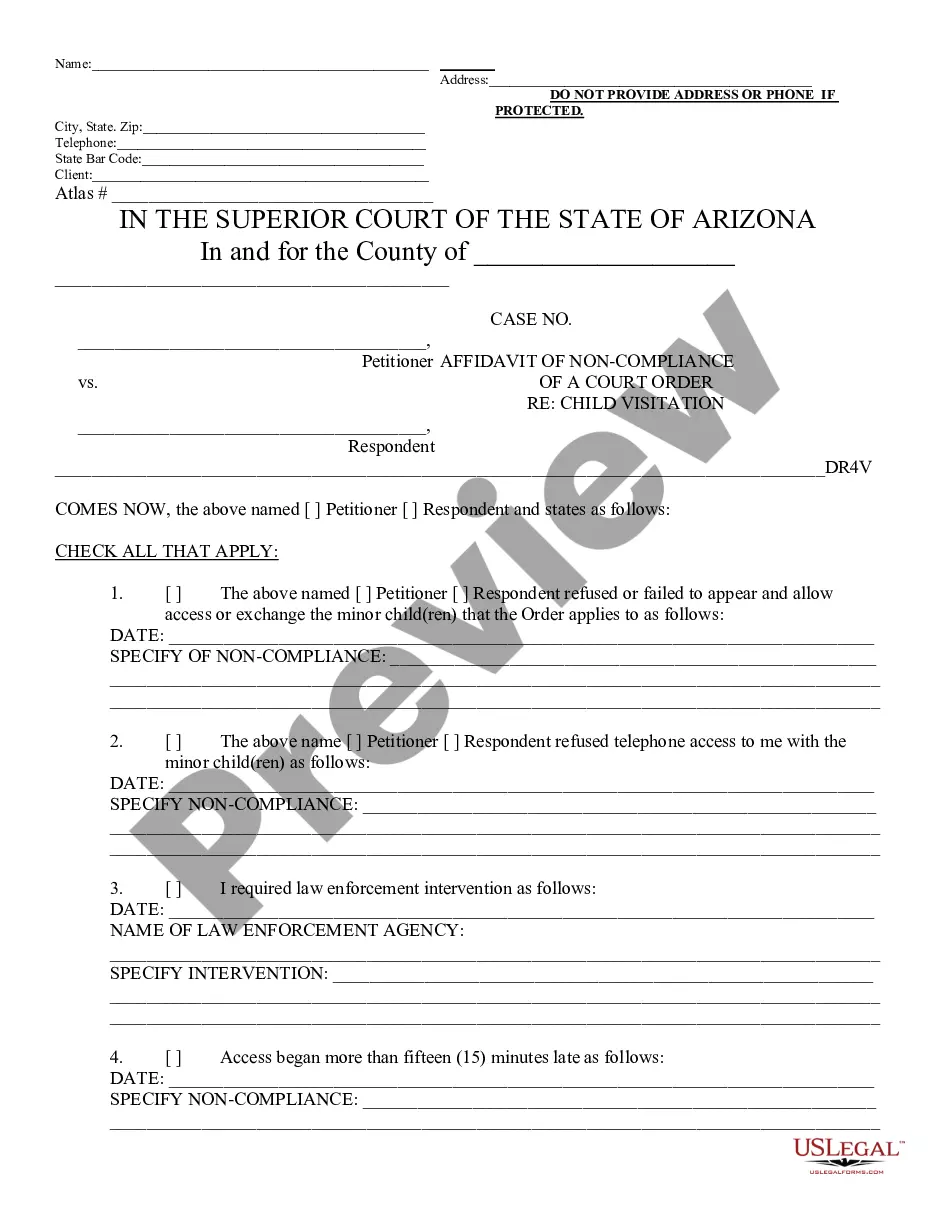
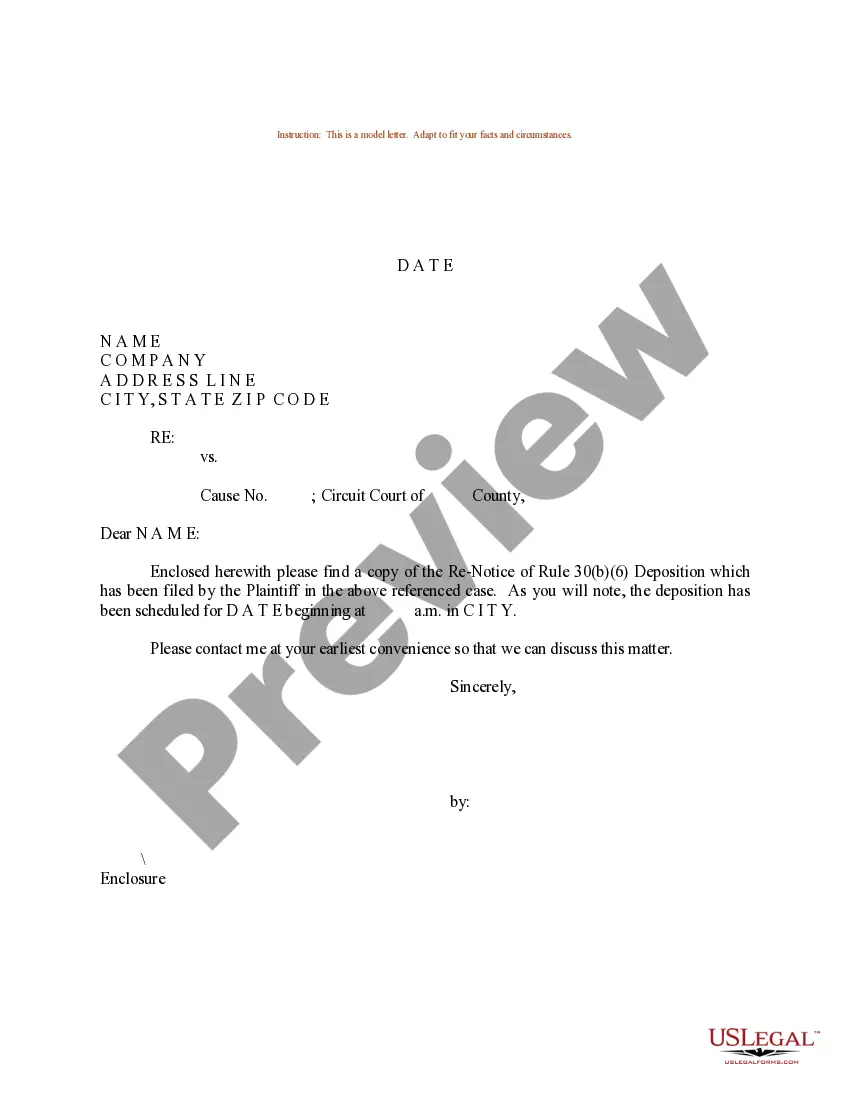

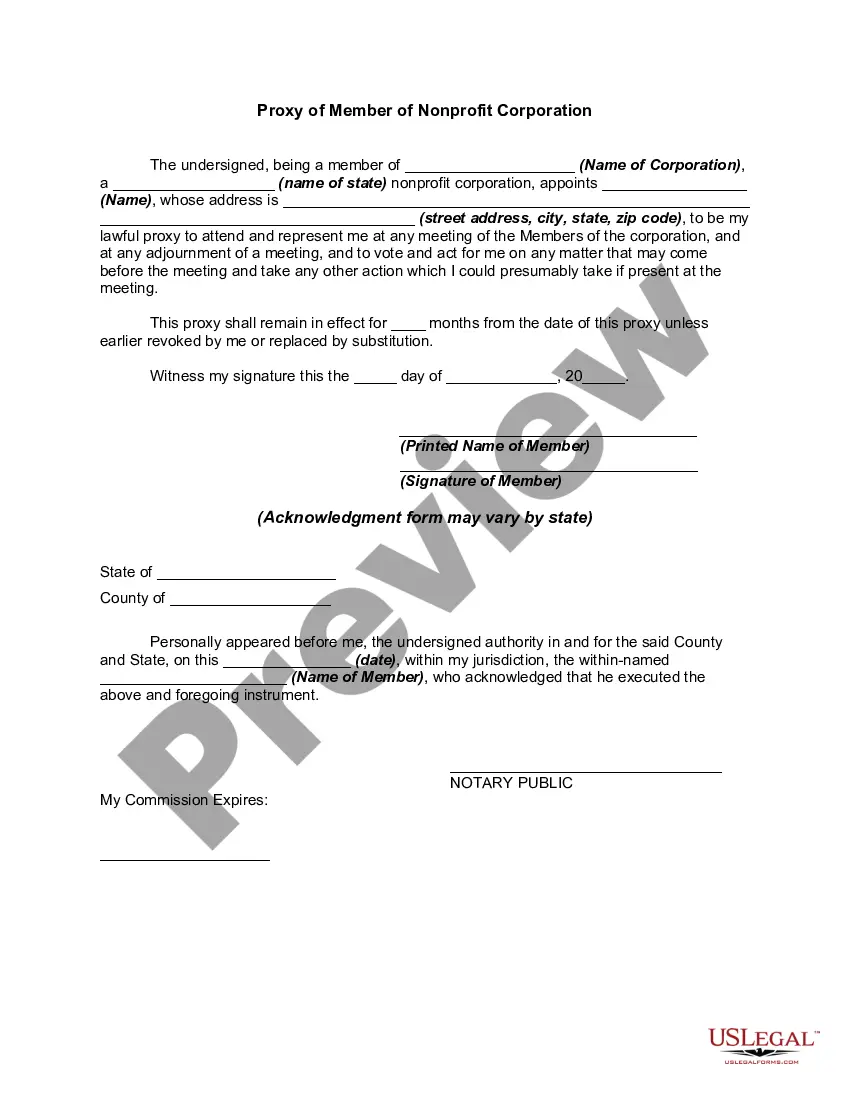

How to fill out Subordination And Attornment Agreement - Landlord - Tenant - Lender?
Are you currently in a position where you require documents for either business or personal purposes almost every day.
There are numerous legal document templates available online, but finding ones you can trust isn't simple.
US Legal Forms provides a vast array of form templates, including the Illinois Subordination and Attornment Agreement - Landlord - Tenant - Lender, which can be generated to meet federal and state requirements.
Once you find the appropriate form, click Get now.
Choose the pricing plan you desire, complete the necessary information to create your account, and pay for the order using your PayPal or credit card. Select a convenient file format and download your copy. Access all the document templates you have purchased in the My documents section. You can obtain another copy of the Illinois Subordination and Attornment Agreement - Landlord - Tenant - Lender at any time, if needed. Just click on the required form to download or print the document template. Use US Legal Forms, the most extensive collection of legal forms, to save time and avoid mistakes. The service offers properly crafted legal document templates that can be used for various purposes. Create an account on US Legal Forms and start making your life a bit easier.
- If you are already familiar with the US Legal Forms website and have an account, simply Log In.
- After that, you can download the Illinois Subordination and Attornment Agreement - Landlord - Tenant - Lender template.
- If you do not have an account and wish to start using US Legal Forms, follow these steps.
- Locate the form you need and ensure it is for your specific city/county.
- Use the Preview feature to review the document.
- Read the description to confirm that you have selected the correct form.
- If the form isn't what you're looking for, utilize the Search field to find the form that suits your needs.
Form popularity
FAQ
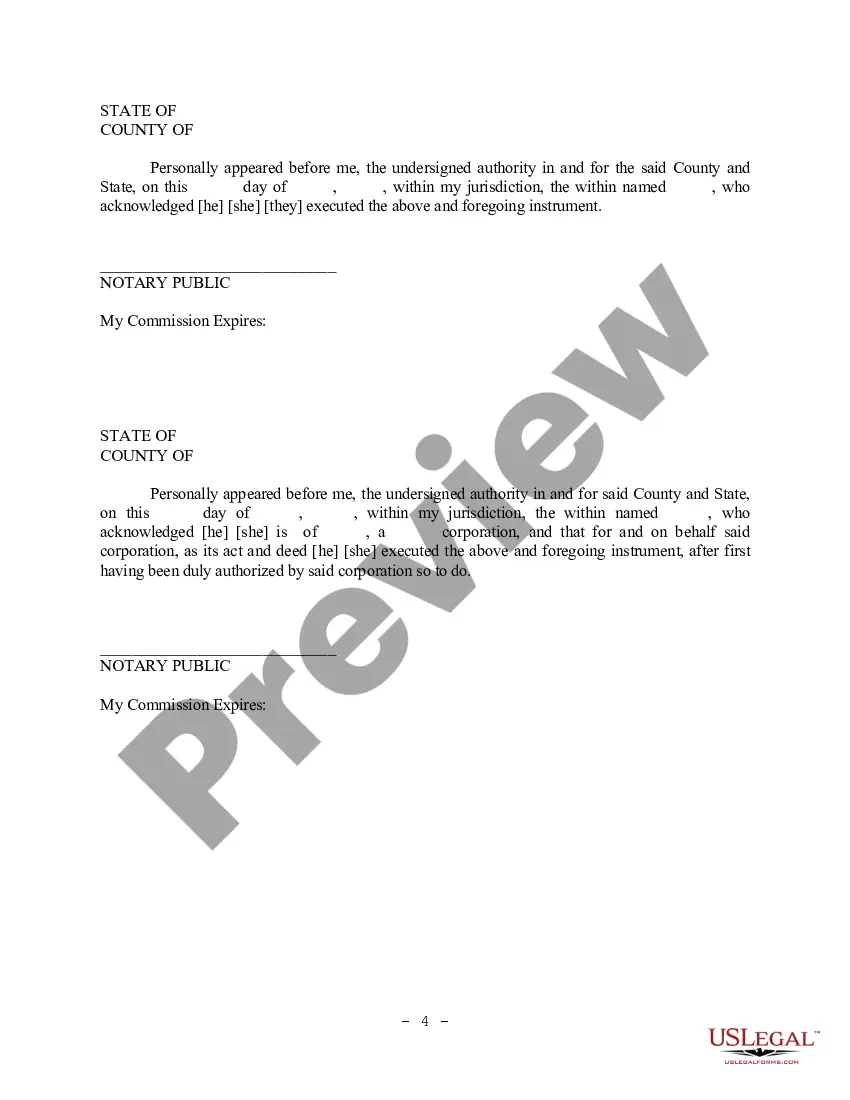
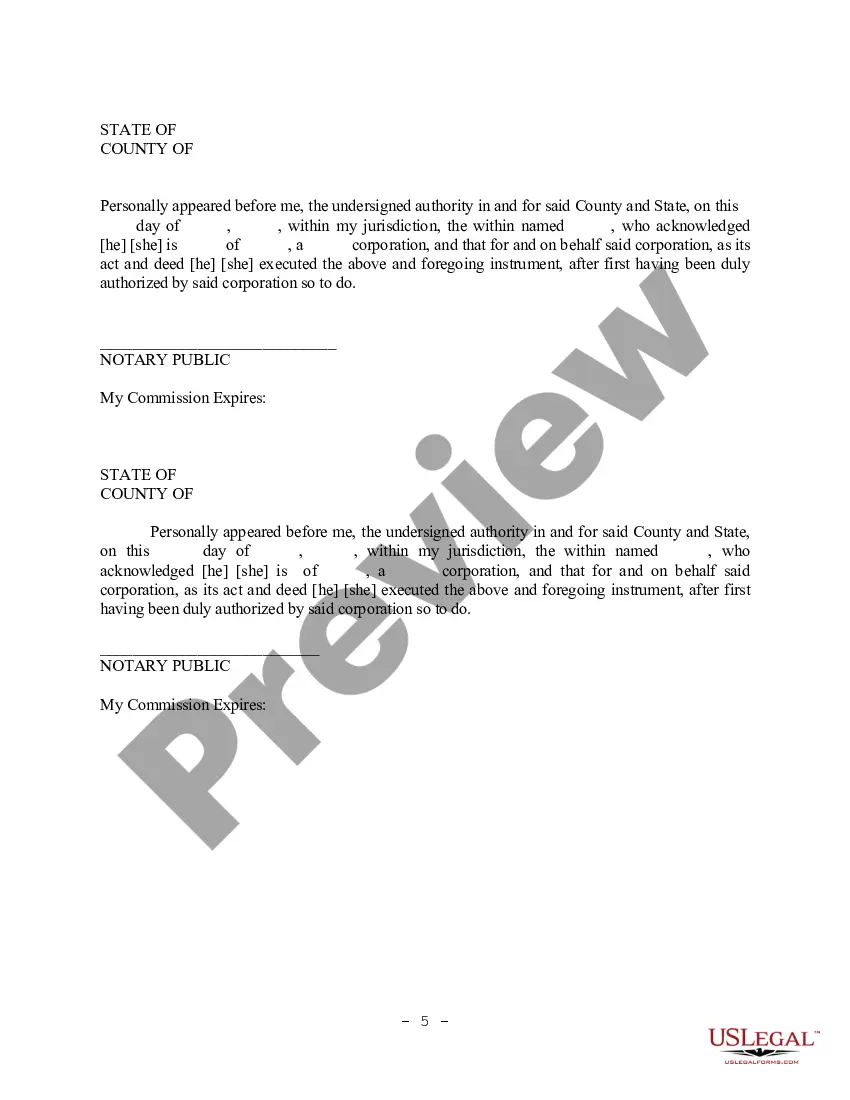
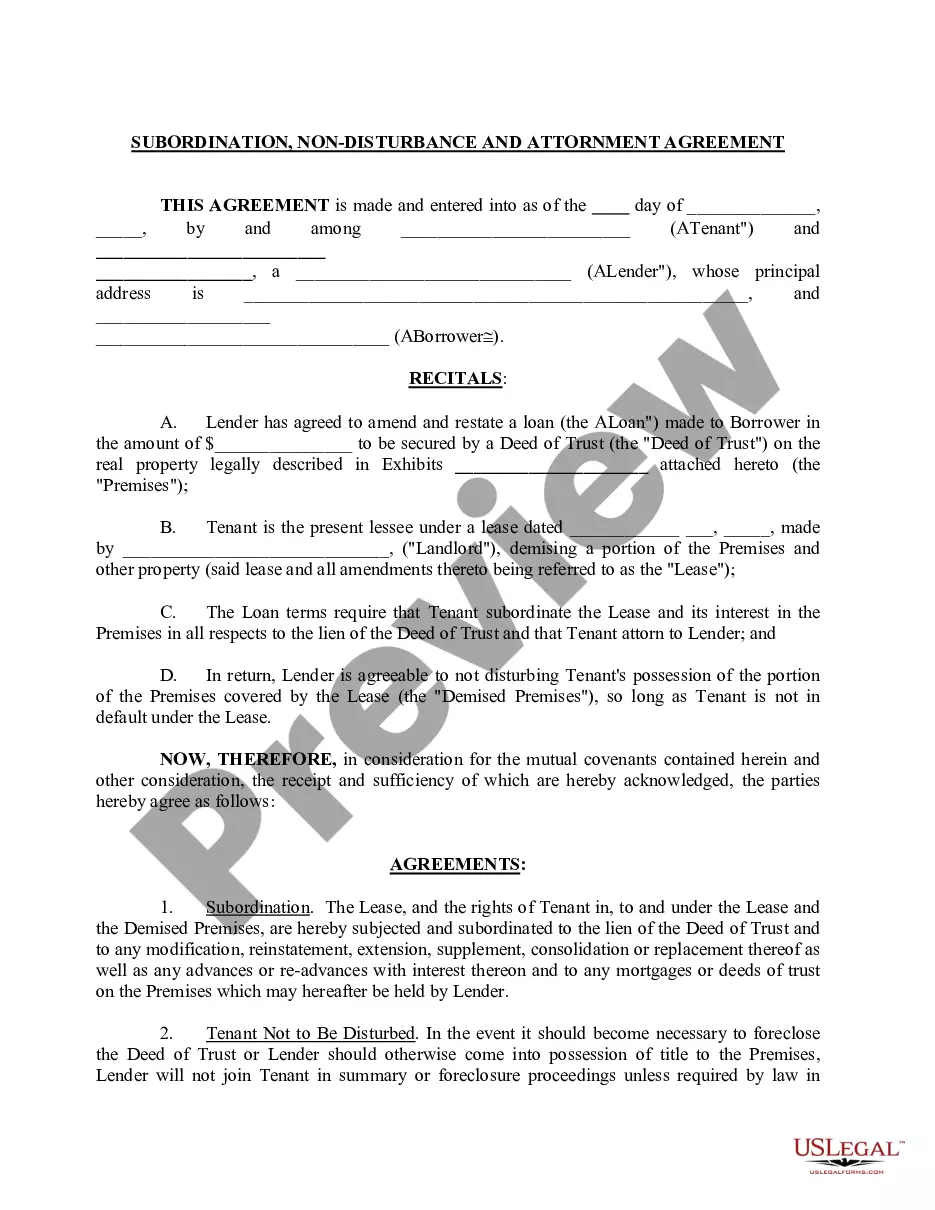
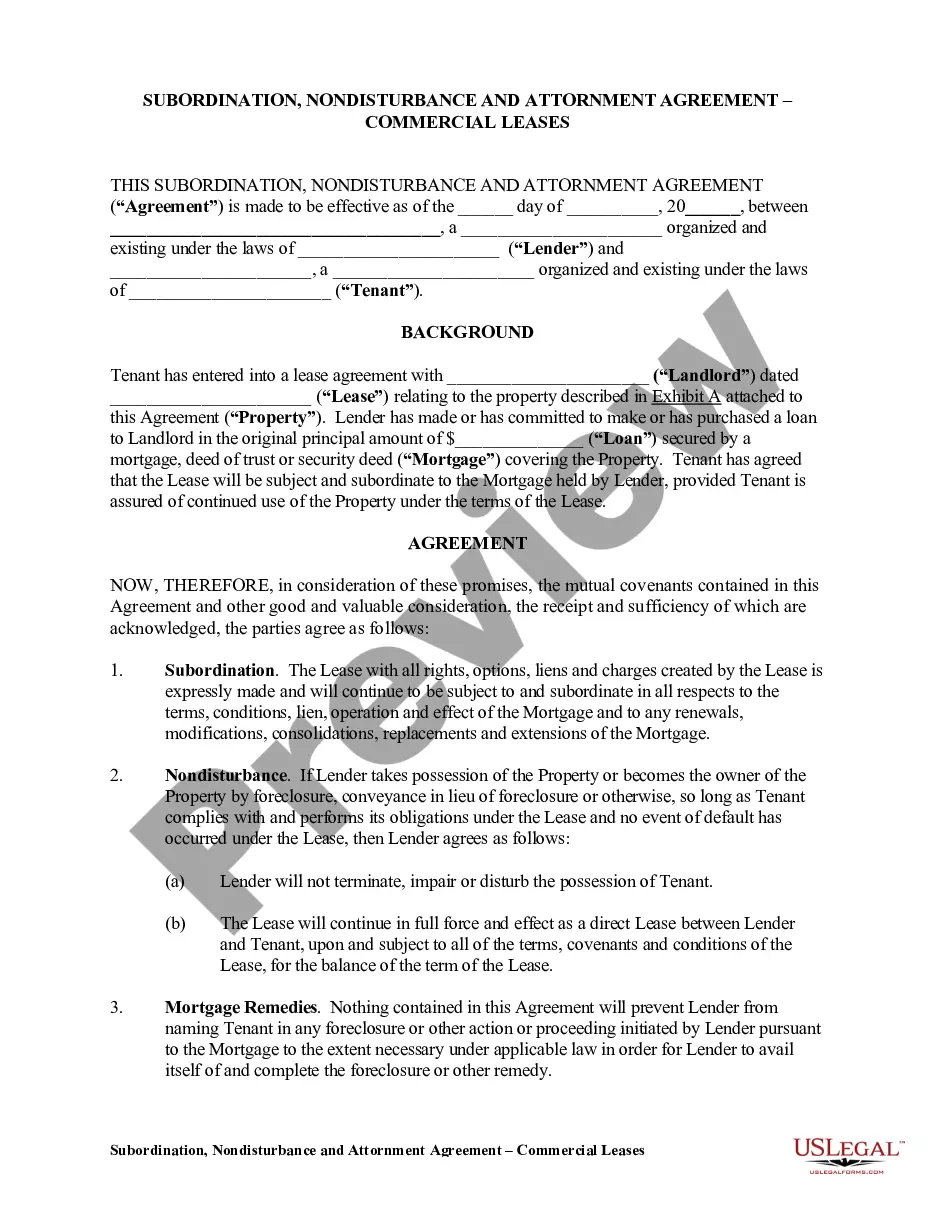
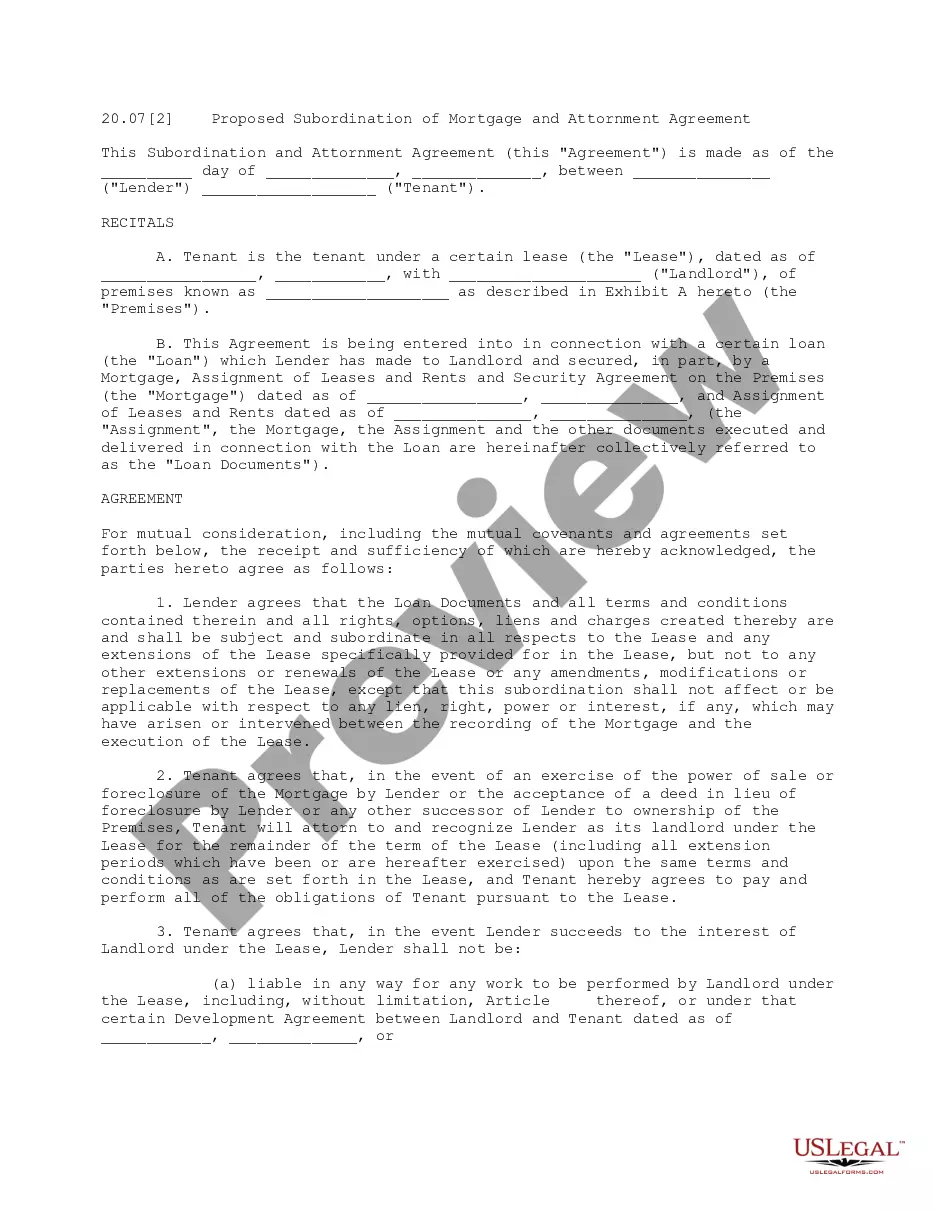
A subordination and attornment agreement, specifically the Illinois Subordination and Attornment Agreement - Landlord - Tenant - Lender, is a legal document that defines the relationship between landlords, tenants, and lenders. It establishes that the tenant agrees to subordinate their lease to the lender's mortgage. This agreement also requires the tenant to acknowledge the lender as their new landlord if ownership changes. Utilizing platforms like uslegalforms can simplify the creation and understanding of such agreements.
An Illinois Subordination and Attornment Agreement - Landlord - Tenant - Lender typically includes several key clauses. These often outline the subordination of the tenant's lease to the lender's mortgage, the attornment of the tenant to the lender in case of foreclosure, and provisions for the rights of both parties regarding property management. Understanding these clauses helps all parties involved to navigate their rights and obligations effectively.
The Illinois Subordination and Attornment Agreement - Landlord - Tenant - Lender offers significant advantages to lenders. It ensures that the lender's rights take precedence over the rights of tenants and landlords in the event of foreclosure. This agreement also provides clarity on the relationship between the parties, which can enhance the lender's position when managing risks. By using an SNDA, lenders can secure their investment and maintain control over the property.
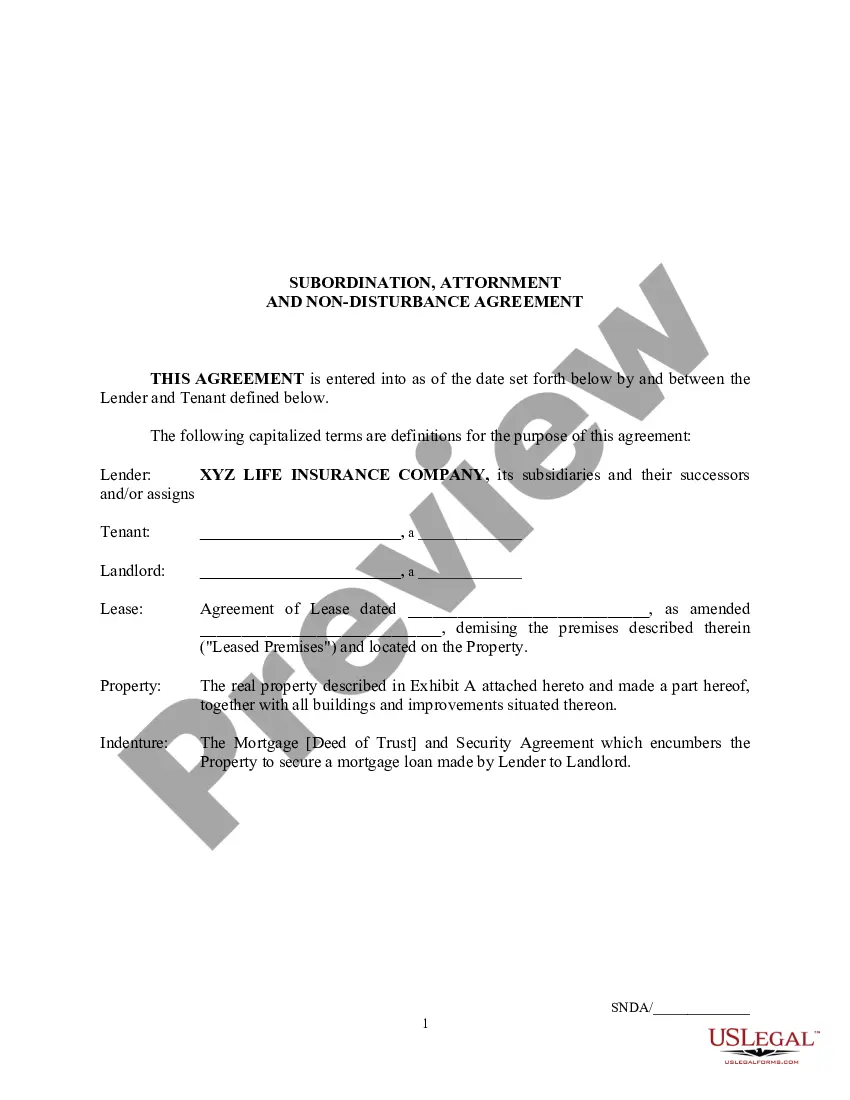
A lender SNDA, or Subordination, Non-Disturbance, and Attornment agreement, is a crucial document in the context of the Illinois Subordination and Attornment Agreement - Landlord - Tenant - Lender. This agreement ensures that a tenant's lease remains intact even if the property changes ownership or is foreclosed upon. It establishes the relationship and rights between landlords, tenants, and lenders, providing security for all parties involved. If you are navigating these agreements, uslegalforms can provide valuable templates and resources to simplify the process.
Lenders seek an SNDA to protect their interests and investment in the property. By ensuring that the lease will remain valid even after a foreclosure, lenders can mitigate risks associated with property management. An Illinois Subordination and Attornment Agreement - Landlord - Tenant - Lender not only secures the lender's position but also creates a harmonious relationship among all parties involved, leading to smoother transactions.
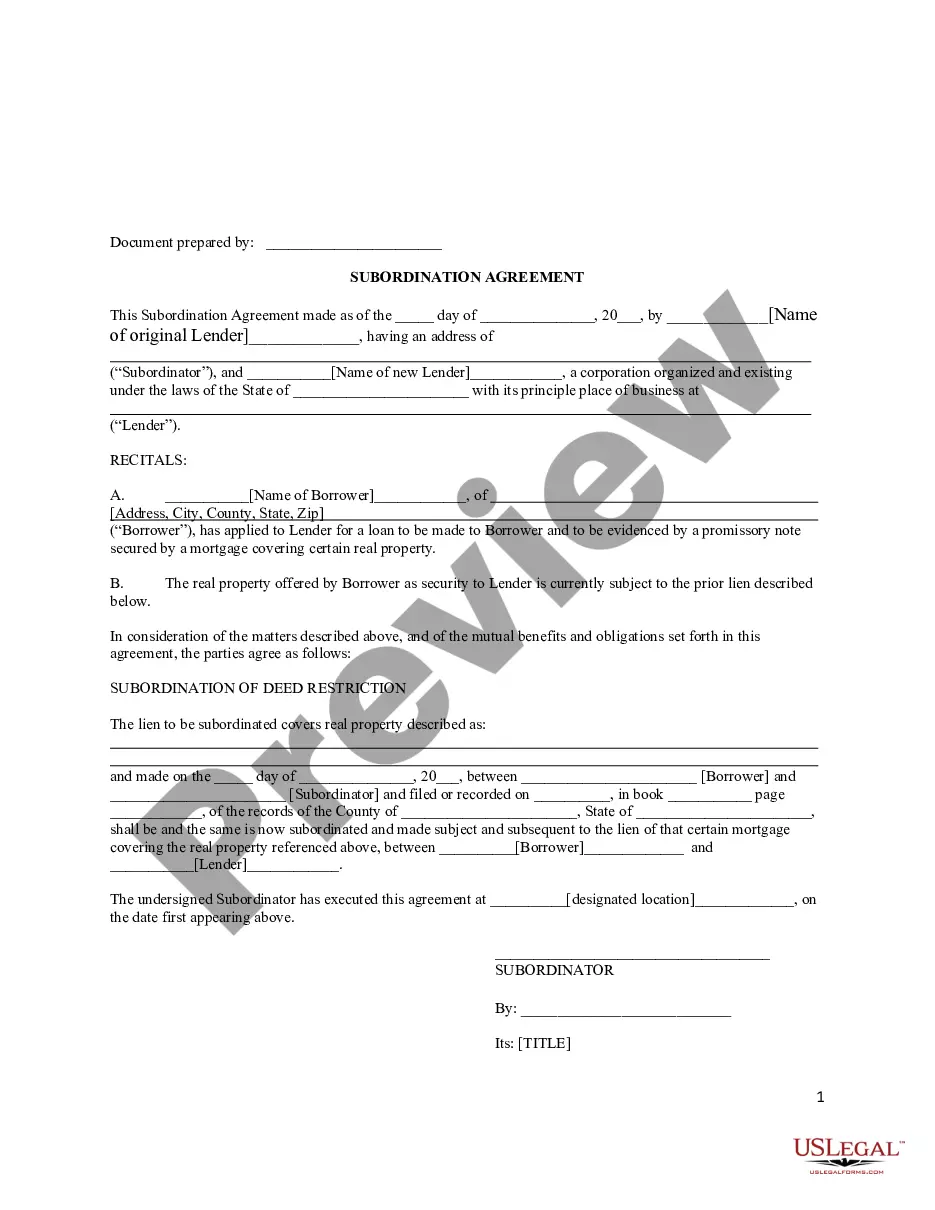
A subordination agreement primarily serves to establish the priority of liens on a property. This document determines which parties have the first claim to the property in case of foreclosure or sale. When you draft an Illinois Subordination and Attornment Agreement - Landlord - Tenant - Lender, you clarify the hierarchy of claims, protecting both the lender’s investment and the tenant’s rights.
The purpose of an SNDA is to create a secure environment for both the tenant and the lender. It allows tenants to maintain their rights to occupy the property, even if the property changes ownership or the lender takes action. By utilizing an Illinois Subordination and Attornment Agreement - Landlord - Tenant - Lender, you can ensure that your interests as a tenant are safeguarded, fostering a stable leasing arrangement.
The SNDA clause in a lease refers to the Subordination, Non-Disturbance, and Attornment agreement. This clause establishes the relationship between the landlord, tenant, and lender, ensuring that the tenant's rights are protected, even if the property is sold or foreclosed. In the context of an Illinois Subordination and Attornment Agreement - Landlord - Tenant - Lender, this clause helps clarify the roles and responsibilities of each party involved.