Illinois Waiver and Release From Liability For Adult for Owner of Land used by Vendor
Description
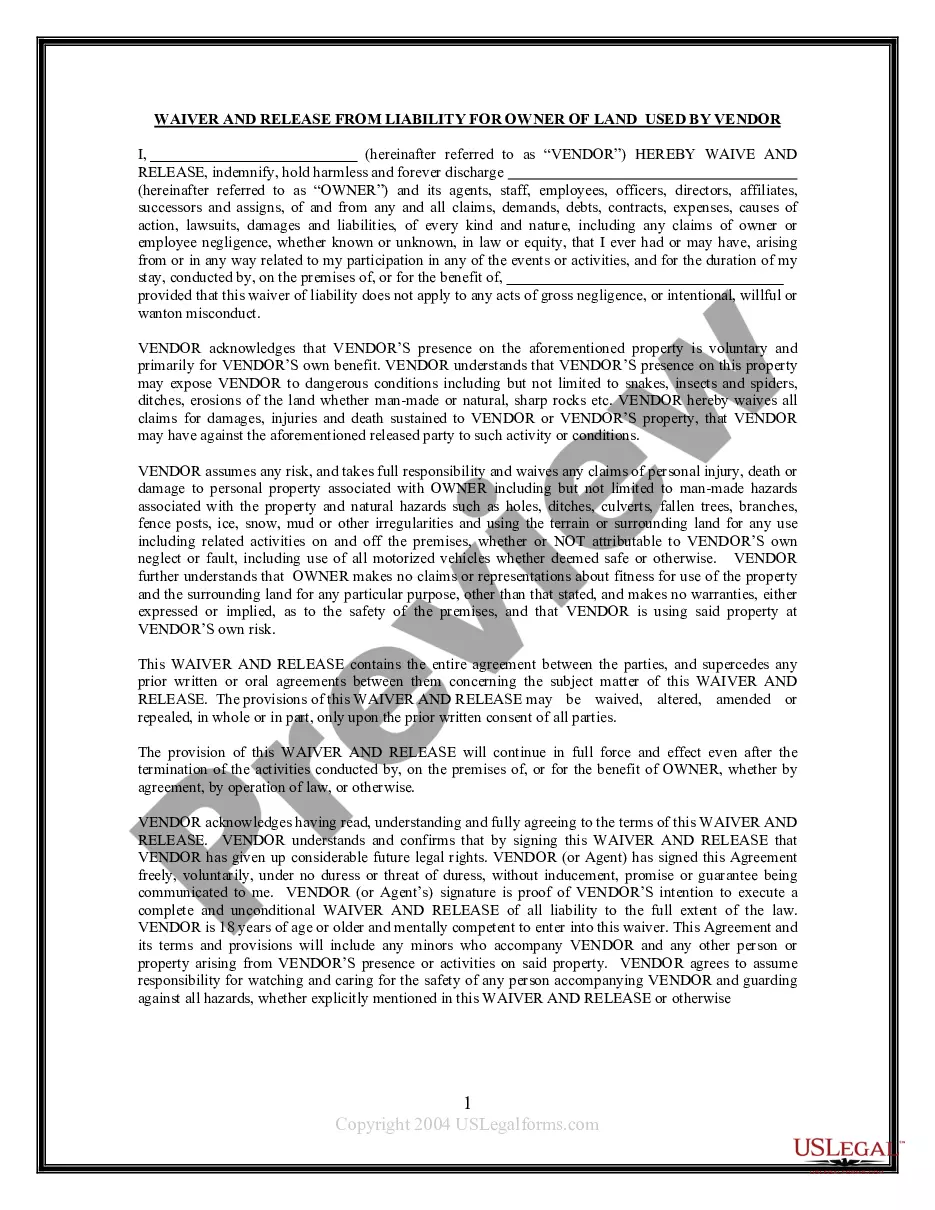
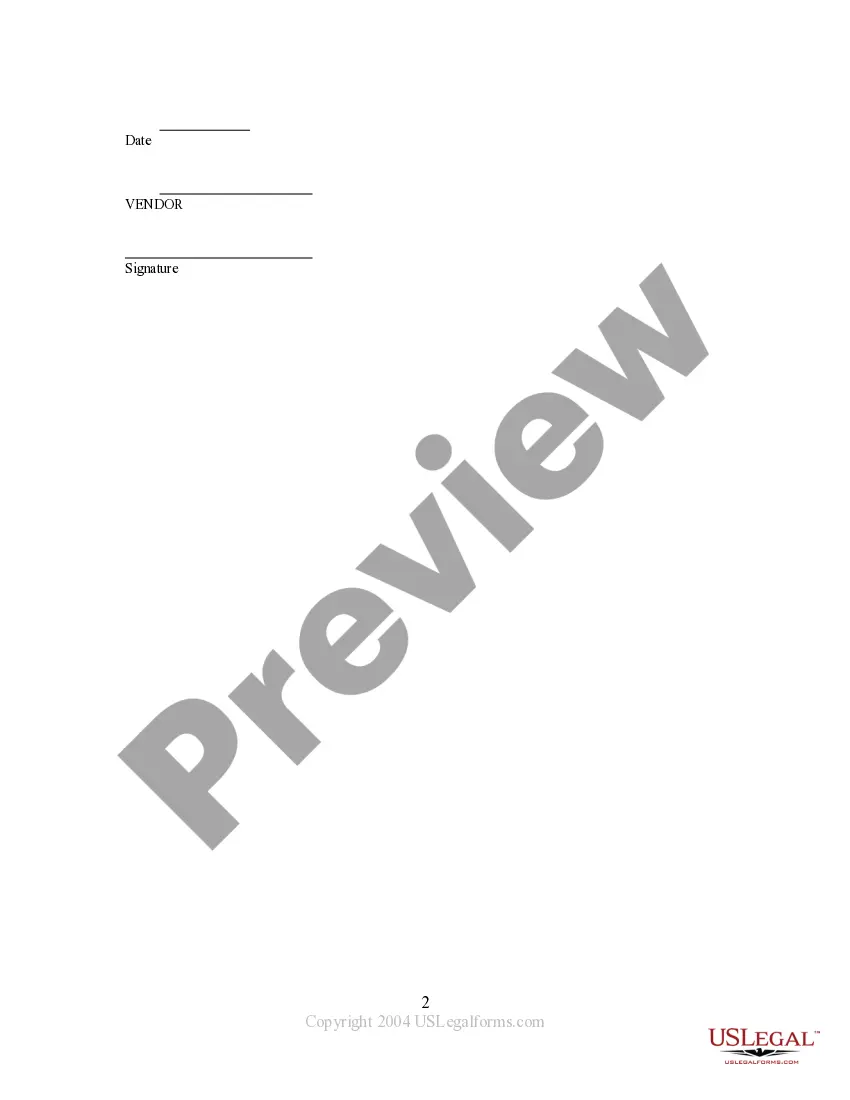
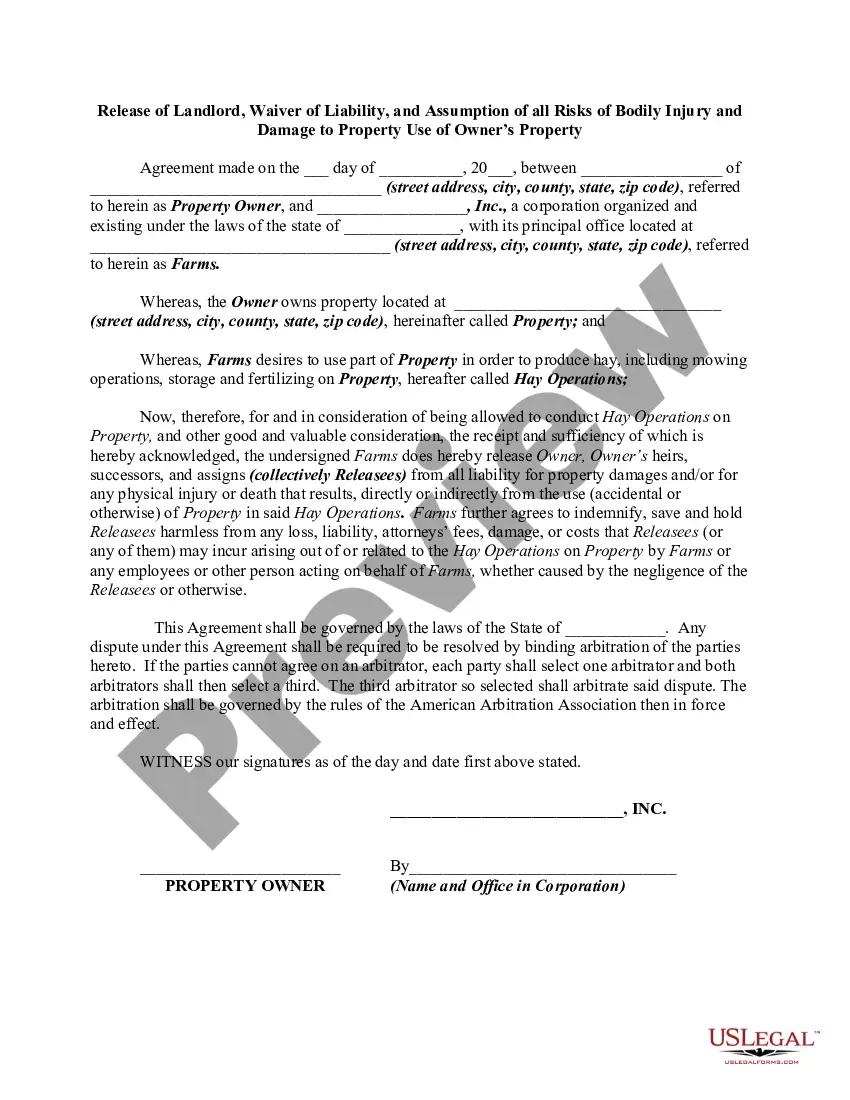
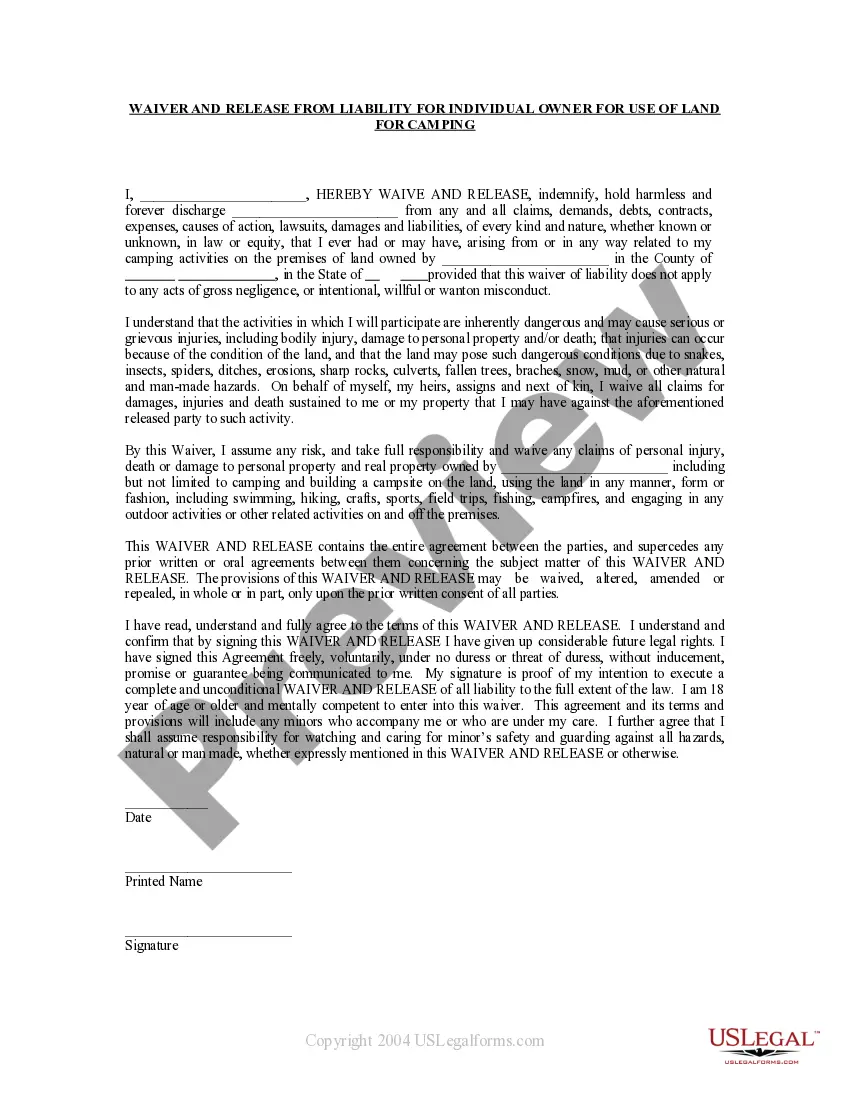
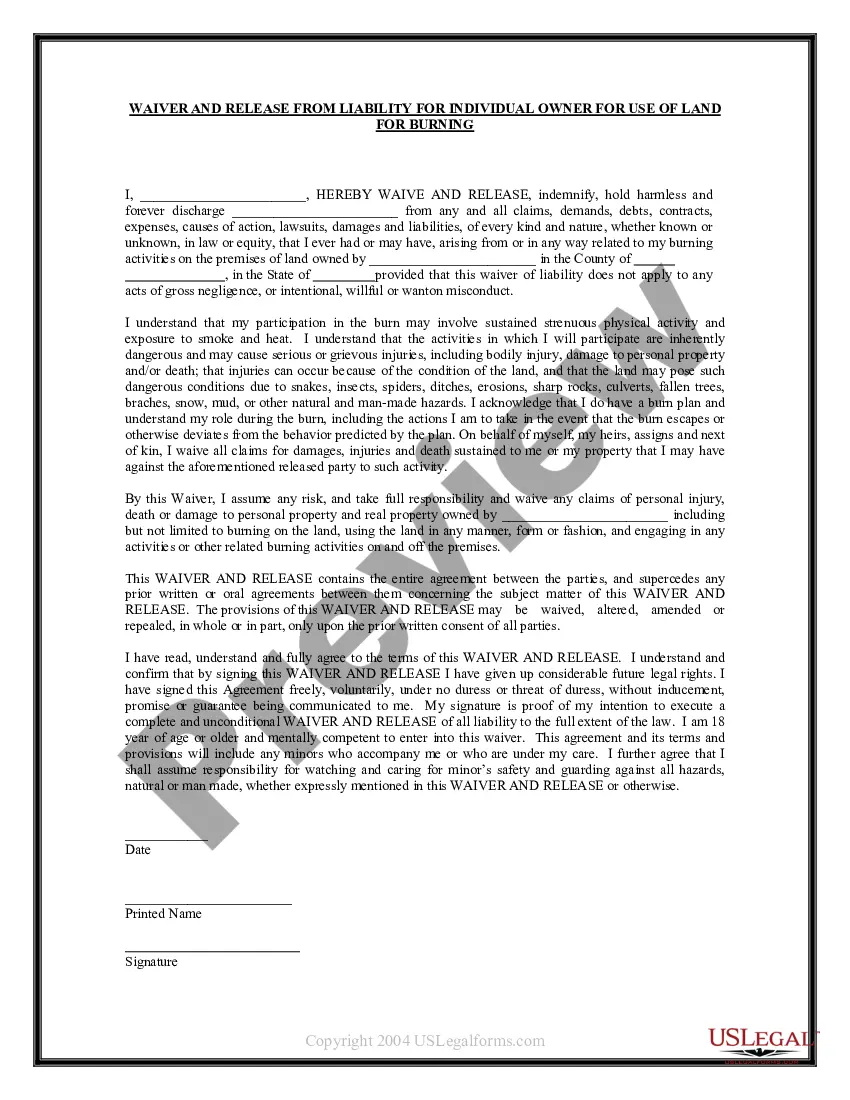
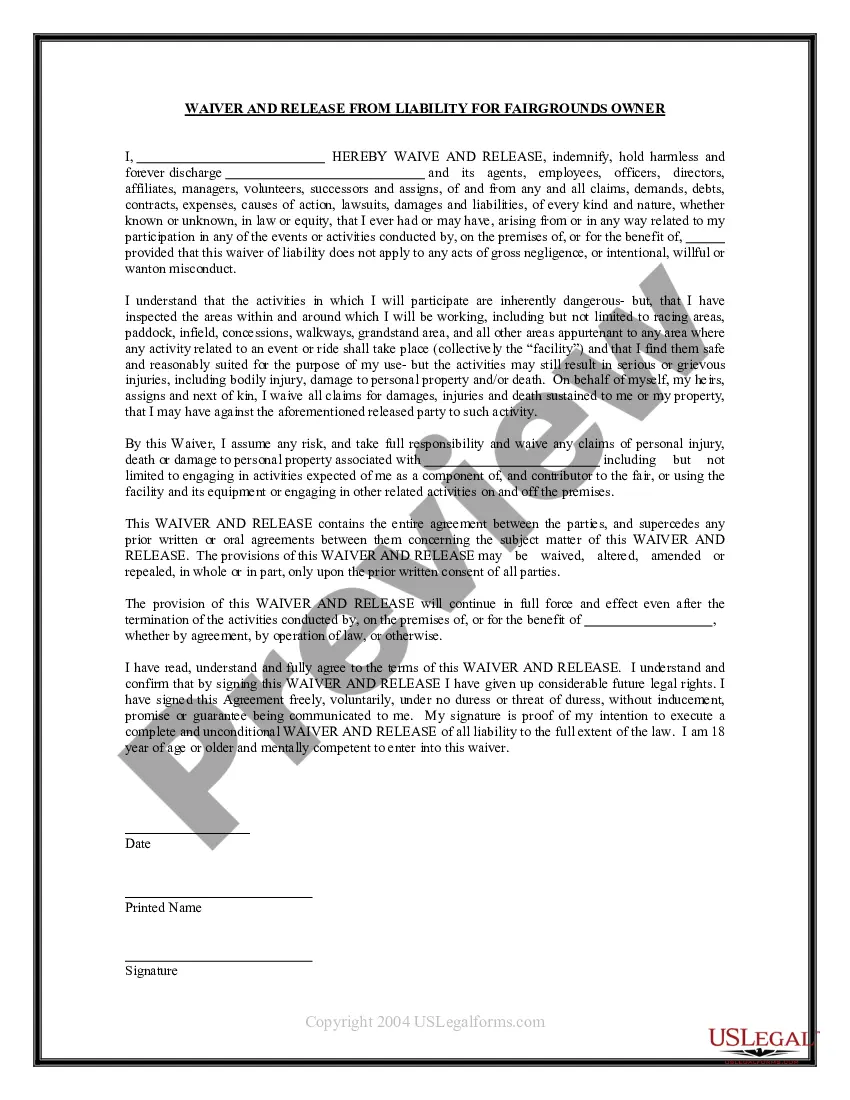

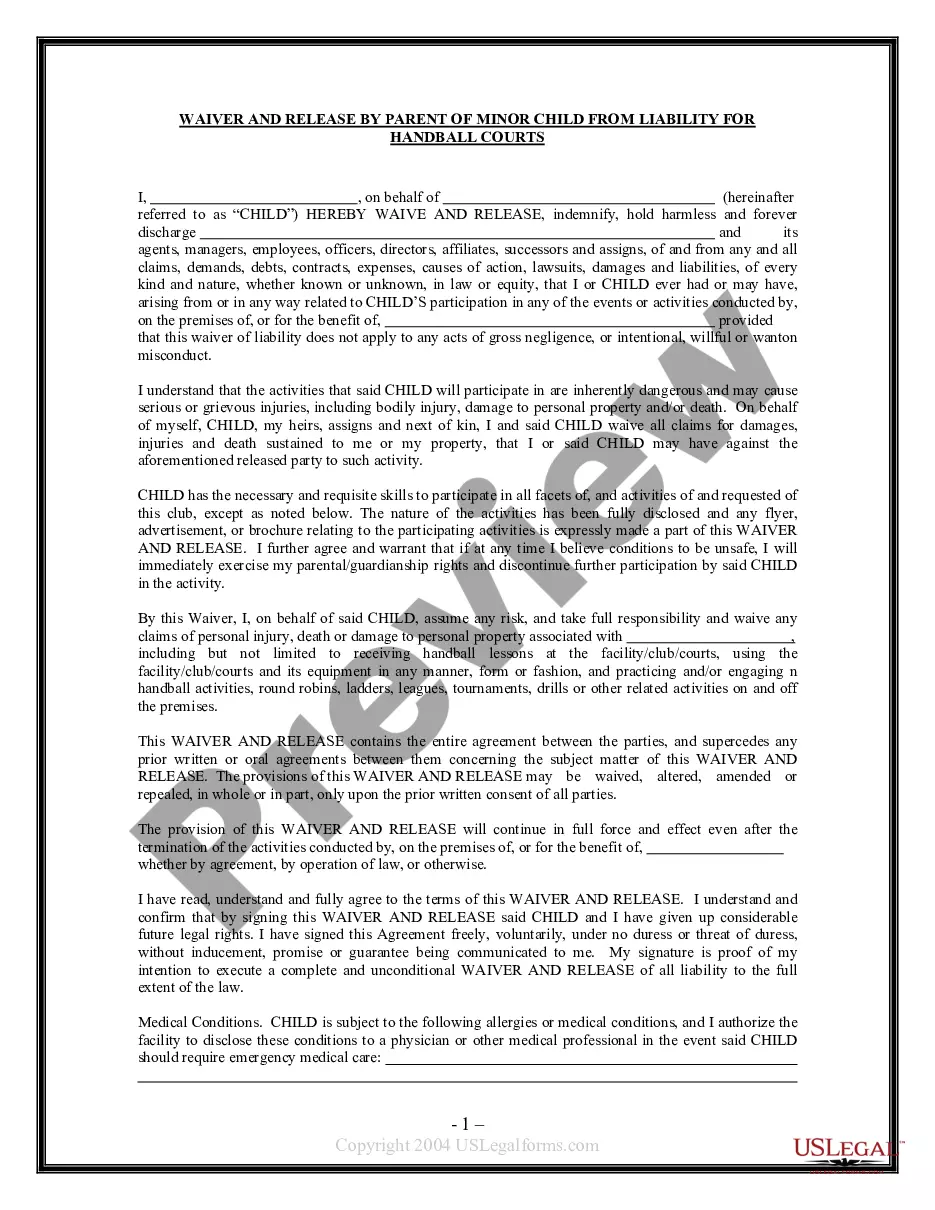
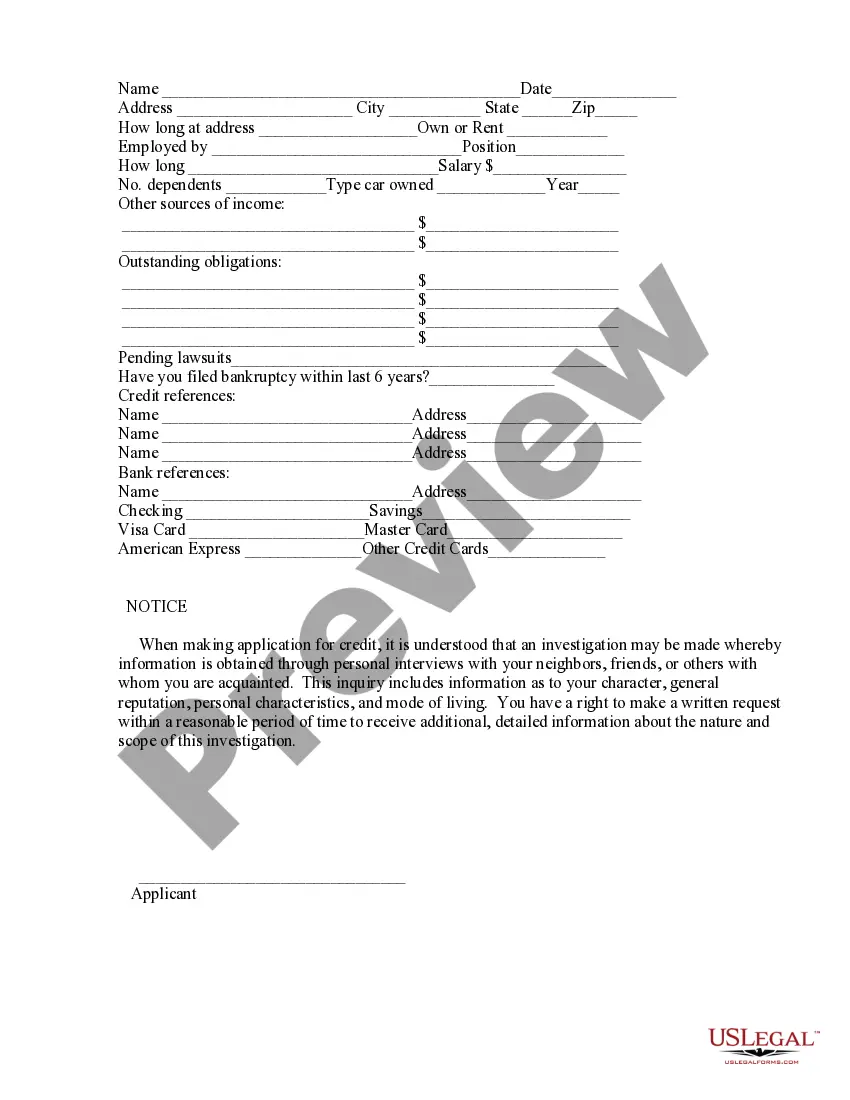
How to fill out Waiver And Release From Liability For Adult For Owner Of Land Used By Vendor?
Are you presently in a situation where you require documentation for potential business or specific purposes every day.
There are numerous official document templates accessible online, but finding ones you can trust isn’t straightforward.
US Legal Forms offers a vast collection of form templates, including the Illinois Waiver and Release From Liability For Adult for Land Owner utilized by Vendor, which can be tailored to comply with federal and state regulations.
Utilize US Legal Forms, one of the largest collections of official forms, to save time and avoid mistakes.
The service offers professionally crafted legal document templates that you can use for various purposes. Create an account on US Legal Forms and start simplifying your life.
- If you are already familiar with the US Legal Forms website and possess an account, simply Log In.
- Then, you can download the Illinois Waiver and Release From Liability For Adult for Land Owner used by Vendor template.
- If you do not have an account and wish to start using US Legal Forms, follow these steps.
- Locate the form you need and ensure it is for the correct city/region.
- Utilize the Review button to examine the form.
- Read the description to confirm you have selected the correct document.
- If the form isn't what you're searching for, use the Search field to find the form that satisfies your needs and requirements.
- If you find the right form, click on Buy now.
- Choose the pricing plan you prefer, fill in the necessary details to process your payment, and pay for your order using your PayPal or Visa or Mastercard.
- Select a convenient file format and download your copy.
- Access all the document templates you have purchased in the My documents section. You can obtain an additional copy of the Illinois Waiver and Release From Liability For Adult for Land Owner used by Vendor at any time, if needed. Just select the required form to download or print the document template.
Form popularity
FAQ
To make a waiver form, start by determining the specific risks associated with the activity you'll be organizing. Then, draft the document by including key details such as the Illinois Waiver and Release From Liability For Adult for Owner of Land used by Vendor, the names of the parties, and a clear acknowledgment of risks. Finally, have participants sign the form to confirm their understanding and acceptance of the terms.
You can find waiver templates on various online platforms, including uslegalforms, which offers a wide range of customizable documents. These templates often include specific provisions like the Illinois Waiver and Release From Liability For Adult for Owner of Land used by Vendor. By using these templates, you can save time and ensure you cover all necessary legal aspects.
Yes, you can write your own liability waiver, but it is crucial to ensure that it complies with legal standards. Including specific language such as the Illinois Waiver and Release From Liability For Adult for Owner of Land used by Vendor can help clarify the intentions of the document. However, consider consulting legal resources or platforms like uslegalforms for templates and guidance to ensure your waiver is effective and enforceable.
An example of a waiver of liability is a document signed by participants before engaging in a high-risk activity, such as rock climbing or a sports event. This document typically includes a statement like the Illinois Waiver and Release From Liability For Adult for Owner of Land used by Vendor, ensuring that participants acknowledge the risks associated with the activity. By signing, participants agree not to hold the organizers liable for any injuries that may occur.
A proper waiver should include essential elements like the names of the parties, a clear description of the activity, and the acknowledgment of risks. Make sure to incorporate the Illinois Waiver and Release From Liability For Adult for Owner of Land used by Vendor, as this specifies the context of the waiver. Additionally, include a signature line for participants to confirm their understanding and agreement.
To write an effective liability waiver form, start by clearly stating the purpose of the document. Include the names of all parties involved, specifically mentioning the Illinois Waiver and Release From Liability For Adult for Owner of Land used by Vendor. Ensure that you outline the specific activities covered by the waiver and include a section where participants acknowledge the risks involved.
Key Takeaways. A waiver is a legally binding provision where either party in a contract agrees to voluntarily forfeit a claim without the other party being liable. Waivers can either be in written form or some form of action.
''11 Therefore, under Illinois law, a key to enforceability of a COVID-19 waiver will be whether the Third Party was under an ''economic or other compulsion to sign the release. '' In sum, Illinois law may well find third-party liability waivers against COVID-19 liability unenforceable in certain circumstances.
The truth is waivers and release clausesdocuments in which you promise to hold the other party harmless if you get injuredare often unenforceable in Illinois. The main reason for this is courts in the state usually rule that businesses be held accountable for their own negligence.
Liability waivers are enforceable in California solely to the extent they shift to the customer the risk of ordinary negligence. Under California law, a liability waiver cannot excuse an injury caused by a defendant's gross negligence, recklessness or intentionally wrongful act.