Illinois Waiver and Release From Liability For Minor Child for Ice Skating Rink
Description
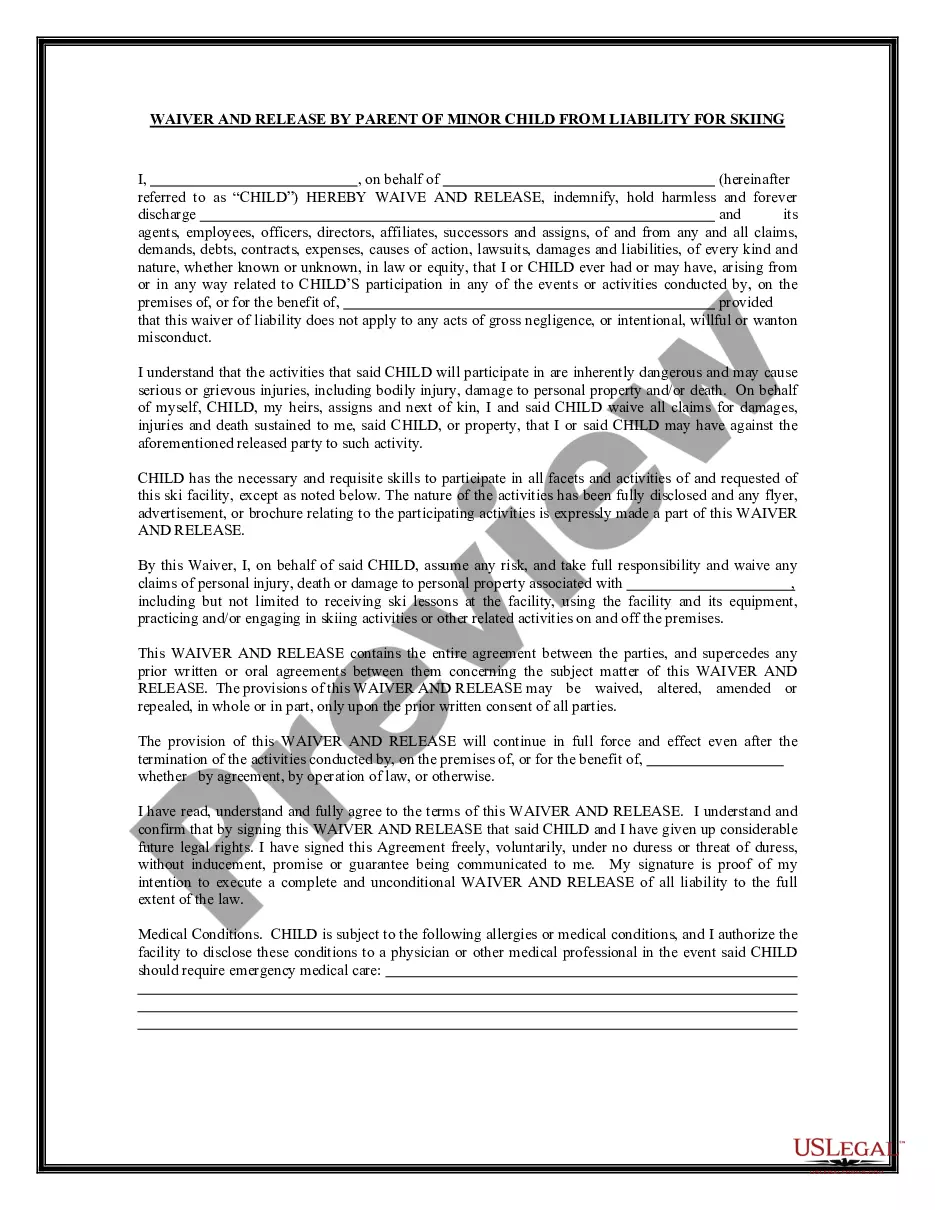
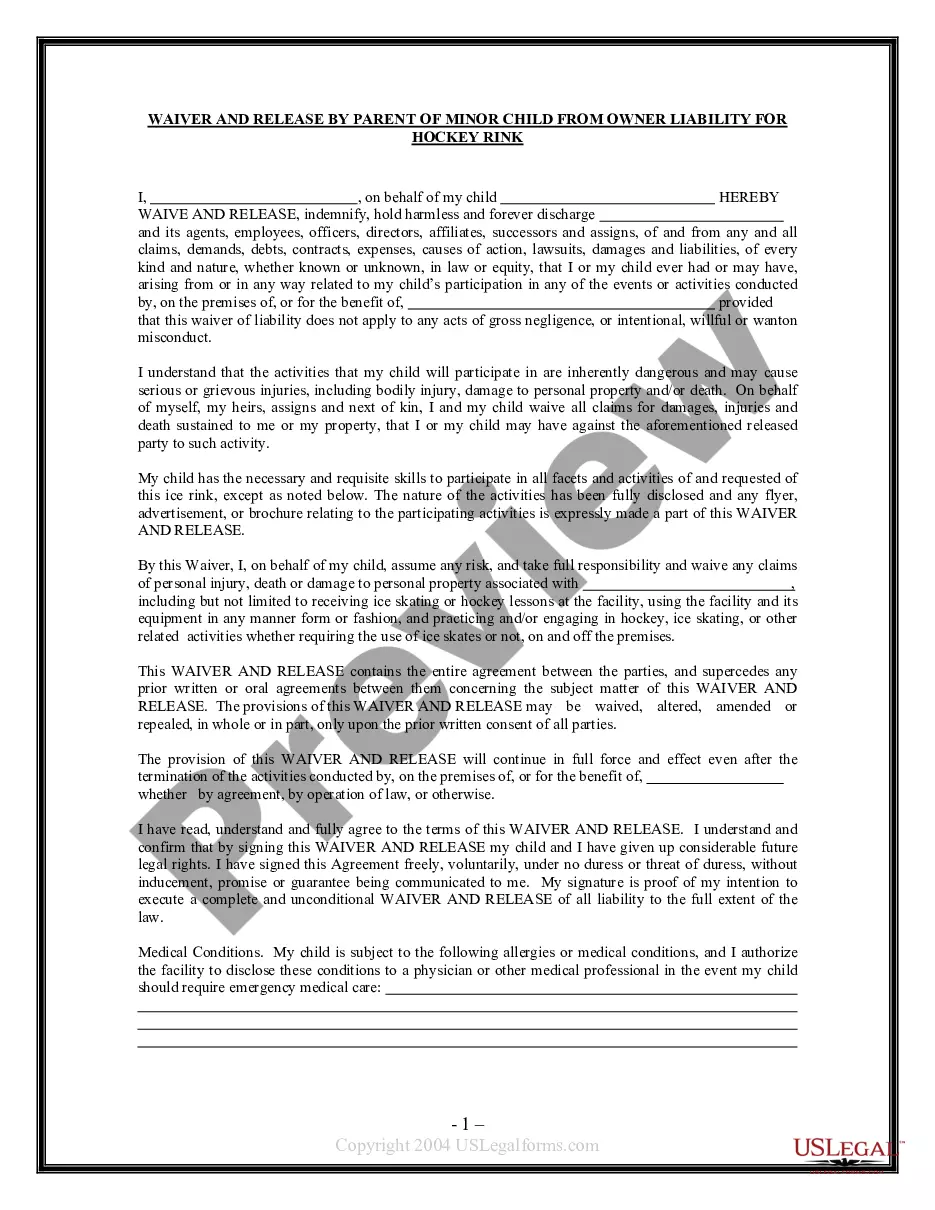
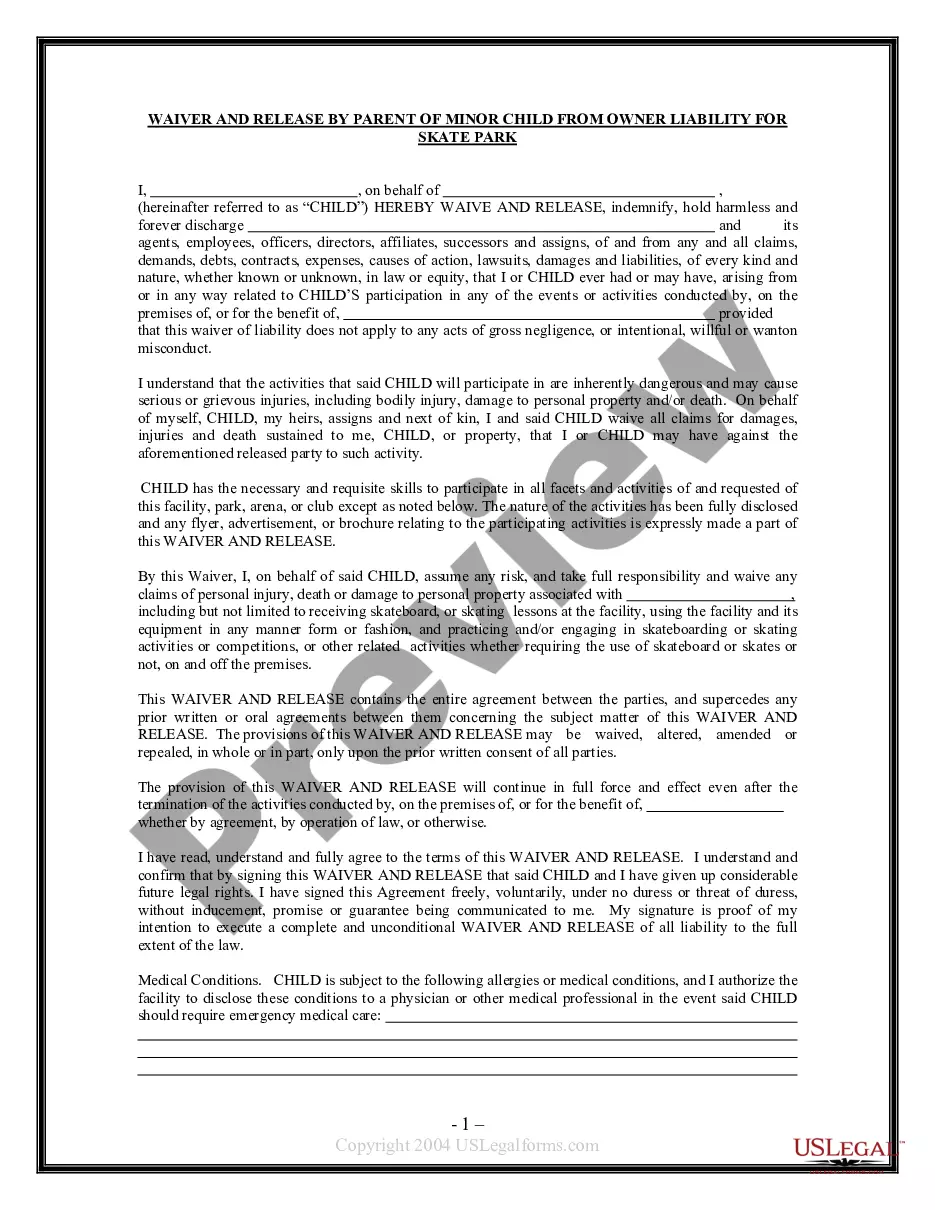
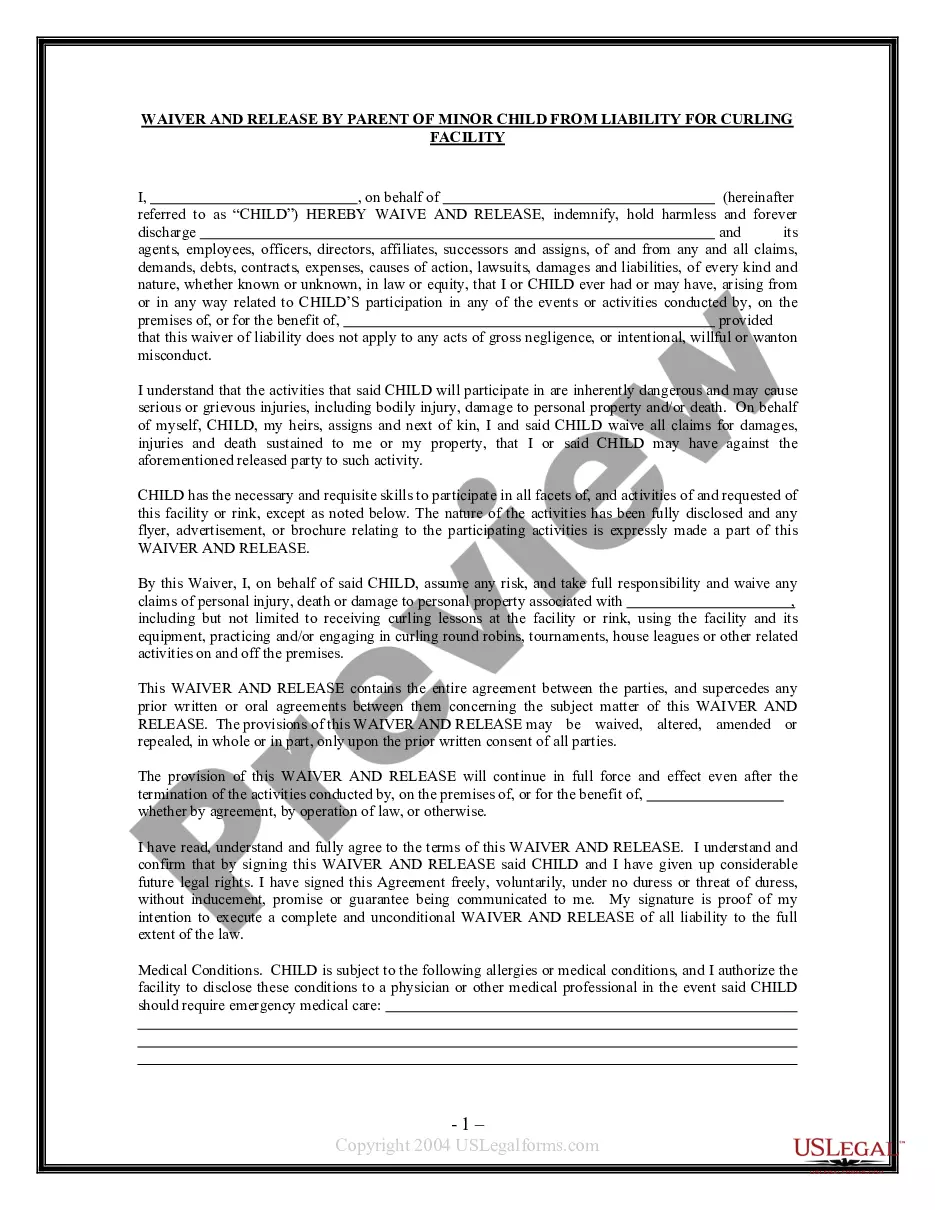


How to fill out Waiver And Release From Liability For Minor Child For Ice Skating Rink?
You might spend time online searching for the valid document template that meets the state and federal requirements you need.
US Legal Forms offers thousands of valid forms that are reviewed by experts.
It is easy to download or generate the Illinois Waiver and Release From Liability For Minor Child for Ice Skating Rink from our service.
- If you already have a US Legal Forms account, you can Log In and click the Download button.
- Then, you can fill out, modify, generate, or sign the Illinois Waiver and Release From Liability For Minor Child for Ice Skating Rink.
- Every valid document template you purchase is yours forever.
- To obtain another copy of any purchased form, visit the My documents tab and click the corresponding button.
- If you are using the US Legal Forms website for the first time, follow the simple instructions below.
- First, ensure that you have selected the right document template for the county/city of your choice.
- Review the form description to confirm you have chosen the correct form.
- If available, utilize the Preview button to view the document template as well.
- To find another version of the form, use the Search field to locate the template that meets your needs and specifications.
- Once you have found the template you want, click Buy now to proceed.
- Choose the pricing plan you want, enter your credentials, and register for your account on US Legal Forms.
- Complete the transaction.
- You may use your credit card or PayPal account to pay for the valid form.
- Select the format of the document and download it to your device.
- Make changes to the document if necessary.
- You can fill out, modify, and sign and generate the Illinois Waiver and Release From Liability For Minor Child for Ice Skating Rink.
- Download and generate thousands of document layouts using the US Legal Forms website, which offers the largest selection of valid forms.
- Utilize expert and state-specific layouts to address your business or personal needs.
Form popularity
FAQ
Yes, liability waivers can be enforceable in Illinois, provided they meet certain legal standards. An Illinois Waiver and Release From Liability For Minor Child for Ice Skating Rink must be clear, specific, and not violate public policy. Courts generally uphold waivers if they are well-crafted and inform participants of the risks involved, making it essential for businesses to use a reliable source like uslegalforms to create a compliant waiver.
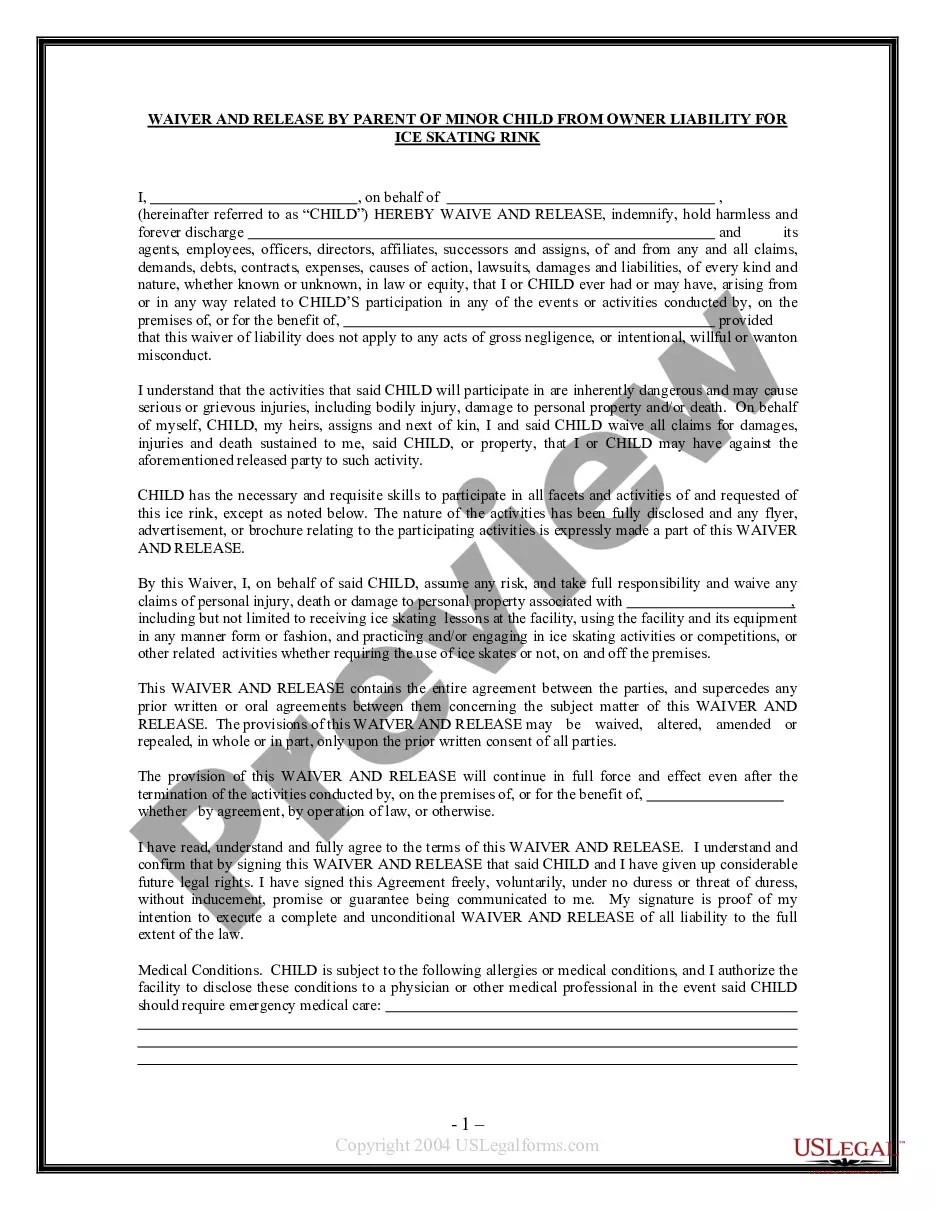
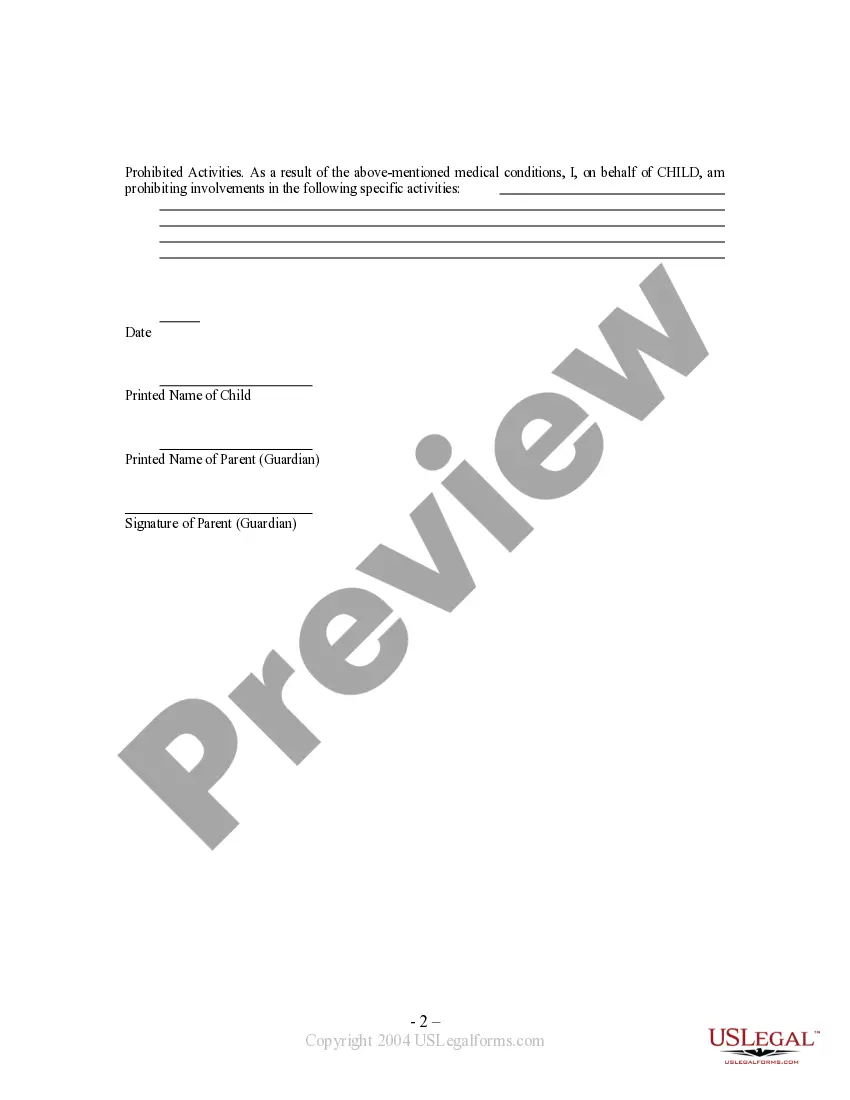
A parental release of liability form is a document that allows a parent or guardian to waive their child's right to sue in the event of an injury during activities like ice skating. This form serves as an Illinois Waiver and Release From Liability For Minor Child for Ice Skating Rink, providing legal protection for the facility and acknowledging the risks involved. By signing this form, parents take responsibility for their child's participation and acknowledge the potential hazards associated with the activity.
While you can draft your own liability waiver, it is crucial to ensure it meets all legal requirements specific to Illinois. A well-structured Illinois Waiver and Release From Liability For Minor Child for Ice Skating Rink should include specific terms and conditions that protect your interests. However, consider utilizing a template from a trusted source like uslegalforms, which can simplify the process and ensure compliance with state laws.
To create an effective Illinois Waiver and Release From Liability For Minor Child for Ice Skating Rink, three essential requirements must be met. First, the waiver must clearly state the activities covered, ensuring that participants understand what they are agreeing to. Second, it must be signed voluntarily by a parent or guardian, indicating informed consent. Lastly, the language used should be clear and straightforward, so there is no ambiguity about the rights being waived.
A release and waiver agreement is an enforceable promise not to pursue legal action in exchange for compensation. The releasee gives money or some other form of compensation to the releasor, who then agrees not to press charges, sue, or take any other legal action against the releasee.
To sum it up, customers can still sue business owners even when they've signed a waiver to use the business.
Signing a waiver does not mean you automatically do not have the right to file a lawsuit after suffering a serious injury in California. Liability laws are complex and often require an attorney's assistance. If you signed a waiver before an activity that gave you an injury, speak to a lawyer about your rights.
A waiver/release is an exculpatory contract that attempts to excuse or relieve a party, for injuries to a participant that arise out of the known and unknown risks in an activity. This includes the inherent risks that arise from the sports organization's ordinary negligence.
If you are injured as a result of ordinary negligence, the liability waiver may fully protect the defendant and leave you without legal recourse. If you are injured as a result of gross negligence, then you may have a case.
A waiver is an exculpatory contract. That means it's used to excuse a party from responsibility when the other contracted party is injured by either known or unknown risks in a particular activity. This includes inherent risks and ordinary negligence.