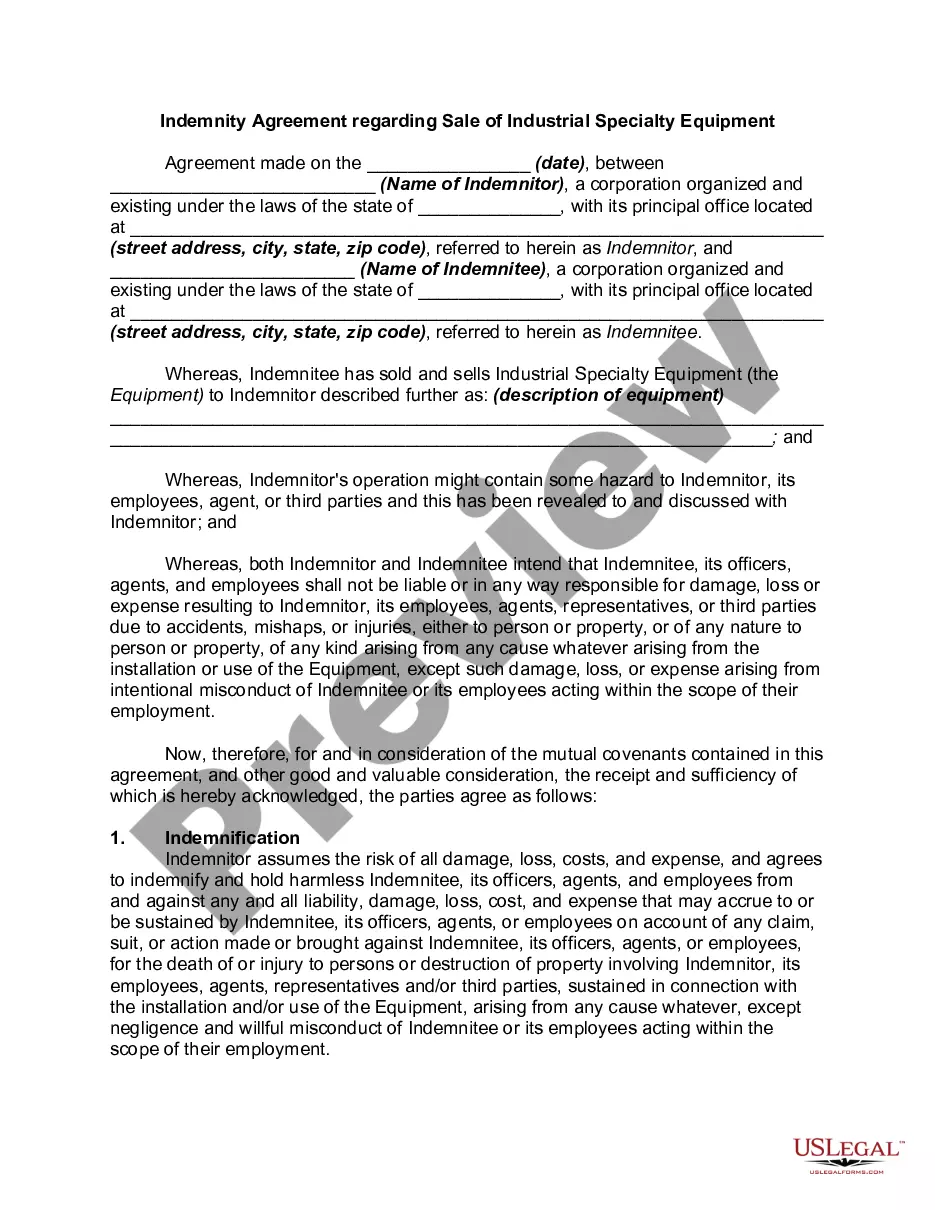
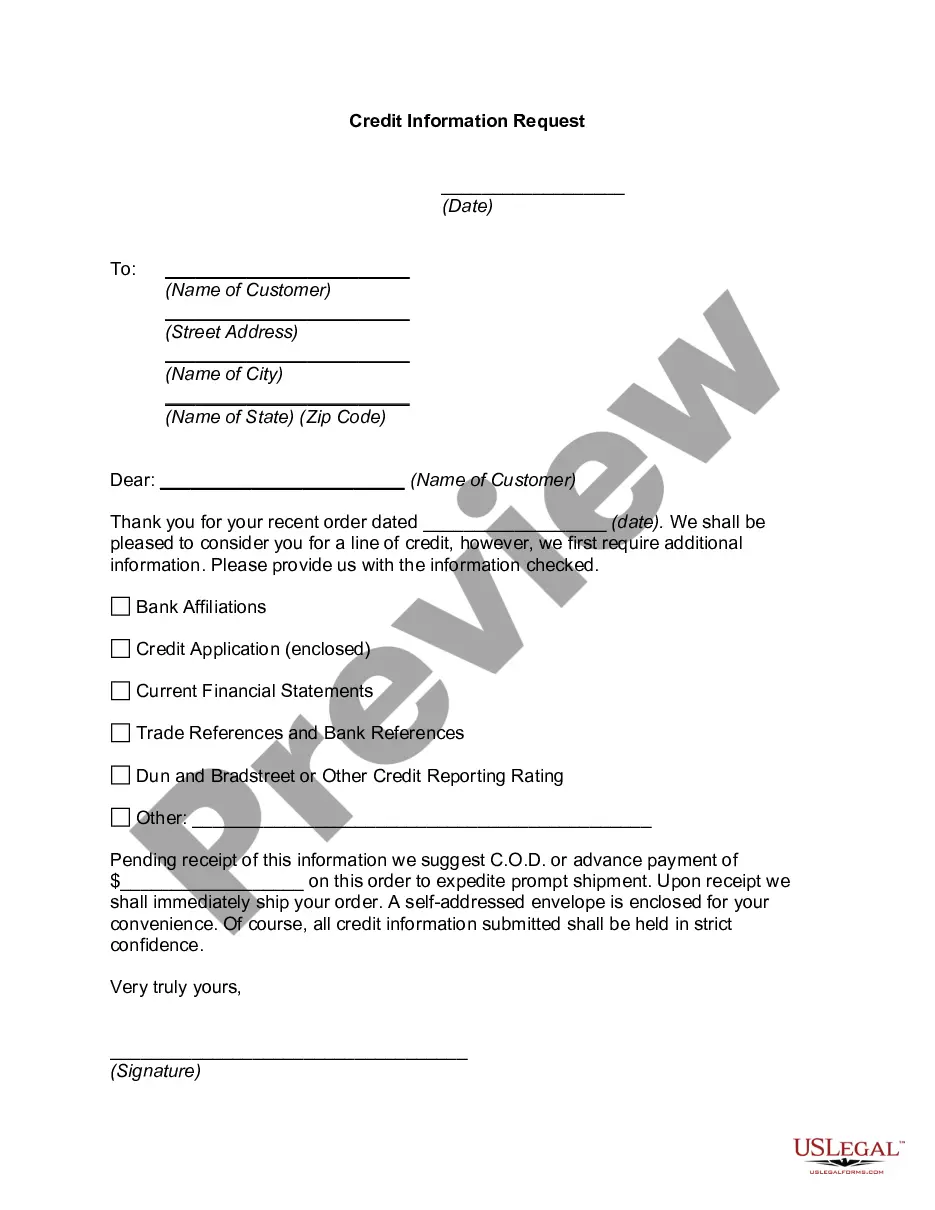
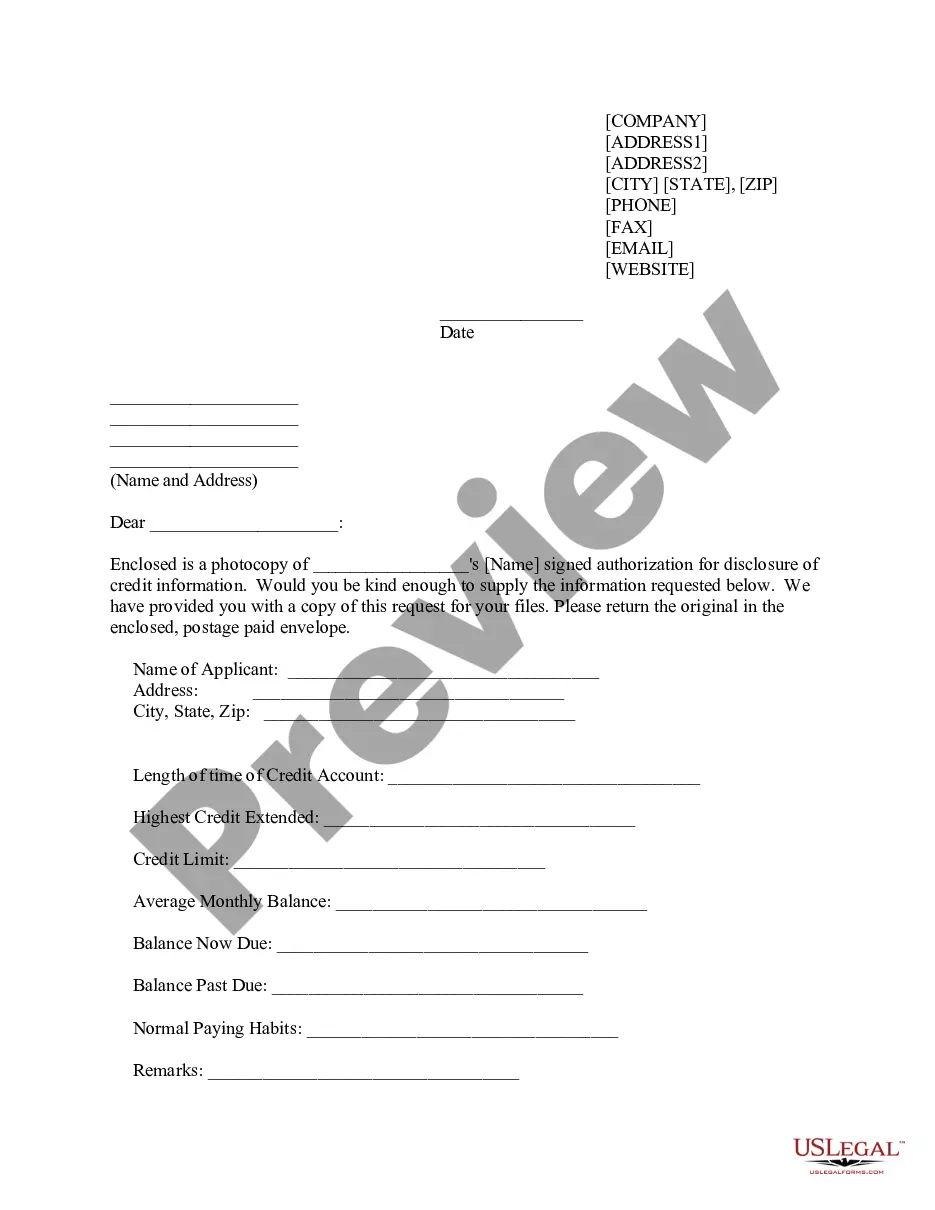
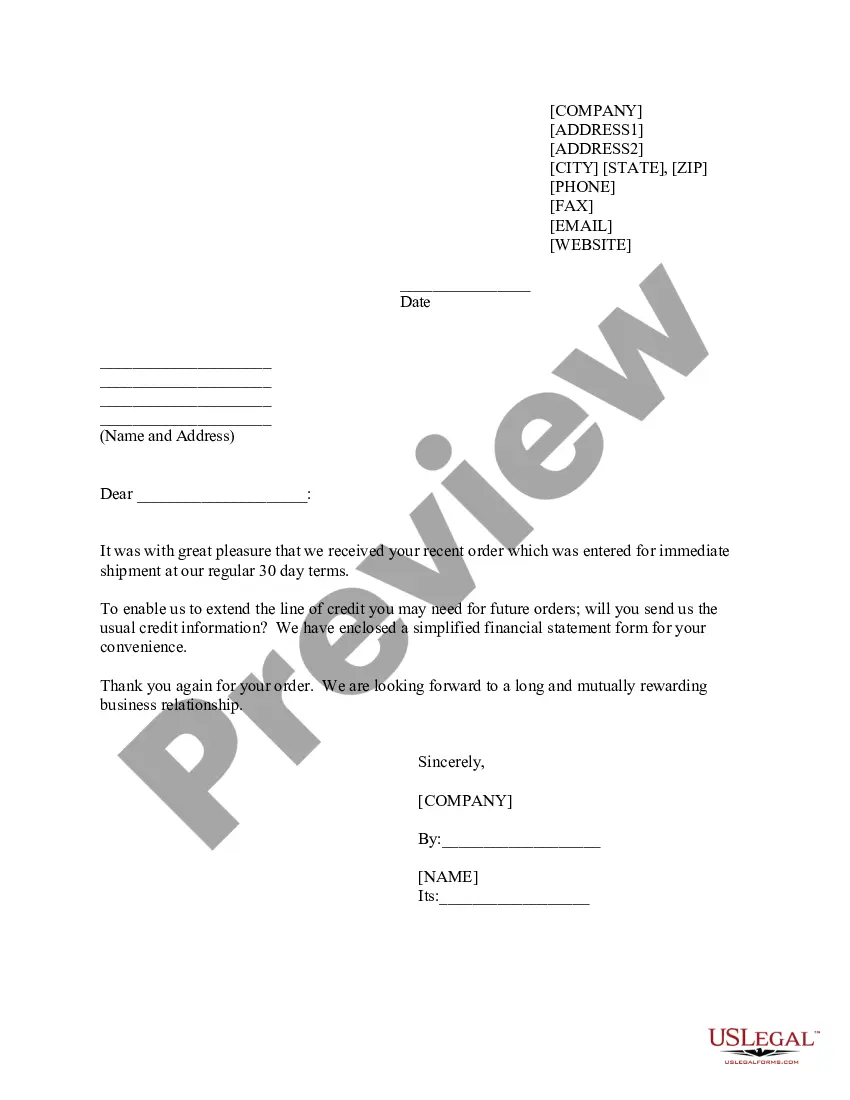
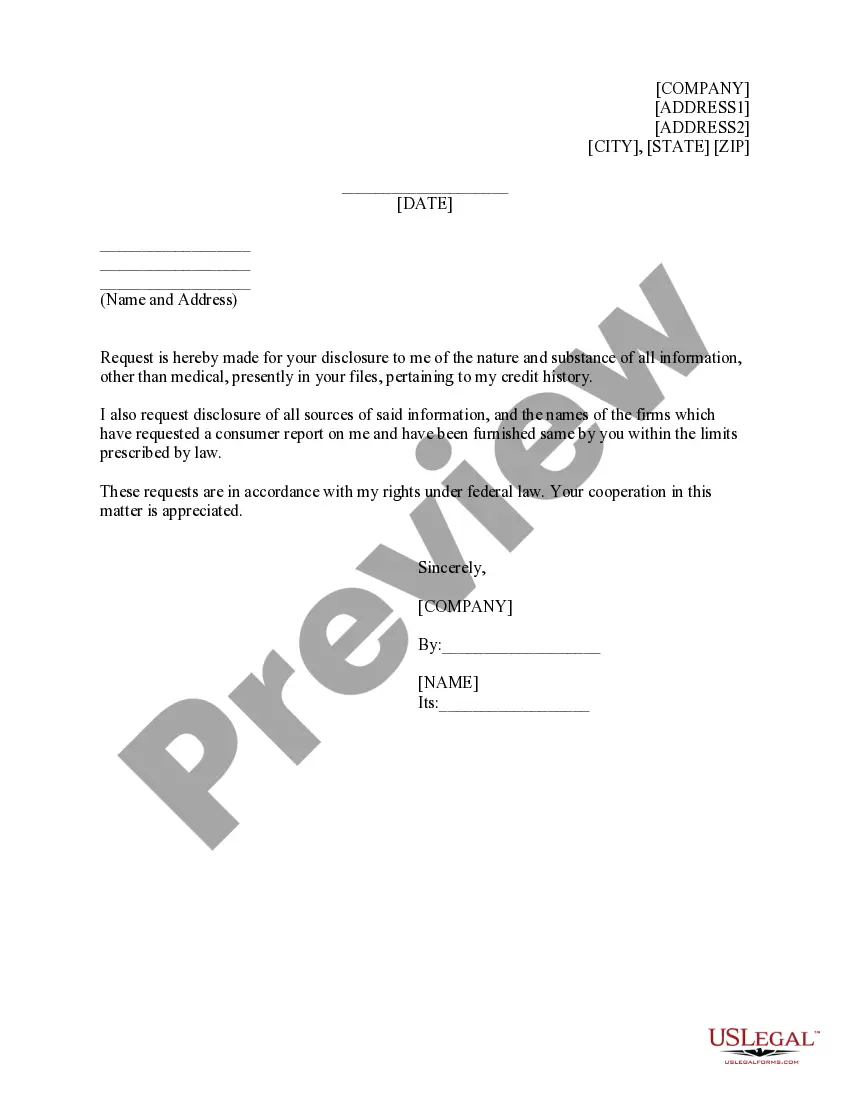
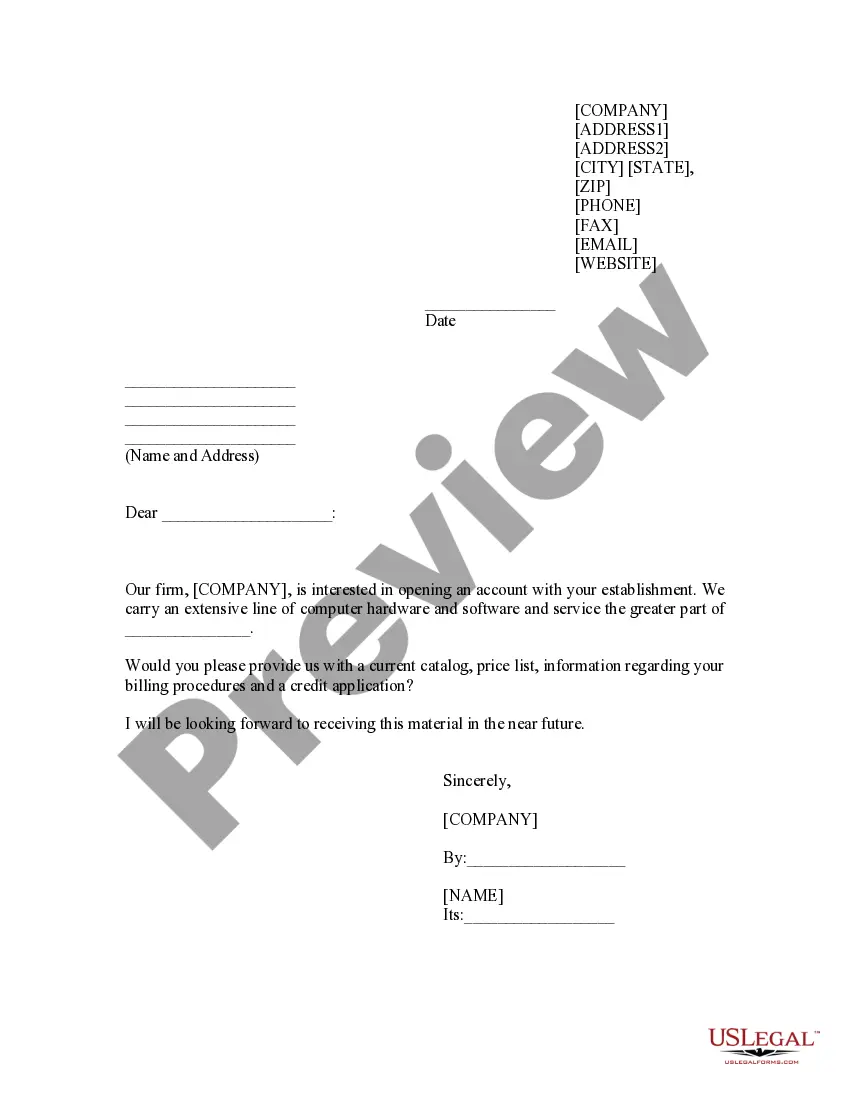
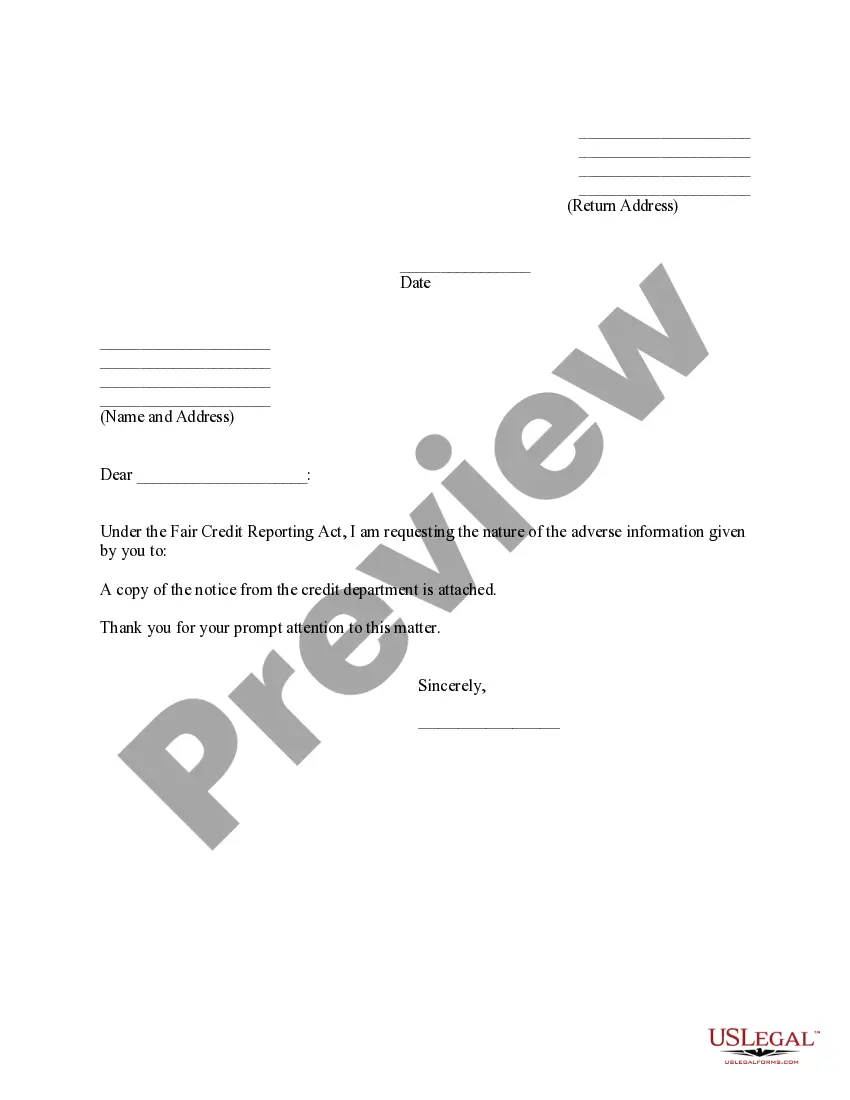
Illinois Credit Information Request
Description

Get your form ready online
Our built-in tools help you complete, sign, share, and store your documents in one place.
Make edits, fill in missing information, and update formatting in US Legal Forms—just like you would in MS Word.
Download a copy, print it, send it by email, or mail it via USPS—whatever works best for your next step.
Sign and collect signatures with our SignNow integration. Send to multiple recipients, set reminders, and more. Go Premium to unlock E-Sign.
If this form requires notarization, complete it online through a secure video call—no need to meet a notary in person or wait for an appointment.
We protect your documents and personal data by following strict security and privacy standards.

Make edits, fill in missing information, and update formatting in US Legal Forms—just like you would in MS Word.

Download a copy, print it, send it by email, or mail it via USPS—whatever works best for your next step.

Sign and collect signatures with our SignNow integration. Send to multiple recipients, set reminders, and more. Go Premium to unlock E-Sign.

If this form requires notarization, complete it online through a secure video call—no need to meet a notary in person or wait for an appointment.

We protect your documents and personal data by following strict security and privacy standards.
Looking for another form?

How to fill out Credit Information Request?
Finding the appropriate legal document template can be a challenge.
Certainly, there are numerous designs available online, but how can you acquire the legal template you need.
Make use of the US Legal Forms website.
You can browse the form using the Review button and read the form description to confirm that it is suitable for you.
- The service offers thousands of templates, including the Illinois Credit Information Request, suitable for both business and personal use.
- All forms are reviewed by experts and comply with state and federal requirements.
- If you are already registered, Log In to your account and click the Download button to obtain the Illinois Credit Information Request.
- Use your account to review the legal forms you have purchased earlier.
- Navigate to the My documents section of your account to get another copy of the document you need.
- If you are a new user of US Legal Forms, here are simple steps for you to follow.
- First, ensure that you have selected the right form for your region/county.
Form popularity
FAQ
In Illinois, a good credit score typically falls within the range of 700 to 749, reflecting responsible credit management. Achieving a score in this range can enhance your chances of securing loans and favorable interest rates. To better understand your credit position, you can make an Illinois Credit Information Request to review your report and identify areas for improvement. By being proactive, you can work towards achieving a strong financial future.
To get your free credit report from each credit reporting agency, visit AnnualCreditReport.com. To access your reports, you will need to provide certain information, including your name, Social Security number and address.
To get the free credit report authorized by law, go to AnnualCreditReport.com or call (877) 322-8228.
You must provide written consent before a prospective or current employer can get a copy of your credit report.
Under the Fair Credit Reporting Act, you are also entitled to a free annual credit report each year from each of the three major consumer credit bureaus. To request a free copy of your credit reports from Equifax, Experian and TransUnion, visit the official site, annualcreditreport.com.
A: No, you can't check your spouse's (or ex's) personal credit reports. In order to request a consumer report on someone else, you must have what's called a permissible purpose under federal law, and marriage or divorce is not one of them.
Call (888) 397-3742 if you want to order a credit report or if you have any questions related to fraud and identity theft. The number (888) 397-3742-6 (1-888-EXPERIAN) will also work. You can place an immediate fraud/security alert on your credit with this number.
Personal information: Your name, including any aliases or misspellings reported by creditors, birth date, Social Security number, current and past home addresses, phone numbers, and current and past employers.
Thanks to the Fair Credit Reporting Act (FCRA), employers can't go checking your credit history behind your back. They must have written consent before pulling an applicant's credit history.
The law regulates credit reporting and ensures that only business entities with a specific, legitimate purpose, and not members of the general public, can check your credit without written permission. The circumstances surrounding the release of your financial information vary widely.