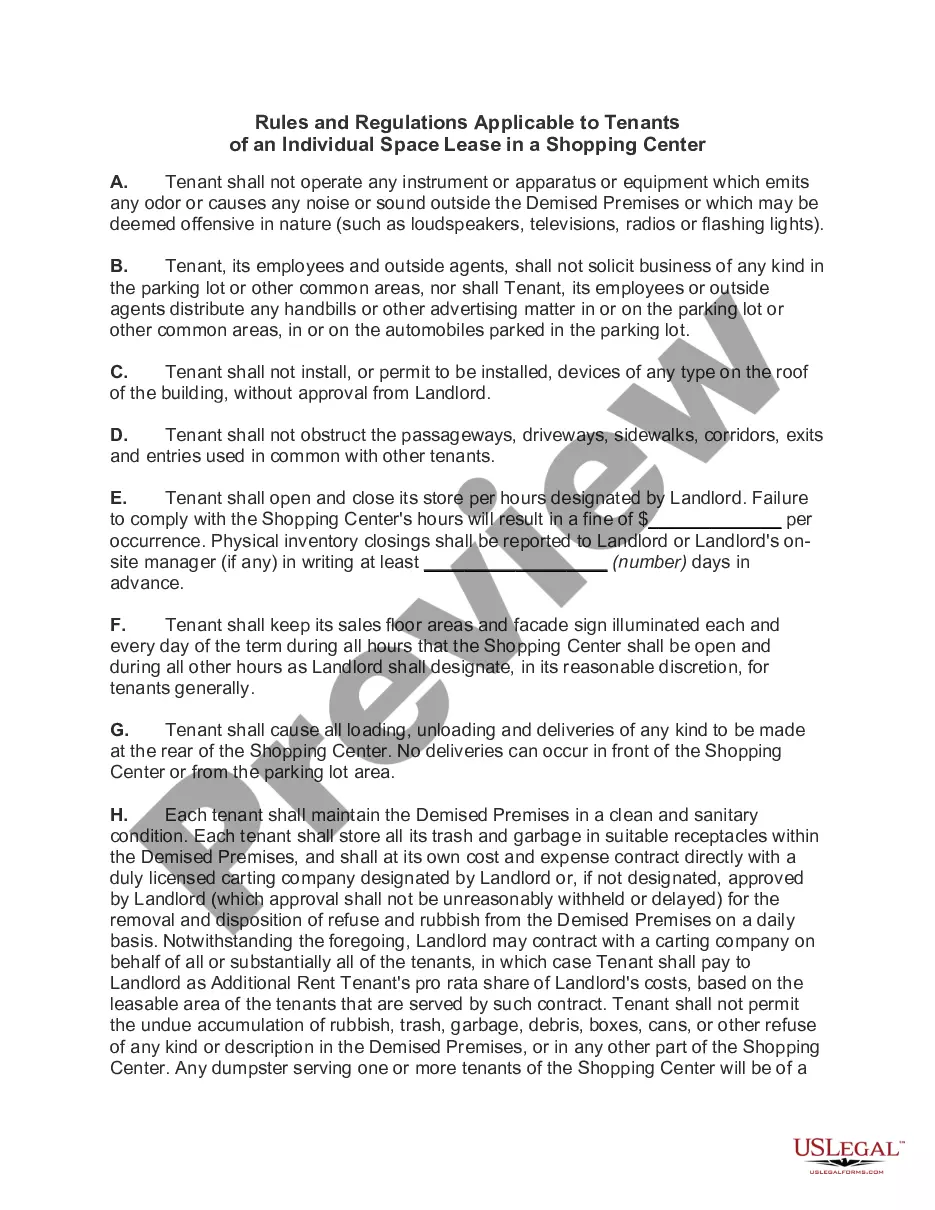
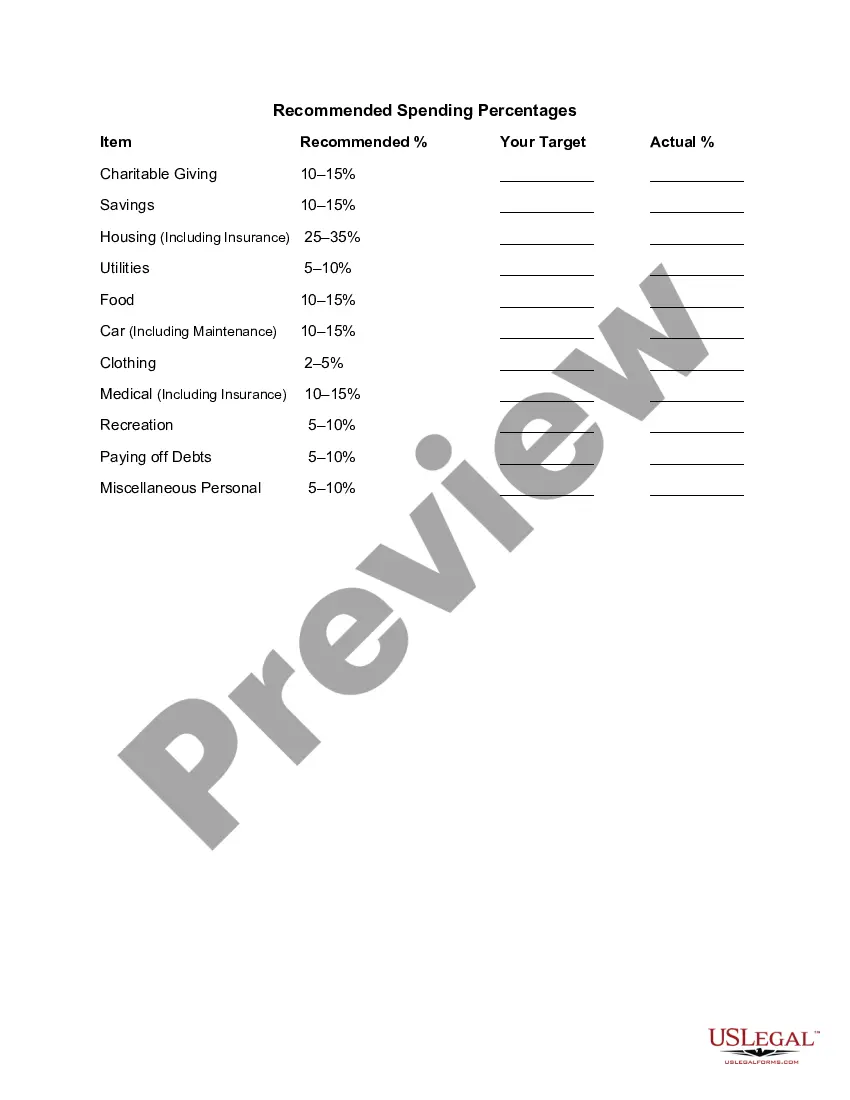
Illinois Recommended Spending Percentages
Description
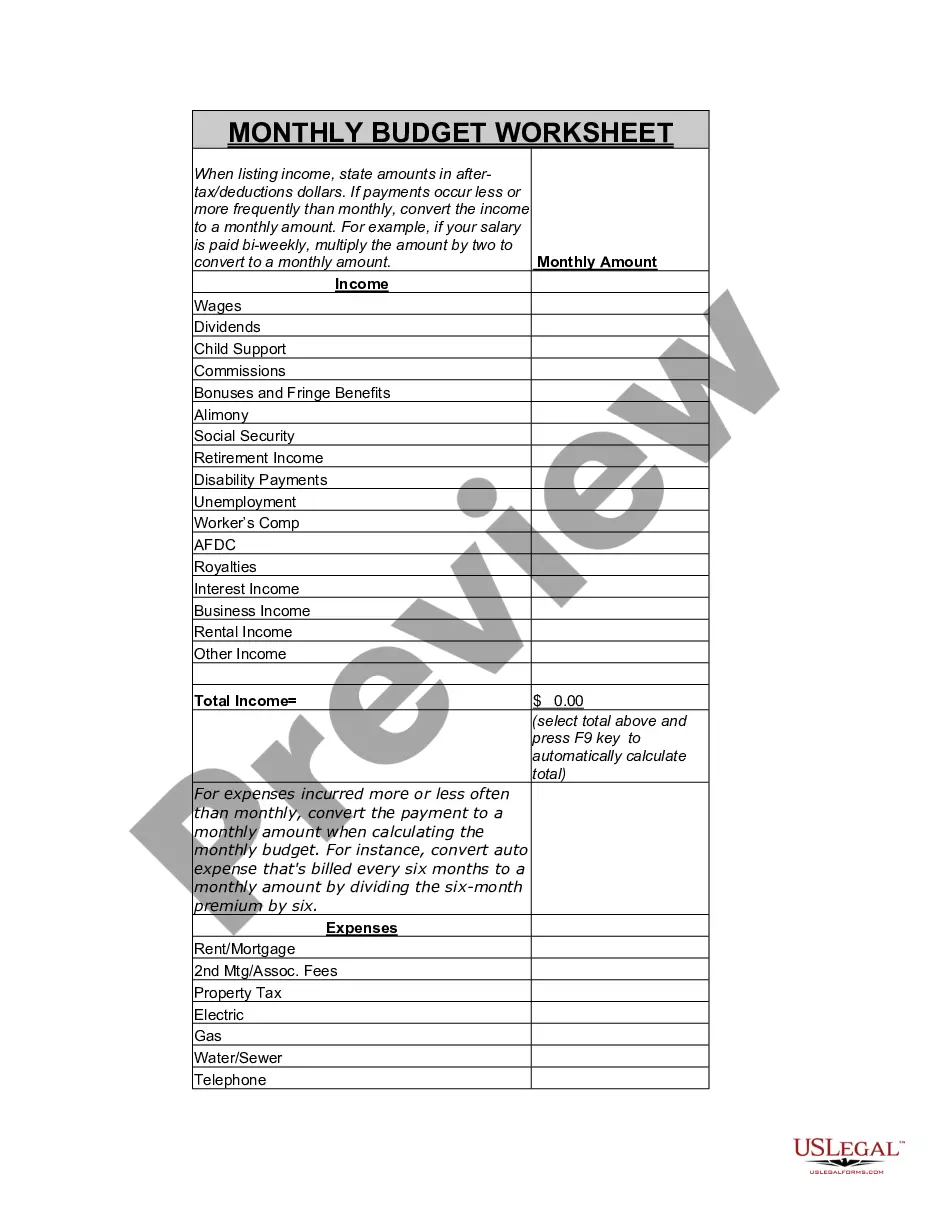
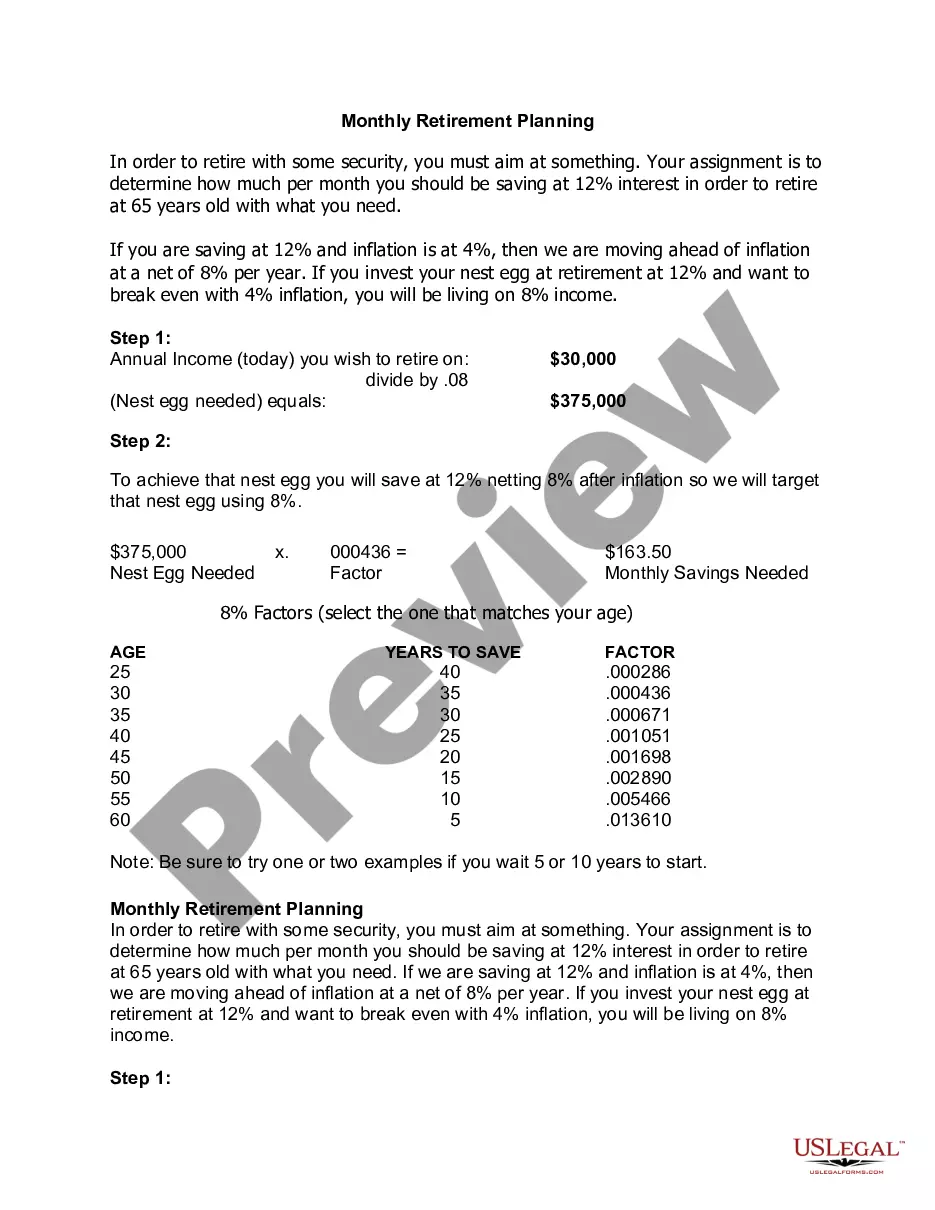
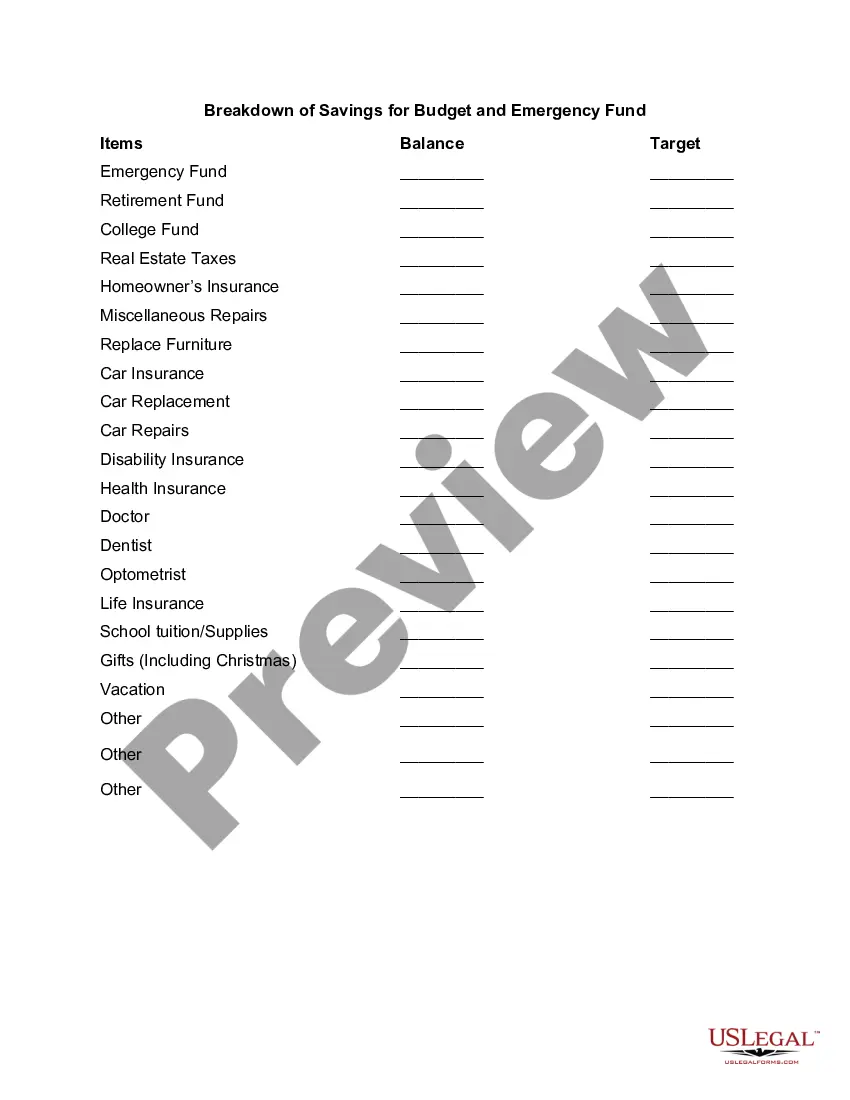
Get your form ready online
Our built-in tools help you complete, sign, share, and store your documents in one place.
Make edits, fill in missing information, and update formatting in US Legal Forms—just like you would in MS Word.
Download a copy, print it, send it by email, or mail it via USPS—whatever works best for your next step.
Sign and collect signatures with our SignNow integration. Send to multiple recipients, set reminders, and more. Go Premium to unlock E-Sign.
If this form requires notarization, complete it online through a secure video call—no need to meet a notary in person or wait for an appointment.
We protect your documents and personal data by following strict security and privacy standards.

Make edits, fill in missing information, and update formatting in US Legal Forms—just like you would in MS Word.

Download a copy, print it, send it by email, or mail it via USPS—whatever works best for your next step.

Sign and collect signatures with our SignNow integration. Send to multiple recipients, set reminders, and more. Go Premium to unlock E-Sign.

If this form requires notarization, complete it online through a secure video call—no need to meet a notary in person or wait for an appointment.

We protect your documents and personal data by following strict security and privacy standards.
Looking for another form?





How to fill out Recommended Spending Percentages?
If you need to aggregate, acquire, or print legal document templates, utilize US Legal Forms, the largest assortment of legal forms available online.
Leverage the site's simple and convenient search to locate the documents you need.
Numerous templates for business and personal purposes are organized by categories and states, or keywords.
Every legal document template you purchase is your property permanently.
You will have access to every form you have downloaded in your account. Click the My documents section and select a form to print or download again.
- Use US Legal Forms to access the Illinois Recommended Spending Percentages in just a few clicks.
- If you are an existing US Legal Forms customer, Log In to your account and click the Obtain button to access the Illinois Recommended Spending Percentages.
- You can also retrieve forms you previously downloaded within the My documents section of your account.
- If this is your first time using US Legal Forms, follow the instructions below.
- Step 1. Ensure you have chosen the form for the correct city/state.
- Step 2. Use the Preview option to review the form's content. Remember to read the description.
- Step 3. If you are not satisfied with the form, utilize the Search field at the top of the screen to find other versions of the legal form template.
- Step 4. Once you have identified the form you need, select the Acquire now button. Choose your preferred pricing plan and enter your details to register for an account.
- Step 5. Complete the transaction. You can use your credit card or PayPal account to finalize the transaction.
- Step 6. Select the format of the legal form and download it to your device.
- Step 7. Complete, edit, and print or sign the Illinois Recommended Spending Percentages.
Form popularity
FAQ
Average Daily Costs While meal prices in Chicago can vary, the average cost of food in Chicago is $37 per day. Based on the spending habits of previous travelers, when dining out an average meal in Chicago should cost around $15 per person. Breakfast prices are usually a little cheaper than lunch or dinner.
Groceries in Chicago have their own 2.25% tax but are not especially expensive overall. The average food cost per person is $299 per month, which is similar to Minneapolis, MN, or Miami, FL.
USDA Food Plan Spending for a Single PersonThrifty: $175.60. Low-cost: $222.60. Moderate-cost: $272.20. Liberal: $348.80.
If you're really looking to cut corners, the USDA's thrifty food plan is the gold standard of budget-friendly grocery spending. According to that plan, a family of four defined as an adult couple between 20 and 50 years old, and two children ages 6 to 8 and 9 to 11 should plan to spend around $887 per month.
Illinois' newly approved $46.5 billion budget is set to temporarily bring financial relief to residents through direct checks, a suspension of grocery taxes and a freeze on the state's fuel tax. The House voted to approve the budget just before 6 a.m. Saturday, less than two days after Gov. J.B.
This category includes entitlement programs such as Social Security, Medicare, and unemployment compensation. It also includes welfare programs such as Medicaid. Social Security will be the biggest expense, budgeted at $1.196 trillion. It's followed by Medicare at $766 billion and Medicaid at $571 billion.
Most state and local government spending falls into one of seven categories: elementary and secondary education, public welfare (which includes most Medicaid spending), higher education, health and hospitals, highways and roads, criminal justice (which includes spending on police, corrections, and courts), and housing
In Illinois in fiscal year 2015, 47.6 percent of total tax revenues came from sales taxes and gross receipts. Income taxes accounted for 44.1 percent of total state tax collections. Education accounted for 17.4 percent of state expenditures in fiscal year 2015, while 27.1 percent went to Medicaid.
Illinois's combined state and local general revenues were $128.4 billion in FY 2019, or $10,138 per capita. National per capita general revenues were $10,563. Illinois uses all major state and local taxes. Illinois's largest sources of per capita revenue were property taxes ($2,339) and federal transfers ($1,886).
2013 Budget This is because most state expenditures are in the areas that people care about: education, health, and human services. The budget does contain theoretical General Funds surpluses. However, note this is only General Funds not the total budget.