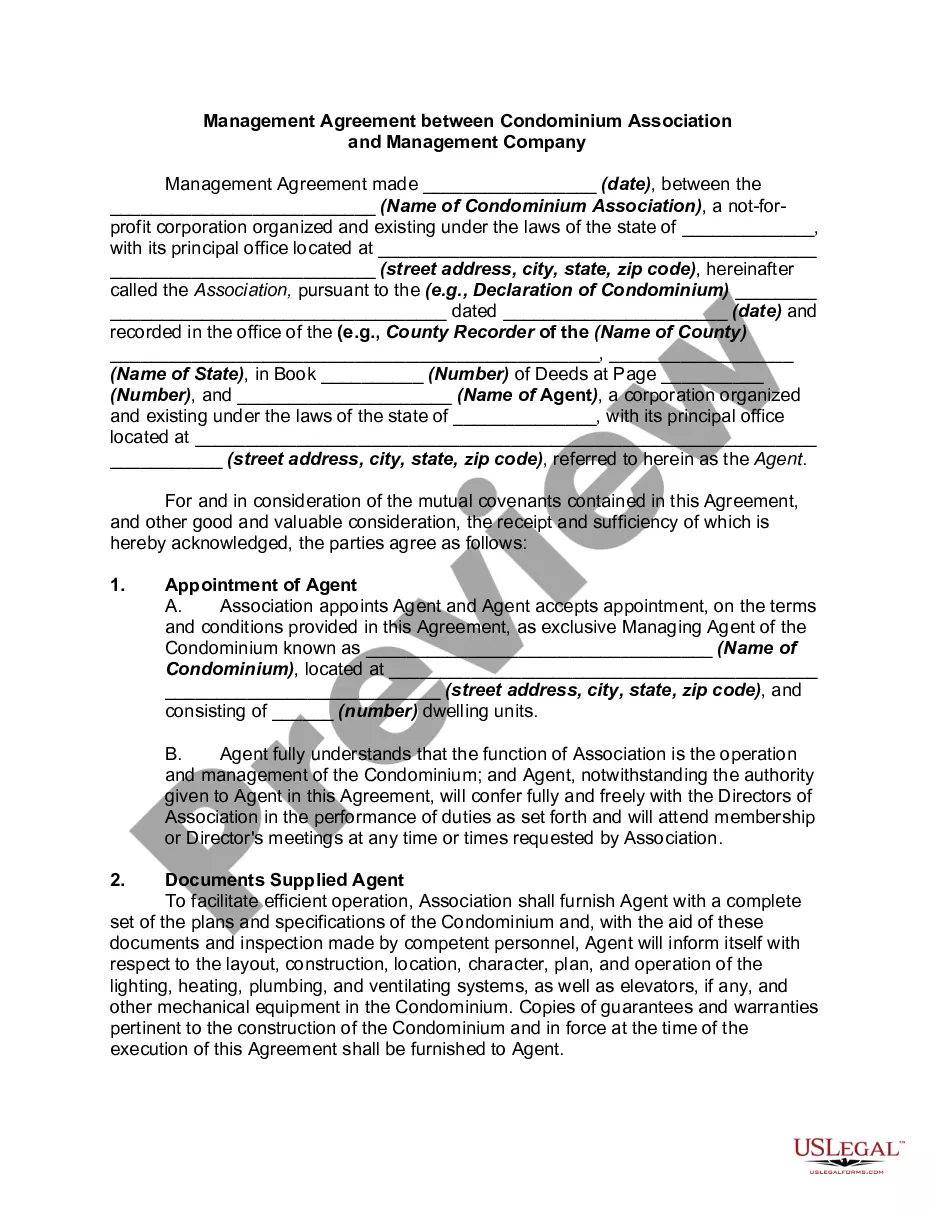
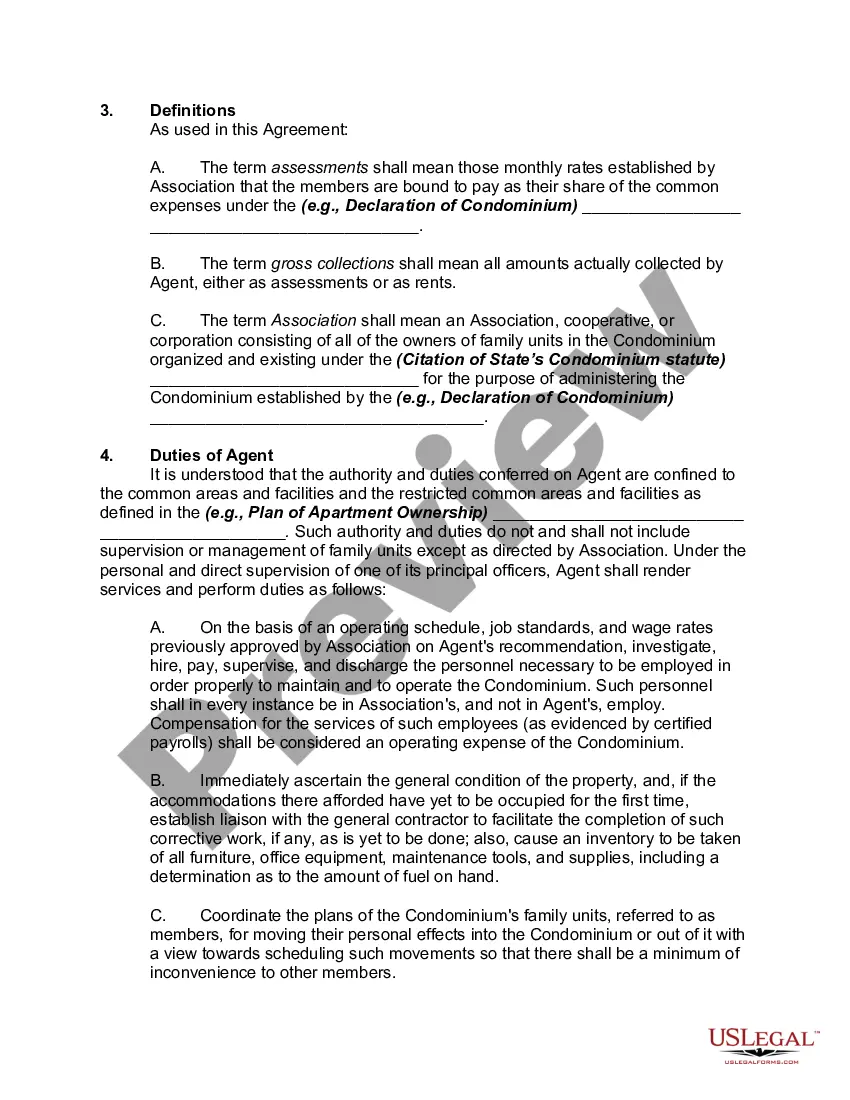
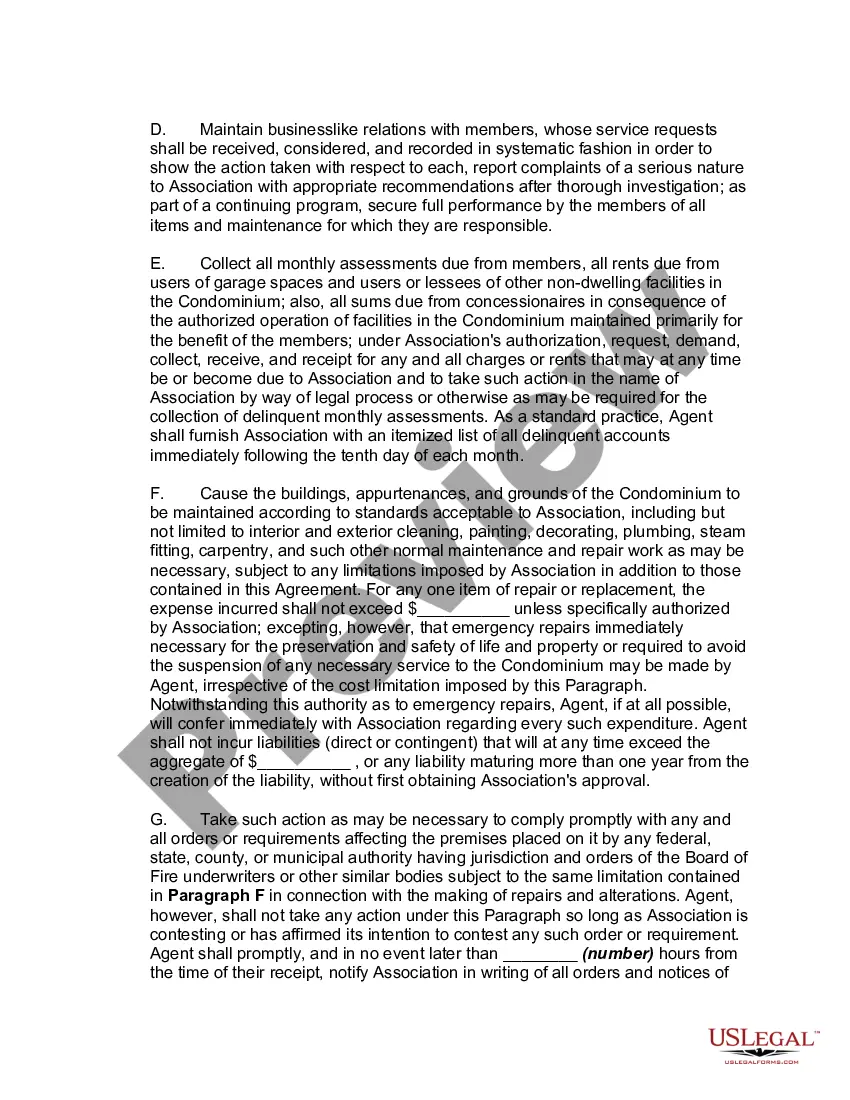
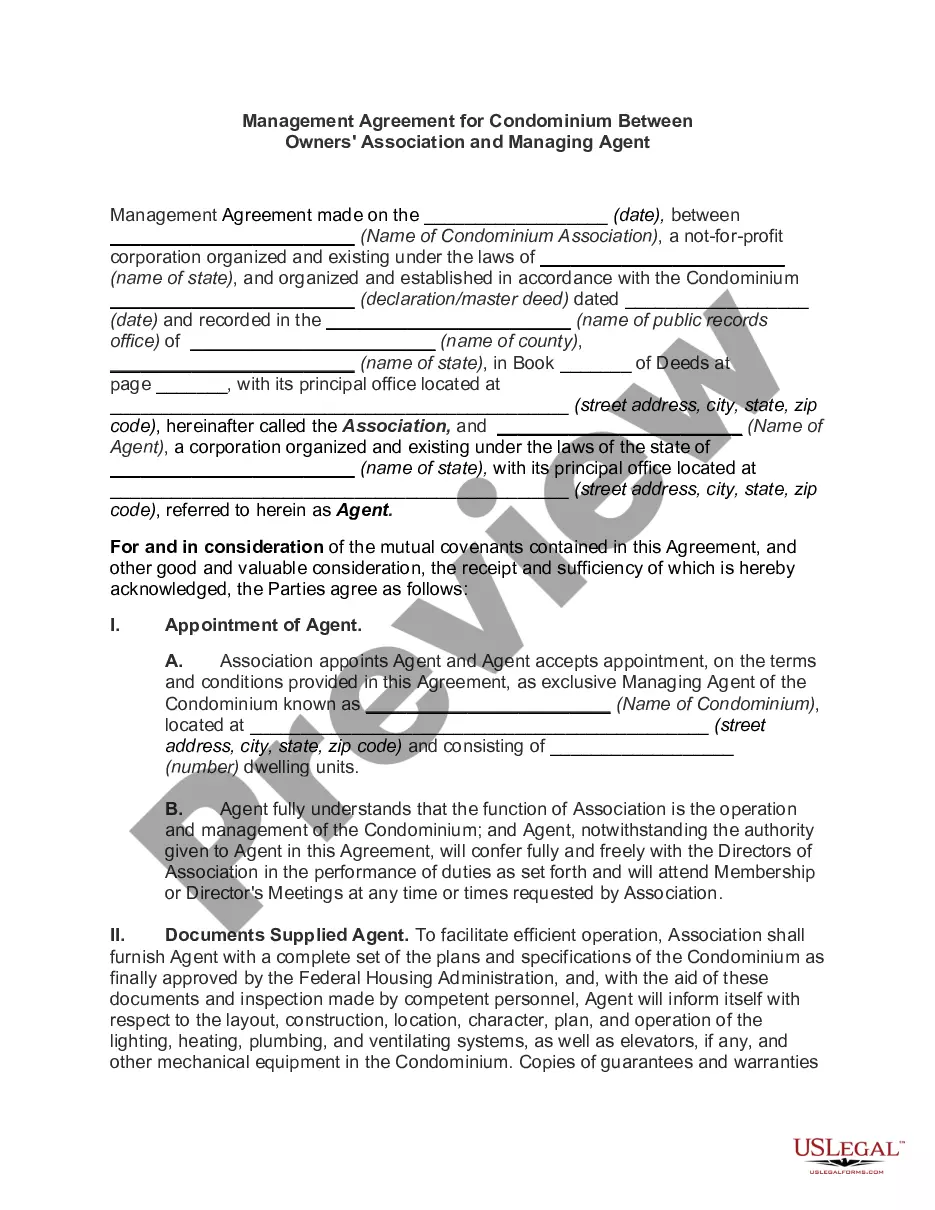
Illinois Management Agreement between Condominium Association and Management
Description
Get your form ready online
Our built-in tools help you complete, sign, share, and store your documents in one place.
Make edits, fill in missing information, and update formatting in US Legal Forms—just like you would in MS Word.
Download a copy, print it, send it by email, or mail it via USPS—whatever works best for your next step.
Sign and collect signatures with our SignNow integration. Send to multiple recipients, set reminders, and more. Go Premium to unlock E-Sign.
If this form requires notarization, complete it online through a secure video call—no need to meet a notary in person or wait for an appointment.
We protect your documents and personal data by following strict security and privacy standards.

Make edits, fill in missing information, and update formatting in US Legal Forms—just like you would in MS Word.

Download a copy, print it, send it by email, or mail it via USPS—whatever works best for your next step.

Sign and collect signatures with our SignNow integration. Send to multiple recipients, set reminders, and more. Go Premium to unlock E-Sign.

If this form requires notarization, complete it online through a secure video call—no need to meet a notary in person or wait for an appointment.

We protect your documents and personal data by following strict security and privacy standards.
Looking for another form?

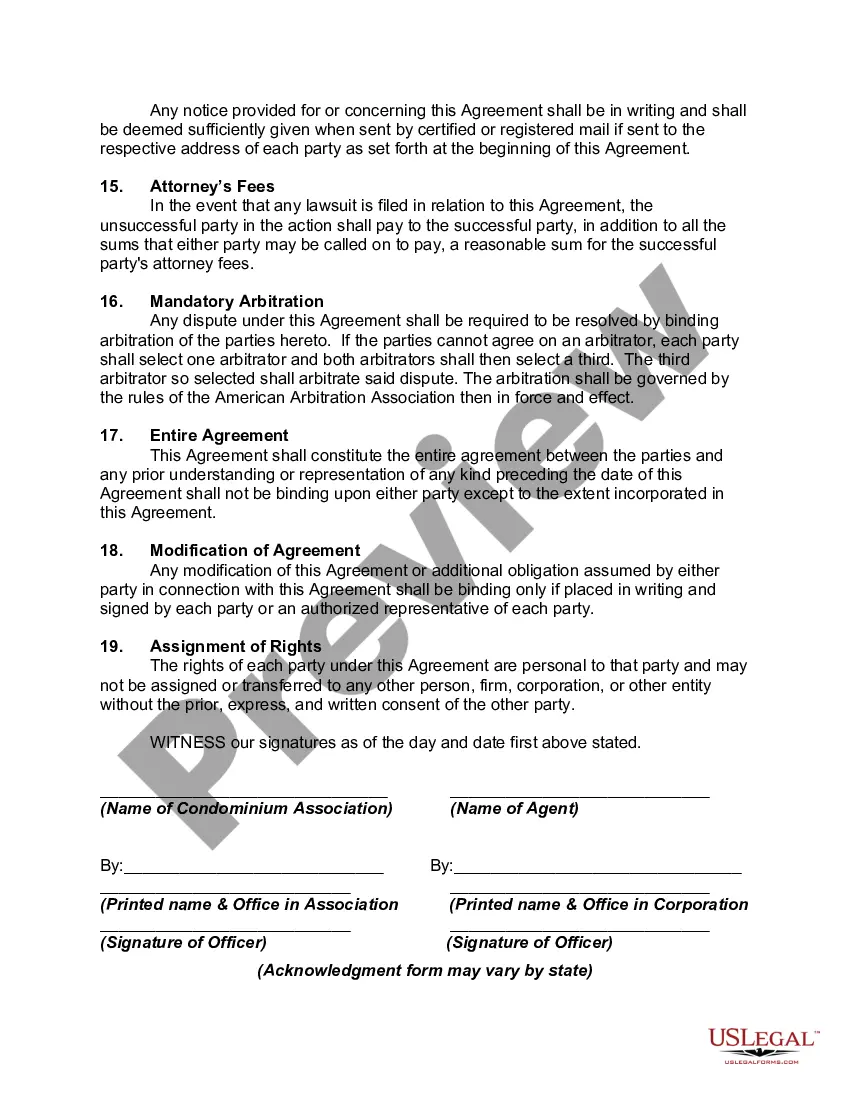
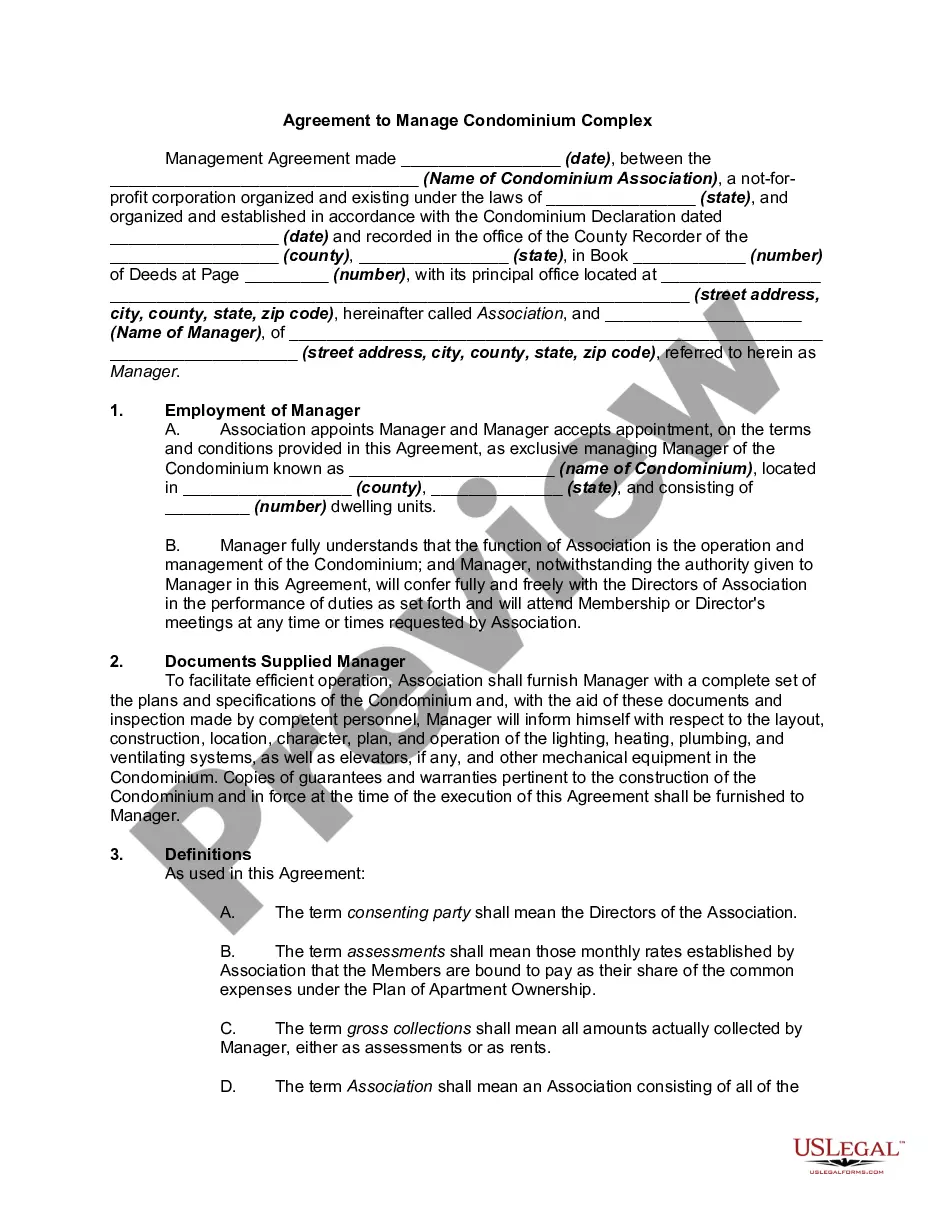
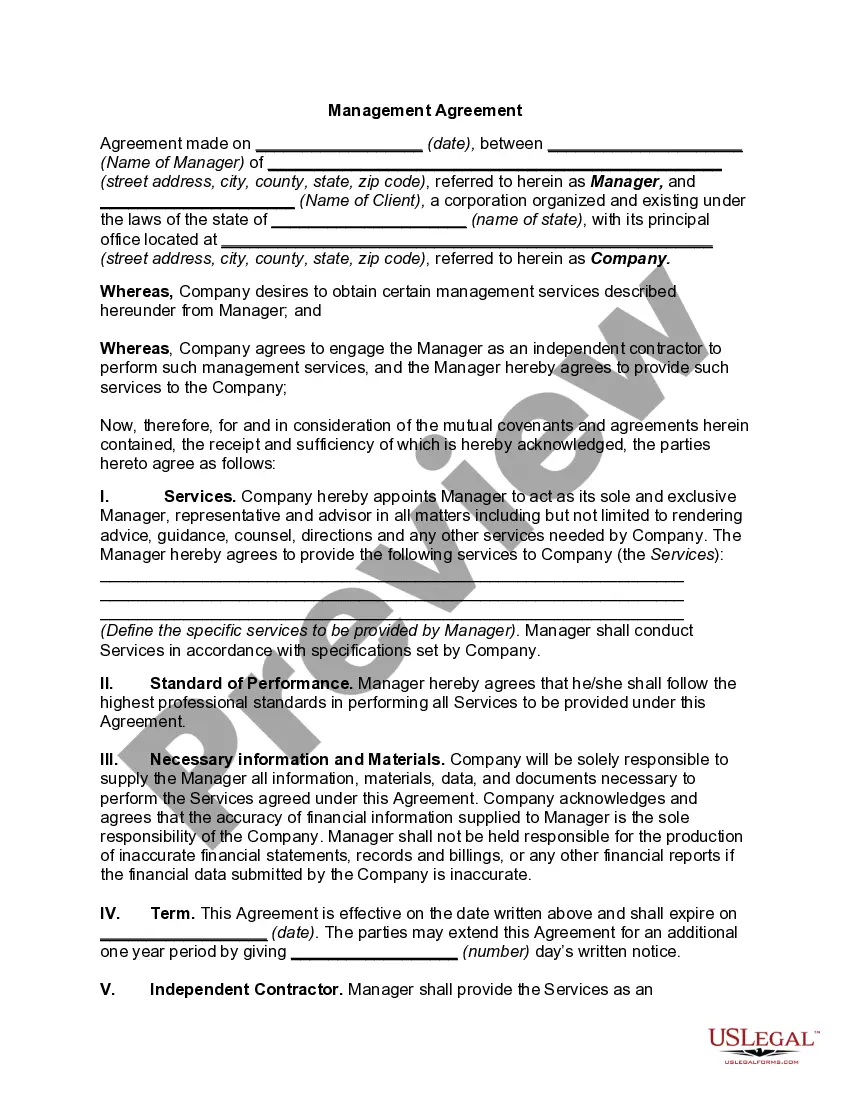
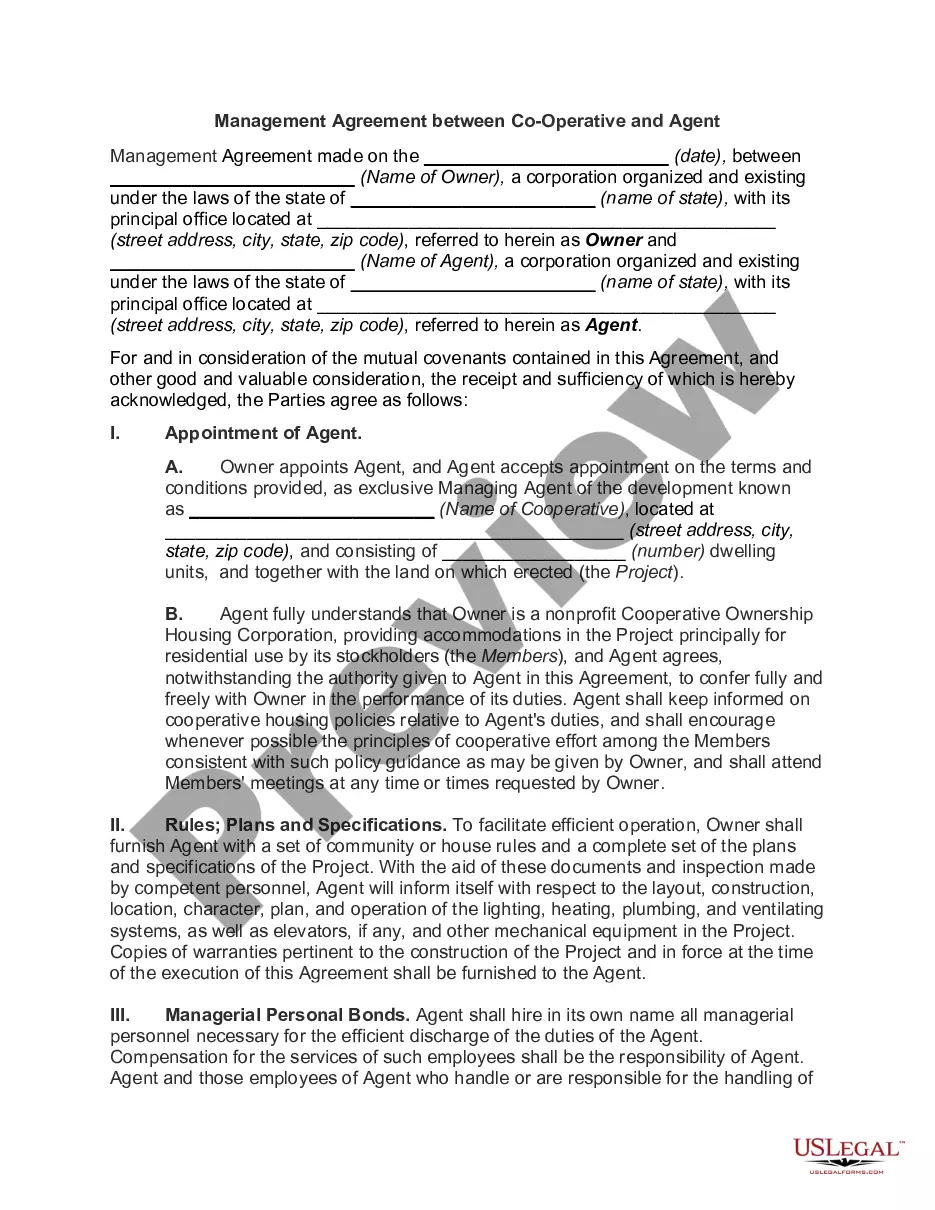
How to fill out Management Agreement Between Condominium Association And Management?
US Legal Forms - one of the largest repositories of legal documents in the US - offers a wide range of legal form templates for you to download or print.
By utilizing the website, you can access thousands of forms for both business and personal purposes, organized by categories, states, or keywords.
You can find the latest documents such as the Illinois Management Agreement between Condominium Association and Management in a matter of seconds.
Review the form description to make sure you have selected the right one.
If the form does not fulfill your needs, use the Search bar at the top of the screen to locate the one that does.
- If you already possess a subscription, Log In and download the Illinois Management Agreement between Condominium Association and Management from the US Legal Forms collection.
- The Acquire button will be visible on every form you view.
- You have access to all previously downloaded forms in the My documents section of your account.
- To use US Legal Forms for the first time, here are simple steps to get started.
- Ensure you have chosen the appropriate form for your locality.
- Select the Review button to examine the form's content.
Form popularity
FAQ
Section 27 of the Illinois Condominium Property Act addresses the essential requirements for Illinois management agreements between condominium associations and management companies. This section ensures that agreements are fair and protect the interests of both parties involved. It specifies necessary details such as compensation, extent of services, and termination conditions. Understanding this section is crucial for any association considering a management company to ensure compliance and effective governance.
Yes, an HOA can operate without a management company, but this often places a significant burden on volunteer board members. Without an Illinois Management Agreement between Condominium Association and Management, boards may struggle with tasks such as financial management and maintenance coordination. While self-management is possible, it requires a dedicated team willing to invest time and effort, which may not always be feasible for all associations. Many find that partnering with a management company leads to a more efficient and harmonious community.
A management company typically handles day-to-day operations of a condominium community, while a Homeowners Association (HOA) is a governing body made up of homeowners. The Illinois Management Agreement between Condominium Association and Management defines the roles and responsibilities of each party, ensuring clarity in operations. Essentially, the management company implements the decisions made by the HOA, allowing for a clear distinction between management services and community governance.
A property management company is essential for condominium associations that want to streamline operations and enhance community living. By utilizing an Illinois Management Agreement between Condominium Association and Management, associations can delegate tasks such as maintenance, budgeting, and communication. This approach not only alleviates the workload on board members but also ensures compliance with local regulations. Ultimately, it allows residents to focus more on enjoying their homes.
A condo association often benefits from hiring a management company to handle daily operations and maintenance tasks. The Illinois Management Agreement between Condominium Association and Management serves as a framework for this relationship, empowering associations to focus on their community goals. While not mandatory, a management company can significantly enhance property management efficiency and resident satisfaction.
For a property management agreement to be valid, it must have clear terms agreed upon by both parties, including scope, fees, and duration. Additionally, it should be in writing and signed by both the property owner and the management company. The Illinois Management Agreement between Condominium Association and Management reflects these principles, reinforcing its validity and effectiveness.
A property management agreement usually includes the duration of the agreement, details about management fees, responsibilities of both parties, and procedures for communication. In the context of the Illinois Management Agreement between Condominium Association and Management, it often covers rules for tenant screenings and maintenance requests. This comprehensive approach ensures that all parties understand their commitments.
Property management typically focuses on the upkeep and administration of individual properties. In contrast, association management deals specifically with managing shared amenities and the overall wellbeing of community associations, as seen in the Illinois Management Agreement between Condominium Association and Management. Both play crucial roles but serve different aspects of real estate management.
The parties to a property management agreement include the property owner and the management firm, like those described in the Illinois Management Agreement between Condominium Association and Management. The homeowner or association hires the management firm to handle day-to-day operations, property maintenance, and administrative tasks. This partnership ultimately enhances property value and resident satisfaction.
The two parties to a property management agreement are typically the property owner and the property management company. In the context of the Illinois Management Agreement between Condominium Association and Management, the condominium association represents the owners collectively. Both parties must agree on the terms to create a successful partnership.