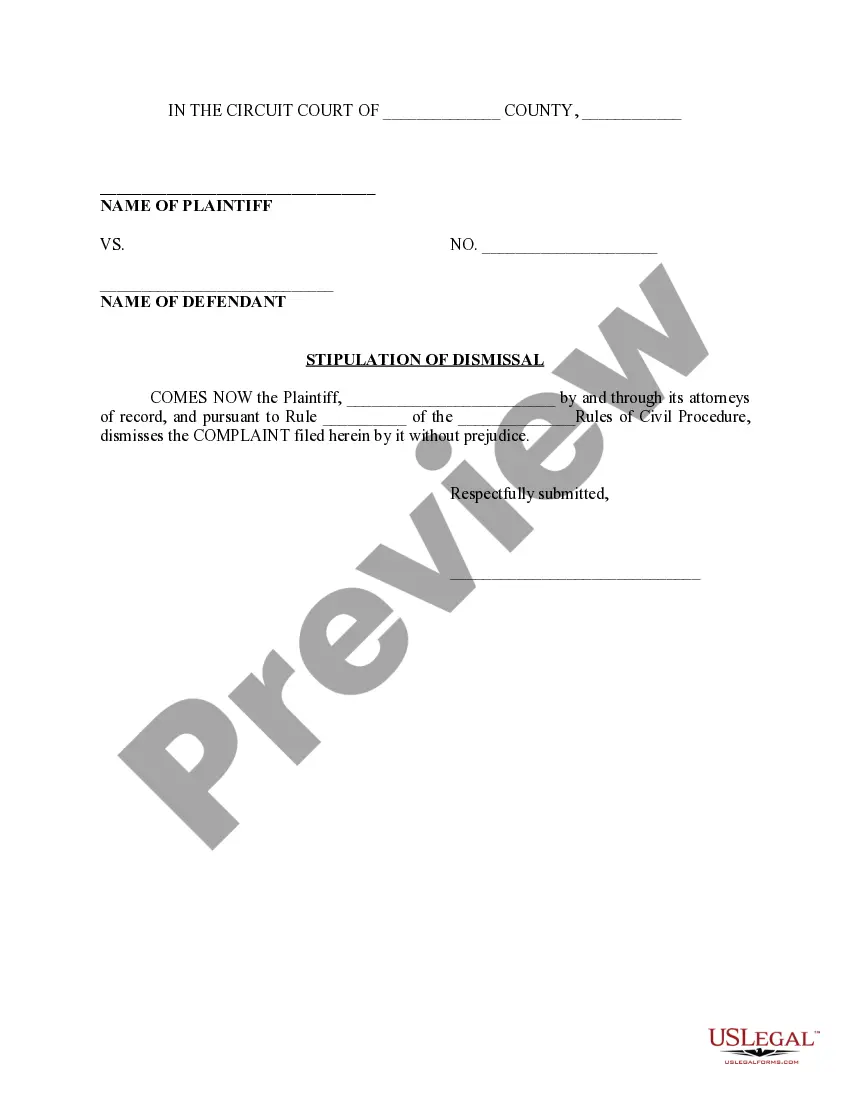
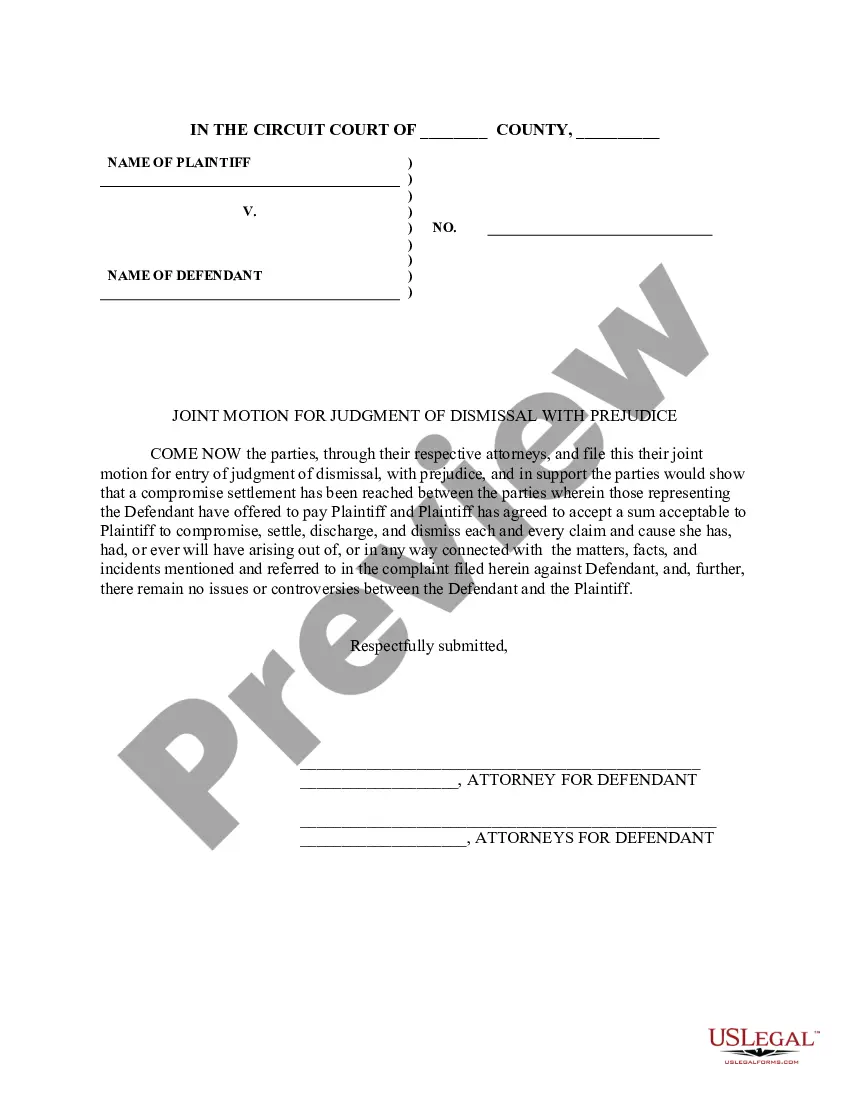
Illinois Stipulation for Dismissal
Description
Get your form ready online
Our built-in tools help you complete, sign, share, and store your documents in one place.
Make edits, fill in missing information, and update formatting in US Legal Forms—just like you would in MS Word.
Download a copy, print it, send it by email, or mail it via USPS—whatever works best for your next step.
Sign and collect signatures with our SignNow integration. Send to multiple recipients, set reminders, and more. Go Premium to unlock E-Sign.
If this form requires notarization, complete it online through a secure video call—no need to meet a notary in person or wait for an appointment.
We protect your documents and personal data by following strict security and privacy standards.

Make edits, fill in missing information, and update formatting in US Legal Forms—just like you would in MS Word.

Download a copy, print it, send it by email, or mail it via USPS—whatever works best for your next step.

Sign and collect signatures with our SignNow integration. Send to multiple recipients, set reminders, and more. Go Premium to unlock E-Sign.

If this form requires notarization, complete it online through a secure video call—no need to meet a notary in person or wait for an appointment.

We protect your documents and personal data by following strict security and privacy standards.
Looking for another form?

How to fill out Stipulation For Dismissal?
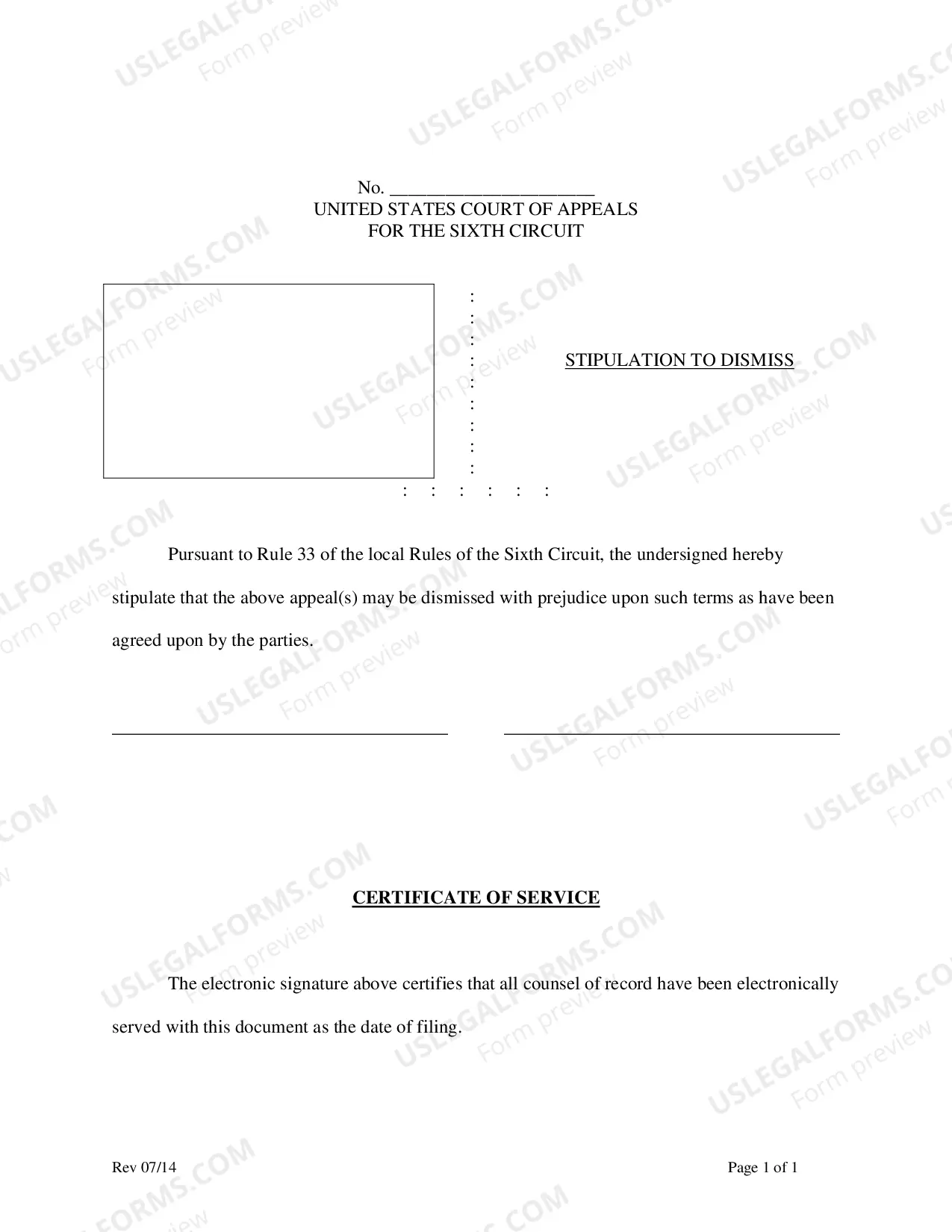
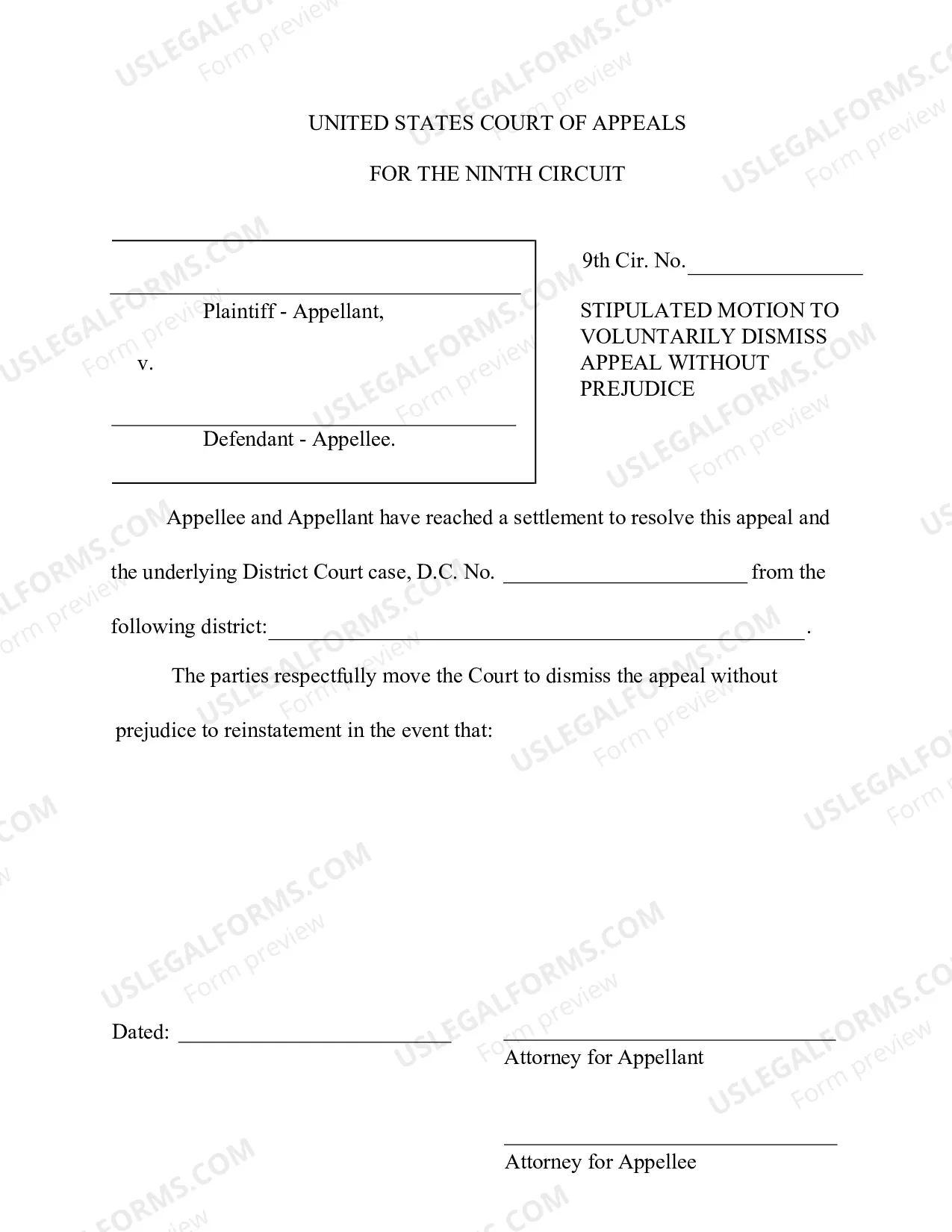
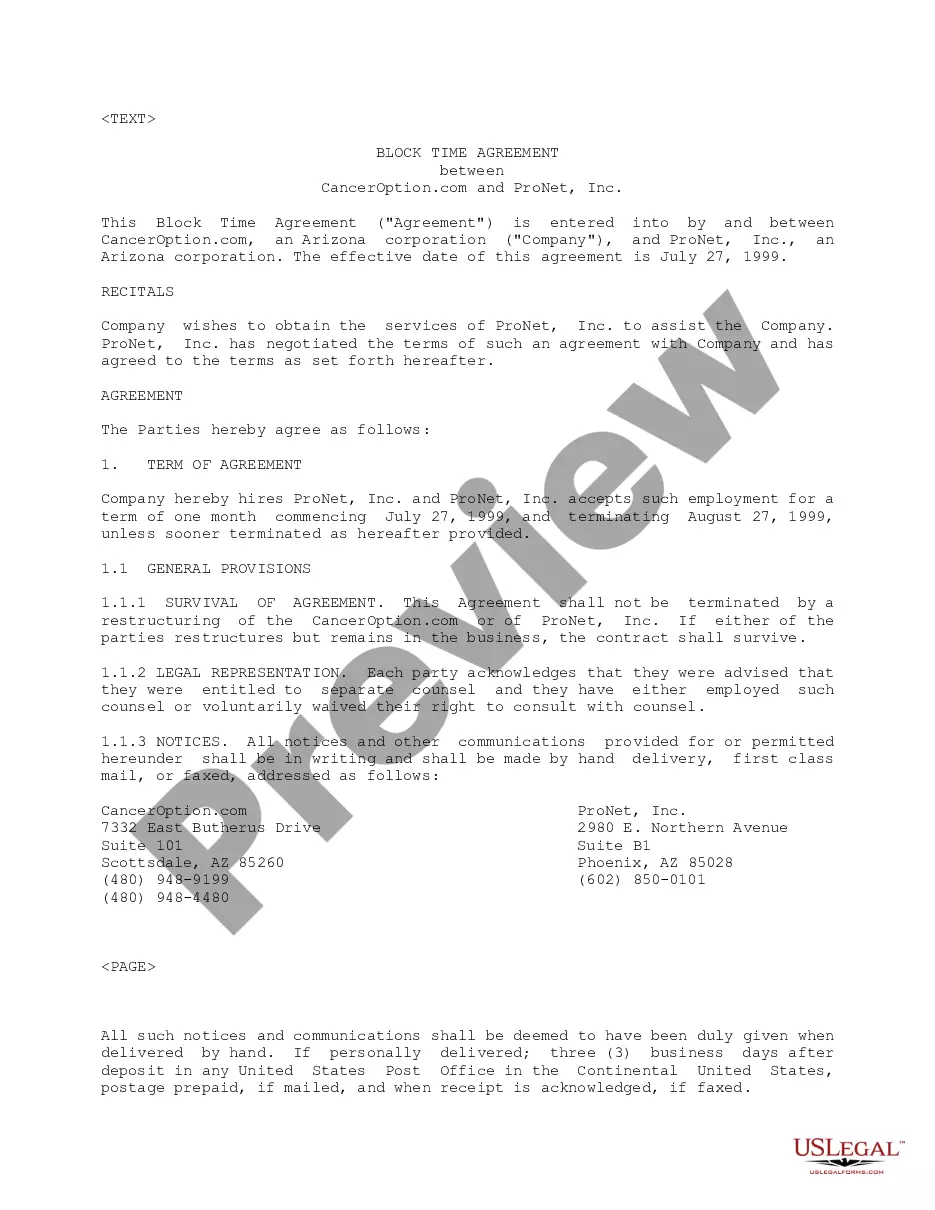
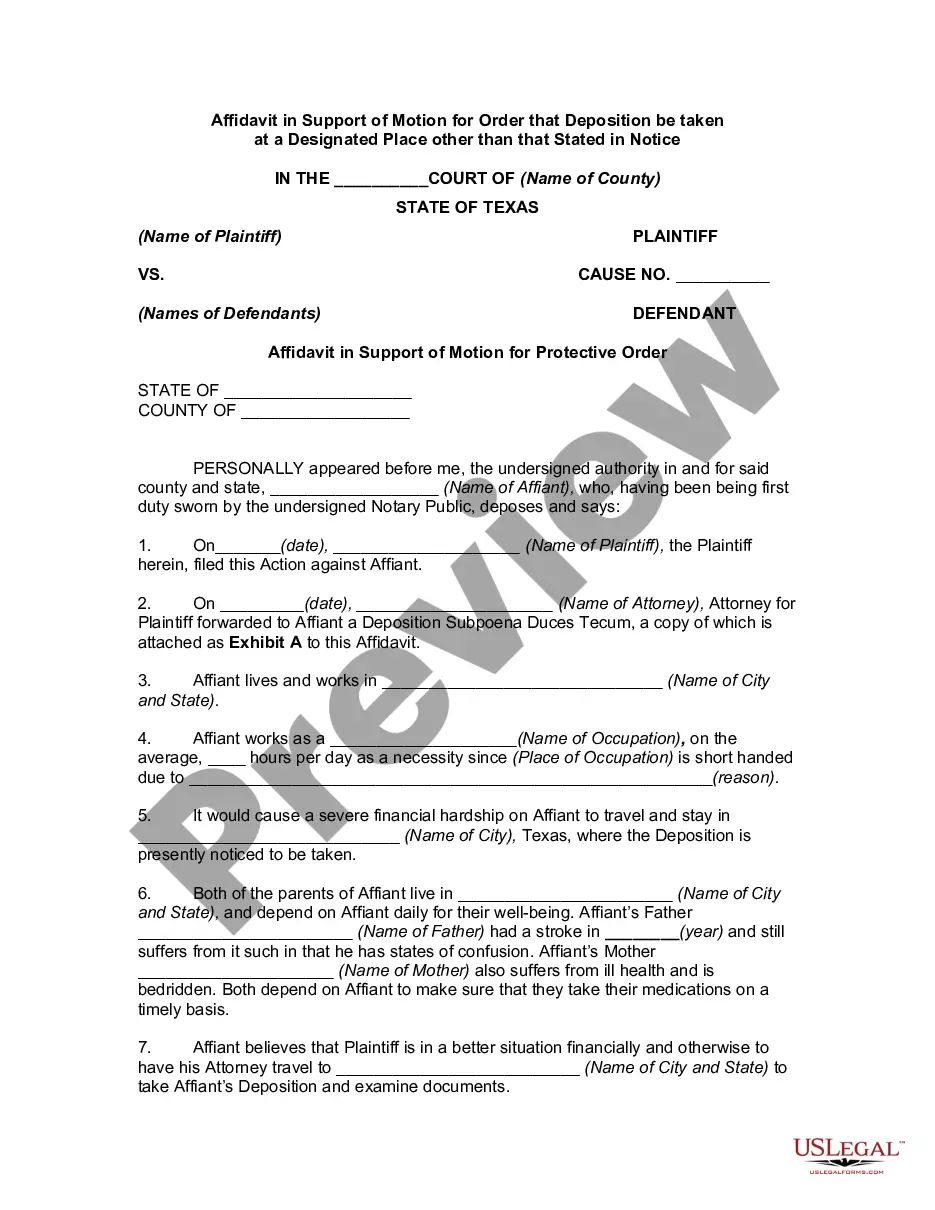
Locating the appropriate authorized documents template can be challenging. Obviously, there are many templates accessible online, but how do you identify the legal form you require? Utilize the US Legal Forms website. The service provides thousands of templates, including the Illinois Stipulation for Dismissal, that can be utilized for professional and personal purposes. All of the forms are reviewed by experts and comply with federal and state regulations.
If you are already registered, Log In to your account and click on the Download button to acquire the Illinois Stipulation for Dismissal. Use your account to browse through the legal forms you have previously purchased. Visit the My documents tab in your account and retrieve another copy of the documents you need.
If you are a new user of US Legal Forms, here are simple steps that you can follow: First, ensure you have chosen the correct form for the city/county. You can preview the form using the Preview button and review the form outline to confirm it is the correct one for you. If the form does not meet your needs, use the Search field to find the right form. Once you are sure that the form is appropriate, click the Buy now button to obtain the form. Select the payment plan you prefer and enter the required information. Create your account and complete your purchase using your PayPal account or Visa or Mastercard. Choose the file format and download the authorized document template to your device. Complete, edit, print, and sign the obtained Illinois Stipulation for Dismissal.
Take advantage of this resource to simplify your legal documentation process.
- US Legal Forms is the largest repository of legal forms where you can find various document templates.
- Use the service to download professionally created documents that adhere to state regulations.
- The site offers a user-friendly interface for easy navigation.
- Templates are available for a wide range of legal needs.
- All forms are vetted to ensure legal compliance.
- Access a vast selection of legal document templates efficiently.
Form popularity
FAQ
A: A judge can dismiss a case without prejudice if they detect legal errors that prevent the case from going forward. However, dismissing the case without prejudice allows the two sides to correct those errors and re-file the case.
If you were sued before filing bankruptcy, you may receive a ?Stipulation for Dismissal? or similar document from the creditor that sued you at some point after filing your Chapter 7 case. It's basically an ?agreement? letting the judge know that the court can dismiss (end/close) the case pending against you.
The motion to dismiss is a defendant's request that the case be thrown out, usually because of a deficiency in the complaint or the way the complaint was served on the defendant. Failure to state a claim is the most common grounds for dismissal. A judge can dismiss a claim with or without prejudice.
?2-615 Motions to Dismiss Typically, 2-615 Motions are granted when the Complaint fails to state allegations which amount to a cause of action. For example, a cause of action for a civil assault requires the plaintiff to plead the following elements: An intentional act. Directed toward the plaintiff.
Both Federal Rule of Civil Procedure 41(a) and its corresponding Illinois statute provide a ?two strikes? rule: a plaintiff may dismiss an action once without prejudice, but refiling and dismissing again serves as an adjudication on the merits that bars plaintiff from filing any future action based on the same claim.
2-619. Involuntary dismissal based upon certain defects or defenses. (a) Defendant may, within the time for pleading, file a motion for dismissal of the action or for other appropriate relief upon any of the following grounds.
Sec. 2-1009. Voluntary dismissal. (a) The plaintiff may, at any time before trial or hearing begins, upon notice to each party who has appeared or each such party's attorney, and upon payment of costs, dismiss his or her action or any part thereof as to any defendant, without prejudice, by order filed in the cause.