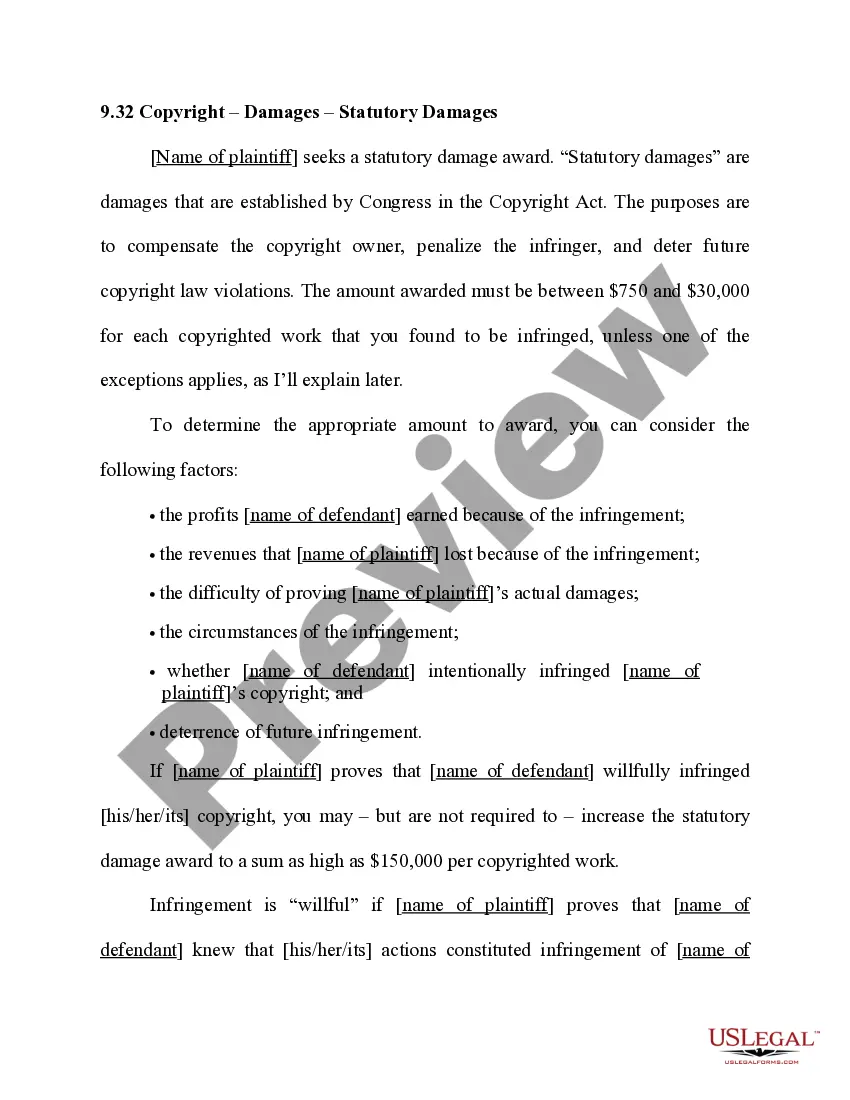
Illinois Notice of Hearing
Description
Get your form ready online
Our built-in tools help you complete, sign, share, and store your documents in one place.
Make edits, fill in missing information, and update formatting in US Legal Forms—just like you would in MS Word.
Download a copy, print it, send it by email, or mail it via USPS—whatever works best for your next step.
Sign and collect signatures with our SignNow integration. Send to multiple recipients, set reminders, and more. Go Premium to unlock E-Sign.
If this form requires notarization, complete it online through a secure video call—no need to meet a notary in person or wait for an appointment.
We protect your documents and personal data by following strict security and privacy standards.

Make edits, fill in missing information, and update formatting in US Legal Forms—just like you would in MS Word.

Download a copy, print it, send it by email, or mail it via USPS—whatever works best for your next step.

Sign and collect signatures with our SignNow integration. Send to multiple recipients, set reminders, and more. Go Premium to unlock E-Sign.

If this form requires notarization, complete it online through a secure video call—no need to meet a notary in person or wait for an appointment.

We protect your documents and personal data by following strict security and privacy standards.
Looking for another form?




How to fill out Notice Of Hearing?
You can invest multiple hours online attempting to locate the legal document template that satisfies the federal and state stipulations you need. US Legal Forms offers thousands of legal options that are assessed by specialists.
You can obtain or create the Illinois Notice of Hearing from the service. If you possess a US Legal Forms account, you can Log In and then click the Download button. After that, you can fill out, modify, print, or sign the Illinois Notice of Hearing.
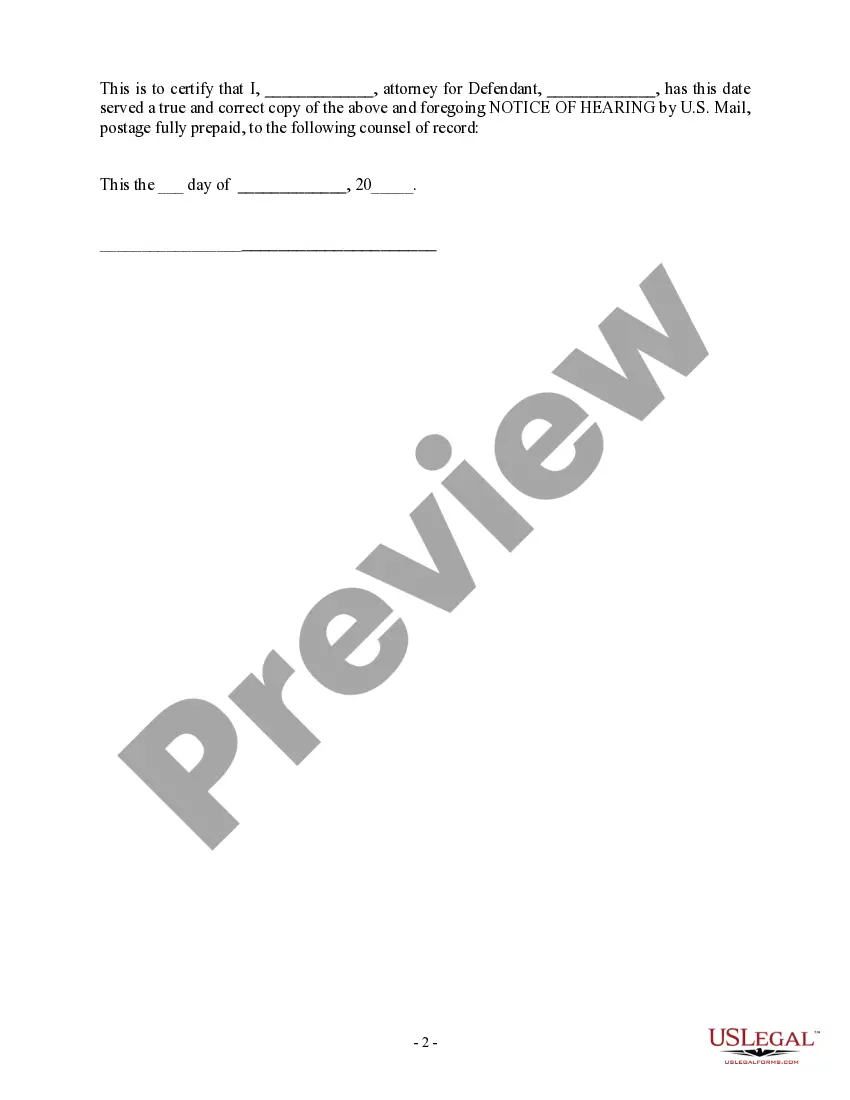
Every legal document template you acquire is yours permanently. To obtain another copy of a purchased form, navigate to the My documents tab and click the appropriate button. If you are using the US Legal Forms website for the first time, follow the simple instructions below: First, ensure that you have selected the correct document template for the area/city you choose. Review the form outline to confirm you have selected the right template. If available, utilize the Preview button to examine the document template as well.
- To find another version of the template, use the Search field to locate the template that meets your needs and requirements.
- Once you have found the template you desire, click on Get now to proceed.
- Select the pricing plan you want, input your credentials, and register for your account on US Legal Forms.
- Complete the transaction. You can use your credit card or PayPal account to pay for the legal document.
- Choose the format of the document and download it to your device.
- Make modifications to the document if necessary. You can fill out, edit, sign, and print the Illinois Notice of Hearing.
- Download and print thousands of document templates using the US Legal Forms website, which offers the largest selection of legal options. Utilize professional and state-specific templates to address your business or personal needs.
Form popularity
FAQ
Every appellant must pay a $50.00 docket fee and all other parties must pay a $30.00 appearance fee [Rule 313].
In most civil cases, you have 30 days from the date that final judgment is issued to file a Notice of Appeal. However, the Illinois Supreme Court Rules say that some orders can be appealed prior to the circuit court issuing a final judgment. Some examples include: a.
A Notice of Motion tells the other parties in your court case that you've asked the judge to do something in the case.
If you go to court, the judge will tell you when you need to file your Answer. It will usually be 10 days from your court date. In lawsuits for more than $50,000, the Summons will state that you must file an appearance within 30 days after the day you are served.
Who can use a Motion to Continue or Extend Time? Anyone who needs to ask the court to continue (reschedule) a court date that has already been scheduled, or who needs more time to do something (like file an Answer or respond to a Motion another party has filed) can file a Motion to Continue or Extend Time.
An answer or motion with respect to pleadings must be filed within twenty one (21) days after the date of the filing of the petition or the Rule 19A. 1 Section B supplemental petition whichever is later. Upon motion and a showing of good cause the court may extend the time for filing.
But, if any party files a Motion to Reconsider (or similar post-judgment motion) within 30 days of the final judgment, you must file your Notice of Appeal within 30 days after the trial court rules on the Motion.
(b) Content of notice - The notice of hearing shall show the title and number of the action, the name of the judge before whom, the time and date when, and the place where the motion will be presented. If the motion is made orally, the notice shall state the nature of the motion.
In most cases, you may file a Notice of Appeal within 30 days after the trial court's judgment in both civil cases (Rule 303) and criminal cases (Rule 606(b)). If you file a post-trial motion, the 30 days begin to run when the trial court resolves the last post-trial motion.