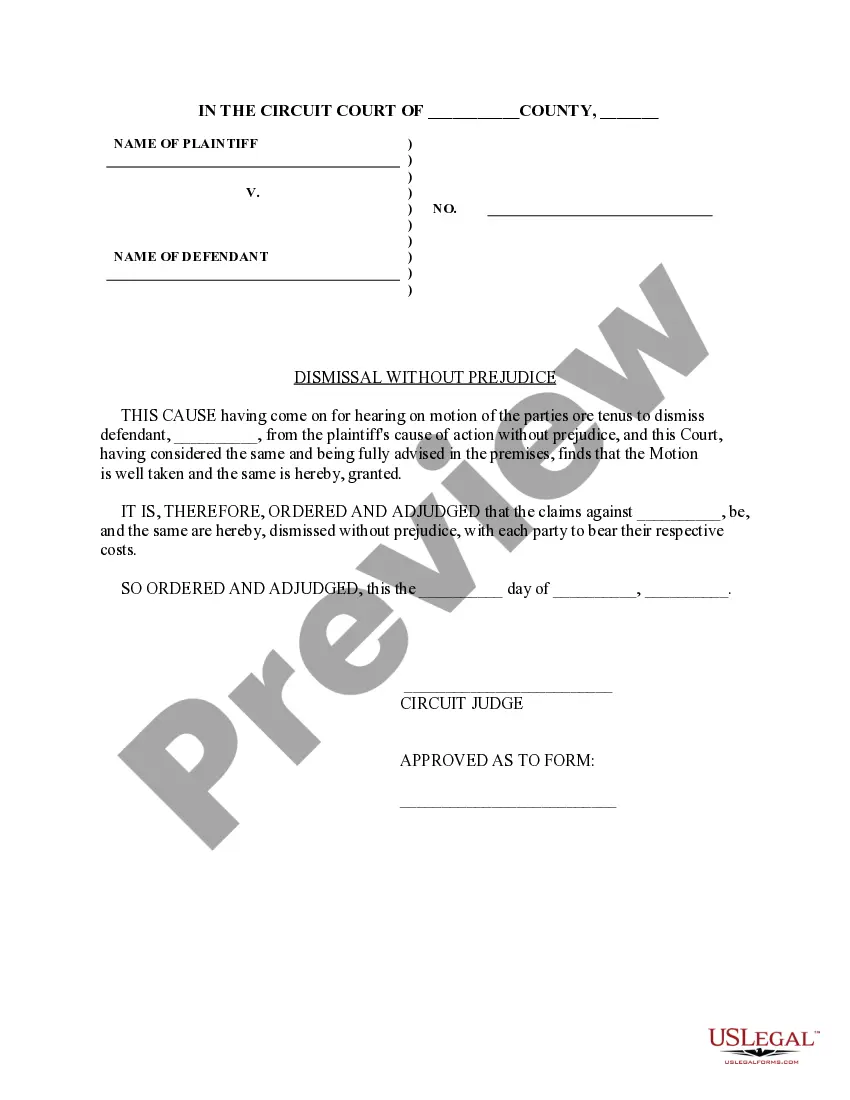
Illinois Dismissal Without Prejudice
Description
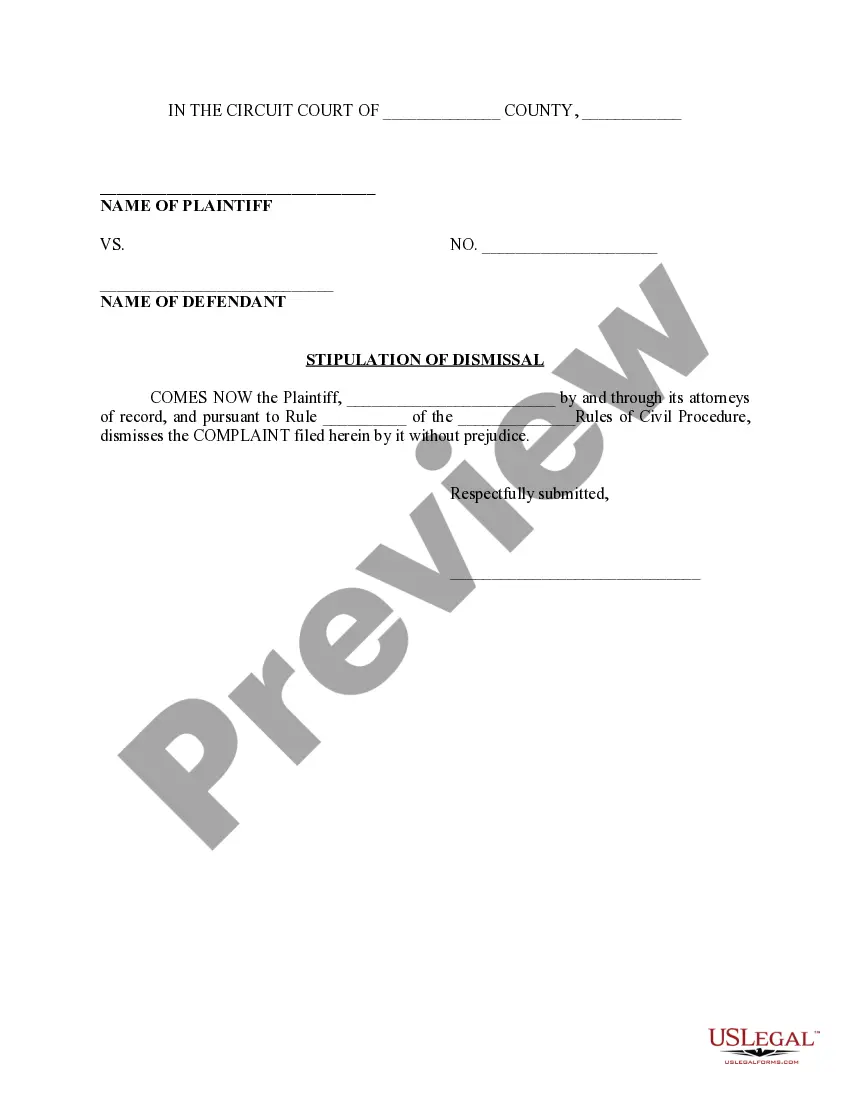
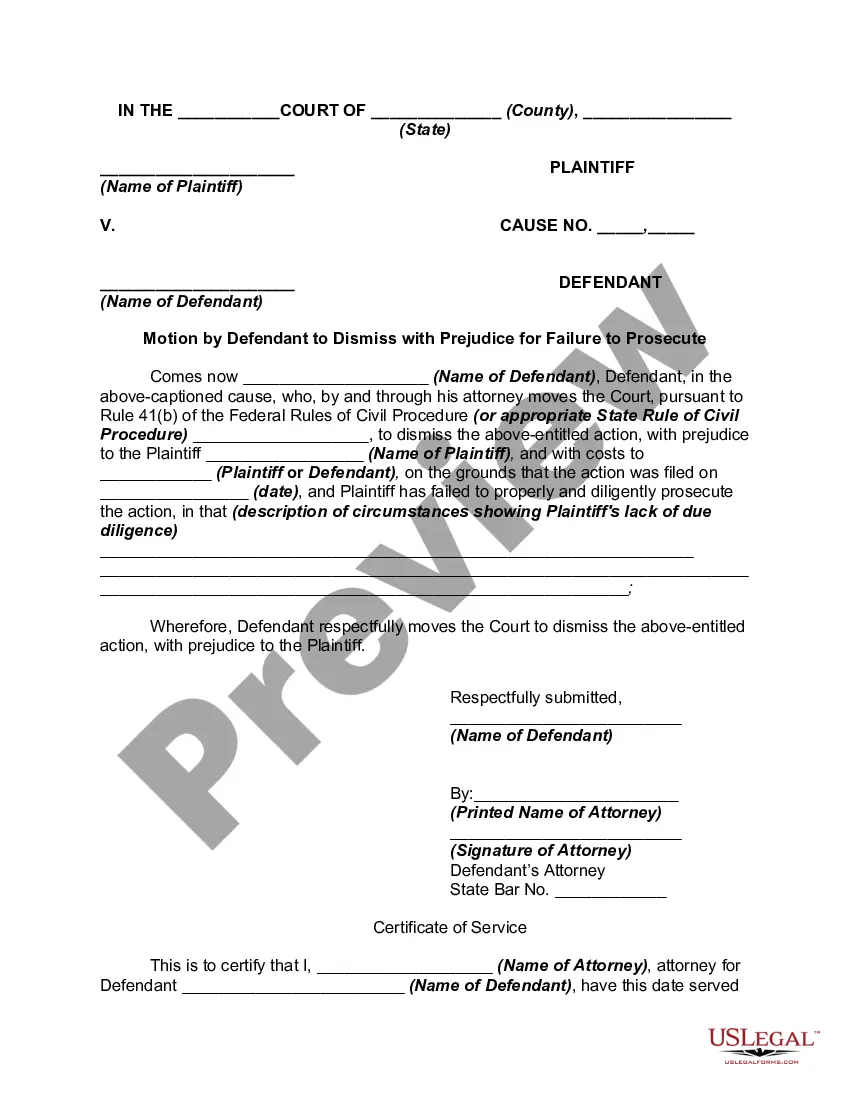
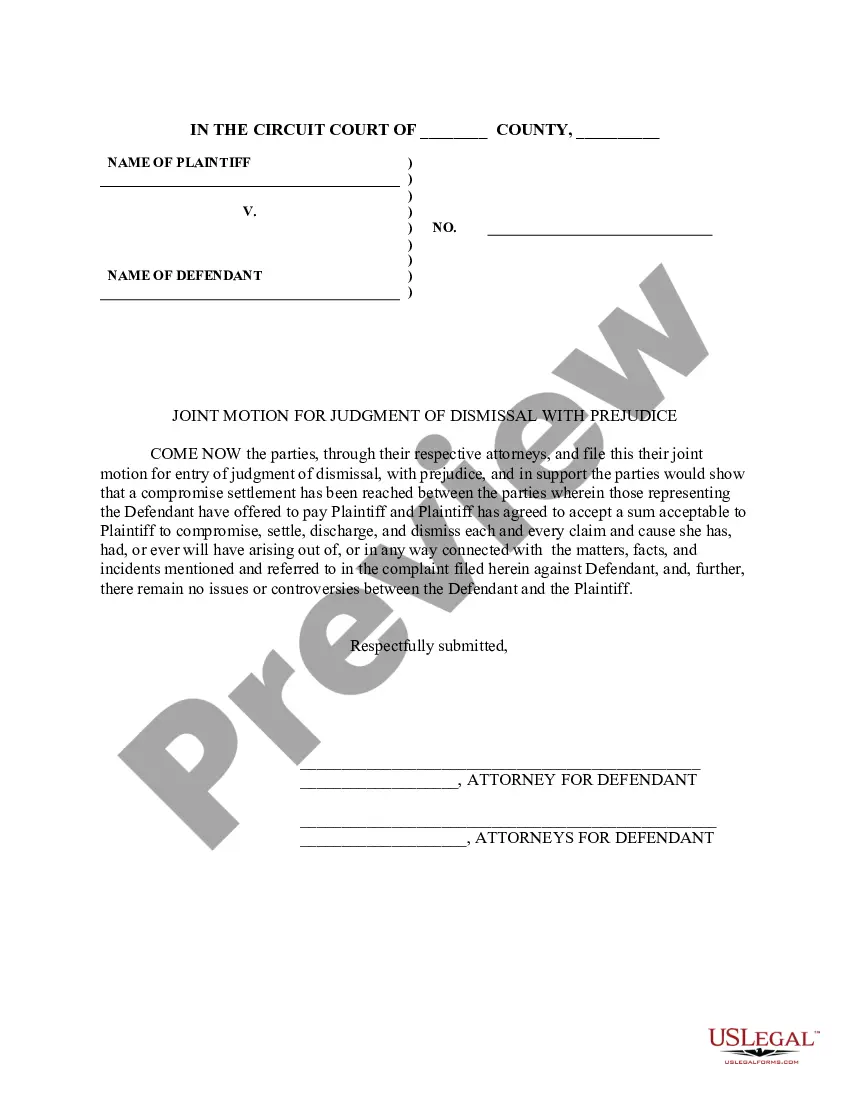
Get your form ready online
Our built-in tools help you complete, sign, share, and store your documents in one place.
Make edits, fill in missing information, and update formatting in US Legal Forms—just like you would in MS Word.
Download a copy, print it, send it by email, or mail it via USPS—whatever works best for your next step.
Sign and collect signatures with our SignNow integration. Send to multiple recipients, set reminders, and more. Go Premium to unlock E-Sign.
If this form requires notarization, complete it online through a secure video call—no need to meet a notary in person or wait for an appointment.
We protect your documents and personal data by following strict security and privacy standards.

Make edits, fill in missing information, and update formatting in US Legal Forms—just like you would in MS Word.

Download a copy, print it, send it by email, or mail it via USPS—whatever works best for your next step.

Sign and collect signatures with our SignNow integration. Send to multiple recipients, set reminders, and more. Go Premium to unlock E-Sign.

If this form requires notarization, complete it online through a secure video call—no need to meet a notary in person or wait for an appointment.

We protect your documents and personal data by following strict security and privacy standards.
Looking for another form?





How to fill out Dismissal Without Prejudice?
US Legal Forms - one of the largest collections of legal documents in the United States - offers a variety of legal document templates that you can download or print. Through the website, you can access thousands of forms for business and personal purposes, organized by categories, states, or keywords. You can find the latest versions of forms like the Illinois Dismissal Without Prejudice in just minutes.
If you already have a subscription, Log In and download the Illinois Dismissal Without Prejudice from the US Legal Forms library. The Download button will appear on every form you view. You have access to all previously saved forms in the My documents section of your account.
If you are using US Legal Forms for the first time, here are simple steps to get started: Ensure you have selected the correct form for your city/region. Click the Preview button to review the form's content. Read the form description to confirm that you have chosen the correct form. If the form does not suit your needs, use the Search field at the top of the screen to find the one that does. If you are satisfied with the form, confirm your selection by clicking the Download now button. Then, choose the payment plan you prefer and provide your credentials to register for an account.
Utilize thousands of professional and state-specific templates that meet your business or personal needs and requirements.
- Process the payment. Use your credit card or PayPal account to complete the transaction.
- Select the format and download the form to your device.
- Make changes. Fill out, modify, and print and sign the downloaded Illinois Dismissal Without Prejudice.
- Every template you added to your account has no expiration date and is yours forever.
- So, if you want to download or print another copy, just go to the My documents section and click on the form you need.
- Access the Illinois Dismissal Without Prejudice with US Legal Forms, the most extensive collection of legal document templates.
Form popularity
FAQ
Whereas a case that is dismissed ?with prejudice? is dismissed permanently, a case that is dismissed ?without prejudice? is only dismissed temporarily. This temporary dismissal means that the plaintiff is allowed to re-file charges, alter the claim, or bring the case to another court.
A dismissal with prejudice means that the ruling is the final judgment in the case. The dismissal prohibits the prosecutor from refiling the charges. In a dismissal without prejudice, the prosecutor can refile the charges (or file new charges based on the same circumstances) at some future time.
Reasons for dismissal without prejudice The parties came to an agreement and the plaintiff wants to end the case. The person the plaintiff sued paid you the money he or she owed you. The plaintiff cannot locate the defendant to serve him or her, but wants to reserve the right to sue at a later date.
A case dismissed with prejudice is over and done with, once and for all, and can't be brought back to court. A case dismissed without prejudice means the opposite.
?In a 2-615 Motion to Dismiss, the defendant argues that there is some defect on the face of the Complaint that makes it improper and makes dismissal of the case appropriate. Typically, 2-615 Motions are granted when the Complaint fails to state allegations which amount to a cause of action.
Dismiss refers to the court's decision to terminate a court case without imposing liability on the defendant.
?With prejudice? means the decision is final. ?Without prejudice? means it's not final and subject to future inquiry. If the judge announces a case is dismissed with prejudice, that means it's permanently dismissed and can't be retried.
For example, an employer might admit in a without prejudice communication that it had failed to carry out certain procedures which might otherwise render a dismissal unfair, but the employee would normally not be able to show that admission to an Employment Tribunal to try and prove their claim.