Illinois Self-Defense
Description
Get your form ready online
Our built-in tools help you complete, sign, share, and store your documents in one place.
Make edits, fill in missing information, and update formatting in US Legal Forms—just like you would in MS Word.
Download a copy, print it, send it by email, or mail it via USPS—whatever works best for your next step.
Sign and collect signatures with our SignNow integration. Send to multiple recipients, set reminders, and more. Go Premium to unlock E-Sign.
If this form requires notarization, complete it online through a secure video call—no need to meet a notary in person or wait for an appointment.
We protect your documents and personal data by following strict security and privacy standards.
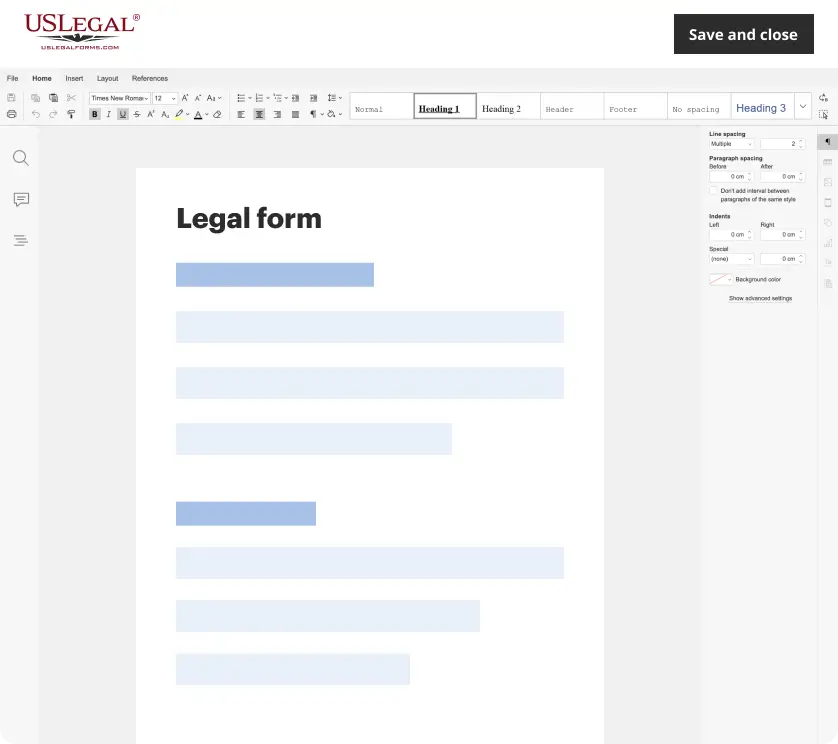
Make edits, fill in missing information, and update formatting in US Legal Forms—just like you would in MS Word.
Download a copy, print it, send it by email, or mail it via USPS—whatever works best for your next step.
Sign and collect signatures with our SignNow integration. Send to multiple recipients, set reminders, and more. Go Premium to unlock E-Sign.

If this form requires notarization, complete it online through a secure video call—no need to meet a notary in person or wait for an appointment.
We protect your documents and personal data by following strict security and privacy standards.
Looking for another form?




How to fill out Self-Defense?
It is feasible to spend numerous hours online searching for the legal document format that meets the state and federal standards you require.
US Legal Forms provides a vast array of legal documents that have been evaluated by experts.
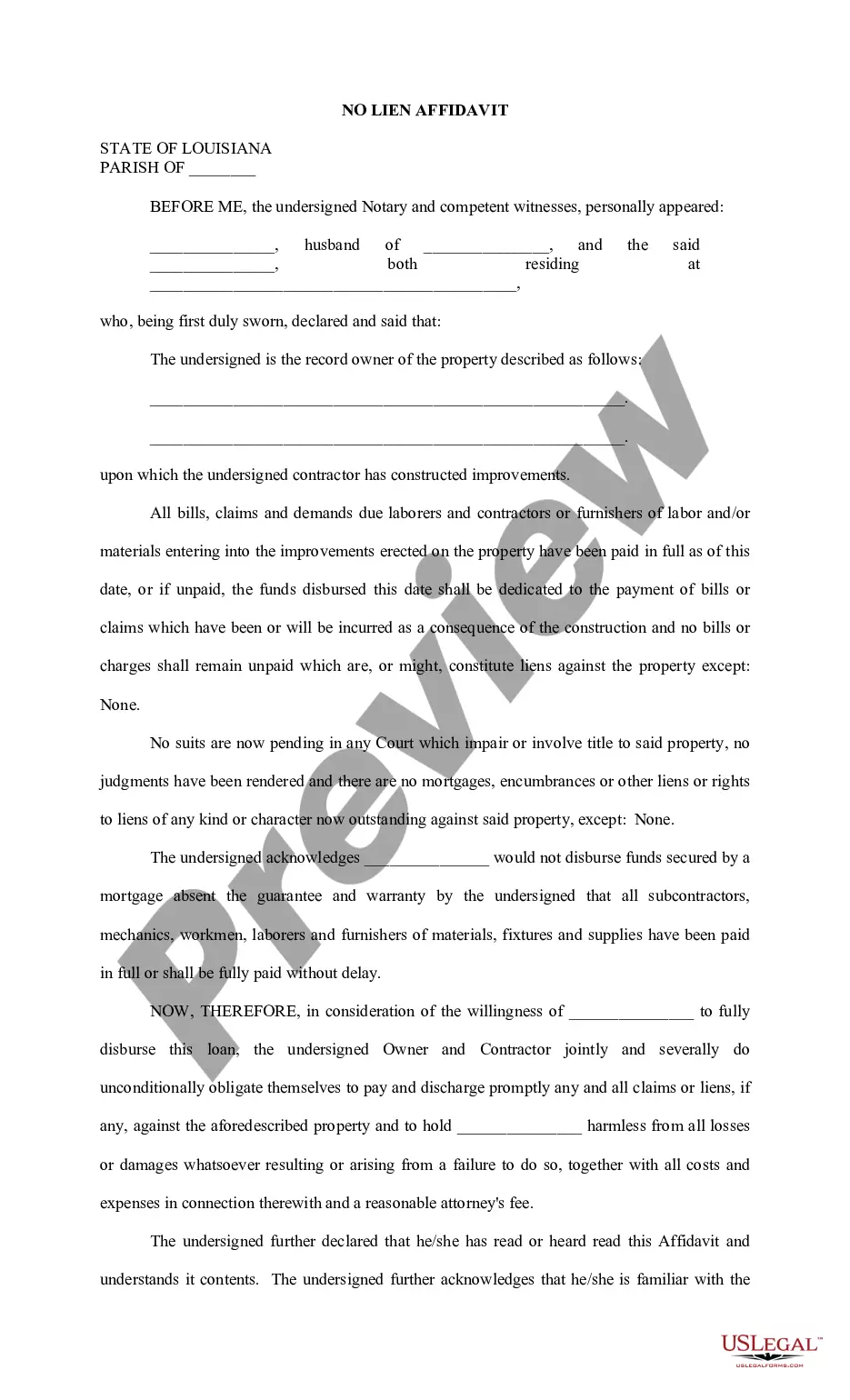
You can effortlessly download or print the Illinois Self-Defense from the platform.
If available, utilize the Preview button to review the format as well. If you wish to find another version of the form, use the Search field to locate the template that fits your needs and requirements. Once you have identified the format you desire, click Get now to proceed. Choose the pricing plan you wish, enter your credentials, and register for your account on US Legal Forms. Complete the transaction. You can use your credit card or PayPal account to pay for the legal document. Select the format of the file and download it to your device. Make modifications to the document if necessary. You can complete, edit, sign, and print the Illinois Self-Defense. Obtain and print thousands of document templates using the US Legal Forms website, which offers the largest collection of legal forms. Utilize professional and state-specific templates to manage your business or personal needs.
- If you possess a US Legal Forms account, you can sign in and then click the Obtain button.
- After that, you can complete, modify, print, or sign the Illinois Self-Defense.
- Every legal document format you acquire is yours permanently.
- To get another copy of the purchased form, navigate to the My documents tab and click the corresponding button.
- If you are using the US Legal Forms site for the first time, follow the straightforward instructions below.
- First, ensure you have selected the correct format for the region/area that you choose.
- Review the form description to confirm you have chosen the accurate template.
Form popularity
FAQ
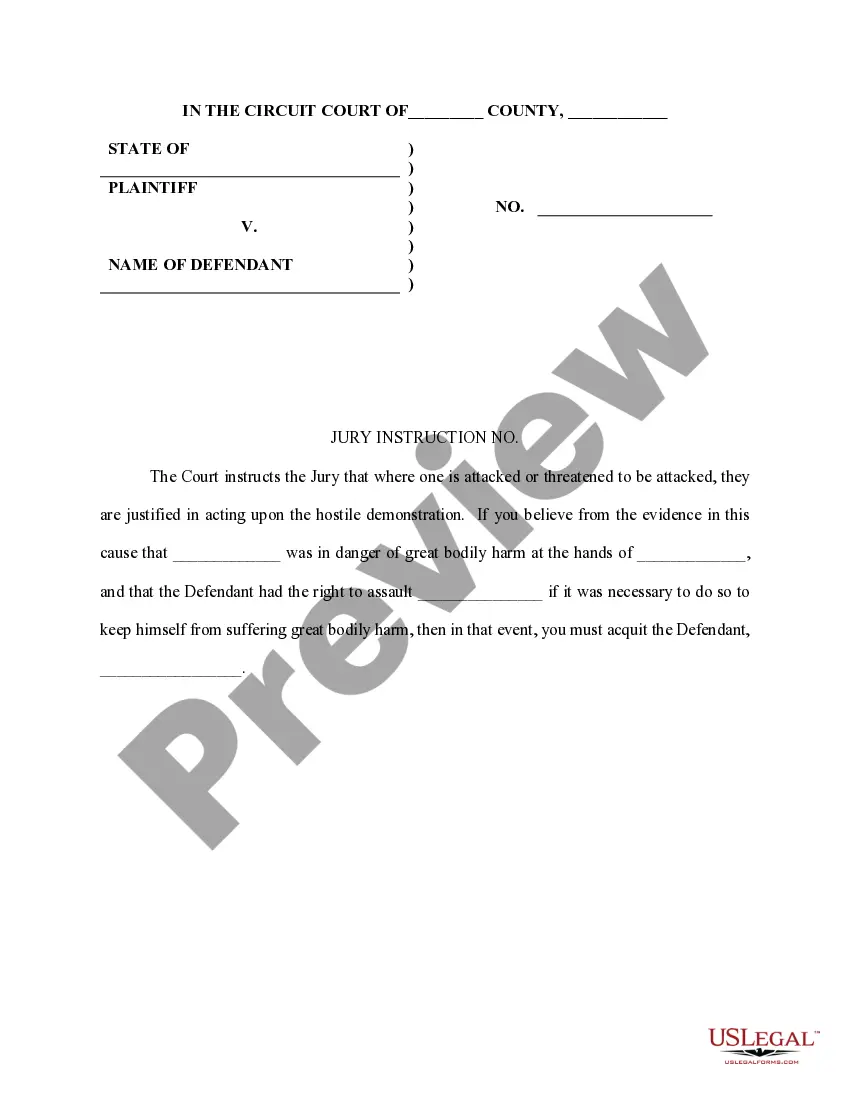
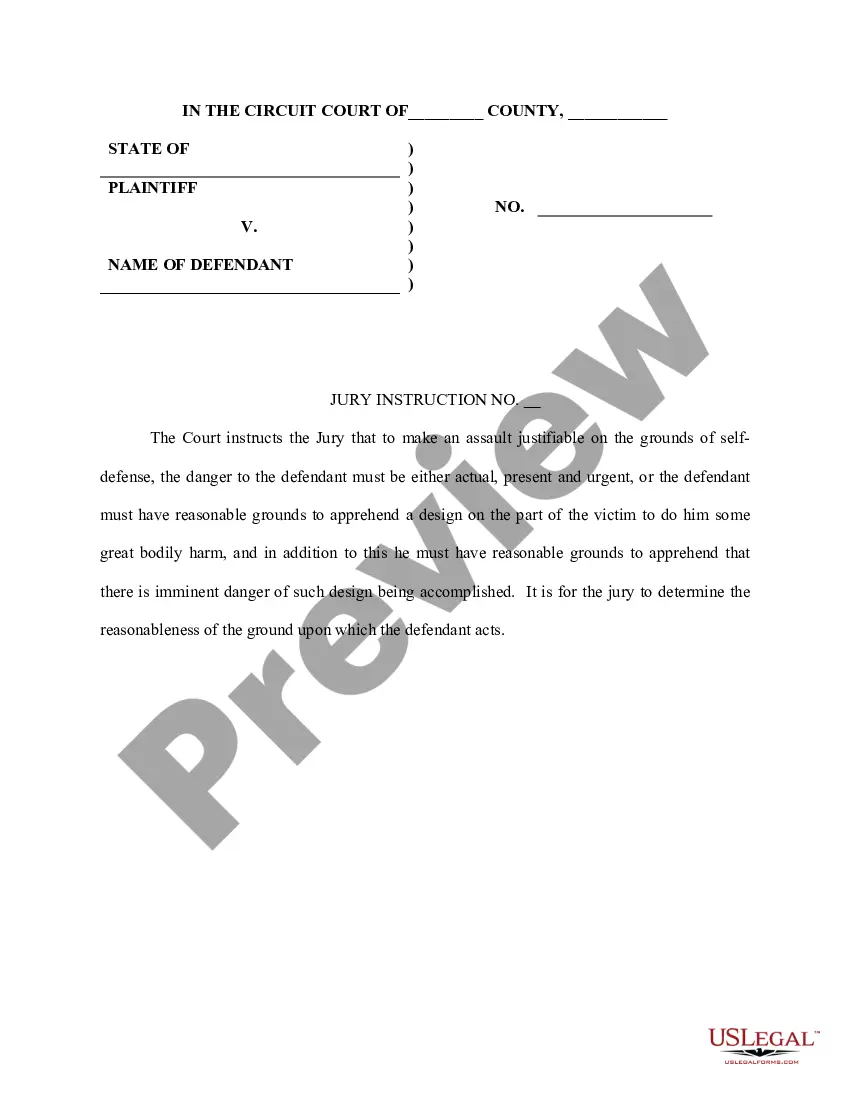
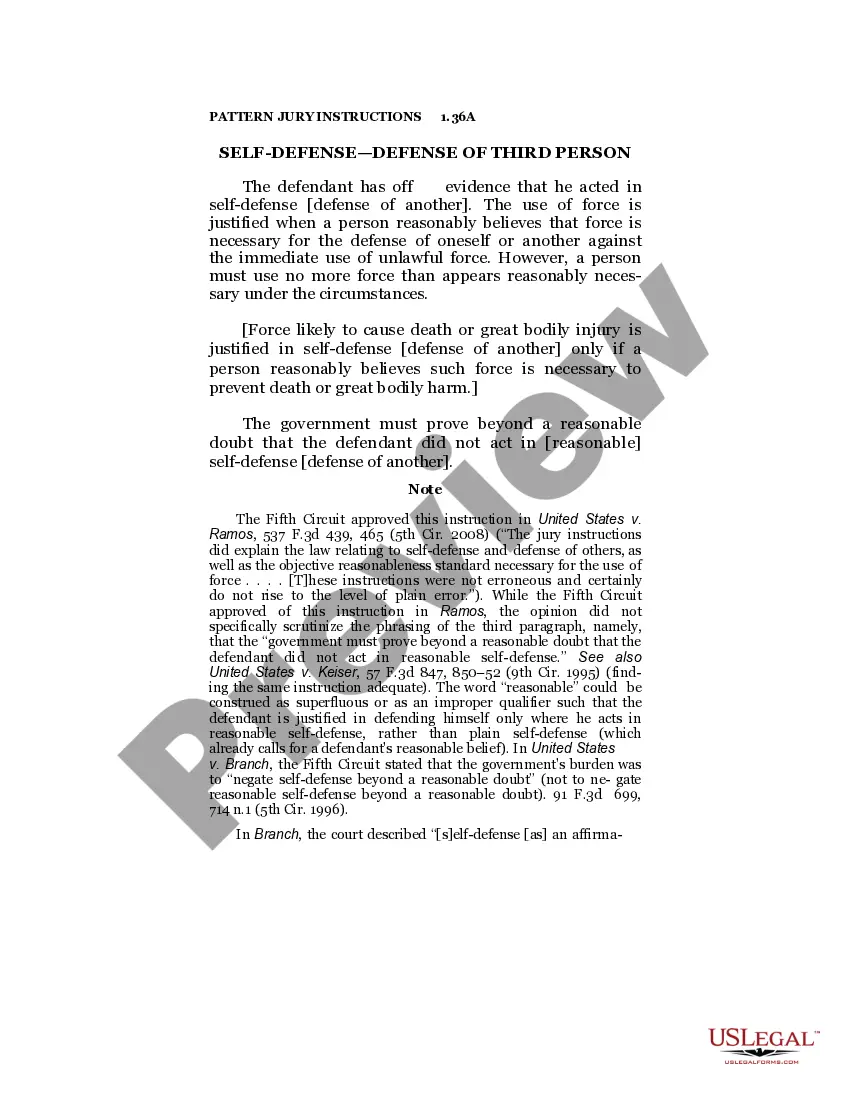
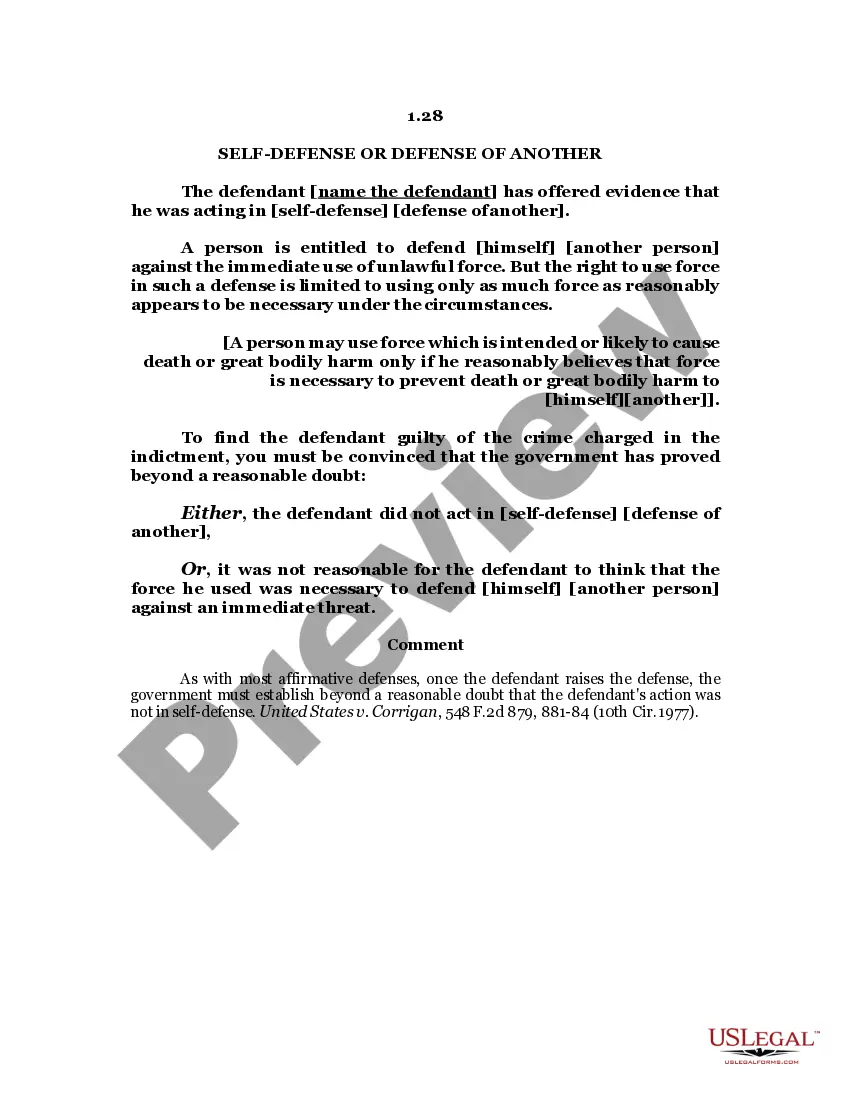
A person is justified in using or threatening to use deadly force if he or she reasonably believes that using or threatening to use such force is necessary to prevent imminent death or great bodily harm to himself or herself or another or to prevent the imminent commission of a forcible felony.
Under Illinois law, it is acceptable to use regular force to defend oneself against some type of attack or entry into a property. If the accused is defending himself or another individual, deadly force is appropriate if the accused is trying to prevent serious injury or death.
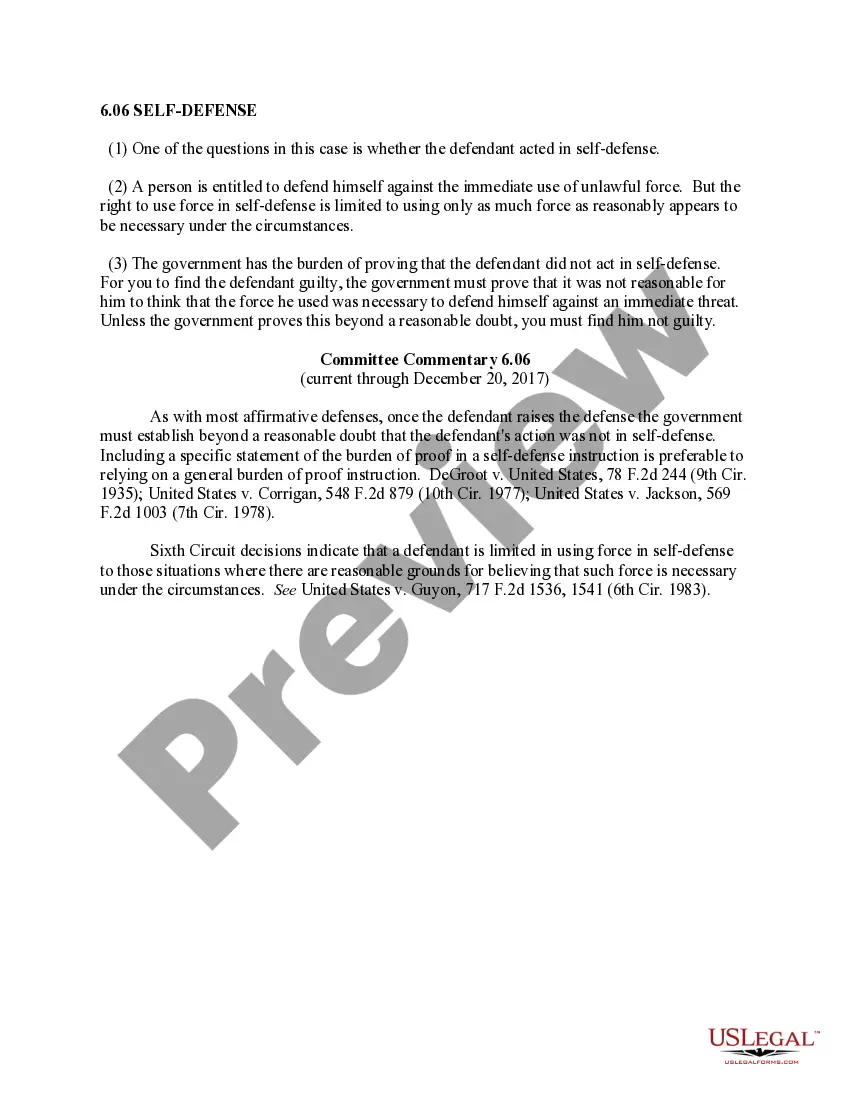
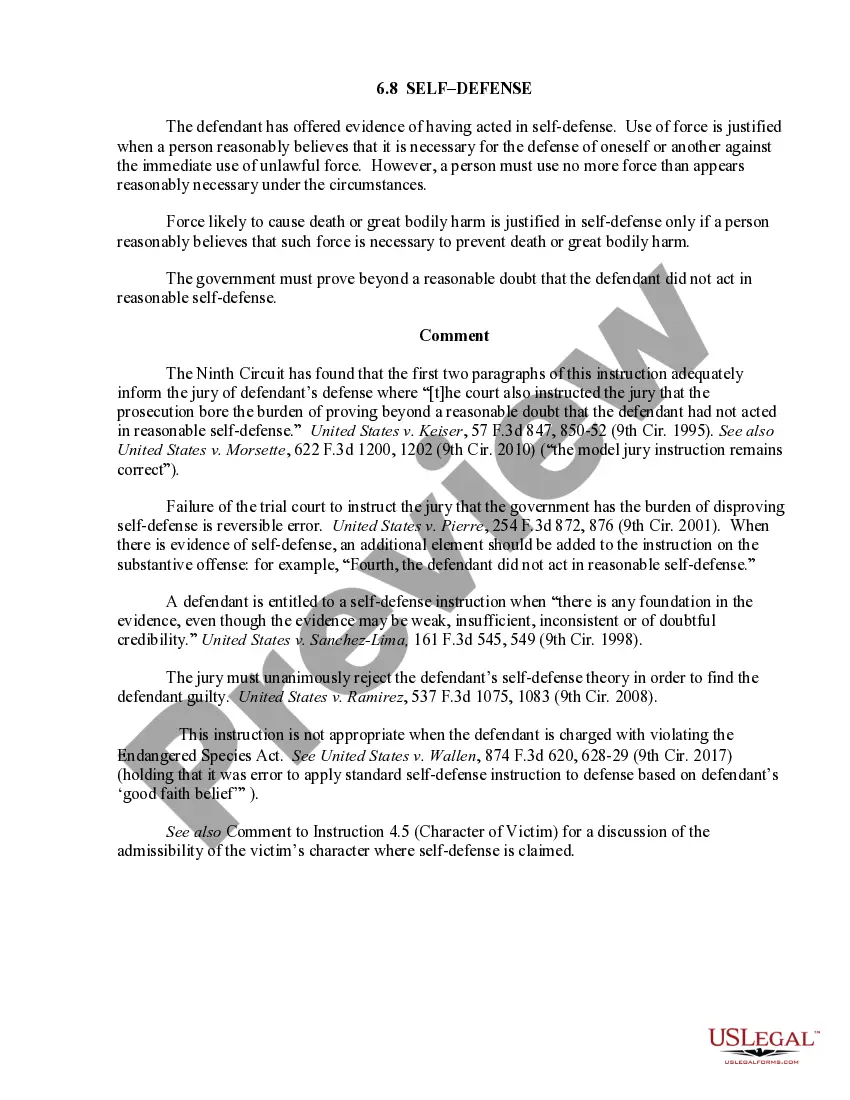
Self-defense is considered an affirmative defense, which means that even if you have acted in self-defense you must still assert and prove that defense at trial. ing to case law in Illinois, there are a number of facts that you must establish at trial for a jury to be instructed regarding self-defense.
A Castle Doctrine also states that a person has no ?duty of retreat? (avoid the conflict at all cost) when one's home/abode is under attack. The state of Illinois technically speaking does not have a Castle Law. However the state does have self-defense laws in place to protect person and property.
Under Illinois law, it is acceptable to use regular force to defend oneself against some type of attack or entry into a property. If the accused is defending himself or another individual, deadly force is appropriate if the accused is trying to prevent serious injury or death.
Burden of Proof: It is important to note that the burden of proof in a self-defense claim typically falls on the defendant. You must establish, with evidence and testimony, that you reasonably believed the use of force, including deadly force if applicable, was necessary to prevent death or great bodily harm.
The state of Illinois technically speaking does not have a Castle Law. However the state does have self-defense laws in place to protect person and property.