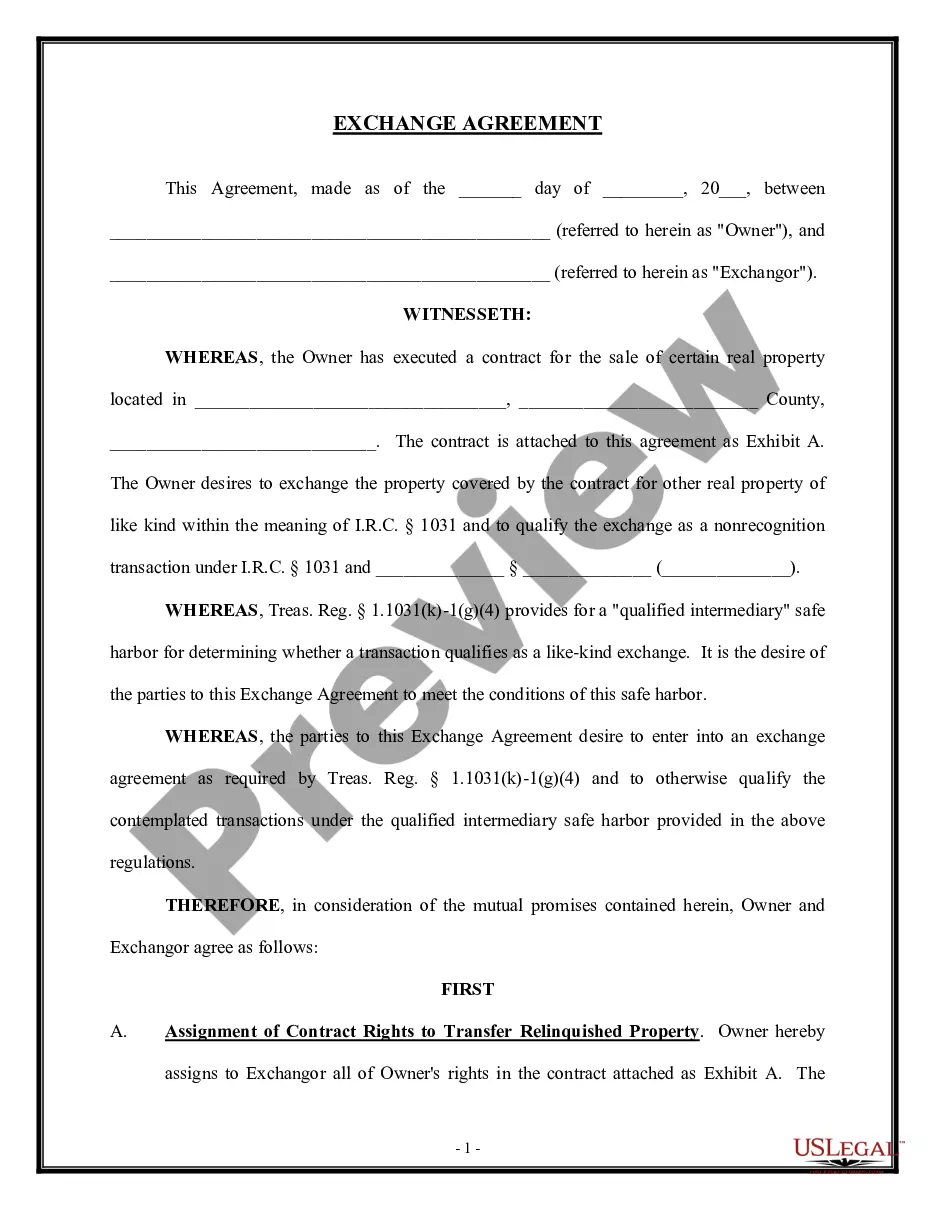
Illinois Tax Free Exchange Agreement Section 1031
Description

Get your form ready online
Our built-in tools help you complete, sign, share, and store your documents in one place.
Make edits, fill in missing information, and update formatting in US Legal Forms—just like you would in MS Word.
Download a copy, print it, send it by email, or mail it via USPS—whatever works best for your next step.
Sign and collect signatures with our SignNow integration. Send to multiple recipients, set reminders, and more. Go Premium to unlock E-Sign.
If this form requires notarization, complete it online through a secure video call—no need to meet a notary in person or wait for an appointment.
We protect your documents and personal data by following strict security and privacy standards.

Make edits, fill in missing information, and update formatting in US Legal Forms—just like you would in MS Word.

Download a copy, print it, send it by email, or mail it via USPS—whatever works best for your next step.

Sign and collect signatures with our SignNow integration. Send to multiple recipients, set reminders, and more. Go Premium to unlock E-Sign.

If this form requires notarization, complete it online through a secure video call—no need to meet a notary in person or wait for an appointment.

We protect your documents and personal data by following strict security and privacy standards.
Looking for another form?


How to fill out Tax Free Exchange Agreement Section 1031?
Selecting the appropriate legal document format can be challenging.
Of course, numerous templates exist online, but how can you find the legal document you need.
Utilize the US Legal Forms website.
First, ensure you have chosen the correct form for the city/state. You can review the form using the Preview button and read the form description to confirm it is suitable for your needs.
- The service offers a vast array of templates, including the Illinois Tax-Free Exchange Agreement Section 1031, suitable for both business and personal purposes.
- All documents are reviewed by experts and comply with both state and federal requirements.
- If you are already registered, Log In to your account and click the Obtain button to access the Illinois Tax-Free Exchange Agreement Section 1031.
- Use your account to view the legal forms you have previously acquired.
- Visit the My documents tab in your account to obtain another copy of the document you need.
- If you are a new user of US Legal Forms, here are simple steps to follow.
Form popularity
FAQ
Section 1031 is a federal tax code, so it is recognized in all states, so you can exchange from state to state.
The short answer to this is yes. Because Section 1031 is a federal tax code, it is technically recognized in all states. Going one step further, swapping a relinquished property in one state into a replacement property in another is known, appropriately enough, as a state-to-state 1031 exchange.
The main requirements for a 1031 exchange are: (1) must purchase another like-kind investment property; (2) replacement property must be of equal or greater value; (3) must invest all of the proceeds from the sale (cannot receive any boot); (4) must be the same title holder and taxpayer; (5) must identify new
There are also states that have withholding requirements if the seller of a piece of property in these states is a non-resident of any of the following states: California, Colorado, Hawaii, Georgia, Maryland, New Jersey, Mississippi, New York, North Carolina, Oregon, West Virginia, Maine, South Carolina, Rhode Island,
A 1031 exchange gets its name from Section 1031 of the U.S. Internal Revenue Code, which allows you to avoid paying capital gains taxes when you sell an investment property and reinvest the proceeds from the sale within certain time limits in a property or properties of like kind and equal or greater value.
While you can't do a 1031 exchange directly into a personal residence -- exchanges are limited to real property that is held strictly for investment or business purposes -- you can convert an investment property into personal property so long as you follow the IRS' rules to the letter.
Illinois doesn't have any specific statewide laws governing 1031 exchanges, so an Illinois 1031 exchange will generally be a straightforward affair. But that doesn't mean it's any less important to find the right qualified intermediary (QI) to help execute your Illinois 1031 exchange.
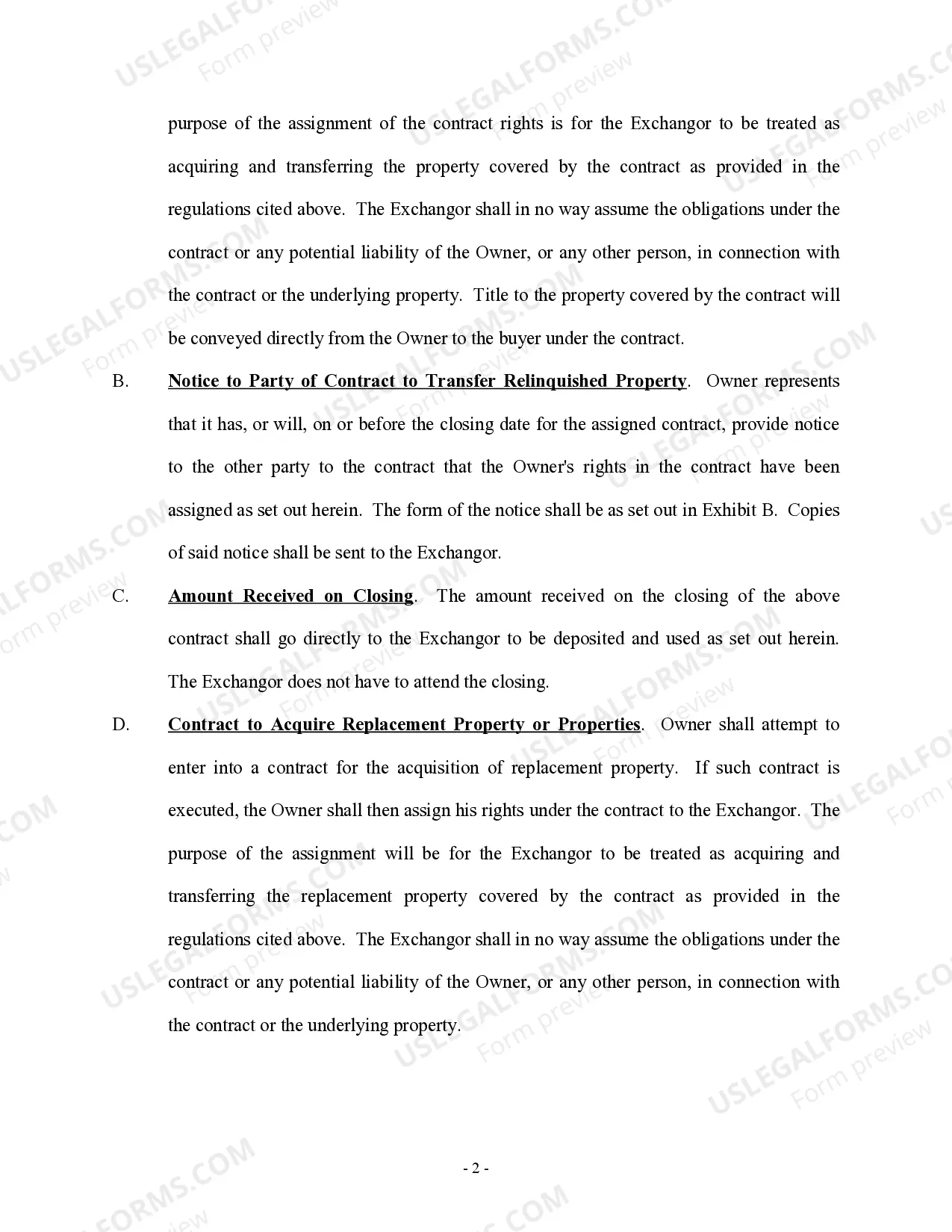
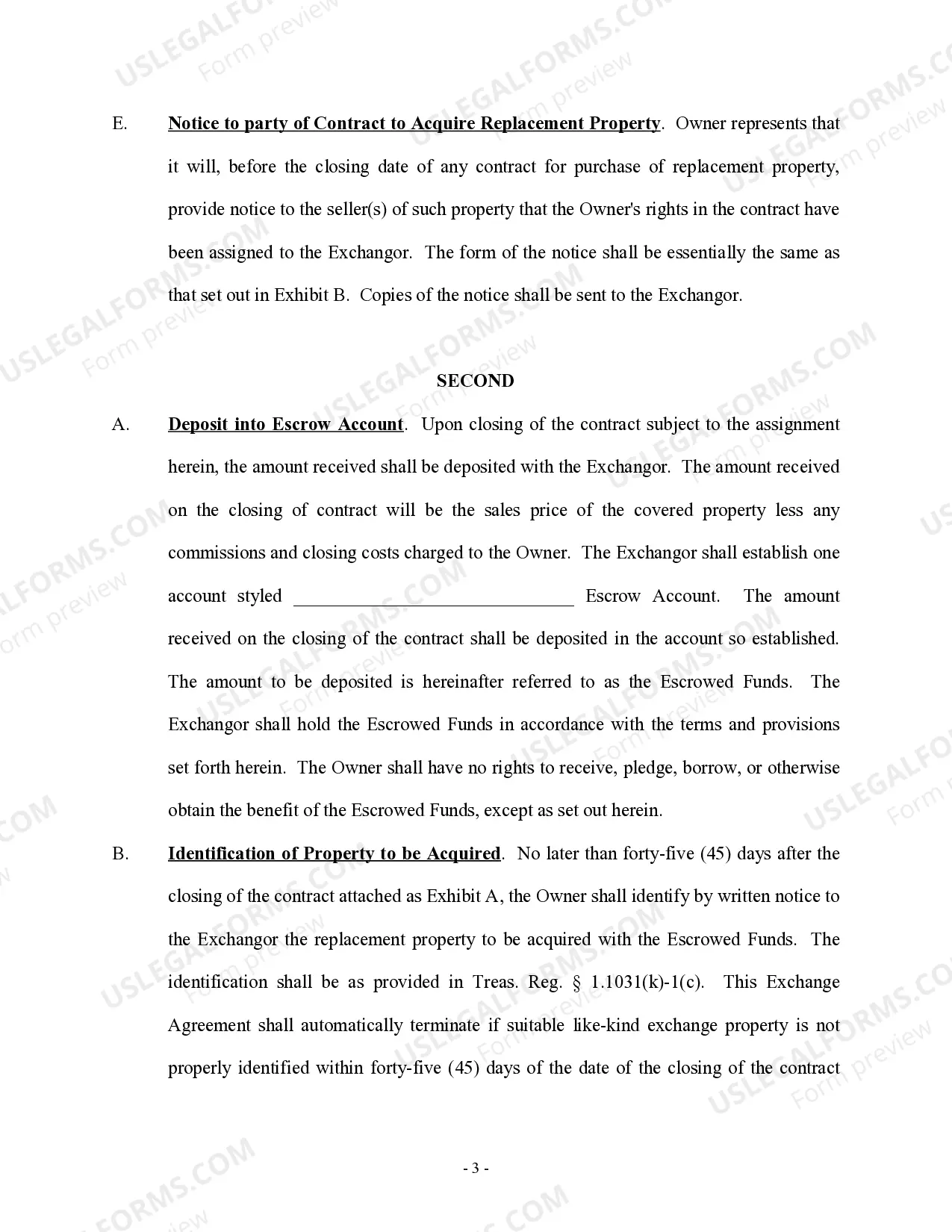
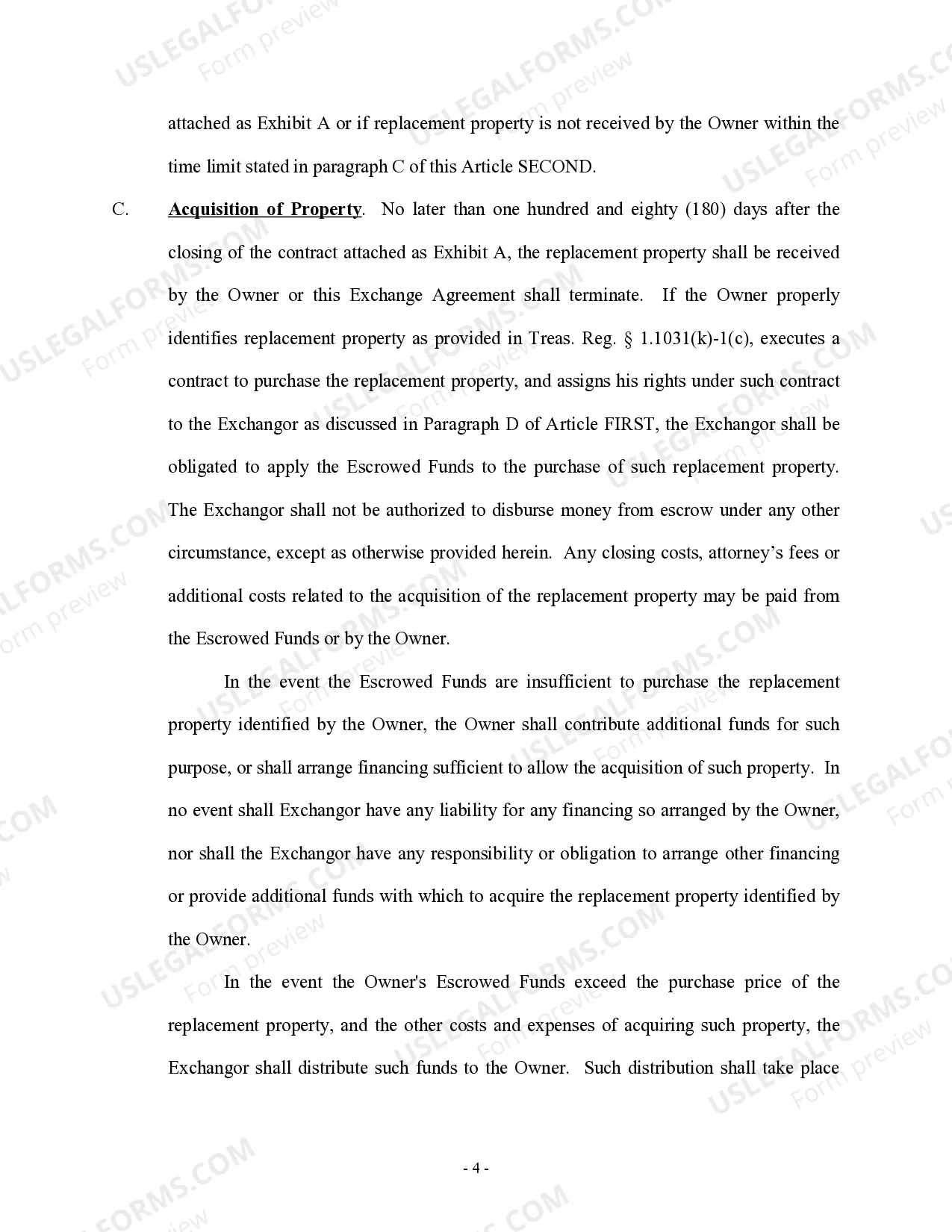
A 1031 exchange allows the seller of real estate to avoid the payment of taxes by acquiring new real estate. As long as the proper procedures are followed, the Internal Revenue Service will recognize the transaction, not as a sale and purchase, but as an exchange of a relinquished property for a replacement property.