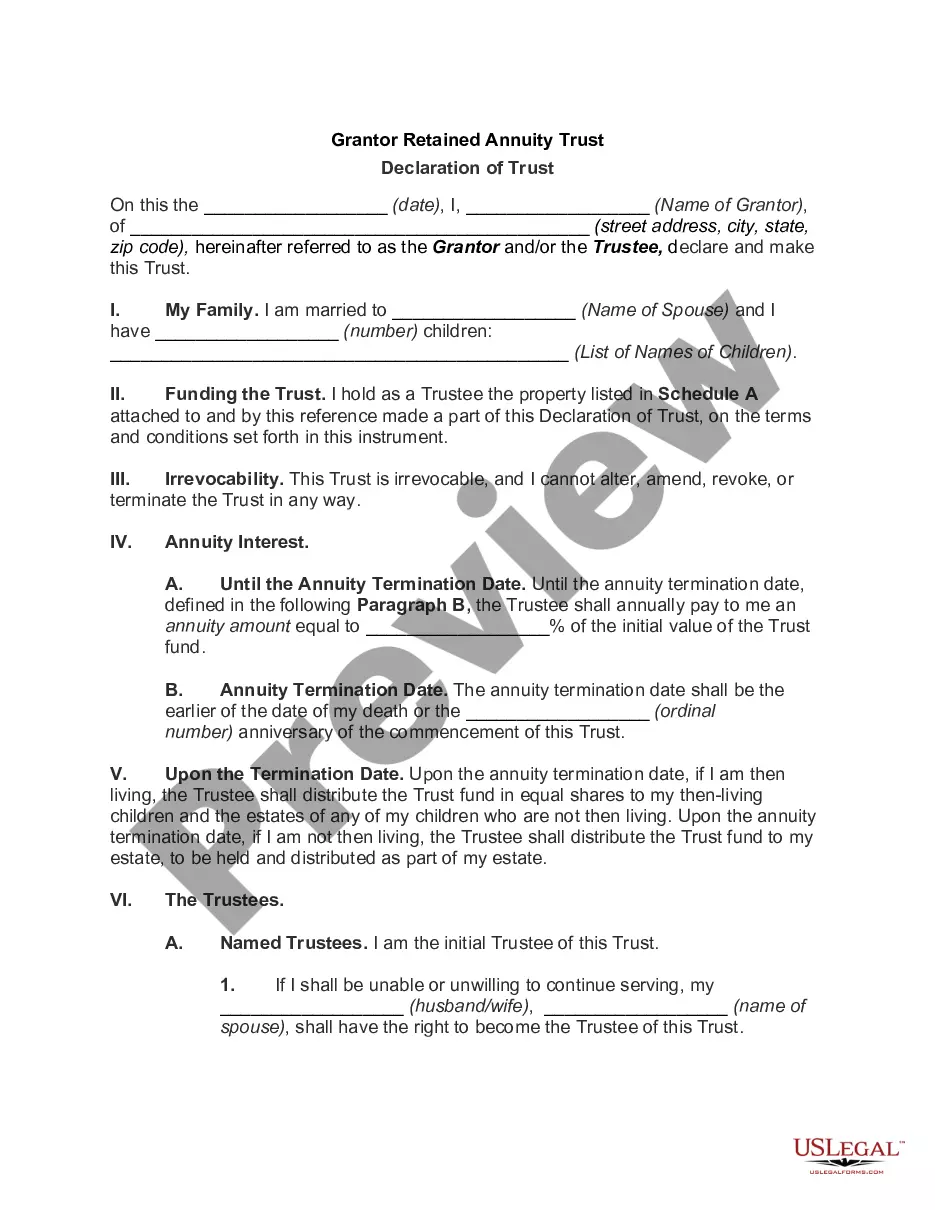
Illinois Charitable Remainder Inter Vivos Annuity Trust
Description

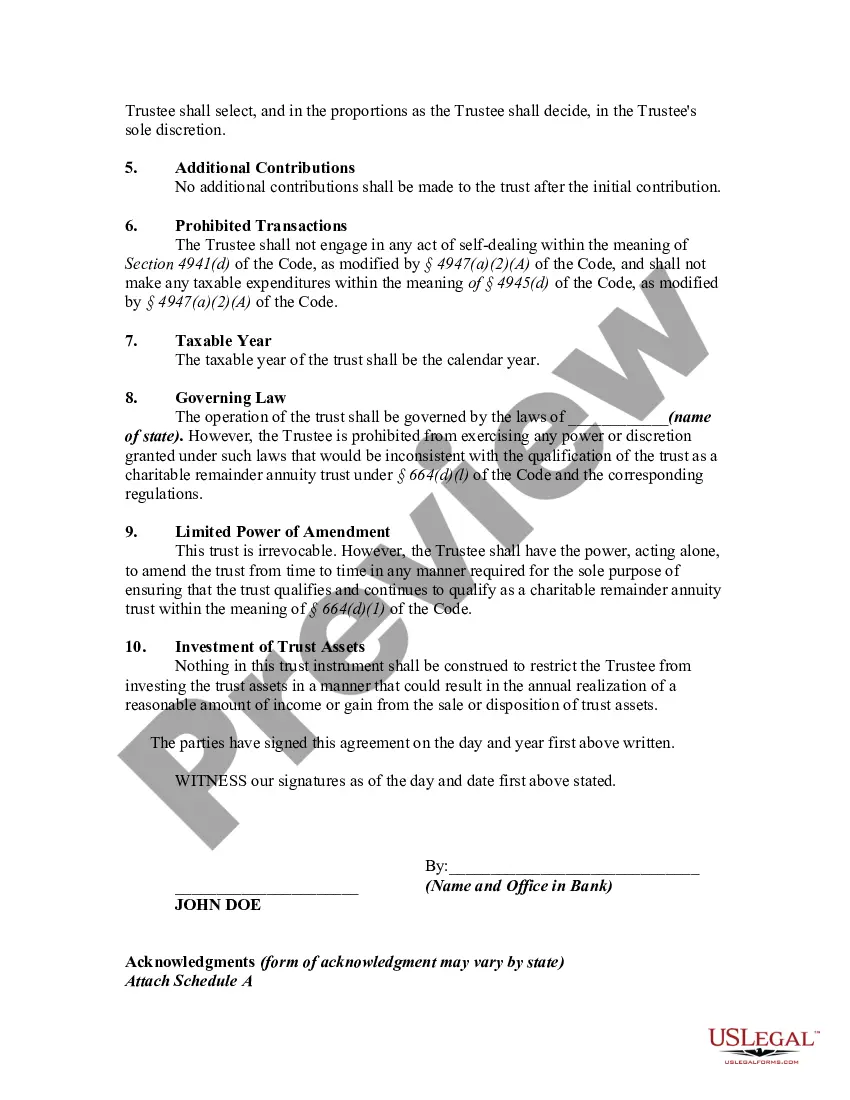
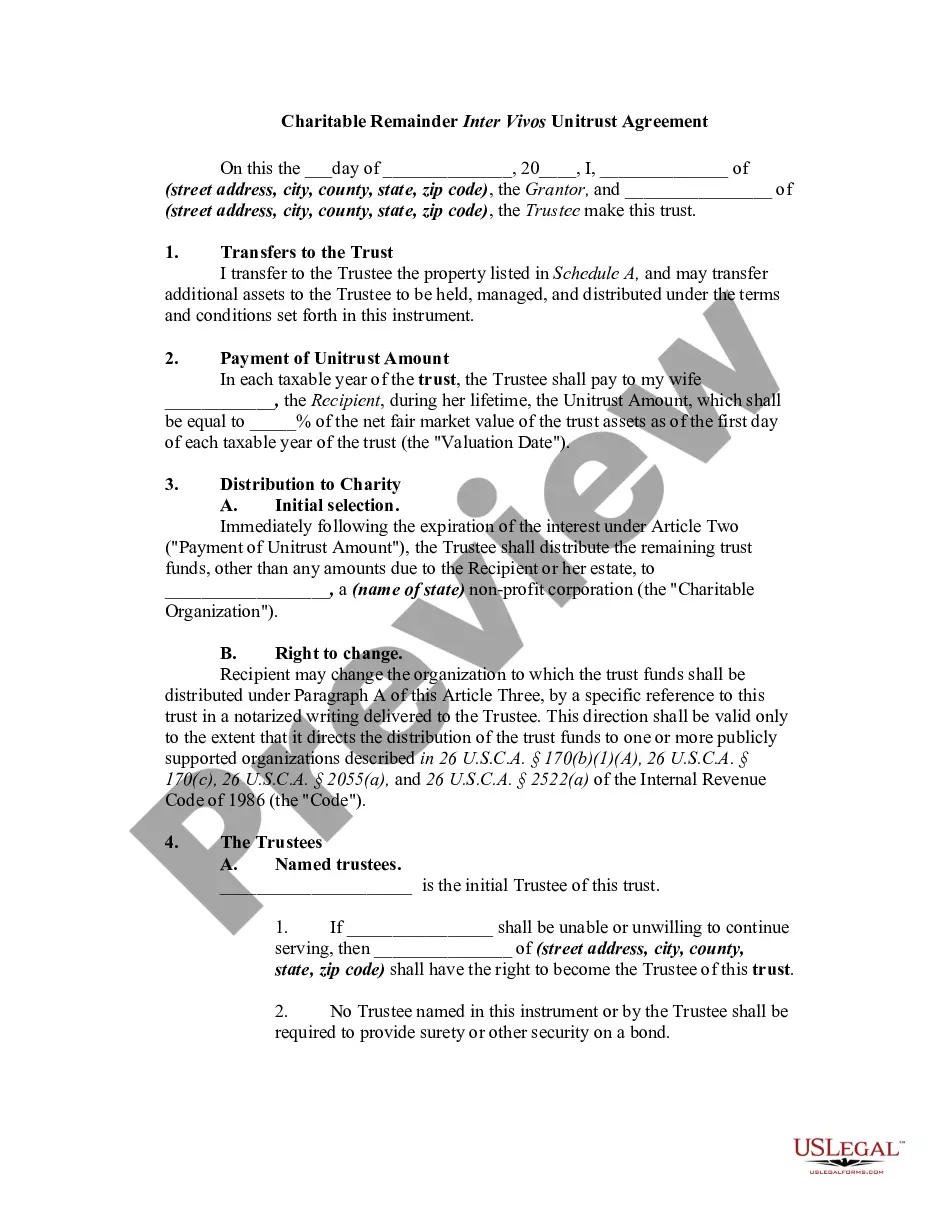
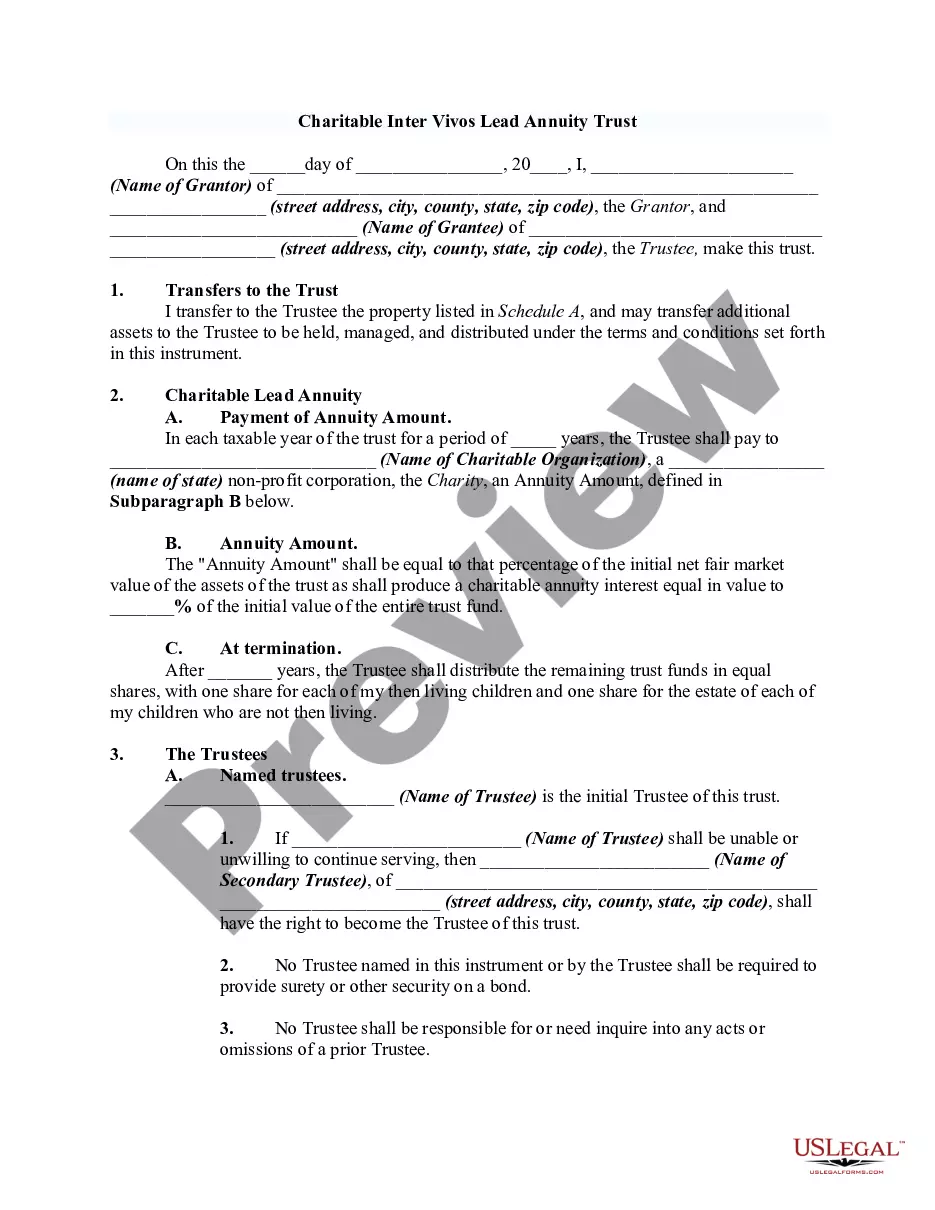
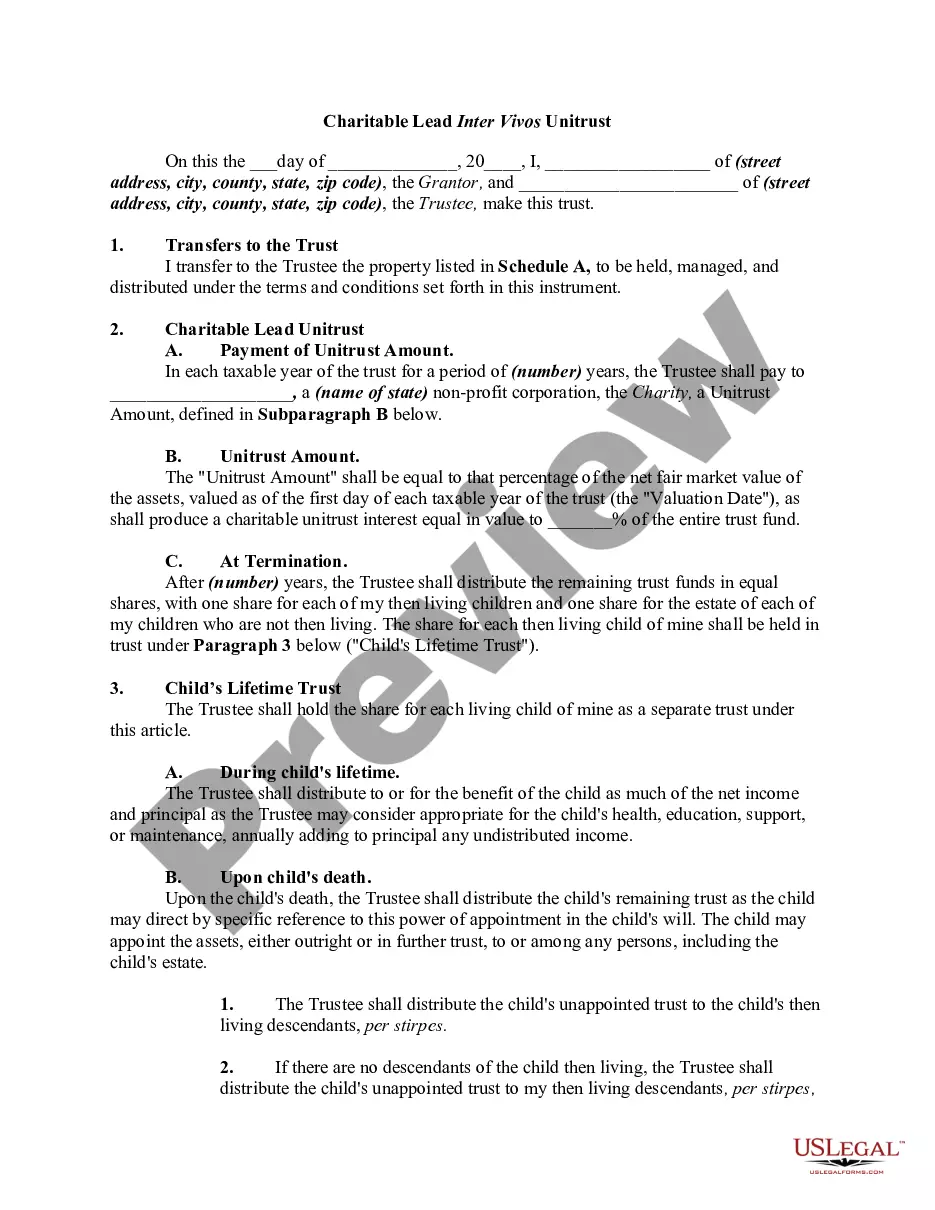

Get your form ready online
Our built-in tools help you complete, sign, share, and store your documents in one place.
Make edits, fill in missing information, and update formatting in US Legal Forms—just like you would in MS Word.
Download a copy, print it, send it by email, or mail it via USPS—whatever works best for your next step.
Sign and collect signatures with our SignNow integration. Send to multiple recipients, set reminders, and more. Go Premium to unlock E-Sign.
If this form requires notarization, complete it online through a secure video call—no need to meet a notary in person or wait for an appointment.
We protect your documents and personal data by following strict security and privacy standards.

Make edits, fill in missing information, and update formatting in US Legal Forms—just like you would in MS Word.

Download a copy, print it, send it by email, or mail it via USPS—whatever works best for your next step.

Sign and collect signatures with our SignNow integration. Send to multiple recipients, set reminders, and more. Go Premium to unlock E-Sign.

If this form requires notarization, complete it online through a secure video call—no need to meet a notary in person or wait for an appointment.

We protect your documents and personal data by following strict security and privacy standards.
Looking for another form?








How to fill out Charitable Remainder Inter Vivos Annuity Trust?
If you require to complete, download, or print sanctioned document templates, utilize US Legal Forms, the largest assortment of legal forms available online.
Take advantage of the website's straightforward and user-friendly search to locate the documents you need.
A variety of templates for business and personal purposes are organized by categories and states, or keywords.
Step 4. Once you have found the form you need, click the Buy now button. Choose the payment plan you prefer and enter your details to create an account.
Step 5. Complete the transaction. You can use your Visa or MasterCard or PayPal account to finalize the purchase.
- Use US Legal Forms to obtain the Illinois Charitable Remainder Inter Vivos Annuity Trust in just a few clicks.
- If you are already a US Legal Forms member, Log In to your account and click on the Download button to access the Illinois Charitable Remainder Inter Vivos Annuity Trust.
- You can also retrieve forms you have previously downloaded in the My documents section of your account.
- If you are using US Legal Forms for the first time, follow the instructions below.
- Step 1. Ensure you have chosen the form for your specific city/state.
- Step 2. Use the Preview option to review the content of the form. Don’t forget to read the description.
- Step 3. If you are not satisfied with the form, use the Search field at the top of the screen to find other versions of the legal form template.
Form popularity
FAQ
The 10 percent rule for a charitable remainder trust stipulates that the present value of the remainder interest must be at least 10 percent of the total trust assets when the trust is established. This rule ensures that a meaningful portion of the assets ultimately benefits the designated charity, as seen in the Illinois Charitable Remainder Inter Vivos Annuity Trust. By adhering to this rule, you can structure the trust to provide both financial benefits for you and lasting support for charitable organizations. Consulting with experts can help you navigate this regulation effectively.
The purpose of an inter vivos trust is to manage and distribute your assets during your lifetime and after your passing. This type of trust, such as the Illinois Charitable Remainder Inter Vivos Annuity Trust, allows you to provide income to yourself or appointed beneficiaries while benefiting charitable organizations. Additionally, it can help reduce estate taxes and simplify the transfer of assets. This trust is particularly useful for individuals looking to support charitable causes while still retaining some control over their assets.
Yes, Illinois recognizes grantor trusts, including the Illinois Charitable Remainder Inter Vivos Annuity Trust. This type of trust allows you, as the grantor, to maintain control over the assets while still providing for charitable contributions. It is important to note that by establishing this trust, you can enjoy specific tax benefits and enhance your estate planning efforts. If you need help setting up an Illinois Charitable Remainder Inter Vivos Annuity Trust, consider using US Legal Forms for proper guidance and documentation.
While an Illinois Charitable Remainder Inter Vivos Annuity Trust has many advantages, there are pitfalls to consider. Once assets are placed in the trust, they cannot be easily removed or altered, limiting your control. Additionally, if the trust does not yield expected income, the financial outcome may not align with your initial intentions, thereby underscoring the importance of careful planning.
An inter vivos charitable remainder trust, such as the Illinois Charitable Remainder Inter Vivos Annuity Trust, is established during the grantor's lifetime. It allows the grantor to retain income from trust assets for a specified period before transferring the remaining assets to designated charities. This approach facilitates charitable giving while still providing financial benefits to the grantor.
A charitable gift annuity offers fixed payments to donors during their lifetime, while an Illinois Charitable Remainder Inter Vivos Annuity Trust provides flexibility regarding income distribution. The trust model allows for potentially larger payments based on asset performance, offering a more dynamic income option. Additionally, the trust typically benefits a particular charity after the donor's death.
In Illinois, the replacement tax generally applies to corporations and partnerships, not to individual charitable remainder trusts. Therefore, your Illinois Charitable Remainder Inter Vivos Annuity Trust typically would not be subjected to this tax. Nonetheless, it's wise to consult with a tax advisor to clarify your specific situation.
Yes, you can add assets to an Illinois Charitable Remainder Inter Vivos Annuity Trust. This flexibility allows you to enhance the trust's value over time, leading to potentially higher income distributions for the beneficiaries. However, it’s important to consult with a professional to ensure compliance with relevant regulations.
Creating an Illinois Charitable Remainder Inter Vivos Annuity Trust involves several steps. You'll need to draft a trust document, decide on the assets you want to place in the trust, and designate a charitable organization as the beneficiary. Working with an attorney or financial advisor ensures that the trust complies with Illinois laws and meets your financial goals.
No, an Illinois Charitable Remainder Inter Vivos Annuity Trust does not need to be recorded in a public registry. However, you should maintain proper documentation to ensure that the trust's terms and assets are clear. Consulting with legal professionals can help you understand the necessary steps to establish and document your trust properly.