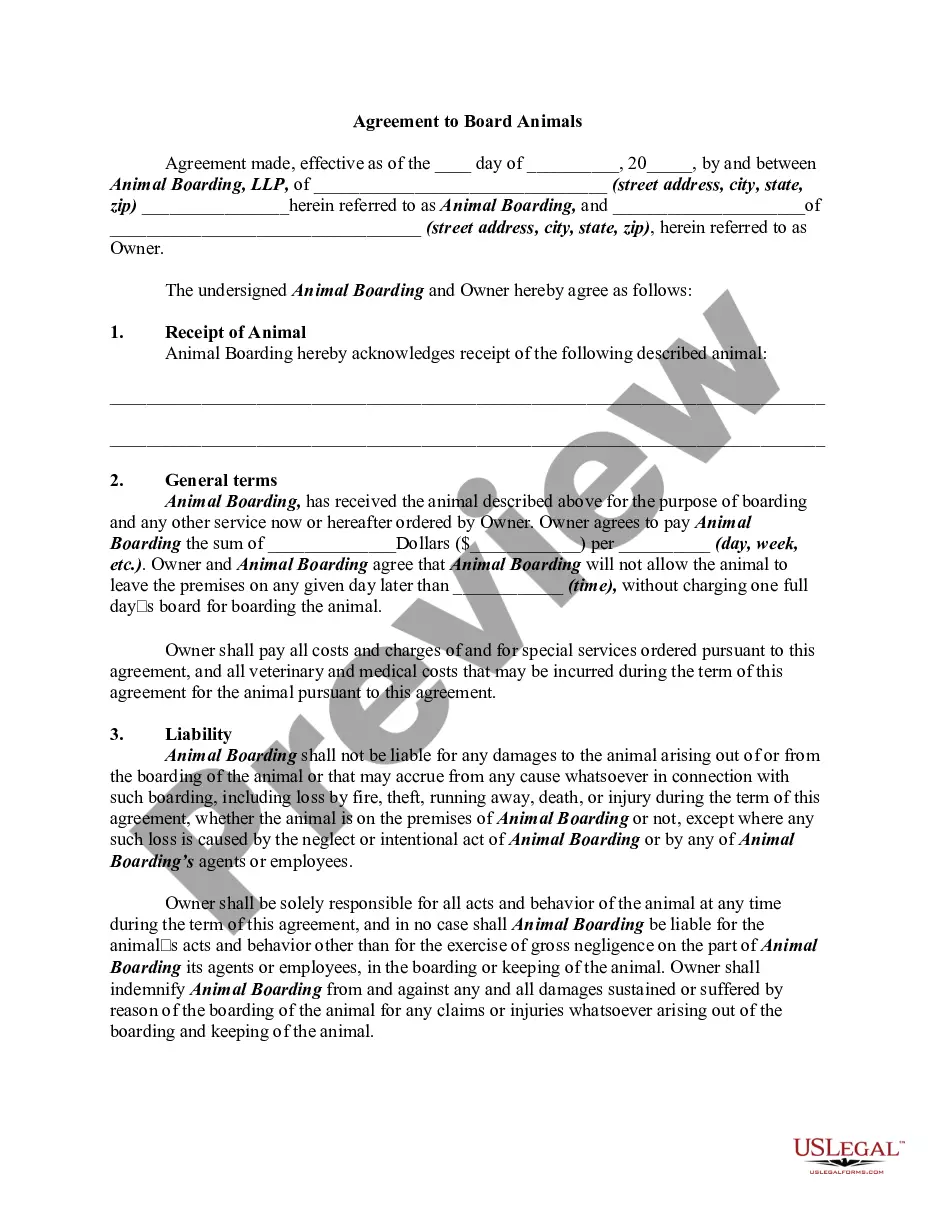
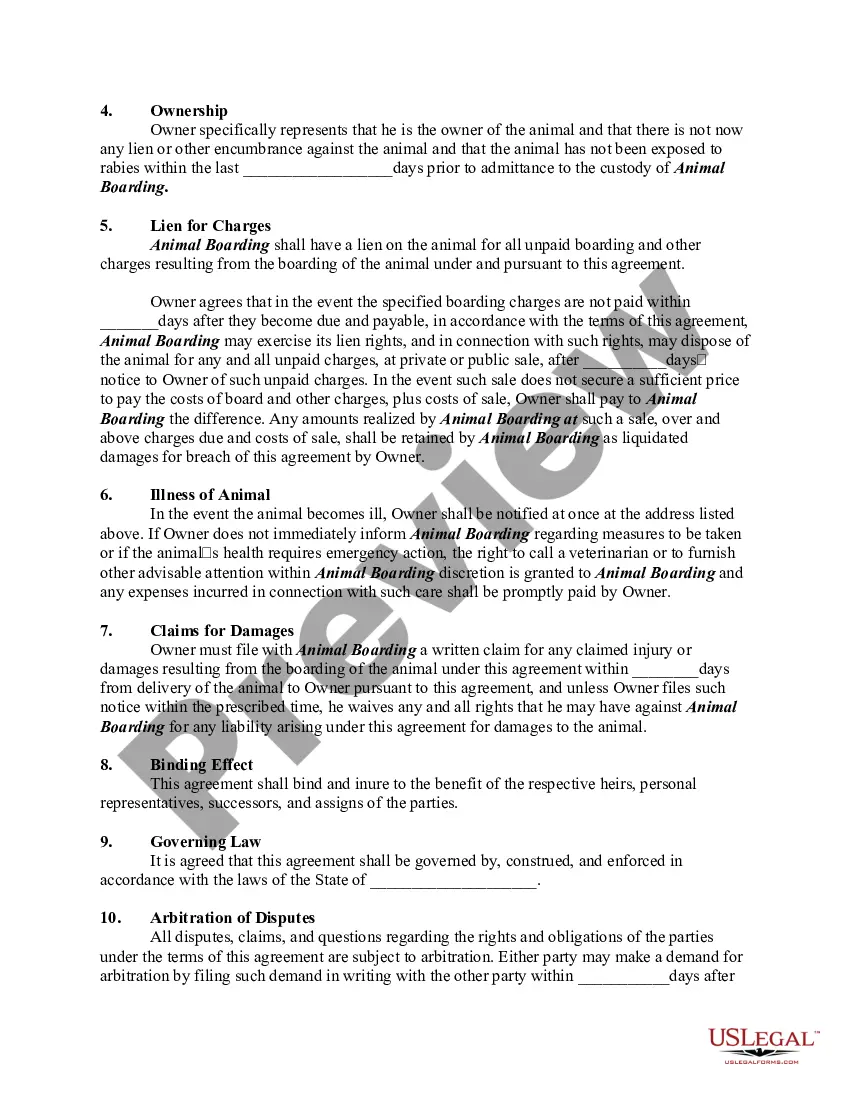
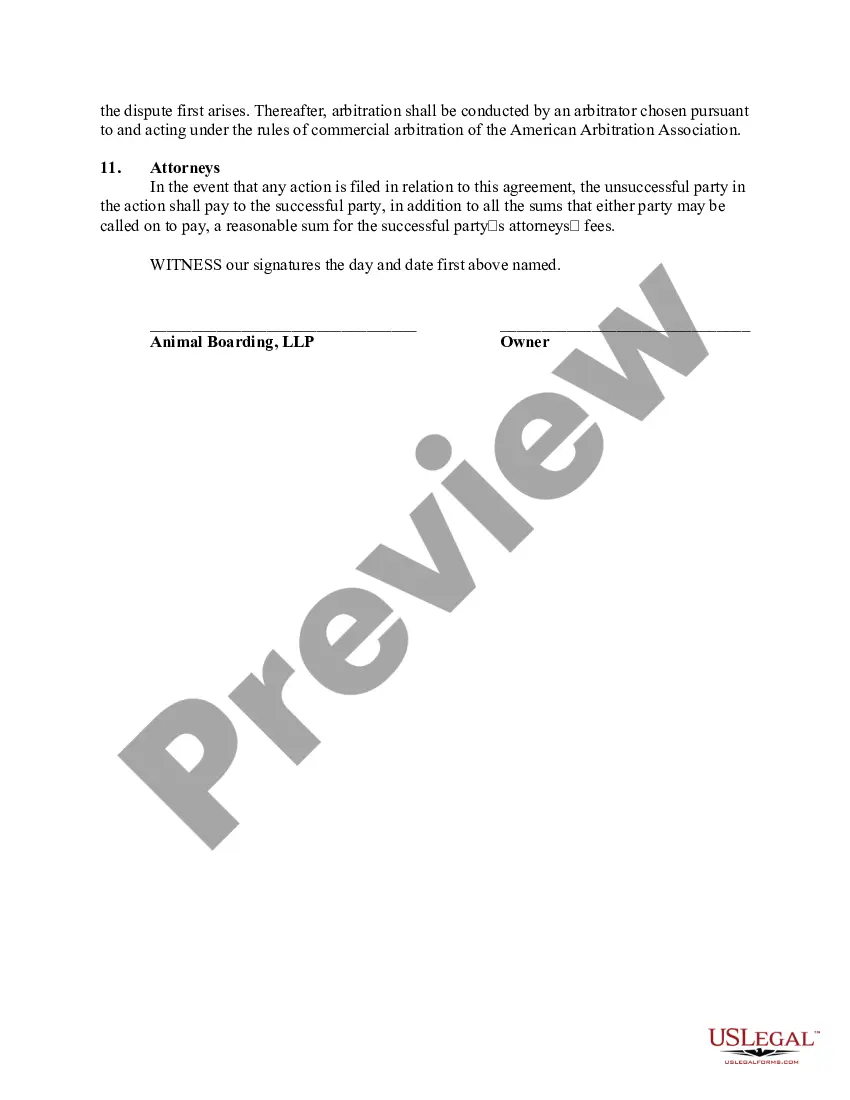
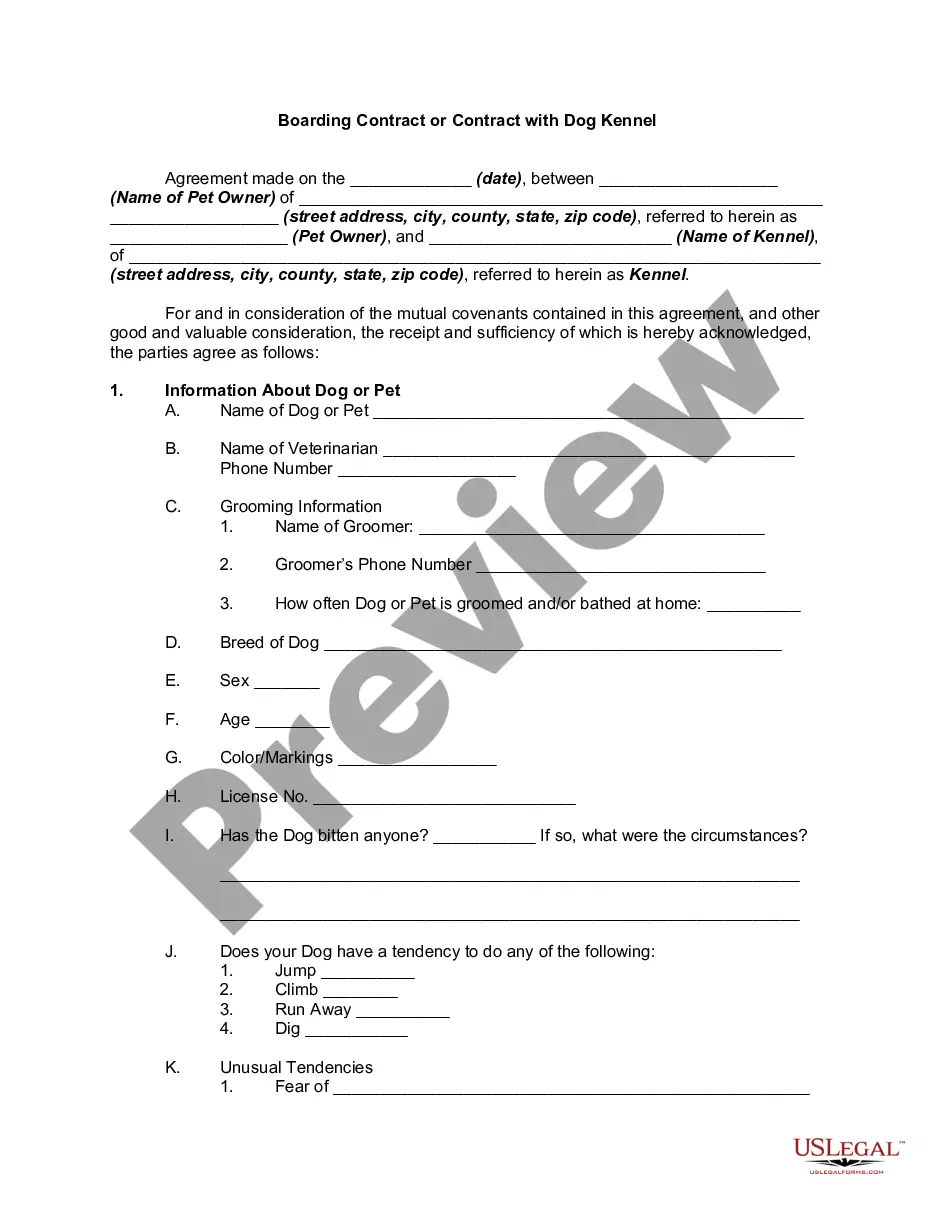
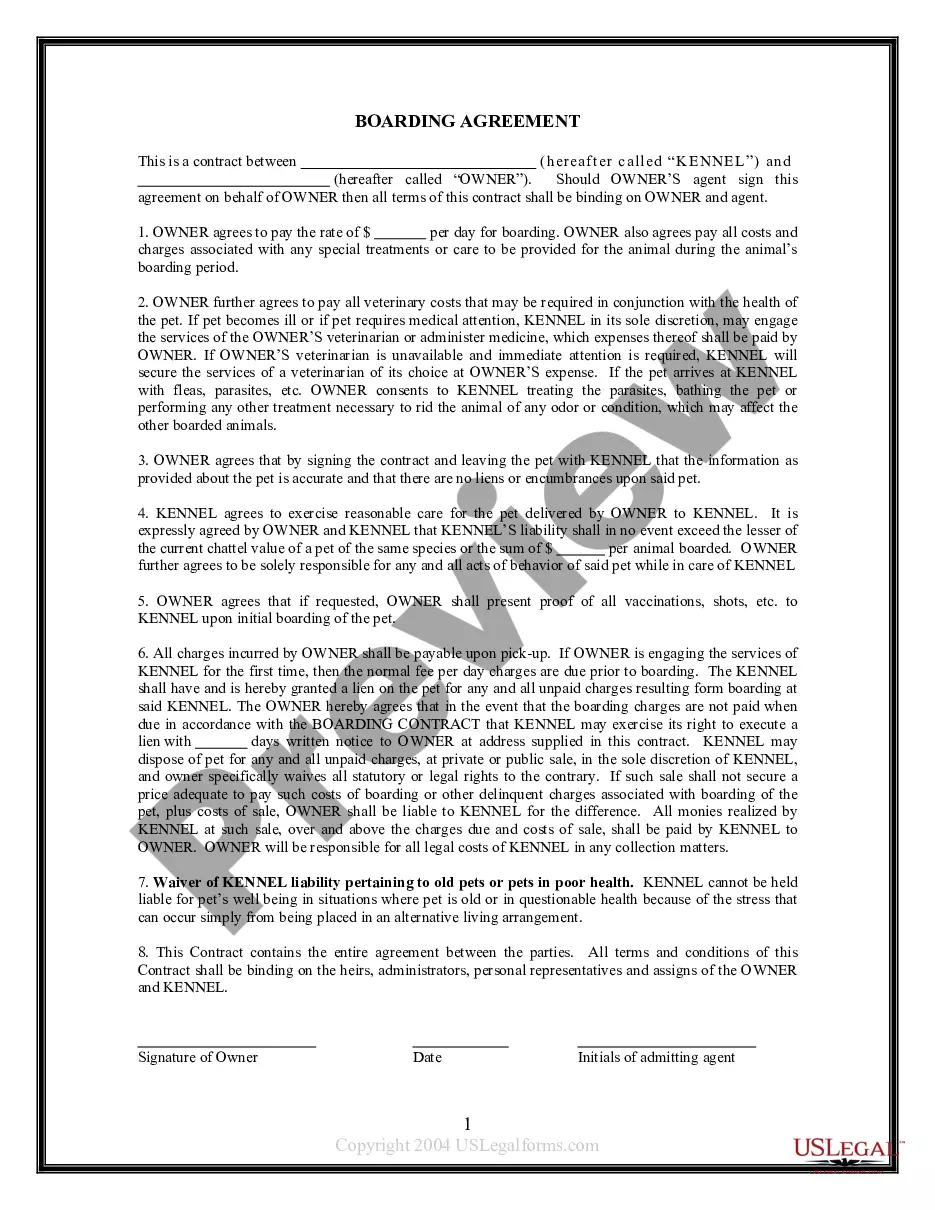
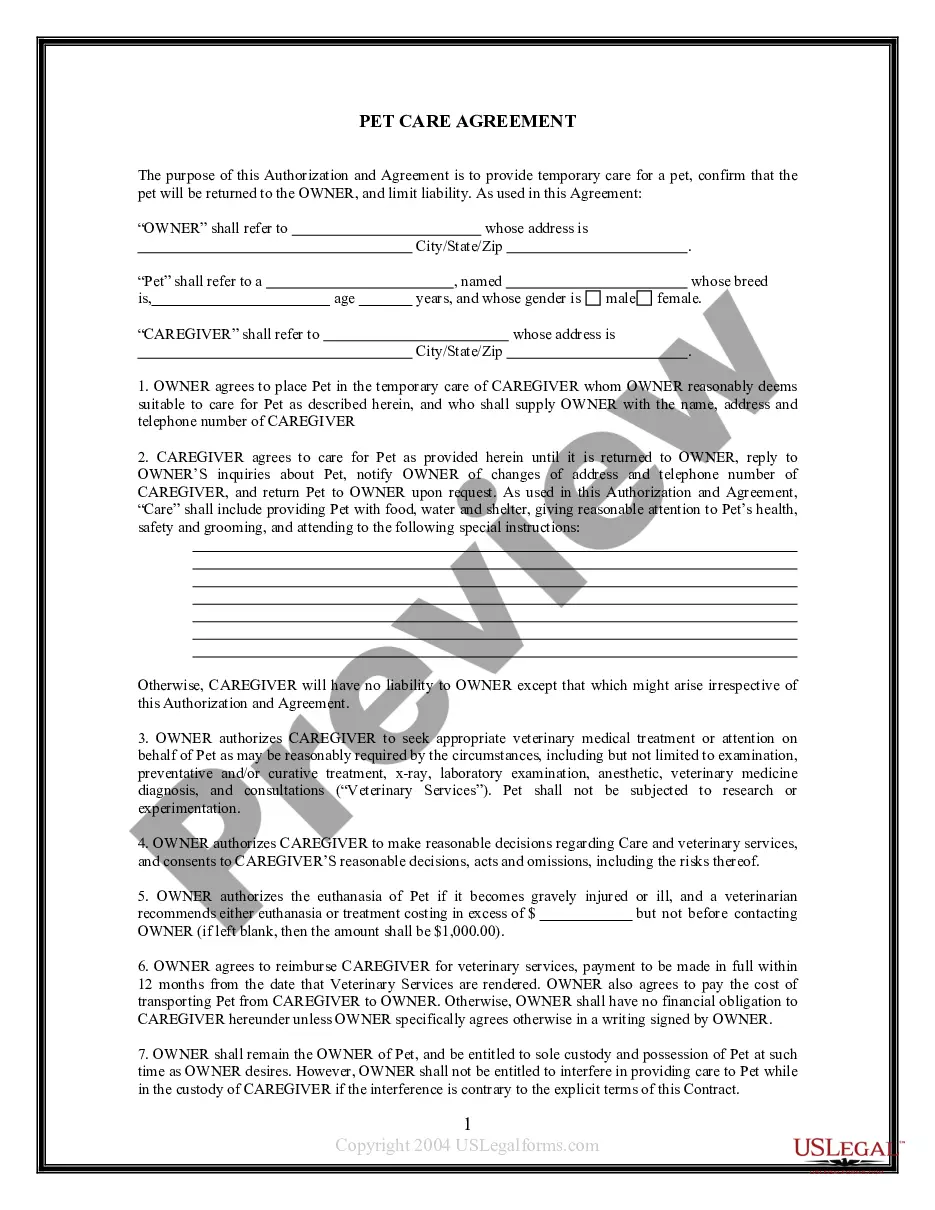
Illinois Agreement to Board Animals - Boarding
Description
Get your form ready online
Our built-in tools help you complete, sign, share, and store your documents in one place.
Make edits, fill in missing information, and update formatting in US Legal Forms—just like you would in MS Word.
Download a copy, print it, send it by email, or mail it via USPS—whatever works best for your next step.
Sign and collect signatures with our SignNow integration. Send to multiple recipients, set reminders, and more. Go Premium to unlock E-Sign.
If this form requires notarization, complete it online through a secure video call—no need to meet a notary in person or wait for an appointment.
We protect your documents and personal data by following strict security and privacy standards.

Make edits, fill in missing information, and update formatting in US Legal Forms—just like you would in MS Word.

Download a copy, print it, send it by email, or mail it via USPS—whatever works best for your next step.

Sign and collect signatures with our SignNow integration. Send to multiple recipients, set reminders, and more. Go Premium to unlock E-Sign.

If this form requires notarization, complete it online through a secure video call—no need to meet a notary in person or wait for an appointment.

We protect your documents and personal data by following strict security and privacy standards.
Looking for another form?


How to fill out Agreement To Board Animals - Boarding?
You can spend numerous hours online trying to locate the legal document template that satisfies the state and federal requirements you require.
US Legal Forms offers a wide array of legal documents that have been reviewed by professionals.
You can obtain or print the Illinois Agreement to Board Animals - Boarding from their service.
If available, utilize the Review button to browse through the document template as well.
- If you already possess a US Legal Forms account, you can Log In and then click the Download button.
- Subsequently, you can fill out, modify, print, or sign the Illinois Agreement to Board Animals - Boarding.
- Every legal document template you purchase belongs to you permanently.
- To retrieve another copy of any downloaded form, navigate to the My documents tab and click the appropriate button.
- If you are using the US Legal Forms website for the first time, follow the straightforward instructions below.
- First, ensure that you have selected the correct document template for the county/city you choose.
- Examine the form description to confirm that you have selected the right form.
Form popularity
FAQ
Yes, you typically need a license to board dogs in your home, especially in Illinois. This requirement is part of the Illinois Agreement to Board Animals - Boarding, which outlines the legalities involved in pet boarding. To ensure compliance, contact your local animal control or similar authority for details on necessary licenses and permits. Following these guidelines helps you run a reputable and safe boarding business.
Yes, Illinois requires a pet license for dogs and cats. This requirement often varies by city or county, so it's essential to check local laws for specific details. Having the proper licenses not only complies with regulations but also aligns with the Illinois Agreement to Board Animals - Boarding, ensuring your business operates legally and ethically. Additionally, it helps build trust with clients, knowing their pets are in compliant hands.
Illinois has various rules concerning pet ownership, including licensing, vaccination, and housing regulations. Owners must comply with local pet laws that ensure animal welfare and community safety. Leash laws and noise ordinances are common, so keep these in mind. The Illinois Agreement to Board Animals - Boarding provides valuable insights into these regulations, helping you maintain a responsible and compliant pet ownership experience.
In many cases, boarding dogs in your home without a license may not be legal. Local ordinances typically require a license for home-based boarding to ensure proper care and safety. It is crucial to check the specific regulations in your area. The Illinois Agreement to Board Animals - Boarding can guide you through understanding these important rules.
Starting an animal boarding business requires careful planning and compliance with local regulations. First, research the market demand and define your services. Then, obtain the necessary licenses, including those outlined in the Illinois Agreement to Board Animals - Boarding. Additionally, consider using US Legal Forms to access templates and documents that can streamline your business setup process.
Yes, you need a license to board dogs in Illinois. That license helps to ensure the safety and welfare of the animals you care for. Additionally, being licensed underscores your professionalism and adherence to local laws. The Illinois Agreement to Board Animals - Boarding outlines the specifics of licensing requirements, so reviewing this can provide you with essential information.
Yes, Illinois requires dog owners to obtain a dog license, which is usually issued by the local government. Each dog over a certain age must be licensed annually to promote responsible pet ownership and ensure accountability. Licensing helps manage stray animal populations and supports local animal services. Familiarizing yourself with the Illinois Agreement to Board Animals - Boarding can emphasize the importance of these licenses.
In Illinois, grooming dogs generally does not require a specific grooming license; however, some municipalities may have their own regulations. It is essential to check local rules to ensure compliance. Proper sanitation and animal welfare practices are crucial in this field. Always consider the Illinois Agreement to Board Animals - Boarding for a complete understanding of your responsibilities.
To board dogs in Illinois, you typically need a kennel license. This license ensures that you meet the necessary health and safety standards for the animals in your care. Depending on your local laws, additional permits may also be required. Make sure to review the Illinois Agreement to Board Animals - Boarding for comprehensive guidance.
Animal boarding works by providing a safe and supervised environment for pets while their owners are away. Pets are typically housed in individual kennels, with staff responsible for feeding, exercising, and caring for them. The Illinois Agreement to Board Animals - Boarding lays out the terms of service, ensuring both the pet owner and boarding facility understand their responsibilities and expectations.