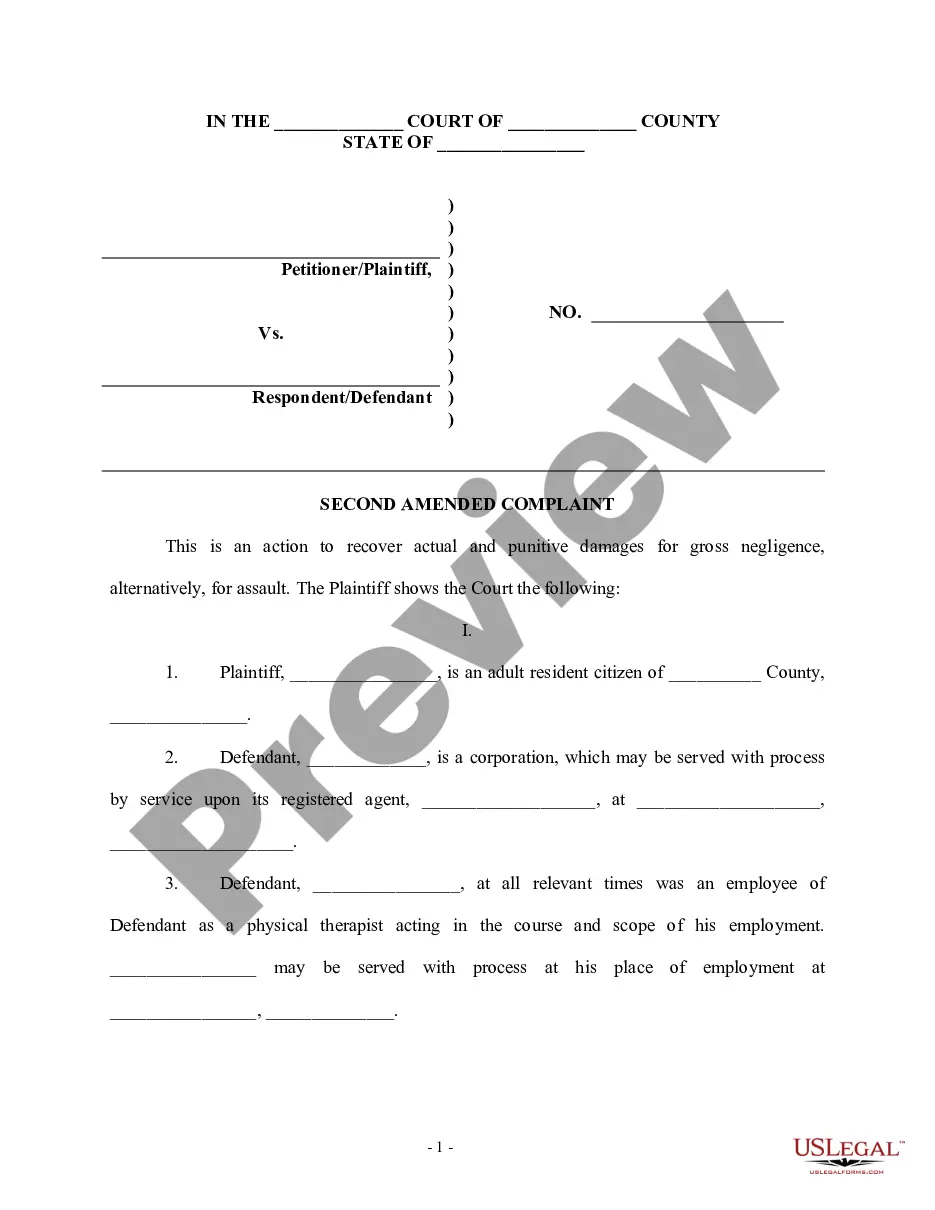
This is a Complaint pleading for use in litigation of the title matter. Adapt this form to comply with your facts and circumstances, and with your specific state law. Not recommended for use by non-attorneys.
Illinois Second Amended Complaint For Negligence - Assault By Physical Therapist - Jury Trial Demand
Category:
State:
Multi-State
Control #:
US-000298
Format:
Word;
Rich Text
Instant download
This website is not affiliated with any governmental entity
Public form
Description

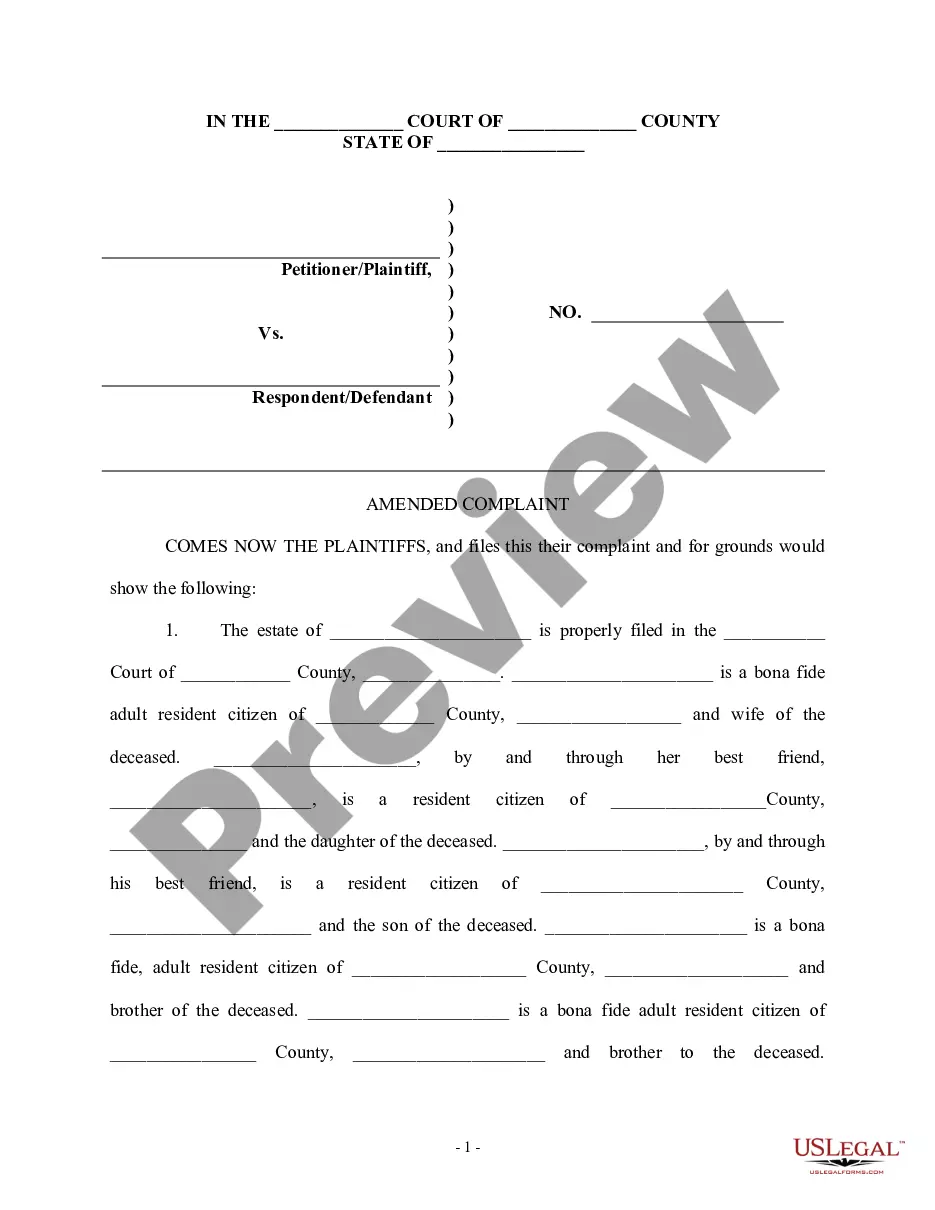
How to fill out Second Amended Complaint For Negligence - Assault By Physical Therapist - Jury Trial Demand?
It is feasible to spend hours online searching for the legal document template that aligns with the state and federal requirements you need.
US Legal Forms provides a vast collection of legal forms that can be reviewed by professionals.
You can easily download or print the Illinois Second Amended Complaint For Negligence - Assault By Physical Therapist - Jury Trial Demand from the service.
If available, utilize the Review button to view the document template at the same time. If you wish to find another version of the form, use the Lookup field to find the template that meets your needs and requirements. Once you have identified the template you want, click Get now to proceed. Choose the pricing plan you desire, enter your details, and register for an account on US Legal Forms. Complete the transaction. You can use your credit card or PayPal account to pay for the legal form. Select the format of the document and download it to your device. Make modifications to your document if applicable. You can complete, alter, and sign and print the Illinois Second Amended Complaint For Negligence - Assault By Physical Therapist - Jury Trial Demand. Download and print thousands of document templates using the US Legal Forms website, which offers the largest variety of legal forms. Utilize professional and state-specific templates to address your business or personal needs.
- If you already have a US Legal Forms account, you can Log In and click on the Download button.
- After that, you can complete, modify, print, or sign the Illinois Second Amended Complaint For Negligence - Assault By Physical Therapist - Jury Trial Demand.
- Each legal document template you purchase belongs to you permanently.
- To obtain another copy of any acquired form, visit the My documents tab and click on the appropriate button.
- If you are using the US Legal Forms website for the first time, follow the simple instructions below.
- First, ensure that you have selected the correct document template for the region/area of your choice.
- Review the form details to confirm you have chosen the right form.
Form popularity
FAQ
In Illinois, you generally have 28 days to amend a complaint without needing permission from the court. If you miss this window, you may need to seek the court's approval to make your amendments. Timeliness is crucial, especially for an Illinois Second Amended Complaint For Negligence - Assault By Physical Therapist - Jury Trial Demand, as delays can impact your case significantly.
Rule 222 in Illinois pertains to the requirement for parties involved in a lawsuit to disclose their expert witnesses. This rule helps ensure that both sides are aware of the evidence presented, promoting fairness in the legal process. It is particularly relevant in cases involving an Illinois Second Amended Complaint For Negligence - Assault By Physical Therapist - Jury Trial Demand, where expert testimony can significantly influence the outcome.
The 408 rule in Illinois relates to the admissibility of certain statements made during settlement negotiations. Under this rule, discussions aimed at settling disputes cannot be used as evidence in court. Understanding this rule is crucial when dealing with cases like the Illinois Second Amended Complaint For Negligence - Assault By Physical Therapist - Jury Trial Demand, as it affects how you approach negotiations.
Pleading can be amended in various circumstances, such as when new evidence emerges or if there are changes in legal strategy. If you discover additional facts that support your claims, like those in an Illinois Second Amended Complaint For Negligence - Assault By Physical Therapist - Jury Trial Demand, you have the right to adjust your pleadings. This flexibility is essential for presenting a comprehensive case.
In Illinois, you can amend a complaint at any time before the trial begins. This allows you to correct any errors or add new claims, such as those related to an Illinois Second Amended Complaint For Negligence - Assault By Physical Therapist - Jury Trial Demand. It is crucial to ensure that your amendments are made promptly to avoid unnecessary delays in your case.
The 5-year statute of limitations in Illinois typically applies to written contracts and certain civil actions. However, it is important to note that negligence claims generally fall under the two-year statute. If you are considering an Illinois Second Amended Complaint For Negligence - Assault By Physical Therapist - Jury Trial Demand, be mindful of the relevant deadlines to ensure your claim is filed appropriately. Knowing the correct time limits can make a significant difference in the outcome of your case.
Yes, Illinois allows punitive damages in certain cases, particularly when the defendant's conduct is found to be willful or egregious. In the context of an Illinois Second Amended Complaint For Negligence - Assault By Physical Therapist - Jury Trial Demand, punitive damages may be sought if the therapist acted with gross negligence. This type of compensation serves not only to punish the wrongdoer but also to deter similar behavior in the future. Understanding your eligibility for these damages can strengthen your case.
In Illinois, the statute of limitations for negligence claims is typically two years from the date the injury occurred. This means you must file your Illinois Second Amended Complaint For Negligence - Assault By Physical Therapist - Jury Trial Demand within this time frame to preserve your rights. Failing to act within this period can result in your claim being barred. Therefore, acting promptly is crucial to ensure your case is heard.
Yes, you can sue for emotional distress in Illinois under certain circumstances. If the actions of a physical therapist are deemed extreme or outrageous, and if they cause significant emotional harm, you may have grounds for a claim. When pursuing an Illinois Second Amended Complaint For Negligence - Assault By Physical Therapist - Jury Trial Demand, emotional distress can be included as part of the damages sought. This highlights the importance of documenting all impacts of the incident.
In Illinois, the statute of negligence refers to the legal framework governing claims of negligence. It outlines the obligations of individuals to act with reasonable care to avoid harming others. When filing an Illinois Second Amended Complaint For Negligence - Assault By Physical Therapist - Jury Trial Demand, understanding this statute can guide you in building a strong case. It is important to ensure that all elements of the negligence claim are met within the specified legal guidelines.