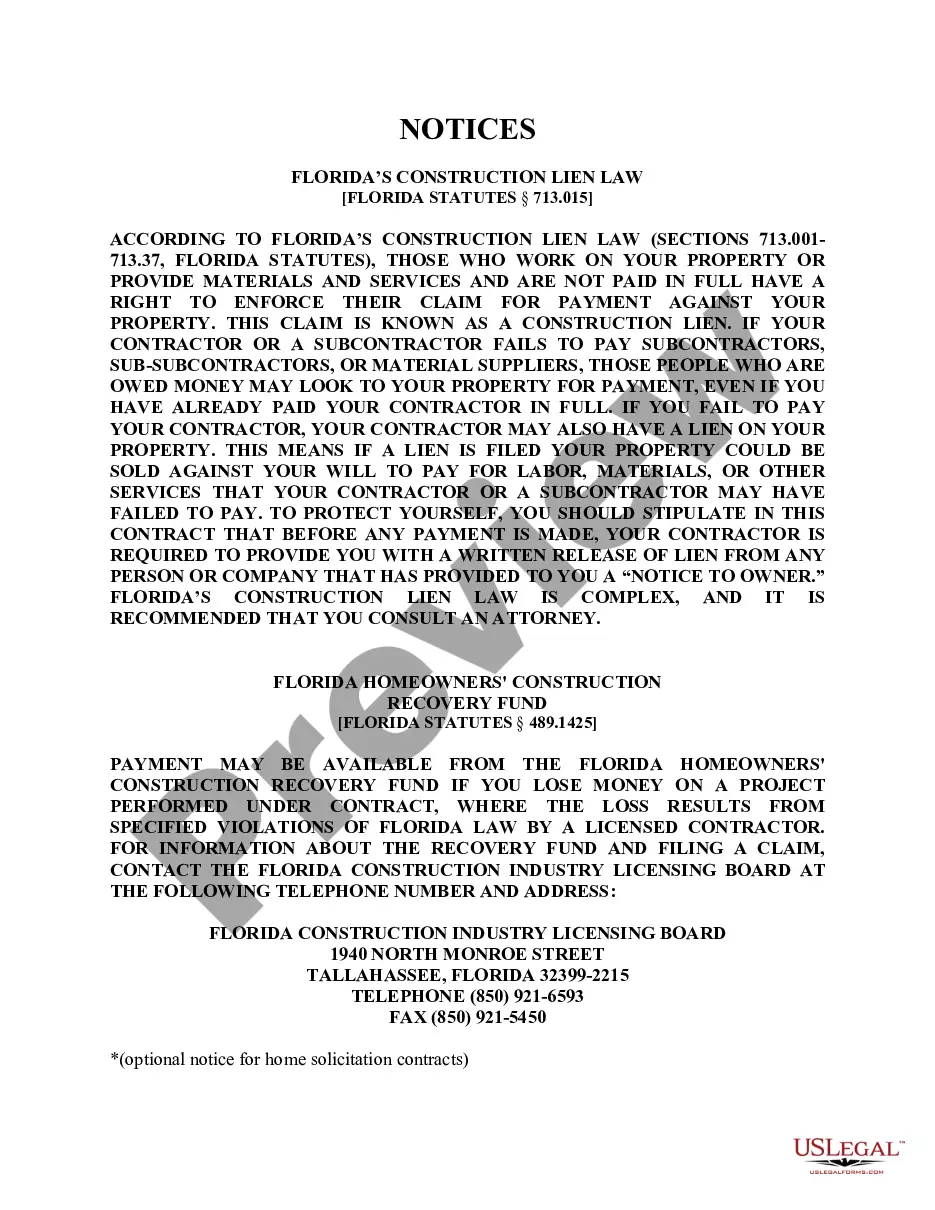
Illinois Notice of Death Affidavit
Understanding this form
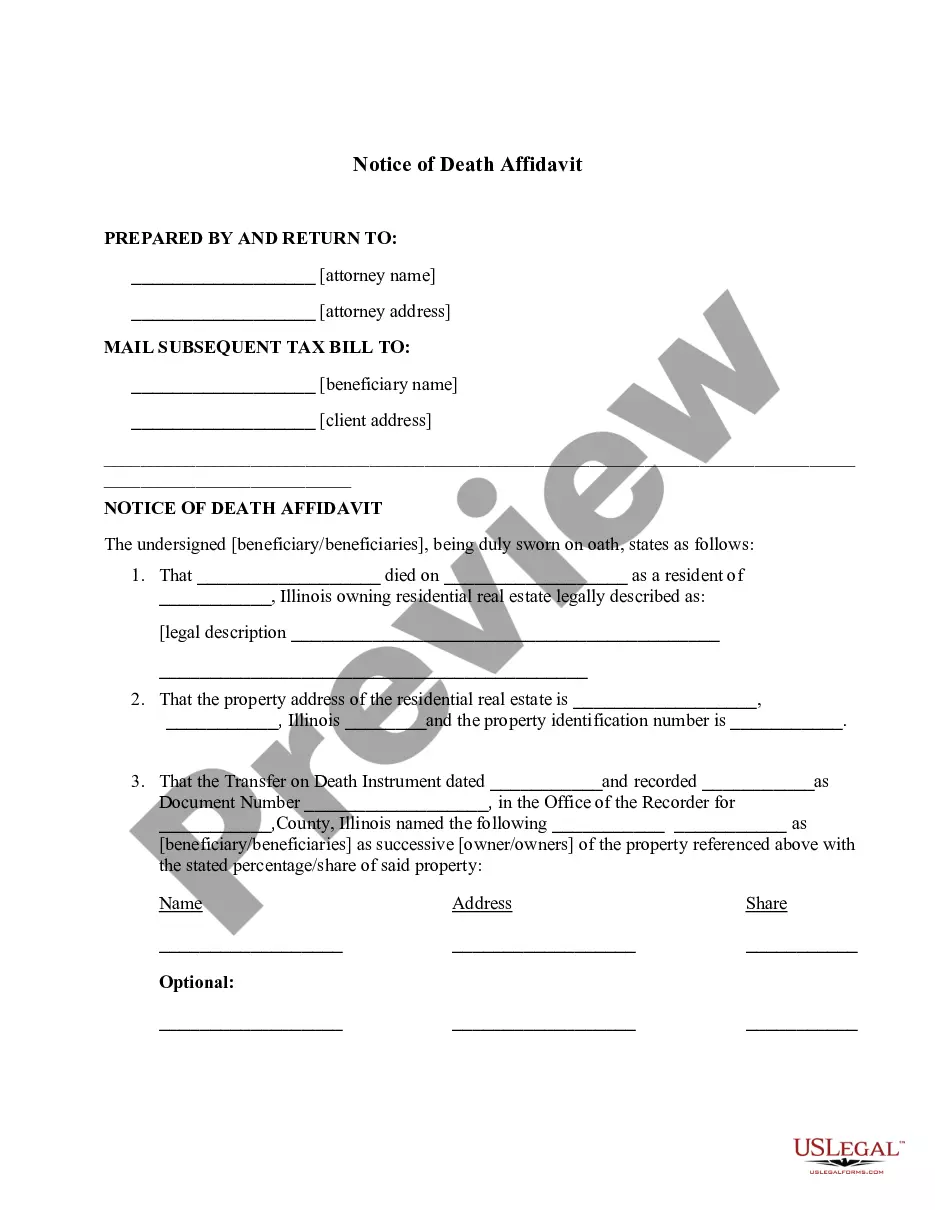
The Notice of Death Affidavit is a legal document that serves to identify the beneficiaries of a deceased individual's property under a Transfer on Death deed. This form is essential for transferring ownership of real estate without going through probate, distinguishing it from other estate documents like wills or trust agreements.
Key parts of this document
- Name of the deceased and date of death
- Legal description of the residential real estate
- Property identification number and address
- Details of the Transfer on Death Instrument, including recording information
- Names and addresses of beneficiaries along with their respective shares
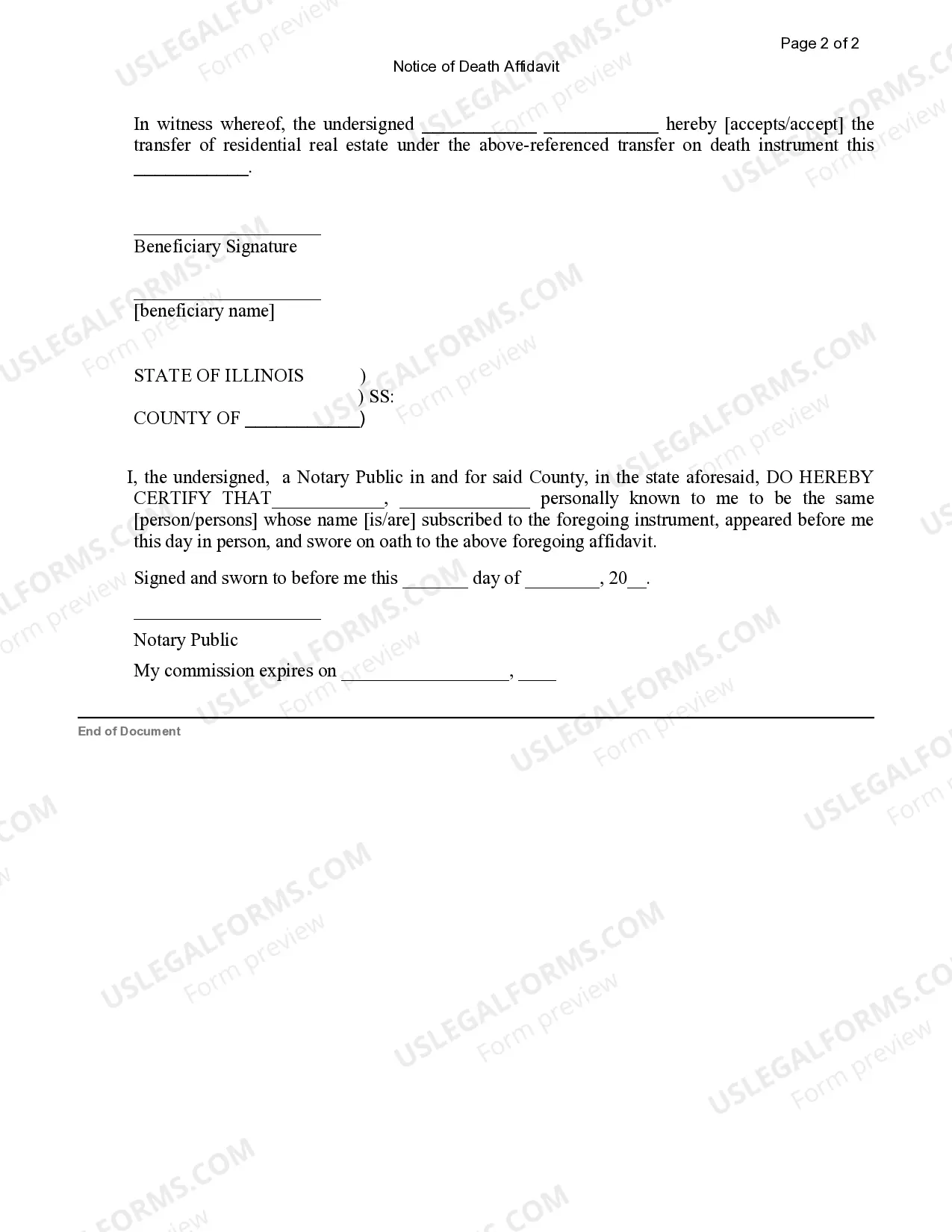
- Notary acknowledgment for legal validity
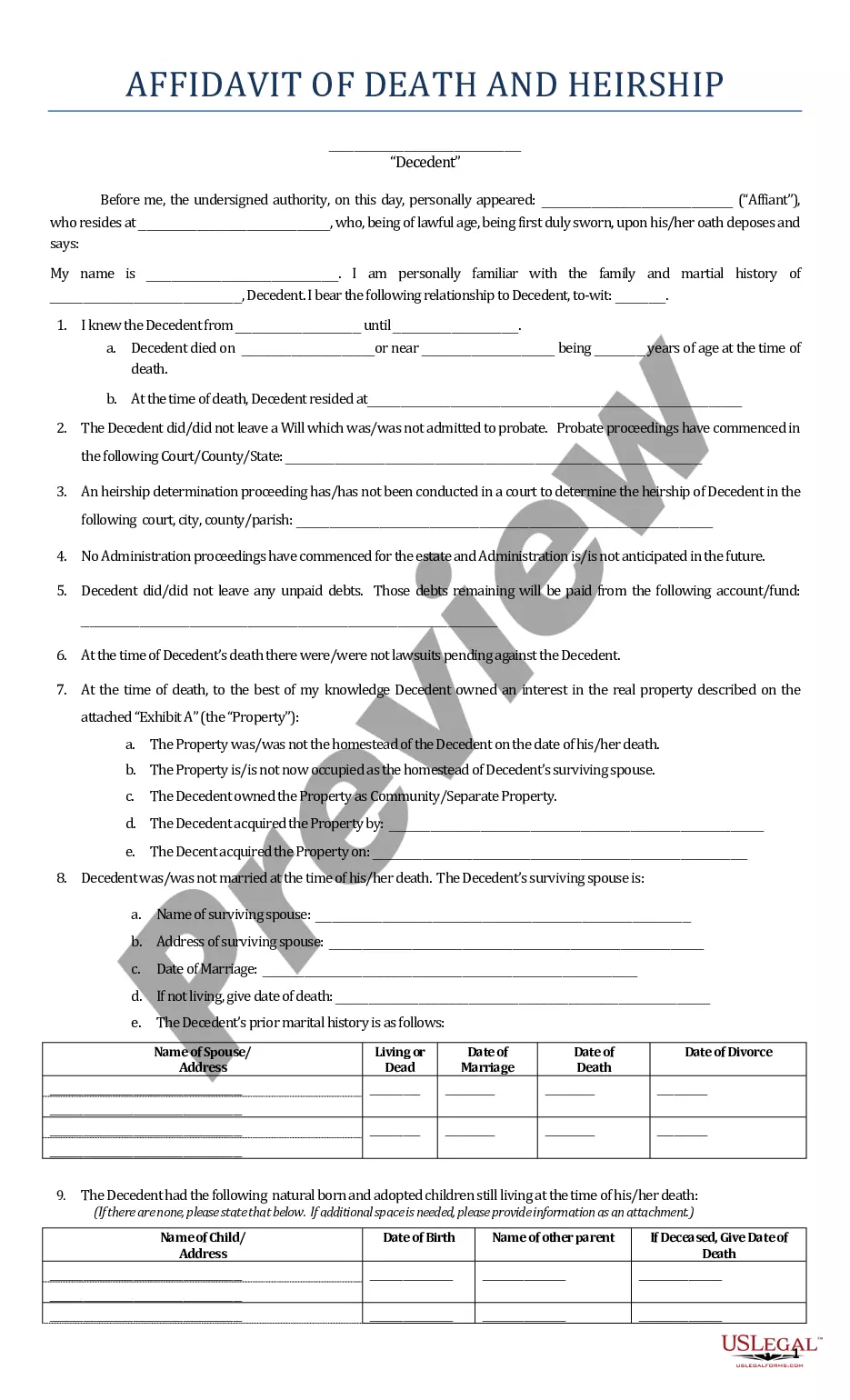
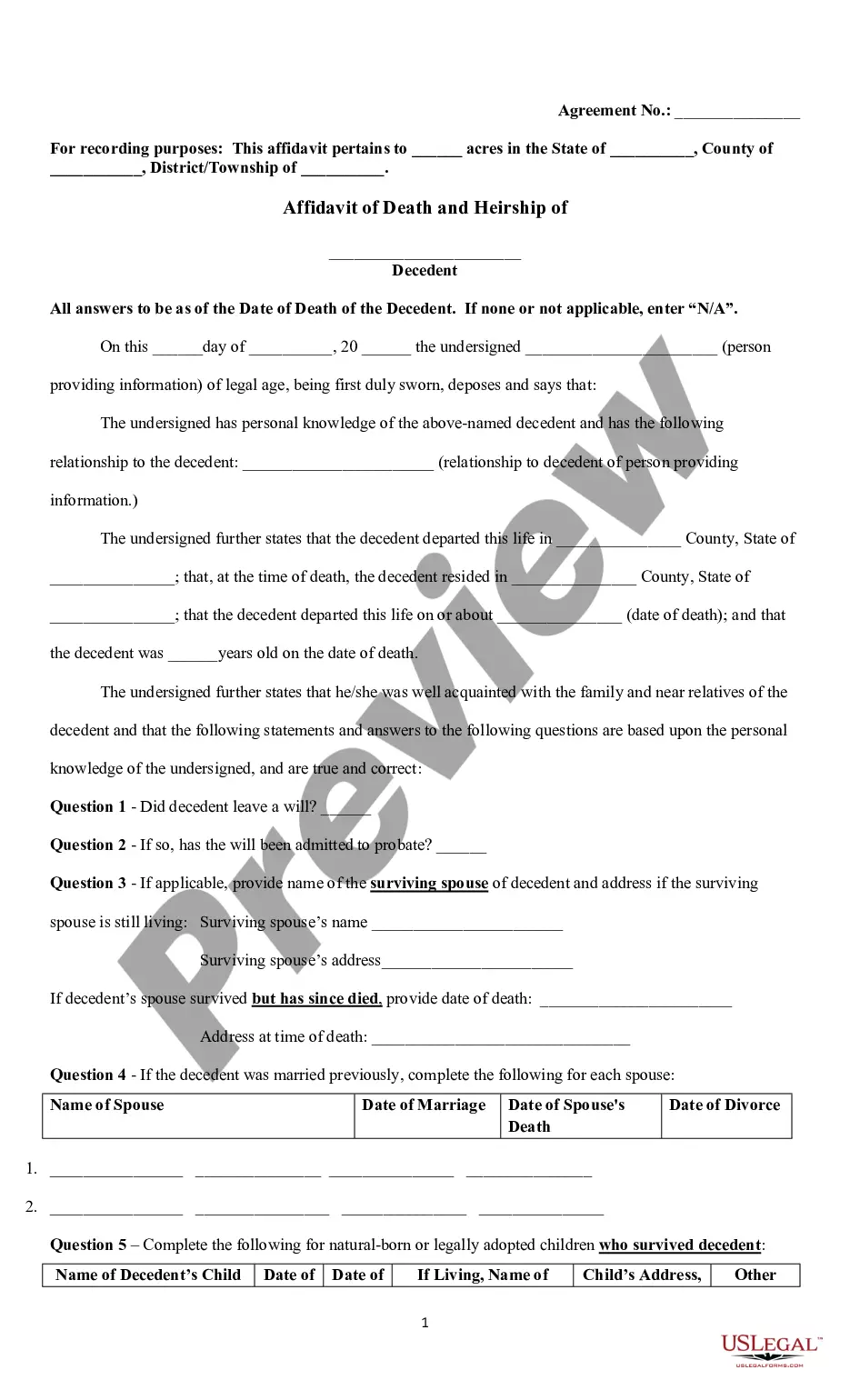
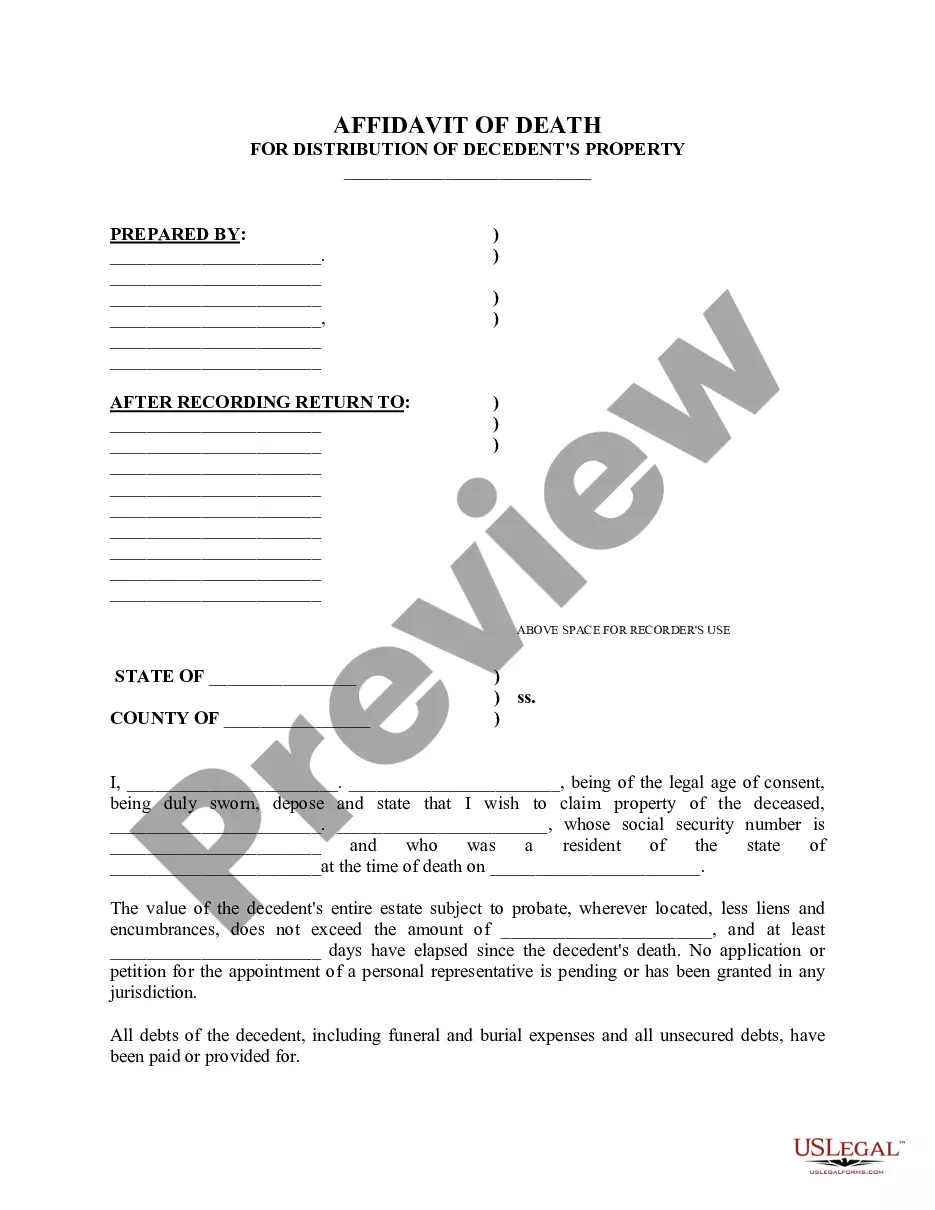
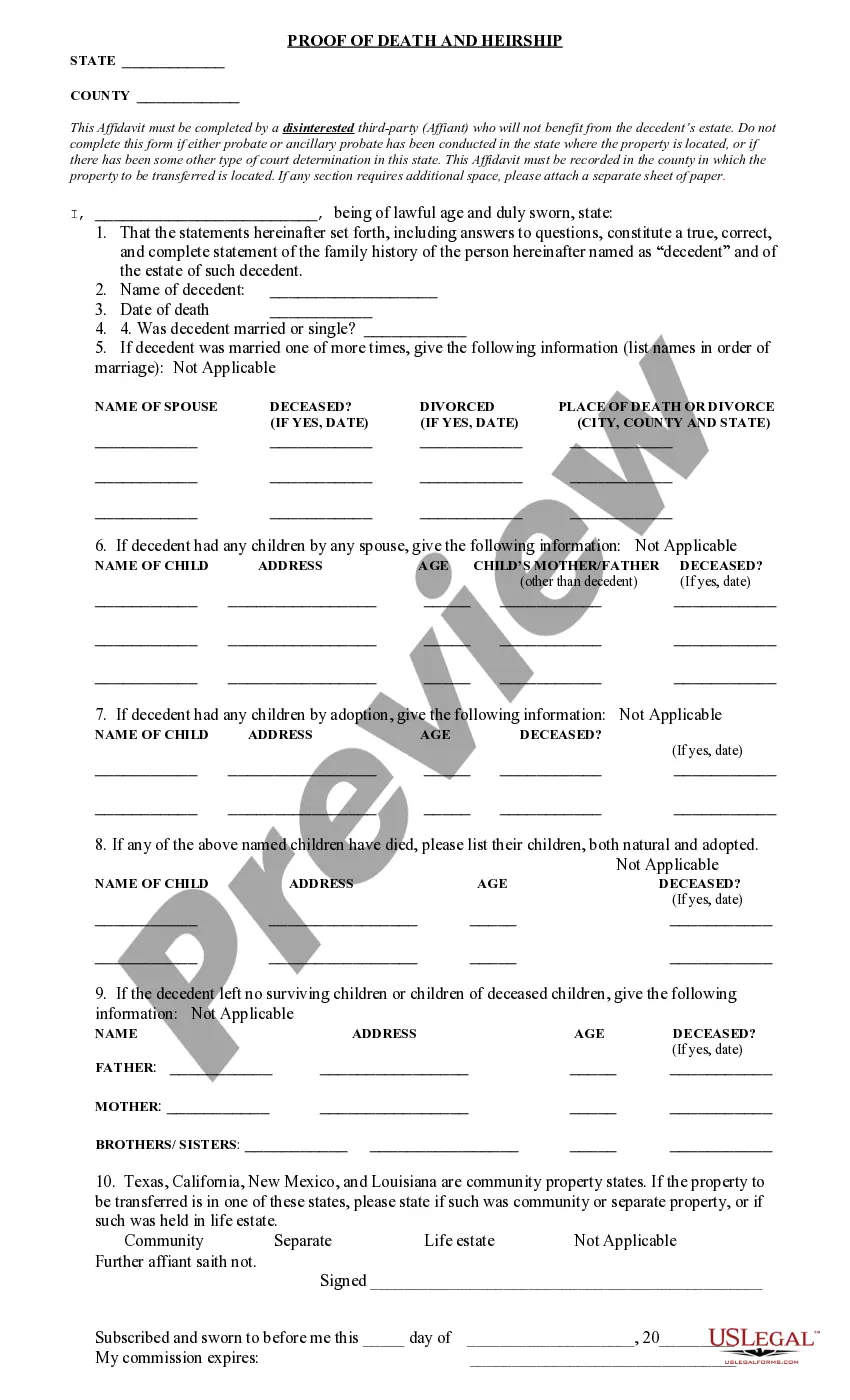
Situations where this form applies
This form is used when an individual who has executed a Transfer on Death deed passes away, and the beneficiaries need to establish their rights to the property. It is commonly utilized in situations where immediate transfer of property is required without the delays associated with probate proceedings.
Intended users of this form
- Individuals named as beneficiaries in a Transfer on Death deed
- Executors or administrators of an estate managing property transfers
- Real estate representatives handling transactions for deceased clients
- Families navigating the distribution of inherited property
Completing this form step by step
- Identify the name and date of death of the deceased individual.
- Provide the legal description and address of the residential real estate.
- Include the property identification number.
- List the beneficiaries' names, addresses, and their respective shares of the property.
- Sign the affidavit in the presence of a notary public to complete the form.
Does this document require notarization?
Yes, this form must be notarized to be legally valid. It is important to sign the affidavit in the presence of a notary public, who will verify the identities of the signers and their understanding of the document. US Legal Forms offers integrated online notarization, allowing you to complete this process securely and conveniently from anywhere.
Get your form ready online
Our built-in tools help you complete, sign, share, and store your documents in one place.
Make edits, fill in missing information, and update formatting in US Legal Forms—just like you would in MS Word.
Download a copy, print it, send it by email, or mail it via USPS—whatever works best for your next step.
Sign and collect signatures with our SignNow integration. Send to multiple recipients, set reminders, and more. Go Premium to unlock E-Sign.
If this form requires notarization, complete it online through a secure video call—no need to meet a notary in person or wait for an appointment.
We protect your documents and personal data by following strict security and privacy standards.

Make edits, fill in missing information, and update formatting in US Legal Forms—just like you would in MS Word.

Download a copy, print it, send it by email, or mail it via USPS—whatever works best for your next step.

Sign and collect signatures with our SignNow integration. Send to multiple recipients, set reminders, and more. Go Premium to unlock E-Sign.

If this form requires notarization, complete it online through a secure video call—no need to meet a notary in person or wait for an appointment.

We protect your documents and personal data by following strict security and privacy standards.
Avoid these common issues
- Failing to accurately complete the legal description of the property.
- Not including all beneficiaries or their respective shares.
- Omitting the notarization step, which can invalidate the affidavit.
- Providing outdated or incorrect property identification numbers.
Benefits of using this form online
- Quick and easy access to necessary legal documents at any time.
- Ability to fill out and edit the form conveniently from home.
- Access to templates drafted by licensed attorneys, ensuring legal accuracy.
Looking for another form?
Form popularity
FAQ
For a TODI to work successfully, the requirements in Illinois include: The owner of property must hold the same capacity as required to make a will: the individual must be 18 years or older and must be of ?sound mind and memory?
An Illinois property owner can use a transfer-on-death instrument to transfer property to one or more beneficiaries. The default rule is that multiple beneficiaries named in a TOD instrument receive the property in equal shares as tenants in common with no right of survivorship.
Chicago, Ill. ?On , the Cook County Board of Commissioners unanimously passed an ordinance temporarily reducing the cost to record Transfer on Death Instruments from $98 to $48.
You and two adult witnesses must sign the TOD instrument while in the presence of a notary public. Under Illinois law, you may not use a beneficiary of your TOD instrument or a beneficiary's spouse as a witness. This rule helps prevent conflicts of interest.
Chicago, Ill. ?On , the Cook County Board of Commissioners unanimously passed an ordinance temporarily reducing the cost to record Transfer on Death Instruments from $98 to $48.
The notice of death affidavit and acceptance shall contain the name and address of each beneficiary who shall take under the transfer on death instrument, a legal description of the property, the street address, and parcel identification number of the residential real estate, the name of the deceased owner, and the
Bring the TODI to the Recorder of Deeds office in the county where the property that you're transferring is. If it is located in more than one county, file it in every county where it is located. Bring your signed TODI form. Tell them you want to record your TODI.
If you register an account in TOD (also called beneficiary) form, the beneficiary you name will inherit the account automatically at your death. No probate court proceedings will be necessary; the beneficiary will deal directly with the brokerage company to transfer the account.