Illinois Temporary Construction Easement
About this form
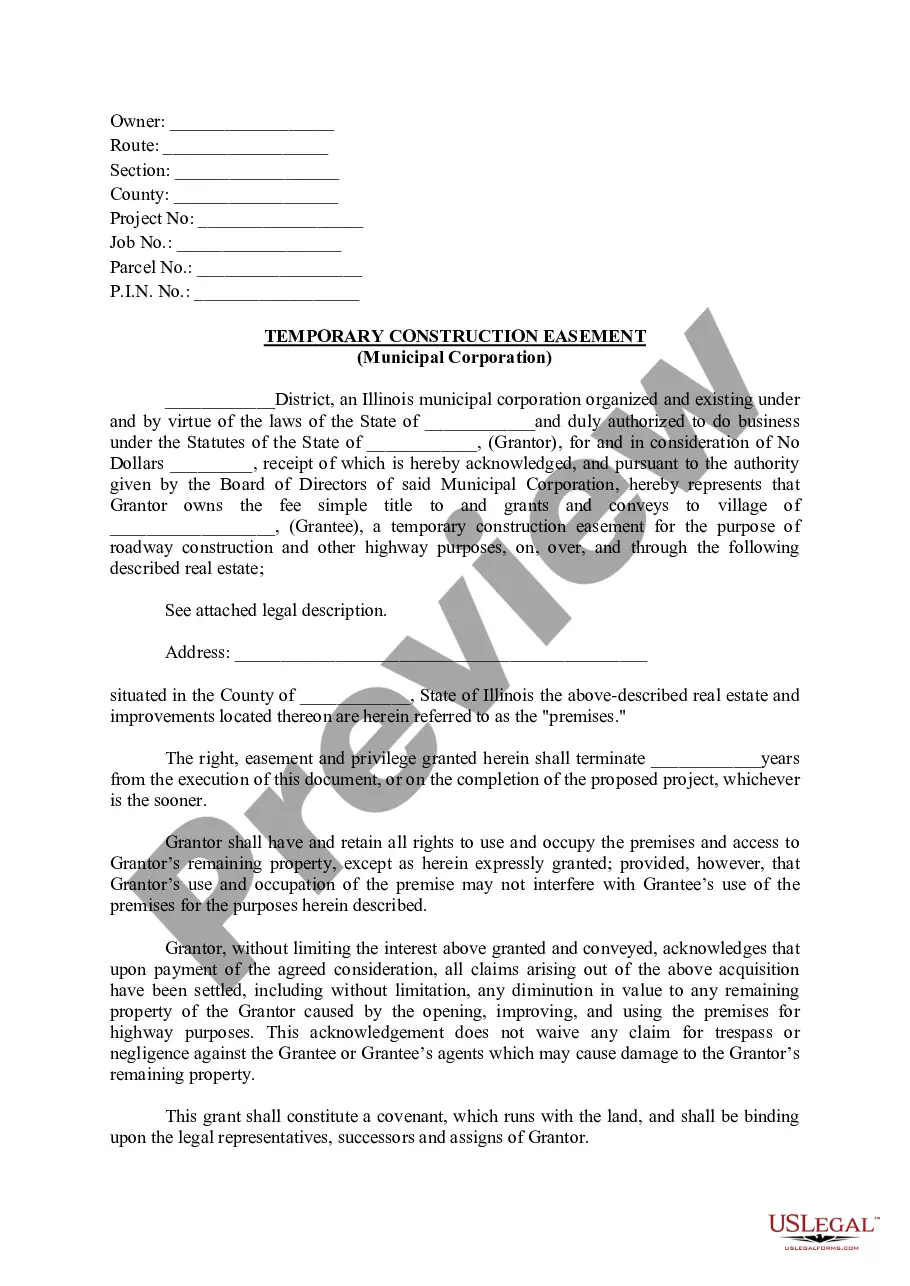
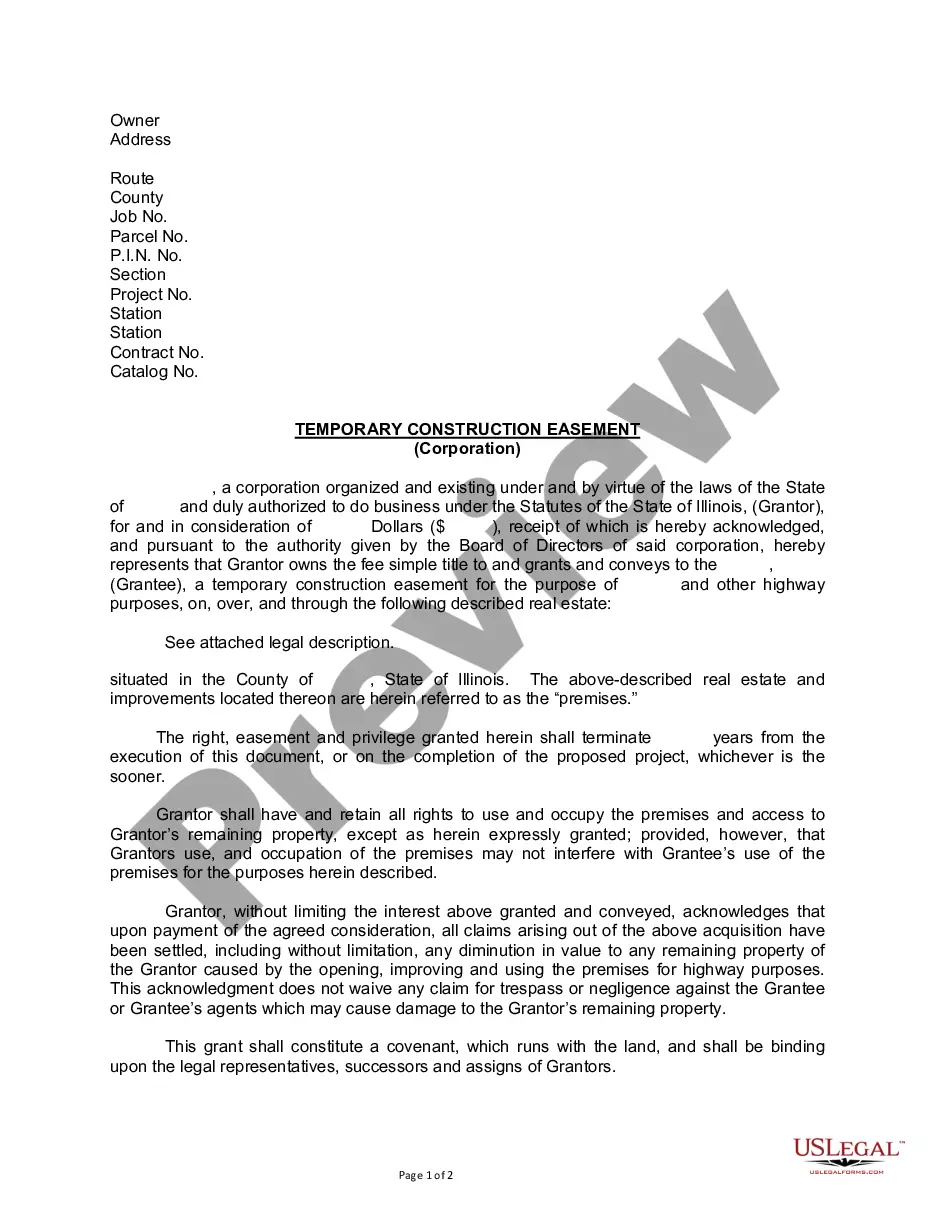
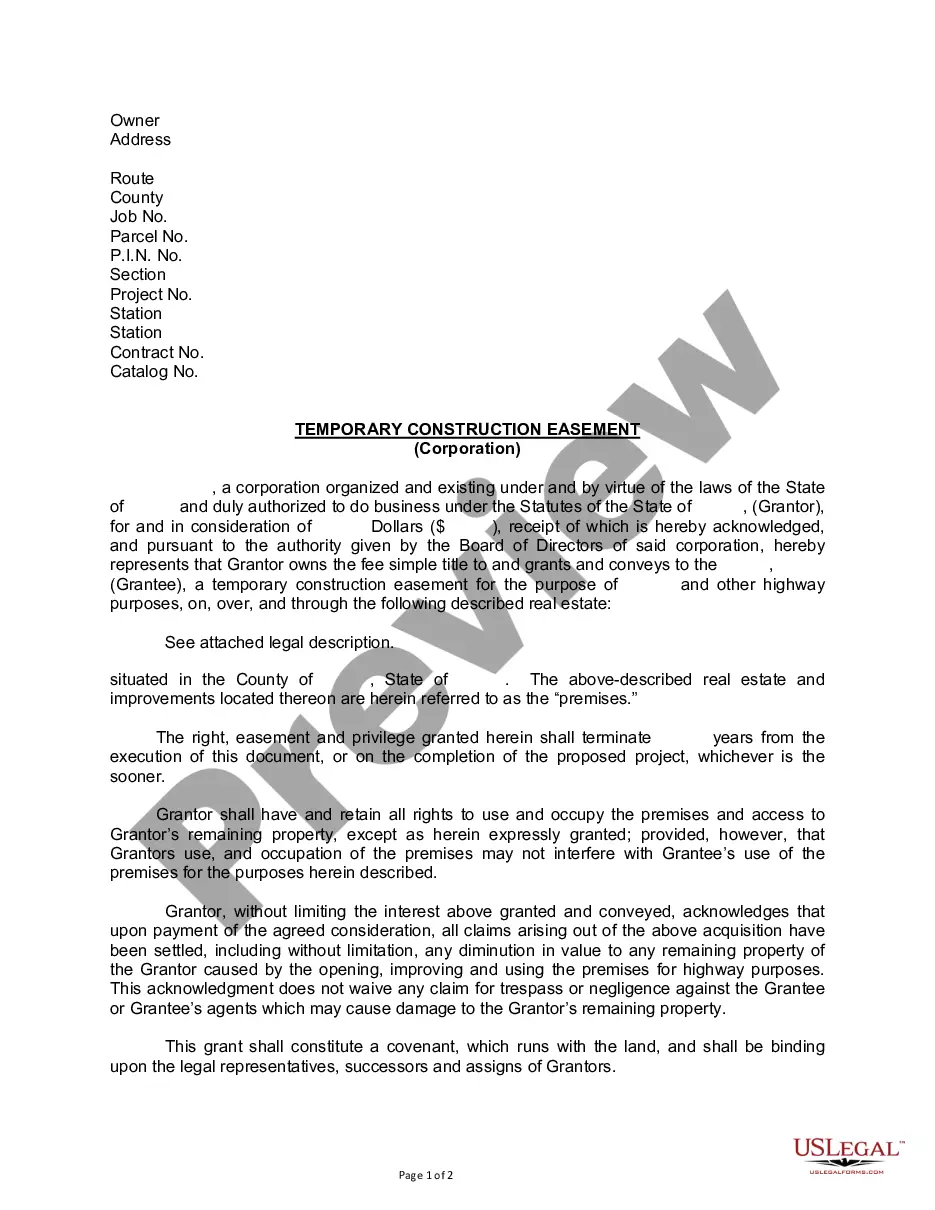
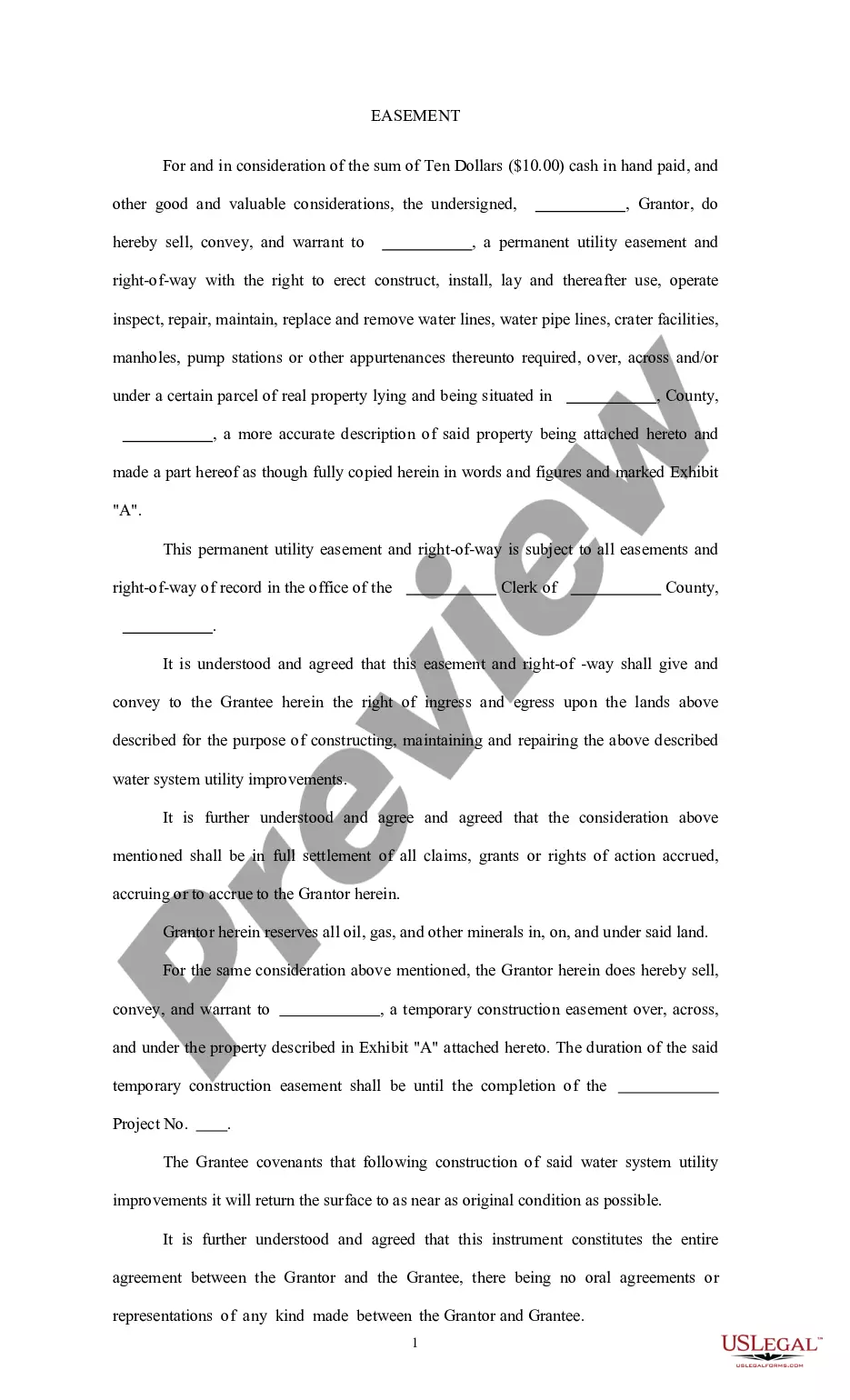
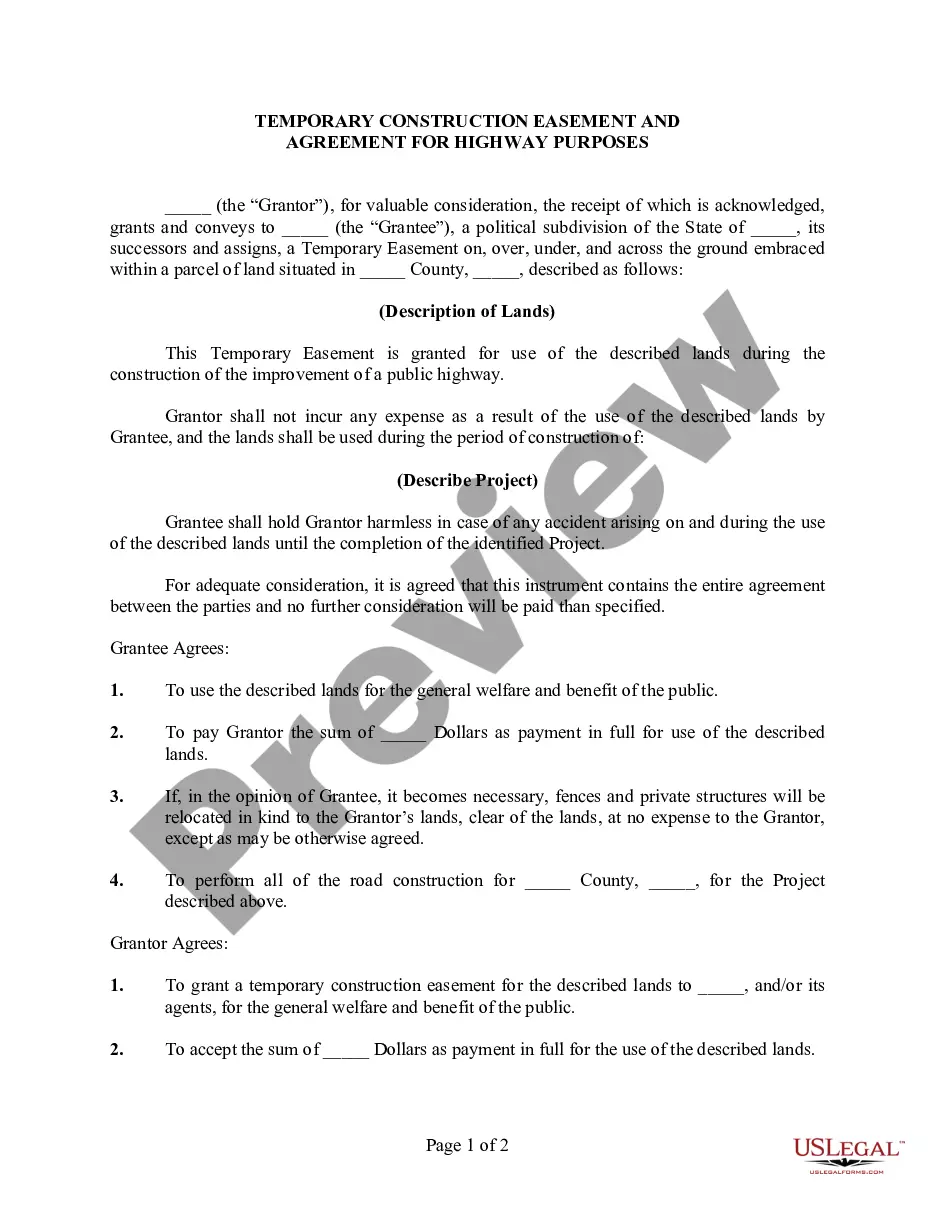
The Temporary Construction Easement is a legal document that grants a temporary right to use a portion of a property for roadway construction and other highway-related purposes. Unlike permanent easements, this form specifies a limited duration and is primarily used by municipal corporations to facilitate essential public projects while ensuring the property owner retains overall rights to their land.
Key parts of this document
- Owner's details: Identifies the property owner granting the easement.
- Grantee's information: Specifies the municipal corporation receiving the easement.
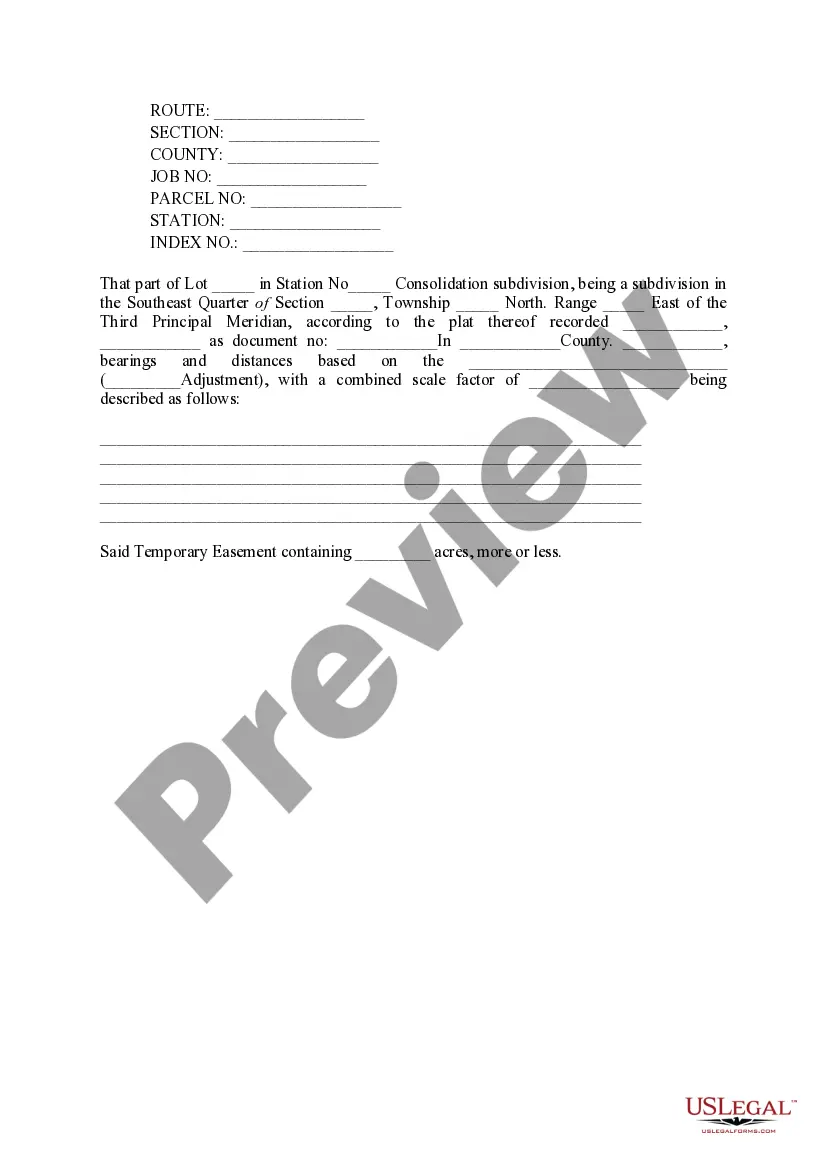
- Property description: Clearly describes the location and boundaries of the property in question.
- Duration of easement: States the time frame for which the easement is valid.
- Rights and obligations: Outlines the rights retained by the property owner and the responsibilities of the grantee.
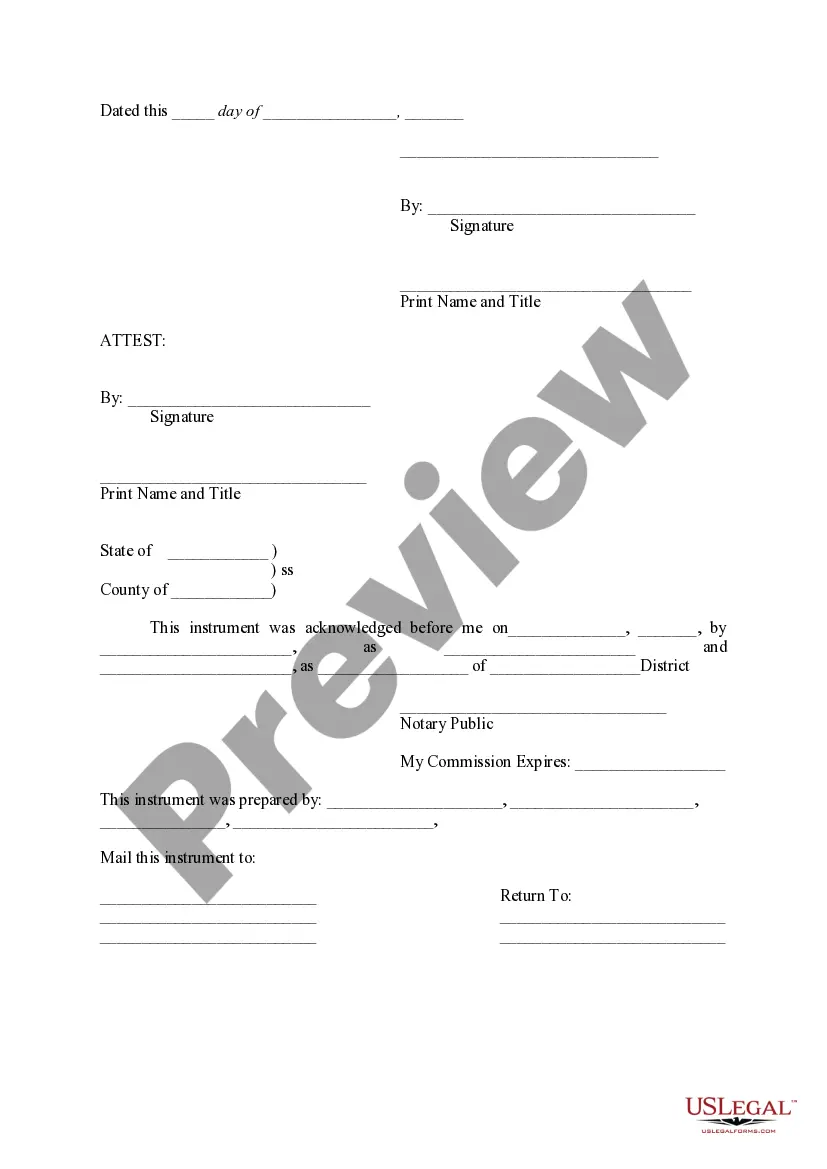
- Notarization section: Requires acknowledgment by a notary public to validate the agreement.

When this form is needed
This form should be used when a municipal corporation needs temporary access to private property for construction projects, such as building roads or improving existing highways. It is particularly relevant during public initiatives where access to property is necessary, but a permanent easement is not justified.
Who should use this form
- Municipal corporations looking to conduct roadway construction on private property.
- Property owners who are approached about granting temporary easements for public works projects.
- Contractors or project managers involved in public infrastructure development.
Completing this form step by step
- Identify the parties involved: Fill in the names of the property owner (Grantor) and municipal corporation (Grantee).
- Complete the property description: Provide an accurate legal description of the property being utilized.
- Specify the duration: Indicate the length of time the easement will remain in effect or mark when the project is expected to complete.
- Sign and date the document: Ensure the form is signed by the appropriate parties and dated correctly.
- Obtain notarization: Take the signed form to a notary public to meet legal requirements.
Notarization guidance
Yes, this form must be notarized to be legally valid. It is essential to have the signatures witnessed and authenticated by a notary public, ensuring that the agreement is enforceable in a court of law.
Get your form ready online
Our built-in tools help you complete, sign, share, and store your documents in one place.
Make edits, fill in missing information, and update formatting in US Legal Forms—just like you would in MS Word.
Download a copy, print it, send it by email, or mail it via USPS—whatever works best for your next step.
Sign and collect signatures with our SignNow integration. Send to multiple recipients, set reminders, and more. Go Premium to unlock E-Sign.
If this form requires notarization, complete it online through a secure video call—no need to meet a notary in person or wait for an appointment.
We protect your documents and personal data by following strict security and privacy standards.

Make edits, fill in missing information, and update formatting in US Legal Forms—just like you would in MS Word.

Download a copy, print it, send it by email, or mail it via USPS—whatever works best for your next step.

Sign and collect signatures with our SignNow integration. Send to multiple recipients, set reminders, and more. Go Premium to unlock E-Sign.

If this form requires notarization, complete it online through a secure video call—no need to meet a notary in person or wait for an appointment.

We protect your documents and personal data by following strict security and privacy standards.
Mistakes to watch out for
- Failing to provide a complete property description, leading to potential legal disputes.
- Incorrectly specifying the duration of the easement, which can complicate project timelines.
- Neglecting notarization, which is vital for the validity of the document.
Benefits of completing this form online
- Convenience: Easily download and complete the form from any location.
- Editability: Tailor the form fields to match the specific details of your project and property.
- Reliability: Access forms reviewed by licensed attorneys for accuracy and compliance with state laws.
Looking for another form?

Form popularity
FAQ
Temporary Easement means a grant in the manner of a permission to enter, easements of a limited duration or time or other similar written permission for the purposes of temporary access or in the case of the District temporary access, construction, repair or maintenance.
Courts generally assume easements are created to last forever unless otherwise indicated in the document creating the easement. Despite this, an individual granting an easement should avoid any potential problems by expressly providing that the easement is permanent.
Easements generally survive conveyances and can only be terminated by completion, destruction, or expiration. So, having an easement on a property may have a permanent outcome on the property with rights of the home owner. But not all easements are bad.
The right to walk is the easement and lawful use cannot be trespassing. If the easement sets out a right to walk, then the owner of the land is bound to abide by that and allow use.
An easement is a limited right to use another person's land for a stated purpose. Examples of easements include the use of private roads and paths, or the use of a landowner's property to lay railroad tracks or electrical wires.
Easements are legal designations that allow individuals or entities to use portions of your property (to build on or for physical access), even though you still own the land and technically have a right to build on it.
No-Build Easements are commonly used in circumstances such as assuring a minimum fire-separation distance from a building on an adjoining property, assuring excavation access to buried utilities, or preserving parking, sunlight and air access, landscaping, or open-space.
A property easement is a legal situation in which the title to a specific piece land remains with the landowner, but another person or organization is given the right to use that land for a distinct purpose.