Illinois Fee Agreement
What is this form?
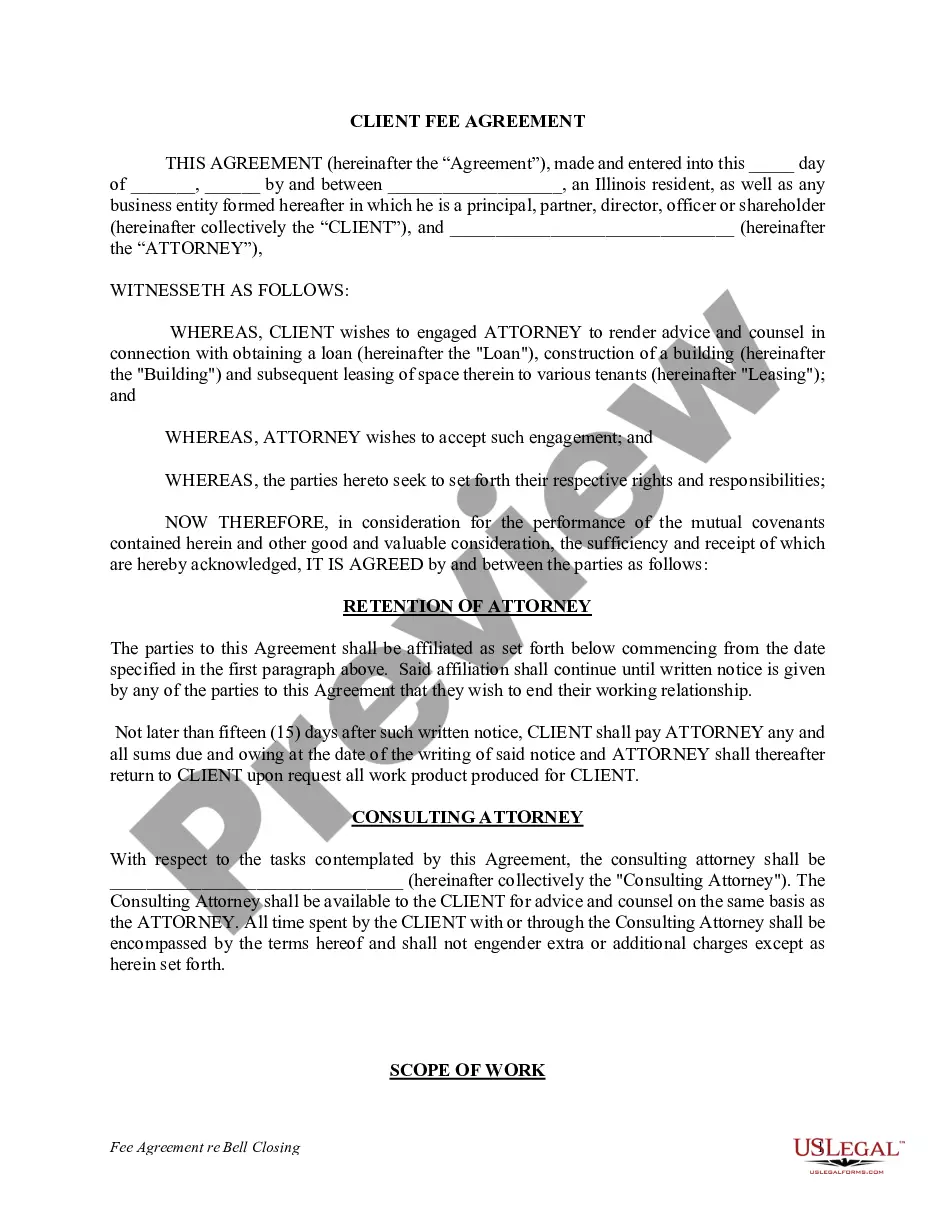
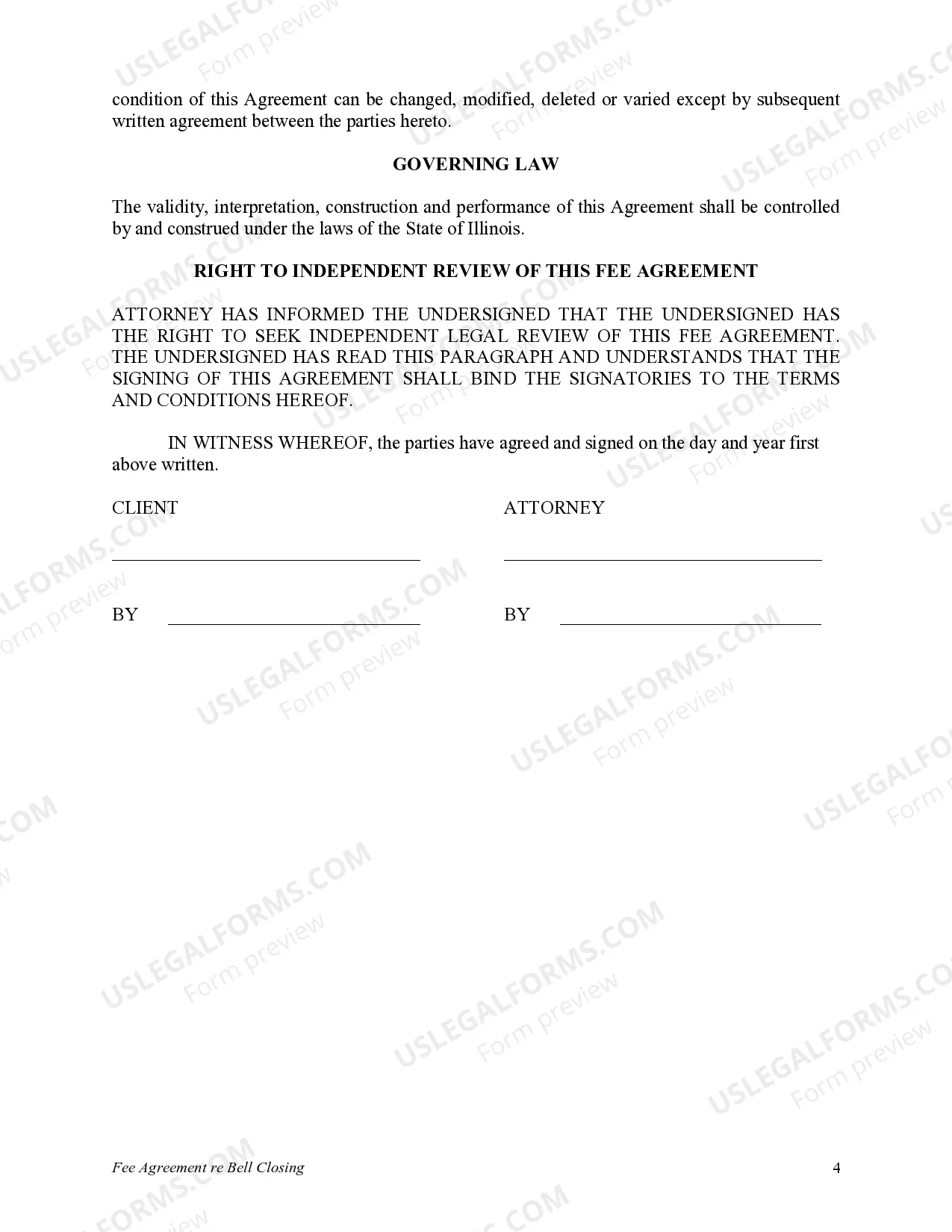
The Fee Agreement is a legal document between an attorney and their client that outlines the payment terms for services rendered. This form specifies the fees, payment arrangements, and responsibilities of both parties, ensuring clarity in the attorney-client relationship. It differs from other agreements by focusing primarily on the financial aspects of legal services provided.
Key components of this form
- Identification of the CLIENT and ATTORNEY.
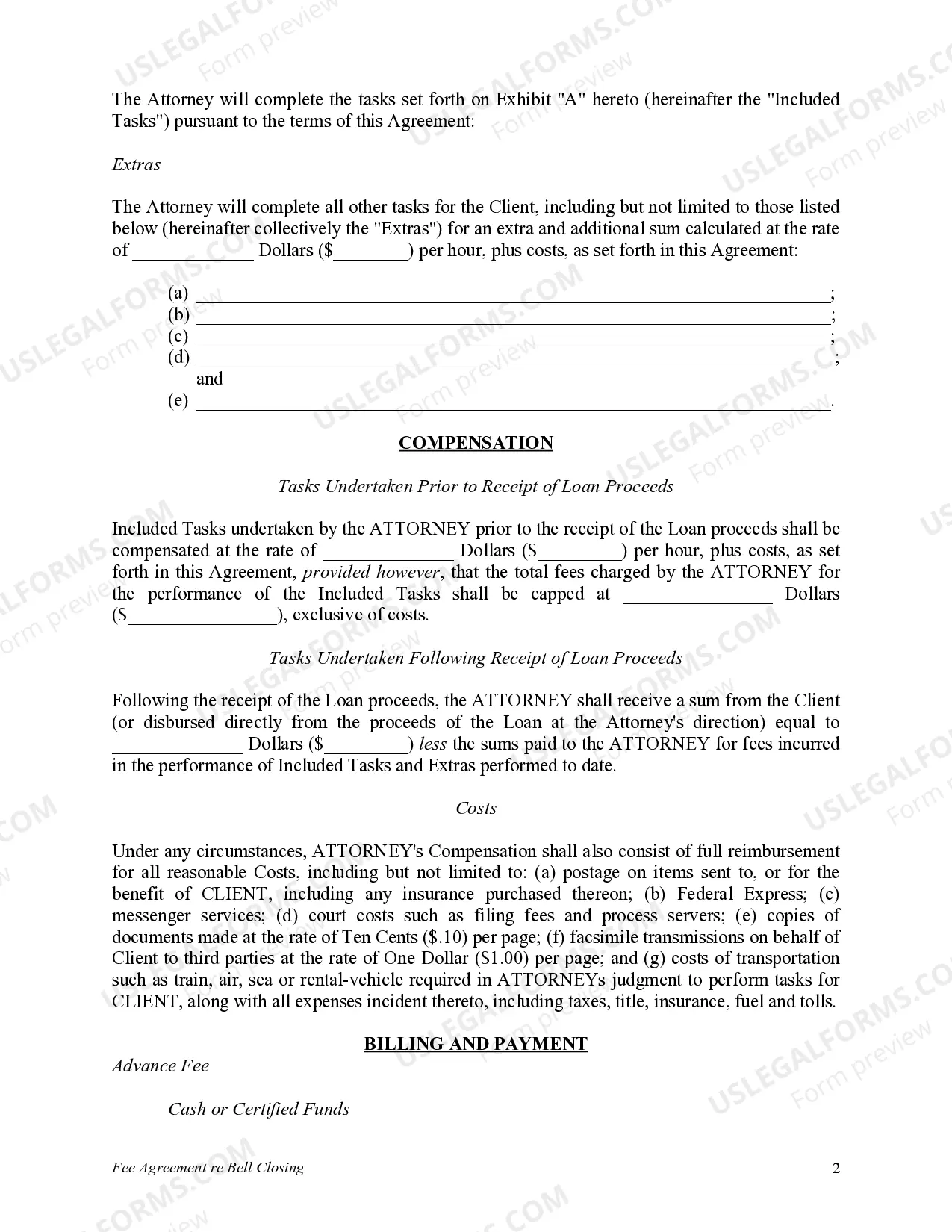
- Scope of work detailing included tasks and additional extras.
- Compensation structure for services before and after receipt of loan proceeds.
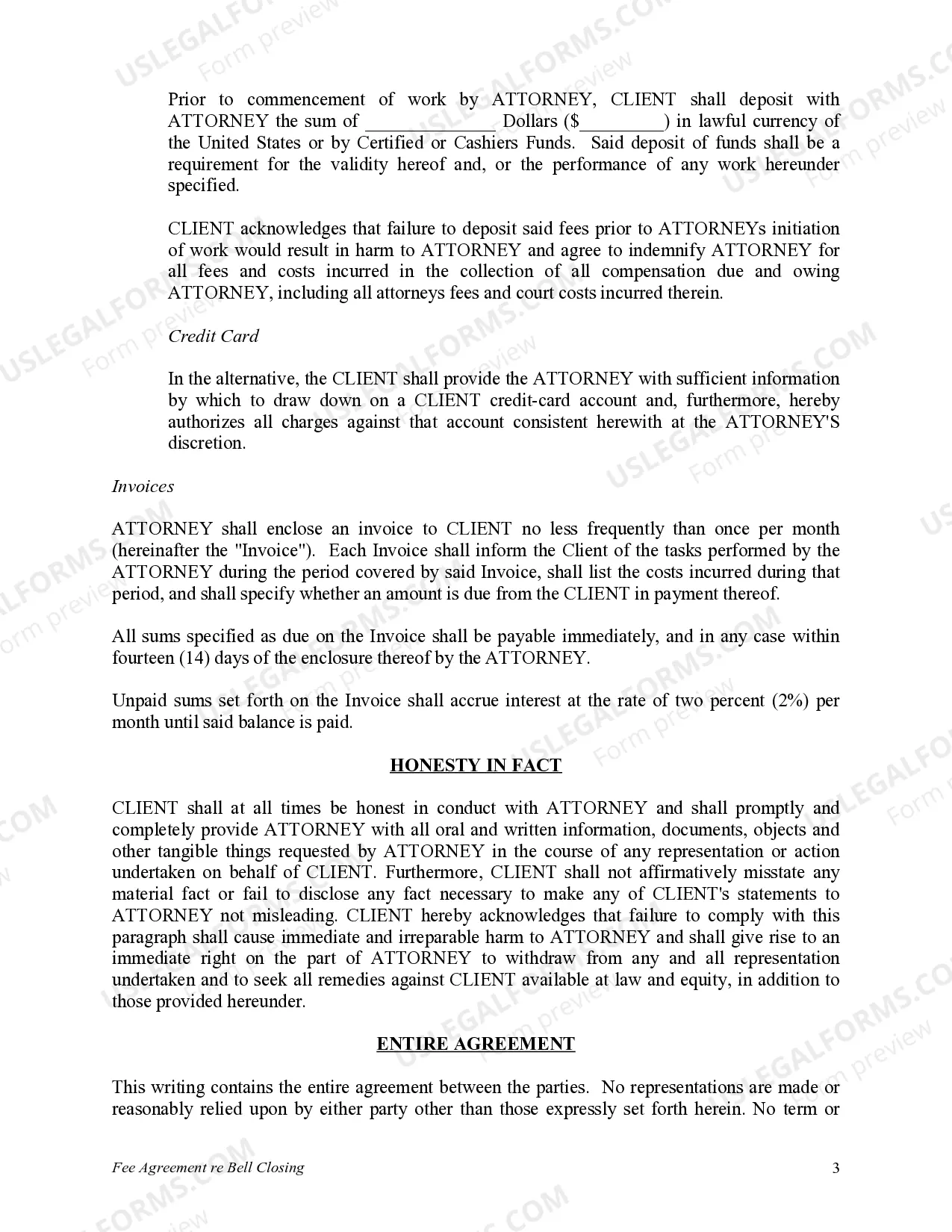
- Billing and payment terms including advance fees and invoicing.
- Requirements for honesty in client communications with the attorney.
- Governing law that specifies jurisdiction as the State of Illinois.




When this form is needed
This form is essential when a client hires an attorney for specific services, such as securing a loan, constructing a building, or leasing space. It should be utilized whenever there is a need to formalize the fees and payment expectations in order to prevent misunderstandings and protect both parties' interests.
Who should use this form
- Individuals hiring an attorney for legal counsel and representation.
- Business entities requiring legal assistance for operational matters.
- Clients seeking clarity on the costs associated with legal services.
Completing this form step by step
- Identify and enter the respective names and addresses of the CLIENT and the ATTORNEY.
- Specify the scope of work by selecting the tasks to be included in the agreement.
- Detail the compensation rates for included tasks and any extras that may arise.
- Include terms regarding advance fees and payment methods.
- Ensure all parties sign and date the agreement to validate it.
Notarization guidance
Notarization is not commonly needed for this form. However, certain documents or local rules may make it necessary. Our notarization service, powered by Notarize, allows you to finalize it securely online anytime, day or night.
Get your form ready online
Our built-in tools help you complete, sign, share, and store your documents in one place.
Make edits, fill in missing information, and update formatting in US Legal Forms—just like you would in MS Word.
Download a copy, print it, send it by email, or mail it via USPS—whatever works best for your next step.
Sign and collect signatures with our SignNow integration. Send to multiple recipients, set reminders, and more. Go Premium to unlock E-Sign.
If this form requires notarization, complete it online through a secure video call—no need to meet a notary in person or wait for an appointment.
We protect your documents and personal data by following strict security and privacy standards.

Make edits, fill in missing information, and update formatting in US Legal Forms—just like you would in MS Word.

Download a copy, print it, send it by email, or mail it via USPS—whatever works best for your next step.

Sign and collect signatures with our SignNow integration. Send to multiple recipients, set reminders, and more. Go Premium to unlock E-Sign.

If this form requires notarization, complete it online through a secure video call—no need to meet a notary in person or wait for an appointment.

We protect your documents and personal data by following strict security and privacy standards.
Avoid these common issues
- Failing to clarify all tasks and responsibilities in the scope of work.
- Neglecting to specify payment methods and due dates clearly.
- Not obtaining signatures from both the CLIENT and ATTORNEY.
- Forgetting to include terms regarding termination of the agreement.
Why use this form online
- Easy access to professionally drafted templates without the need for in-person consultation.
- Options to edit and customize the form to meet specific needs.
- Immediate download allows for quick use in urgent situations.
Legal use & context
- The Fee Agreement is enforceable as a legal contract under state law, provided both parties agree to its terms.
- It is important for clients to understand their obligations and rights under this agreement to avoid any legal disputes.
Summary of main points
- The Fee Agreement clarifies payment arrangements between an attorney and client.
- Completion requires accurate information and mutual agreement on terms.
- Consult local regulations to ensure compliance, especially when used outside Illinois.
Looking for another form?


Form popularity
FAQ
Contact the city courthouse. Seek free lawyer consultations. Look to legal aid societies. Visit a law school. Contact your county or state bar association. Go to small claims court.
Starting February 1, 2020, The Law Society and ALIA will no longer accept payment by cheque or credit card. Payments can be made via online banking or electronic funds transfer (EFT).
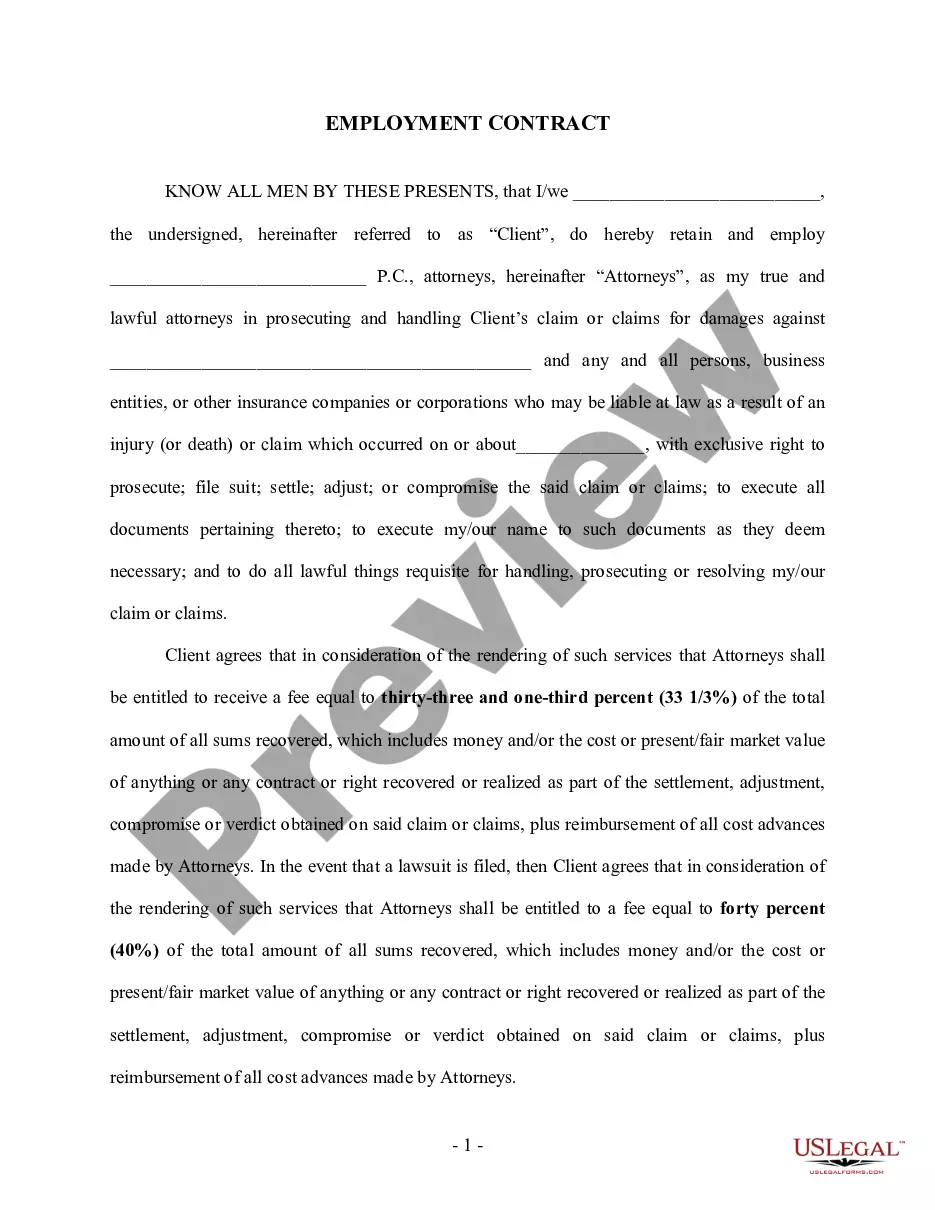
To put it another way, with a contingency fee, payment for your attorney's services is "contingent upon" your receiving some amount of compensation. Your attorney will take an agreed-upon percentage of your recovery. This percentage is often around 1/3 or 33%.
When to Negotiate Attorney Fees You won't be able to negotiate lower fees after you've already signed a contract. You can successfully negotiate contingency fees for injury cases if you are well organized and ready to give the attorney a good reason for the reduction.
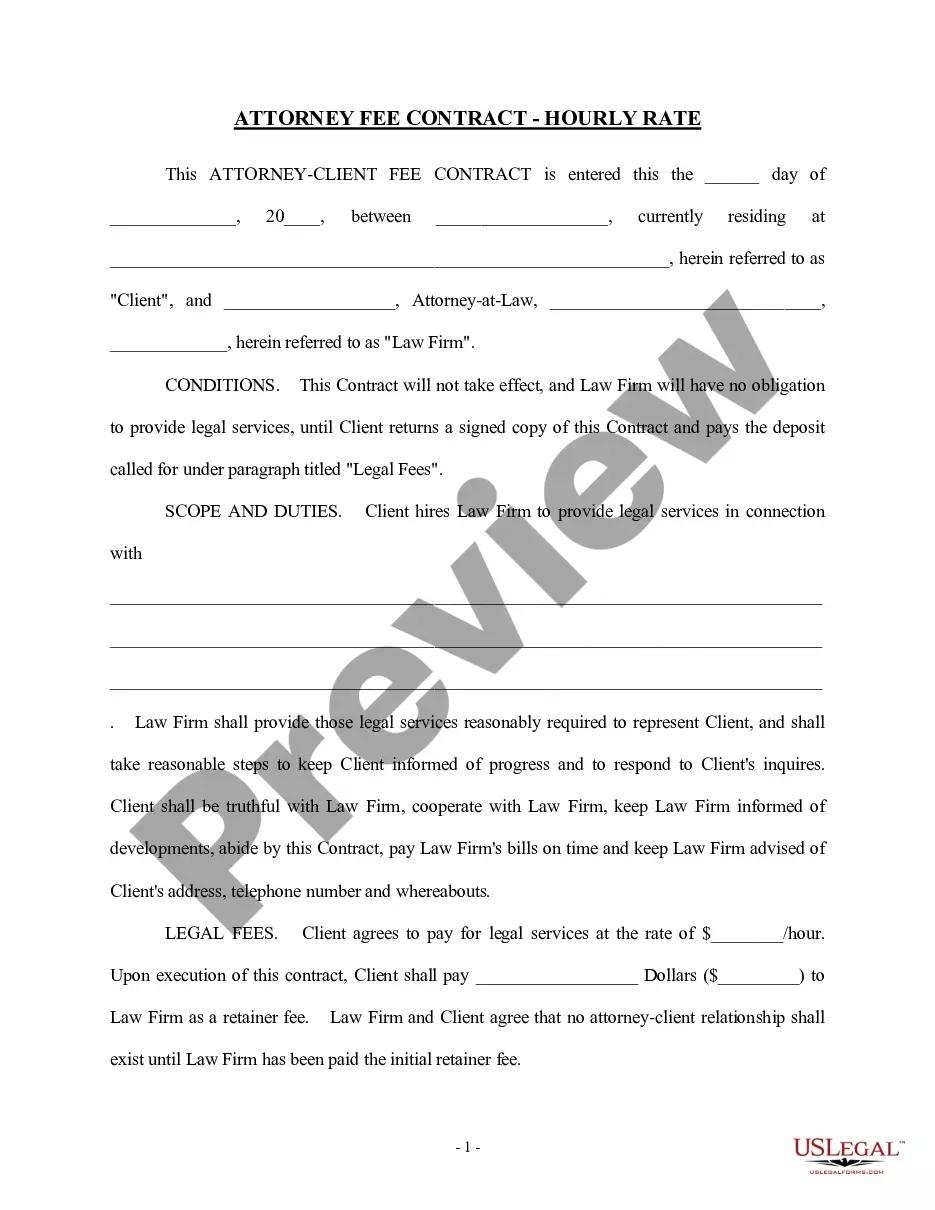
Hourly Rate: This is the most typical type of attorney fee arrangement. The lawyer charges a per hour rate, and usually tracks his or her time in fractions of an hour (often 10ths of an hour / 6 minute increments).
A fee agreementalso called a retainer agreement or representation agreementsets out the fees, as well as the terms of the lawyer-client relationship.A fee agreement is a contract that binds both you and the lawyer.
The standard contingency fee for an attorney is a percentage amount rather than a fixed amount. Most personal injury lawyers charge 33 1/3 percent if the case settles without filing a lawsuit and 40% if a lawsuit is filed. Most employment lawyers charge a 40% fee.
Contingency fee. Retainer fee. Statutory fee. Negotiate a contingency fee. Negotiate pro bono (for high profile cases) Raise funds online. Set up a payment plan to pay your legal fees. Secure a statute that awards fees.
You can ask if your lawyer's firm will allow you to make payments over time. Sometimes law firms can offer those arrangements. For example, you might be able to pay your legal costs by instalments. You should check whether there will be any additional charge for paying in this way.