Illinois Contract to Purchase Agricultural Land with Improvements
What is this form?
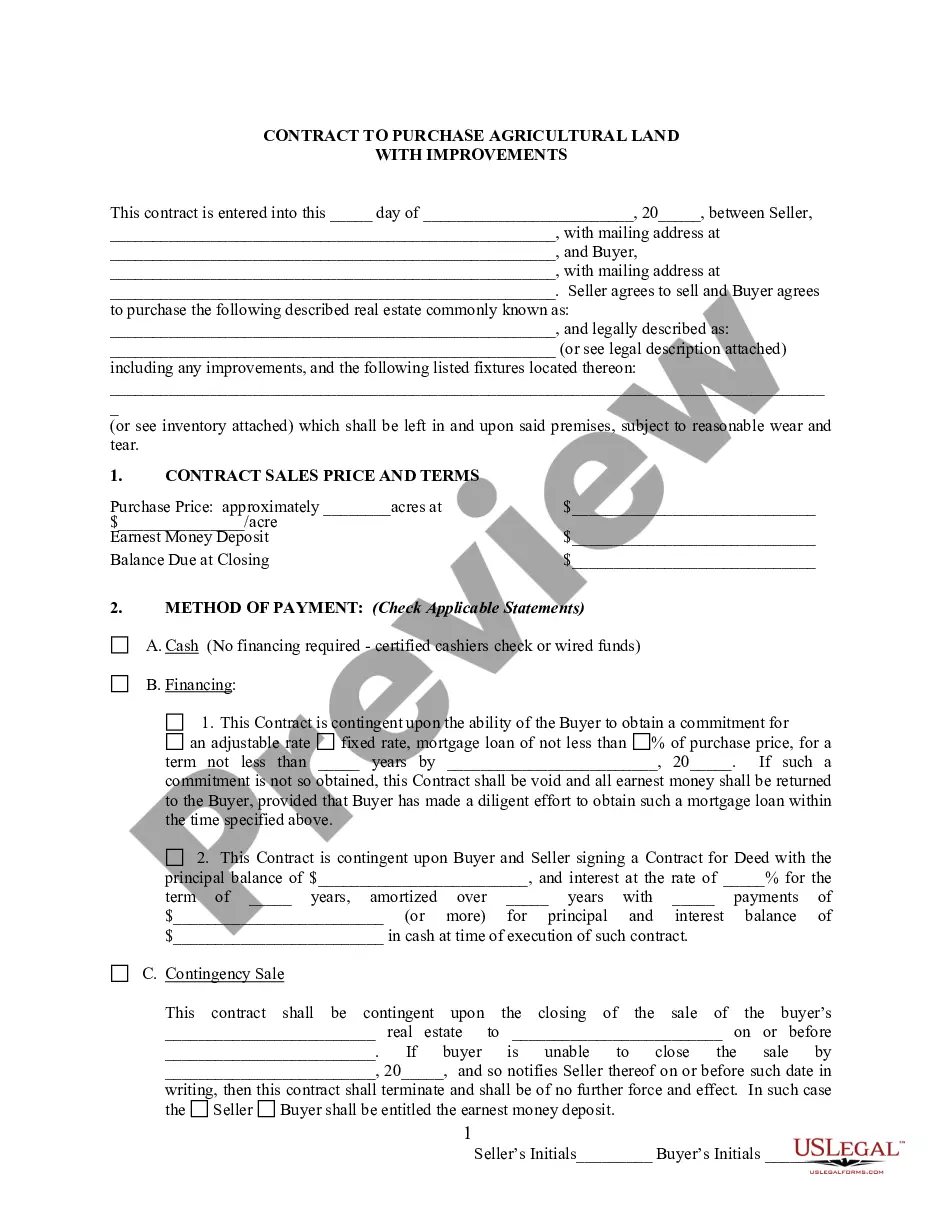
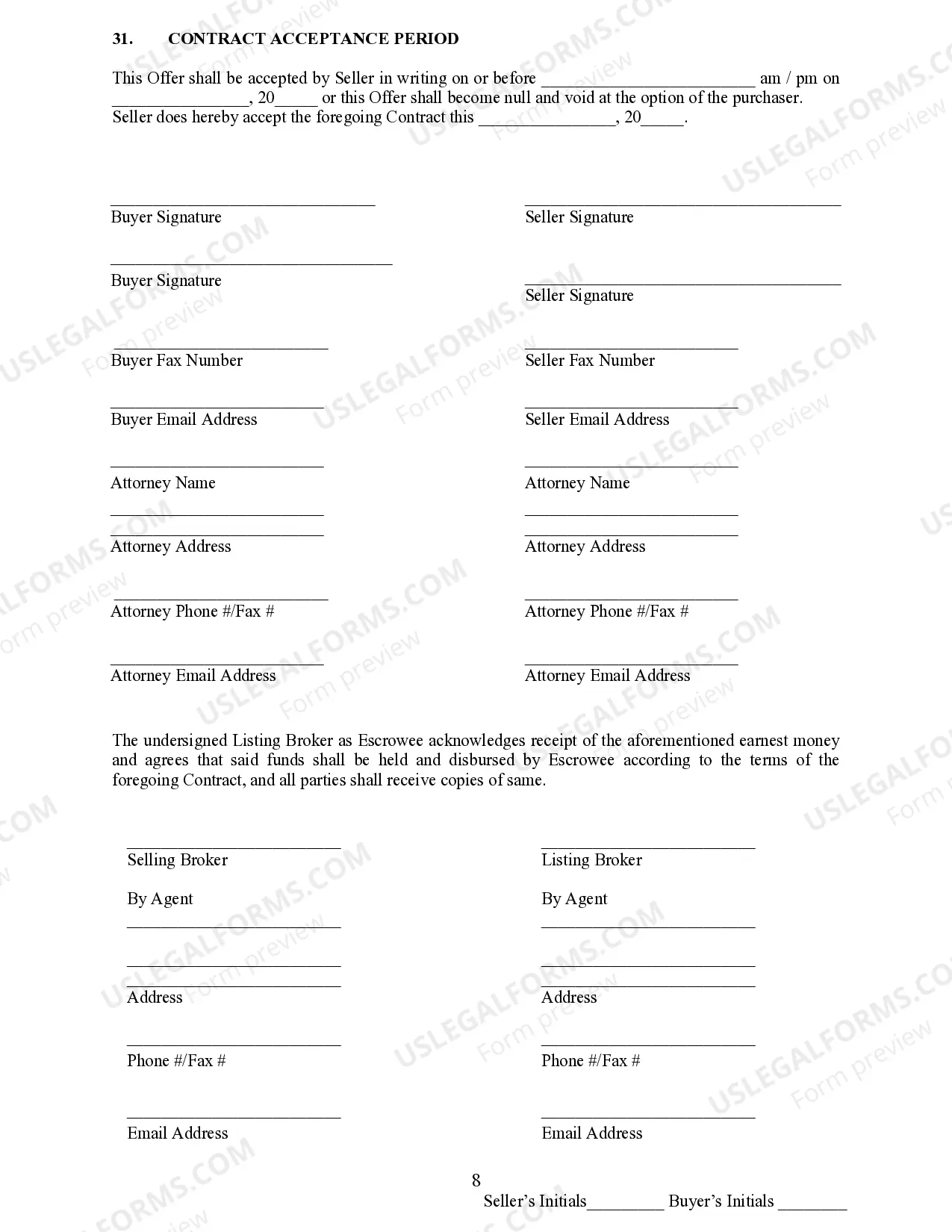
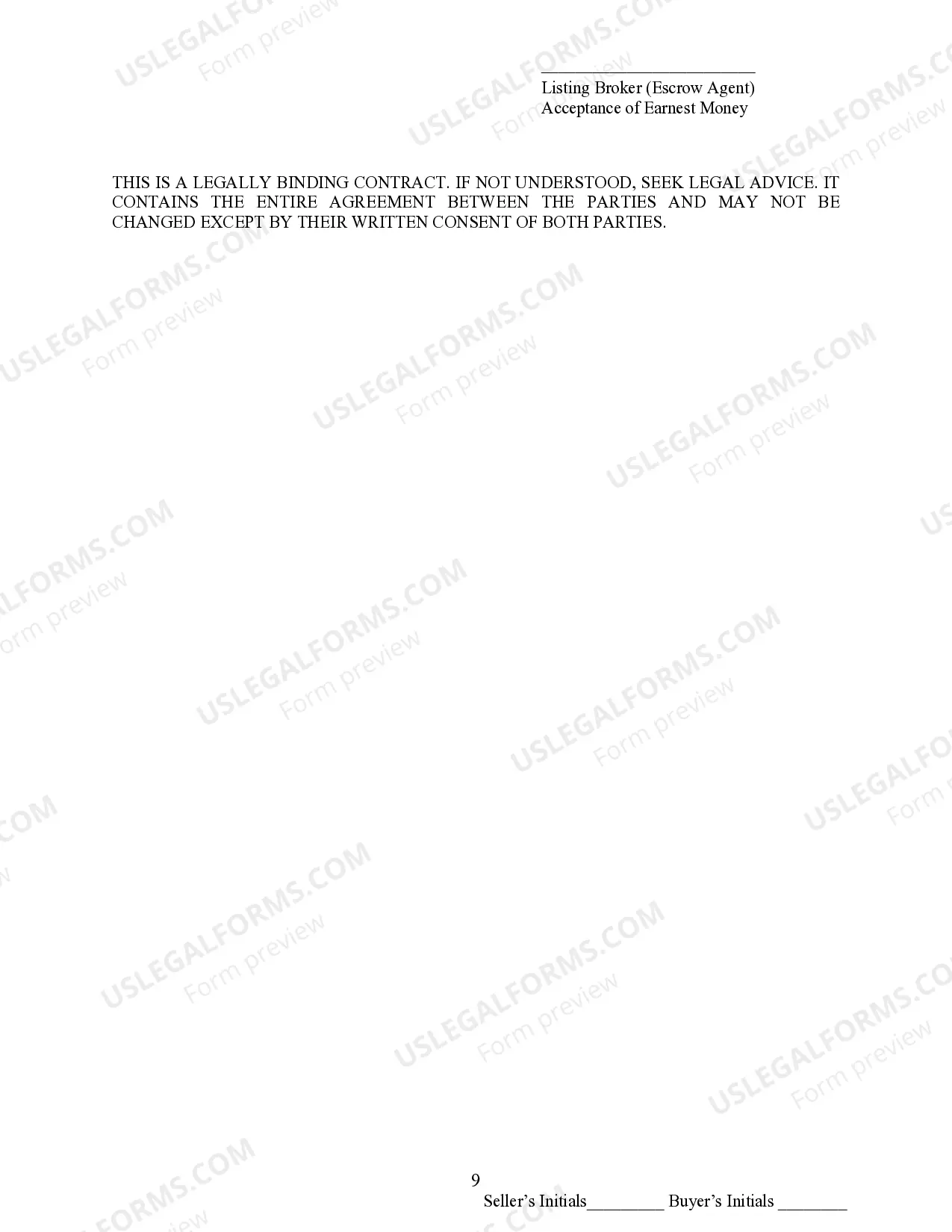
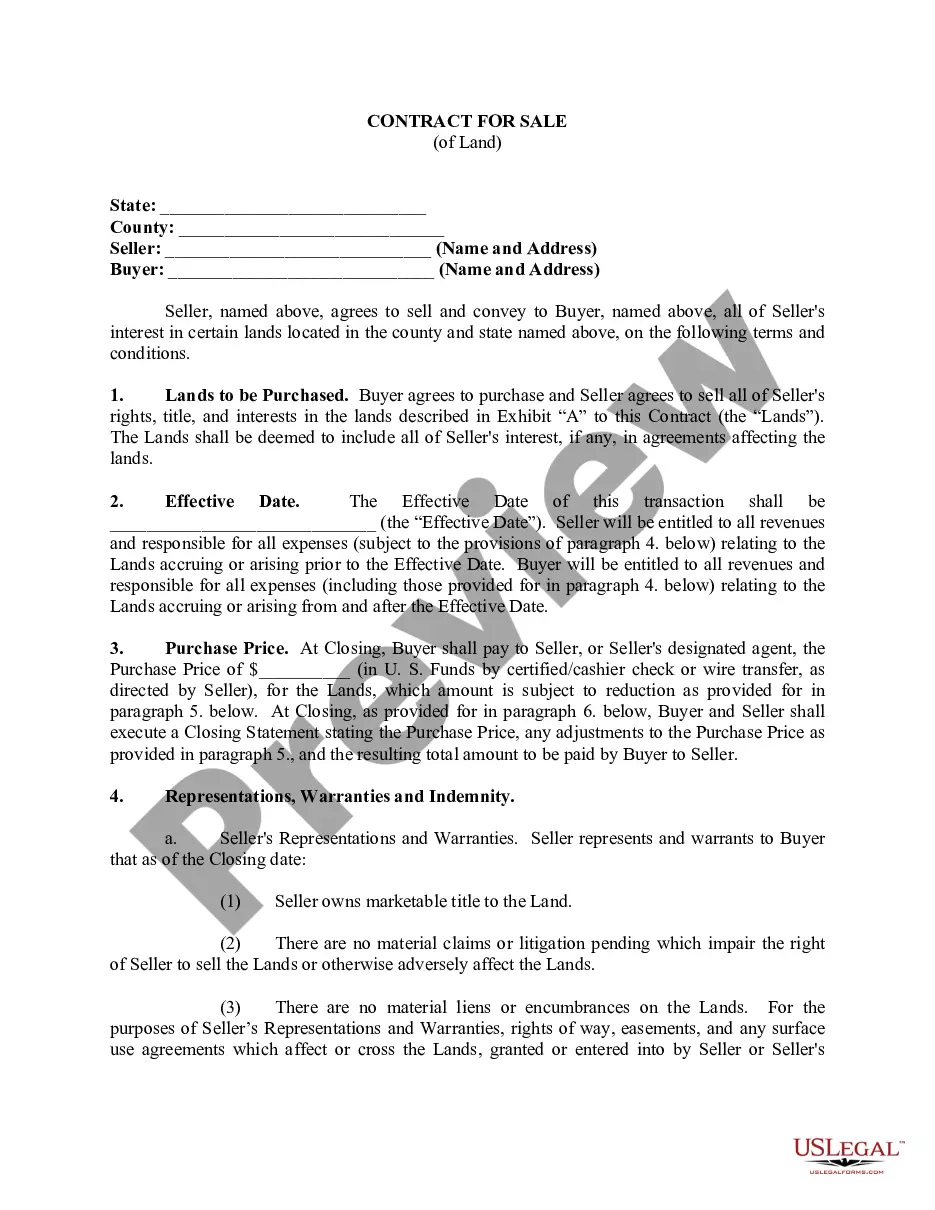
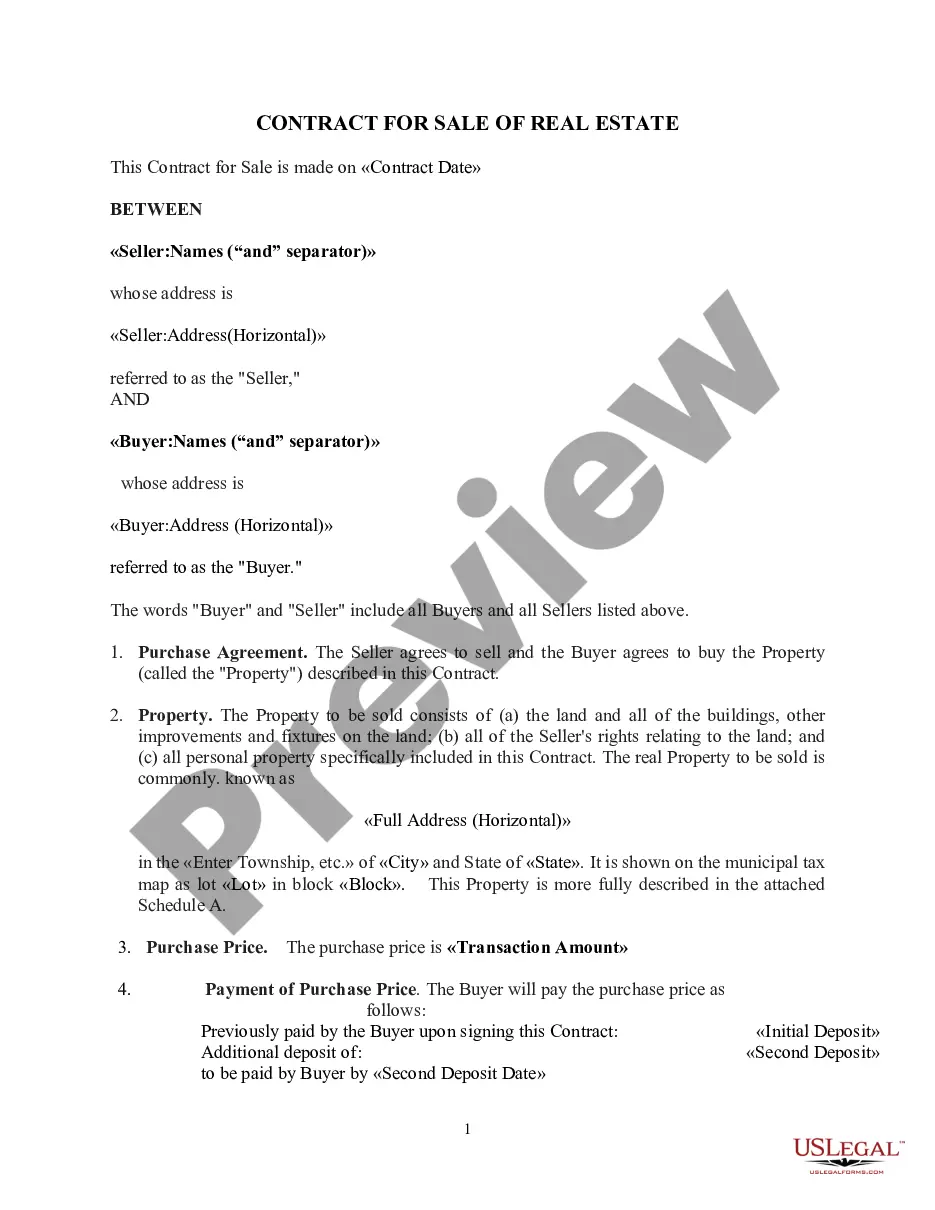
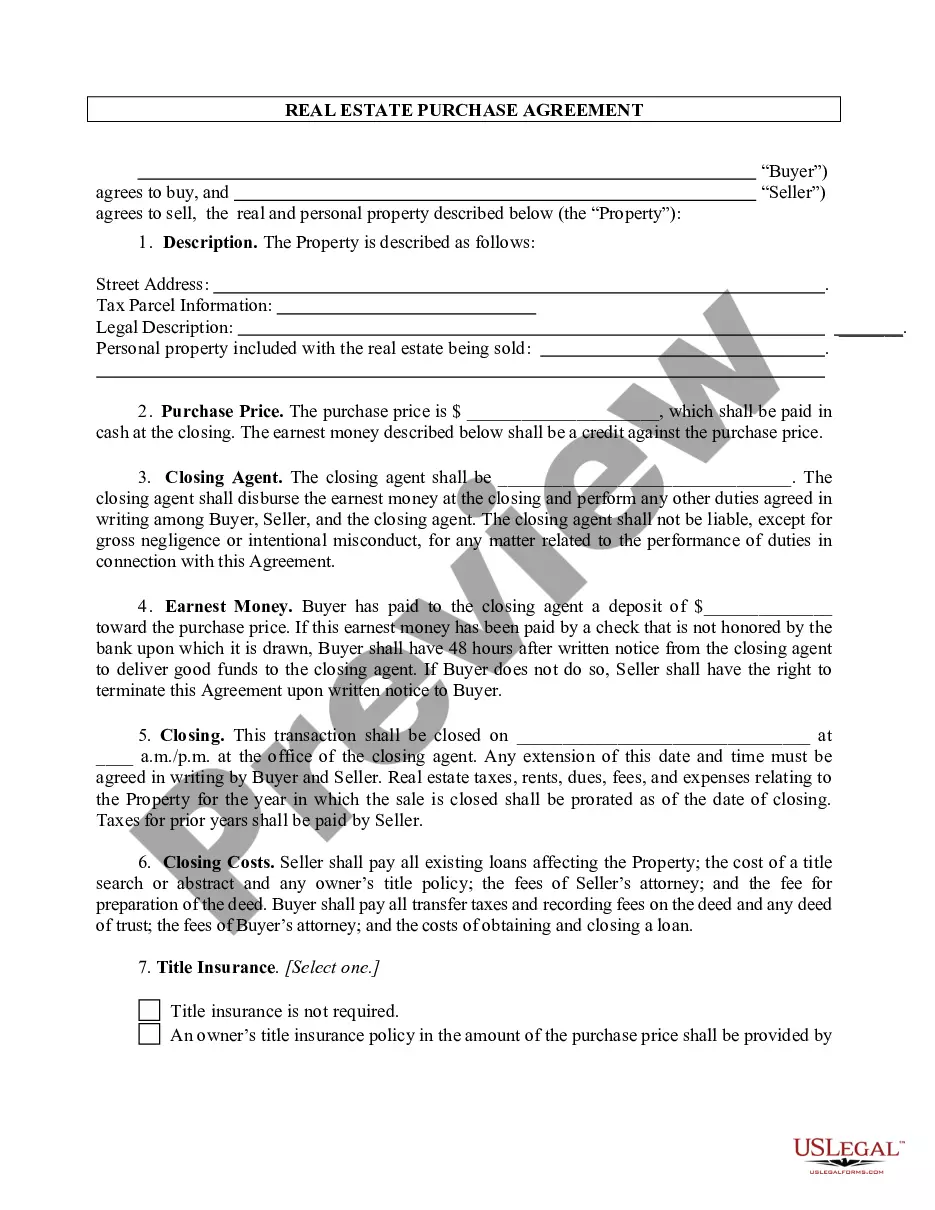
This form is known as the Contract to Purchase Agricultural Land with Improvements. It serves as a legal agreement for the sale of agricultural real estate, specifically designed for transactions in Illinois. The contract can cater to both cash sales and those involving financing. It includes unique provisions such as contingency sales and options related to tenant occupancy and government program benefits, setting it apart from standard real estate contracts.
Key parts of this document
- Contract Sales Price and Terms: Details the purchase price, earnest money deposit, and balance due at closing.
- Method of Payment: Outlines cash or financing options including contingencies for loan approval.
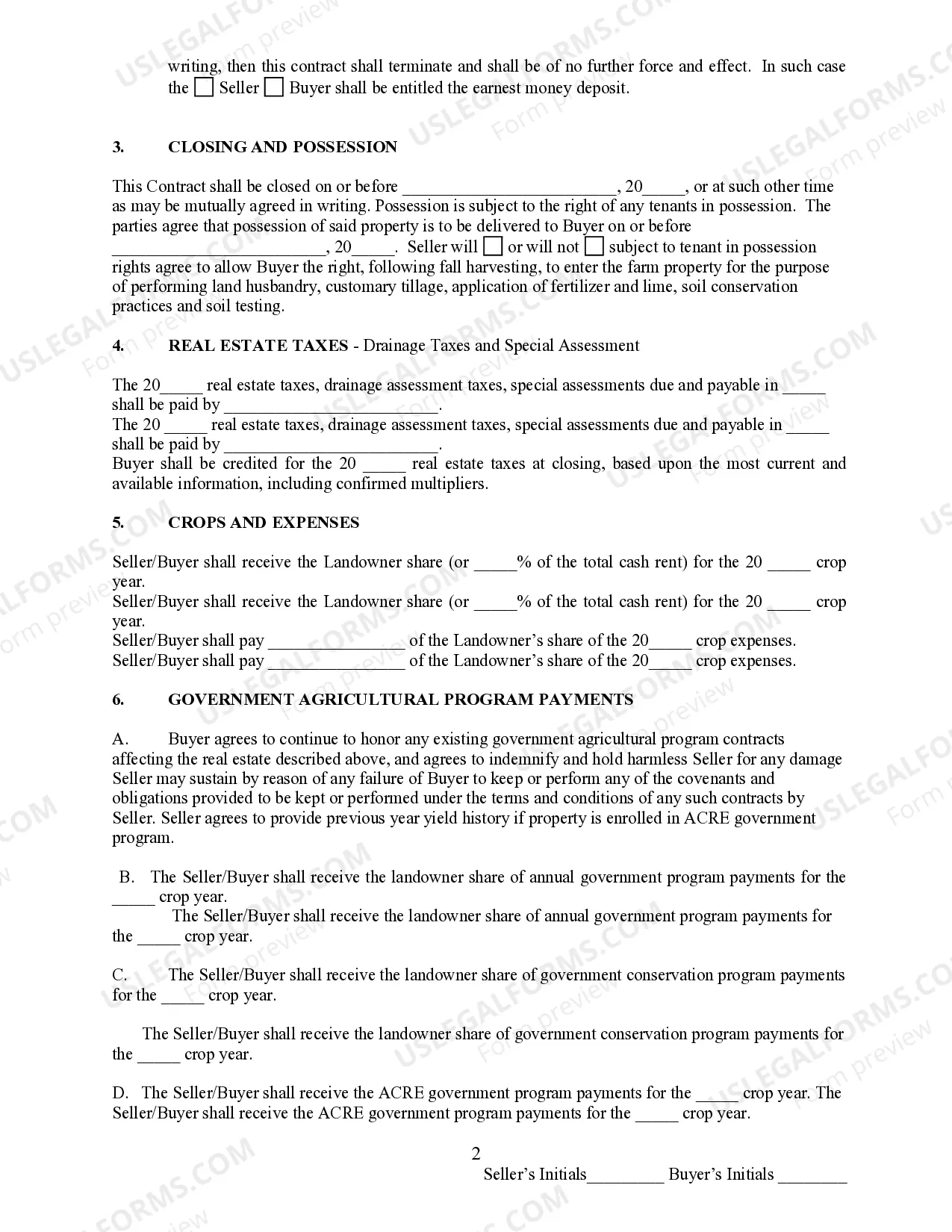
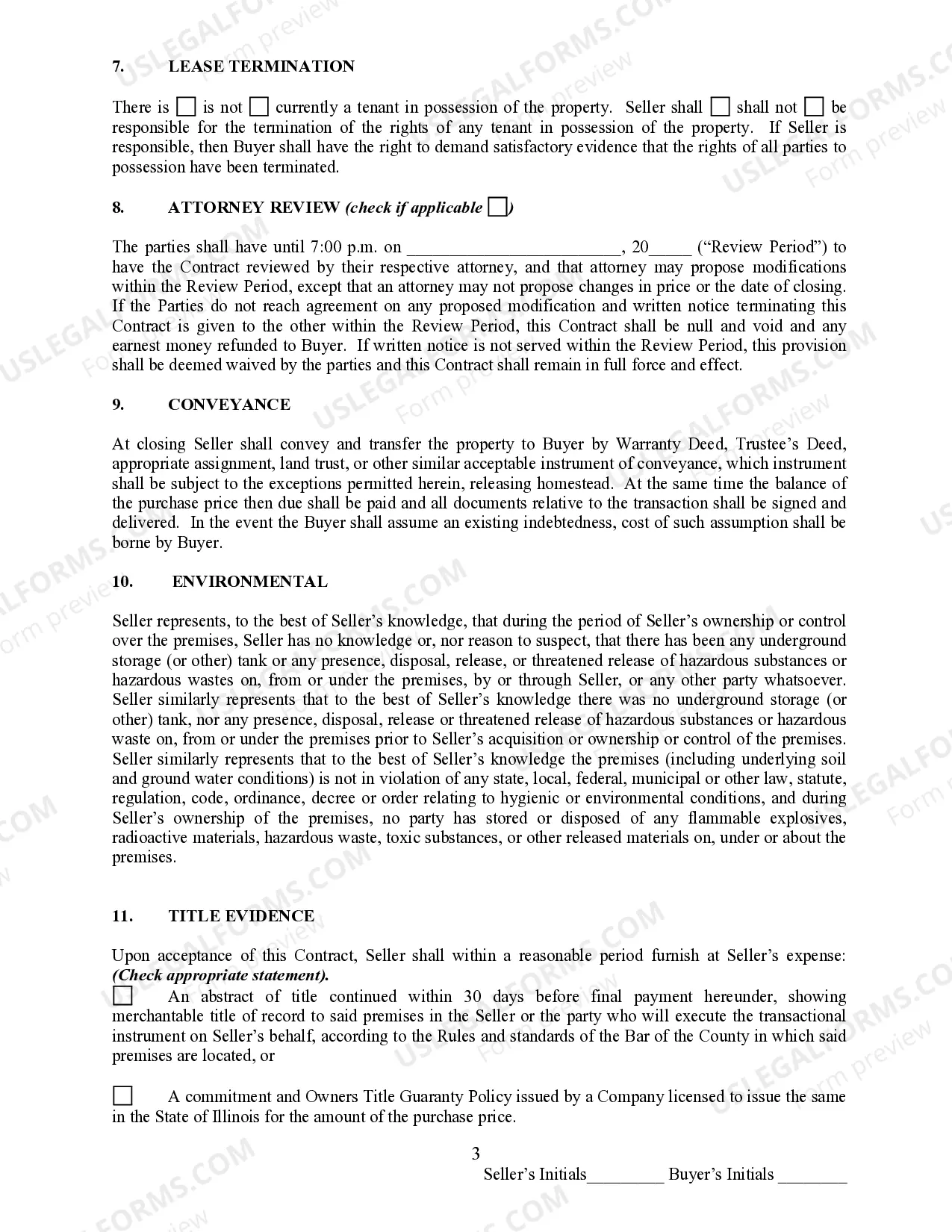
- Closing and Possession: Specifies the closing date and conditions regarding tenant occupancy.
- Taxes and Assessments: States responsibility for real estate taxes and special assessments.
- Crops and Expenses: Allocates responsibilities related to crop profits and expenses between buyer and seller.
- Government Program Payments: Addresses ongoing agricultural program contracts and payments.
When to use this document
This form should be used when an individual or entity is looking to purchase agricultural land in Illinois that comes with improvements. Common scenarios include buying farmland for farming operations, acquiring land for investment or development in agricultural activities, or when current tenants may affect the transaction. This contract ensures that the terms and conditions regarding possession, pricing, and contingencies are clearly outlined for both parties.
Who can use this document
- Buyers looking to purchase agricultural land in Illinois.
- Sellers of agricultural properties who want a formal agreement for the sale.
- Real estate agents and attorneys involved in agricultural sales and purchases.
How to prepare this document
- Identify the parties involved: Clearly define the buyer and seller along with their addresses.
- Specify the property: Enter the description of the property and any improvements or fixtures included in the sale.
- Establish the purchase price: Detail the sales price, earnest money deposit, and balance due at closing.
- Outline the method of payment: Indicate whether the sale is cash or financed, and include any contingencies.
- Agree on closing terms: Clearly mention the closing date and terms regarding tenant rights and closing procedures.
Is notarization required?
This form does not typically require notarization unless specified by local law. It is advisable to check with a local attorney to confirm requirements that may apply to specific situations in Illinois.
Get your form ready online
Our built-in tools help you complete, sign, share, and store your documents in one place.
Make edits, fill in missing information, and update formatting in US Legal Forms—just like you would in MS Word.
Download a copy, print it, send it by email, or mail it via USPS—whatever works best for your next step.
Sign and collect signatures with our SignNow integration. Send to multiple recipients, set reminders, and more. Go Premium to unlock E-Sign.
If this form requires notarization, complete it online through a secure video call—no need to meet a notary in person or wait for an appointment.
We protect your documents and personal data by following strict security and privacy standards.

Make edits, fill in missing information, and update formatting in US Legal Forms—just like you would in MS Word.

Download a copy, print it, send it by email, or mail it via USPS—whatever works best for your next step.

Sign and collect signatures with our SignNow integration. Send to multiple recipients, set reminders, and more. Go Premium to unlock E-Sign.

If this form requires notarization, complete it online through a secure video call—no need to meet a notary in person or wait for an appointment.

We protect your documents and personal data by following strict security and privacy standards.
Avoid these common issues
- Failing to specify the legal description of the property accurately.
- Neglecting to detail payment method or contingencies, leading to misunderstandings.
- Overlooking the rights of current tenants on the property and their impact on sale.
- Not conducting a thorough review of applicable taxes and assessments.
Why complete this form online
- Convenience of downloading the form anytime, allowing for flexibility in completing it at your own pace.
- Editability enables users to customize fields specific to their transaction.
- Access to reliable legal documentation drafted by licensed attorneys ensures compliance with laws.
Looking for another form?

Form popularity
FAQ
In a contract for deed in Illinois, the responsibility for paying property taxes usually falls to the buyer. However, this can vary depending on the terms outlined in the contract. Buyers should clarify their tax responsibilities during negotiations to avoid future misunderstandings. Being aware of tax obligations is crucial when purchasing agricultural land with improvements.
When used in these transactions, a purchase-money mortgage performs different functions. For instance, in a land contract, the seller of a piece of land does not pass the legal title to the buyer under the purchase-money mortgage, rather, the buyer enjoys an equitable title based on the seller financing.
When a prospective buyer cannot qualify for a conventional mortgage loan or other financing, ILI may offer an installment land contract, a type of contract recognized under Illinois law that allows buyers to live in the home while they improve it and build equity over the term of the contract.
Land contract cons. Higher interest rates ? Since the seller is taking most of the risk, they may insist on a higher interest rate than a traditional mortgage. Ownership is unclear ? The seller retains the property title until the land contract is paid in full.
A major drawback of a contract for deed for buyers is that the seller retains the legal title to the property until the payment plan is completed. On one hand, this means that they're responsible for things like property taxes. On the other hand, the buyer lacks security and rights to their home.
As a type of specialty home financing, a land contract is similar to a mortgage. However, rather than borrowing money from a lender or bank to buy real estate, the buyer makes payments to the real estate owner, or seller, until the purchase price is paid in full.
Disadvantage #1: The title does not automatically pass to the purchaser in a land contract. Disadvantage #2: The seller could be held legally responsible for inspection issues with local or state authorities. Disadvantage #3: Forfeiture of a land contract by the purchaser is a fairly common occurrence.