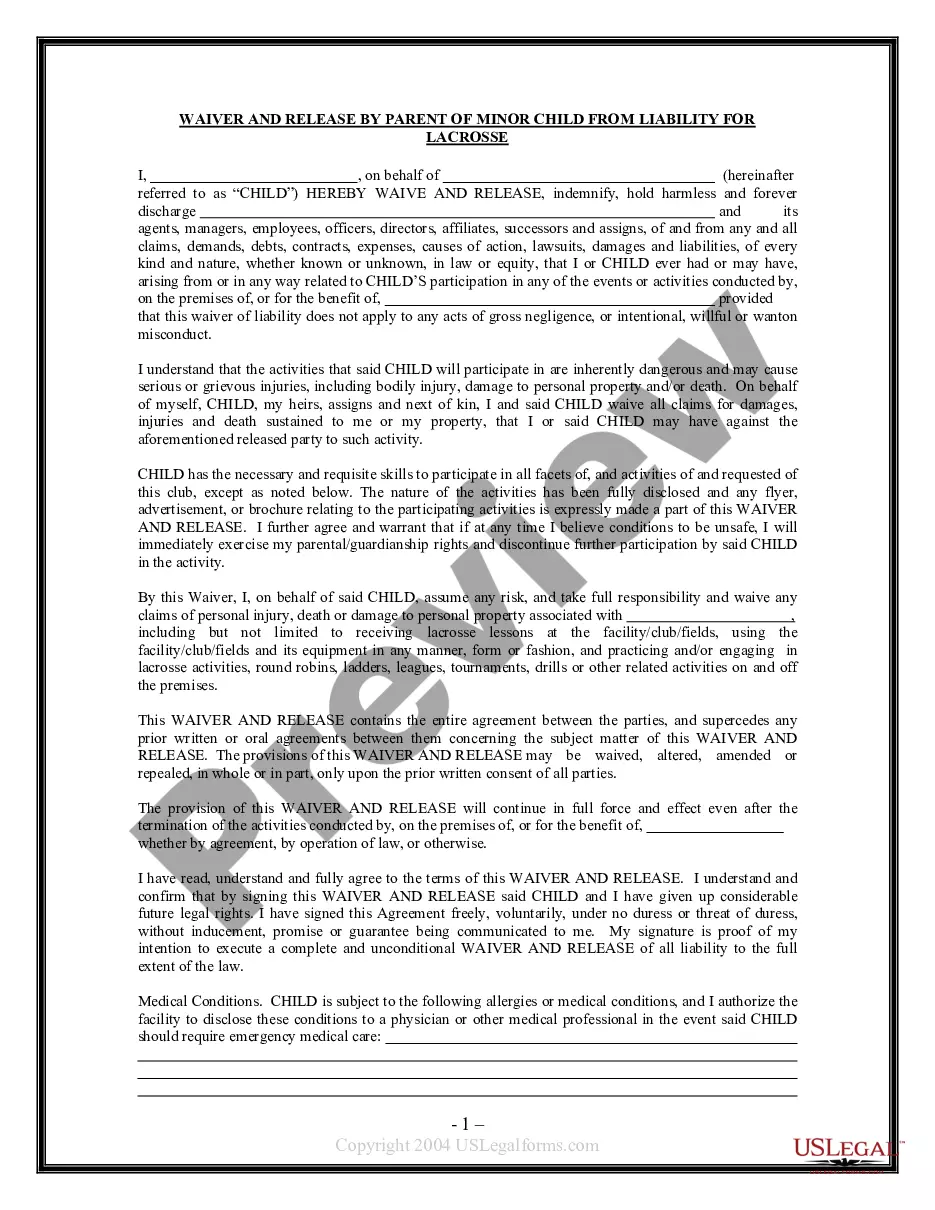
Idaho Waiver and Release From Liability For Minor Child for Scuba Diving and Skin Diving
Description
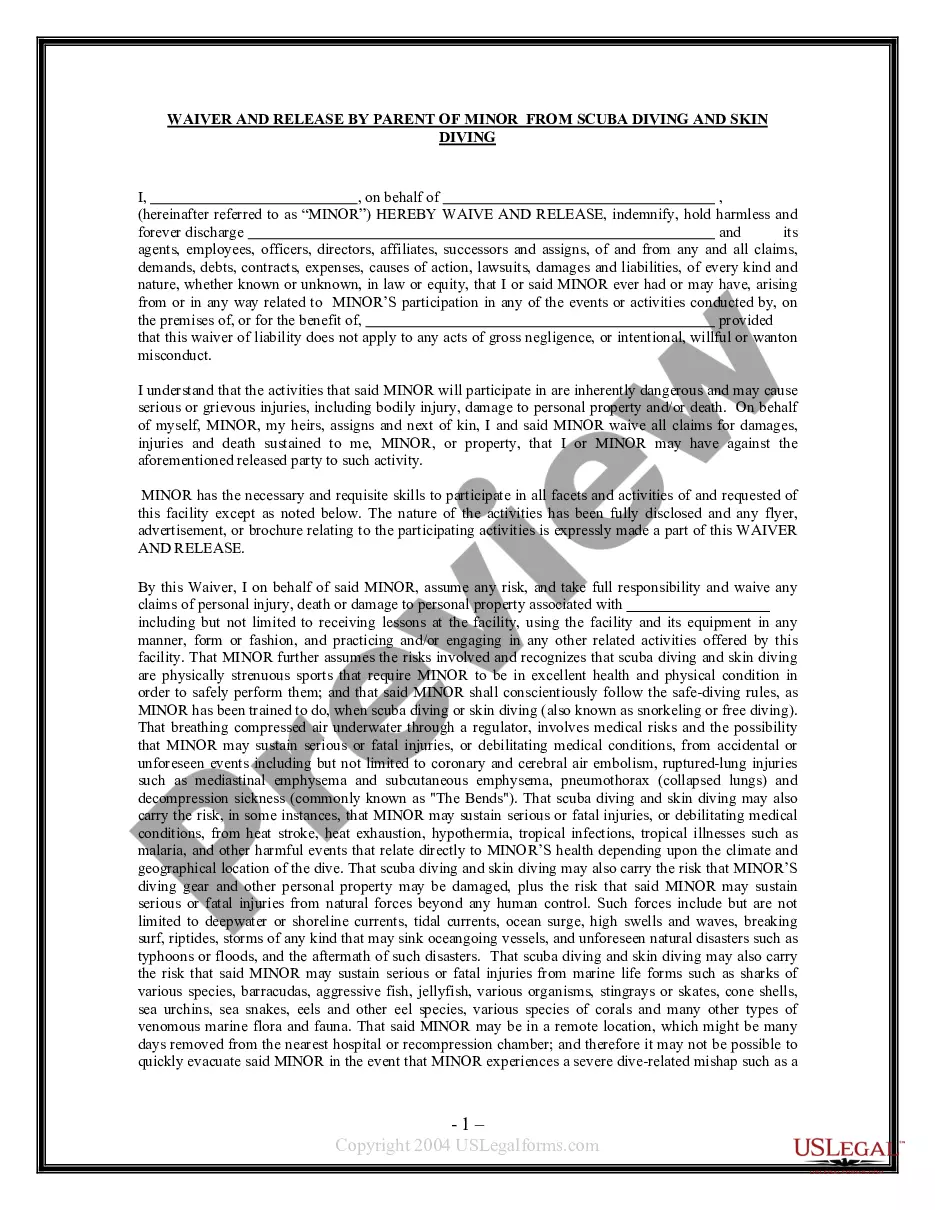
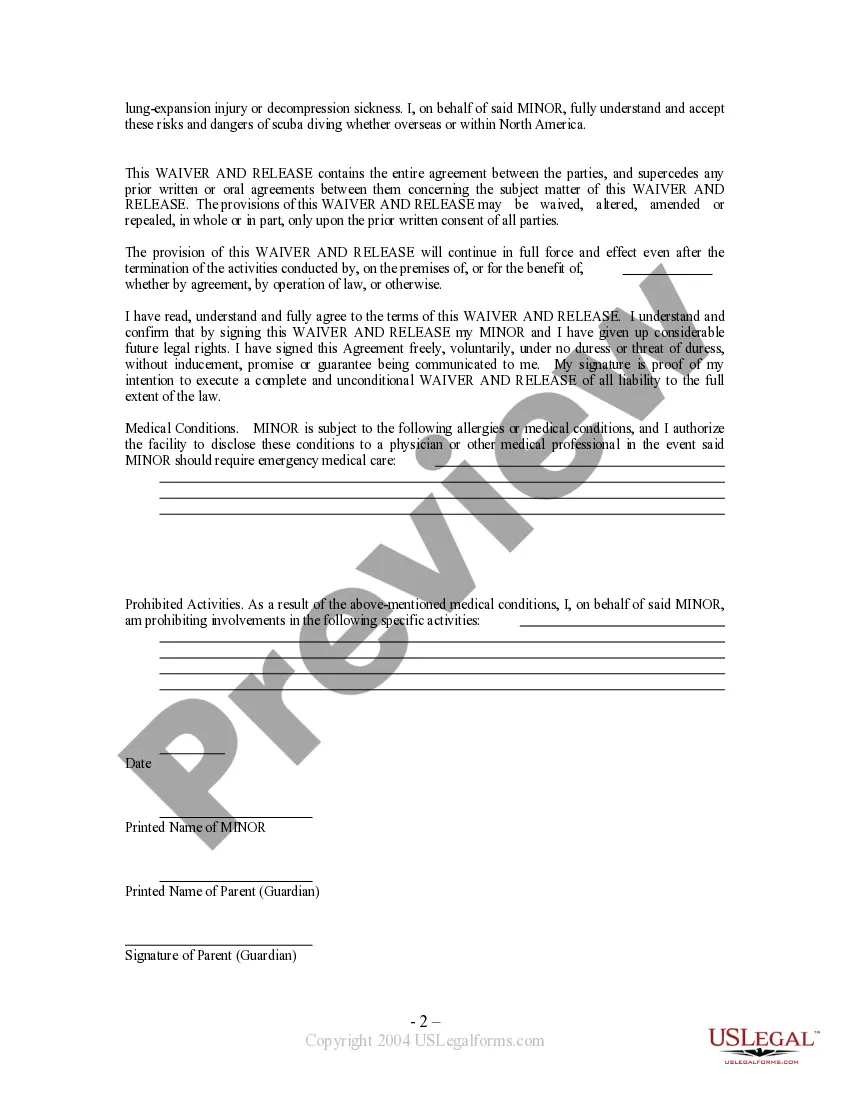
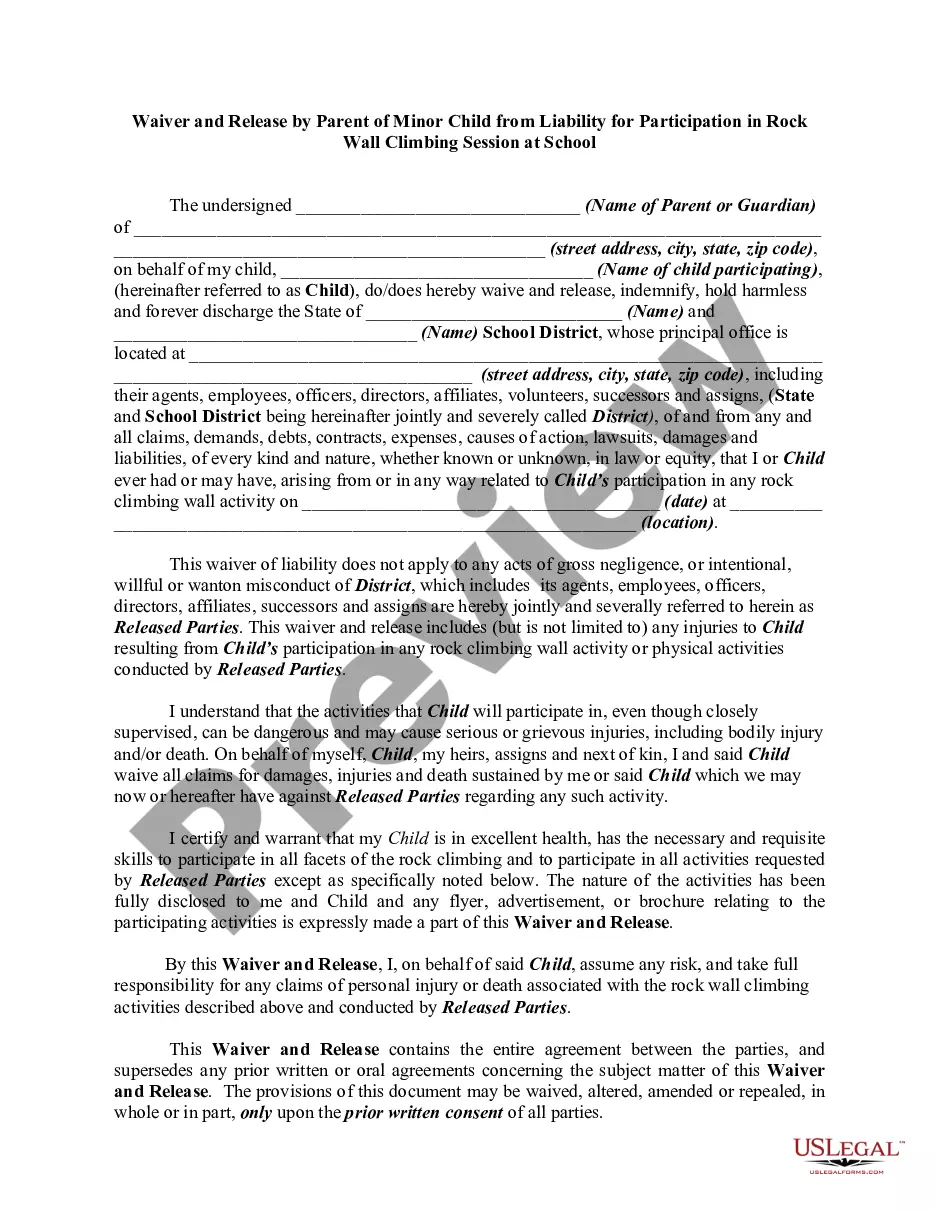
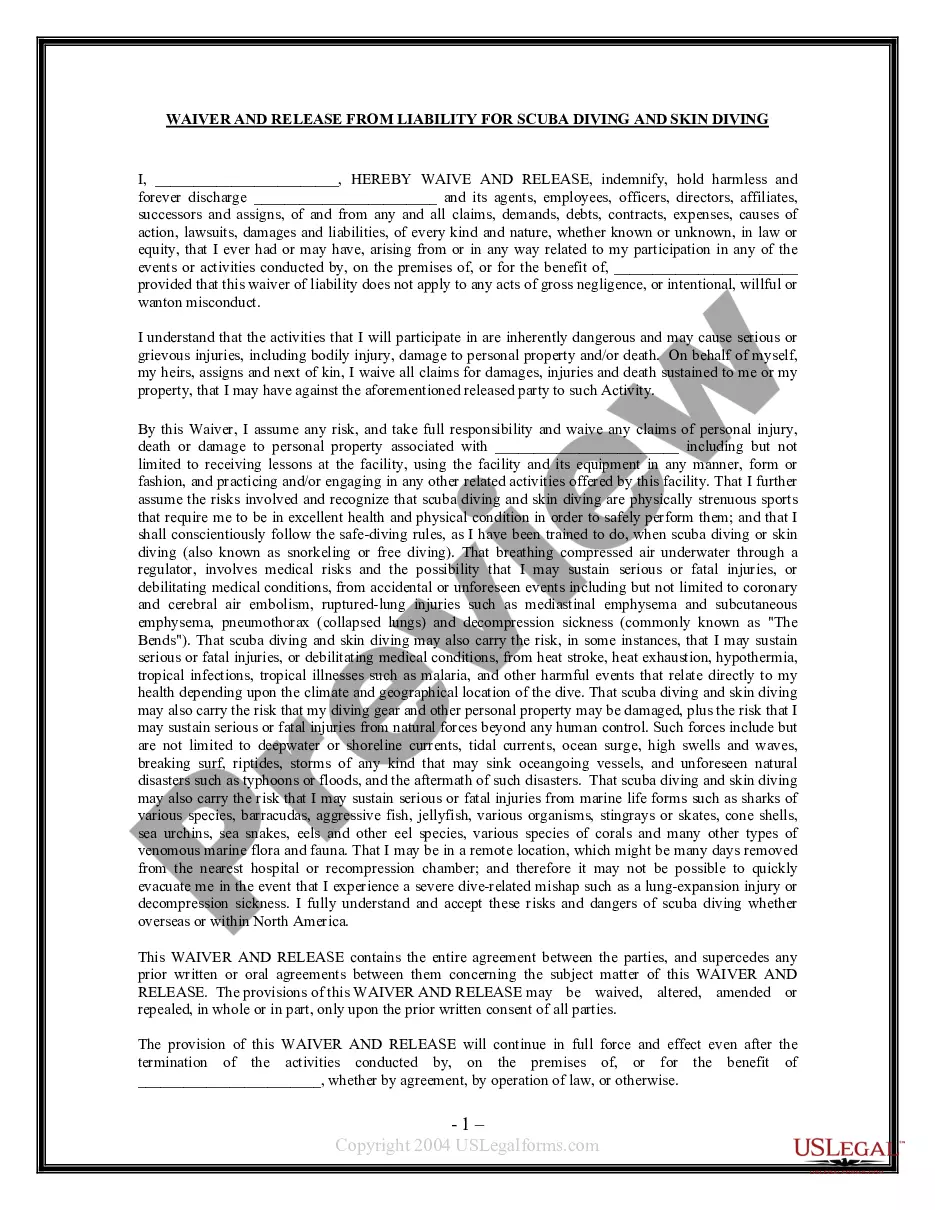


How to fill out Waiver And Release From Liability For Minor Child For Scuba Diving And Skin Diving?
US Legal Forms - one of the largest collections of legal documents in the United States - provides a range of legal form templates that you can download or print. By utilizing the website, you can find thousands of forms for business and personal purposes, organized by categories, states, or keywords. You can locate the latest versions of forms like the Idaho Waiver and Release From Liability For Minor Child for Scuba Diving and Skin Diving within moments.
If you already have an account, Log In and download the Idaho Waiver and Release From Liability For Minor Child for Scuba Diving and Skin Diving from the US Legal Forms database. The Download button will appear on every form you view. You can access all previously saved forms in the My documents section of your account.
To use US Legal Forms for the first time, here are some simple steps to get started: Ensure you have chosen the correct form for your area/state. Click the Review button to examine the form’s content. Check the form details to confirm that you have selected the correct form. If the form does not meet your needs, use the Search field at the top of the screen to find the one that does. If you are satisfied with the form, confirm your selection by clicking on the Buy now button. Then, choose the payment plan you prefer and provide your details to register for an account. Complete the transaction. Use your Visa or MasterCard or PayPal account to finalize the transaction. Select the format and download the form onto your device. Make modifications. Fill out, edit, print, and sign the saved Idaho Waiver and Release From Liability For Minor Child for Scuba Diving and Skin Diving. Every template you add to your account has no expiration date and is yours indefinitely. Thus, if you wish to download or print another copy, simply go to the My documents section and click on the form you need.
- Access the Idaho Waiver and Release From Liability For Minor Child for Scuba Diving and Skin Diving through US Legal Forms, the most extensive collection of legal document templates.
- Utilize thousands of professional and state-specific templates that cater to your business or personal needs and requirements.
Form popularity
FAQ
A generic form of release agreement for use when parties to a commercial contract are terminating or have terminated the contract (or a portion of it) and have agreed to deliver a mutual release of claims. This Standard Document has integrated notes with important explanations and drafting tips.
Writing your own release of liability waiver As tempting as it may be, you should never write your own liability waiver. Unless you're a fully qualified lawyer with experience in this area, it's likely that you'll omit critical language that puts your business at risk for lawsuits.
How to Write(1) Calendar Date Of Document. Record the date when this release is filled out and completed.(2) Releasor Name.(3) Releasor Address.(4) Releasee Name.(5) Releasee Address.(6) Event Or Actions Being Indemnified.(7) No Payment By Releasee.(8) Required Payment For Release.More items...?
A liability waiver, or release of liability, is a legal document that a company or organization has you sign in order to protect them from being sued in the event that you are injured.
A waiver can't just be drafted on a blank word document. You will have to make necessary adjustments to the font before you begin. The fonts should be set to Roman 12 so that the document is easily readable. You may then use bold to highlight the most essential information.
Here is all that pertains writing an effective liability waiver:Get help. Writing a waiver should not be complicated.Use the correct structure.Proper formatting.Include a subject line.Include a caution!Talk about the activity risks.Do not forget an assumption of risk.Hold harmless.More items...?
The main difference between releases and waivers is the transferring of ownership. When rights are released, they are transferred to another party. When rights are waived, they are gone altogether. If intellectual property rights are waived, the IP can be used by any other party that has access to it.
A release and waiver agreement is an enforceable promise not to pursue legal action in exchange for compensation. The releasee gives money or some other form of compensation to the releasor, who then agrees not to press charges, sue, or take any other legal action against the releasee.
Liability waivers are enforceable in California solely to the extent they shift to the customer the risk of ordinary negligence. Under California law, a liability waiver cannot excuse an injury caused by a defendant's gross negligence, recklessness or intentionally wrongful act.
A waiver is a legally binding provision where either party in a contract agrees to voluntarily forfeit a claim without the other party being liable. Waivers can either be in written form or some form of action.