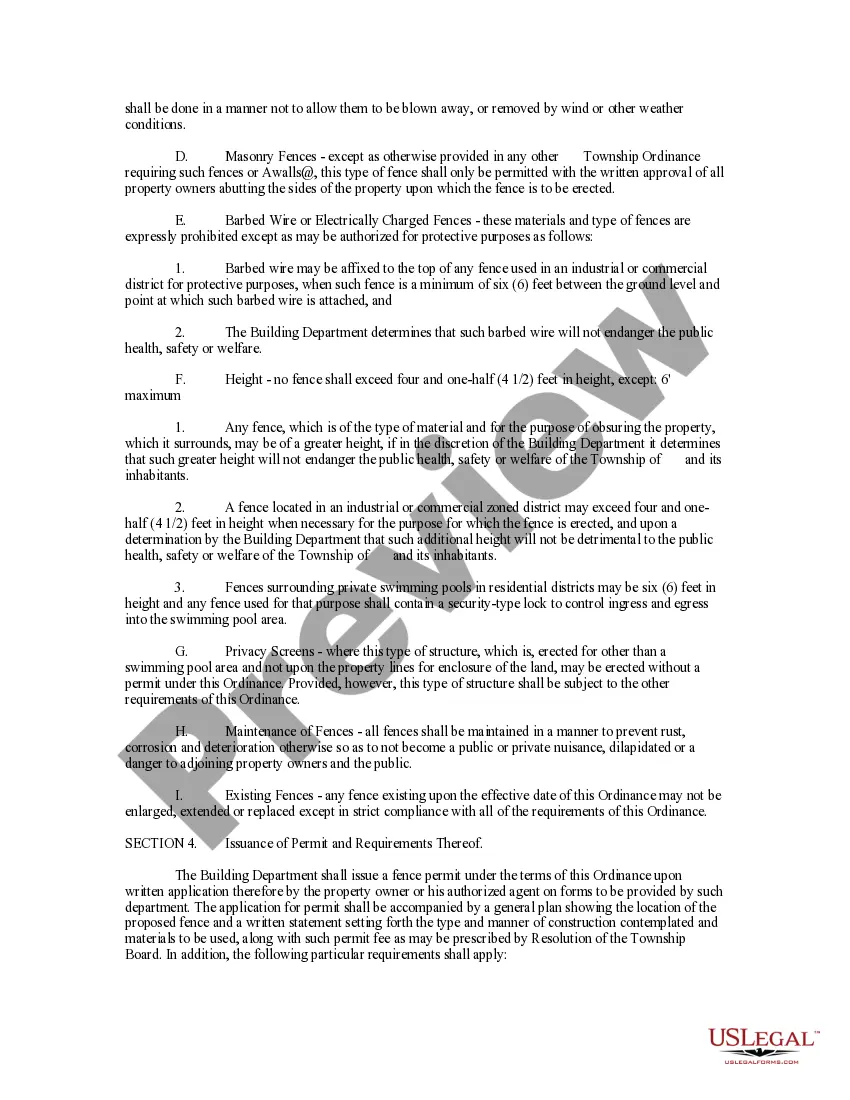
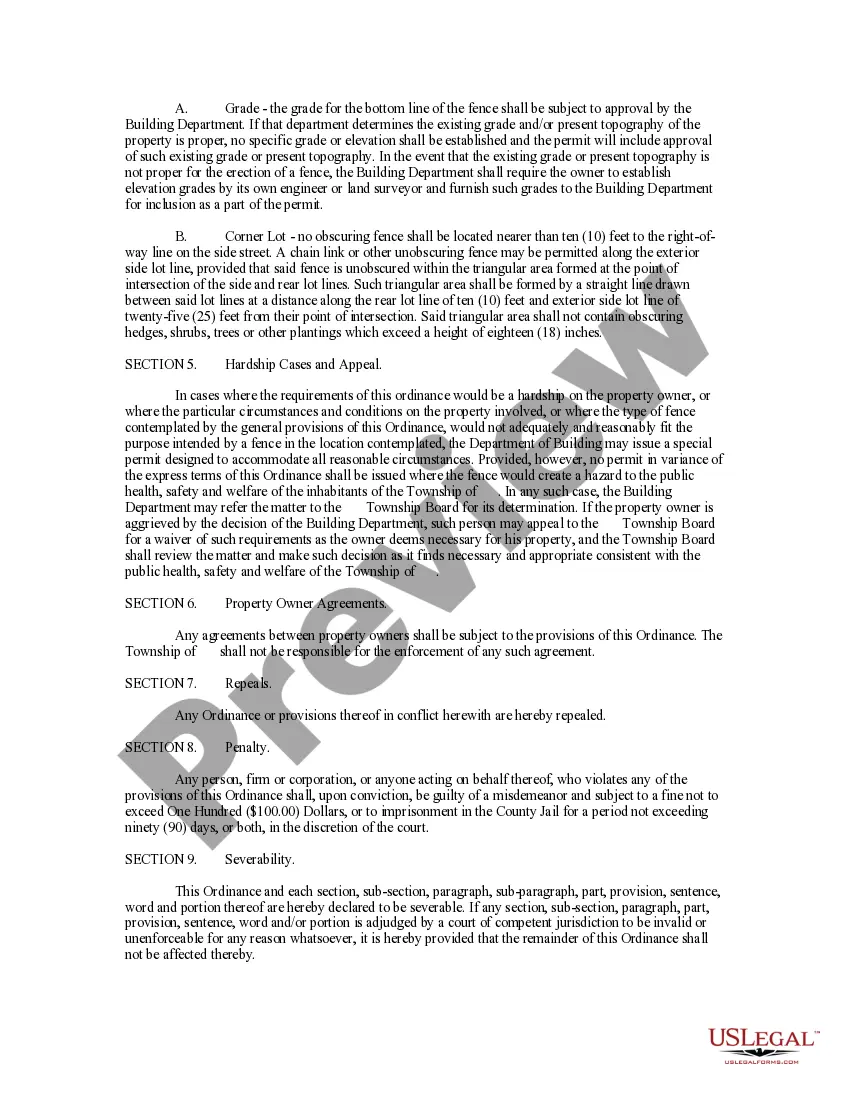
Idaho Fence Ordinance
Description
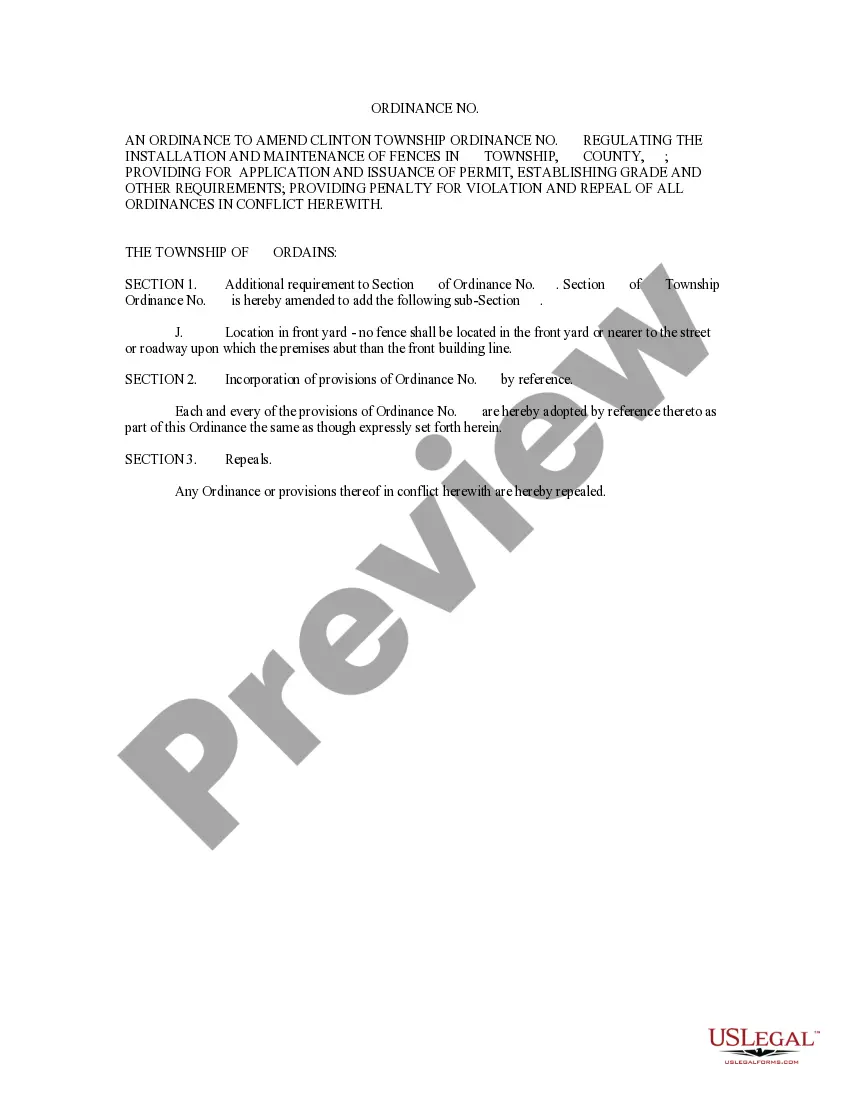
Get your form ready online
Our built-in tools help you complete, sign, share, and store your documents in one place.
Make edits, fill in missing information, and update formatting in US Legal Forms—just like you would in MS Word.
Download a copy, print it, send it by email, or mail it via USPS—whatever works best for your next step.
Sign and collect signatures with our SignNow integration. Send to multiple recipients, set reminders, and more. Go Premium to unlock E-Sign.
If this form requires notarization, complete it online through a secure video call—no need to meet a notary in person or wait for an appointment.
We protect your documents and personal data by following strict security and privacy standards.

Make edits, fill in missing information, and update formatting in US Legal Forms—just like you would in MS Word.

Download a copy, print it, send it by email, or mail it via USPS—whatever works best for your next step.

Sign and collect signatures with our SignNow integration. Send to multiple recipients, set reminders, and more. Go Premium to unlock E-Sign.

If this form requires notarization, complete it online through a secure video call—no need to meet a notary in person or wait for an appointment.

We protect your documents and personal data by following strict security and privacy standards.
Looking for another form?






How to fill out Fence Ordinance?
Finding the right lawful record design might be a have a problem. Naturally, there are plenty of themes available online, but how do you get the lawful type you want? Take advantage of the US Legal Forms web site. The services offers a huge number of themes, including the Idaho Fence Ordinance, that you can use for organization and private demands. Every one of the types are checked by professionals and satisfy federal and state specifications.
In case you are presently signed up, log in in your account and click the Down load button to have the Idaho Fence Ordinance. Make use of account to check through the lawful types you may have acquired in the past. Go to the My Forms tab of your respective account and have another backup from the record you want.
In case you are a brand new end user of US Legal Forms, allow me to share straightforward recommendations so that you can stick to:
- Initially, ensure you have selected the appropriate type for your metropolis/state. It is possible to examine the shape utilizing the Preview button and read the shape information to make sure this is basically the best for you.
- In the event the type will not satisfy your expectations, utilize the Seach field to discover the appropriate type.
- When you are sure that the shape is suitable, click the Acquire now button to have the type.
- Pick the costs program you want and enter in the essential information and facts. Make your account and purchase the order utilizing your PayPal account or bank card.
- Opt for the file structure and down load the lawful record design in your product.
- Full, change and printing and signal the attained Idaho Fence Ordinance.
US Legal Forms is definitely the most significant library of lawful types in which you will find a variety of record themes. Take advantage of the service to down load skillfully-made files that stick to condition specifications.
Form popularity
FAQ
In Idaho, the adverse possession doctrine is a combination of both statutory and common law. To prove ownership by adverse possession, the claimant must prove, by clear and convincing evidence, the following elements: Possession of the property.
Fences are typically built between 2 and 8 inches from the line between properties. Some areas will allow the building of fences directly on the property line, but in this case, you'll have to cooperate with your neighbor and potentially share the cost of the fence.
Idaho is a ?fence out? state. That means that in open range, a landowner is required to construct fences to keep livestock off their property. In areas that are not open range, such as herd districts or cities, it changes to ?fence in,? which means the burden to fence shifts to the livestock owner.
A lawful fence, except as hereinafter provided, must be not less than four and one-half (4 1/2) feet high, and the bottom board, rail, pole or wire must not be more than twenty (20") inches above the ground, and the space between the top and bottom board, rail, pole or wire must be well divided. [(35-101) R.S., sec.
(1) If any highway or public right-of-way under the jurisdiction of a county or highway district is encroached upon by gates, fences, buildings, or otherwise, the appropriate county or highway district may require the encroachment to be removed.
Typically, landowners are entitled to "self help" by trimming branches only up to the property line. Idaho doesn't have laws specifically related to encroaching tree branches; however, it's illegal trespass to enter the land of another and willfully or intentionally cut or injure a tree.
Any person who enters or remains upon the real property of another person without permission commits a civil trespass.
Each adjoining land owner, unless both otherwise agree, or unless other arrangements have heretofore been made, must construct and keep in repair that half of the line fence between their respective tracts of land which is to his left when he is standing on his own land facing the other; unless the owner of one (1) of ...