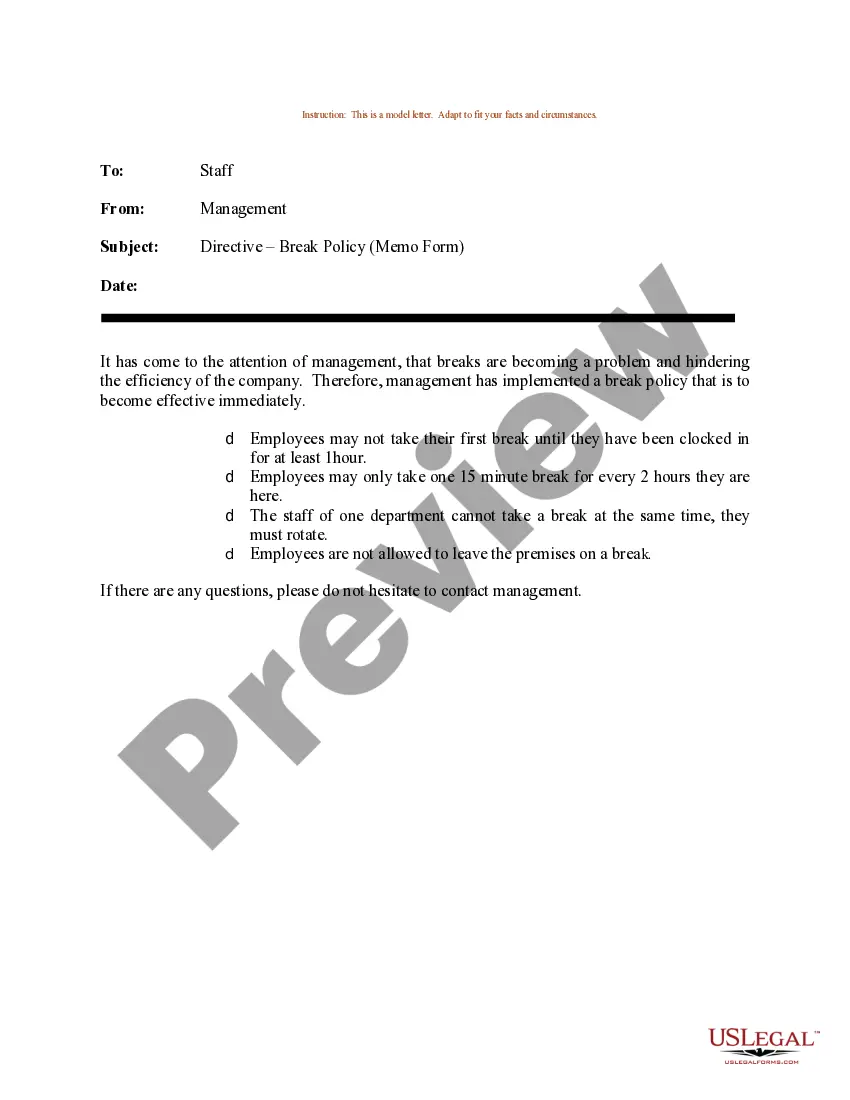
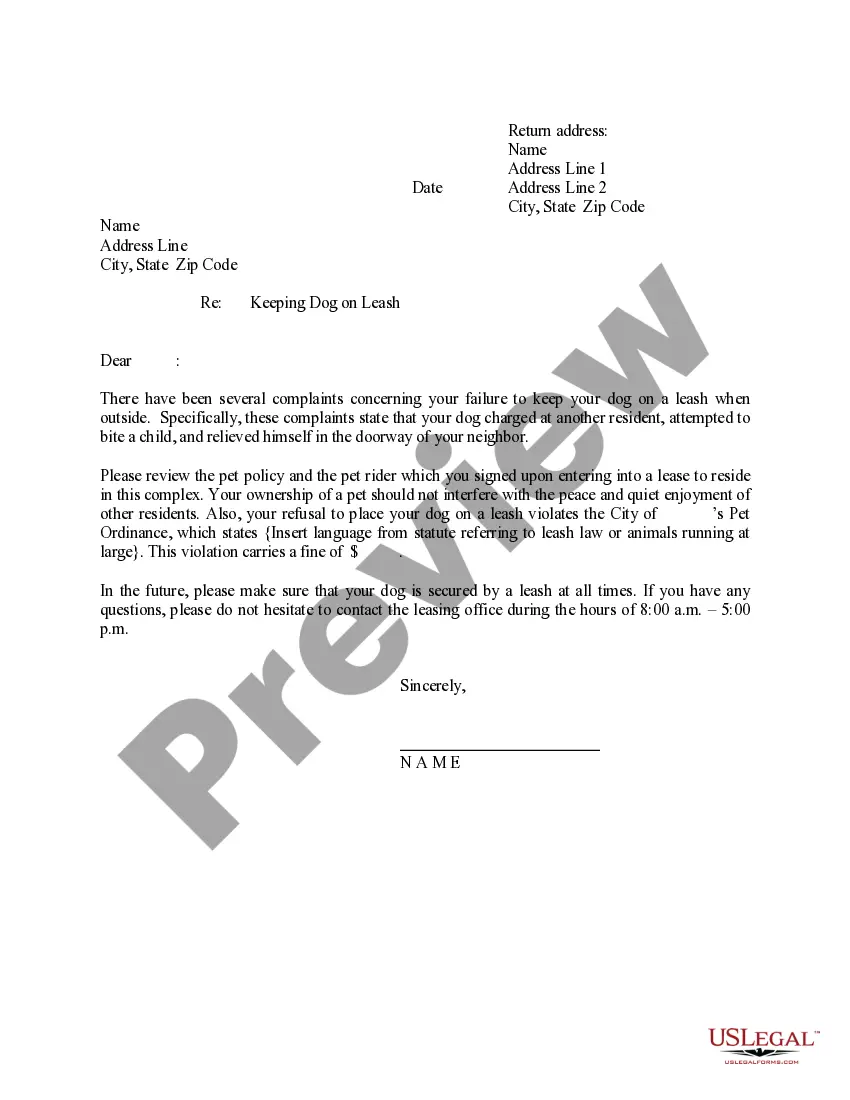
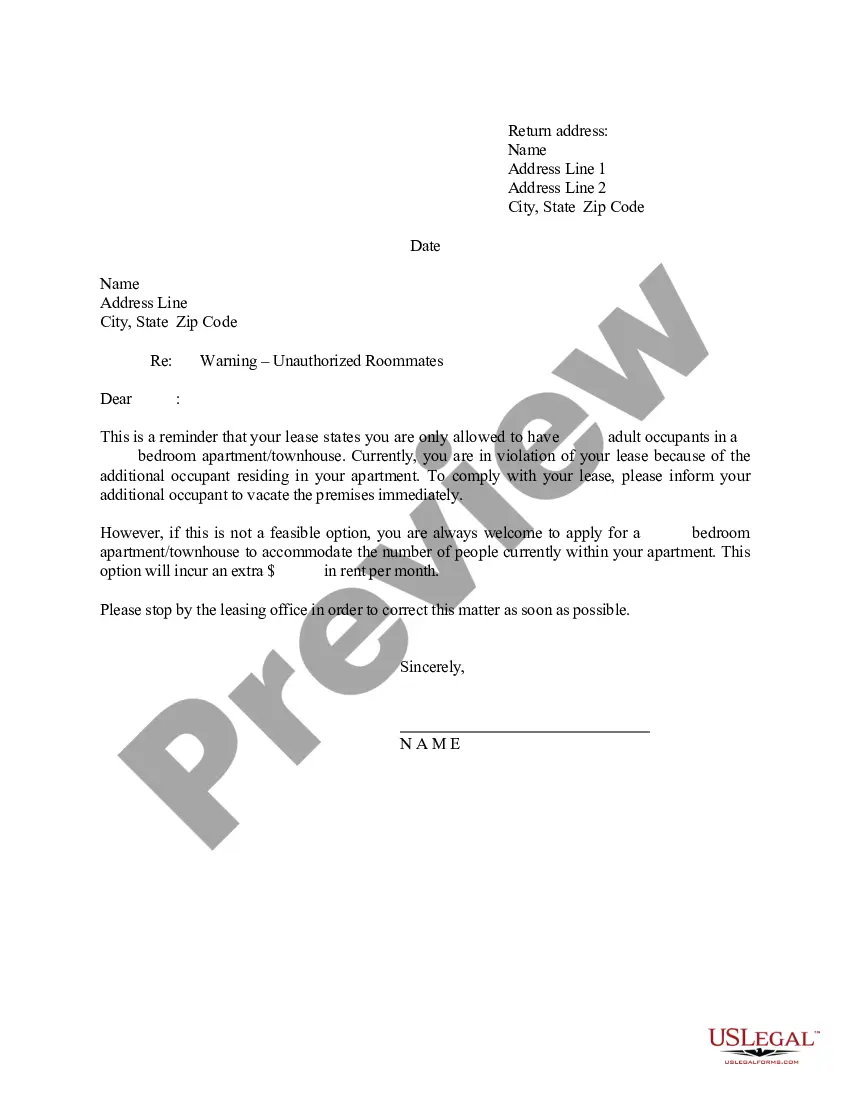
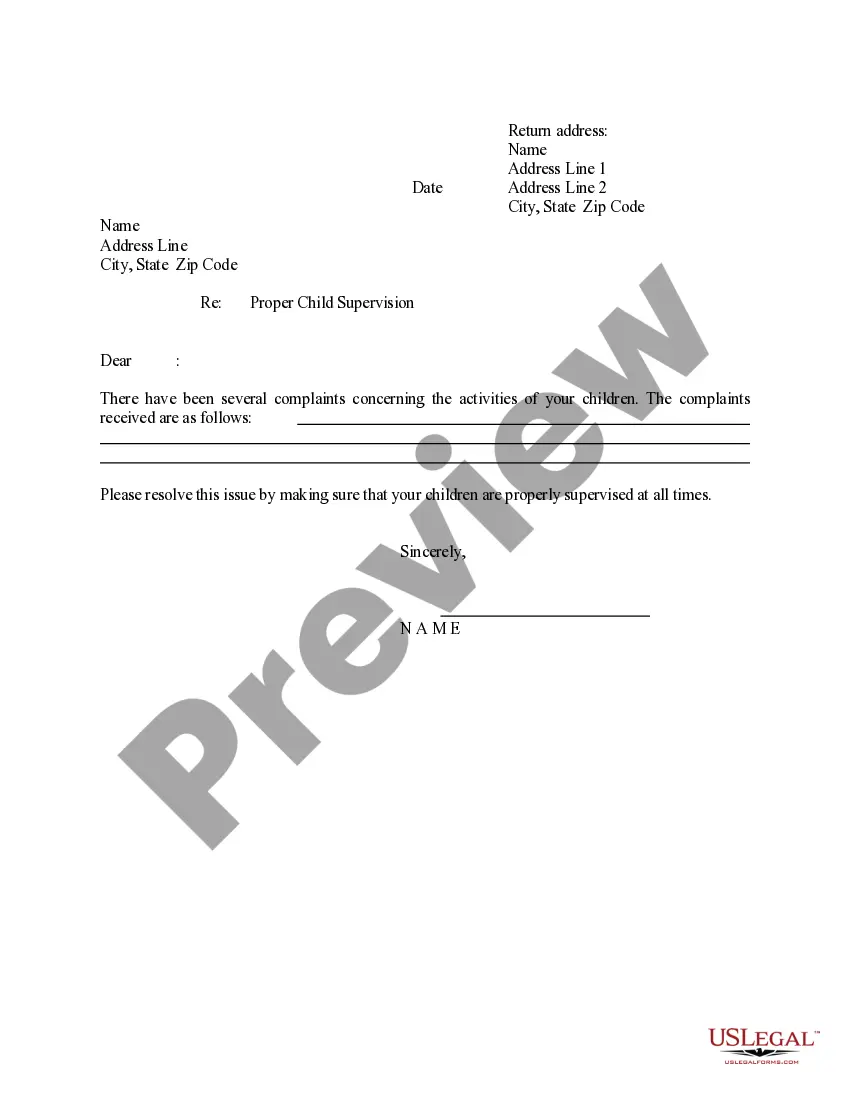
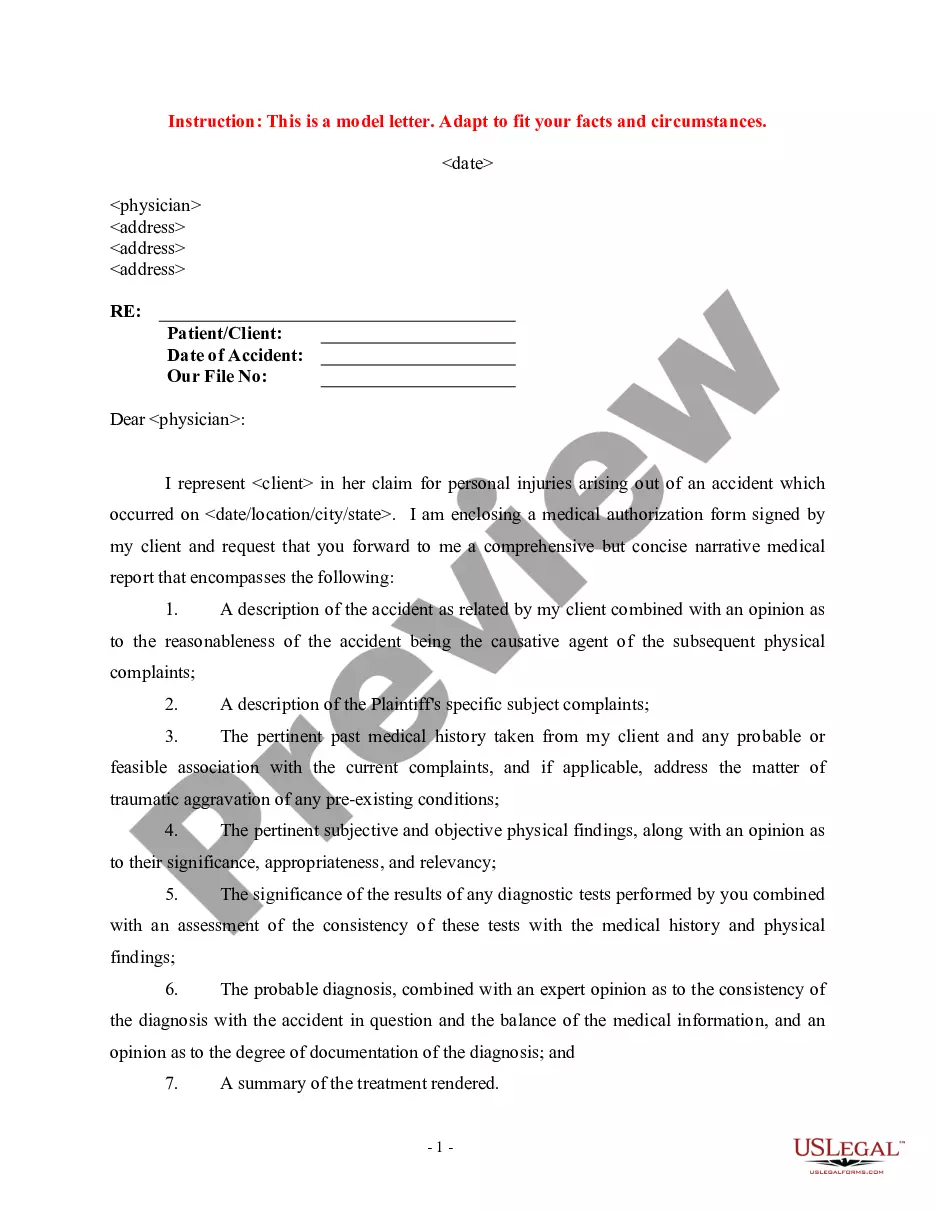
This is a letter of a warning to renter concerning the behavior of the renter's dog.
Idaho Letter - Warning To Renter Regarding the Behavior of the Renters Dog
State:
Multi-State
Control #:
US-1118LT
Format:
Word;
Rich Text
Instant download
Description
Get your form ready online
Our built-in tools help you complete, sign, share, and store your documents in one place.
Built-in online Word editor
Make edits, fill in missing information, and update formatting in US Legal Forms—just like you would in MS Word.
Export easily
Download a copy, print it, send it by email, or mail it via USPS—whatever works best for your next step.
E-sign your document
Sign and collect signatures with our SignNow integration. Send to multiple recipients, set reminders, and more. Go Premium to unlock E-Sign.
Notarize online 24/7
If this form requires notarization, complete it online through a secure video call—no need to meet a notary in person or wait for an appointment.
Store your document securely
We protect your documents and personal data by following strict security and privacy standards.

Make edits, fill in missing information, and update formatting in US Legal Forms—just like you would in MS Word.

Download a copy, print it, send it by email, or mail it via USPS—whatever works best for your next step.

Sign and collect signatures with our SignNow integration. Send to multiple recipients, set reminders, and more. Go Premium to unlock E-Sign.

If this form requires notarization, complete it online through a secure video call—no need to meet a notary in person or wait for an appointment.

We protect your documents and personal data by following strict security and privacy standards.
Looking for another form?

How to fill out Letter - Warning To Renter Regarding The Behavior Of The Renters Dog?
US Legal Forms - one of the largest collections of legal documents in the United States - offers a vast selection of legal record templates that you can obtain or print.
By utilizing this website, you can access thousands of forms for business and personal purposes, organized by categories, states, or keywords.
You can quickly find the most recent versions of forms such as the Idaho Letter - Warning To Renter Regarding the Behavior of the Renters Dog.
Examine the form description to confirm that you’ve chosen the correct document.
If the form doesn’t meet your needs, use the Search field at the top of the screen to find one that fits.
- If you already have a membership, Log In to download the Idaho Letter - Warning To Renter Regarding the Behavior of the Renters Dog from the US Legal Forms library.
- The Download option will appear on every form you view.
- You can access all previously downloaded forms in the My documents section of your account.
- To use US Legal Forms for the first time, here are simple steps to get you started.
- Ensure you have selected the appropriate form for your area/county.
- Select the Preview option to review the form’s details.
Form popularity
FAQ
Landlords can still stop tenants from keeping pets but must offer a reasonable excuse for refusal in writing within 28 days of the tenant's request.
Federal LawsLandlords may not charge the tenant extra "pet" rent or "pet" security deposit for a service or emotional support animal. Landlords may not apply other "pet policy" rules like breed or weight restrictions to service or emotional support animals.
Alongside the proposed bill, the Ministry of Housing updated their standard tenancy agreement so that landlords cannot issue a 'blanket ban' on pets. Allowing pets is now the default position on the government's recommended model tenancy agreement.
Model tenancy agreement changed to allow renting with petsIf a landlord doesn't want their tenant to have a pet, they must object in writing within 28 days of a written request from the tenant. The landlord must provide a good reason, such as in smaller properties where owning a pet would be impractical.
'The new standard agreement has consent for pets as the default position. And landlords will no longer be able to blanket ban pets without good reason. 'If a landlord has an objection, they will have to put it in writing why they are objecting, within 28 days of a tenant making a written pet request.
2022 is a significant year for renters who wish to have a pet in their homes, with the Government confirming changes to its model tenancy agreement. This means that landlords can now no longer issue blanket bans on pets in rental accommodation.
Landlords cannot enter tenanted properties without giving proper notice. Landlords cannot arbitrarily end someone's tenancy before the lease expires. Arbitrary, mid-lease rent increases are not permitted unless specified in certain circumstances in the lease or by the municipality.
If a tenant is found to be keeping a pet despite the tenancy agreement stating that they can't, the landlord has the right to evict them from the property as it is considered a breach of contract.
A landlord would need a good reason to refuse. For instance, if a home is too small for a pet to be feasible. The government's new model tenancy agreement is its recommended contract for landlords. But there is no obligation to use it and most landlords don't.
Alongside the proposed bill, the Ministry of Housing updated their standard tenancy agreement so that landlords cannot issue a 'blanket ban' on pets. Allowing pets is now the default position on the government's recommended model tenancy agreement.