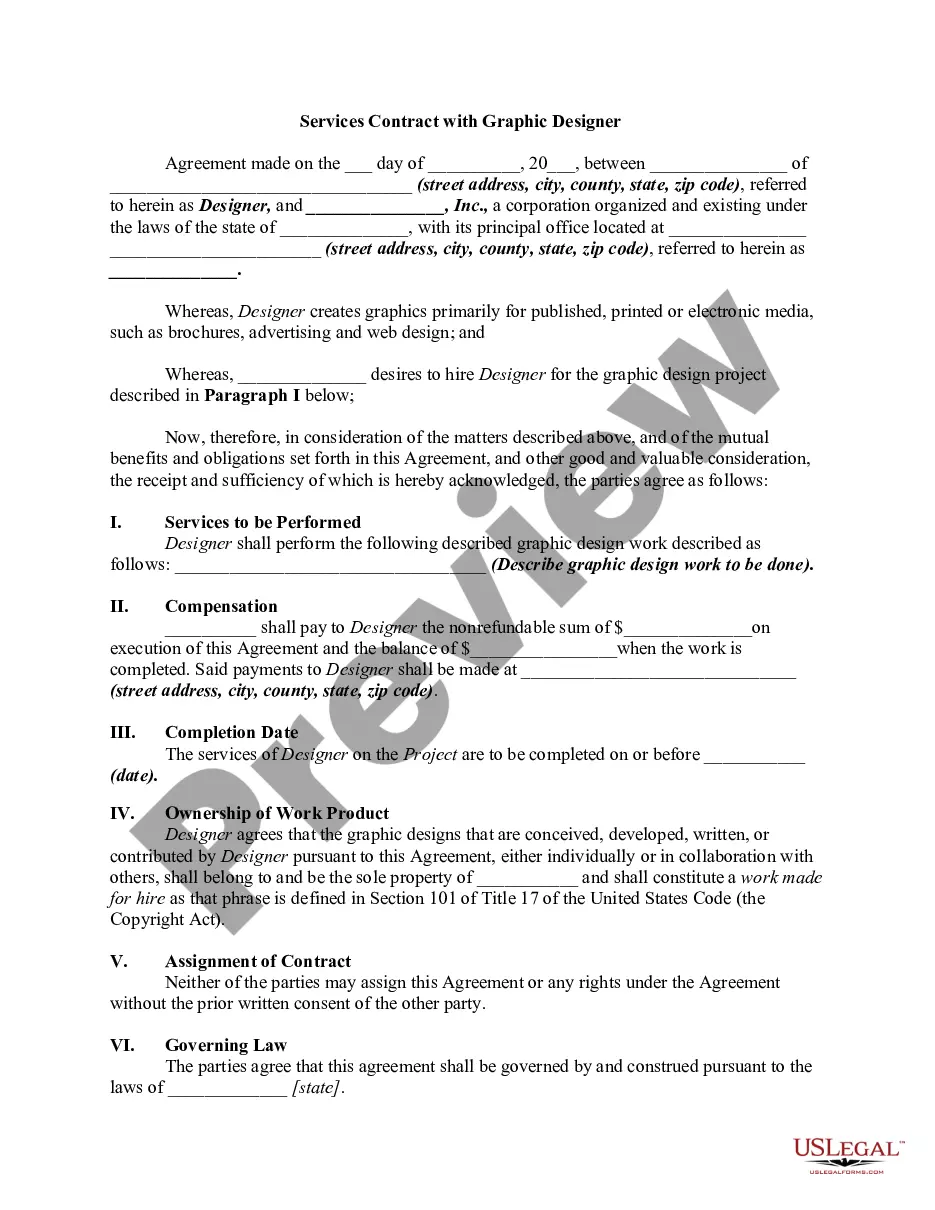
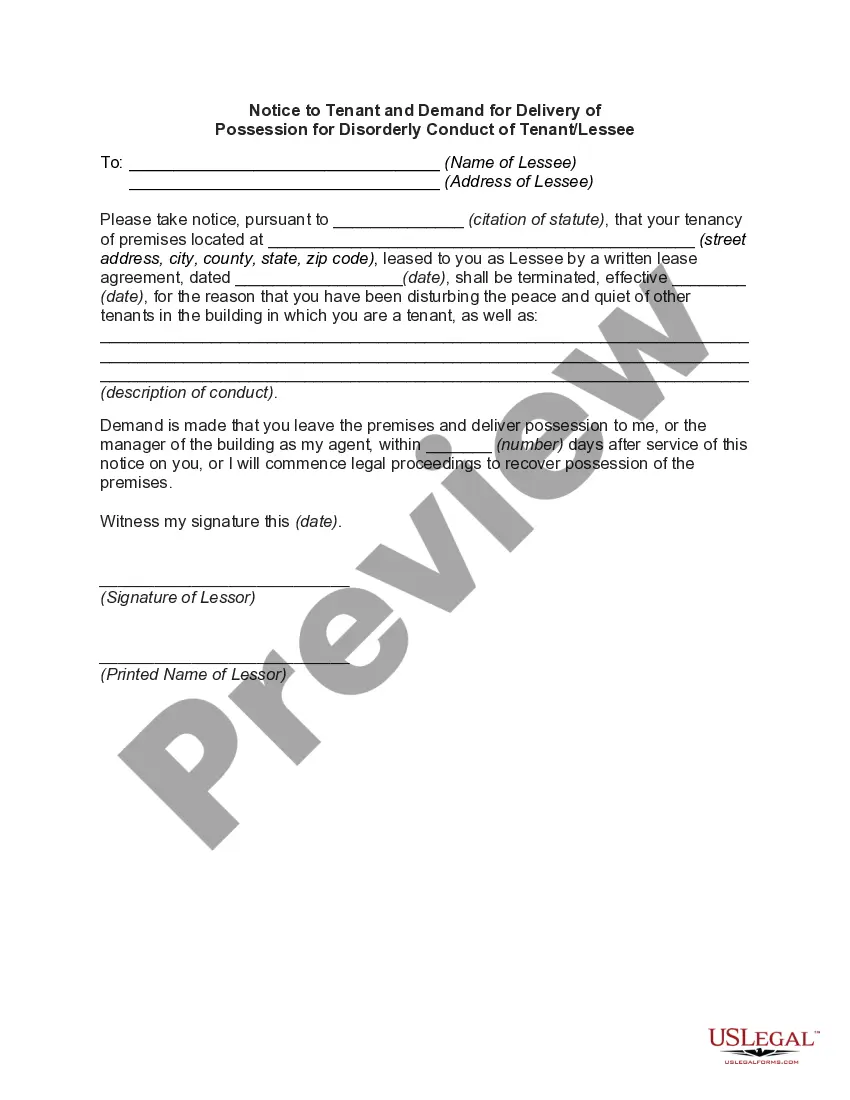
Idaho Notice to Tenant and Demand for Delivery of Possession for Disorderly Conduct of Tenant/Lessee
Description
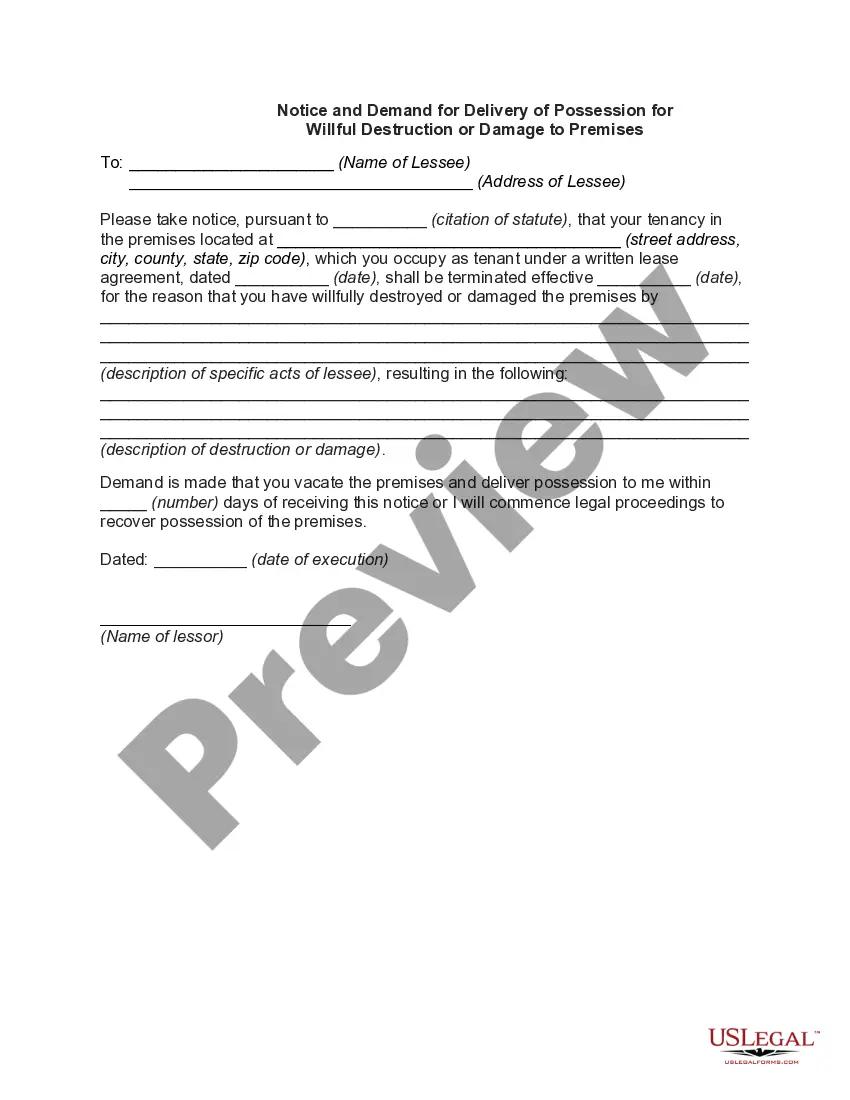
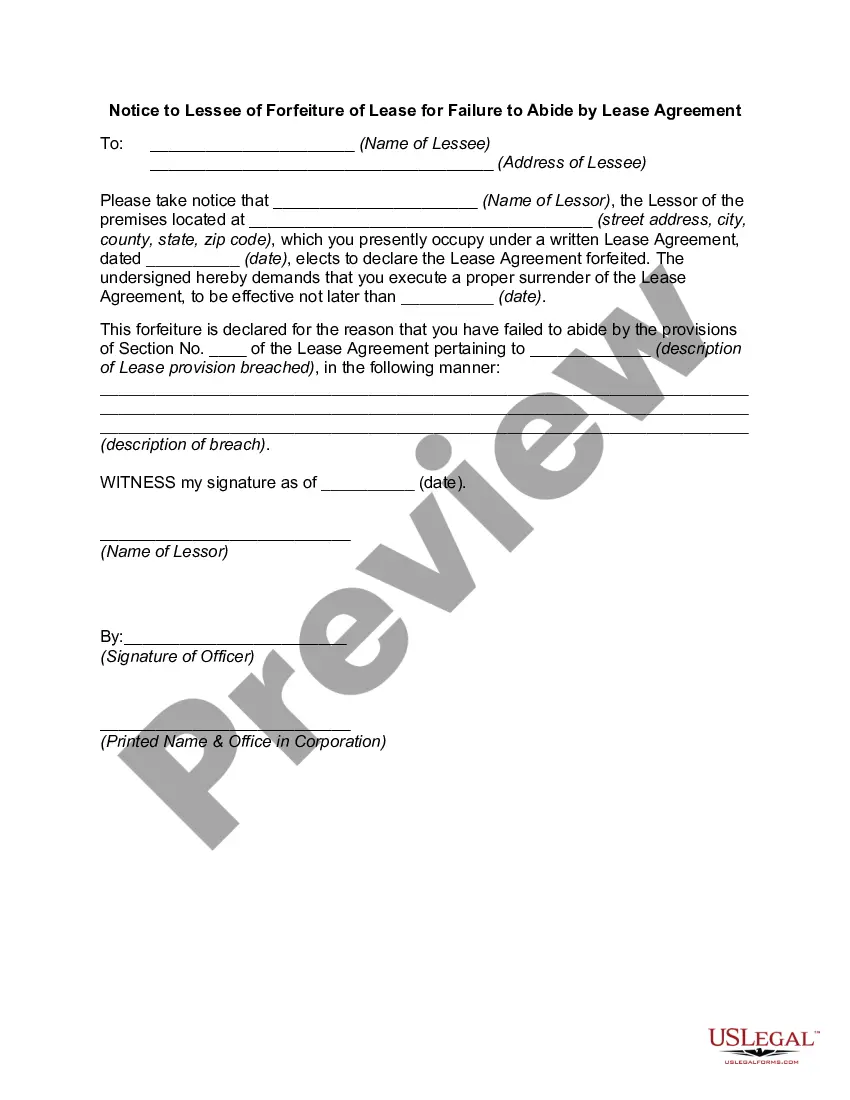
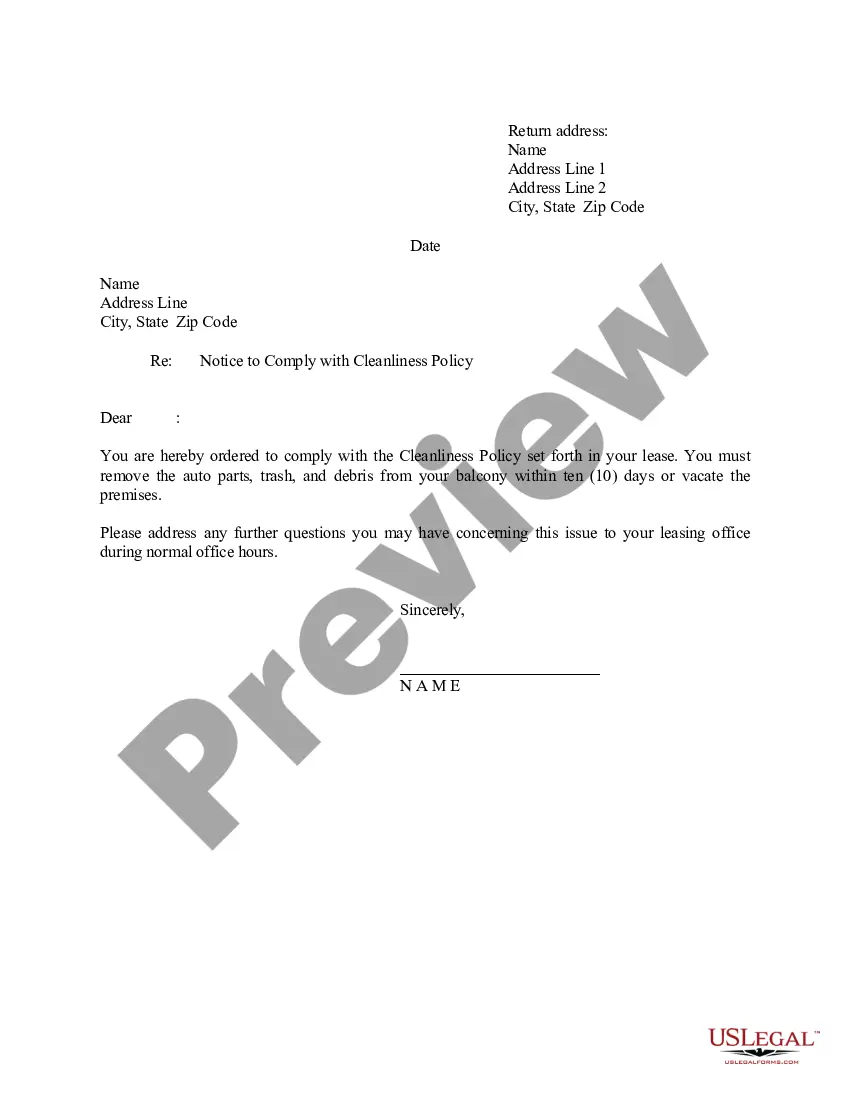
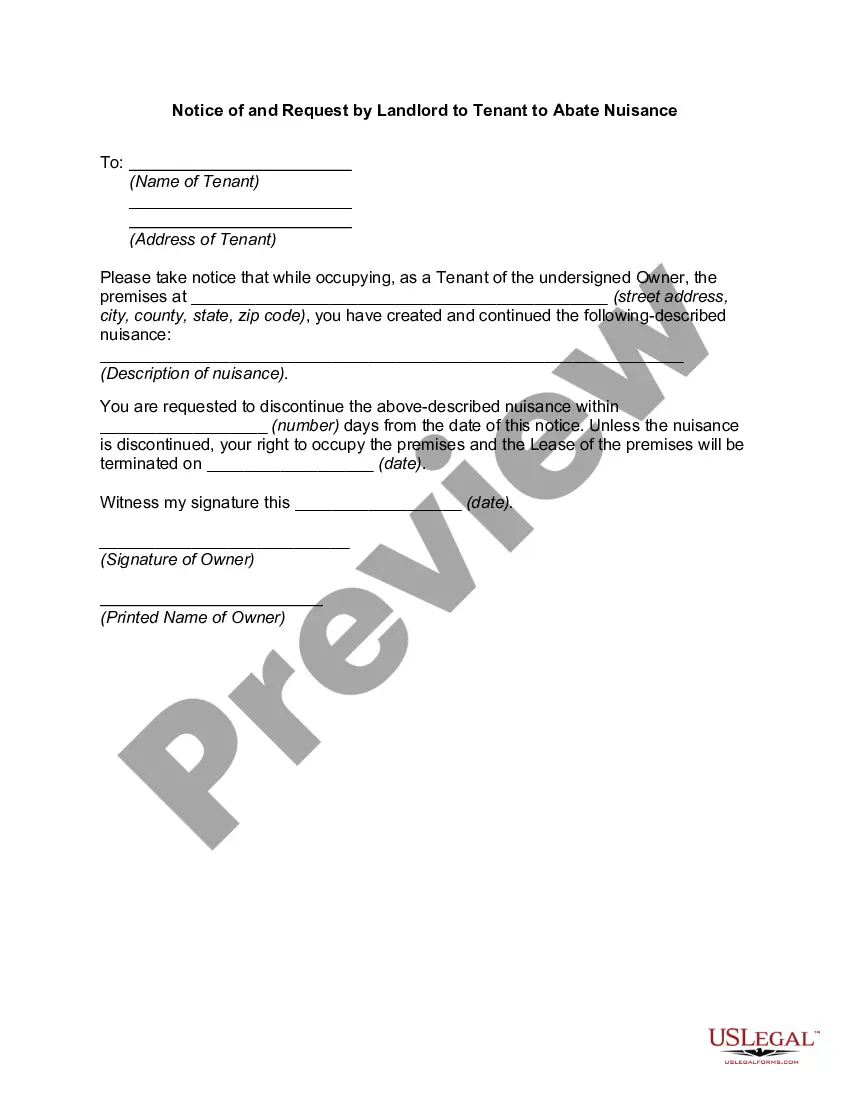


How to fill out Notice To Tenant And Demand For Delivery Of Possession For Disorderly Conduct Of Tenant/Lessee?
You can spend hours online searching for the legal document template that meets the federal and state requirements you need.
US Legal Forms provides thousands of legal forms that are reviewed by professionals.
You can download or print the Idaho Notice to Tenant and Demand for Delivery of Possession for Disorderly Conduct of Tenant/Lessee from my service.
First, ensure you have selected the correct document template for the state/city of your choice. Review the form outline to confirm you've chosen the right form. If available, use the Preview button to look through the document template as well.
- If you have a US Legal Forms account, you may Log In and click the Get button.
- Then, you can complete, modify, print, or sign the Idaho Notice to Tenant and Demand for Delivery of Possession for Disorderly Conduct of Tenant/Lessee.
- Every legal document template you acquire is yours indefinitely.
- To obtain another copy of the purchased form, go to the My documents section and click the corresponding button.
- If you are visiting the US Legal Forms website for the first time, follow the simple instructions below.
Form popularity
FAQ
1. A tenant must be given notice by a landlord prior to the eviction. The notice can be 3 days or one month. (A 3 day notice means 3 working days and does not include the day it was served, weekends, or holidays.)
Since there are currently no emergency protections in Idaho, then for renters: Your landlord can still give you a notice to quit. Your landlord can still file an eviction claim against you. They must include a form with their filing, that says your home does not qualify for national protections under the CARES Act.
A tenant can be evicted in Idaho if they do not uphold their responsibilities and obligations under the terms of a written lease/rental agreement. Idaho landlords must provide tenants with a 3-Day Notice to Comply, giving tenants three days 2 to correct the issue in order to avoid eviction.
If your landlord wants to end your periodic tenancy, they usually have to give you 90 days' notice. In some cases, your landlord only has to give you 42 days' notice. They will need to tell you the reason why they're giving you less notice though.
For a lease violation, Idaho landlord-resident laws require that you must give your resident a 3-Day Notice to Comply or Vacate to begin the eviction process. This notice informs the resident that they have 3 days to either remedy or comply with the lease agreement or to move out.
The national CDC eviction moratorium ended on August 26, 2021. Please reach out to legal services if you are worried about eviction. There are currently no state-level protections for Idaho renters during the emergency period in Idaho. Landlords may try to sue tenants to evict them.
A tenant can be evicted in Idaho if they do not uphold their responsibilities and obligations under the terms of a written lease/rental agreement. Idaho landlords must provide tenants with a 3-Day Notice to Comply, giving tenants three days 2 to correct the issue in order to avoid eviction.
A landlord may not discriminate based on sex, race, color, religion, disability, familial status or national origin. In cases of a disability, the landlord is required to make reasonable accommodations or modifications to the rental unit or lease policies.