Idaho Complaint for Conversion Seeking Punitive Damages

State:
Multi-State
Control #:
US-02074BG
Format:
Word; 
Rich Text
Instant download

Description

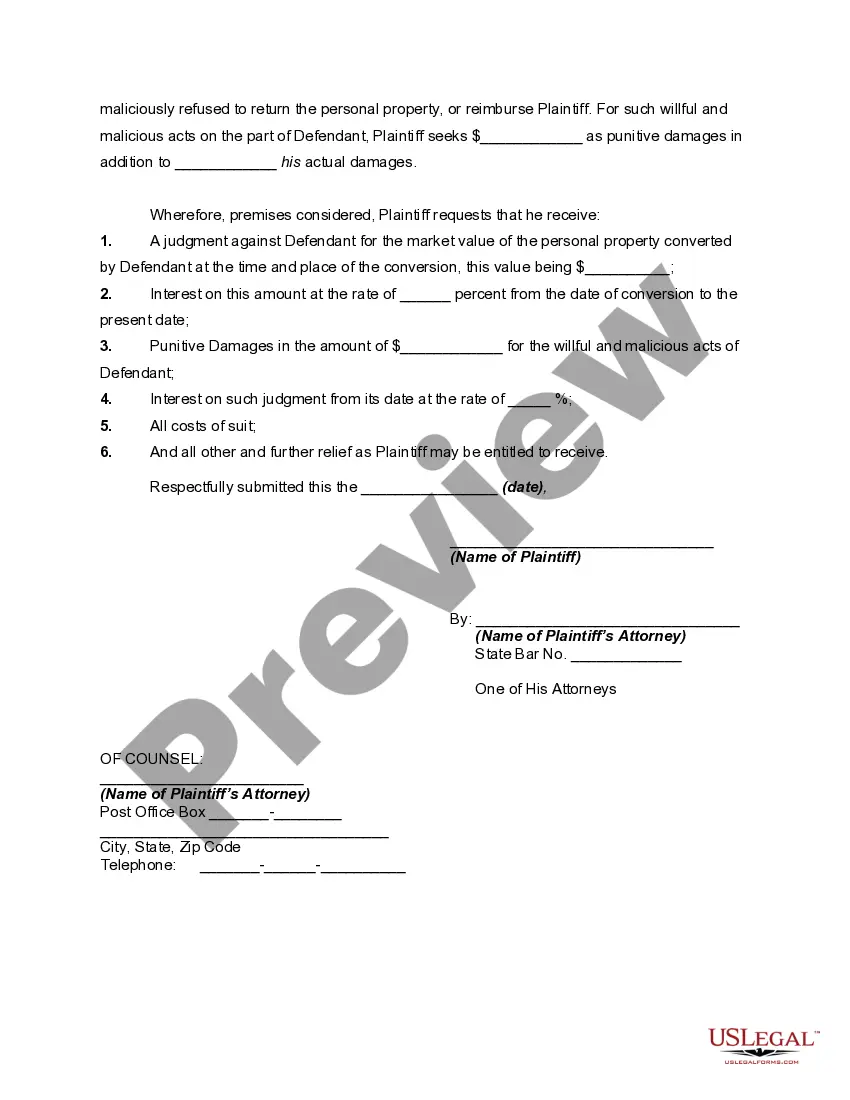
Conversion occurs when someone wrongfully uses property of another for their own purposes or alters or destroys it. In an action for conversion, the taking of the property may be lawful, but the retaining of the property is unlawful. To succeed in the action, the plaintiff must generally prove that he or she demanded the property returned and the defendant refused to do so.


Punitive damages are damages awarded in a lawsuit as a punishment and example to deter others from malicious, evil or particularly fraudulent acts. Plaintiff has the burden of proving that punitive damages should be awarded, and the amount, by a preponderance of the evidence. In order to succeed, the plaintiff must prove that the defendant's conduct was malicious, or in reckless disregard of plaintiff's rights.


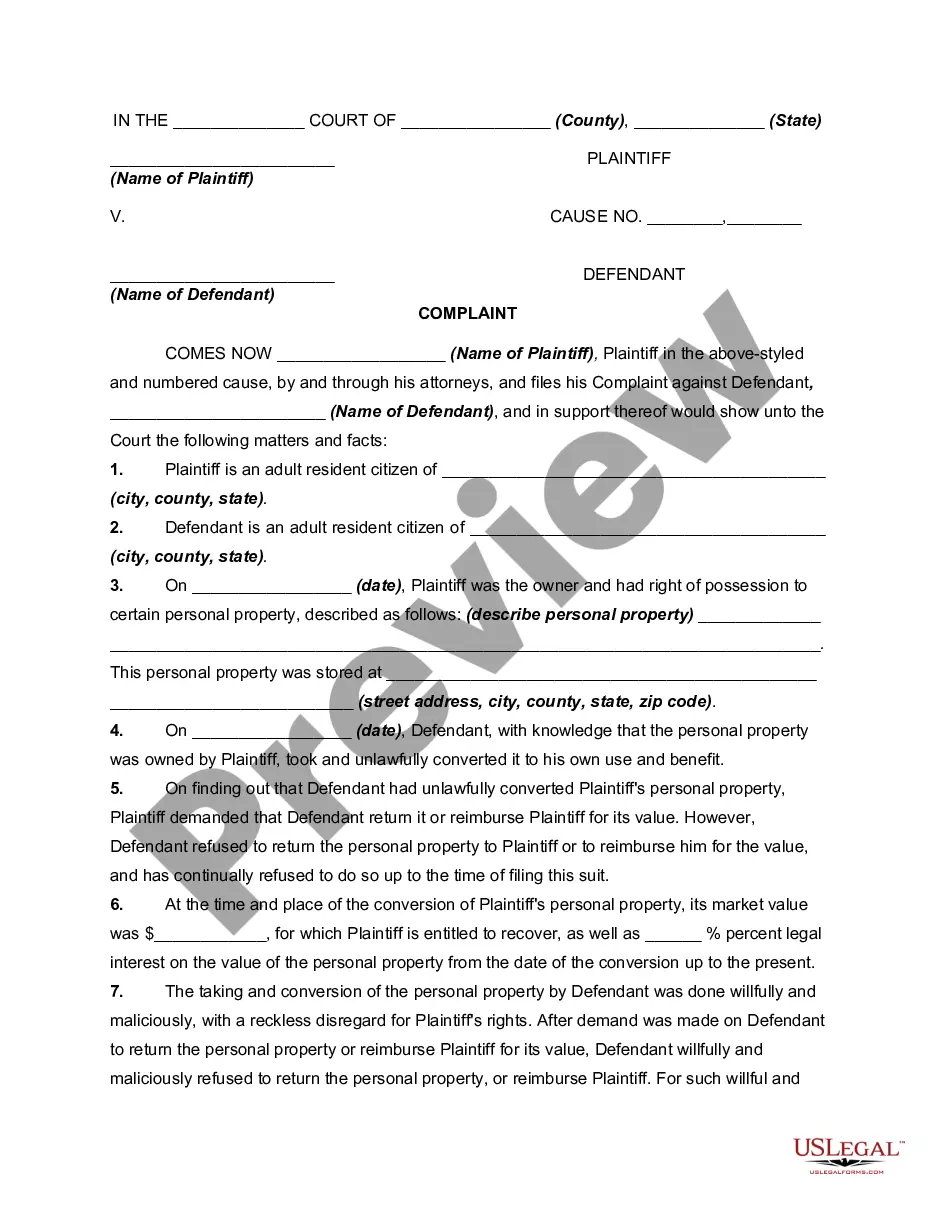
The following form is a complaint that adopts the notice pleadings format of the Federal Rules of Civil Procedure, which have been adopted by most states in one form or another.
Free preview
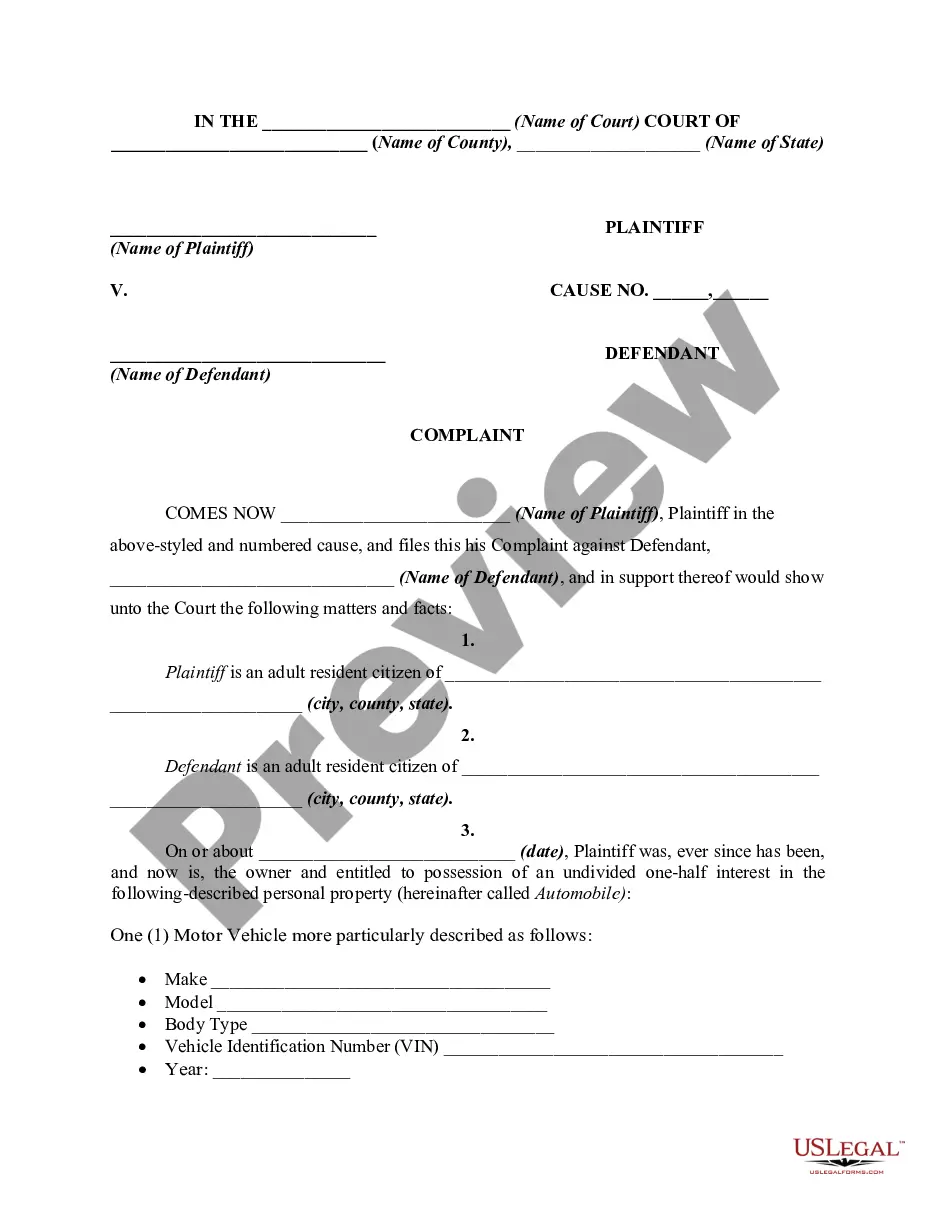
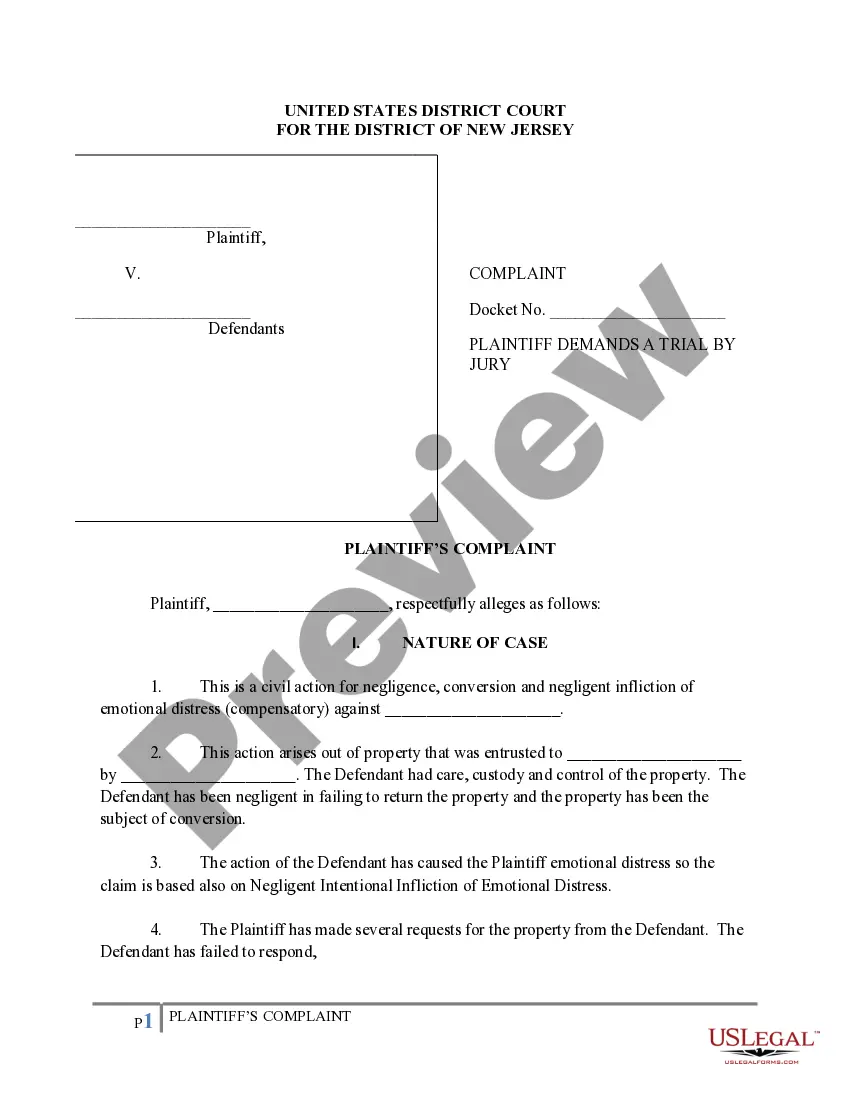
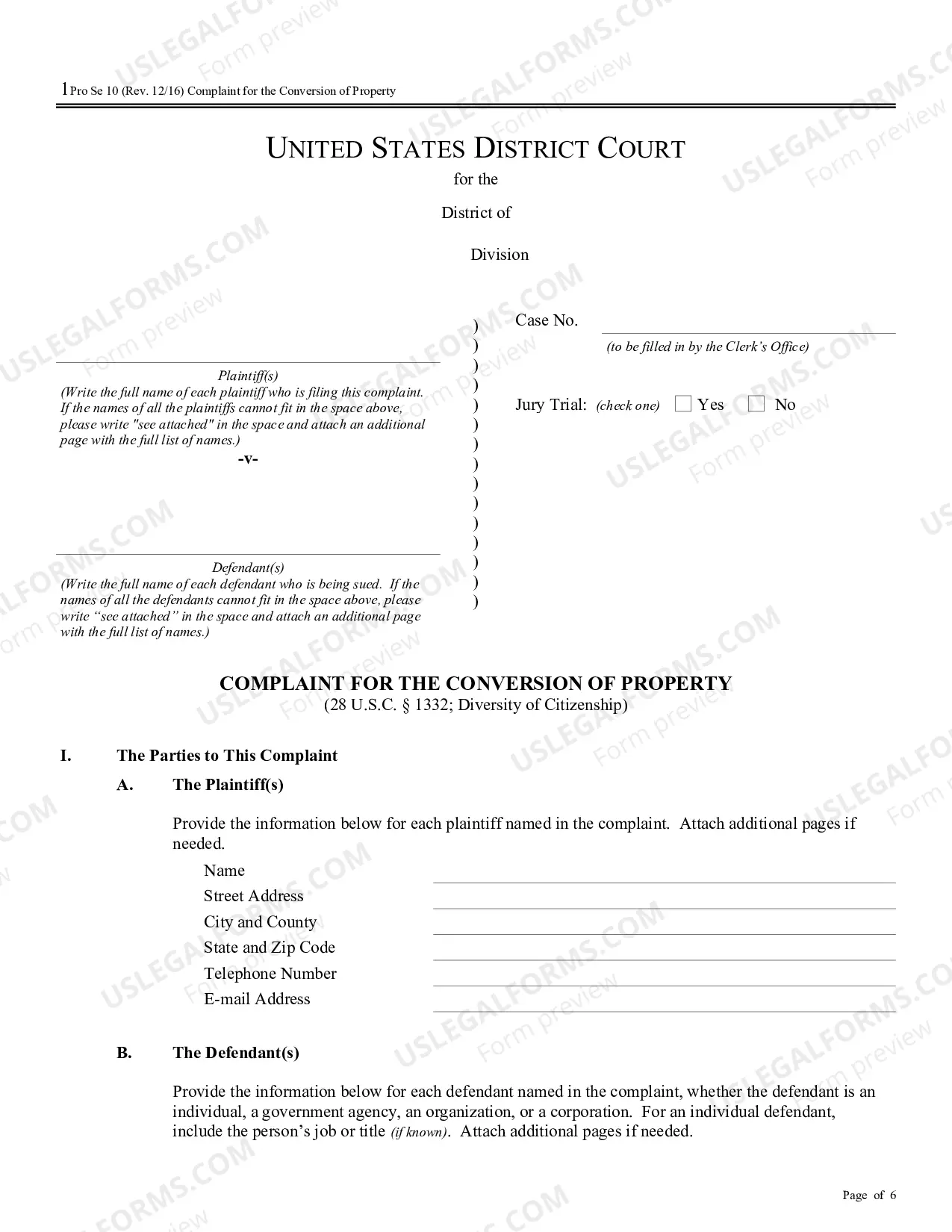
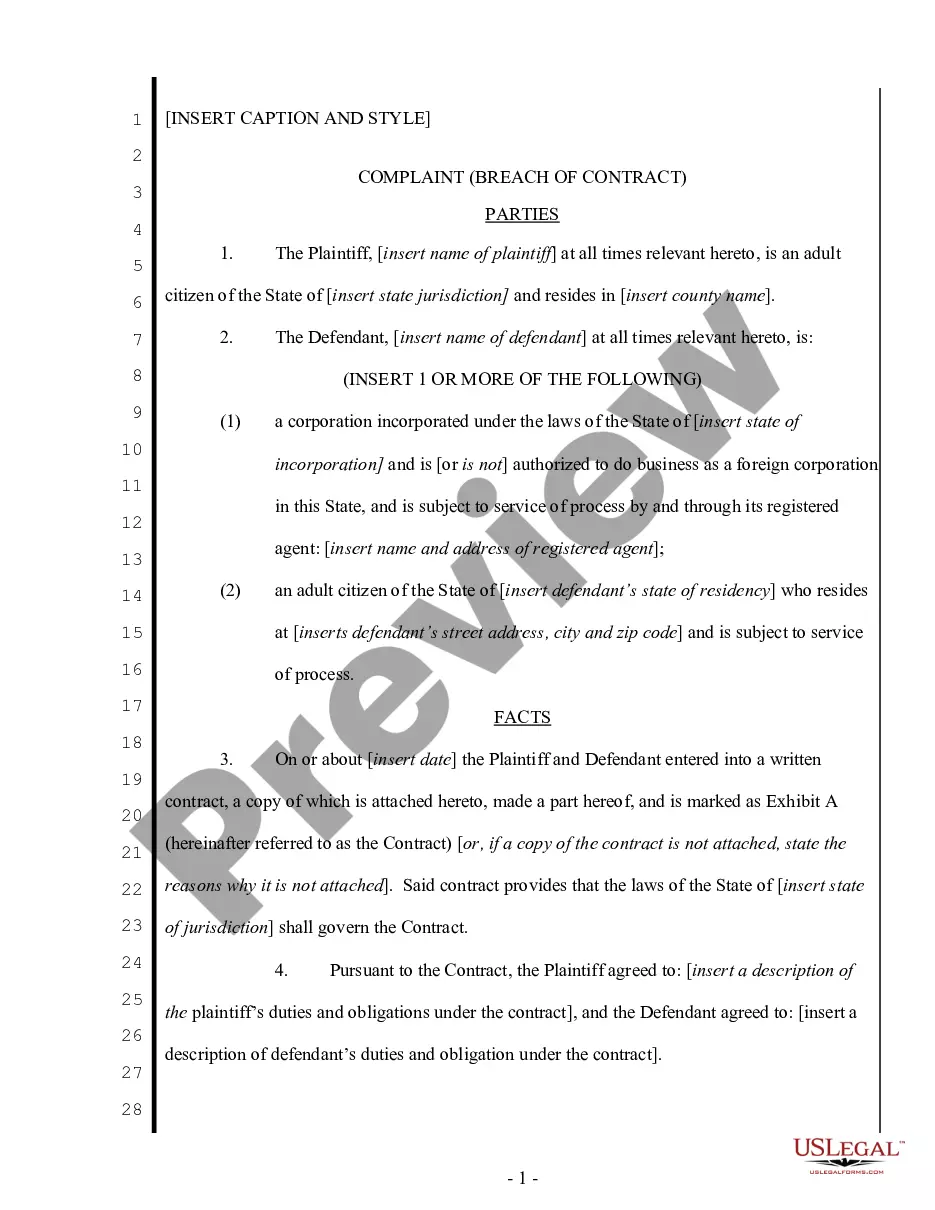
  • Preview Complaint for Conversion Seeking Punitive Damages
  • Preview Complaint for Conversion Seeking Punitive Damages
  • Preview Complaint for Conversion Seeking Punitive Damages

How to fill out Complaint For Conversion Seeking Punitive Damages?

US Legal Forms - one of the largest collections of legal documents in the United States - offers a variety of legal document templates that you can download or print. By using the site, you can access thousands of forms for business and personal purposes, organized by categories, states, or keywords. You can find the latest versions of forms such as the Idaho Complaint for Conversion Seeking Punitive Damages in moments.

If you already have a subscription, Log In and download the Idaho Complaint for Conversion Seeking Punitive Damages from the US Legal Forms library. The Download button will appear on each form you view. You can access all previously downloaded forms in the My documents section of your account.

To use US Legal Forms for the first time, here are simple steps to get you started: Ensure you have selected the correct form for your city/state. Click the Review button to examine the form's content. Check the form details to ensure you have chosen the right one. If the form does not meet your needs, use the Search field at the top of the screen to find one that does. If you are satisfied with the form, confirm your choice by clicking the Get now button. Then, select your preferred payment plan and provide your details to register for the account. Process the payment. Use your credit card or PayPal account to complete the transaction. Select the format and download the form to your device. Make edits. Fill out, modify, and print or sign the downloaded Idaho Complaint for Conversion Seeking Punitive Damages. Each template you add to your account does not expire and is yours indefinitely. Therefore, if you wish to download or print another copy, simply go to the My documents section and click on the form you need.

  1. Access the Idaho Complaint for Conversion Seeking Punitive Damages with US Legal Forms, the most extensive library of legal document templates.
  2. Utilize thousands of professional and state-specific templates that meet your business or personal needs and requirements.

Form popularity

FAQ

Yes, you can ask for punitive damages in a settlement, especially in cases involving an Idaho Complaint for Conversion Seeking Punitive Damages. Punitive damages aim to punish the wrongdoer and deter similar behavior in the future. During settlement discussions, it is essential to articulate the reasons for seeking these damages and how they relate to your specific case. Utilizing platforms like USLegalForms can help you prepare a compelling case for negotiations.

The statute 28 42 301 in Idaho addresses conversion, which is the unauthorized use of someone else's property. Under this law, individuals can seek legal recourse if their property has been wrongfully taken or withheld. When filing an Idaho Complaint for Conversion Seeking Punitive Damages, understanding this statute is crucial, as it helps establish the basis for your claim. You can consult resources like USLegalForms to navigate the legal language and ensure your complaint is correctly drafted.

The statute of limitations for property damage in Idaho is generally two years from the date the damage occurred. This means that if you are considering filing an Idaho Complaint for Conversion Seeking Punitive Damages, you need to act promptly. Delaying could jeopardize your ability to seek compensation. For guidance on the filing process, consider utilizing platforms like USLegalForms to streamline your efforts.

In Idaho, there is no statutory cap on damages for most personal injury claims, but there can be limits on specific types of claims, such as medical malpractice. However, when pursuing an Idaho Complaint for Conversion Seeking Punitive Damages, the focus is often on the specific circumstances of the case. It’s advisable to work with a legal expert to understand how damages may be calculated in your situation.

Yes, you can sue for emotional distress in Idaho under certain circumstances. Typically, you must demonstrate that the distress resulted from extreme and outrageous conduct by another party. When filing an Idaho Complaint for Conversion Seeking Punitive Damages, emotional distress claims may be included if the conversion of property has significantly affected your mental well-being.

The 49 910 law in Idaho pertains to the legal framework surrounding consumer protection and deceptive practices. This law ensures that consumers are treated fairly in transactions and have recourse if they fall victim to unfair practices. If you believe you have a valid claim, including an Idaho Complaint for Conversion Seeking Punitive Damages, it is crucial to consult legal resources to ensure your rights are upheld.

A consumer complaint arises when an individual feels wronged by a business or service provider. This could include issues such as misrepresentation, faulty products, or inadequate services. In the context of an Idaho Complaint for Conversion Seeking Punitive Damages, it often involves a dispute over personal property that was unlawfully taken. Understanding your rights can help you navigate the complaint process effectively.

In conversion torts, damages typically consist of the value of the property converted, along with any other losses directly resulting from the conversion. Depending on the circumstances, the court may also award punitive damages if the conduct involved was particularly wrongful. Therefore, when filing an Idaho Complaint for Conversion Seeking Punitive Damages, it is vital to clearly outline all damages suffered.

A Rule 35 motion in Idaho refers to a request for a mental or physical examination of a party when their condition is in controversy. This can be useful in legal cases where a party’s mental or physical state is relevant to the claims or defenses presented. If you are pursuing an Idaho Complaint for Conversion Seeking Punitive Damages, understanding procedural rules like this can bolster your case preparation.

A few states, such as Alaska and Washington, have restrictions or do not allow punitive damages in tort cases. Each state has its own legal framework regarding the awarding of punitive damages, often tied to specific types of cases. Understanding these nuances can be critical when drafting an Idaho Complaint for Conversion Seeking Punitive Damages, as it frames your expectations.

Trusted and secure by over 3 million people of the world’s leading companies

Idaho Complaint for Conversion Seeking Punitive Damages