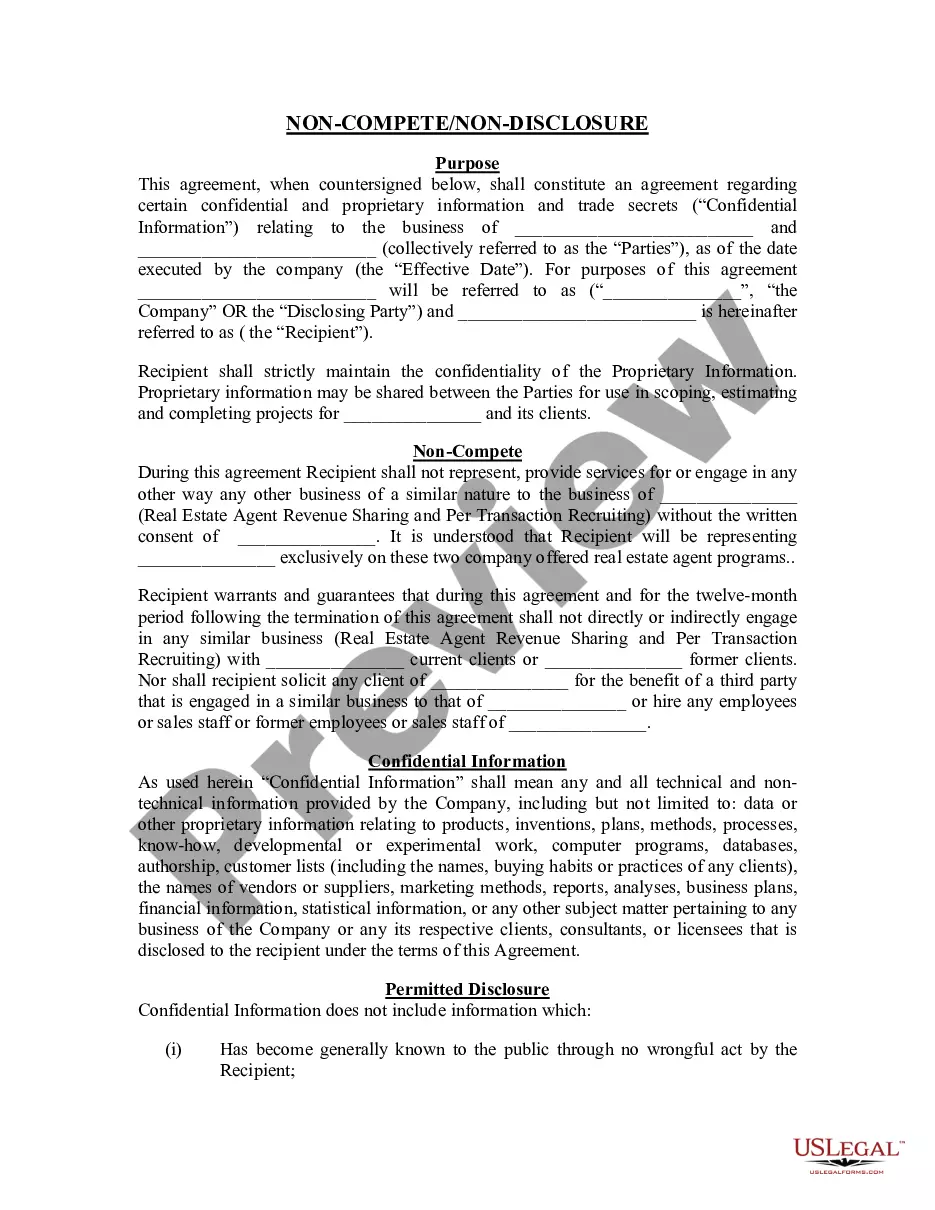
This agreement is between an employee and a certain company. The employee desires to be employed by the company in a capacity in which he/she may receive, contribute or develop Confidential and proprietary information. It is agreed that such information is important to the future of the company and the company expects the employee to keep secret such proprietary and confidential information and not to compete with the company during his/her employment and for a reasonable period after employment.
Idaho Confidentiality Agreements - Noncompetition in Employment
State:
Multi-State
Control #:
US-00569
Format:
Word;
Rich Text
Instant download
Description

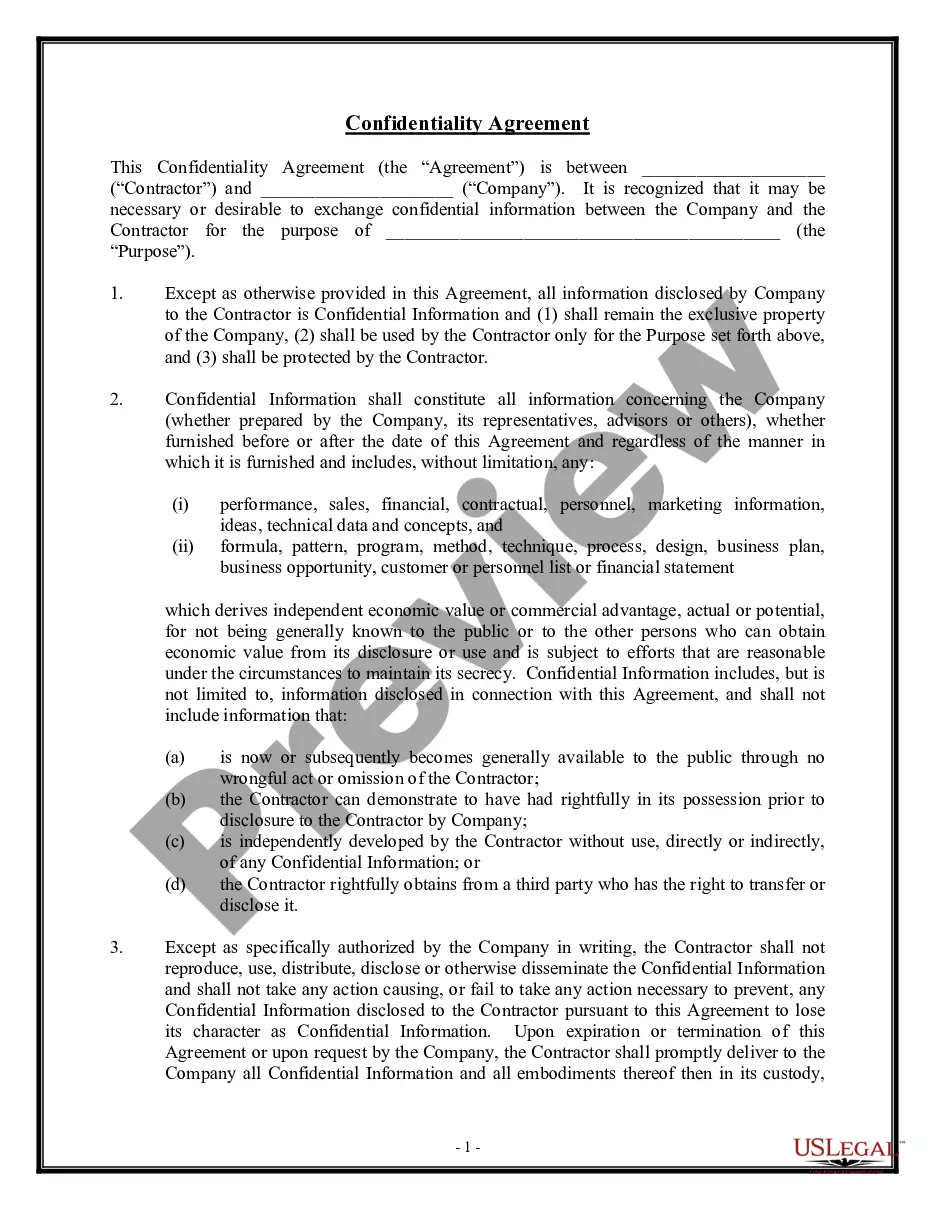
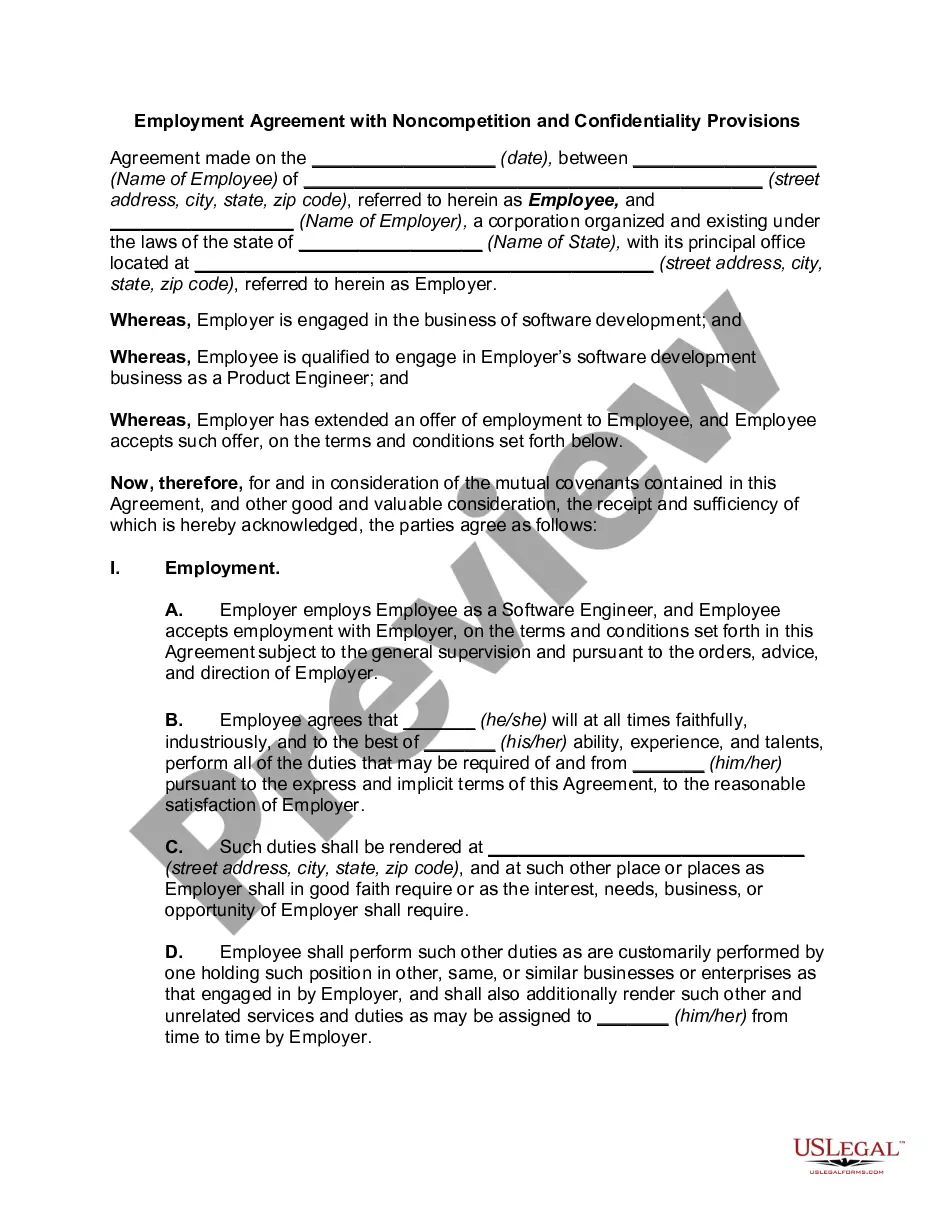
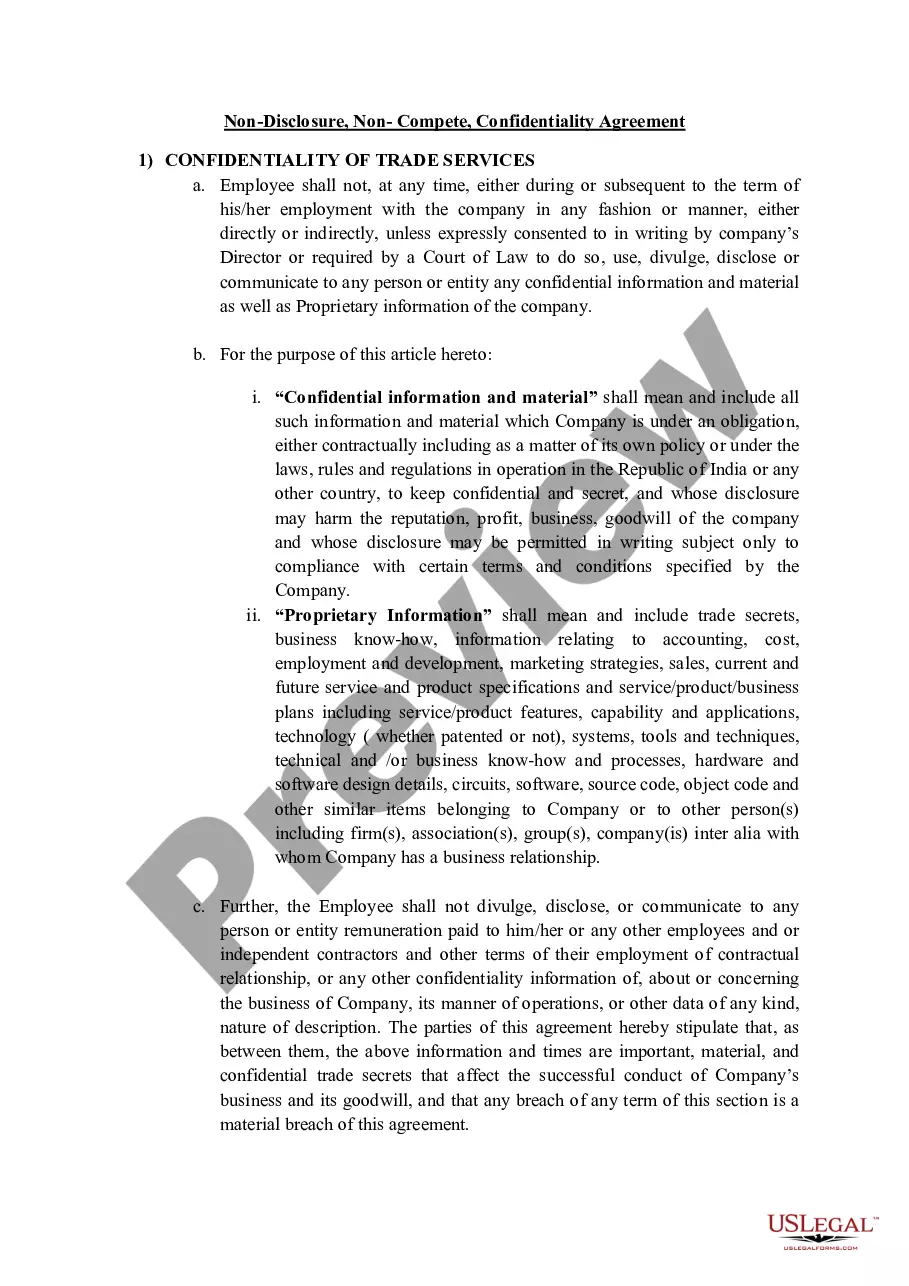





How to fill out Confidentiality Agreements - Noncompetition In Employment?
Are you presently in a location where you require documents for either business or personal purposes nearly every day.
There is an abundance of legal document templates available online, but locating trustworthy ones can be challenging.
US Legal Forms offers thousands of template forms, such as the Idaho Confidentiality Agreements - Noncompetition in Employment, designed to comply with federal and state regulations.
Once you find the appropriate form, click Get now.
Choose the pricing plan you prefer, complete the necessary information to create your account, and pay for the order using your PayPal or credit card.
- If you are already familiar with the US Legal Forms website and have an account, just Log In.
- After that, you can download the Idaho Confidentiality Agreements - Noncompetition in Employment template.
- If you do not have an account and wish to utilize US Legal Forms, follow these instructions.
- Find the form you need and ensure it is for the correct state/region.
- Use the Review button to check the form.
- Read through the details to confirm you have selected the right form.
- If the form is not what you are searching for, use the Lookup field to find the document that meets your needs.
Form popularity
FAQ
The NDA law in Idaho governs non-disclosure agreements, which protect confidential information shared between parties. These agreements are essential to maintain business secrets and prevent unauthorized disclosures. Understanding the relationship between NDAs and Idaho Confidentiality Agreements - Noncompetition in Employment will help you safeguard your interests in any employment situation.
There are several strategies to address the constraints of a non-compete agreement. Employees may negotiate terms before signing, seek to prove the agreement is overly broad, or demonstrate that it lacks consideration. Familiarizing yourself with Idaho Confidentiality Agreements - Noncompetition in Employment can help you explore these options confidently.
Non-compete agreements can be enforceable in Idaho, but they must meet specific criteria. The agreements need to be reasonable in duration, geographic scope, and the type of work prohibited. If you are considering a non-compete, it is essential to review Idaho Confidentiality Agreements - Noncompetition in Employment to ensure compliance with the law.
Section 44 2701 in Idaho addresses noncompetition agreements in employment. This law outlines the enforceability and limitations of these contracts, which often restrict employees from working for competitors after leaving a job. Understanding this section is crucial for both employers and employees to navigate Idaho Confidentiality Agreements - Noncompetition in Employment effectively.
Yes, Idaho does recognize non-compete agreements, but they are subject to specific legal standards. The agreement must be reasonable in terms of duration, geography, and scope to be enforceable. Familiarity with Idaho Confidentiality Agreements - Noncompetition in Employment can help you comprehend the legal framework better. Consulting a legal professional can ensure your agreement complies with Idaho law.
No, a confidentiality agreement and a non-compete are distinct legal documents. A confidentiality agreement typically focuses on protecting sensitive information, while a non-compete restricts a person's ability to work with competitors. However, both documents are relevant aspects of Idaho Confidentiality Agreements - Noncompetition in Employment. Understanding both terms can help you navigate your legal obligations effectively.
While this question pertains to the UK, it's important to note that procedures can vary by location. Common strategies include negotiating with your former employer or proving the agreement's unreasonableness. Though the laws differ, understanding your rights in Idaho Confidentiality Agreements - Noncompetition in Employment is essential. Consulting a qualified attorney can provide tailored advice for your circumstances.
Yes, employers can require a non-compete agreement as part of their standard hiring process. However, the terms of these agreements must be reasonable and not overly restrictive. In Idaho, the enforceability of such agreements depends on their scope and duration. Understanding your rights in Idaho Confidentiality Agreements - Noncompetition in Employment is crucial for both employers and employees.
You can obtain a copy of a contract by requesting it from the party who provided it to you, typically your employer. They are required to share this document upon your request. If you face challenges in accessing your contract, engaging with a legal expert can guide you through the process and ensure you understand the implications of your Idaho Confidentiality Agreements - Noncompetition in Employment.
To obtain a copy of a non-compete agreement, you can directly request it from your employer or review the documents you received upon hiring. Employers are generally obliged to provide copies of signed agreements. If you can't locate your agreement, consider seeking help from a lawyer who specializes in Idaho Confidentiality Agreements - Noncompetition in Employment to assist you in retrieving this important document.