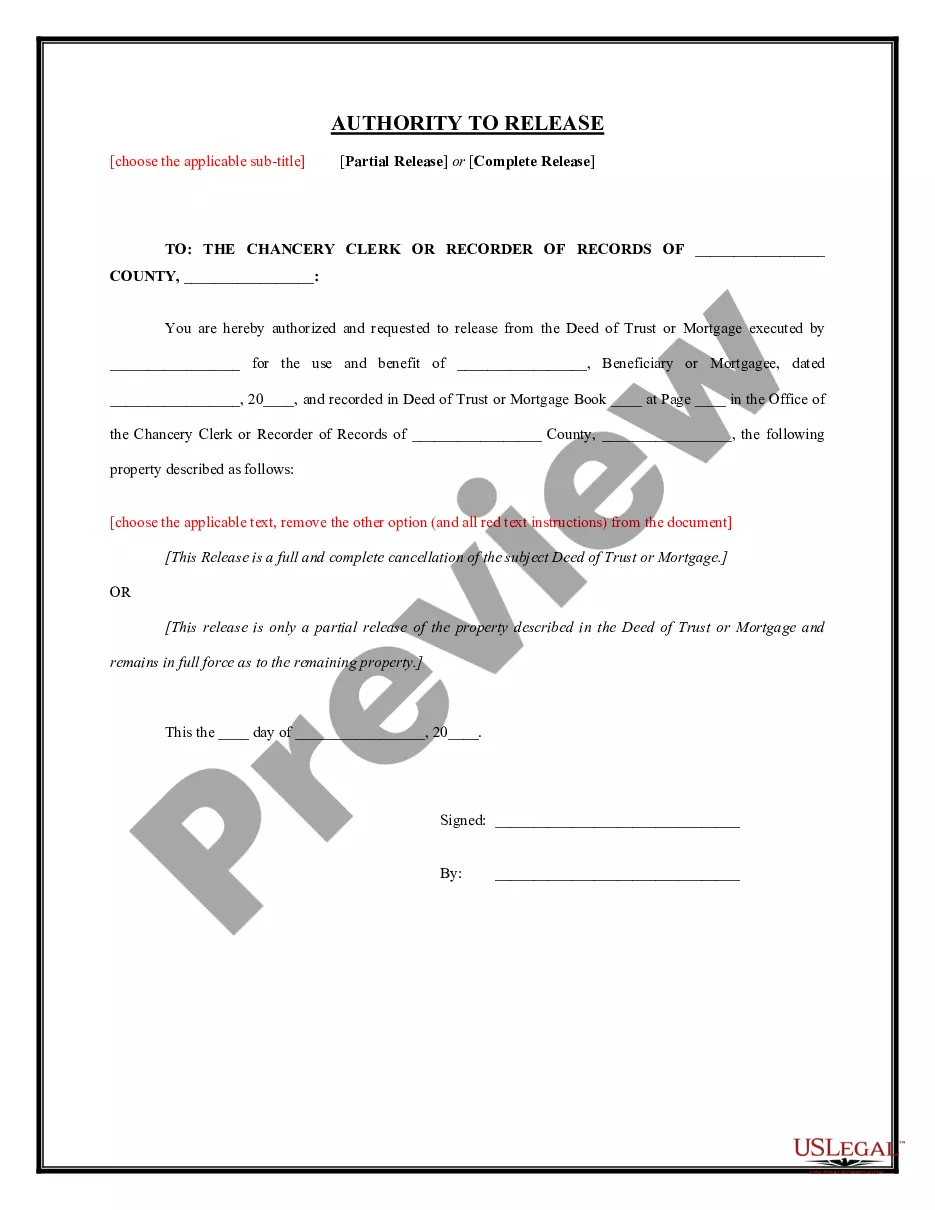
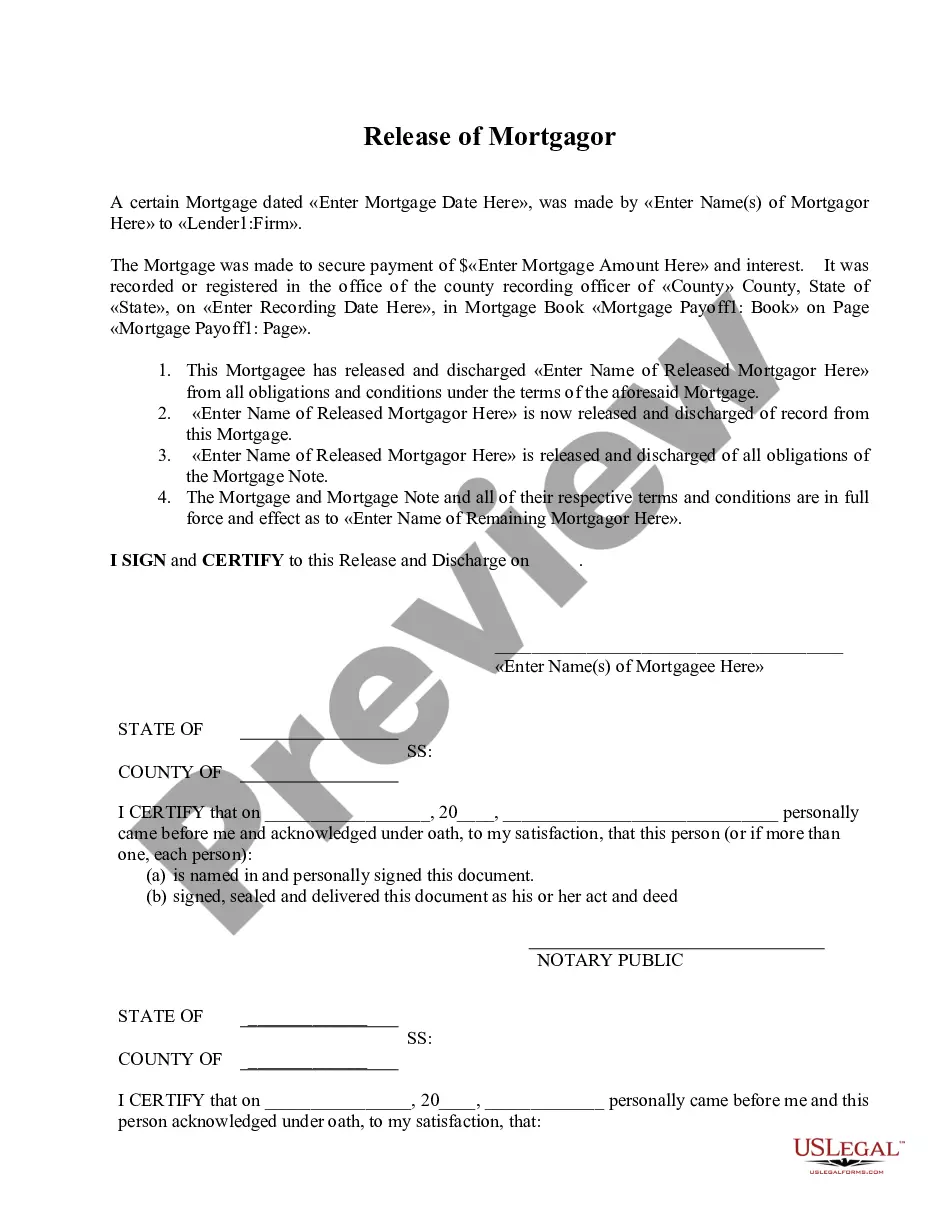
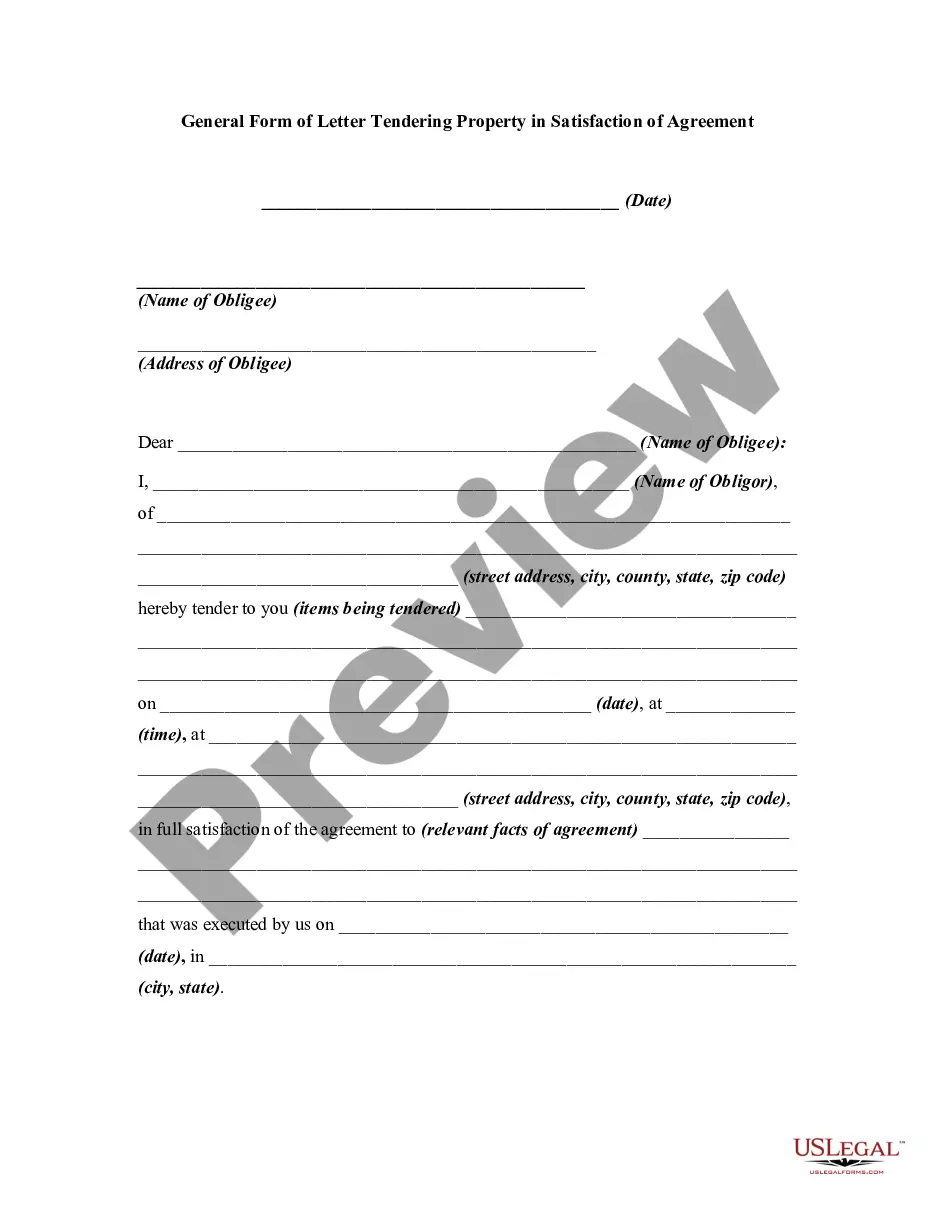
This form authorizes the chancery clerk or the recorder of deeds to release from the deed of trust or mortgage certain property described in the document.
Idaho Deed of Trust - Release
State:
Multi-State
Control #:
US-00489
Format:
Word;
Rich Text
111 downloads
Description
Free preview


Get your form ready online
Our built-in tools help you complete, sign, share, and store your documents in one place.
Built-in online Word editor
Make edits, fill in missing information, and update formatting in US Legal Forms—just like you would in MS Word.
Export easily
Download a copy, print it, send it by email, or mail it via USPS—whatever works best for your next step.
E-sign your document
Sign and collect signatures with our SignNow integration. Send to multiple recipients, set reminders, and more. Go Premium to unlock E-Sign.
Notarize online 24/7
If this form requires notarization, complete it online through a secure video call—no need to meet a notary in person or wait for an appointment.
Store your document securely
We protect your documents and personal data by following strict security and privacy standards.

Make edits, fill in missing information, and update formatting in US Legal Forms—just like you would in MS Word.

Download a copy, print it, send it by email, or mail it via USPS—whatever works best for your next step.

Sign and collect signatures with our SignNow integration. Send to multiple recipients, set reminders, and more. Go Premium to unlock E-Sign.

If this form requires notarization, complete it online through a secure video call—no need to meet a notary in person or wait for an appointment.

We protect your documents and personal data by following strict security and privacy standards.
Looking for another form?
How to fill out Deed Of Trust - Release?
Are you in a location where you need paperwork for occasional business or specific purposes on a daily basis.
There are many legal document templates accessible online, but locating ones you can trust isn’t easy.
US Legal Forms provides thousands of form templates, including the Idaho Deed of Trust - Release, which are designed to satisfy federal and state requirements.
You can download another copy of the Idaho Deed of Trust - Release at any time if needed. Just click the desired form to download or print the document template.
Utilize US Legal Forms, the most extensive collection of legal forms, to save time and avoid mistakes. The service offers professionally crafted legal document templates that can be used for various purposes. Create an account on US Legal Forms and start making your life a bit easier.
- If you are already familiar with the US Legal Forms website and possess an account, just Log In.
- After that, you can download the Idaho Deed of Trust - Release template.
- If you do not have an account and wish to start using US Legal Forms, follow these steps.
- Find the form you need and ensure it is for the correct area/county.
- Use the Review button to examine the form.
- Read the description to confirm that you have selected the right form.
- If the form isn’t what you are looking for, use the Lookup section to find the form that suits your needs.
- Once you discover the right form, click Purchase now.
- Choose the pricing plan you prefer, fill out the required information to create your account, and pay for your order using your PayPal or credit card.
- Select a convenient document format and download your copy.
- Find all of the document templates you have purchased in the My documents menu.
Form popularity
FAQ
The ?Trustor? is the person who borrowed the money (the Payor of the Note) The ?Beneficiary? is the person who is lending the money (the Payee of the Note) The ?Trustee? is the neutral 3rd party who will issue the release of the loan once it is paid in full.
45-1502. Definitions ? Trustee's charge. As used in this act: (1) "Beneficiary" means the person named or otherwise designated in a trust deed as the person for whose benefit a trust deed is given, or his successor in interest, and who shall not be the trustee.
Although about 60% of the US states are mortgage states, Idaho is considered a deed state. A deed of trust is an agreement between a beneficiary, grantor, and trustee. A deed is signed to a trustee as a form of security to ensure that the performance of obligation is fulfilled.
The way it differs from a TOD deed is that a living trust can be used for any type of asset, not just real estate. So if you have stocks, savings accounts, valuable belongings, or other assets that you want to transfer to someone after your death, a living trust is a way to do it.
45-1504. TRUSTEE OF TRUST DEED --- WHO MAY SERVE --- SUCCESSORS. (d) A licensed title insurance agent or title insurance company authorized to transact business under the laws of the state of Idaho. (2) The trustee may resign at its own election or be replaced by the beneficiary.
A beneficiary of trust is the individual or group of individuals for whom a trust is created. The trust creator or grantor designates beneficiaries and a trustee, who has a fiduciary duty to manage trust assets in the best interests of beneficiaries as outlined in the trust agreement.
While a beneficiary deed will help your estate to avoid probate, it will not provide any help or protection if you become incapacitated. If you have sole ownership of the property, no one will be able to care for or sell the property for you if you have medical issues.
The ?Trustor? is the person who borrowed the money (the Payor of the Note) The ?Beneficiary? is the person who is lending the money (the Payee of the Note) The ?Trustee? is the neutral 3rd party who will issue the release of the loan once it is paid in full.