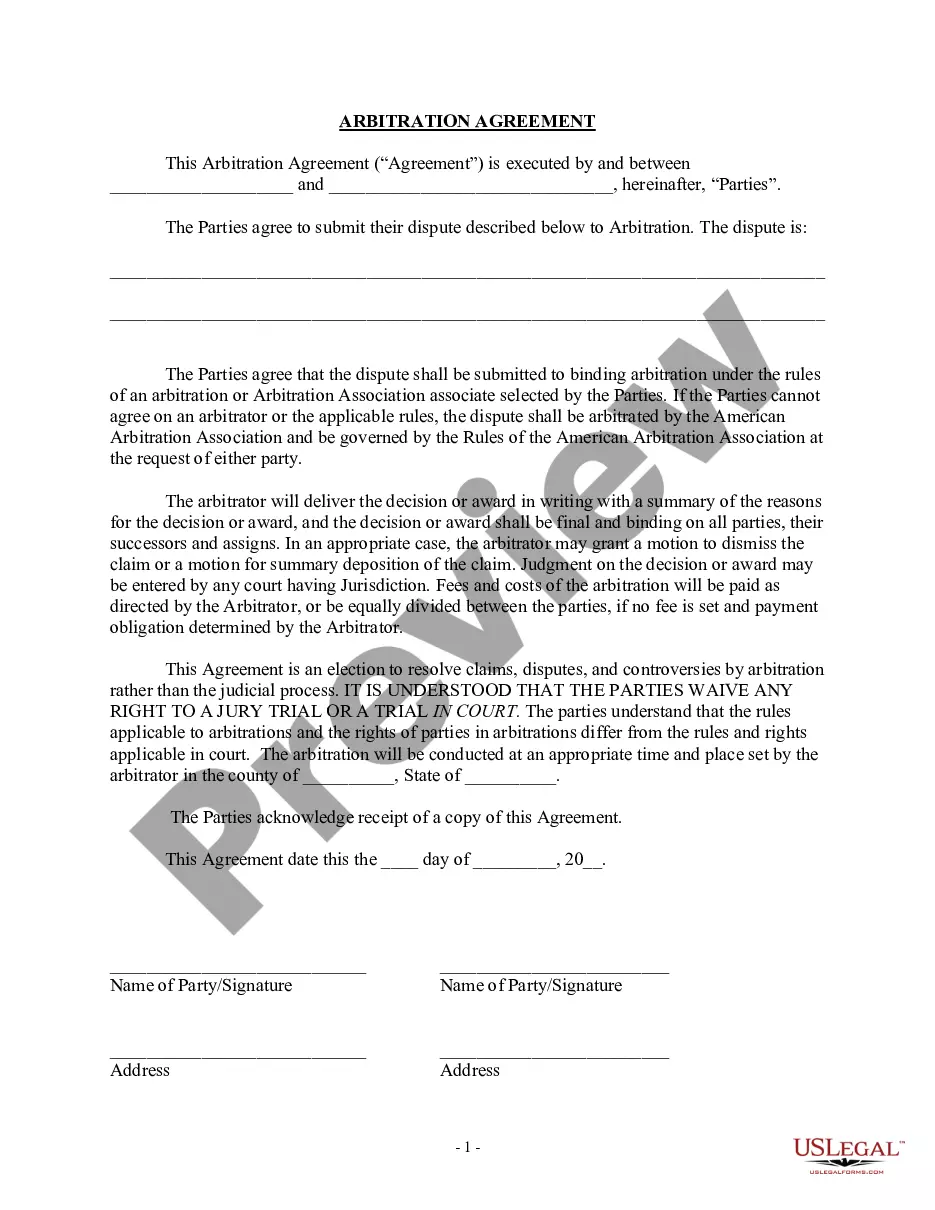
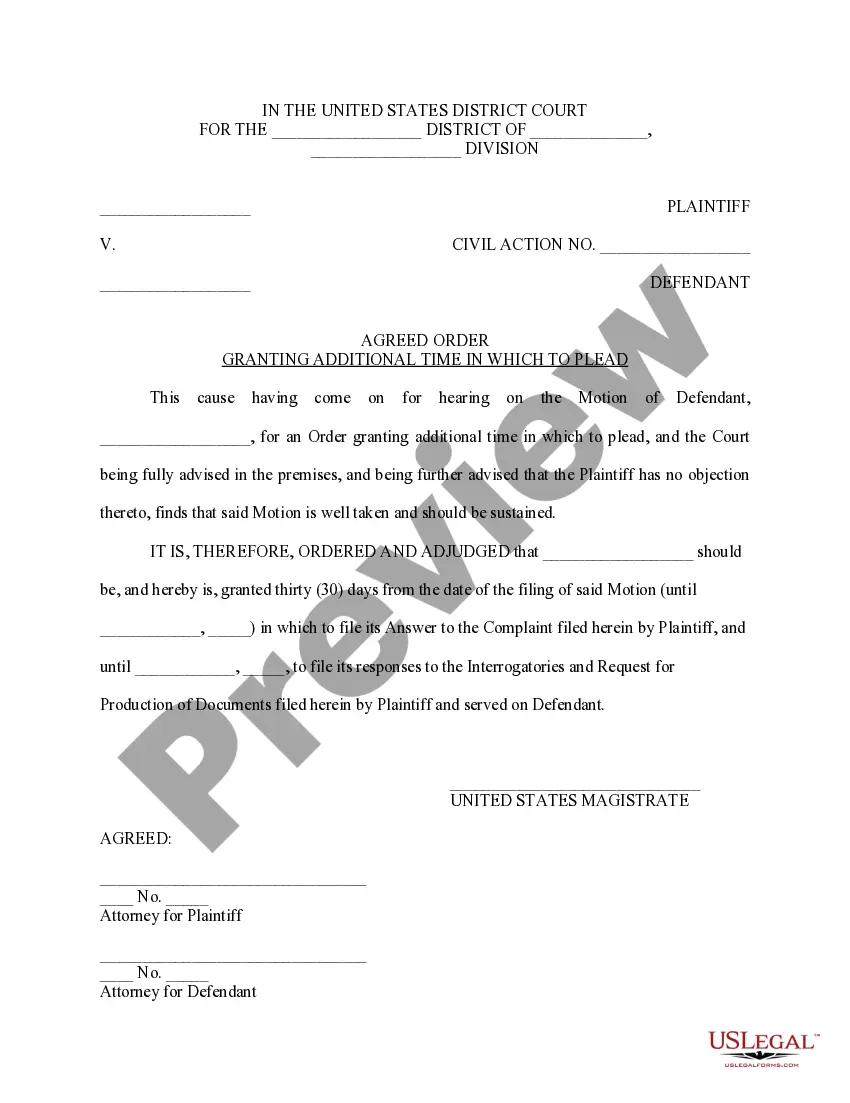
Idaho Agreed Order Granting Additional Time to Plead and Respond to Interrogatories and Requests for Production
Description
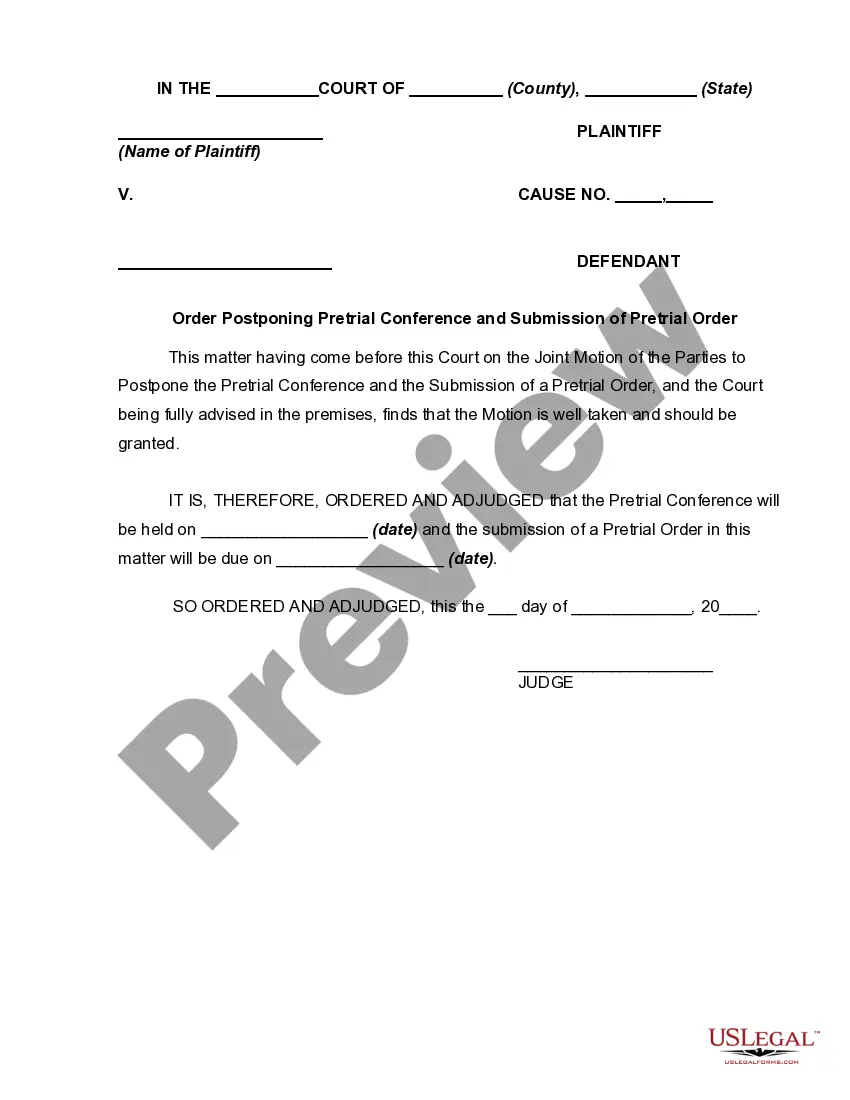
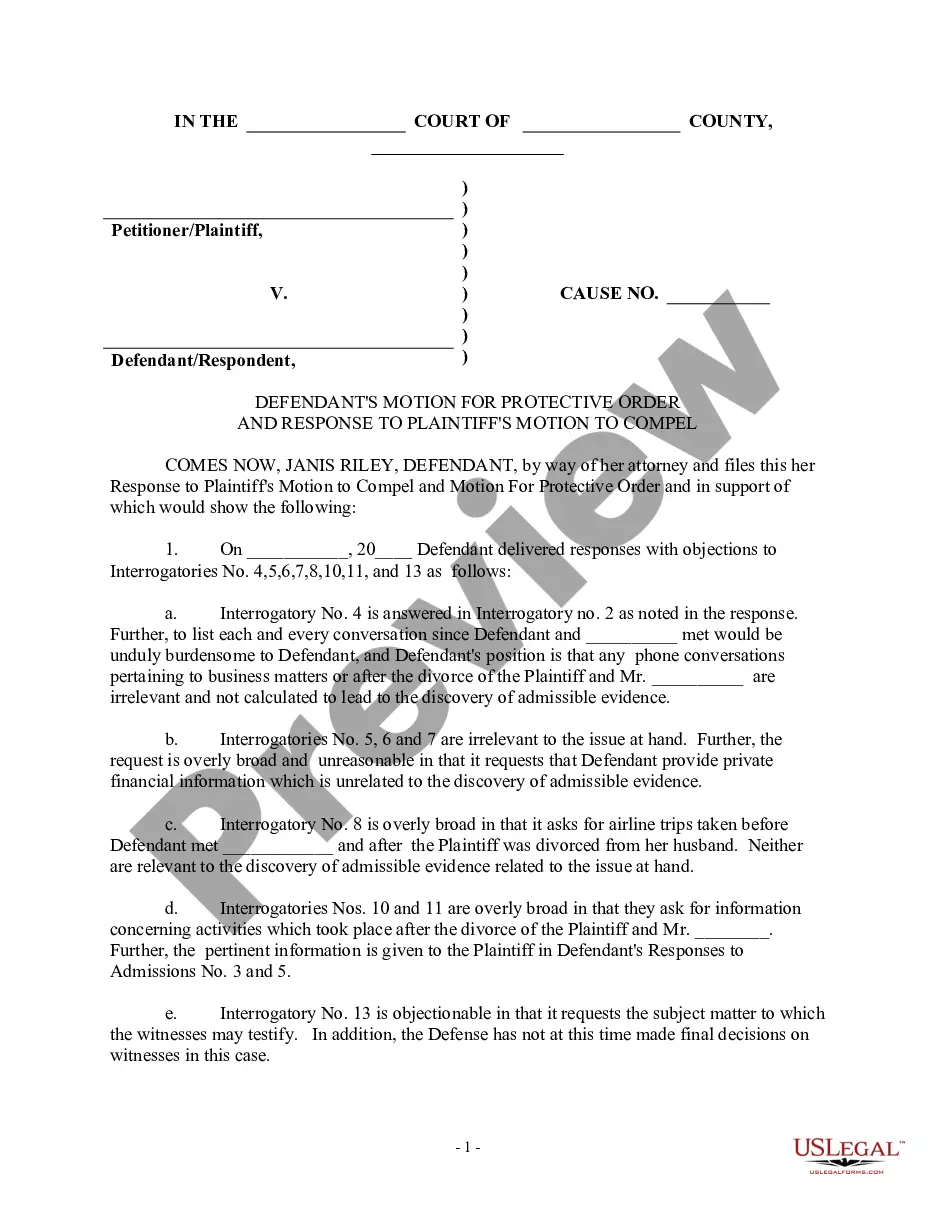
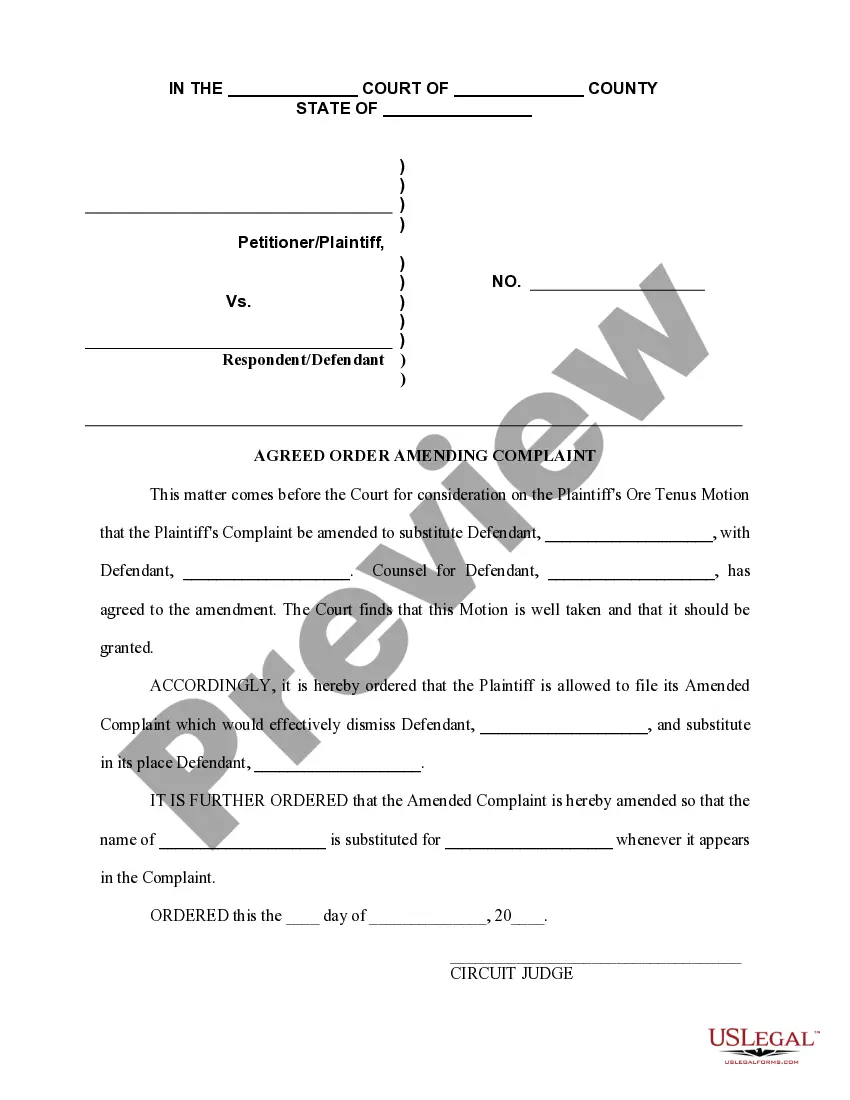


How to fill out Agreed Order Granting Additional Time To Plead And Respond To Interrogatories And Requests For Production?
If you require to total, acquire, or generate valid document templates, utilize US Legal Forms, the premier assortment of legal forms available online.
Employ the site’s straightforward and user-friendly search to locate the documents you need.
A range of templates for business and personal uses are organized by categories and states, or keywords.
Step 4. Once you have found the form you need, click the Purchase now button. Select the pricing plan you prefer and enter your information to register for an account.
Step 5. Process the payment. You may use your Visa or Mastercard or PayPal account to complete the transaction. Step 6. Choose the format of the legal document and download it to your device. Step 7. Complete, edit, print, or sign the Idaho Agreed Order Granting Additional Time to Plead and Respond to Interrogatories and Requests for Production. Each legal document template you purchase is yours indefinitely. You have access to every form you downloaded in your account. Click on the My documents section and select a form to print or download again. Stay competitive and obtain, and print the Idaho Agreed Order Granting Additional Time to Plead and Respond to Interrogatories and Requests for Production with US Legal Forms. There are millions of professional and state-specific forms you can use for your business or personal needs.
- Utilize US Legal Forms to locate the Idaho Agreed Order Granting Additional Time to Plead and Respond to Interrogatories and Requests for Production with just a few clicks.
- If you are a current US Legal Forms customer, Log In to your account and then click the Download button to access the Idaho Agreed Order Granting Additional Time to Plead and Respond to Interrogatories and Requests for Production.
- You can also access forms you previously downloaded in the My documents section of your account.
- If you are using US Legal Forms for the first time, follow the steps below.
- Step 1. Ensure you have selected the form for the correct city/state.
- Step 2. Use the Preview option to review the form’s content. Don’t forget to read the details.
- Step 3. If you are not satisfied with the document, utilize the Search area at the top of the screen to find other versions of the legal document template.
Form popularity
FAQ
In Idaho, you generally have 30 days to respond to interrogatories from the date you receive them. This timeframe ensures that you provide thorough and accurate answers. However, if you anticipate needing additional time to prepare your responses, you may file for an Idaho Agreed Order Granting Additional Time to Plead and Respond to Interrogatories and Requests for Production. This option provides you with the necessary flexibility to address the inquiries effectively.
Rule 56 of the Idaho Rules of Civil Procedure pertains to summary judgment, allowing a party to seek a ruling from the court when there is no genuine issue of material fact. This rule streamlines the legal process, ensuring that cases without disputed facts can move forward efficiently. Familiarizing yourself with this rule can strengthen your legal strategy. If you require more time to respond to related requests, consider utilizing the Idaho Agreed Order Granting Additional Time to Plead and Respond to Interrogatories and Requests for Production.
Requests for production are not considered interrogatories; however, they both serve the purpose of gathering information during litigation. Interrogatories consist of written questions requiring written answers, while requests for production involve asking for specific documents or evidence. Understanding the distinction can help you respond appropriately. If you find yourself needing extra time to prepare, an Idaho Agreed Order Granting Additional Time to Plead and Respond to Interrogatories and Requests for Production can be beneficial.
To answer interrogatories and requests for production of documents, first, review each question carefully. Gather all relevant information and documents that pertain to your case. Craft clear and concise responses that directly address each inquiry. If you require more time, consider filing an Idaho Agreed Order Granting Additional Time to Plead and Respond to Interrogatories and Requests for Production to ensure you meet all legal requirements.
If a party fails to supplement discovery responses when required or fails to comply with a disclosure requirement ordered by the court pursuant to a Rule 16 scheduling or pre-trial order, the party is not allowed to use that information or witness to supply evidence on a motion, at a hearing, or at a trial, unless the ...
Interrogatories are a discovery tool that the parties can use to have specific questions about a case answered before trial. Interrogatories are lists of questions sent to the other party that s/he must respond to in writing.
The court where a judgment has been rendered may, if an appeal has been taken or may still be taken, permit a party to depose witnesses to perpetuate their testimony for use in the event of further proceedings in that court. (B) the reasons for perpetuating the testimony.
We don't like Motions to Compel. Judges don't like them, and neither do the opposing parties we bring them against. But they are, sometimes, required to be brought in cases where you need information to make sure you know what facts, witnesses and documents are in a case prior to going to going to trial.
Rule 35 refers to Idaho Criminal Rule 35, which controls a Motion for Correction of Sentence. A Rule 35 Motion can do two things: (1) correct an illegal sentence, or (2) reduce a legal sentence because it is excessive or unduly harsh. You may file only one motion to reduce a legal sentence.
Rule 37-Failure to Make or Cooperate in Discovery: Sanctions. (a) Motion for Order Compelling Disclosure or Discovery. A party, upon reasonable notice to other parties and all persons affected thereby, may apply for an order compelling disclosure or discovery as follows: (1) Appropriate Court.