Idaho Complex Will with Credit Shelter Marital Trust for Large Estates
What is this form?
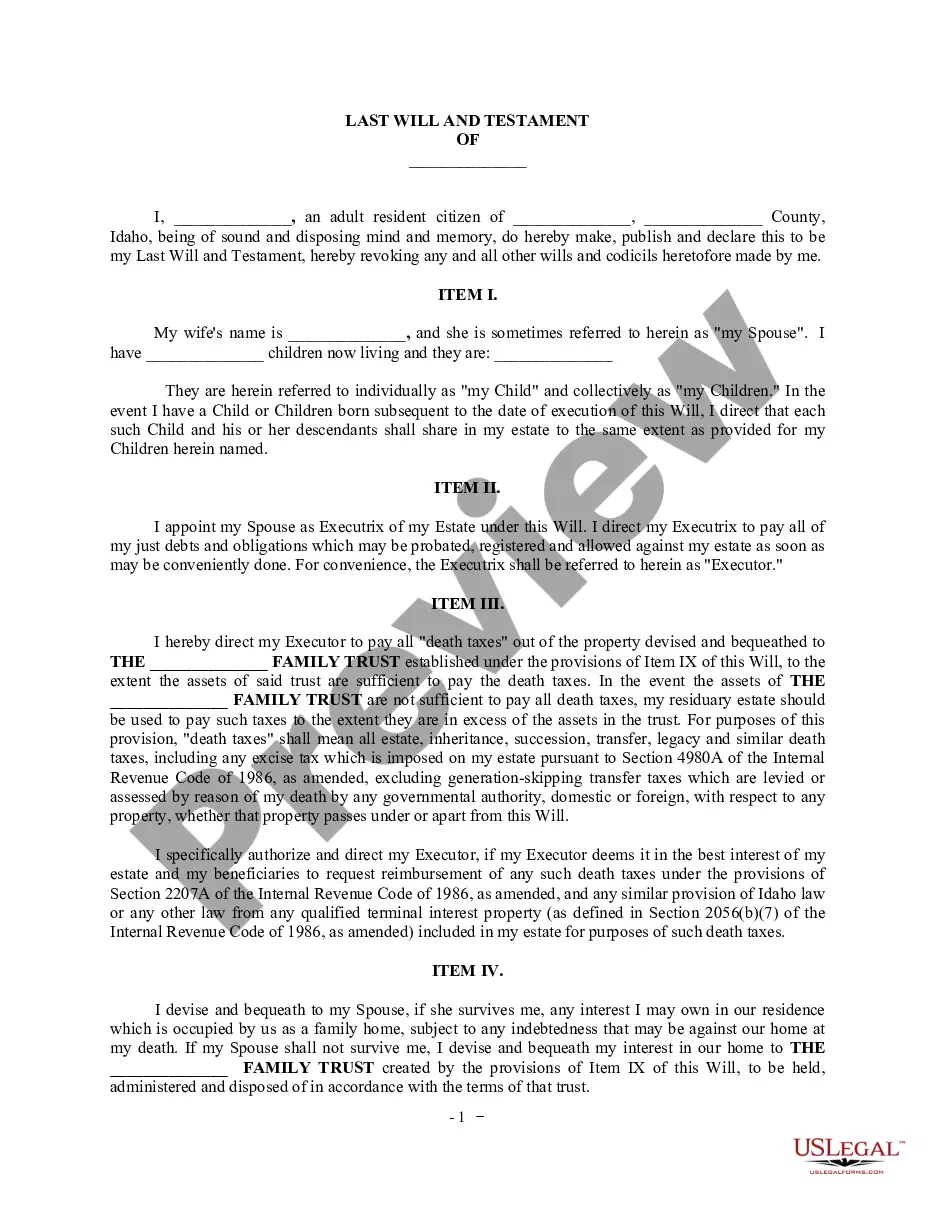
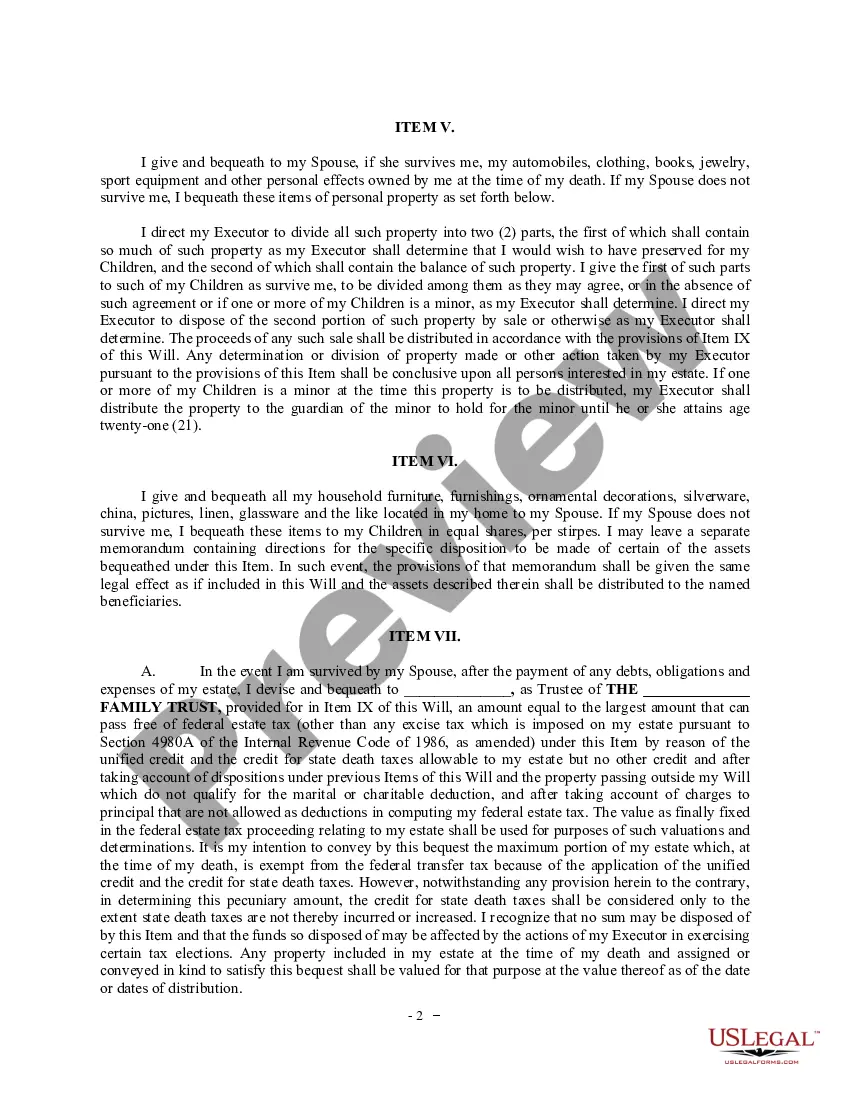
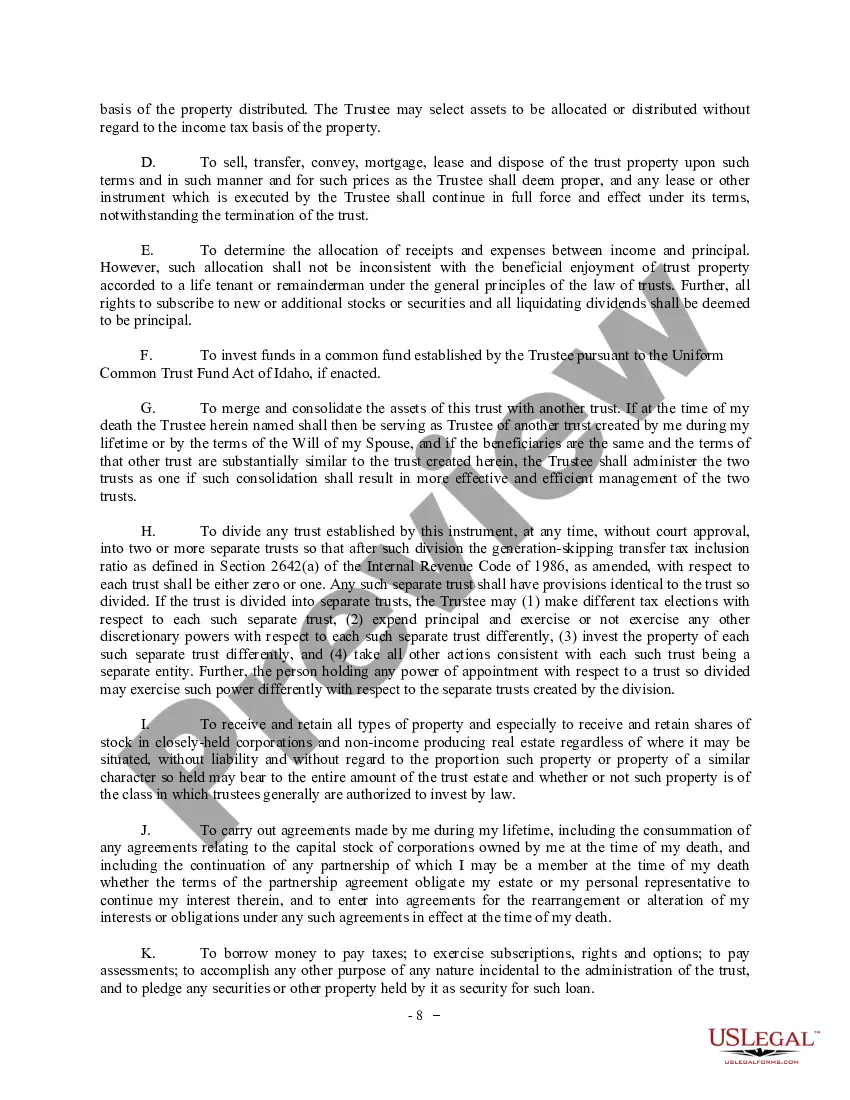
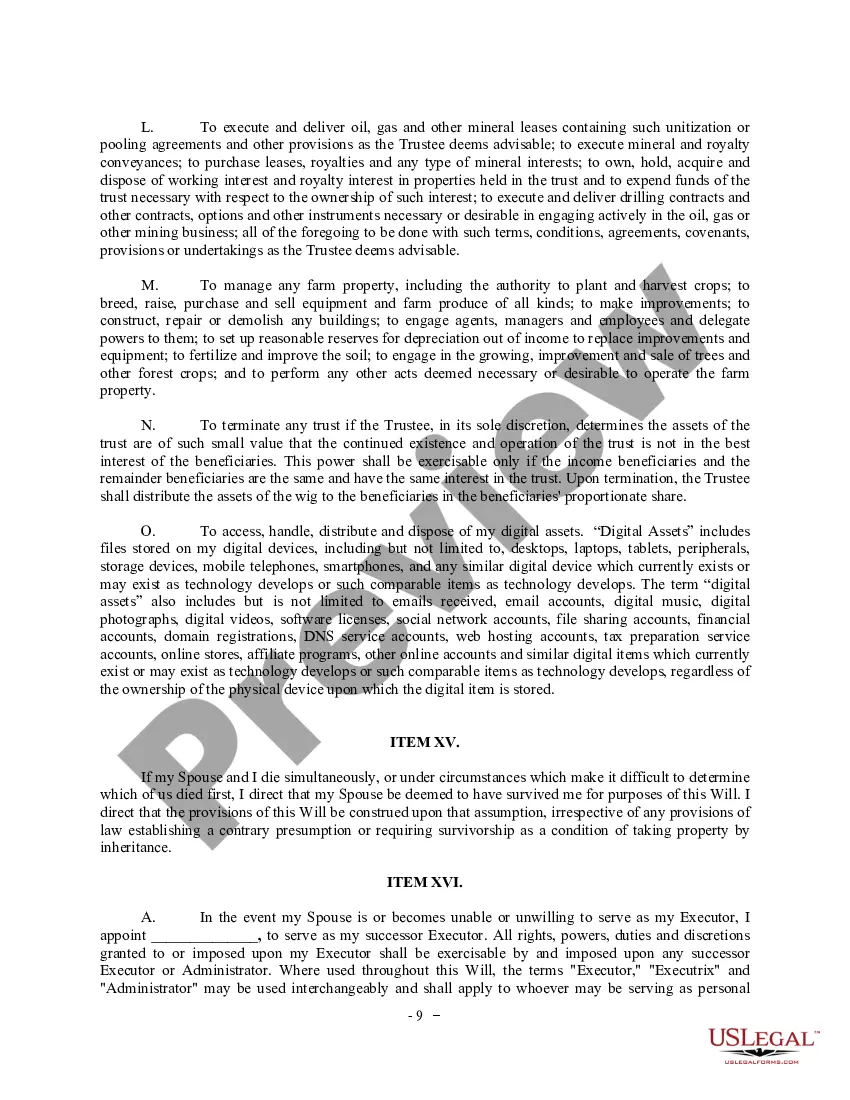
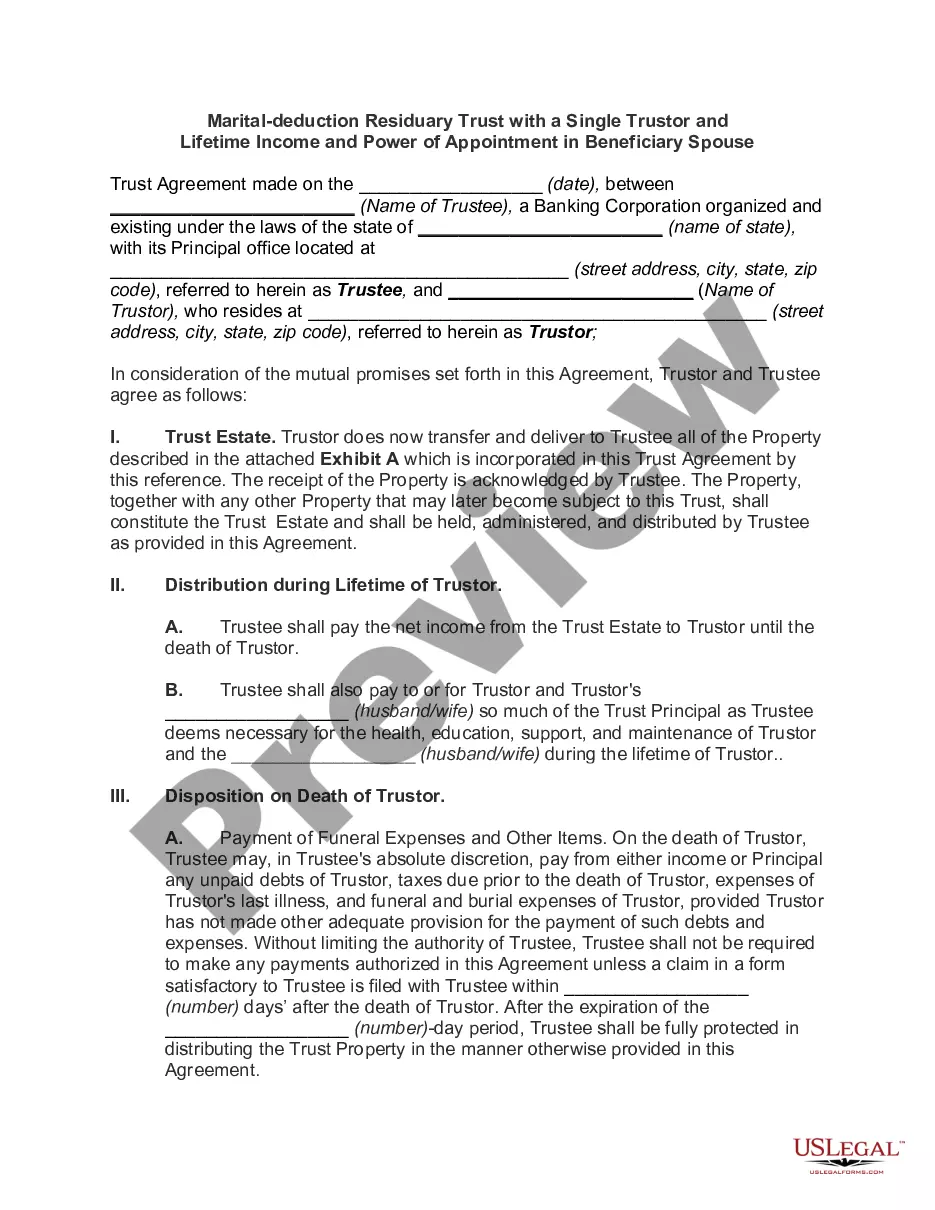
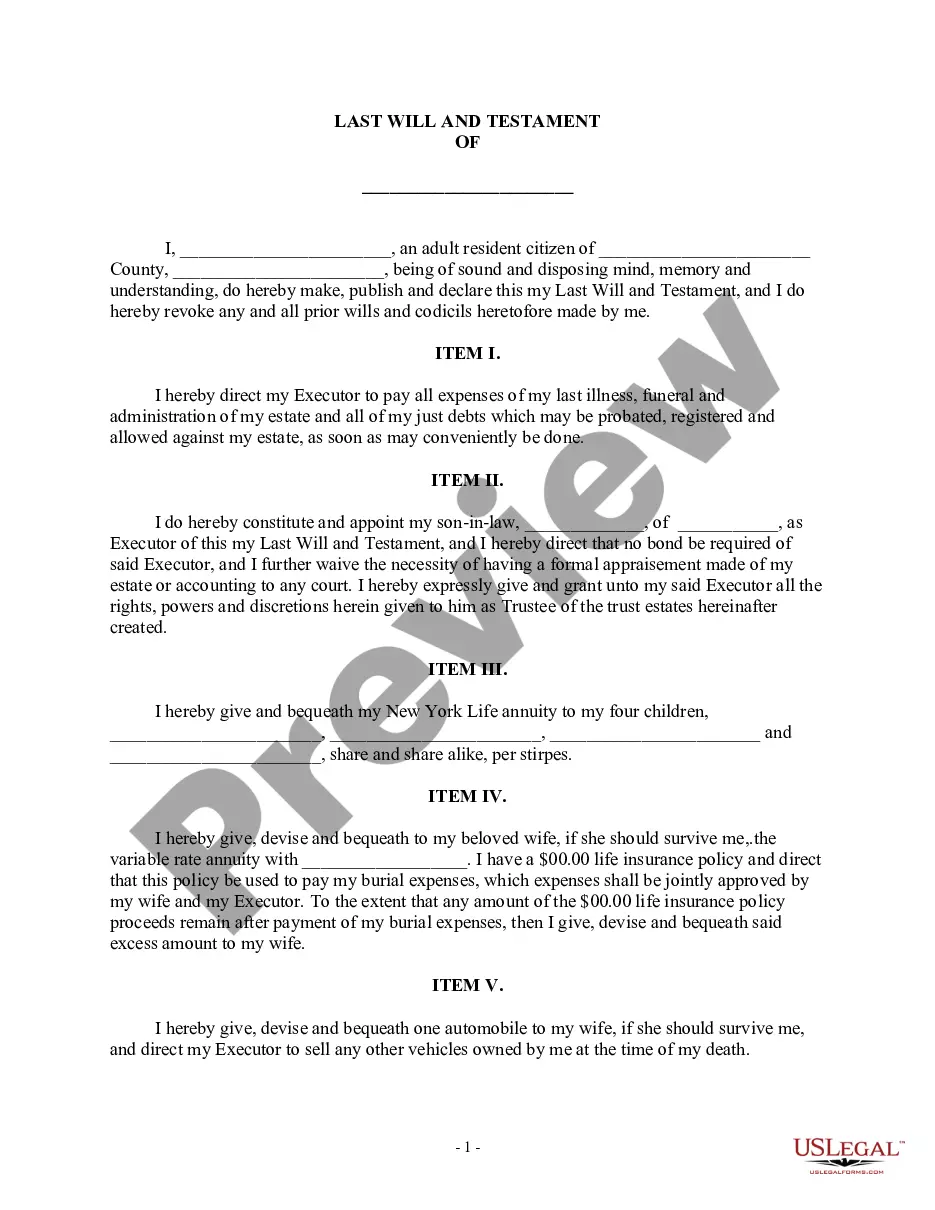
The Complex Will with Credit Shelter Marital Trust for Large Estates is a legal document crafted to assist couples in maximizing the amount of property that can transfer without incurring estate taxes. This will specifies that the maximum tax-free amount allowed will be allocated to a credit shelter trust, while the remaining property is passed to the surviving spouse. This structure ensures that no estate taxes are due upon the death of the first spouse and enhances the potential tax-free transfer to heirs, helping to secure a larger inheritance for future generations.
Key components of this form
- Identification of the testator and their spouse.
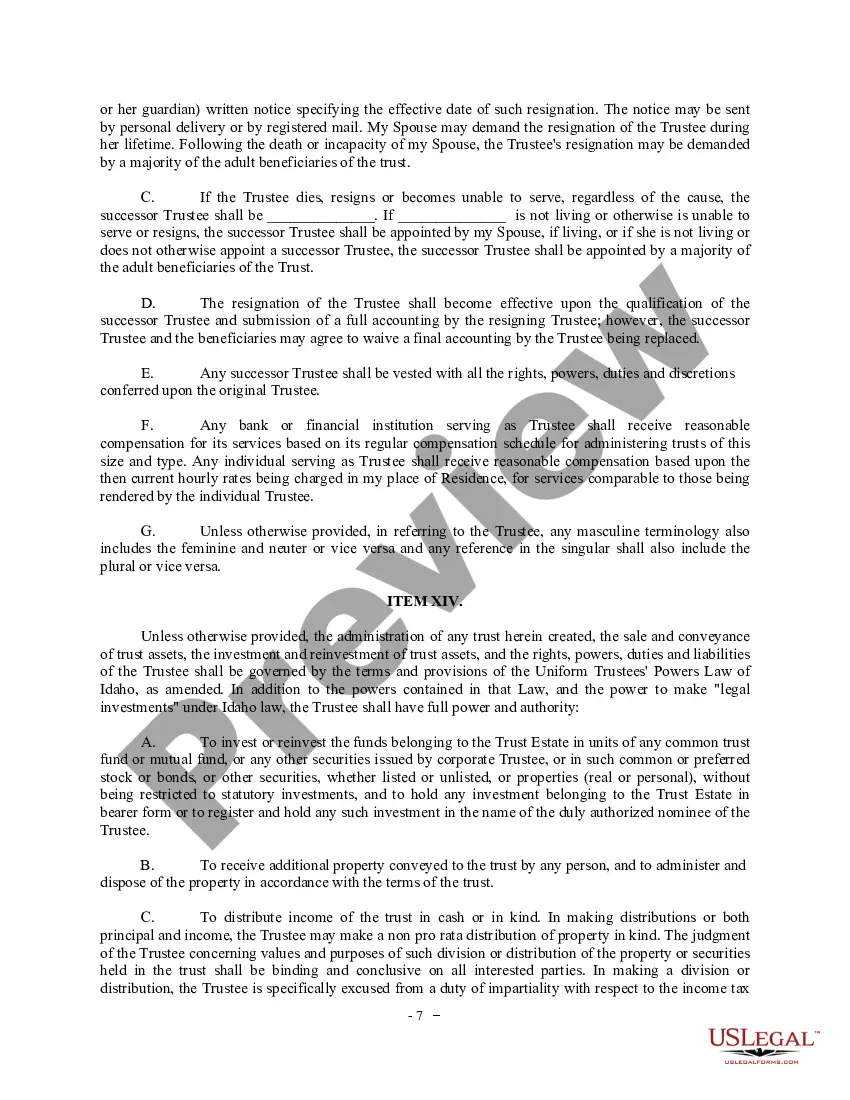
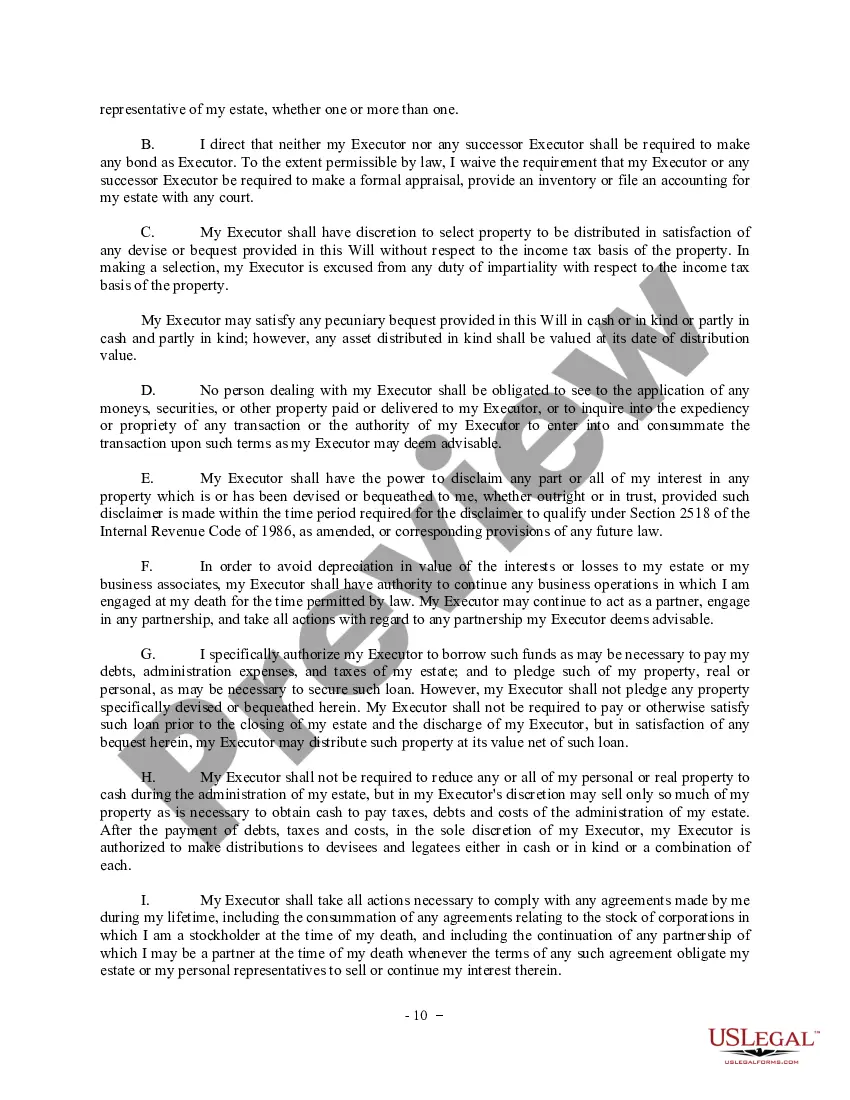
- Appointment of an executor to manage the estate.
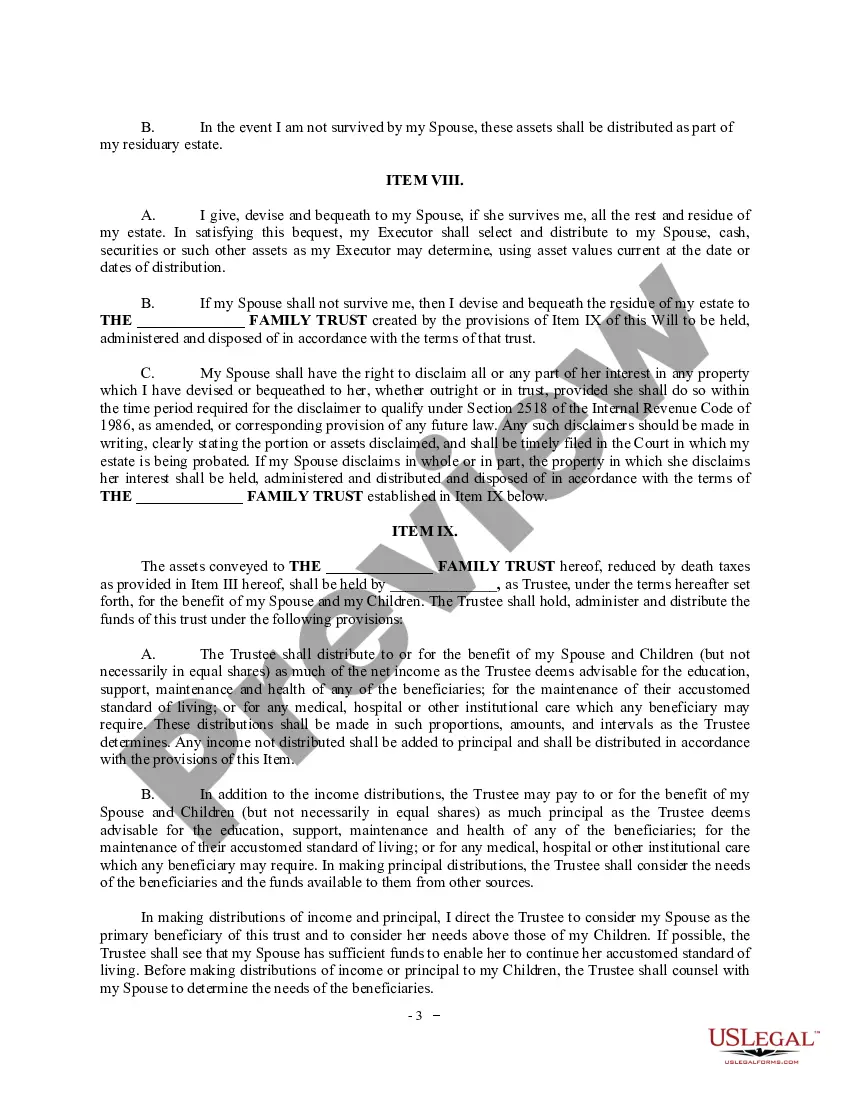
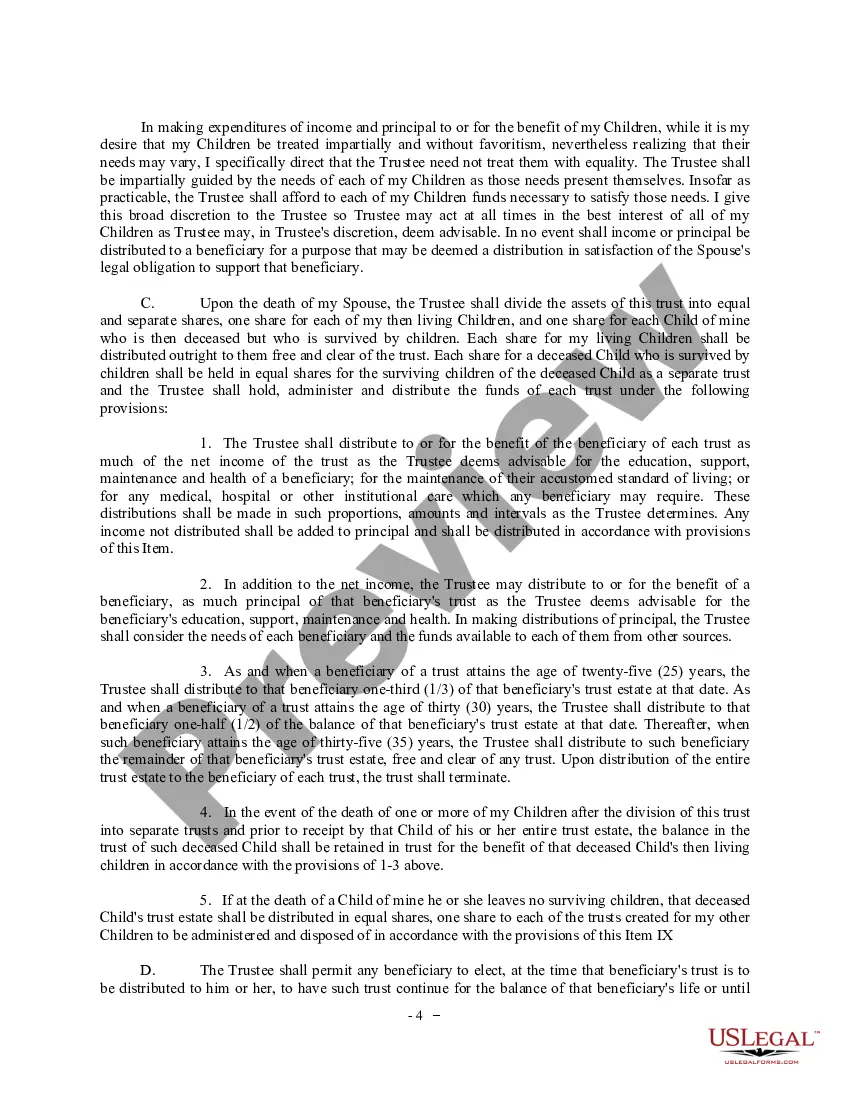
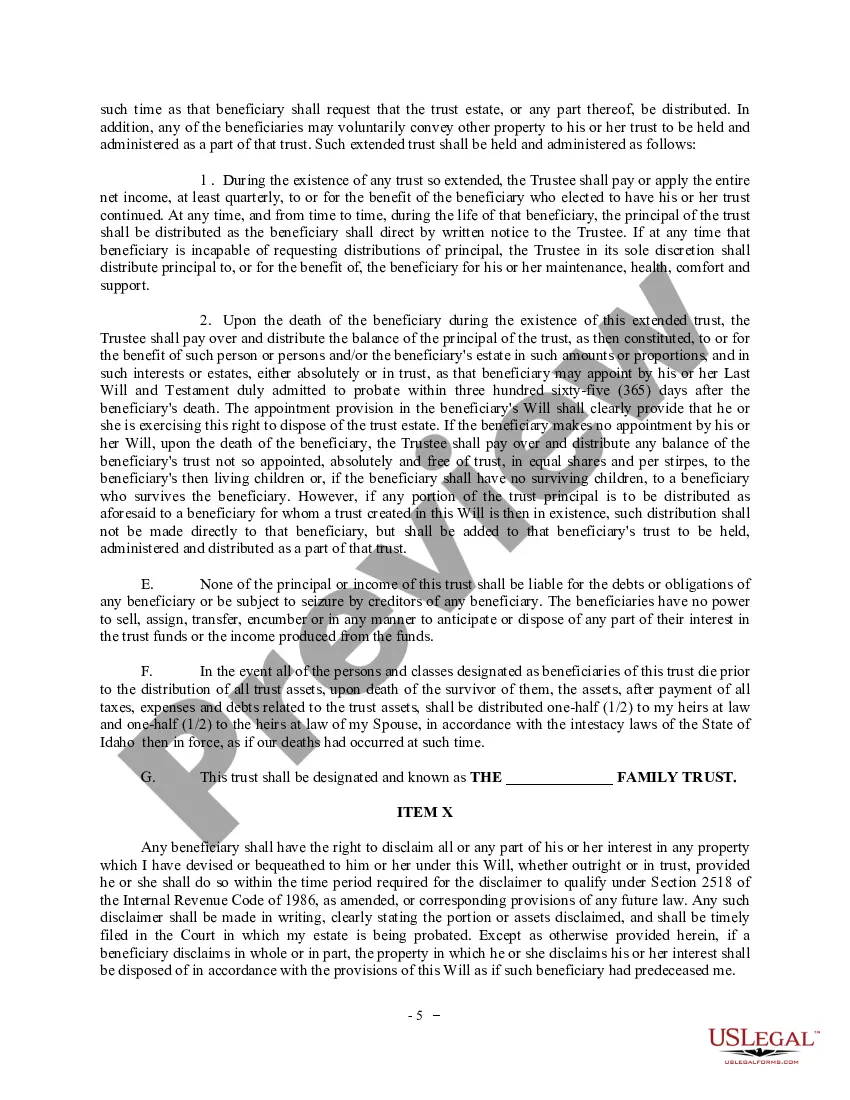
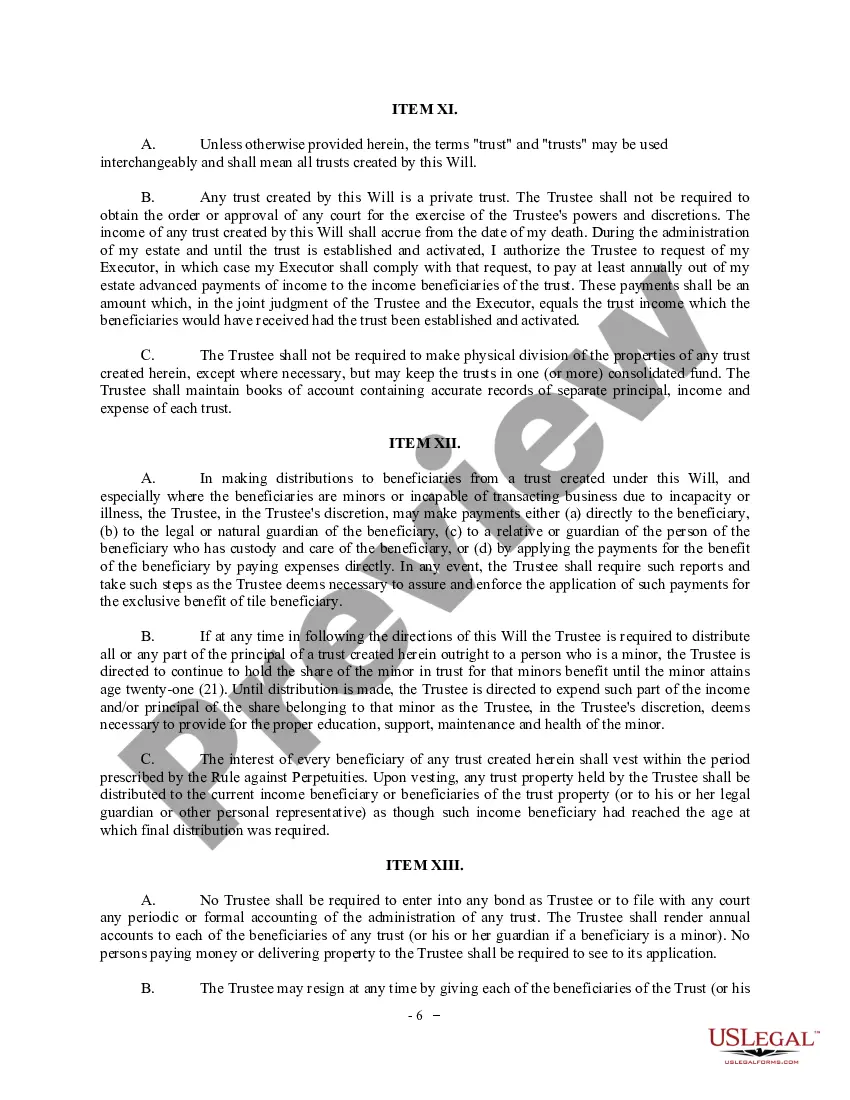
- Establishment of a family trust to manage assets and provide income to beneficiaries.
- Provisions for the distribution of property to surviving spouses and children.
- Instructions for handling any debts and taxes from the estate.




When to use this form
This form should be used when a married couple has significant assets and wishes to ensure that their estate is structured to minimize tax liabilities upon death. It is particularly beneficial for couples with estates valued at over $1 million, as it allows for effective tax planning and ensures that more wealth is passed on to heirs without unnecessary taxation.
Who should use this form
- Married couples with large estates wanting to minimize estate taxes.
- Individuals planning for complex financial situations involving children and trusts.
- Those looking to secure their family's financial future through strategic estate planning.
Instructions for completing this form
- Begin by entering the date of the document and the full names of the testator and spouse.
- Appoint an executor by naming the individual responsible for managing the estate.
- Clearly define the family trust and specify its beneficiaries.
- Detail how debts and taxes should be handled, including any specific instructions for tax payments.
- Sign the document in the presence of witnesses as required by Idaho law to ensure its validity.
Is notarization required?
Notarization is required for this form to take effect. Our online notarization service, powered by Notarize, lets you verify and sign documents remotely through an encrypted video session, available 24/7.
Get your form ready online
Our built-in tools help you complete, sign, share, and store your documents in one place.
Make edits, fill in missing information, and update formatting in US Legal Forms—just like you would in MS Word.
Download a copy, print it, send it by email, or mail it via USPS—whatever works best for your next step.
Sign and collect signatures with our SignNow integration. Send to multiple recipients, set reminders, and more. Go Premium to unlock E-Sign.
If this form requires notarization, complete it online through a secure video call—no need to meet a notary in person or wait for an appointment.
We protect your documents and personal data by following strict security and privacy standards.

Make edits, fill in missing information, and update formatting in US Legal Forms—just like you would in MS Word.

Download a copy, print it, send it by email, or mail it via USPS—whatever works best for your next step.

Sign and collect signatures with our SignNow integration. Send to multiple recipients, set reminders, and more. Go Premium to unlock E-Sign.

If this form requires notarization, complete it online through a secure video call—no need to meet a notary in person or wait for an appointment.

We protect your documents and personal data by following strict security and privacy standards.
Common mistakes to avoid
- Failing to properly identify all beneficiaries, which can lead to disputes.
- Not having the will signed and witnessed according to state requirements.
- Neglecting to review or update the will after significant life events, such as births, deaths, or changes in assets.
- Using vague language that can lead to misinterpretation of the testator's intentions.
Why complete this form online
- Convenience of accessing the form anytime and from anywhere.
- Editable format allows users to personalize the document easily.
- Step-by-step guidance ensures that users complete the form accurately.
- Secure storage and digital access help in maintaining important legal documents.
What to keep in mind
- The Complex Will with Credit Shelter Marital Trust for Large Estates is designed to minimize estate taxes for married couples with significant assets.
- This form provides clear instructions on asset allocation and trust management benefits.
- Understanding the requirements for completing and executing the will is essential for it to be legally effective.
Looking for another form?

Form popularity
FAQ
Creating an estate plan is a lot like getting into better shape. Step 1: Sign a will. Step 2: Name beneficiaries. Step 3: Dodge estate taxes. Step 4: Leave a letter. Step 5: Draw up a durable power of attorney. Step 6: Create an advance health care directive.
An estate plan is a comprehensive plan that includes documents that are effective during your lifetime as well as other documents that aren't in effect until your death.A will details where you want your assets to go at your death, and who you would like to serve as guardian of your minor children.
Estate planning prevents unwanted inheritors Or if you die without a will, then the state will decide who will be your beneficiaries. In Alberta, the wills and succession act specifies what will happen to your wealth if you don't have a will.
Give Gifts. One way to get around the estate tax is to hand off portions of your wealth to your family members through gifts. Set up an Irrevocable Life Insurance Trust. Make Charitable Donations. Establish a Family Limited Partnership. Fund a Qualified Personal Residence Trust.
An estate plan is a collection of documents that protects your assets and personal property (your estate) and explains how you want to pass them down. It documents your wishes and specifies exactly who will guard those wishes and act on them in your absence.
First, the property must be included in the decedent's gross estate. Second, the property must be transferred to the surviving spouse. Third, the interest must not be a terminable interest.To qualify for the unlimited marital deduction, the surviving spouse must inherit the property.
A trust is traditionally used for minimizing estate taxes and can offer other benefits as part of a well-crafted estate plan. A trust is a fiduciary arrangement that allows a third party, or trustee, to hold assets on behalf of a beneficiary or beneficiaries.Other benefits of trusts include: Control of your wealth.
The unlimited marital deduction allows spouses to transfer an unlimited amount of money to one another, including upon death, without penalty or tax.Under current rules, the limit on non-taxable gifts is $15,000 per individual and the estate tax exemption is $11.58 million.
Estate planning is the preparation of tasks that serve to manage an individual's asset base in the event of their incapacitation or death. The planning includes the bequest of assets to heirs and the settlement of estate taxes. Most estate plans are set up with the help of an attorney experienced in estate law.