Idaho Grant Deed from Four Individual Grantors to Two Trusts with Two Trustees Each
Overview of this form
This Grant Deed is a legal document that transfers property ownership from four individual grantors to two trusts, each with two trustees. This form is essential for ensuring the legal conveyance of property rights and is compliant with state statutory laws. Unlike other deeds, it clearly outlines the roles of multiple grantors and trustees, making it ideal for complex property ownership scenarios involving trusts.
Main sections of this form
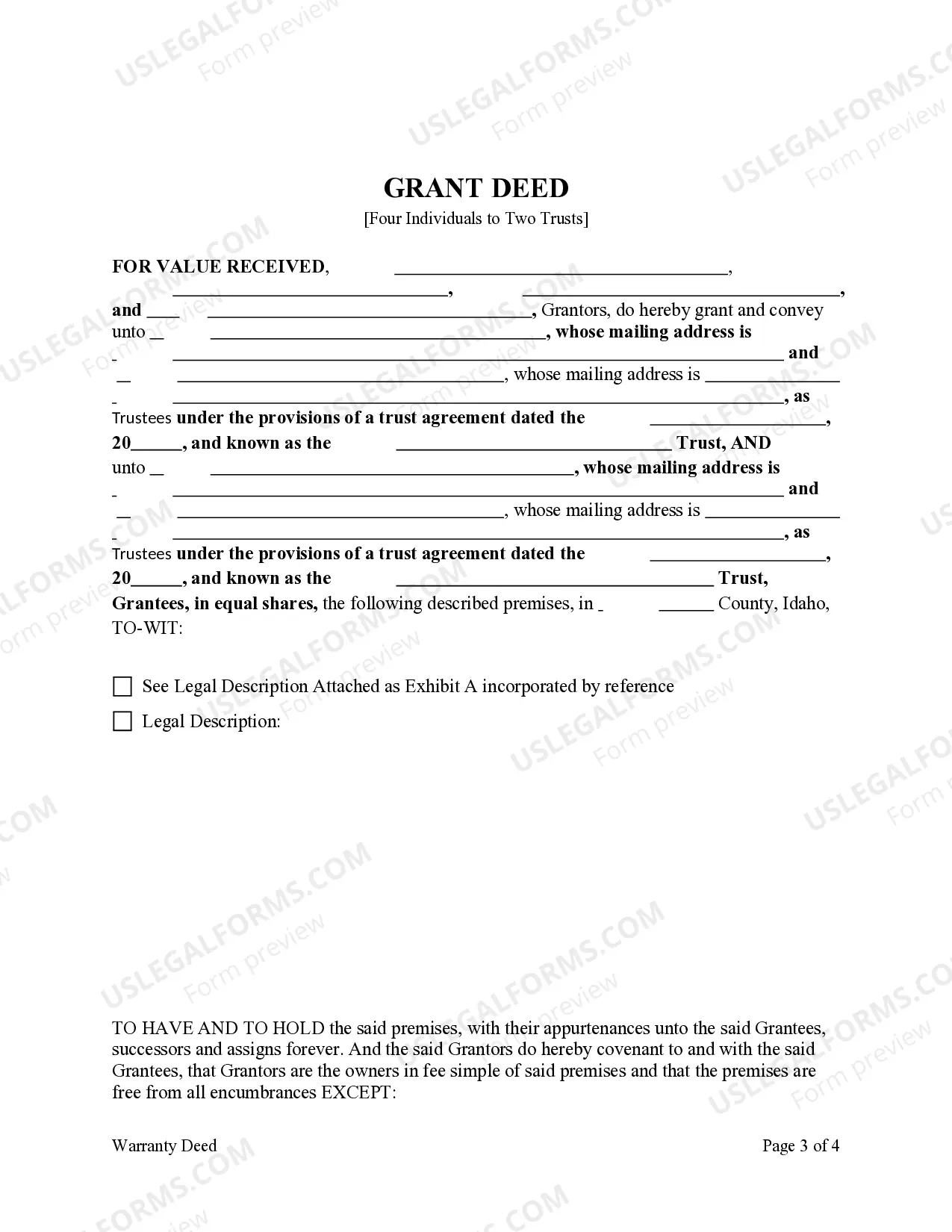
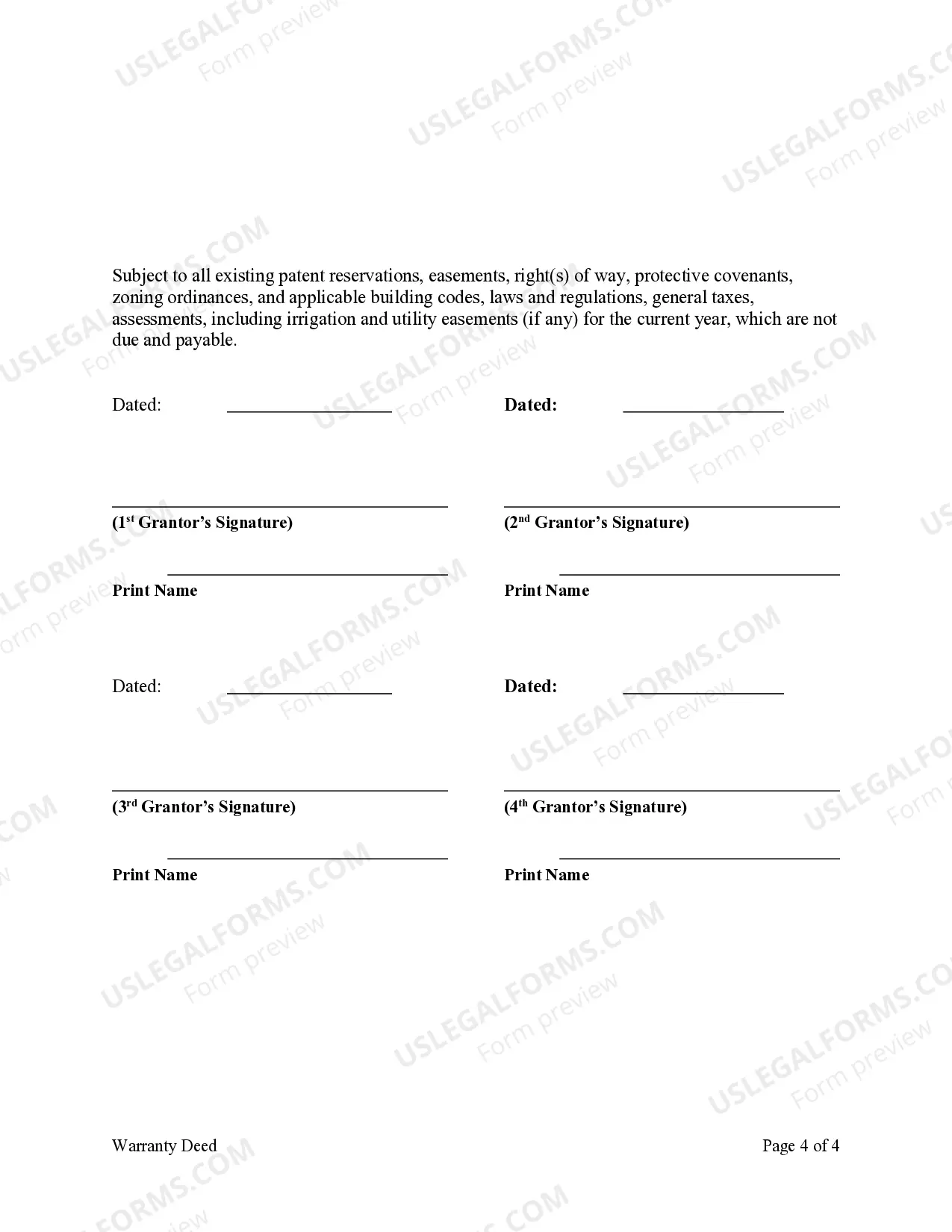
- Identification of grantors: This section specifies the four individuals transferring the property.
- Designation of grantees: This clearly states the two trusts that will receive the property.
- Trustee information: Each trust has two designated trustees whose roles are defined in the deed.
- Description of property: A detailed description of the property being transferred, ensuring clarity and precision.
- Date of execution: The date on which the grantors sign the deed is included for legal validation.





Common use cases
This Grant Deed is typically used when multiple individuals (grantors) want to transfer property to two distinct trusts. This might occur during estate planning, when parents wish to place their property into trust for the benefit of their children or beneficiaries. It is also useful in cases where property is held within a partnership or group and needs to be divided among separate trusts, ensuring that each trust is managed by its respective trustees.
Who can use this document
- Individuals looking to transfer real estate into a trust for estate planning purposes.
- Trustees needing a formal document to represent property ownership for each trust.
- Beneficial owners who want to manage property ownership and title with multiple trustees.
Steps to complete this form
- Identify the parties involved: Fill in the names of the four grantors and the two trusts.
- Specify the property details: Provide a complete and accurate description of the property being conveyed.
- Enter trustee names: List the names of the trustees for each trust to clarify ownership management.
- Sign and date the form: Each grantor must sign the deed and enter the date to validate the transfer.
- File the deed: In some jurisdictions, you may need to file the completed deed with a local authority to record the transfer.
Notarization guidance
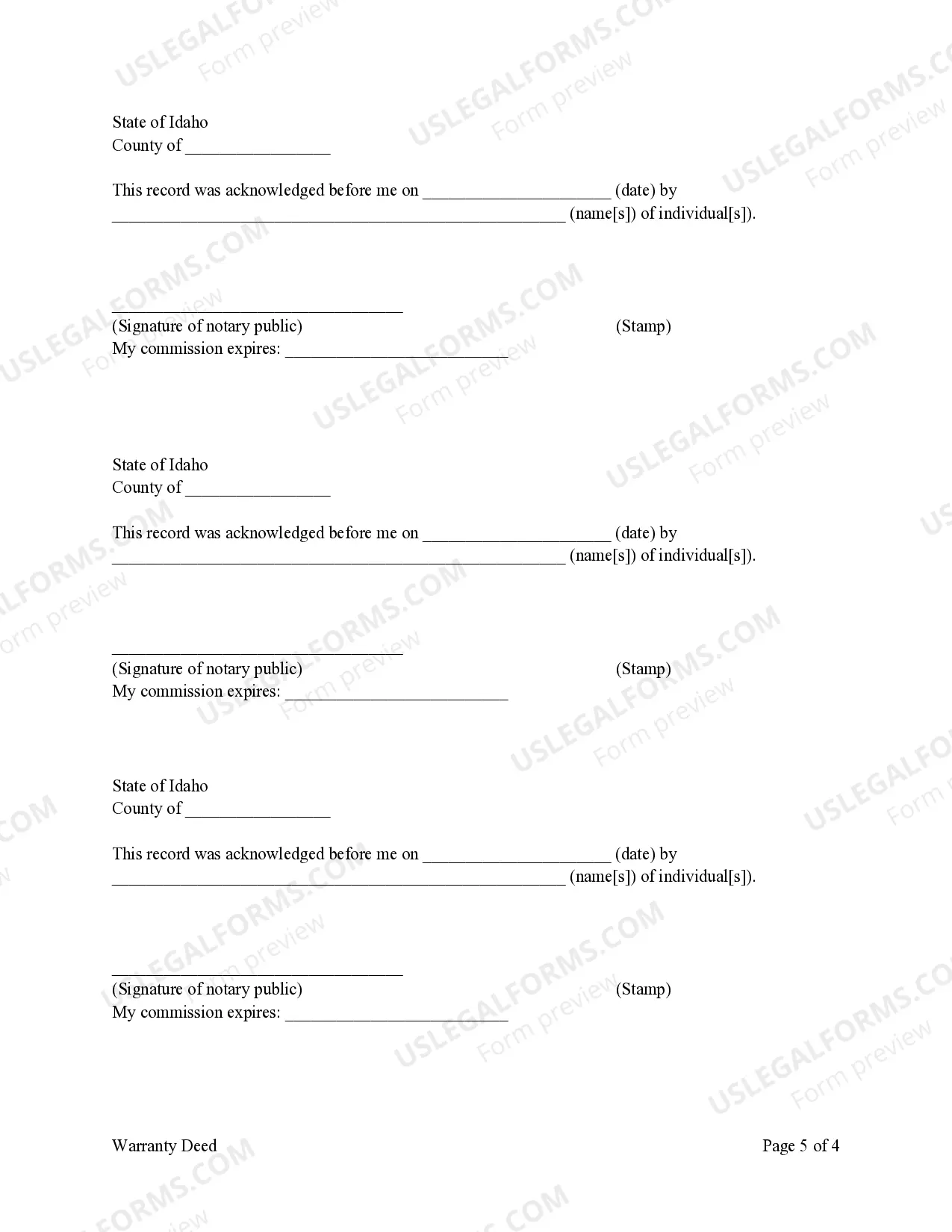
This document requires notarization to meet legal standards. US Legal Forms provides secure online notarization powered by Notarize, allowing you to complete the process through a verified video call, available 24/7.
Get your form ready online
Our built-in tools help you complete, sign, share, and store your documents in one place.
Make edits, fill in missing information, and update formatting in US Legal Forms—just like you would in MS Word.
Download a copy, print it, send it by email, or mail it via USPS—whatever works best for your next step.
Sign and collect signatures with our SignNow integration. Send to multiple recipients, set reminders, and more. Go Premium to unlock E-Sign.
If this form requires notarization, complete it online through a secure video call—no need to meet a notary in person or wait for an appointment.
We protect your documents and personal data by following strict security and privacy standards.

Make edits, fill in missing information, and update formatting in US Legal Forms—just like you would in MS Word.

Download a copy, print it, send it by email, or mail it via USPS—whatever works best for your next step.

Sign and collect signatures with our SignNow integration. Send to multiple recipients, set reminders, and more. Go Premium to unlock E-Sign.

If this form requires notarization, complete it online through a secure video call—no need to meet a notary in person or wait for an appointment.

We protect your documents and personal data by following strict security and privacy standards.
Typical mistakes to avoid
- Failure to include all grantors' signatures, which may invalidate the deed.
- Incomplete property description, which can lead to future disputes.
- Neglecting to list all trustees for each trust, causing confusion in management roles.
Why use this form online
- Convenience: Complete the form from anywhere at any time, eliminating the need for in-person visits.
- Editability: Easily modify the form as needed to ensure accuracy before printing.
- Reliability: Downloadable forms are created by licensed attorneys, ensuring legal compliance.
Looking for another form?


Form popularity
FAQ
A trust can indeed have multiple trustees, as seen in the Idaho Grant Deed from Four Individual Grantors to Two Trusts with Two Trustees Each. Multiple trustees can bring diverse perspectives and skills to managing trust assets. It is essential, however, that all trustees understand their duties and operate collaboratively to benefit the trust's beneficiaries.
Co-trustee. n. a trustee of a trust when there is more than one trustee serving at the same time, usually with the same powers and obligations. Occasionally a co-trustee may be a temporary fill-in, as when the original trustee is ill but recovers.
The default rule in California is that co-trustees must act unanimously. In California, unlike most states, co-trustees must make administration decisions by unanimous consent.
A trustee is an individual or company that serves a managerial function in connection with some type of property.A successor trustee is a new trustee who replaces a previous trustee, while a co-trustee is a trustee that serves at the same time as another trustee.
Either draft or have an attorney draft a Trustee's Deed transferring ownership of the real estate out of the trust to the beneficiary. After it is signed, you and the beneficiary must go to the clerk of the court to have the deed recorded in the public records.
Retrieve your original deed. Get the appropriate deed form. Draft the deed. Sign the deed before a notary. Record the deed with the county recorder. Obtain the new original deed.
1Check the mortgage.2Get a copy of the property title.3Fill out a property title transfer form.4Submit the title transfer form.5Pay the relevant fee.6Wait for the processing of the form.
The default rule in California is that co-trustees must act unanimously. In California, unlike most states, co-trustees must make administration decisions by unanimous consent.
So yes California law does seem to allow a trust to be a joint tenant.It has to be the person who transfers it to the trust. So, for example, Able and Buddy own a property together as joint tenants. Able wants to transfer his half to his trust.
Worse yet, under the default rules of California Trust law, co-trustees must act unanimously if they are to act at all. This means that one Trustee cannot simply break a deadlock by acting on his own. One of the Co-Trustees does not have the power and authority to act alone.