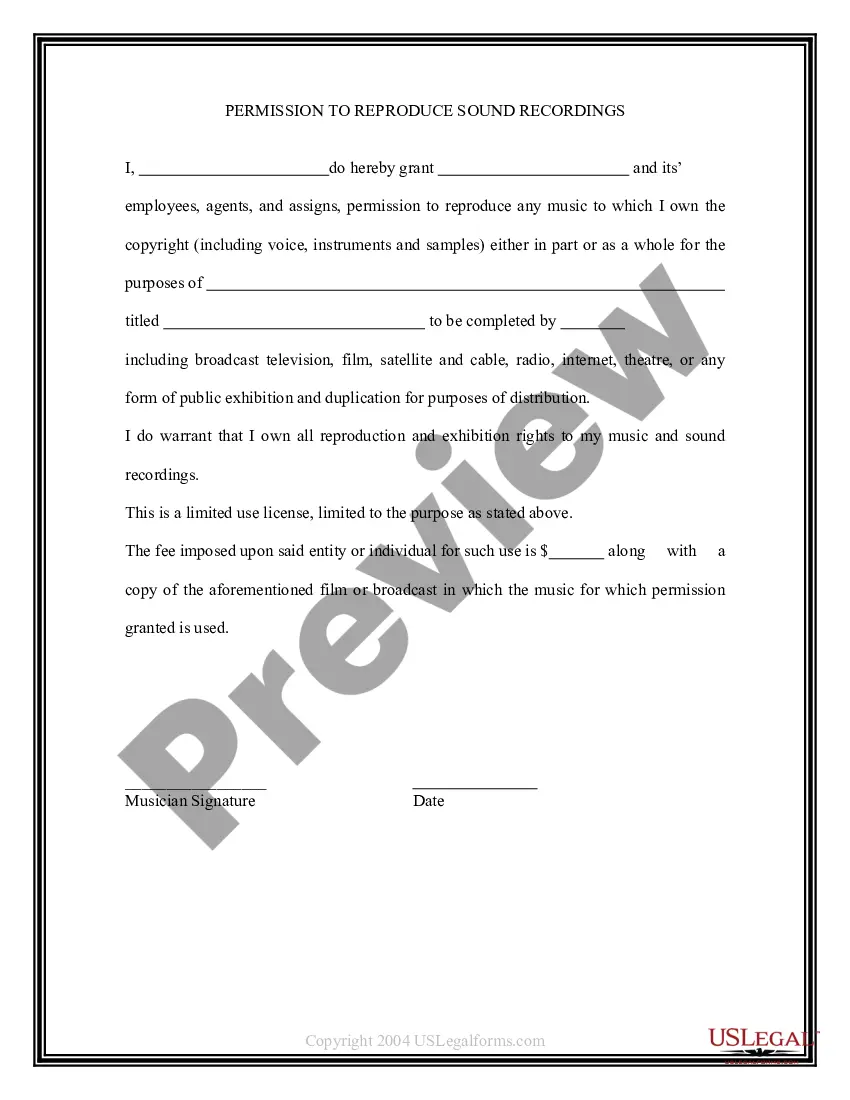
This is a form signed by a musician or owner of music granting permission to reproduce copyrighted music for use in a film, television, Internet, radio etc.
Iowa Permission To Reproduce Sound Recordings
State:
Multi-State
Control #:
US-PRM-23
Format:
Word;
Rich Text
Instant download
Description

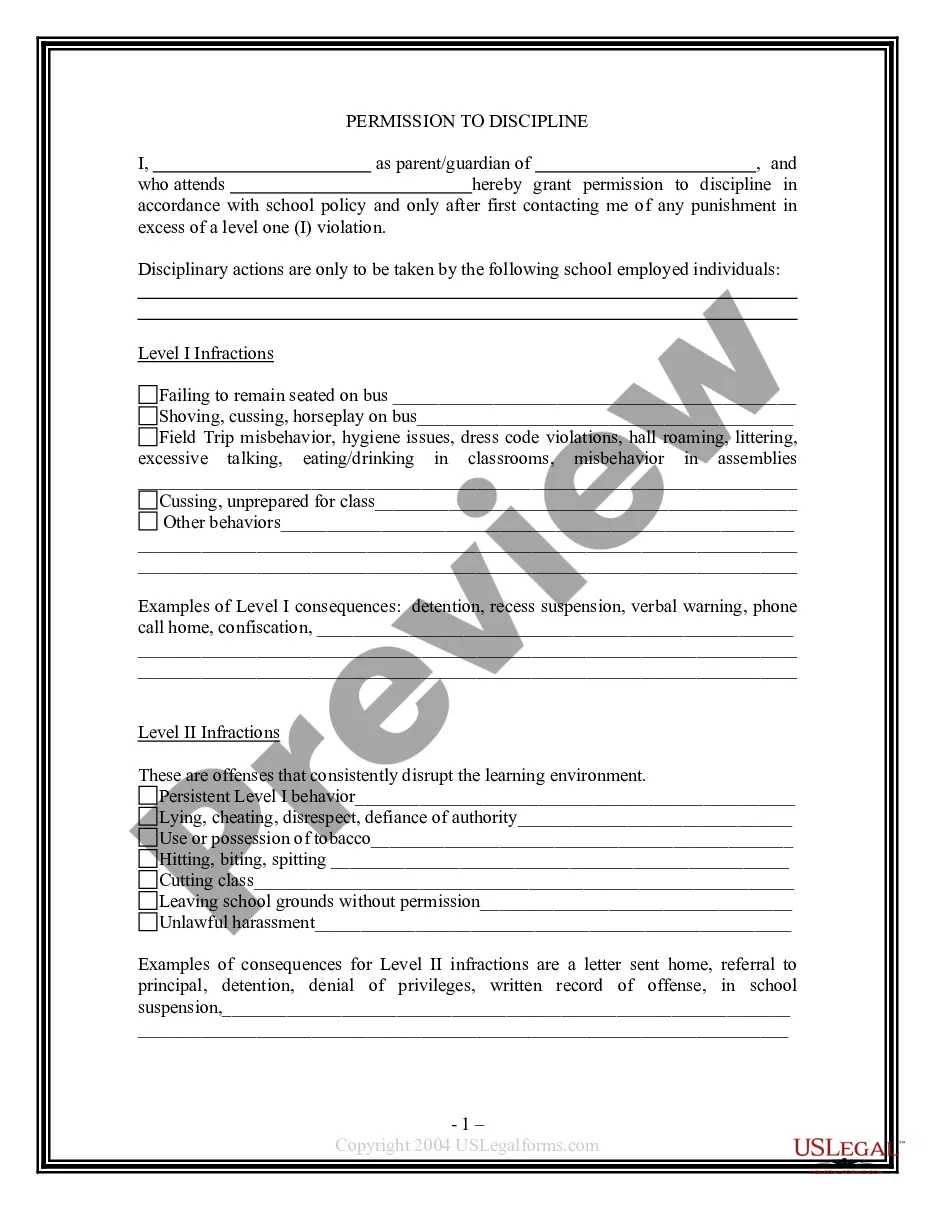
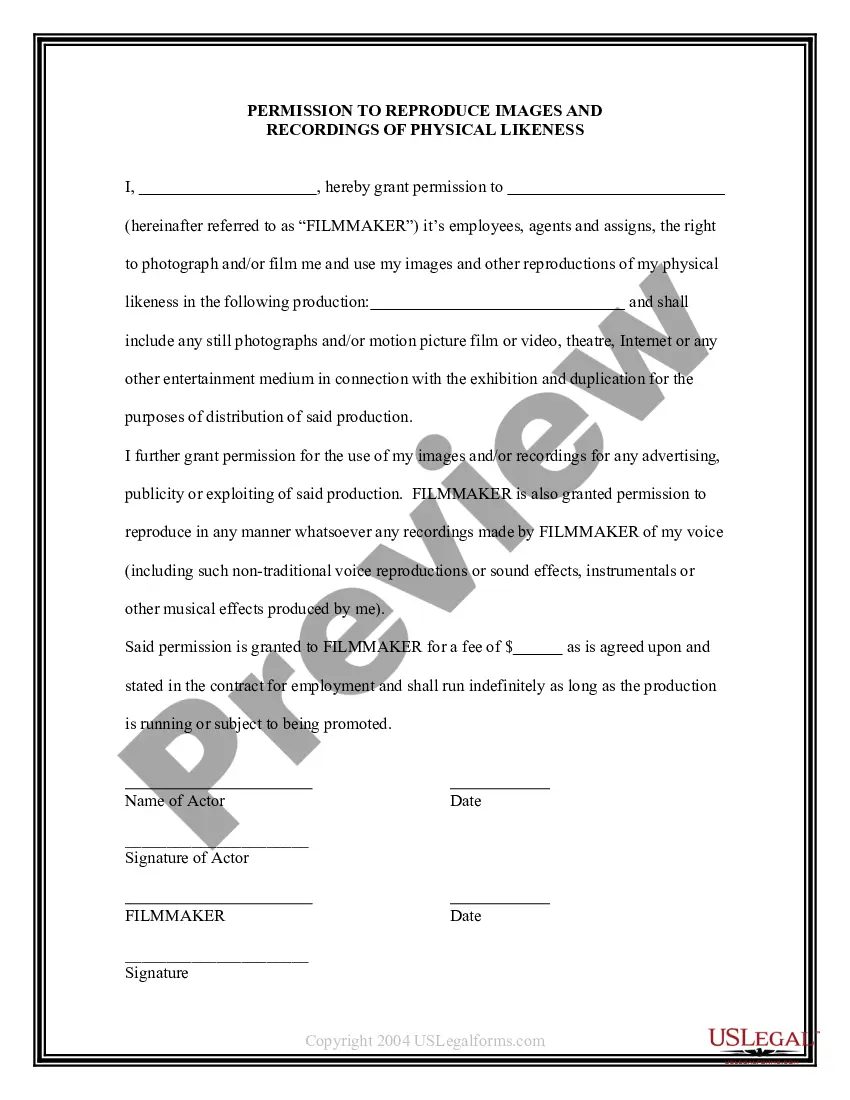
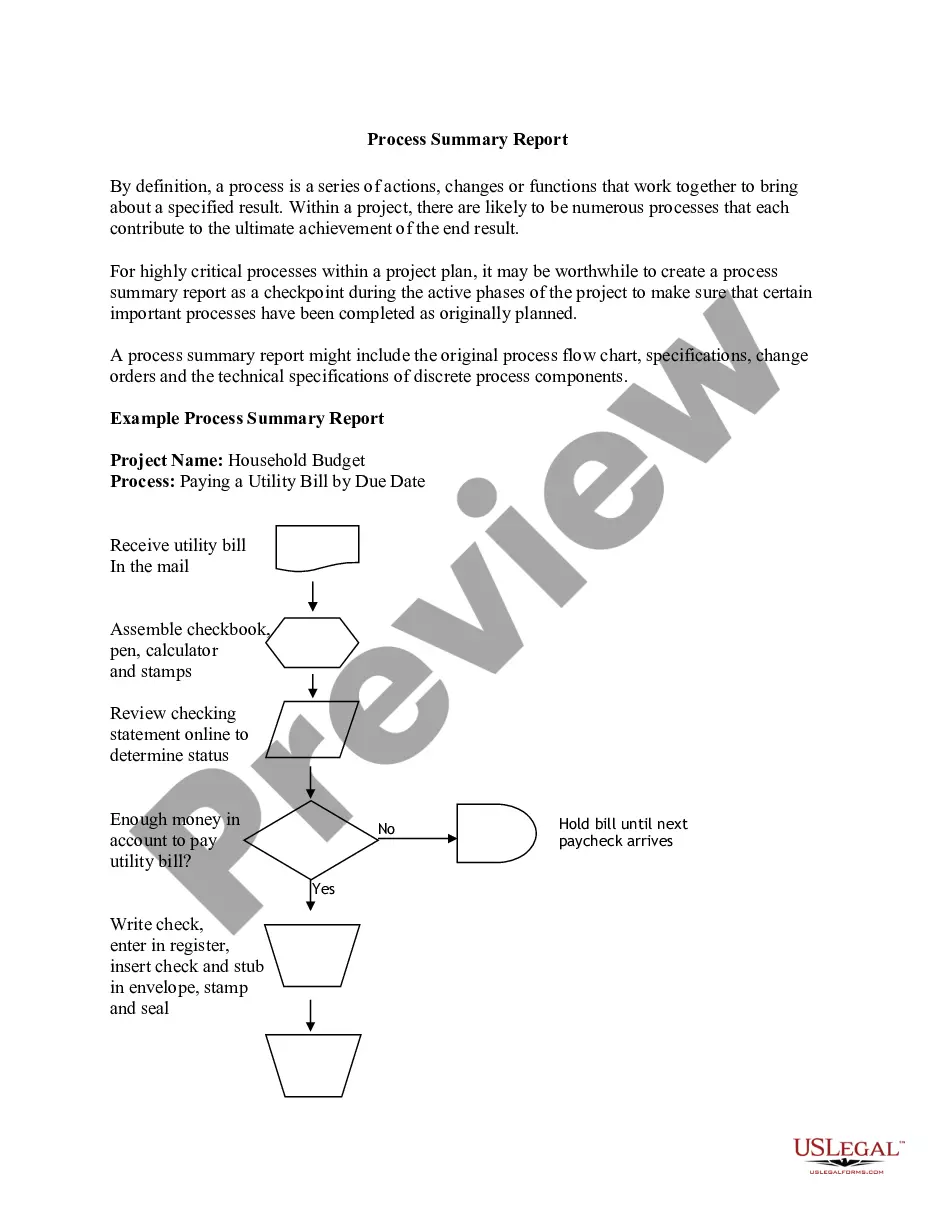
How to fill out Permission To Reproduce Sound Recordings?
You can dedicate hours online searching for the official document template that fulfills the state and federal requirements you need.
US Legal Forms offers thousands of legal forms that are verified by experts.
You can easily obtain or print the Iowa Permission To Reproduce Sound Recordings from my service.
If available, utilize the Preview button to browse through the document template as well. If you want to find another version of your form, use the Search section to discover the template that suits your needs and specifications. Once you have found the template you desire, click on Get now to proceed. Select the pricing plan you prefer, enter your credentials, and register for an account on US Legal Forms. Complete the transaction. You can use your credit card or PayPal account to pay for the legal document. Choose the format of your document and download it to your device. Make changes to the document if necessary. You can complete, modify, sign, and print Iowa Permission To Reproduce Sound Recordings. Download and print thousands of document templates using the US Legal Forms website, which provides the largest collection of legal forms. Utilize professional and state-specific templates to address your business or personal requirements.
- If you already possess a US Legal Forms account, you can sign in and click the Download button.
- After that, you can complete, modify, print, or sign the Iowa Permission To Reproduce Sound Recordings.
- Every legal document template you purchase is yours permanently.
- To acquire another copy of the purchased form, visit the My documents tab and click the corresponding button.
- If you are using the US Legal Forms website for the first time, follow the simple instructions below.
- First, ensure that you have selected the correct document template for the region/city of your choice.
- Review the form details to confirm that you have chosen the correct document.
Form popularity
FAQ
One-party consent laws allow individuals to record conversations if at least one participant agrees to the recording. States like Iowa, California, and Texas follow this approach. It is crucial to know your state's laws to avoid potential legal complications. For more detailed insights and assistance regarding Iowa Permission To Reproduce Sound Recordings, US Legal provides valuable resources tailored to your needs.
Recording audio without someone’s permission can lead to legal issues, depending on the state laws. In Iowa, you can record a conversation if you are a participant, which aligns with the one-party consent rule. However, recording someone else's conversation without being involved may breach their privacy rights. For clear guidance on Iowa Permission To Reproduce Sound Recordings, US Legal offers helpful information and forms.
In Iowa, the law requires at least one party to consent to the recording of a conversation. This means if you are part of the conversation, you can legally record it without needing permission from others. However, if you are not involved in the conversation, recording it without consent may violate privacy laws. To navigate these complex situations, consider using US Legal's resources on Iowa Permission To Reproduce Sound Recordings.
The open records law in Iowa aims to promote transparency by allowing public access to government records. This legislation ensures that citizens can request and obtain various types of records, enhancing accountability. However, there are exceptions for sensitive information. For a detailed understanding of how this law may relate to Iowa Permission To Reproduce Sound Recordings, check out uslegalforms for comprehensive guides.
Iowa law generally requires consent from at least one party involved in the conversation to legally record audio. This means if you are part of the conversation, you can record it without informing others. However, if you're not part of the conversation, recording may violate privacy rights. For clarity on Iowa Permission To Reproduce Sound Recordings, explore legal documentation through uslegalforms.
In Iowa, recording someone on your property without their consent can be a violation of privacy laws. You have a reasonable expectation of privacy in your home or yard. If your neighbor records you, it may fall under the Iowa Permission To Reproduce Sound Recordings rule, which protects your rights. To better understand your situation, consider consulting resources on uslegalforms.
Whether the conversation was made in the confines of a private space such as a house or private room, or in a public place, such as a park or restaurant, the audio or video recording of a conversation, done without the consent of both parties, is still illegal and punished under the Anti-Wiretapping Law.
In Iowa, you can record oral communications with the consent of just one party, meaning if you're interacting with the police and you record it, you should be ok. However, when you are a bystander, the situation depends on whether there is a reasonable expectation of privacy in the communication between the parties.
Iowa Recording Law Summary: In Iowa, it is a criminal offense to use any device to record communications, whether they are wire, oral or electronic, without the consent of at least one person taking part in the communication, as long as the recording is made without any criminal intent.
California is an all-party consent state. It is illegal to record a confidential conversation, including private conversations or telephone calls, without consent in California. A violation of this rule is the crime of eavesdropping, per Penal Code 632 PC.