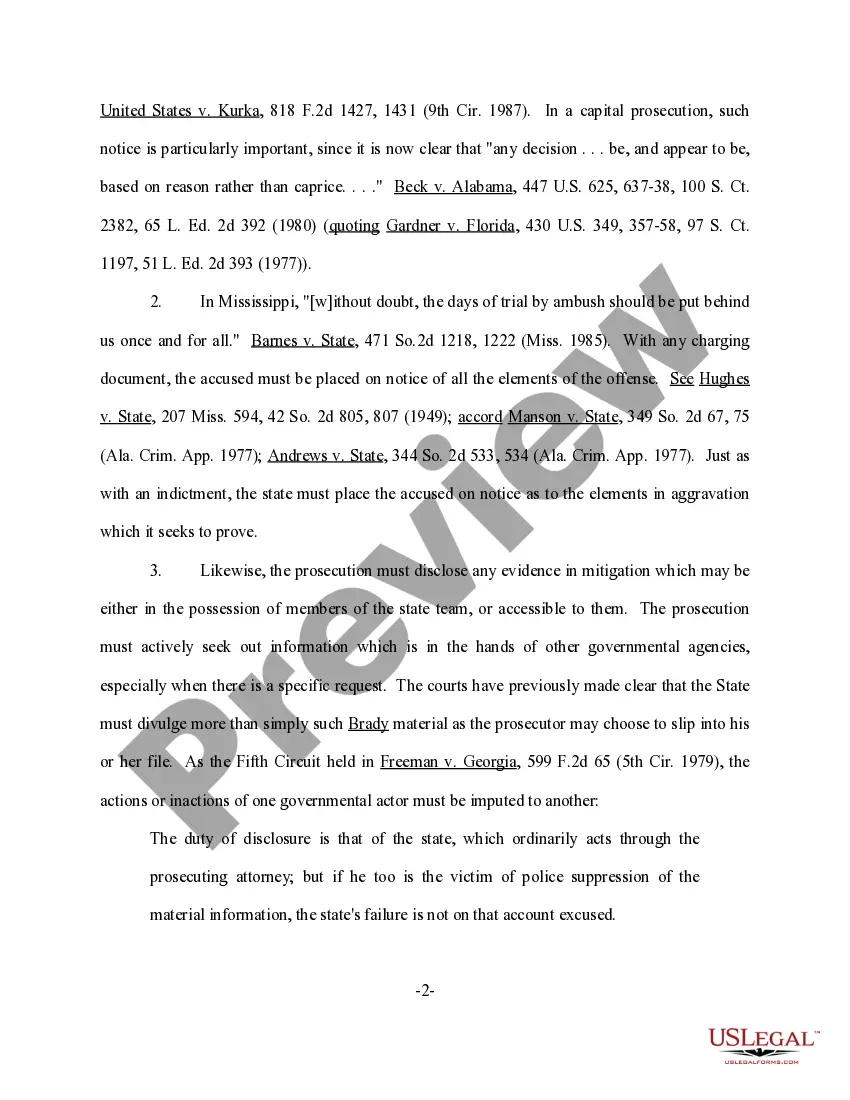
Iowa Demand for Notice of Aggravating and for Disclosure of Evidence Supporting Mitigating Circumstances
Description
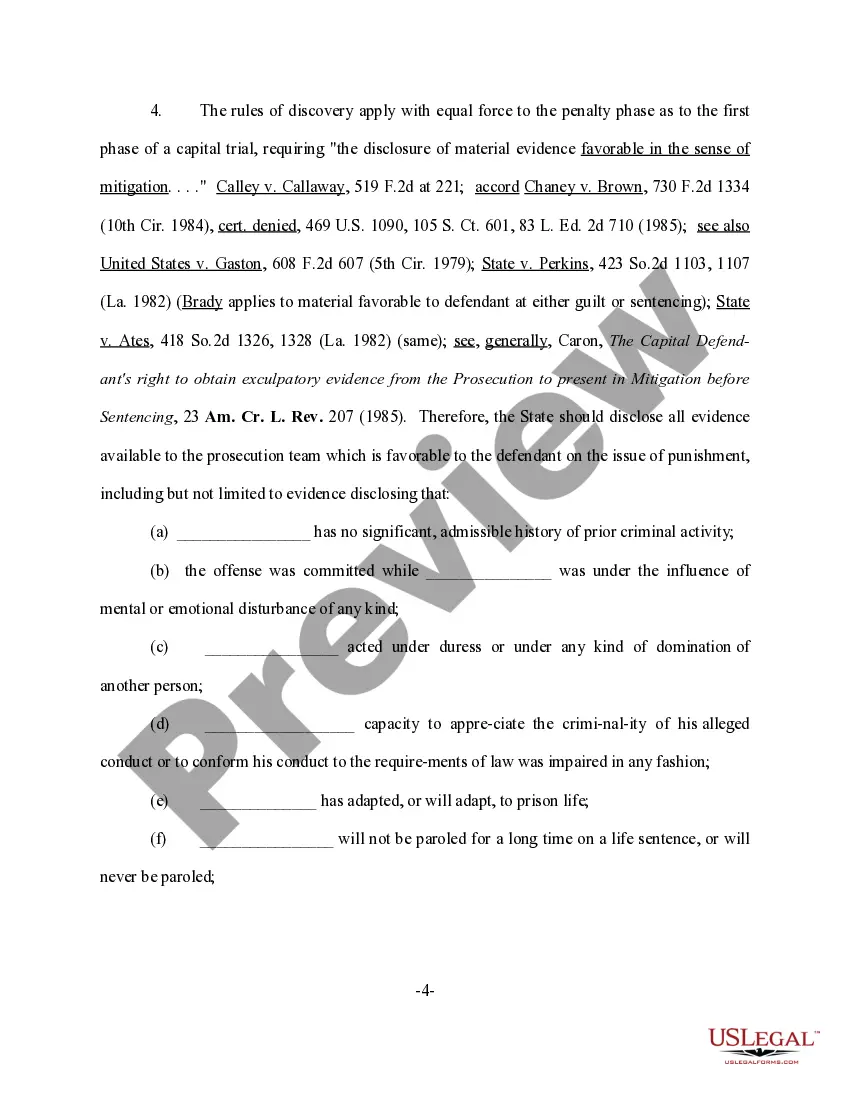
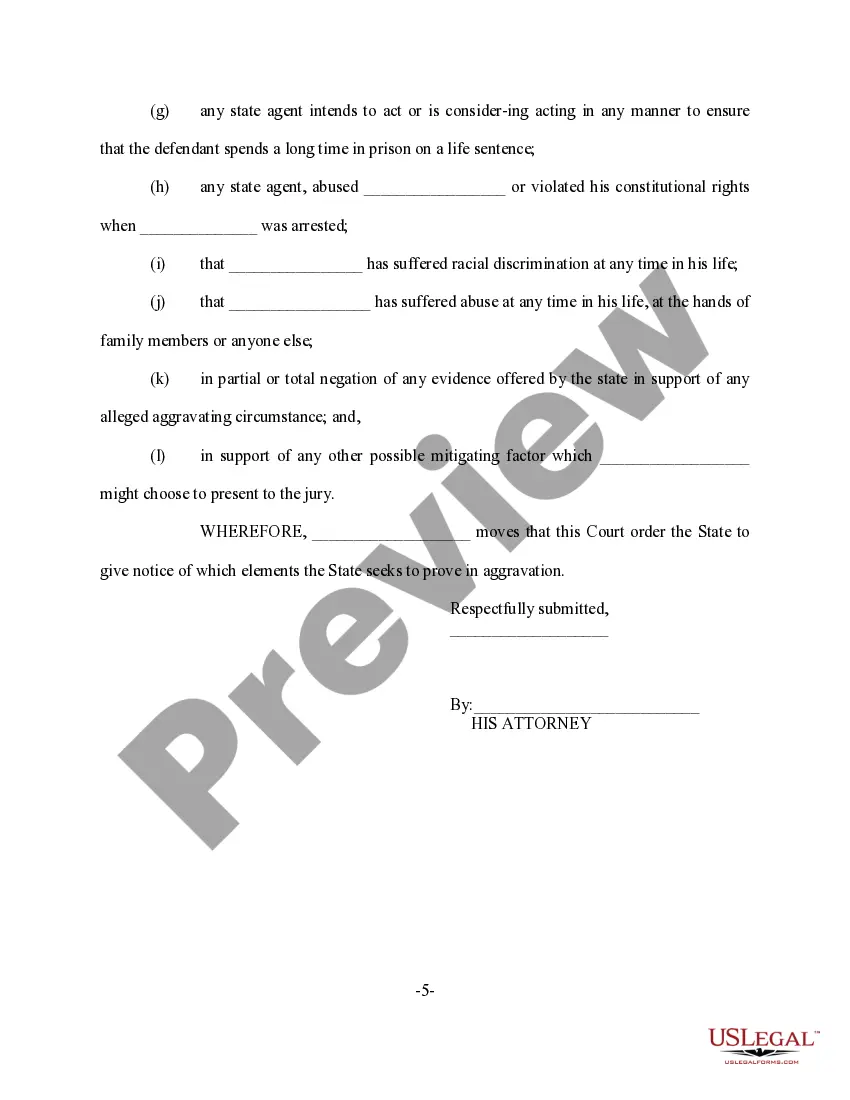
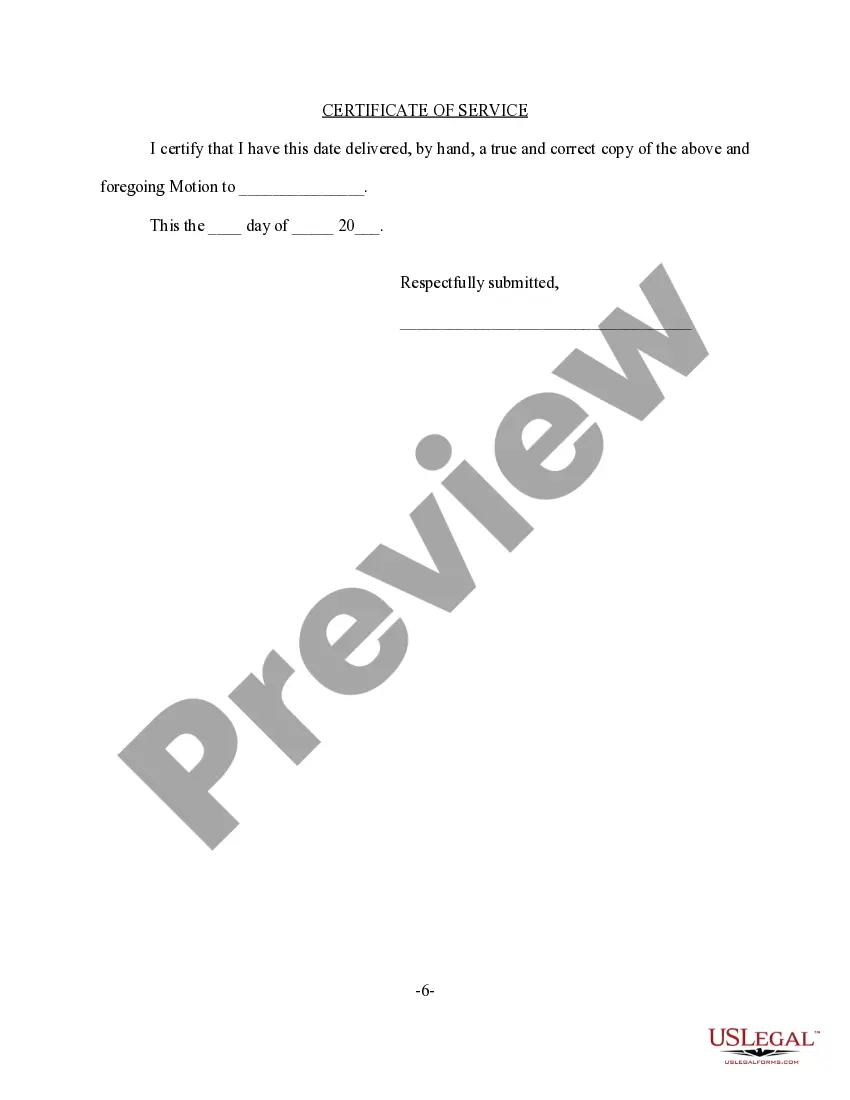
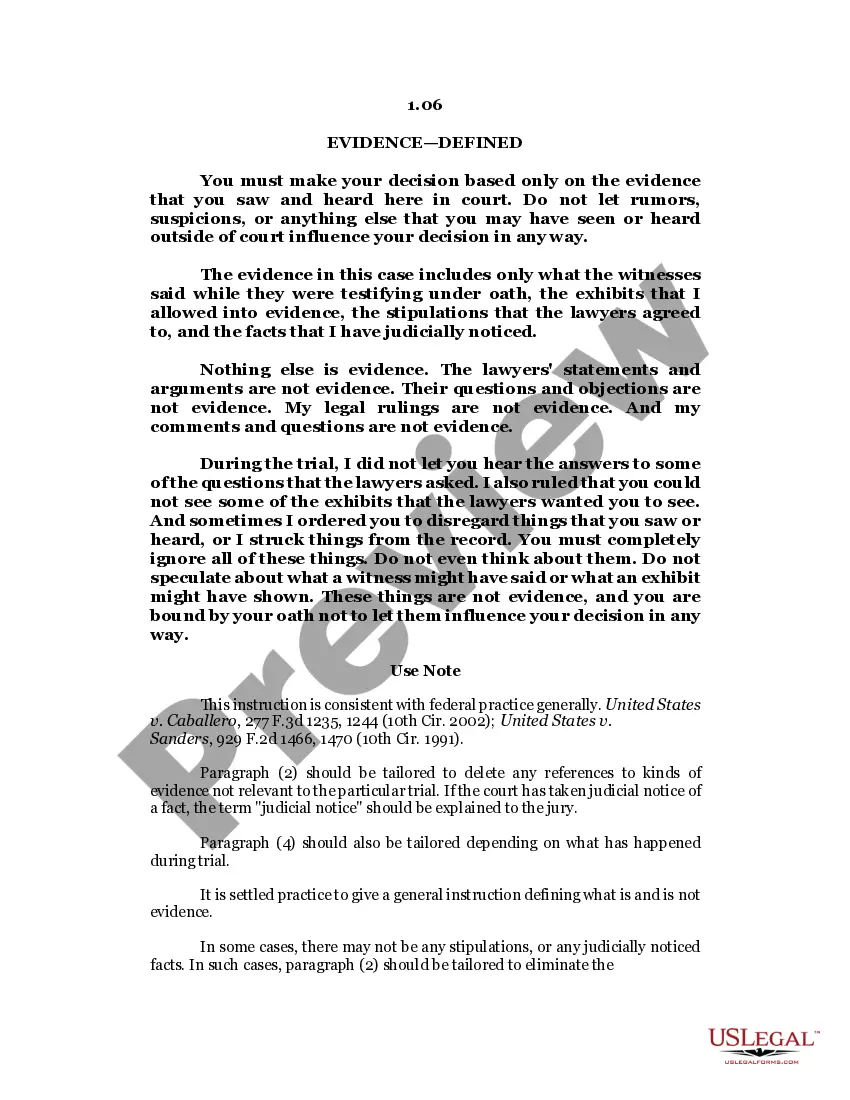
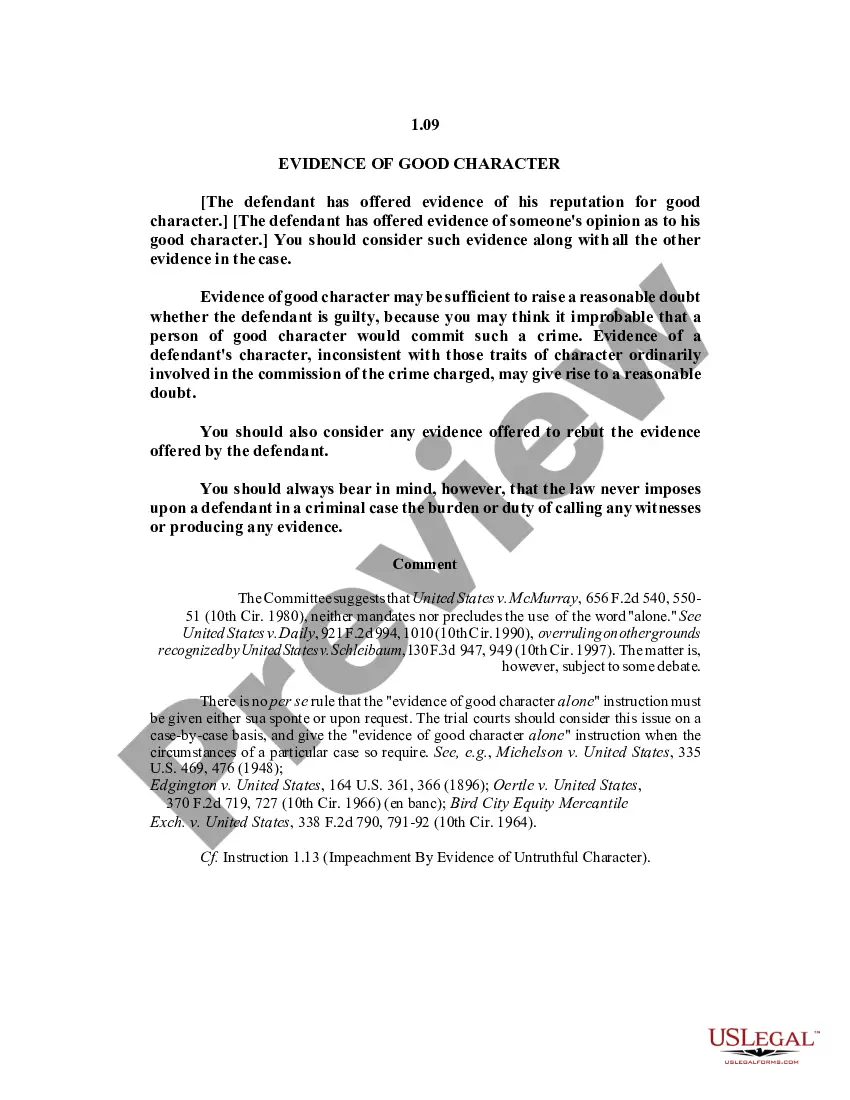
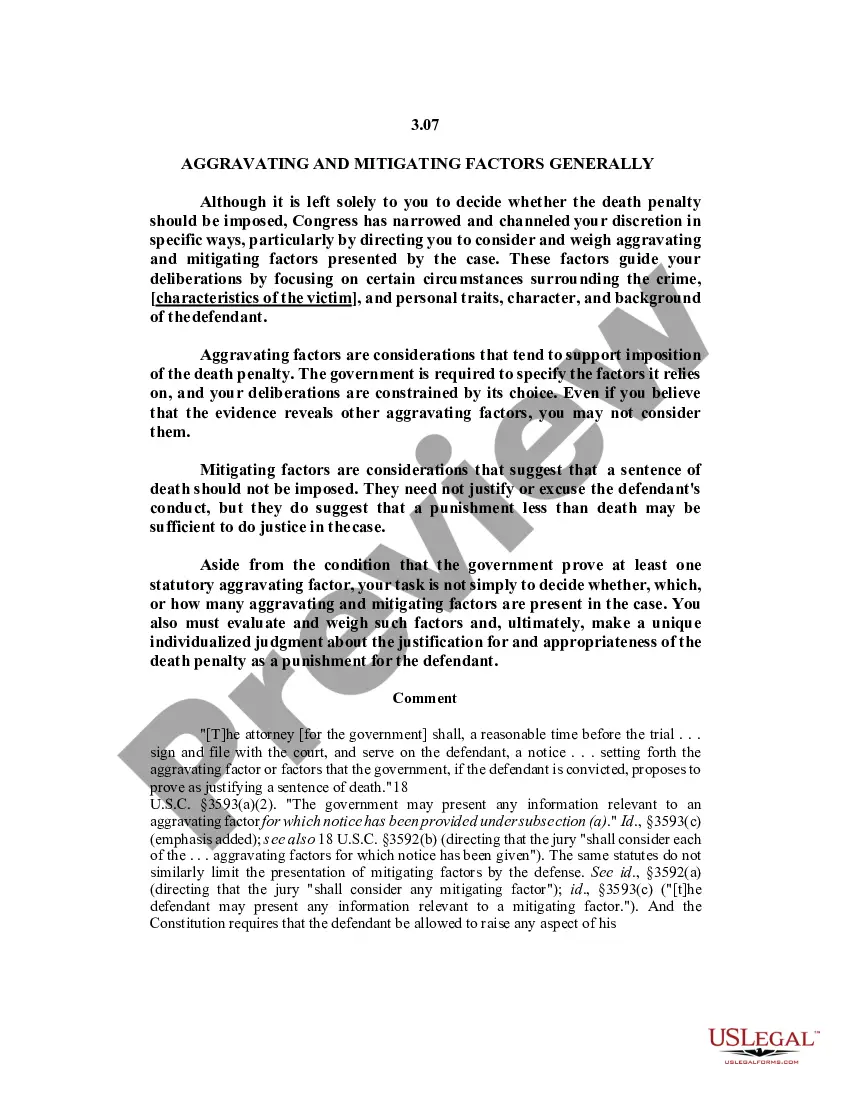
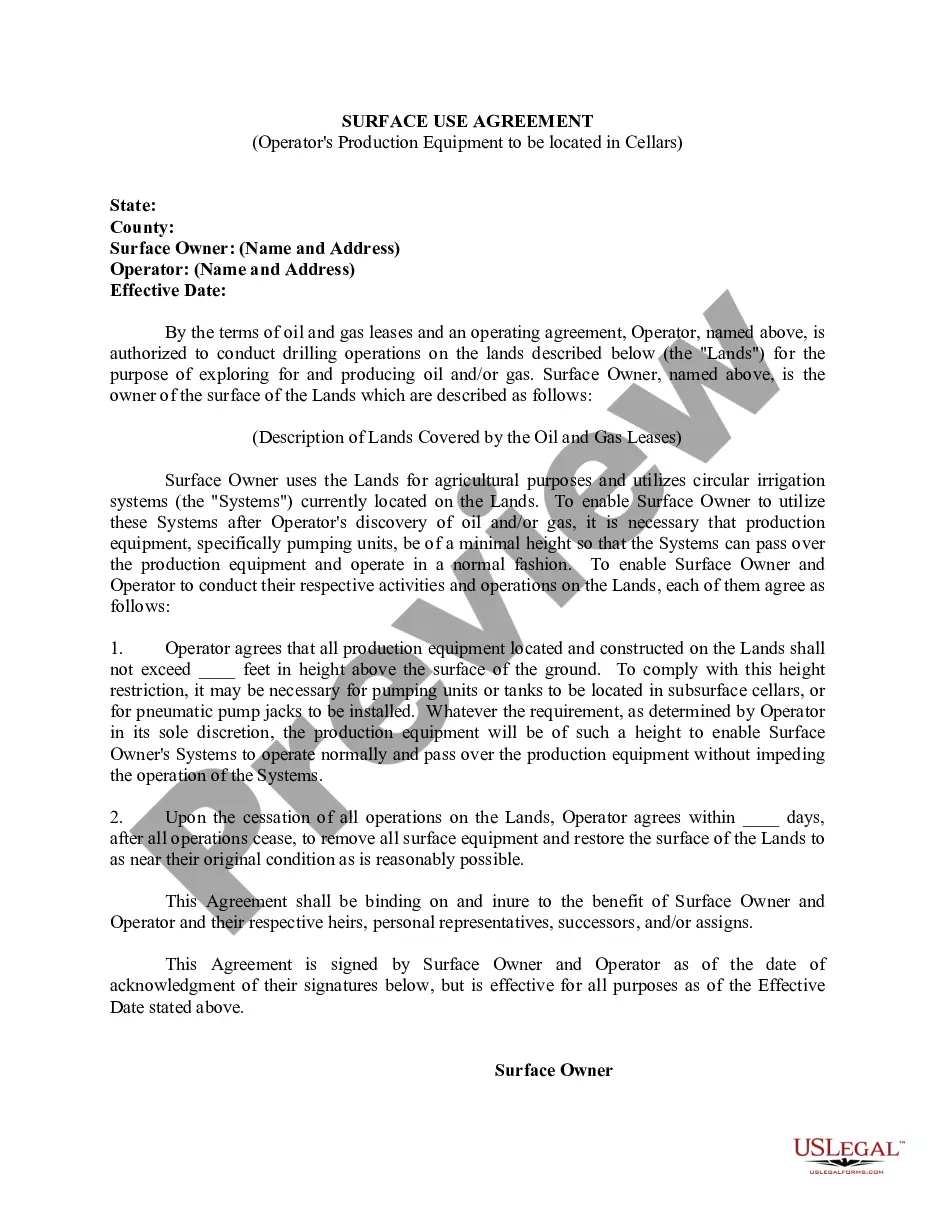
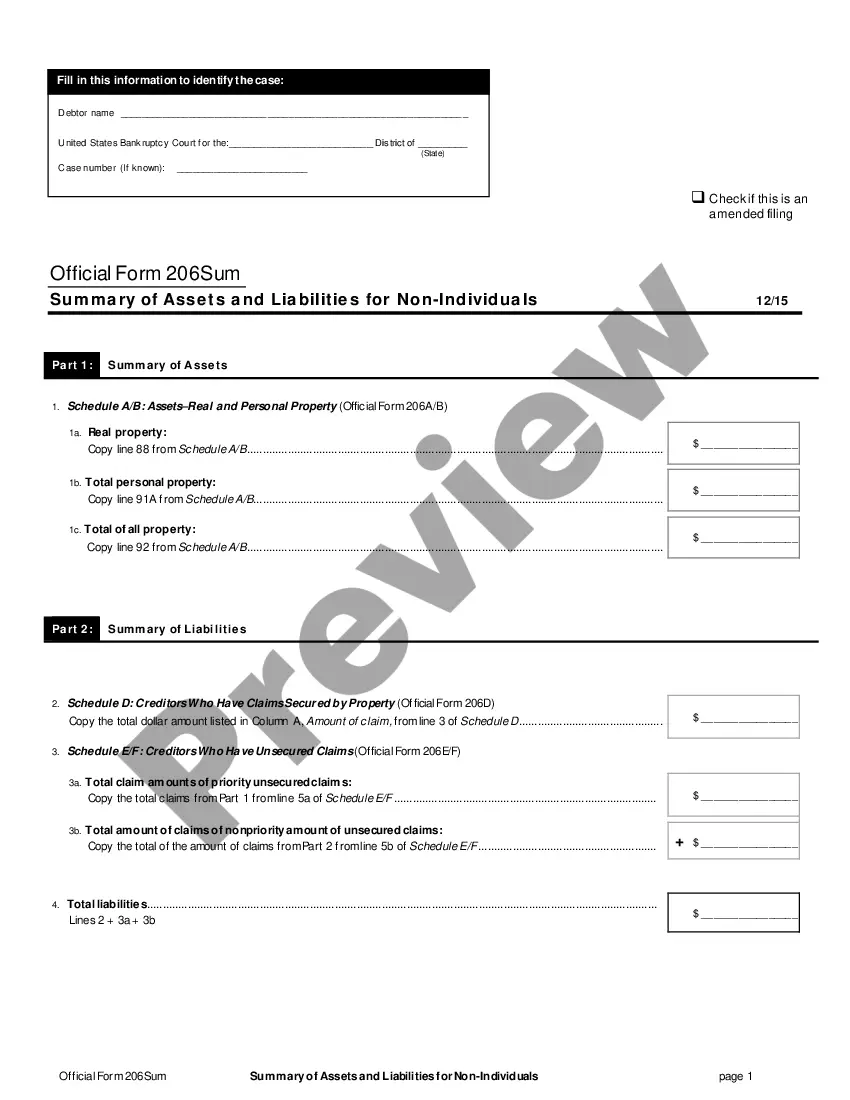
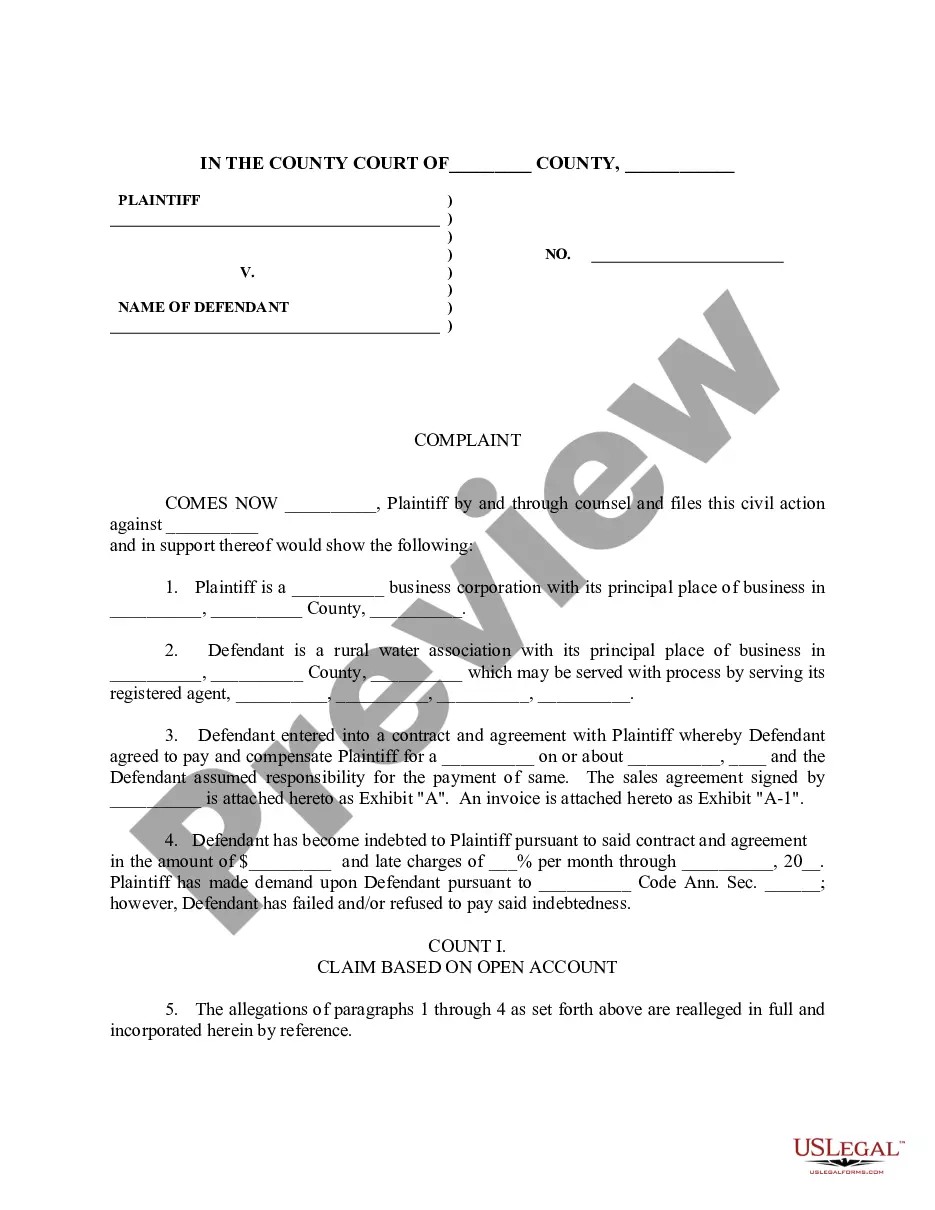

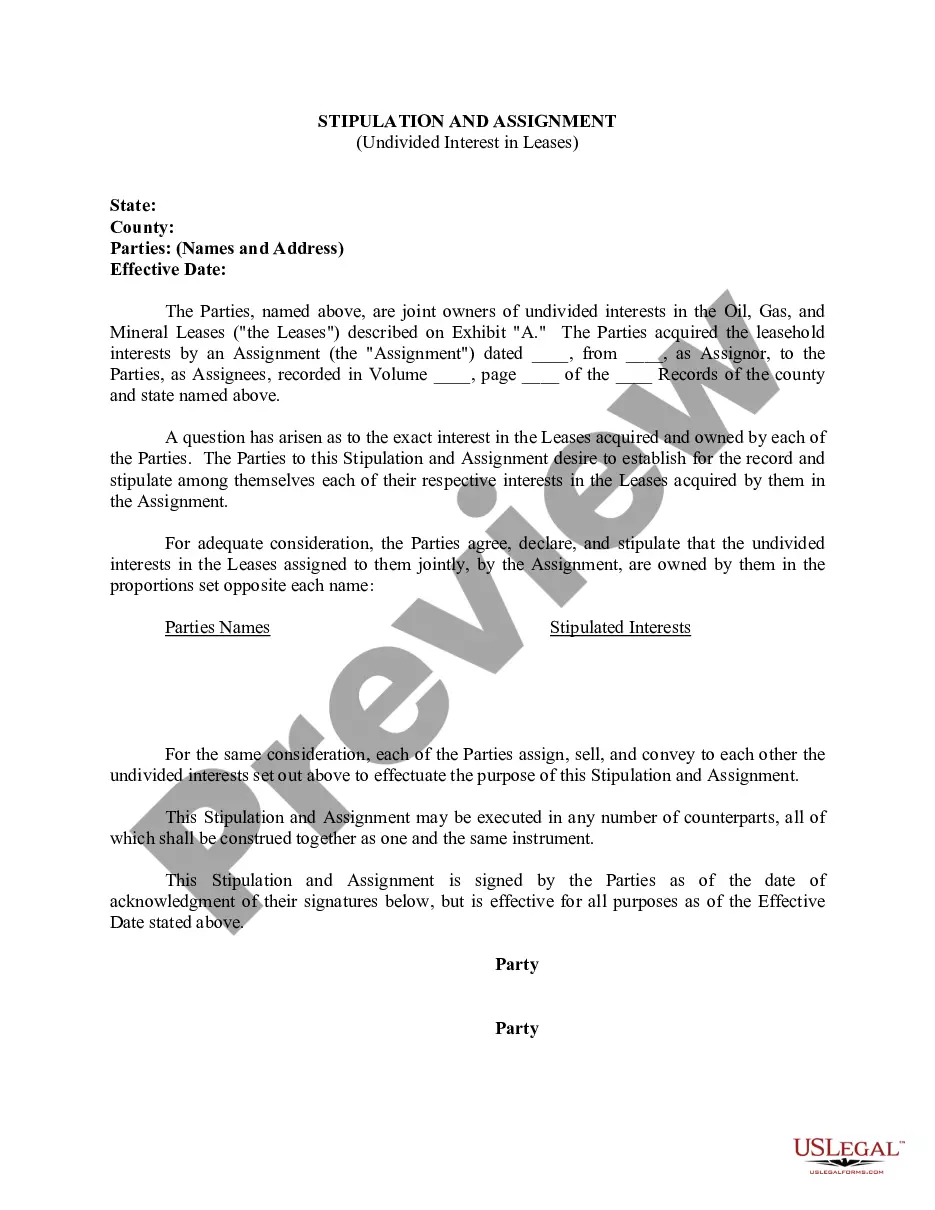
How to fill out Demand For Notice Of Aggravating And For Disclosure Of Evidence Supporting Mitigating Circumstances?
Are you currently in a situation where you require documents for either business or personal reasons on a daily basis.
There are numerous legitimate document templates available online, but finding ones you can trust can be challenging.
US Legal Forms offers thousands of form templates, such as the Iowa Demand for Notice of Aggravating and for Disclosure of Evidence Supporting Mitigating Circumstances, which are designed to meet state and federal requirements.
Select the payment plan you prefer, enter the required information to create your account, and pay for the order using your PayPal or Visa or Mastercard.
Choose a convenient file format and download your copy. Access all the document templates you have purchased in the My documents section. You can obtain another copy of the Iowa Demand for Notice of Aggravating and for Disclosure of Evidence Supporting Mitigating Circumstances at any time if needed. Simply select the necessary form to download or print the document template. Utilize US Legal Forms, one of the most extensive collections of legal forms, to save time and reduce errors. The service provides well-crafted legal document templates that can be used for a variety of purposes. Create an account on US Legal Forms and start simplifying your life.
- If you are already familiar with the US Legal Forms website and possess an account, just Log In.
- Then, you can download the Iowa Demand for Notice of Aggravating and for Disclosure of Evidence Supporting Mitigating Circumstances template.
- If you do not have an account and wish to start using US Legal Forms, follow these steps.
- Find the form you need and ensure it is for your correct city/state.
- Utilize the Preview option to review the form.
- Read the description to confirm that you have selected the right form.
- If the form is not what you are looking for, use the Search field to find the form that suits your needs.
- Once you find the correct form, click Purchase now.
Form popularity
FAQ
A mitigating circumstance is a factor that lessens the severity of an act or the actor's culpability for the action. Mitigating circumstances can be found in both criminal and civil cases and may be used to justify a reduction in the severity of the punishment or damages.
Rule 2.23 - Judgment 2.23(1)Entry of judgment. a. Acquittal. Upon a verdict of not guilty for the defendant or special verdict upon which a judgment of acquittal must be given, the court must render judgment of acquittal immediately.
Rule 2.8 - Arraignment and plea 2.8(1)Conduct of arraignment. a. Arraignment shall be conducted as soon as practicable following the filing of the indictment. If the defendant appears for arraignment without counsel, the court must inform the defendant of the right to counsel and ask if the defendant desires counsel.
For a simple misdemeanor, there shall be a fine of at least one hundred five dollars but not to exceed eight hundred fifty-five dollars. The court may order imprisonment not to exceed thirty days in lieu of a fine or in addition to a fine.
Evidence of the conviction is admissible only if: (1) Its probative value, supported by specific facts and circumstances, substantially outweighs its prejudicial effect; and (2) The proponent gives an adverse party reasonable written notice of the intent to use it so that the party has a fair opportunity to contest its ...
Under Iowa Rule of Criminal Procedure 2.33(2)(c): ?All criminal cases must be brought to trial within one year after the defendant's initial arraignment pursuant to rule 2.8 unless an extension is granted by the court, upon a showing of good cause.? A ninety-day timeframe established under rule 2.33(2)(b).
Rule 2.73 - Motion for a new trial 2.73(1)Generally. The magistrate, on motion of a defendant, may grant a new trial on the grounds set forth in rule 2.24(2) (b). 2.73(2)Newly discovered evidence. A motion for a new trial based on newly discovered evidence must be made within 6 months after the final judgment.
2.33(2)Speedy trial. It is the public policy of the state of Iowa that criminal prosecutions be concluded at the earliest possible time consistent with a fair trial to both parties. Applications for dismissals under this rule may be made by the prosecuting attorney or the defendant or by the court on its own motion. a.