Iowa Living Trust for individual, Who is Single, Divorced or Widow (or Widower) with Children
Overview of this form
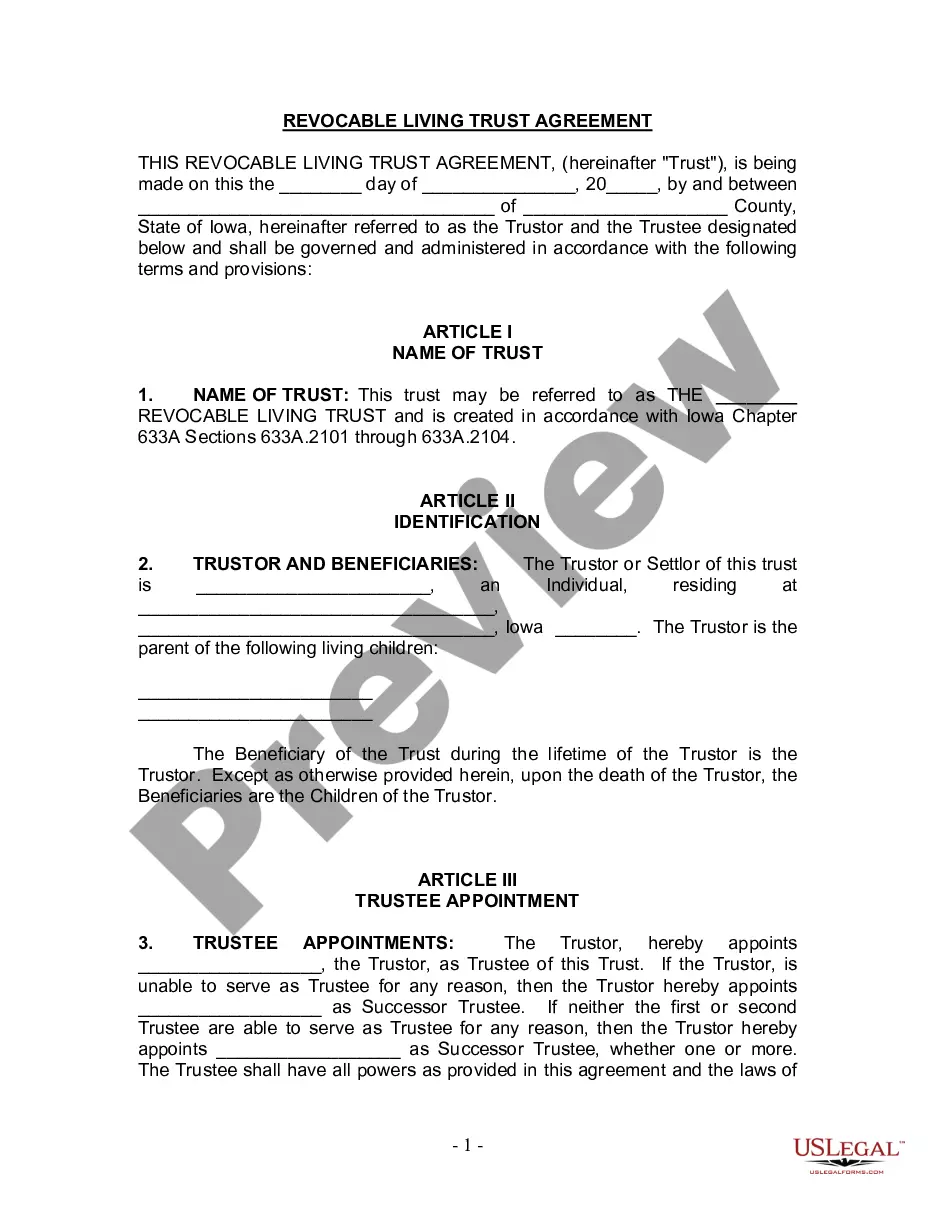
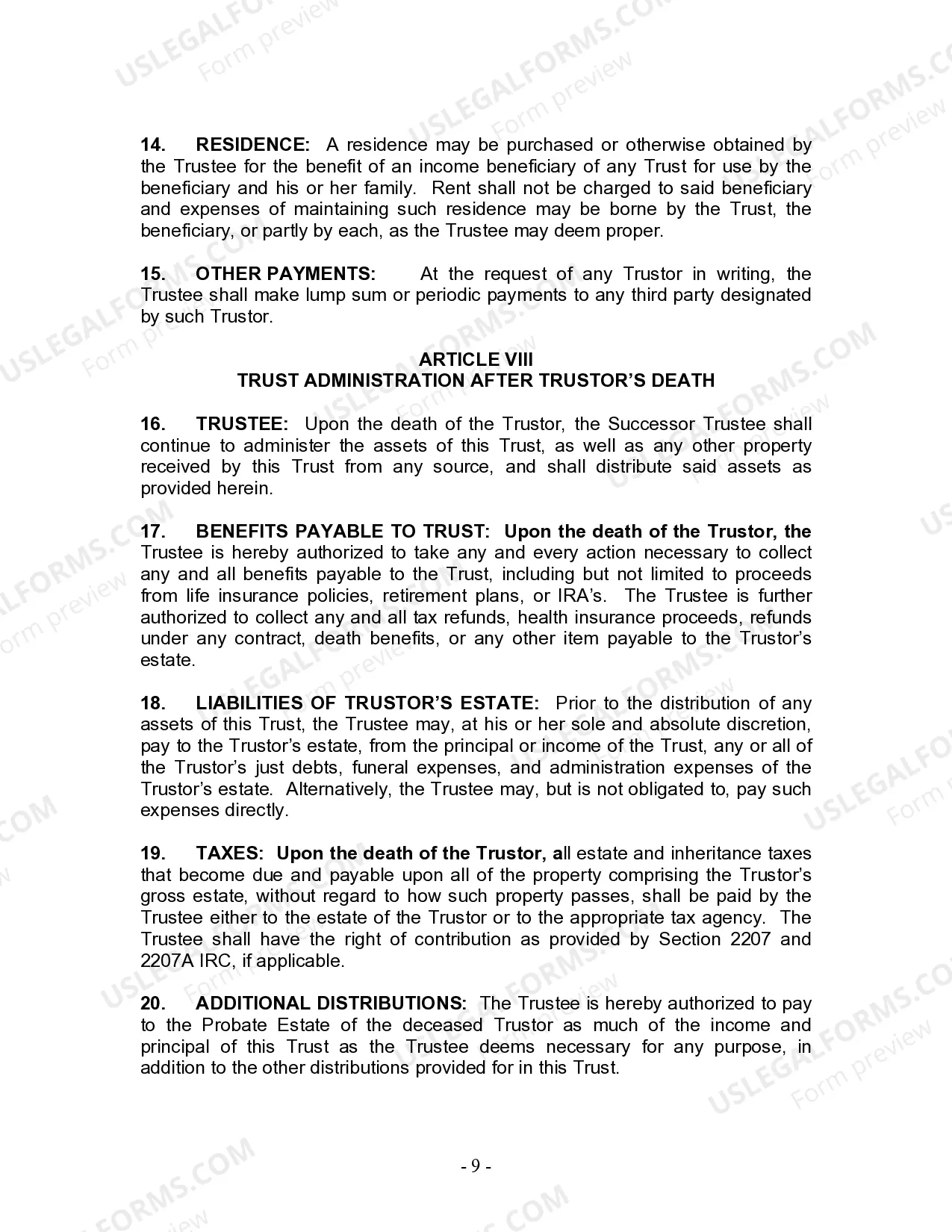
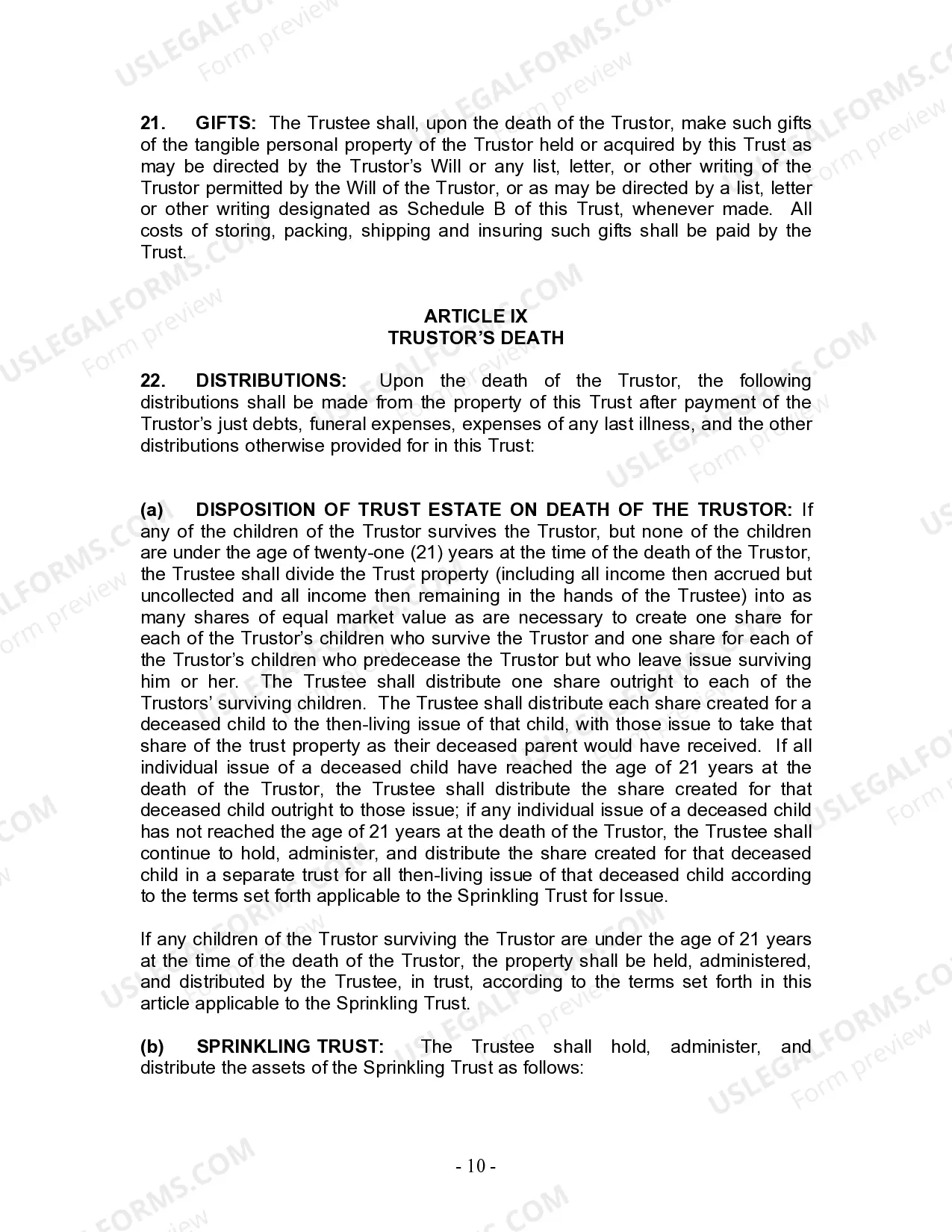
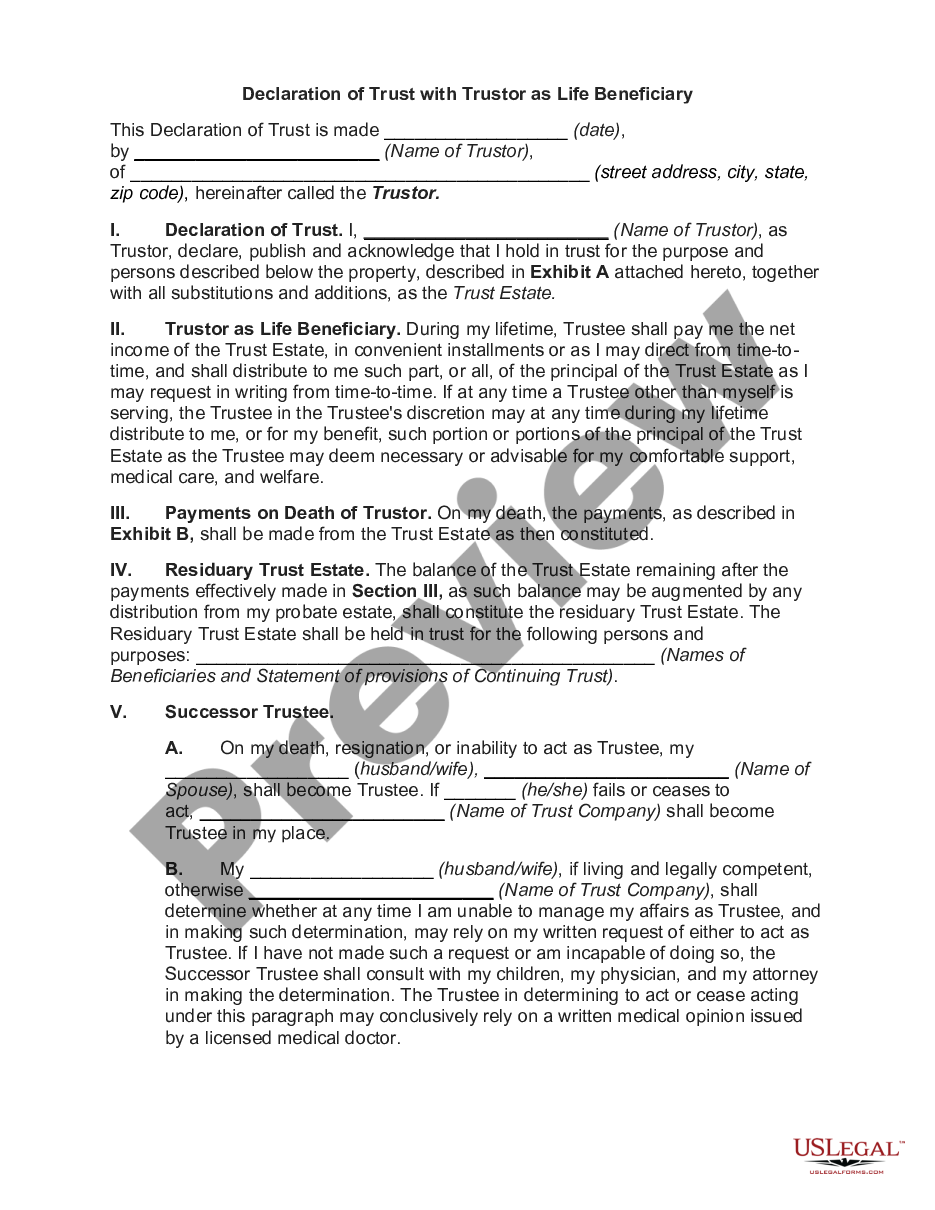
This form is a Living Trust tailored for individuals who are single, divorced, or widowed and have children. A Living Trust is a legal arrangement that allows someone to manage their assets while they are alive, with the property passing to designated beneficiaries upon their death without the need for probate. This type of trust provides control over how assets are distributed and can help avoid lengthy probate processes, unlike a standard Last Will and Testament.
Form components explained
- Name of the trust.
- Identification of the Trustor and beneficiaries.
- Appointment of Trustees and Successor Trustees.
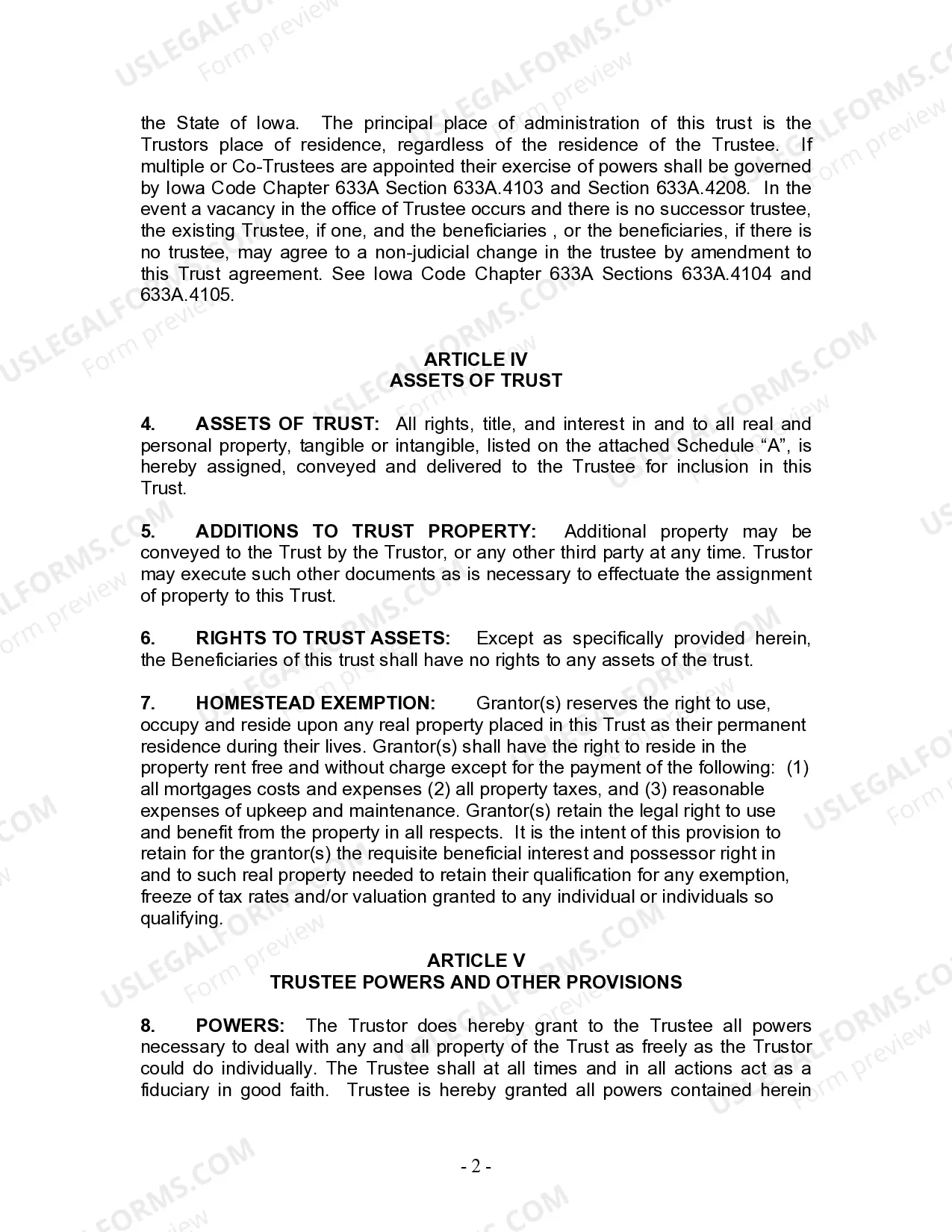
- Details regarding the assets included in the trust.
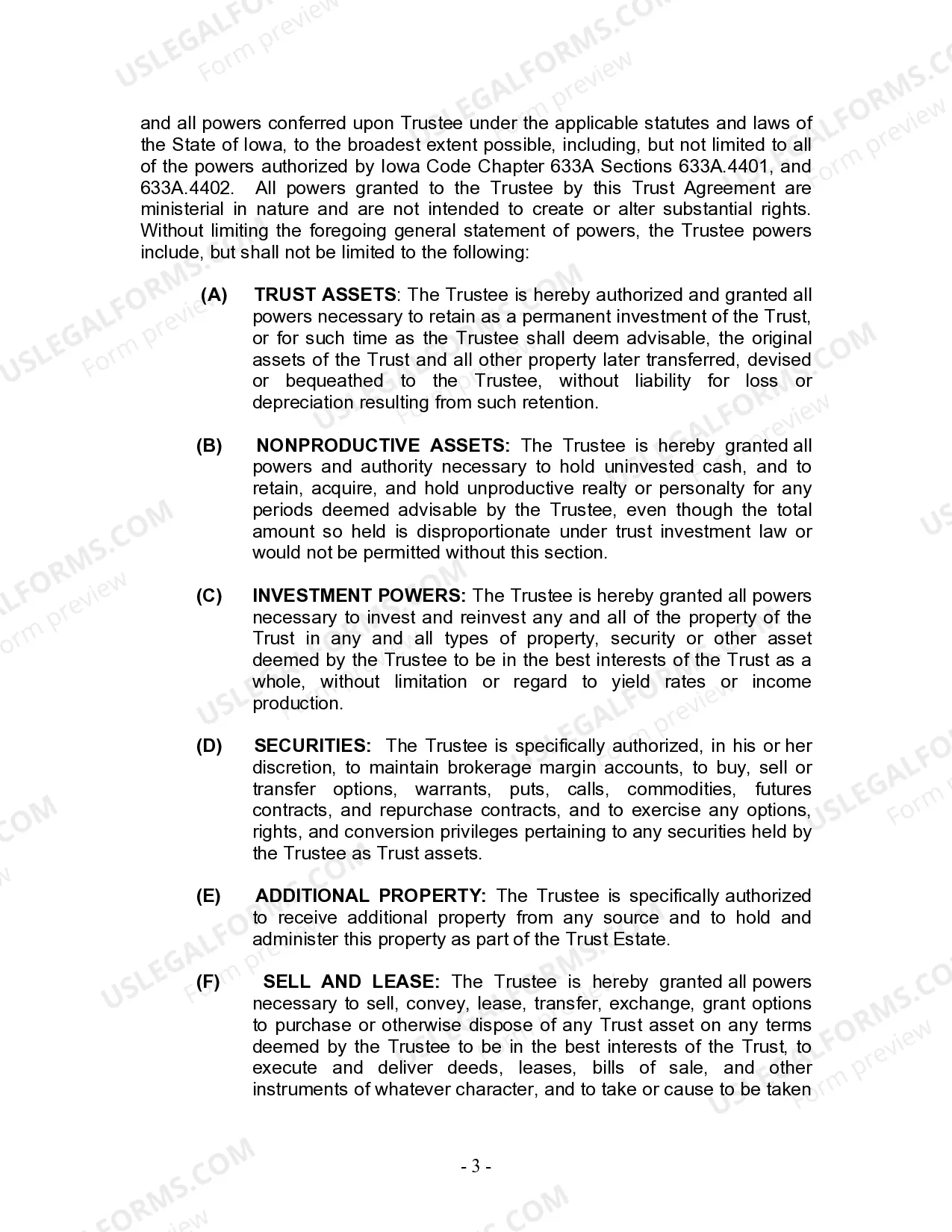
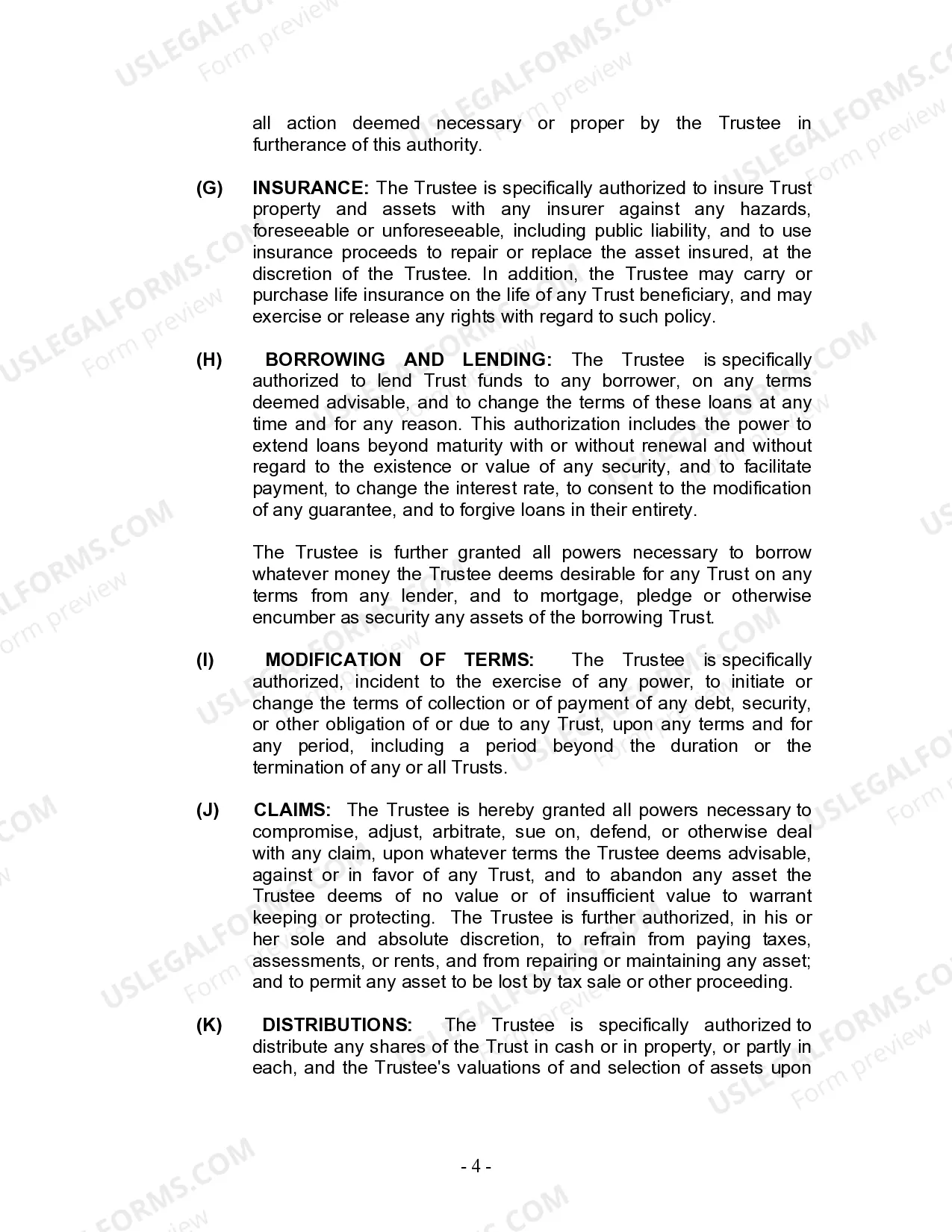
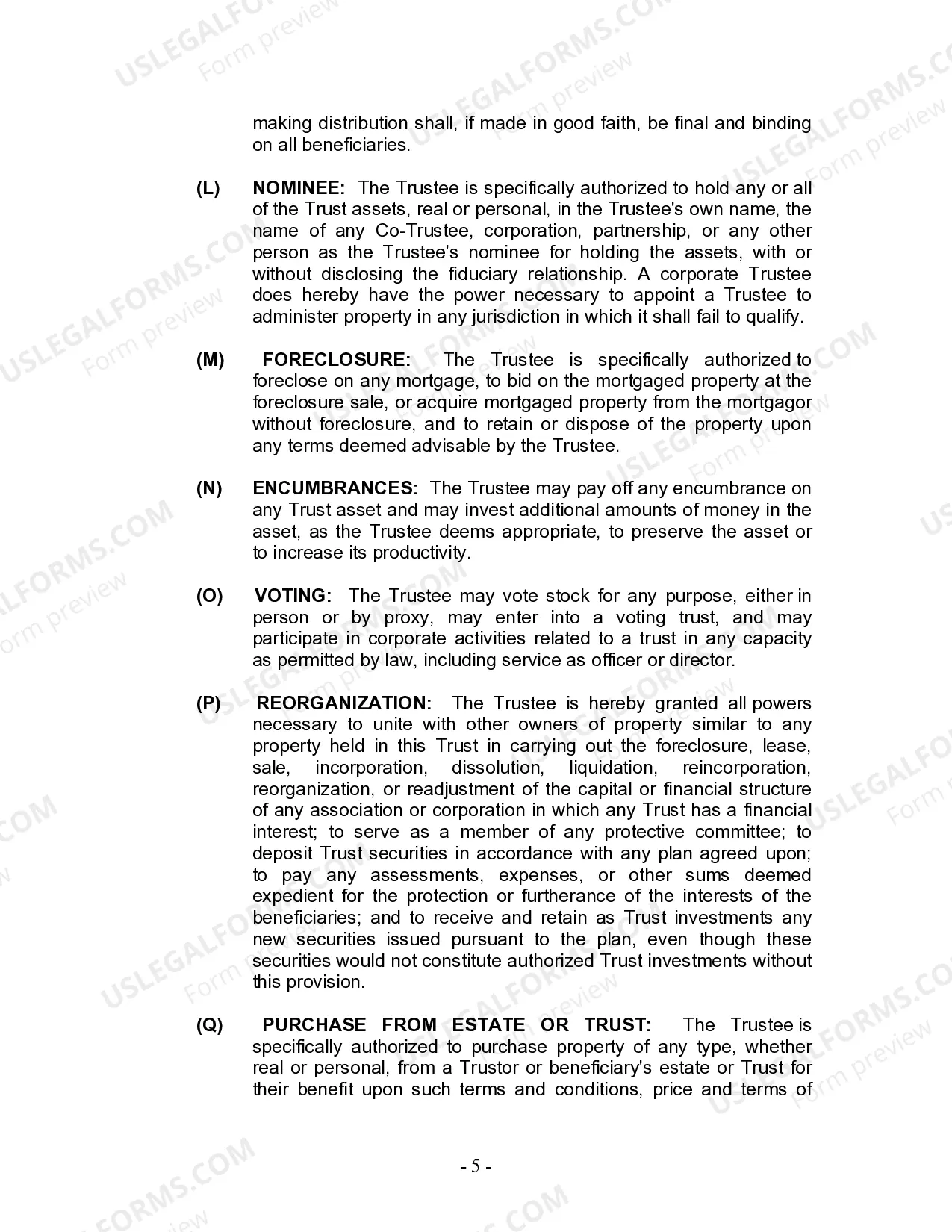
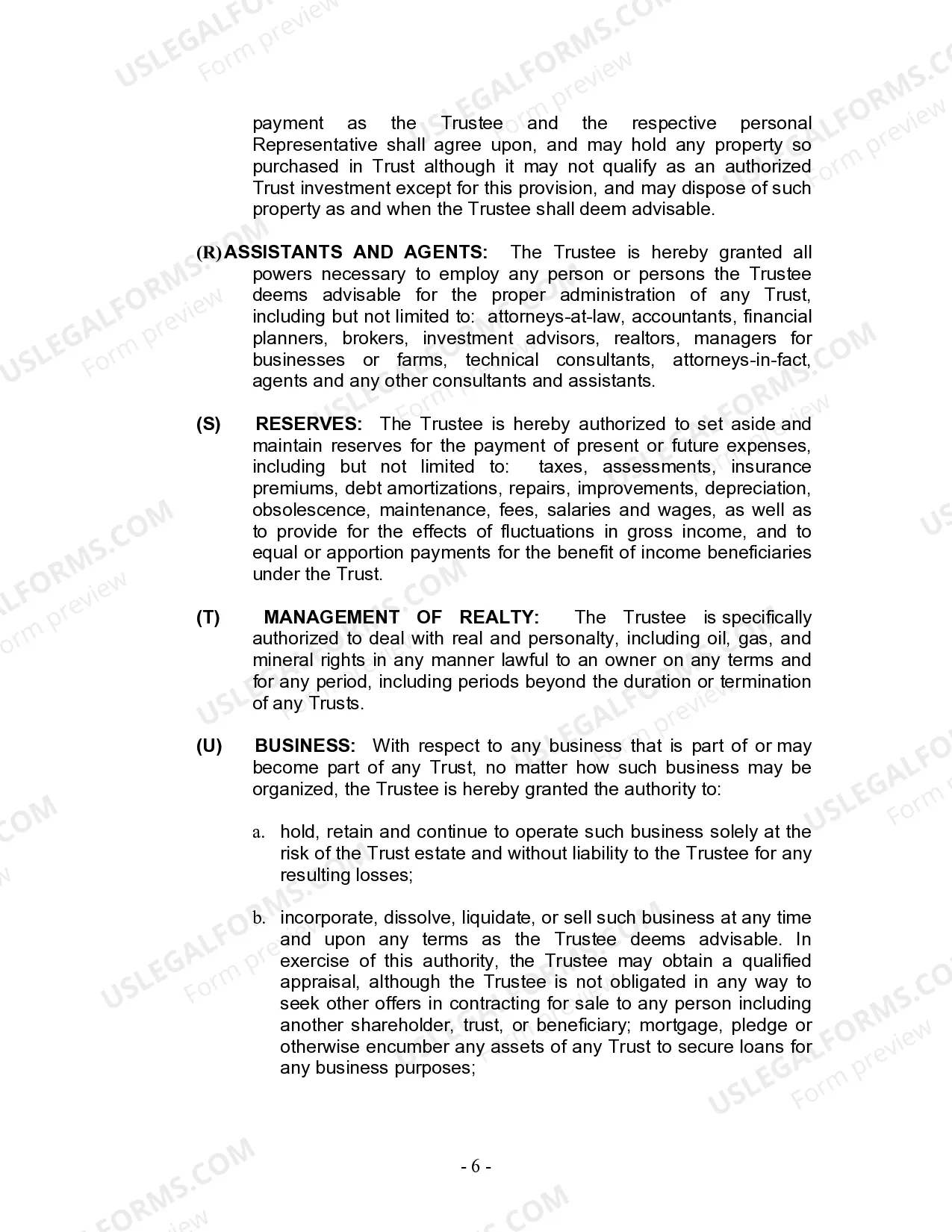
- Trustee powers and responsibilities.
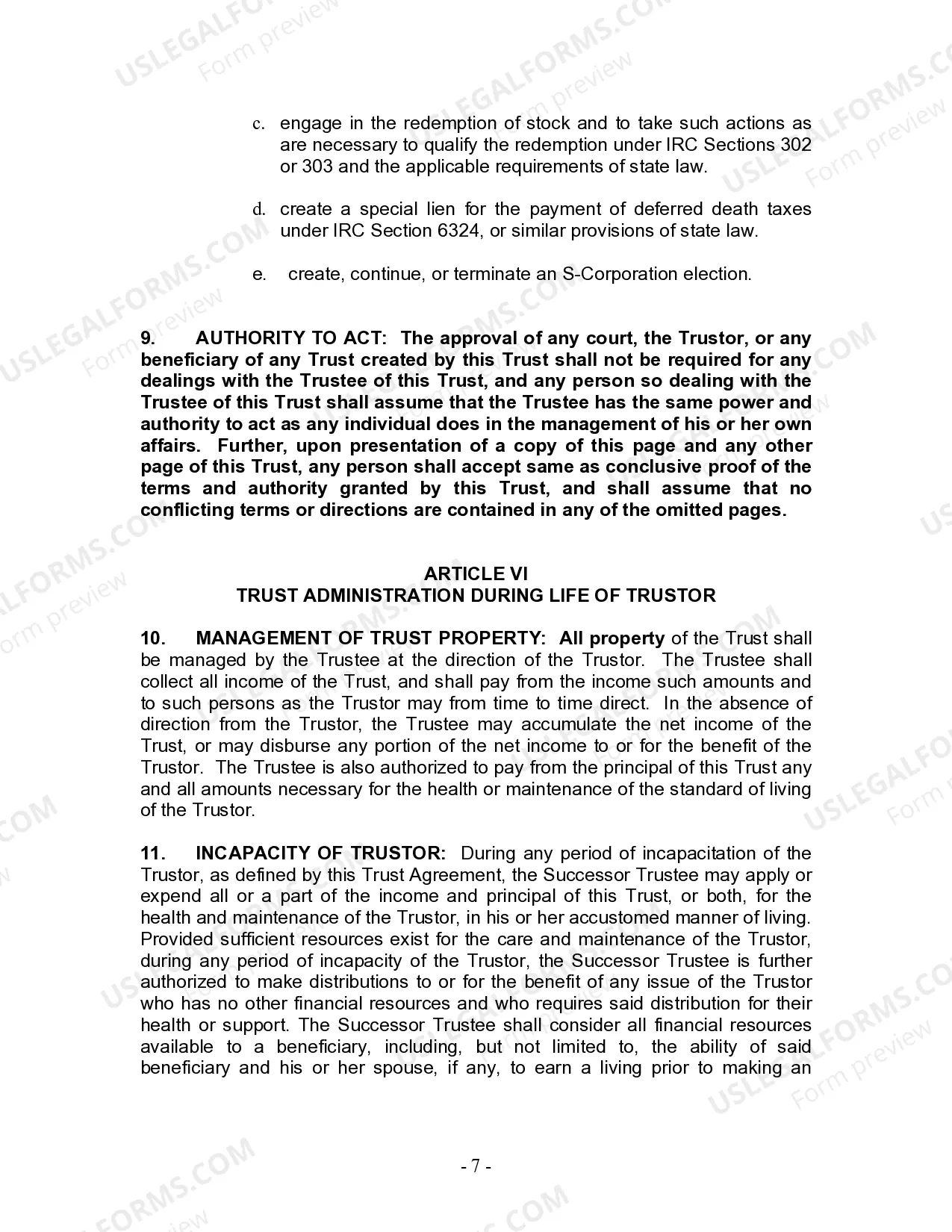
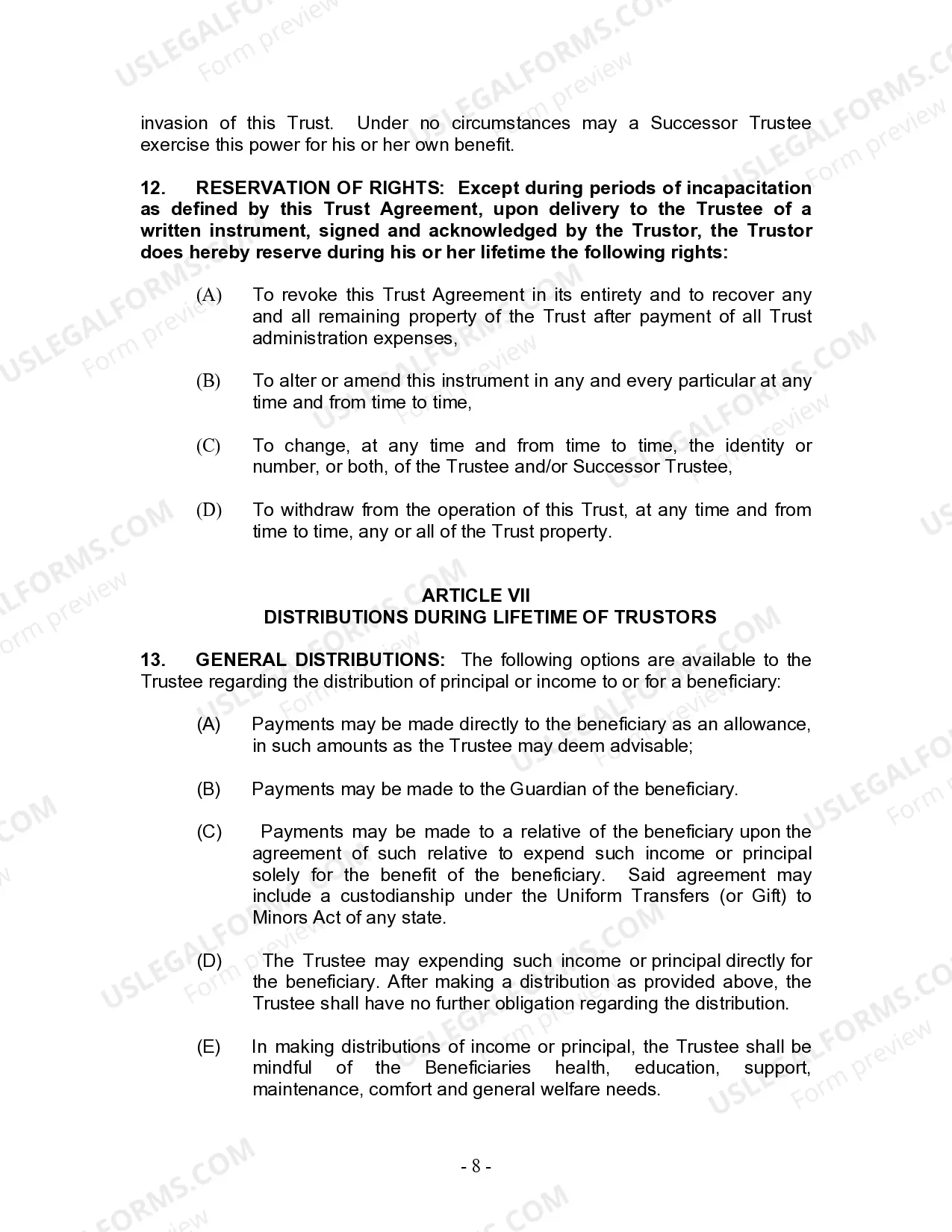
- Procedures for trust administration during the Trustorâs life and after death.



When this form is needed
This Living Trust form is essential when you want to ensure that your assets are managed according to your wishes while you are alive and efficiently passed to your children after your death. It is particularly useful for individuals who wish to avoid the probate process, want to maintain control over their assets, or have specific instructions for asset distribution after passing away.
Intended users of this form
- Individuals who are single, divorced, or widowed.
- Parents with one or more children who want to provide for their future.
- Anyone looking to manage their estate efficiently and avoid probate.
How to complete this form
- Identify the Trustor: Fill in your name and address as the individual creating the trust.
- Designate the Trustee: Appoint yourself or another individual as the Trustee responsible for managing the trust.
- List beneficiaries: Specify your children or other beneficiaries who will receive the trust assets after your death.
- Detail the trust assets: Clearly specify the assets that will be included in the trust.
- Sign and date the document: Ensure all relevant parties sign the trust in front of a notary if required by state law.
Is notarization required?
This document requires notarization to meet legal standards. US Legal Forms provides secure online notarization powered by Notarize, allowing you to complete the process through a verified video call, available 24/7.
Get your form ready online
Our built-in tools help you complete, sign, share, and store your documents in one place.
Make edits, fill in missing information, and update formatting in US Legal Forms—just like you would in MS Word.
Download a copy, print it, send it by email, or mail it via USPS—whatever works best for your next step.
Sign and collect signatures with our SignNow integration. Send to multiple recipients, set reminders, and more. Go Premium to unlock E-Sign.
If this form requires notarization, complete it online through a secure video call—no need to meet a notary in person or wait for an appointment.
We protect your documents and personal data by following strict security and privacy standards.
Make edits, fill in missing information, and update formatting in US Legal Forms—just like you would in MS Word.
Download a copy, print it, send it by email, or mail it via USPS—whatever works best for your next step.
Sign and collect signatures with our SignNow integration. Send to multiple recipients, set reminders, and more. Go Premium to unlock E-Sign.

If this form requires notarization, complete it online through a secure video call—no need to meet a notary in person or wait for an appointment.

We protect your documents and personal data by following strict security and privacy standards.
Avoid these common issues
- Failing to list all intended beneficiaries.
- Not specifying the assets properly.
- Overlooking the appointment of a Successor Trustee.
- Not updating the trust after significant life changes, such as remarriage or the birth of additional children.
Benefits of using this form online
- Convenience: Easily complete the form from home at any time.
- Editability: Update the trust details as needed before finalizing.
- Accessibility: Download the document and retain a copy for your records.
- Expertly drafted: The form is designed by licensed attorneys to ensure legal compliance.
Looking for another form?


Form popularity
FAQ
To establish a valid trust in Iowa, you need five key elements: a trustor, a trustee, beneficiaries, a clear intent to create a trust, and trust property. The trustor, or creator, must demonstrate their intention to form the trust, while appointing a trustee to manage it. Beneficiaries, typically your children in this context, must be clearly identified to receive the trust's assets. Additionally, the trust must have specific property assigned to it. For individuals who are single, divorced, or widowed, understanding these elements can simplify the process of creating an Iowa Living Trust.
A trust often provides clear advantages over a will in Iowa, especially for individuals who are single, divorced, or widowed with children. With a living trust, you can avoid probate, ensuring that your assets transfer to your beneficiaries more quickly and privately. Moreover, a trust allows for more direct control over your assets, including stipulations on when and how your children receive their inheritance. Therefore, many find that an Iowa Living Trust for individuals in your situation offers peace of mind and practical benefits.
Yes, children can be beneficiaries of a marital trust in Iowa. With an Iowa Living Trust for individuals who are single, divorced, or widowed with children, you can allocate a portion of your estate to your children while preserving assets for a surviving spouse. This strategy allows for financial security for your family while respecting your wishes. It's crucial to clearly define these beneficiaries when setting up the trust.
The 5-year rule for trusts refers to a provision that impacts Medicaid eligibility in Iowa. Typically, if you transfer assets into an Iowa Living Trust, you must wait five years before qualifying for Medicaid assistance. This waiting period ensures that assets are not hidden for immediate financial assistance, which can affect how you plan your estate. Understanding this rule helps you navigate your financial future effectively.
A trust in Iowa functions as a legal arrangement where one party holds assets for the benefit of another. With an Iowa Living Trust for individuals who are single, divorced, or widowed with children, you can outline how your assets are to be handled both during your life and after your passing. This mechanism offers privacy and helps avoid probate court. By establishing a trust, you take proactive steps to manage your estate effectively.
In the case of an Iowa Living Trust for individuals, when one spouse passes away, the surviving spouse typically retains control over the trust assets. The trust may dictate how the remaining assets are distributed among children or other beneficiaries. This arrangement helps avoid delays associated with probate, ensuring your wishes are honored more quickly. It's a seamless way to manage your estate during life and after death.
Iowa has specific laws governing the creation and management of trusts. An Iowa Living Trust for individuals who are single, divorced, or widowed with children allows you to protect assets and specify how your estate is managed. Legal requirements include drafting a trust document and designating a trustee. Understanding these laws ensures your trust operates according to your wishes.
Absolutely, you can establish a living trust on your own in Iowa, even if you are not married. An Iowa Living Trust for individuals who are single, divorced, or widowed allows you to take control of your estate and provide for your children. This type of trust ensures your wishes are respected and that your children are cared for according to your intentions. US Legal Forms offers resources to guide you in setting it up smoothly.
You can write your own Iowa Living Trust, but understanding the legal requirements is essential to avoid potential pitfalls. It's important that your trust meets Iowa's specific guidelines to ensure its validity. Utilizing resources from US Legal Forms can provide you with templates and guidance to create a legally sound trust. This way, you can secure your assets and ensure they benefit your children.
Yes, you can create an Iowa Living Trust as an individual, even if you are single, divorced, or a widow or widower with children. This trust allows you to manage your assets while providing for your family's future. Additionally, creating a trust independently ensures that your specific wishes are met. You can utilize platforms like US Legal Forms to simplify the process.