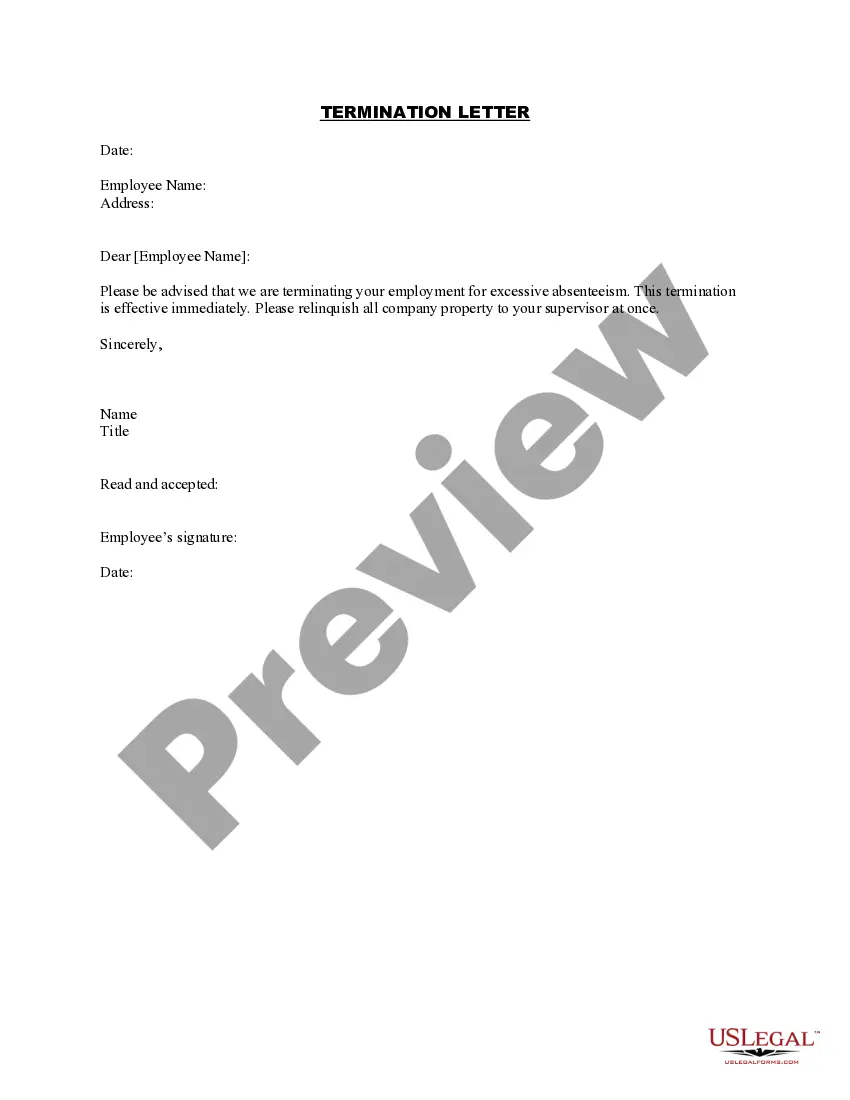
Hawaii Termination Letter - Excessive Absenteeism
Description
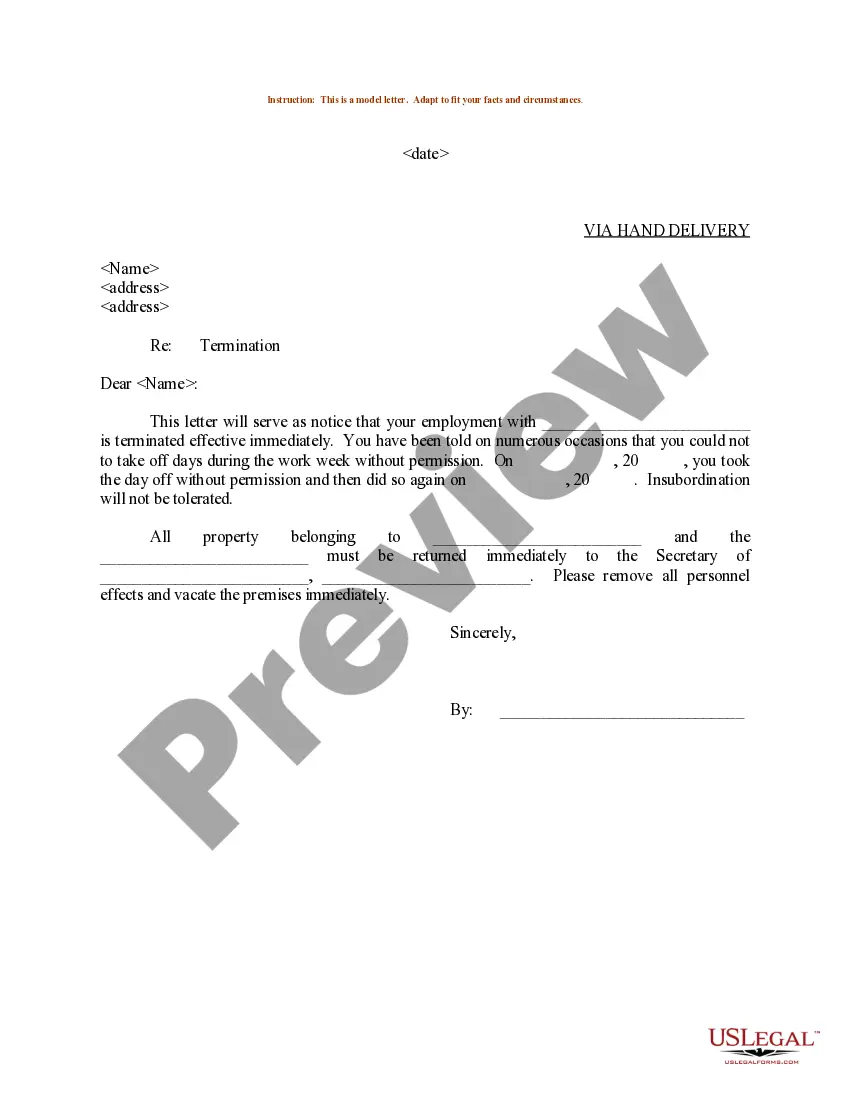
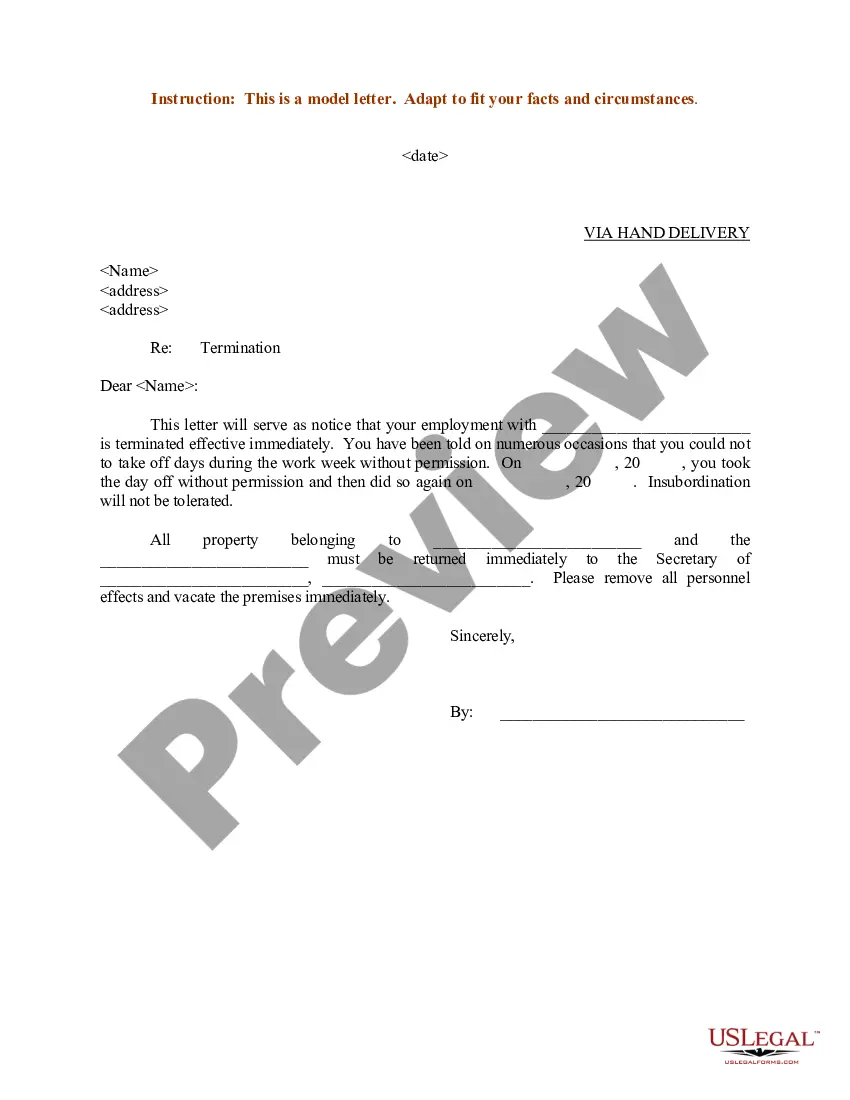
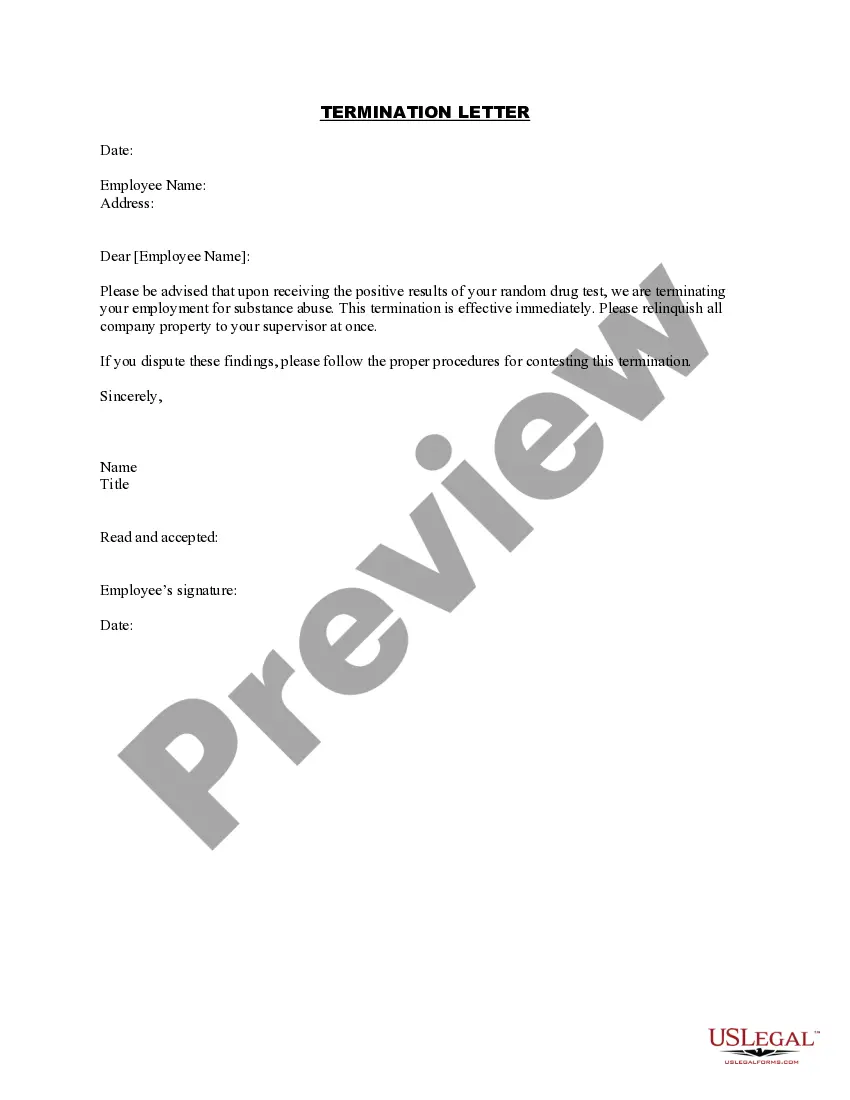
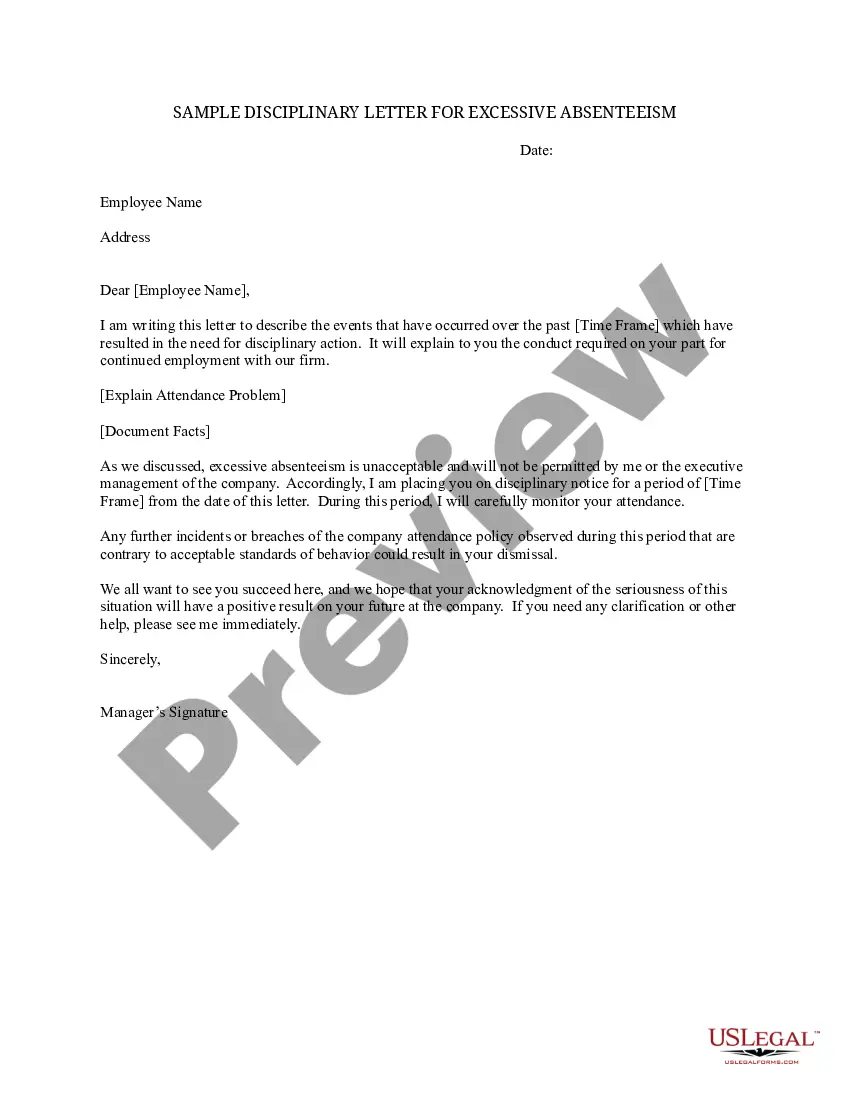
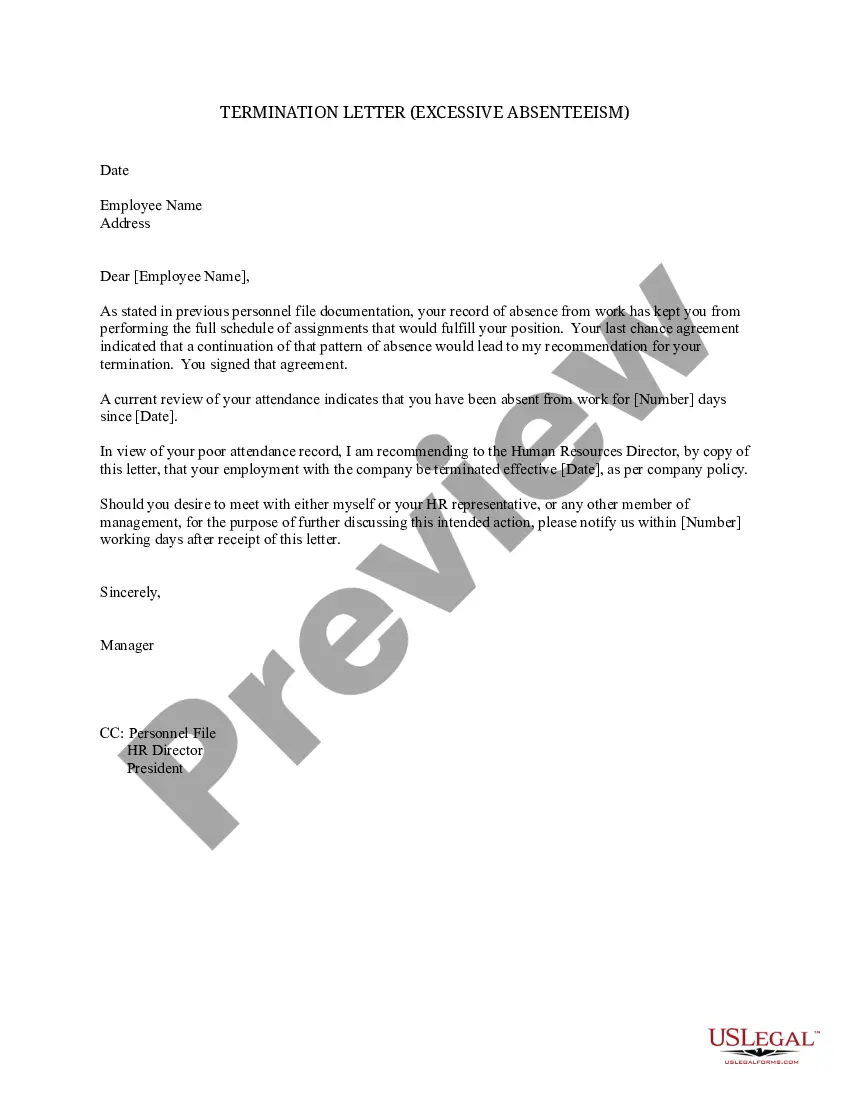

How to fill out Termination Letter - Excessive Absenteeism?
It is feasible to dedicate numerous hours online searching for the valid document format that suits the federal and state requirements you need.
US Legal Forms offers thousands of valid templates that have been assessed by professionals.
You can effortlessly acquire or create the Hawaii Termination Letter - Excessive Absenteeism from the assistance.
First, ensure you have selected the appropriate document format for the area/city of your choice. Review the form description to verify that you have chosen the correct form. If available, utilize the Preview button to examine the document format as well. If you wish to obtain another version of the form, make use of the Lookup area to find the format that suits your needs and requirements. Once you have identified the format you desire, simply click Get now to proceed. Choose the pricing plan you want, provide your credentials, and register your account on US Legal Forms. Complete the transaction. You can use your credit card or PayPal account to buy the valid form. Select the format of the document and download it to your device. Make modifications to your document if possible. You can complete, revise, and sign and print the Hawaii Termination Letter - Excessive Absenteeism. Download and print thousands of document templates using the US Legal Forms site, which offers the best variety of valid types. Utilize professional and state-specific templates to address your business or personal needs.
- If you already possess a US Legal Forms account, you can Log In and press the Obtain button.
- Then, you can complete, modify, create, or sign the Hawaii Termination Letter - Excessive Absenteeism.
- Each valid document format you purchase is yours permanently.
- To get an extra copy of any purchased form, visit the My documents tab and click on the respective button.
- If you are using the US Legal Forms website for the first time, follow the straightforward instructions below.
Form popularity
FAQ
There should also be a clarification that job abandonment is considered a voluntary resignation, which means that the employee is terminated and might not be eligible for unemployment benefits.
Although the general answer is yes, it is accompanied by many what ifs. If the employee's absences are caused by medical reasons, including pregnancy or disability, you mayand more than likely wouldviolate the Family Medical Leave Act, the American Disabilities Act, or any applicable state laws.
Generally, Hawaii is an at will State. This means an employer does not need to give you a reason to let you go, lay you off, or fire you unless: You have a contract with the employer that requires you be notified of the reason.
You can send a termination letter to the employee following the termination meeting with return receipt requested, or you can hand the letter to the employee at the end of the meeting. It should be printed on company stationery with the official signature of the employee's manager.
In most cases, job abandonment is considered to be voluntarily leaving a job. This makes a former employee ineligible for unemployment benefits. Exceptions to this rule generally include cases where the employee feels it would be dangerous for him to continue working or other compelling reasons such as: Discrimination.
You can send a termination letter to the employee following the termination meeting with return receipt requested, or you can hand the letter to the employee at the end of the meeting. It should be printed on company stationery with the official signature of the employee's manager.
Another way to handle job abandonment is to send a notice to the employee's home address stating that they will be terminated if they do not make contact with their employer and provide an acceptable explanation for their disappearance.
Job abandonment is generally defined as failing to report to work for three or more days, and this also does not require employees to inform their employers of their actions. Either way, employees are entitled to walk out without letting their supervisors or coworkers know in advance.
Abandonment of employment occurs when an employee fails to turn up to work and has not given their employer any reason why. An employee's abandonment of their work is considered reasonable grounds for dismissal particularly if it is reasonable to conclude that they no longer wish to work for you.
While an employer's reason for firing an employee, such as absenteeism, may appear to be a legitimate, nondiscriminatory reason, it may amount to a pretext for discrimination or retaliation if it conflicts with an employer's internal policy, the 1st U.S. Circuit Court of Appeals held.