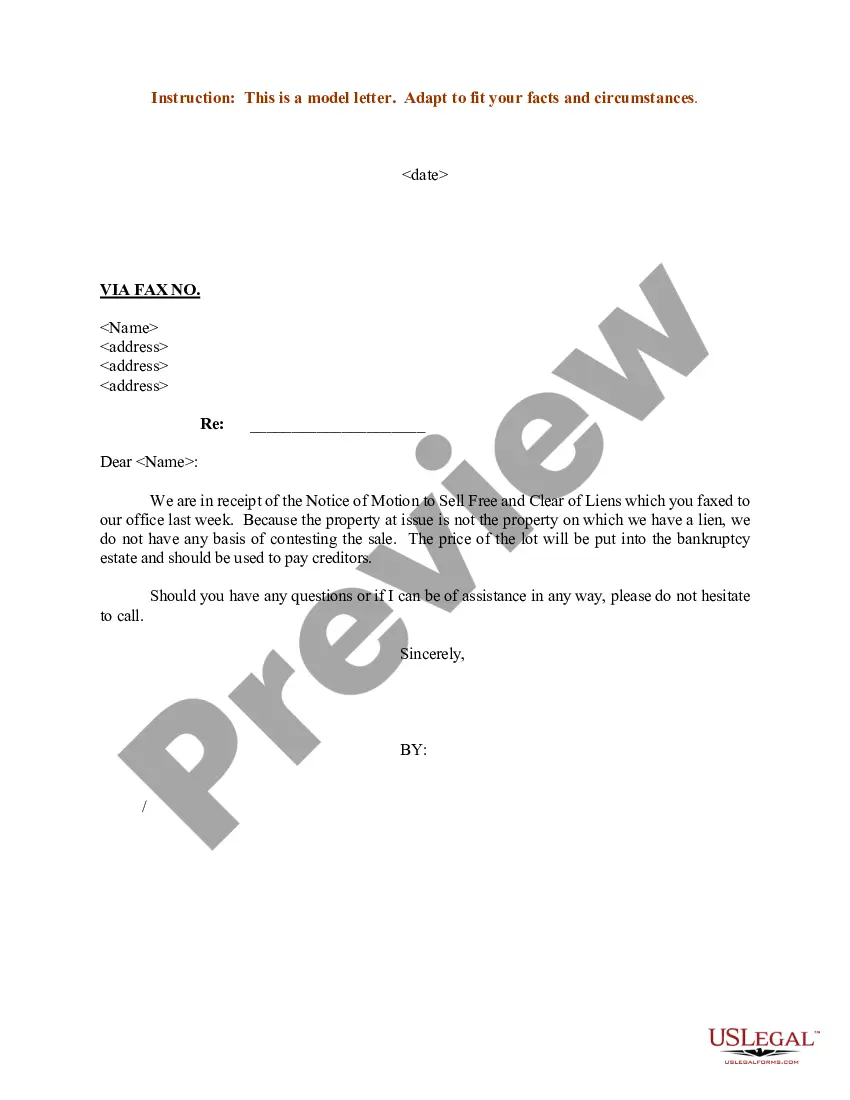
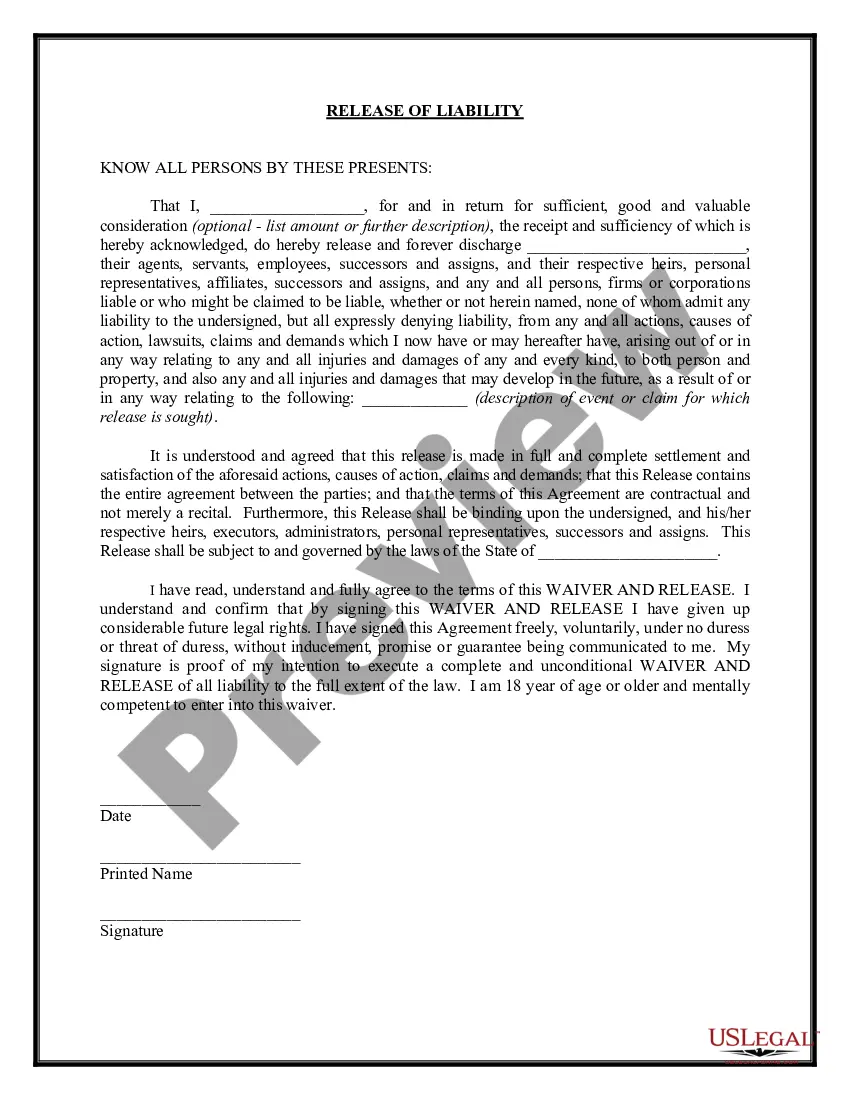
Hawaii Liability Waiver for Homeowner
Description
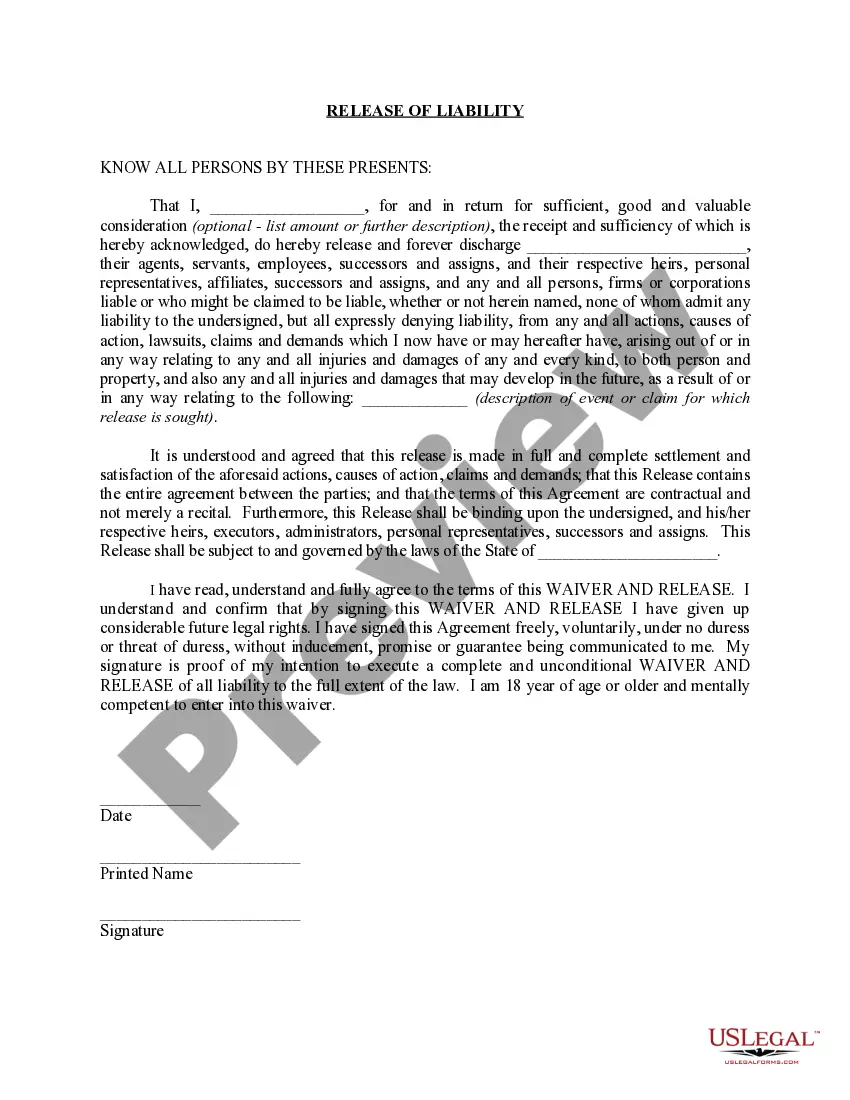
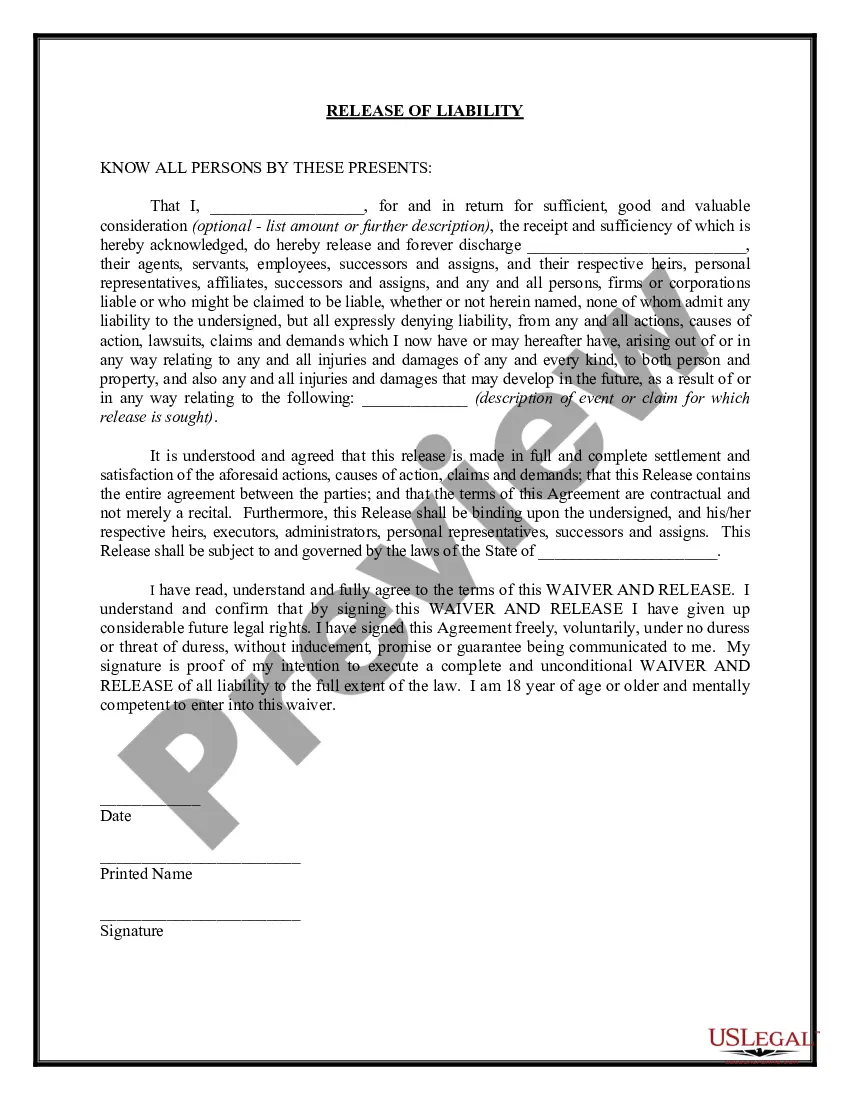
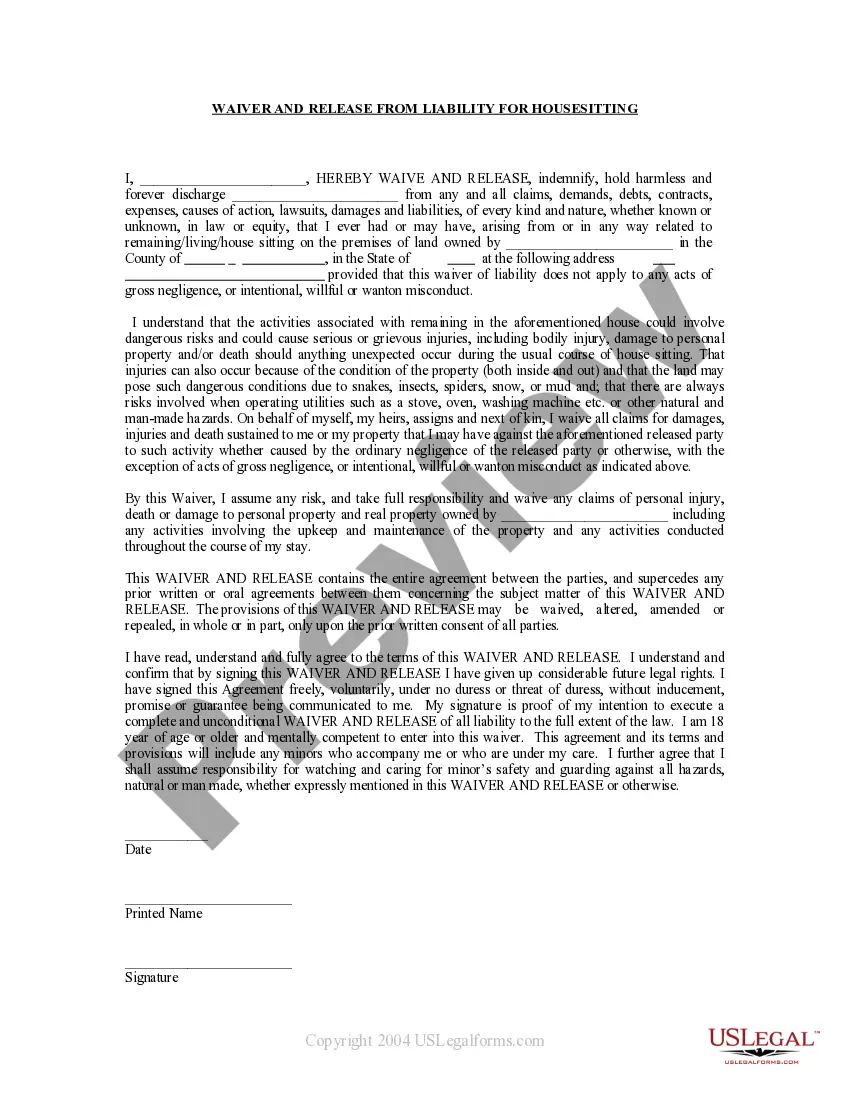
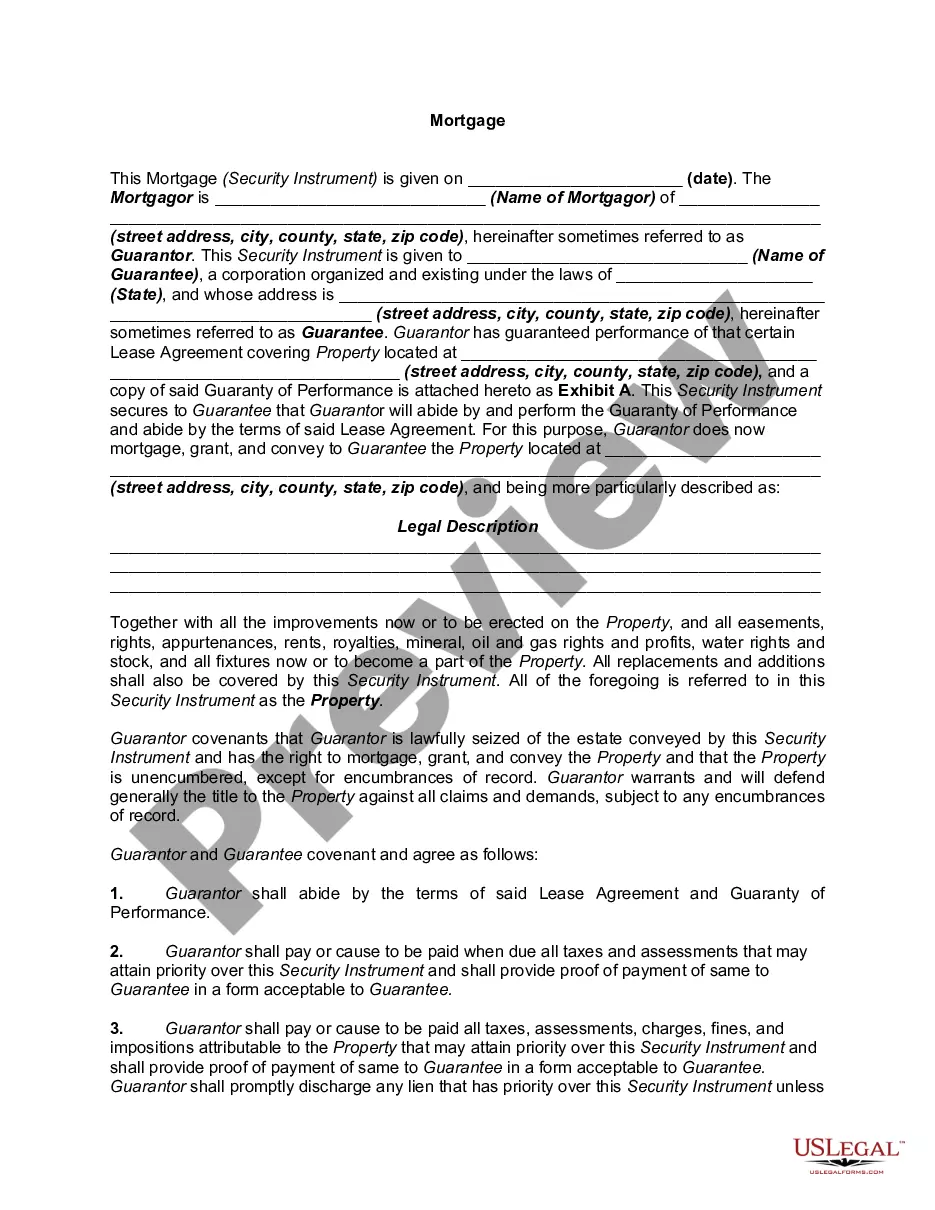
How to fill out Liability Waiver For Homeowner?
Are you currently in a position where you need documents for both business or personal purposes all the time.
There are numerous legal document templates available online, but finding reliable ones isn't straightforward.
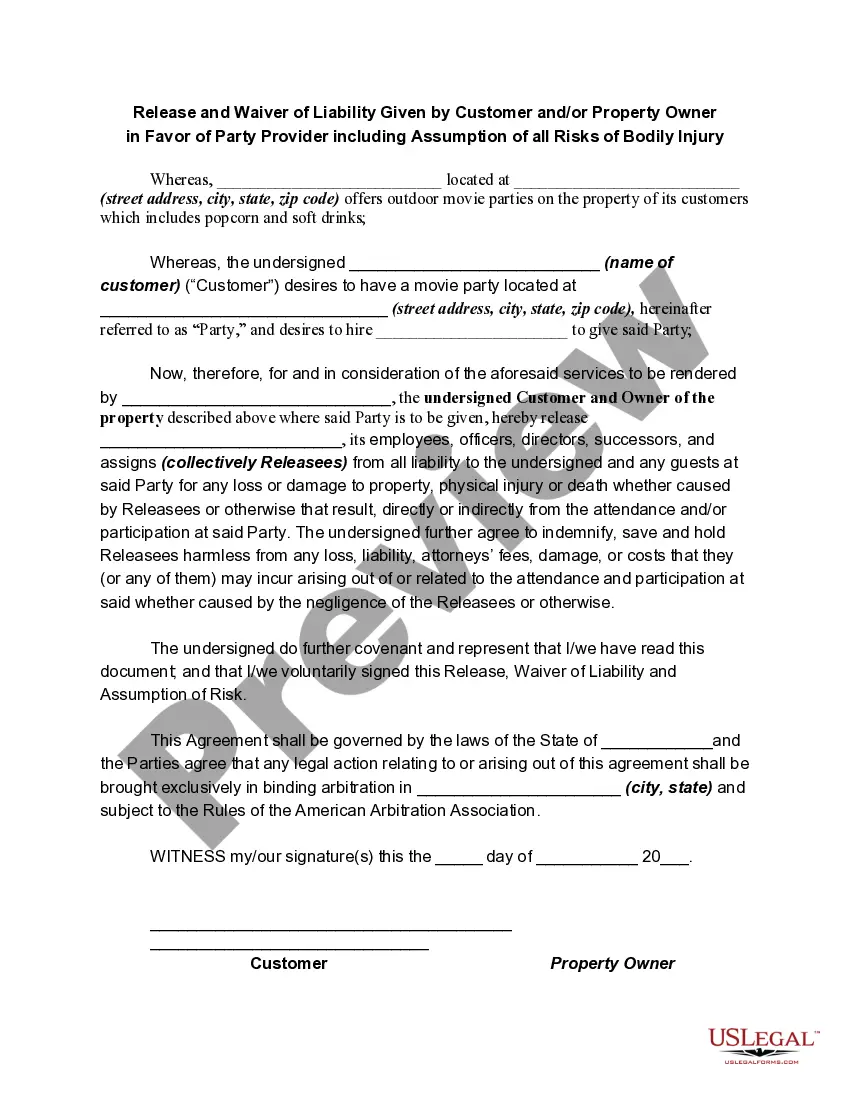
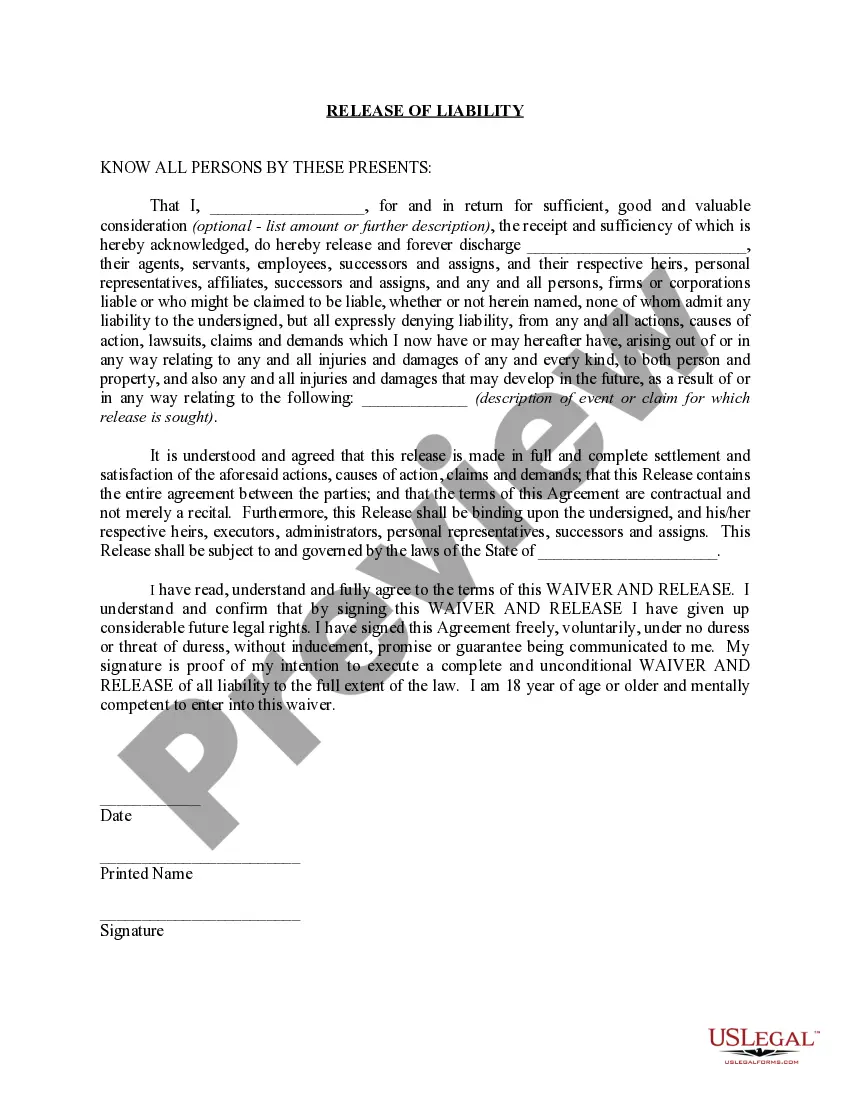
US Legal Forms offers a vast array of form templates, such as the Hawaii Liability Waiver for Homeowner, which are designed to meet federal and state requirements.
Once you find the right form, click Purchase now.
Choose the pricing plan you prefer, fill out the necessary information to create your account, and pay for the transaction using your PayPal or credit card.
- If you are already familiar with the US Legal Forms website and have an account, simply Log In.
- After that, you can download the Hawaii Liability Waiver for Homeowner template.
- If you do not have an account and want to start using US Legal Forms, follow these steps.
- Select the form you want and ensure it is for the correct city/region.
- Use the Preview button to review the document.
- Read the description to confirm you have chosen the right form.
- If the form isn't what you're looking for, use the Search field to find the form that meets your requirements.
Form popularity
FAQ
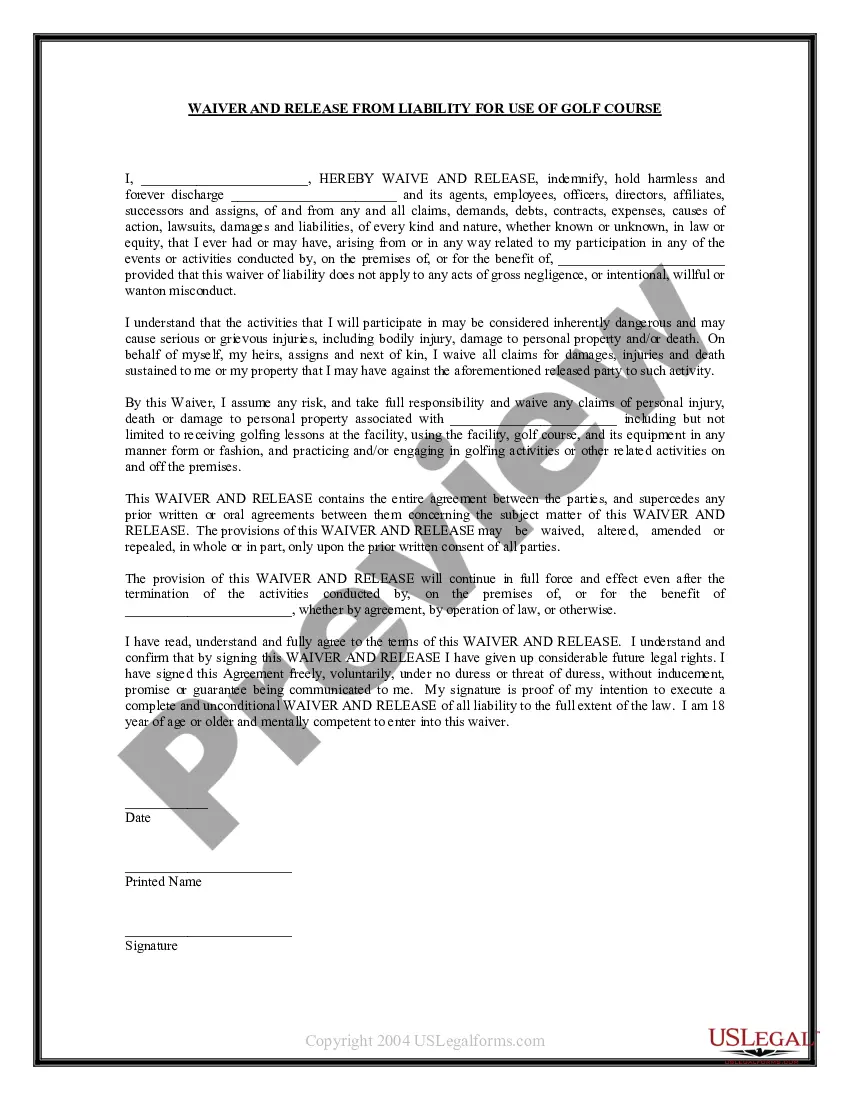
A liability statement typically includes a clear acknowledgment of the risks involved and a declaration that one is assuming those risks. For instance, a liability statement for a Hawaii Liability Waiver for Homeowner might say, 'I acknowledge that participating in this activity involves certain risks, and I waive any claims against the homeowner for injuries incurred.' Crafting this statement carefully can protect you from potential legal complications.
You certainly can draft your own waiver. However, crafting a comprehensive and enforceable Hawaii Liability Waiver for Homeowner requires attention to detail and understanding of legal terms. To make this process simpler, platforms like US Legal Forms provide customizable templates that guide you through creating your waiver effectively. This way, you can be confident that your document covers all necessary aspects.
A waiver may be deemed invalid for several reasons, including unclear language, absence of mutual consent, or if it attempts to waive liability for intentional misconduct. In the context of a Hawaii Liability Waiver for Homeowner, it is vital to avoid vague terms and ensure that all parties understand what they are signing. Review your waiver carefully to avoid these common pitfalls.
Yes, you can create a waiver on your own. Many homeowners in Hawaii find that using online platforms like US Legal Forms makes the process easier and more efficient. By following simple templates, you can craft a Hawaii Liability Waiver for Homeowner that fits your needs. However, consider having a legal expert review it to ensure it is enforceable.
A waiver becomes legal when it is clear, concise, and voluntarily signed by all parties. It should explicitly describe the risks involved and what individuals are waiving. In the context of a Hawaii Liability Waiver for Homeowner, it is essential to ensure that the language is straightforward and comprehensible. Consulting a legal professional can help ensure that your waiver meets all necessary legal criteria.
A Hawaii Liability Waiver for Homeowner can limit your ability to sue for specific claims, but it does not eliminate all potential legal actions. Depending on how the waiver is worded, you may still have the right to pursue a claim in cases of gross negligence or intentional wrongdoing. Always consult with a legal expert to fully understand the implications before signing a waiver.
Generally, a Hawaii Liability Waiver for Homeowner is legally binding if it meets certain legal requirements. This means it should be clear about the risks involved and explicitly state that the signer is waiving their rights. However, the binding nature can vary based on how it is worded and the circumstances of the signing.
The enforceability of a Hawaii Liability Waiver for Homeowner in court depends on various factors, including its language and the situation surrounding its signing. Courts typically uphold waivers if they are clear, voluntary, and cover proper risks. However, if a waiver is seen as unfair or if the homeowner was under duress, it may not hold up in court.
Yes, a well-constructed Hawaii Liability Waiver for Homeowner can provide protection against certain legal claims. However, it's important to understand that it does not protect you from all types of liability, especially in cases of negligence that cause harm. Always make sure your waiver is clear and comprehensive to maximize its effectiveness.
When you sign a Hawaii Liability Waiver for Homeowner, you may face potential risks such as the limitation of your legal rights. If the waiver is poorly drafted, it might not protect you in the event of a dispute. It is crucial to read the terms carefully and understand any implications before signing.