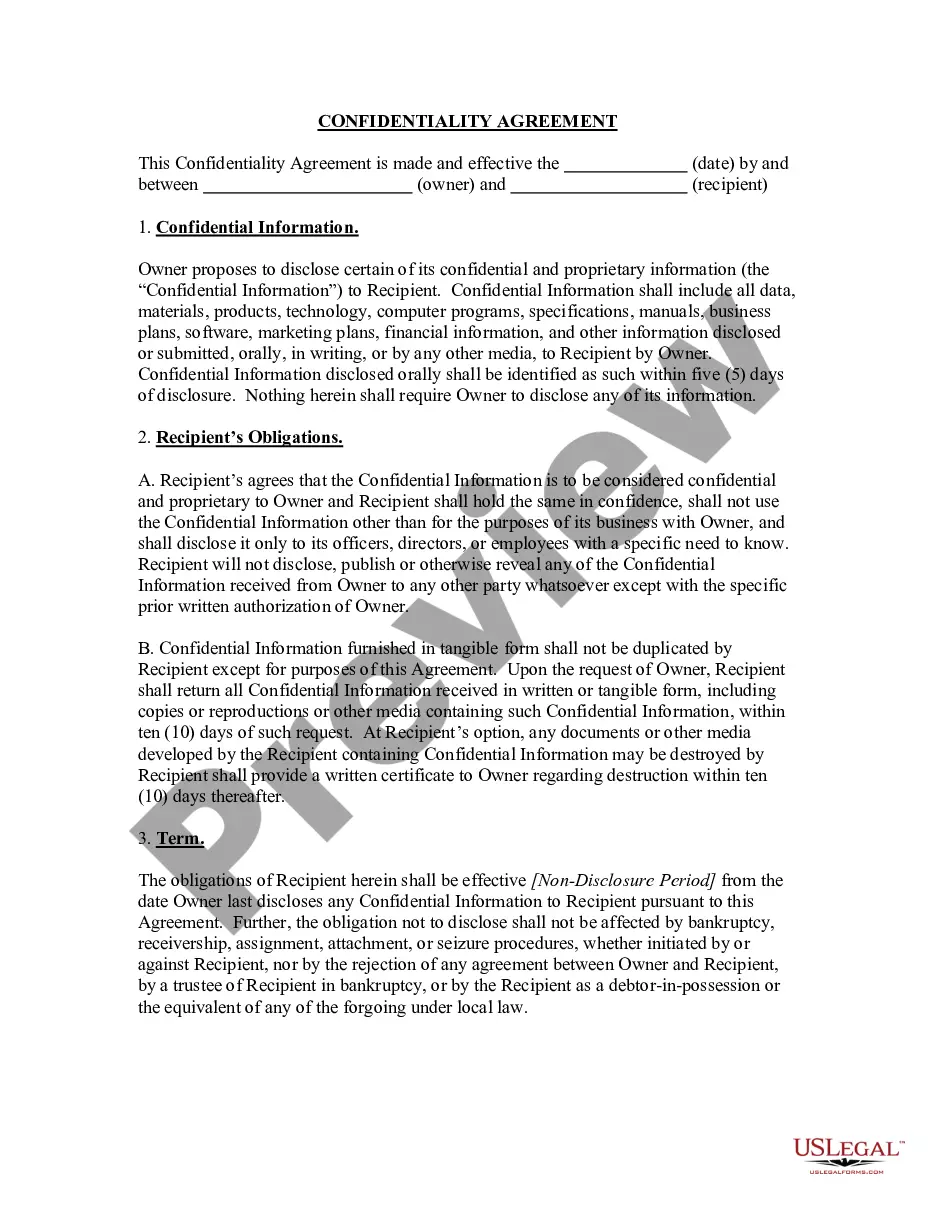
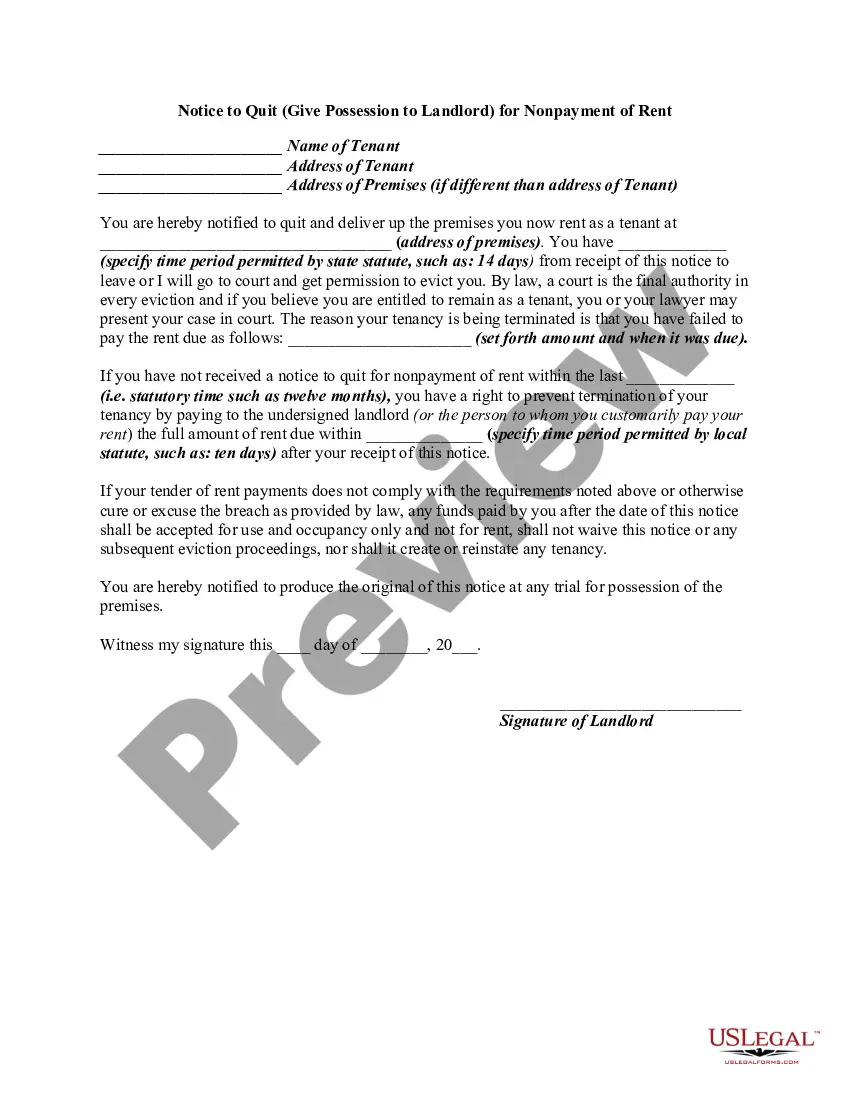
Hawaii Notice to Quit - Give Possession to Landlord - for Nonpayment of Rent - Past Due Rent
Description
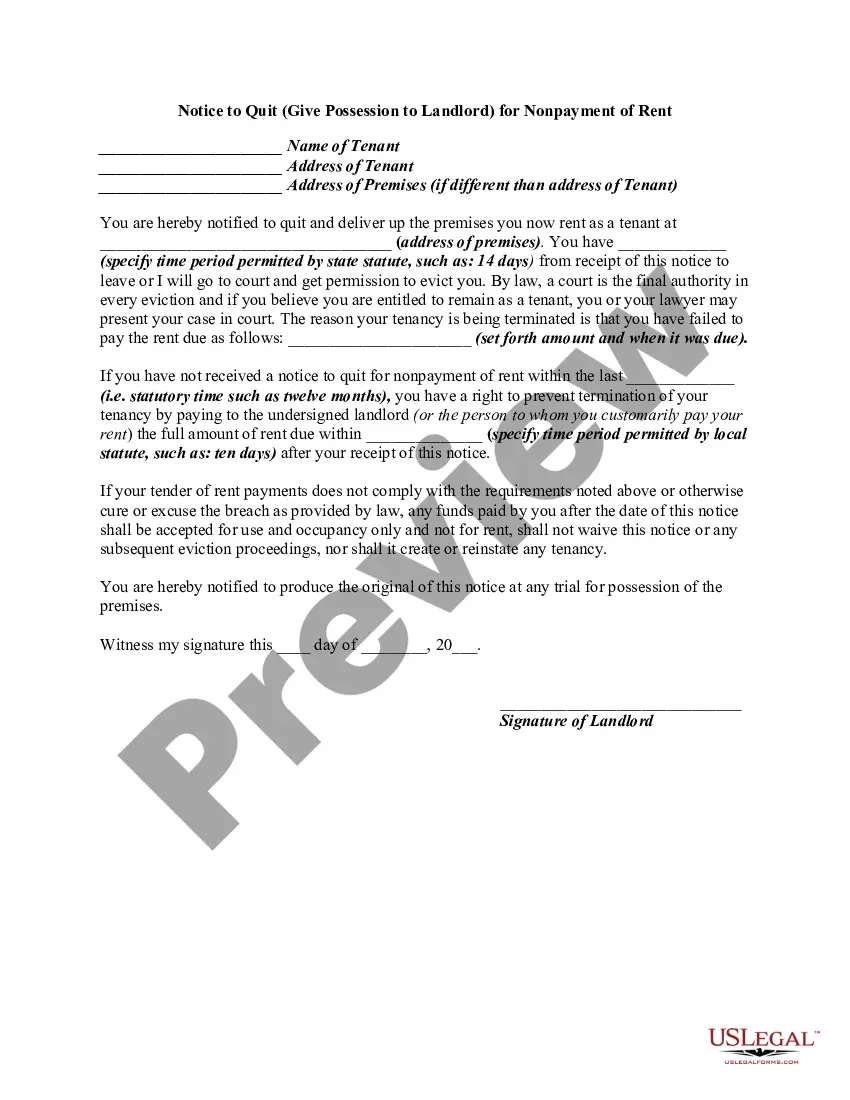
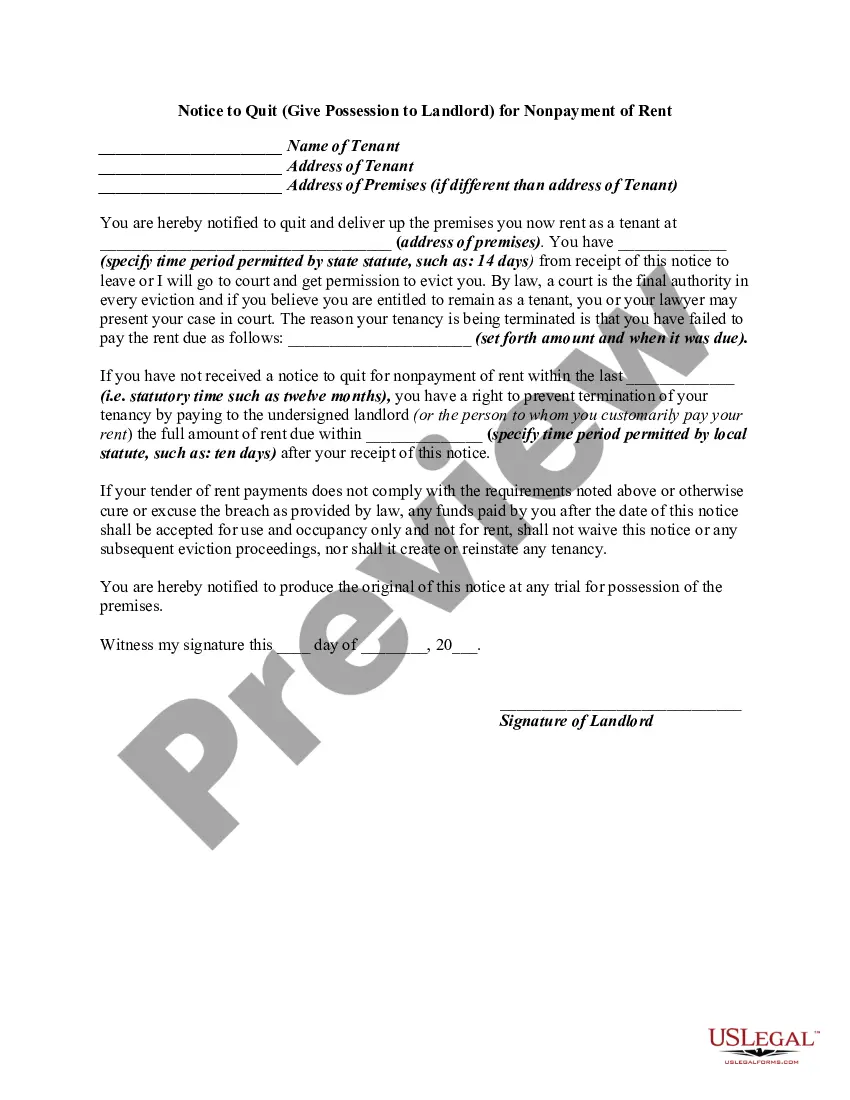
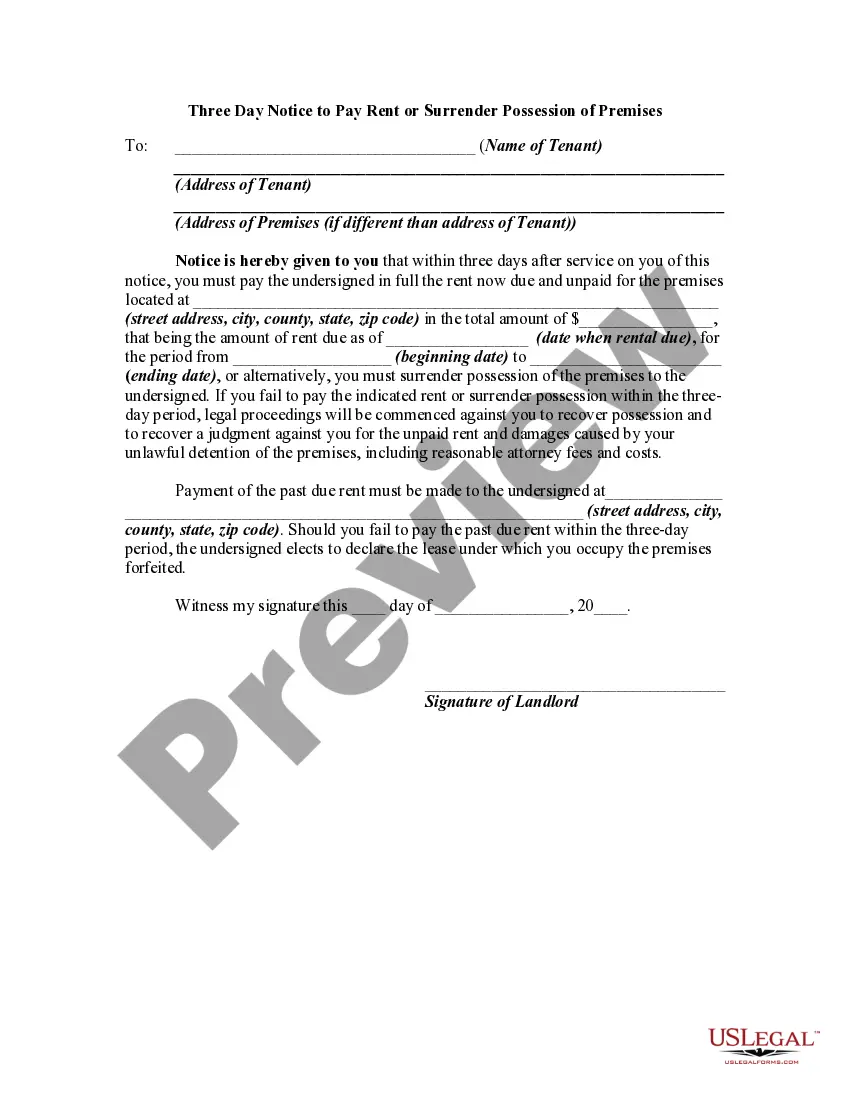
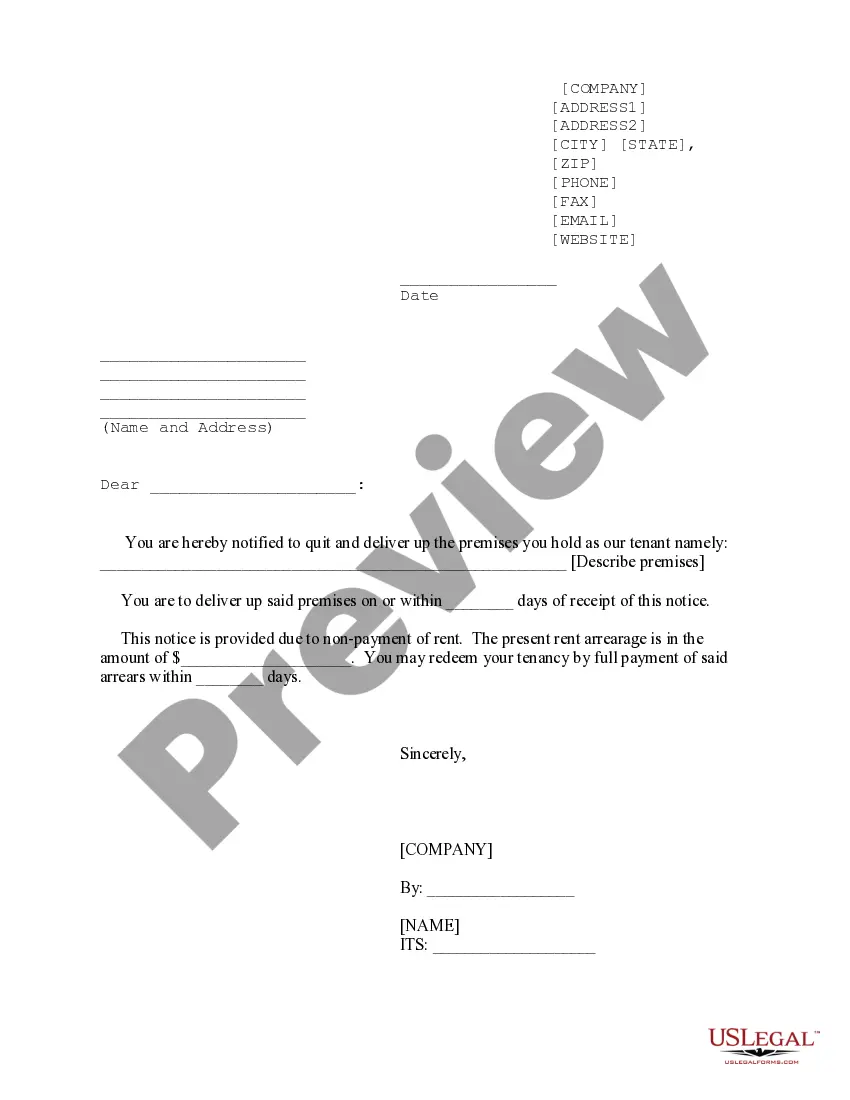


How to fill out Notice To Quit - Give Possession To Landlord - For Nonpayment Of Rent - Past Due Rent?
US Legal Forms - one of the largest collections of legal documents in the United States - offers a variety of legal form templates that you can acquire or create.
Through the website, you can obtain thousands of forms for business and personal purposes, organized by categories, states, or keywords. You can find the latest versions of forms like the Hawaii Notice to Quit - Grant Possession to Landlord - due to Nonpayment of Rent - Outstanding Rent in moments.
If you have an account, Log In to access Hawaii Notice to Quit - Grant Possession to Landlord - due to Nonpayment of Rent - Outstanding Rent in the US Legal Forms library. The Download option will be available for every form you view. You can access all previously downloaded forms from the My documents section of your account.
Complete the transaction. Use your credit card or PayPal account to finalize the transaction.
Select the format and download the form to your device. Edit, modify, print, and sign the downloaded Hawaii Notice to Quit - Grant Possession to Landlord - due to Nonpayment of Rent - Outstanding Rent. Every template added to your account has no expiration date and is yours forever. Therefore, if you wish to download or print another copy, simply go to the My documents section and click on the form you need. Access the Hawaii Notice to Quit - Grant Possession to Landlord - due to Nonpayment of Rent - Outstanding Rent with US Legal Forms, one of the most extensive collections of legal document templates. Utilize thousands of professional and state-specific templates that fulfill your business or personal requirements.
- If you are using US Legal Forms for the first time, here are simple steps to get started.
- Make sure you have selected the correct form for your city/county.
- Review the Preview option to check the form's content.
- Examine the form details to ensure you have chosen the correct form.
- If the form does not meet your needs, use the Search box at the top of the page to find one that does.
- If you are satisfied with the form, confirm your selection by clicking the Purchase now button.
- Then, choose your preferred payment plan and provide your details to register for an account.
Form popularity
FAQ
The speed of the eviction process in Hawaii largely depends on your adherence to legal requirements, such as serving the proper notices. After you provide a Hawaii Notice to Quit - Give Possession to Landlord - for Nonpayment of Rent - Past Due Rent, the tenant has a period to respond. If the situation is uncontested, the process can take as little as a few weeks. Utilizing resources like uslegalforms can help streamline your efforts and ensure compliance with legal procedures.
Evicting someone in Hawaii can be challenging, especially if the tenant disputes the eviction. You will need to serve a Hawaii Notice to Quit - Give Possession to Landlord - for Nonpayment of Rent - Past Due Rent. The judicial process can take time, depending on court schedules and appeals. Being well-informed and prepared can ease the process, making it essential to seek legal advice.
To evict a squatter in Hawaii, you must start by providing a Hawaii Notice to Quit - Give Possession to Landlord - for Nonpayment of Rent - Past Due Rent. This legal notice informs the squatter of their violation and requests they leave your property. If they do not vacate, you can file an eviction lawsuit. It is essential to follow local laws during this process to ensure a legitimate eviction.
To legally evict a tenant in Hawaii, a landlord must first provide the appropriate notice, such as a 10-day notice for nonpayment of rent. After the notice period expires, if the tenant has not complied, the landlord can file a complaint in the district court. Following this, a court hearing will determine the outcome, which may involve the issuance of the Hawaii Notice to Quit - Give Possession to Landlord - for Nonpayment of Rent - Past Due Rent, allowing the landlord to regain possession of the property.
In Hawaii, the grace period for rent is not mandated by law, but many rental agreements include a grace period ranging from 5 to 15 days after the rent due date. This period allows tenants to make their payments without facing penalties or eviction notices. It's important to review your lease to understand any specific terms regarding the grace period, especially considering the implications of the Hawaii Notice to Quit - Give Possession to Landlord - for Nonpayment of Rent - Past Due Rent.
In Hawaii, a landlord must provide a tenant with a written notice that typically gives either a 30-day or a 5-day notice, depending on the rental agreement specifics. For month-to-month leases, the standard notice is 30 days. If the notice is due to nonpayment, the Hawaii Notice to Quit - Give Possession to Landlord - for Nonpayment of Rent - Past Due Rent may reduce this to just 10 days, emphasizing the urgency of the situation.
Renters in Hawaii have several important rights that protect them, including the right to a habitable living environment and the right to privacy. Landlords must follow legal procedures, such as issuing a Hawaii Notice to Quit - Give Possession to Landlord - for Nonpayment of Rent - Past Due Rent, before evicting tenants. Tenants can also seek assistance from legal aid organizations if they feel their rights have been violated. Understanding these rights empowers renters and ensures a fair legal process.
When writing a quit letter to a tenant, start by clearly stating the intent to terminate the rental agreement. Include essential information such as the reasons for eviction, the time frame for vacating the property, and reference the Hawaii Notice to Quit - Give Possession to Landlord - for Nonpayment of Rent - Past Due Rent if applicable. It's vital to maintain a professional tone and provide all necessary details so that the tenant understands their obligations. Utilizing uslegalforms can also provide you with effective templates to help guide your writing.
The eviction process in Hawaii typically takes about two to three months, depending on various factors. If the tenant responds to the Hawaii Notice to Quit - Give Possession to Landlord - for Nonpayment of Rent - Past Due Rent, this may extend the timeline due to court processing and potential hearings. However, if the tenant agrees to leave or pays the past due rent promptly, the process can conclude much faster. Always seek legal advice if you need clarification or face complications.
To file an eviction notice in Hawaii, you must first ensure that you have a valid reason, such as nonpayment of rent. After that, you can use a Hawaii Notice to Quit - Give Possession to Landlord - for Nonpayment of Rent - Past Due Rent to formally communicate your intent to terminate the tenancy. It's crucial to follow the proper legal procedures as outlined in state law, and you might consider using platforms like uslegalforms to find appropriate templates and guidelines. This can help streamline the process and ensure you follow the correct steps.